Capture the Latest Opportunity: How ViaBTC Capital Picks the Promising GameFi Projects

newsbtcPubblicato 2022-04-14Pubblicato ultima volta 2022-04-14

Introduzione

Lately, the crypto market has been hit by certain short-term impacts as a result of Anton Nell and Andre Cronje’s...

Lately, the crypto market has been hit by certain short-term impacts as a result of Anton Nell and Andre Cronje’s departure from crypto. As the market pins its hope on new projects, investors are also in an urgent search for promising projects. ViaBTC Capital, a rising star in crypto investment, has started to invest in new crypto categories starting from late 2022. It has focused on GameFi, a small category that may promise huge returns. Analyzing on-chain/off-chain indicators and the gaming fundamentals, ViaBTC Capital is looking for the next hit in GameFi.
New opportunities amidst current tensions
Although the market now remains sluggish, some promising GameFi projects are still emerging. Turning challenges into opportunities, ViaBTC Capital is exploring a new crypto category with great potential. At ViaBTC Capital, investment strategies are never confined to the immediate interest. Instead, the institution focuses on long-term development. For example, from a long-term perspective, it helps cryptocurrencies capture the spotlight in global finance, which brings both challenges and opportunities.
The same also applies to the GameFi market. Though 2022 is still waiting for the appearance of phenomenal projects with worldwide impact, the GameFi category is merely a start from the viewpoint of the entire gaming market. Along with the progress of technologies such as blockchain, AR/VR, the Internet of Things, and the metaverse, GameFi mechanisms will grow more diversified in the future. This, coupled with the P2E model, allows GameFi to integrate life, entertainment, and work, which will broaden its growth prospect.
Finding the next hit in GameFi
Having noticed the potential of GameFi, ViaBTC Capital has made fast moves and invested in emerging projects, including four new GameFi projects (STEPN, Edenbrawl, Infinite launch, and AAG).

  1. STEPN

Official website: https://stepn.com/
STEPN is a Web3 lifestyle app with inbuilt Game-Fi and Social-Fi elements. Players will first need to purchase or rent NFT sneakers. In STEPN, you can make handsome earnings by walking, jogging, or running outdoors. STEPN is currently under the public beta phase.
With Game-Fi, STEPN aims to nudge millions toward a healthier lifestyle, combat climate change, and connect the public to Web 3.0 while building a SocialFi platform that fosters user-generated Web 3.0 content and promotes the Web 3.0 lifestyle.
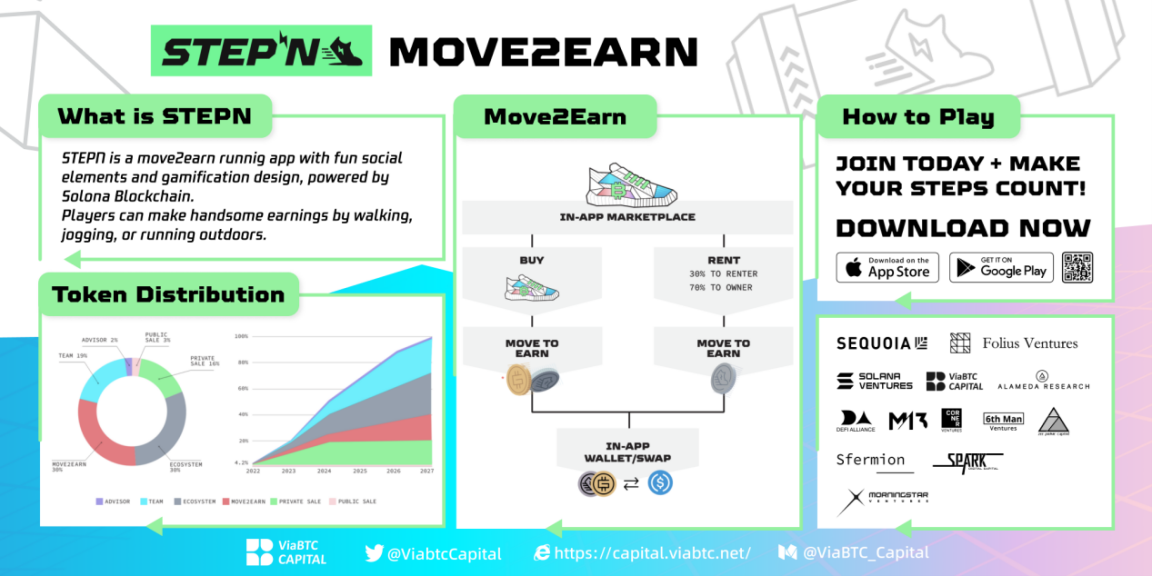
STEPN’s One Page

  1. Infinite launch

Official website: https://infinitelaunch.io/
Focusing on GameFi and NFTs Infinite Launch will be the first launchpad to have its own blockchain games to help new crypto adopters get acquainted with NFTs and Play-to-Earn models. Right now, three GameFi projects plan to go through IDO on Infinite Launch. In addition, the platform has also launched the NFT Whale Club.
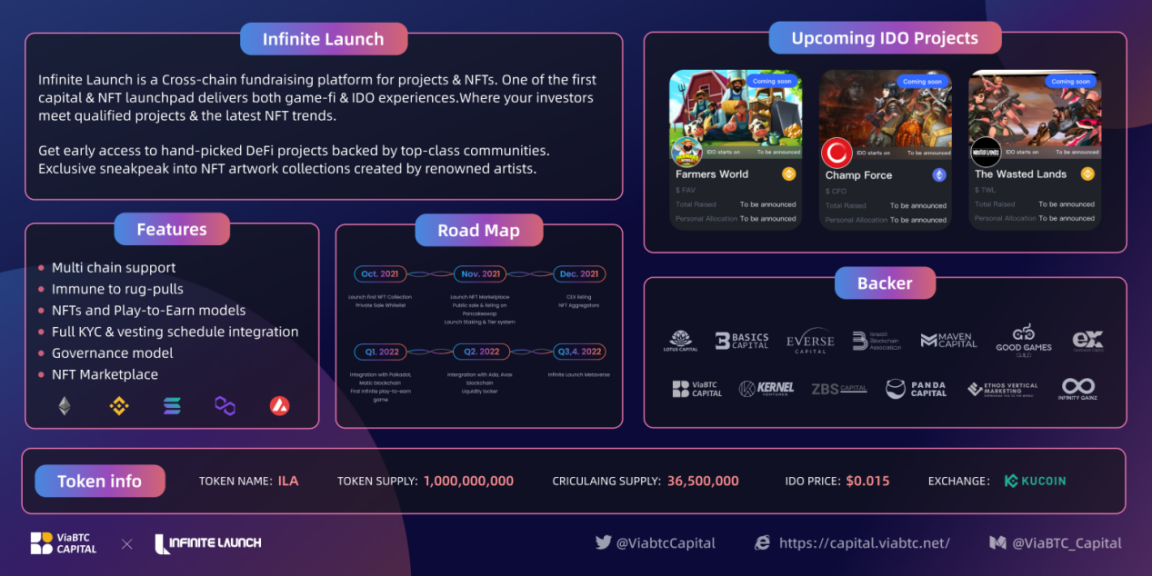
Infinite’s One Page

  1. Edenbrawl

Official website: https://www.edenbrawl.com/
Edenbrawl (formerly “Circuits and Shields”) combines the action combat of a brawler with the endless depth of a MOBA to create a “Mobrawler”. In Edenbrawl, players can kill or block their enemy or land the ball in the enemy’s “endzone” to win the 20-minute MOBA match.
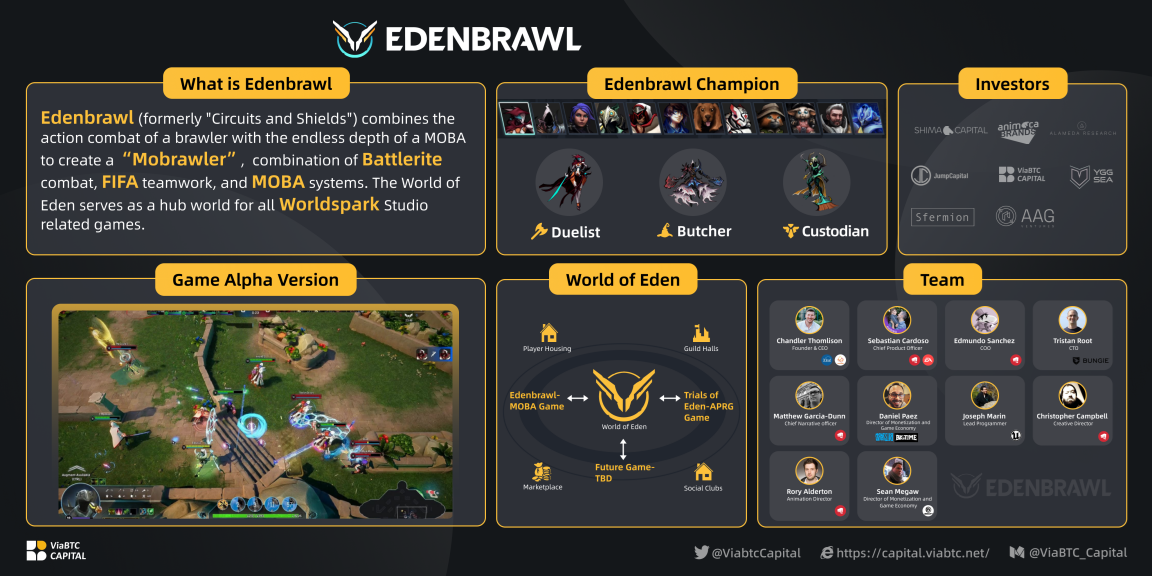
Edenbrawl’s One Page

  1. AAG

Official website: https://aag.ventures/
AAG, a one-stop platform for players, guilds, and investors, aims to create economic freedom for the unemployed worldwide through the metaverse economy. It is also one of the fastest-growing guilds in the P2E industry. As of 2021, AAG covered seven countries and created an environment where players, guilds, and investors could interact seamlessly and make earnings through the services it provides.
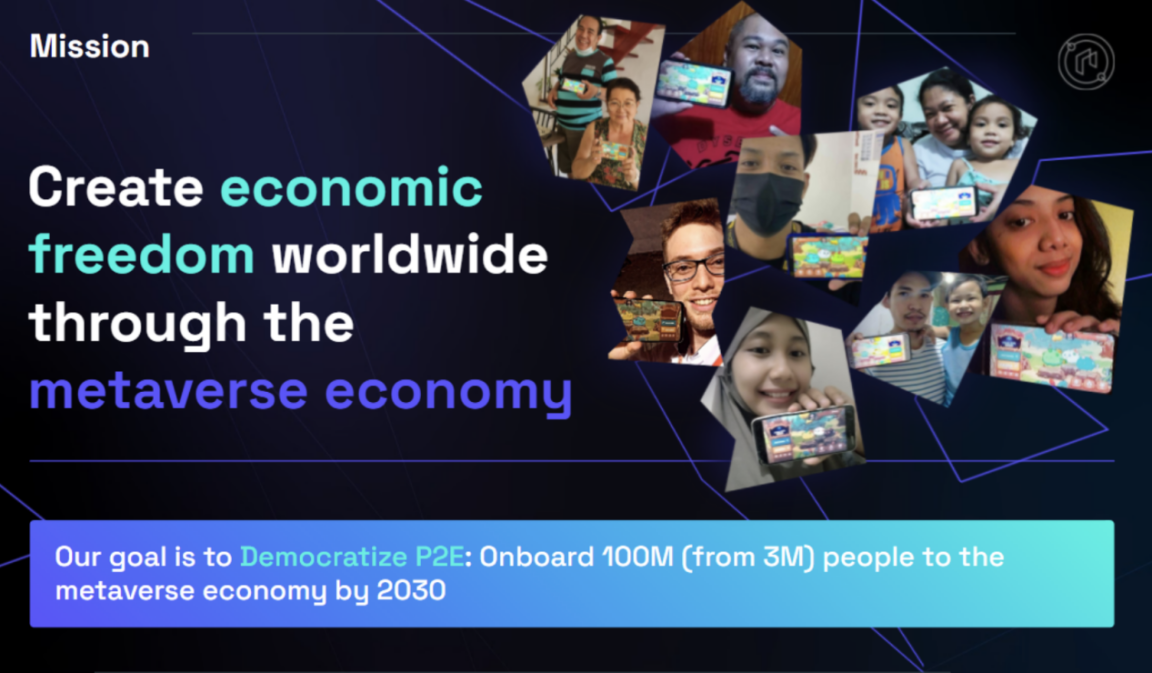
Official website of AGG
AAG is not just a platform. It has built an all-new model. It has partnered up with many guilds, games, and investors, including ViaBTC Capital. Such a powerful investment network provides AAG with a strong business foundation and empowers it in fields that include gaming, blockchain, DeFi, and community building.
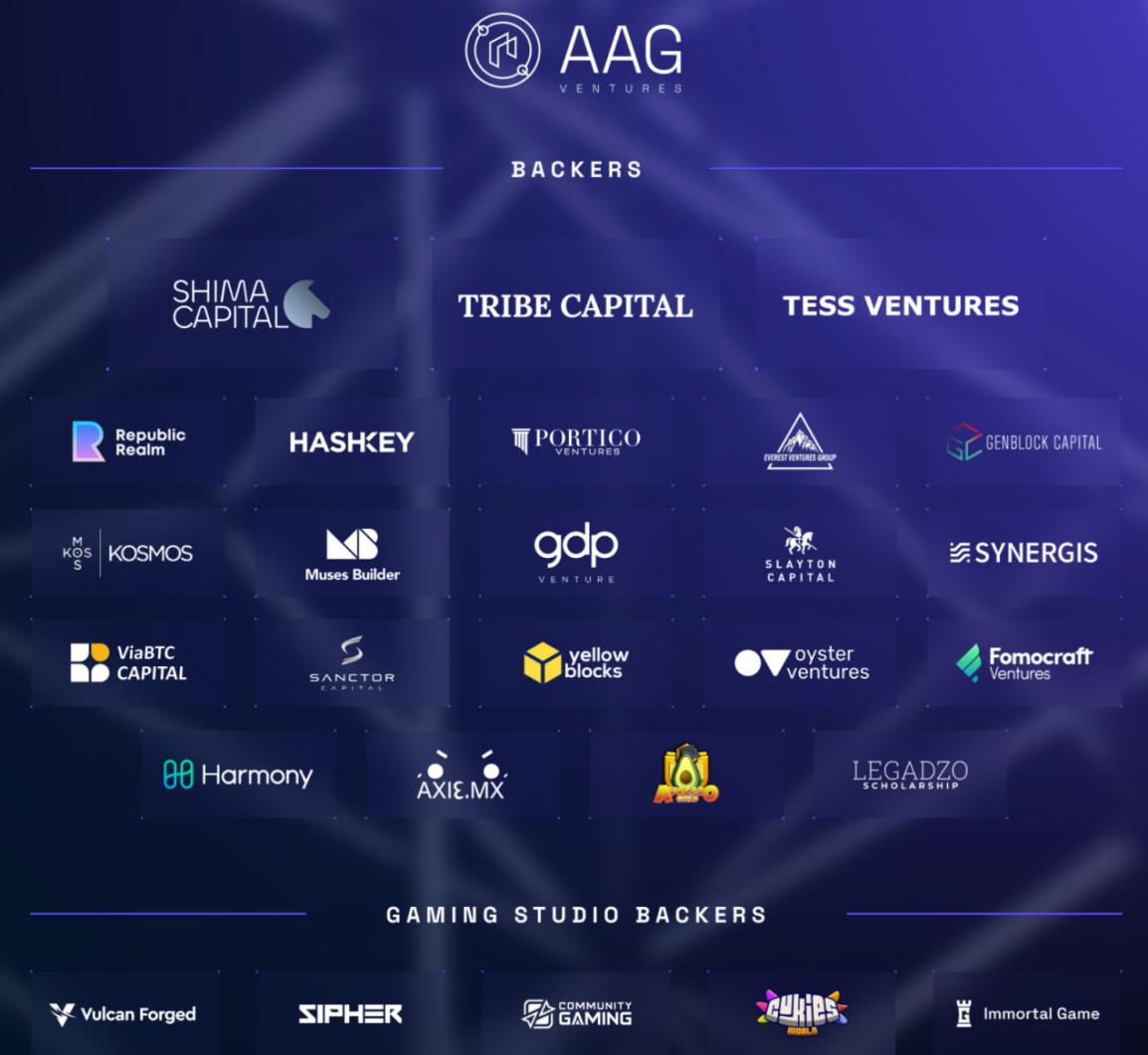
Institutional investors backing AAG
A time of both challenges and opportunities
The GameFi market is shifting to second-generation and third-generation blockchain games. The market landscape of GameFi differs from that of other blockchain categories. Its relationship with the rest of the blockchain space resembles that between the metaverse and the Internet. GameFi successfully duplicates the financial sector, lending/borrowing system, and value-storing framework in the real world through its distributed structure and the confirmation of asset ownership via blockchain, which is also the reason behind its fast growth.
First-generation blockchain NFT games like CryptoKitties diminished due to the lack of long-term players. Second-generation blockchain games (P2E games like Axie Infinity) run the assets on Layer 2 blockchain networks and operate the game itself off-chain, thereby enabling gameplay with few costs and fast results. In such games, players can earn and monetize in-game tokens by playing the game for minutes. However, they still lack the advantages of conventional AAA games in terms of gaming experiences, game designs, and graphics. As such, second-generation blockchain games failed to build a mature market. ViaBTC Capital has captured the exponential growth of the demand for third-generation blockchain games that stimulate users through paid entertainment such as superior gaming experiences and gameplay, rather than P2E alone.
Having inherited all the advantages of blockchain technology, GameFi has brilliant prospects. In the future, ViaBTC Capital will continue to focus on the value-based investment of gaming ecosystems and engage in investment analysis and project empowerment according to the trend of game development. Meanwhile, it will push for the sound growth of GameFi and help build a prosperous ecosystem of third-generation blockchain games.

Letture associate

Bitcoin's 'Rally Ends,' Officially Entering the Later Stage of a Bear Market?

Bitcoin prices declined 13% this week, reversing the recent rebound and signaling a likely transition into the later stages of a bear market. Key on-chain metrics deteriorated, with the short-term holder cost basis falling below the Realized Price—a pattern last seen in early 2022, characteristic of bear market maturity. The rally to ~$82k proved to be a bear market bounce, as evidenced by the 90-day realized profit/loss ratio failing to sustain above the bullish threshold of 2. Daily realized losses surged to $1.35B, including significant selling from long-term holders who accumulated near cycle tops, indicating ongoing supply redistribution. Price was rejected almost precisely at the aggregate US spot ETF cost basis of ~$83k, turning that level into resistance and leaving the average ETF investor underwater again. Spot market selling pressure intensified, with the 7-day volume delta turning significantly negative to its weakest level since February. While a major long liquidation event cleared over $400M in leverage, spot demand has not yet stepped in to absorb the resulting supply. Options markets continue pricing in higher future volatility (elevated volatility risk premium) and maintain a skew toward put options, reflecting persistent demand for downside protection, though not yet panic. Overall, market structure remains fragile. Sustained recovery likely requires a reclaim of the ETF cost basis, a shift back to positive spot demand, and a slowdown in realized loss-taking. Until then, the market risks further downside or extended consolidation within the broader bear trend.

Foresight News42 min fa

Bitcoin's 'Rally Ends,' Officially Entering the Later Stage of a Bear Market?

Foresight News42 min fa

How Risky is the "Death Spiral" of MSTR and STRC?

Summary: This article explores the perceived "death spiral" risk between MicroStrategy (MSTR), its Bitcoin holdings, and its perpetual preferred stock (STRC), drawing comparisons to the LUNA-UST collapse. While both systems feature price anchors, high yields for holders, and potential feedback loops, their core mechanisms differ fundamentally. The MSTR-STRC structure relies on continuous financing to sustain its high dividend payouts, primarily through stock ATM offerings. A negative feedback cycle could occur: falling MSTR stock price makes raising equity capital harder, increasing pressure to sell Bitcoin, which undermines STRC confidence and further depresses MSTR. However, unlike LUNA-UST's automated, direct linkage, the MSTR-STRC loop is weaker and has brakes: STRC dividends can be deferred or rates lowered, and STRC holders have a $100/share liquidation preference in bankruptcy, providing a price floor. The company's sustainability hinges on its ability to continue financing. Its current ~$900 million USD reserves cover only about 6.3 months of its ~$1.71 billion annual interest/dividend burden. The next six months are critical, aligning with both the potential bottom in Bitcoin's four-year cycle and the depletion timeline of its reserves. While a LUNA-style catastrophic collapse is deemed highly unlikely due to structural differences, the key question is whether MicroStrategy can navigate this period through healthy deleveraging to restart its capital engine.

Foresight News1 h fa

How Risky is the "Death Spiral" of MSTR and STRC?

Foresight News1 h fa

How Much Debt Does Strategy Really Have? Is There a Risk of Implosion?

MicroStrategy's Debt Risk: A Turning Point in the "Never Sell" Strategy As of June 3, 2026, MicroStrategy holds 843,706 bitcoins (valued at ~$53.1B) but faces significant financial obligations. Its capital structure includes $6.75B in convertible notes and $15.48B in perpetual preferred stock (led by the $8.5B STRC series), creating an annual payout burden of ~$1.71B. With software revenue at only ~$500M, interest and dividend obligations far exceed operating income. A critical shift occurred in late May 2026 when the company sold 32 bitcoins for ~$2.5M to cover dividends, breaking CEO Michael Saylor's long-standing "never sell" pledge. This symbolic move triggered a sharp decline in both Bitcoin's price and MSTR stock, reflecting market fears about cash flow sustainability. The core of the strain is the STRC perpetual preferred stock, designed as a "permanent loan" with no maturity date but requiring high monthly dividends (currently 11.5%). Its business model relies on a three-part cycle: issuing new STRC shares, using proceeds to buy more Bitcoin and fund a USD reserve, and using that reserve to pay dividends. This cycle depends on continuous investor demand for STRC and Bitcoin's price appreciation. Analysis shows Bitcoin needs to appreciate at least 2.3% annually to cover the $1.71B in yearly obligations at current holdings. With Bitcoin price down ~22% from March 2026 highs, this pressure has intensified. The company's $900M USD reserve can only cover about 7 months of payments if STRC issuance stalls. Key risks are not immediate bankruptcy or forced Bitcoin liquidation (as BTC is not collateral), but rather: 1) The erosion of MSTR's premium to its Bitcoin holdings (mNAV), which would cripple its ability to raise cheap capital; 2) A vicious cycle where stagnant Bitcoin prices reduce STRC demand, draining the USD reserve and forcing BTC sales, further depressing prices. The period from February 2027 to September 2028 is a crucial test, with over $5.9B in convertible notes facing put options or maturity. In essence, MicroStrategy has evolved from a simple Bitcoin holder into a complex financial entity acting like a "private Bitcoin bank," leveraging its BTC holdings to create layered financial products. Its survival depends on maintaining Bitcoin's price trend, its stock premium, and market appetite for its preferred shares. The recent token sale marks not a betrayal of its Bitcoin thesis, but an admission that the leveraged strategy must eventually be paid for.

marsbit1 h fa

How Much Debt Does Strategy Really Have? Is There a Risk of Implosion?

marsbit1 h fa

Trading

Spot
Futures
活动图片