Author: Ma He, Foresight News
At the end of July 2026, on-chain analyst MLM(@mlmabc) data showed that since the actual distribution of team tokens began in December 2025, approximately 4.93 million HYPE tokens, worth around $270 million at the time (0.493% of total supply), were sent to team member wallets. Among these, 1.19 million tokens were sold on the open market for cash, realizing about $32.5 million. 3.14 million tokens were transferred to OTC trading platforms, with a transfer value of approximately $132 million, totaling around 4.33 million tokens corresponding to $165 million. During the same period, the Assistance Fund cumulatively repurchased about 9.8 million tokens, spending around $364 million, at a rate more than double the team's sales.
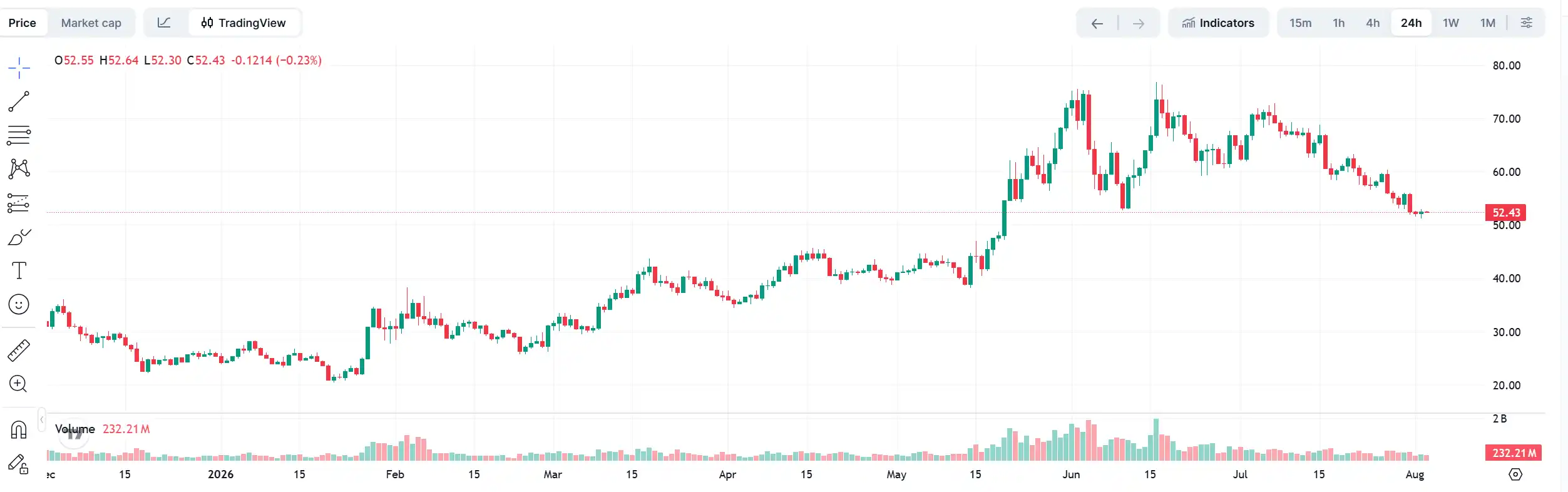
The price of HYPE has been falling from its peak of around $70 in late July and is currently quoted at $52.4, with a market capitalization of $13.23 billion.
So, what factors have led to HYPE's significant correction? Is the core team selling tokens really the most important factor?
Details of the Team's Actual Token Sales: Limited Allocation, Controlled Sales
According to the project's tokenomics, the total supply of HYPE is capped at 1 billion tokens, with no additional inflation design. The main allocation is roughly as follows: Genesis allocation approximately 31% (fully released at TGE, primarily airdropped to early users); future emissions and community rewards approximately 38.9%; foundation budget approximately 6%; and small portions such as community grants. The allocation for Hyperliquid's core contributors accounts for 23.8% of the total supply, i.e., 238 million tokens.
Hyperliquid's official design includes a one-year cliff after TGE (November 29, 2024), followed by linear vesting, with most planned to be completed between 2027 and 2028. The theoretical monthly release amount was exaggerated by some tracking platforms to be close to 10 million tokens, but the actual allocation is much lower than that.
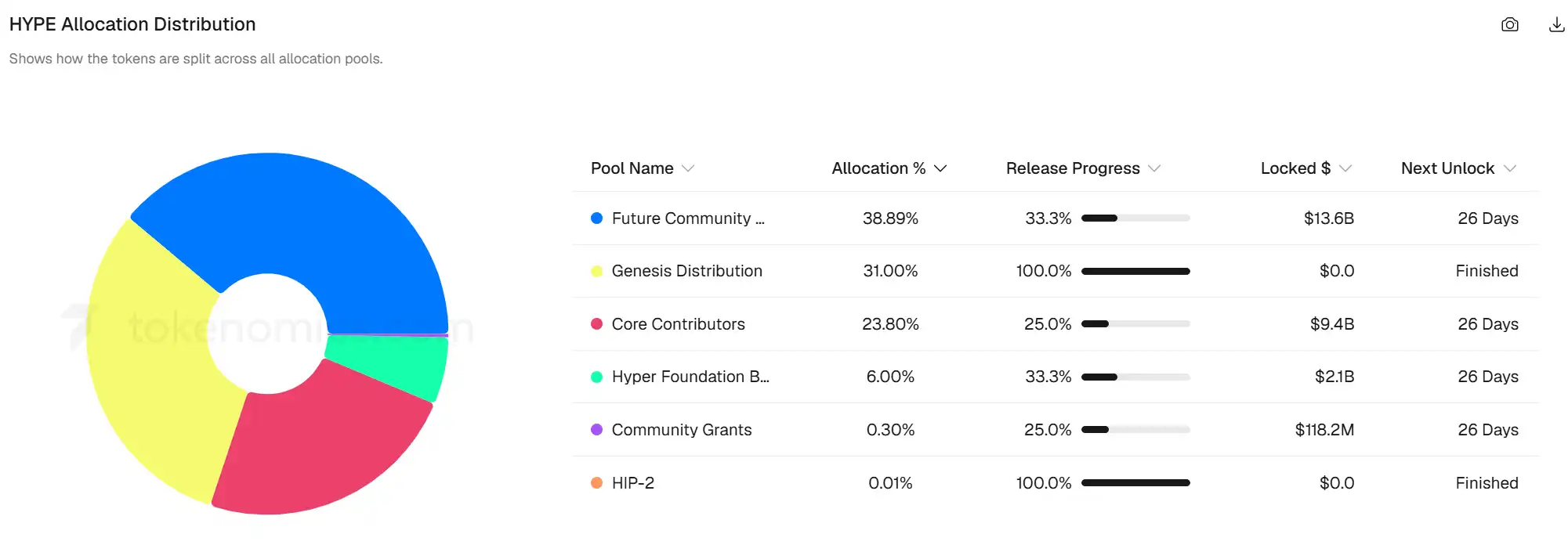
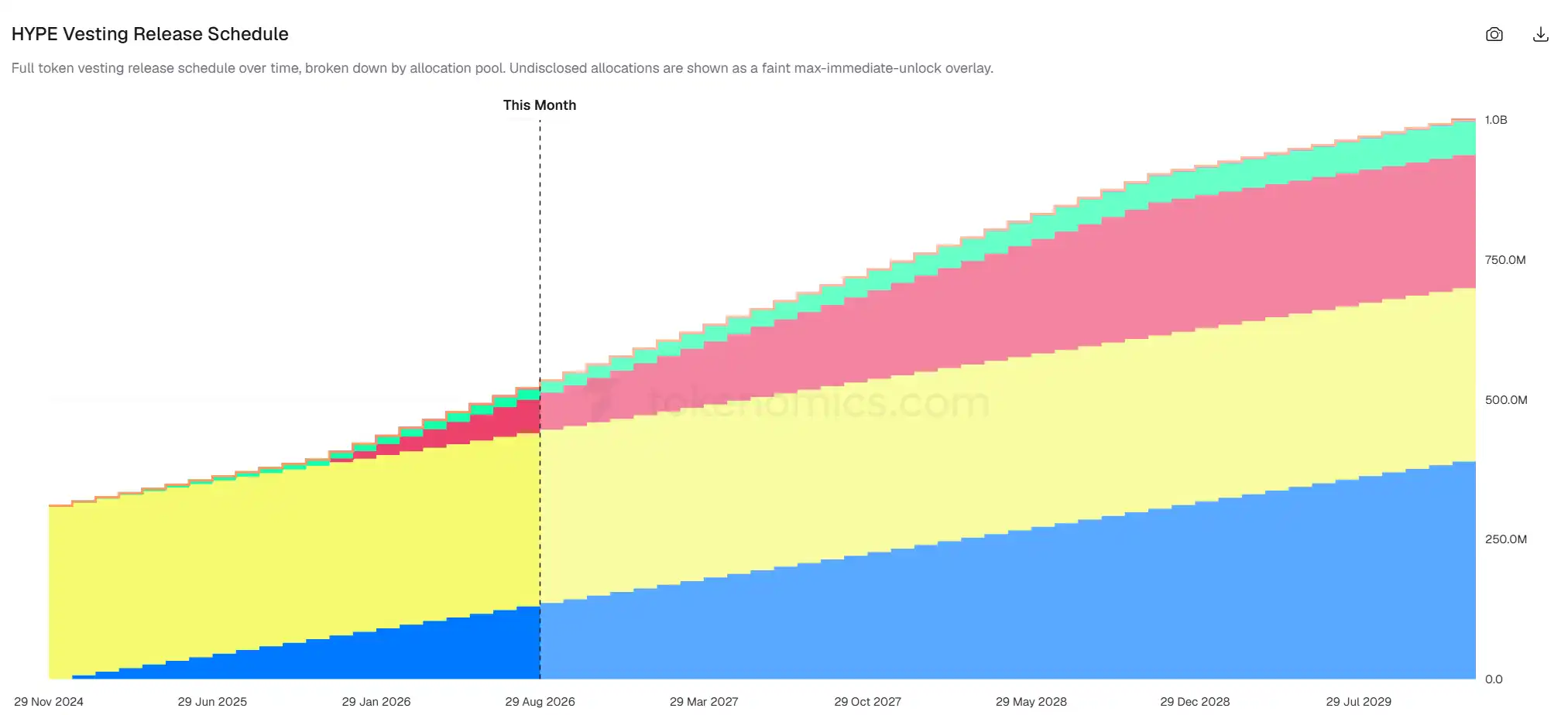
The cumulative actual release is far lower than the "theoretical value" on some vesting calendars because the team has not fully claimed the tokens, and there is restaking and holding behavior.
The 1.19 million tokens sold by core members on the open market, worth about $32.5 million, were mostly small-scale TWAP trades. The larger portion was transferred to known OTC market makers. Typically, OTC transfers are counted as potential sell-side pressure in on-chain analysis, but the actual transaction price, timing, and whether they all materialize remain uncertain.
Cumulative Repurchases Exceed $1.02 Billion
99% of Hyperliquid's trading fees flow into the Assistance Fund, which is used for continuous buying of HYPE on the open market. This mechanism directly converts protocol revenue into continuous buy-side demand for the token. According to the latest data from asxn, the protocol's cumulative repurchases have exceeded the $1 billion level, and the fund's holdings once surpassed 45 million tokens in mid-2026.
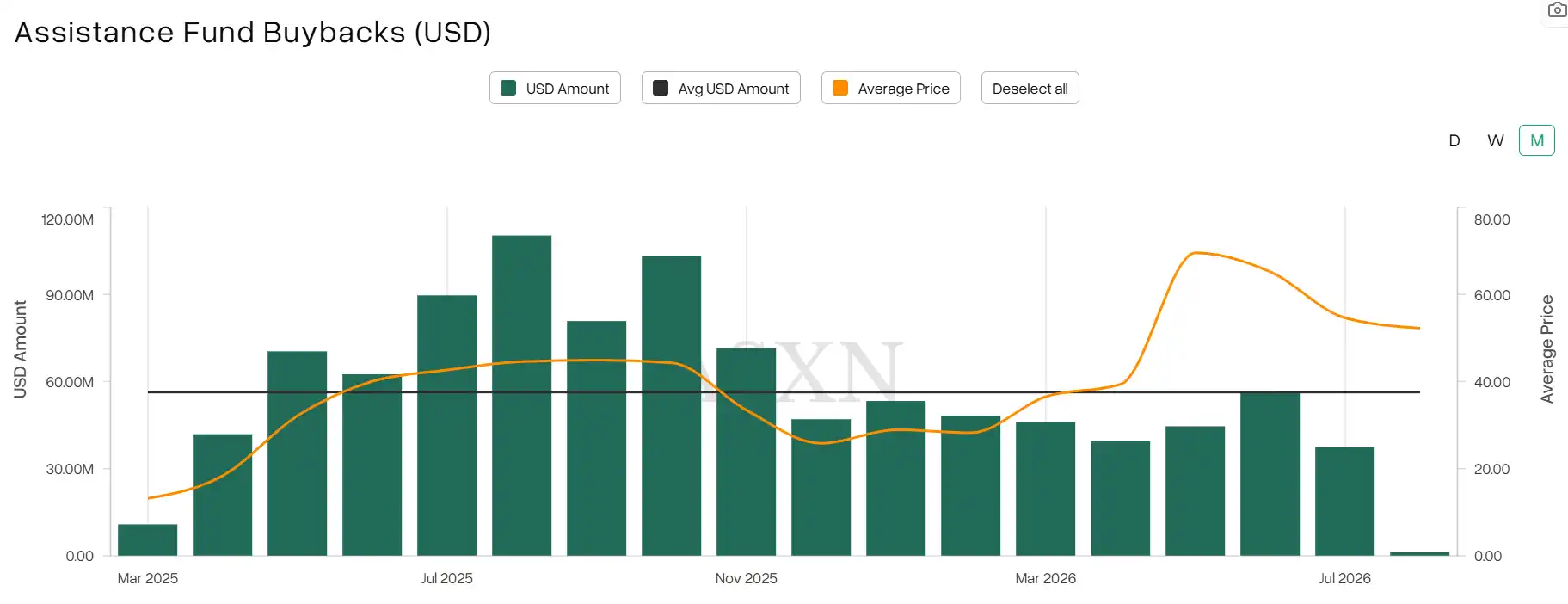
Since the team's actual distribution began in December 2025, the Assistance Fund has repurchased about 9.8 million tokens, spending approximately $364 million, averaging about 1.23 million tokens or $46 million per month. This rate is more than double the team's (including former members) selling speed.
In June 2026, Hyperliquid's protocol revenue remained high. However, after trading volume declined and revenue dropped in July, the repurchase pace also slowed down (but buying pressure was maintained.
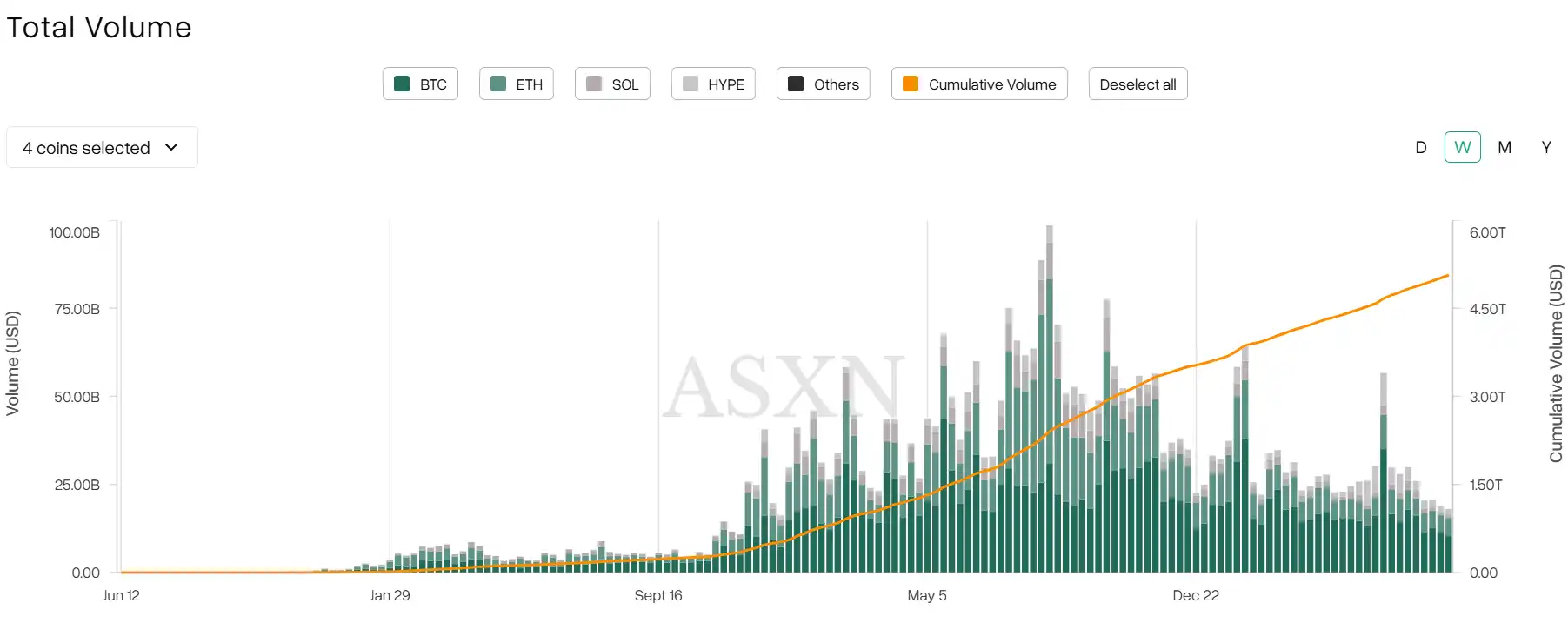
In other words, the team's limited sales were absorbed by the protocol's own revenue repurchases. However, when market sentiment cools and trading volume shrinks, the funds available for Hyperliquid's repurchase support also decrease, thereby putting pressure on the token's buy-side.
Whale Selling, HYPE Spot ETF Net Outflows
After reaching its all-time high of around $76 in mid-June 2026, HYPE has fallen by about 30%. Simply attributing this correction to "team unlocking and dumping" is inaccurate. Selling by some venture capital funds that unstaked tokens and sustained daily net outflows from HYPE spot ETFs are also important factors influencing the price decline.
In July 2026, funds like Multicoin Capital and a16z-related wallets, which previously bought HYPE in the secondary market, carried out large-scale unstaking, followed by records of funds flowing to exchanges.
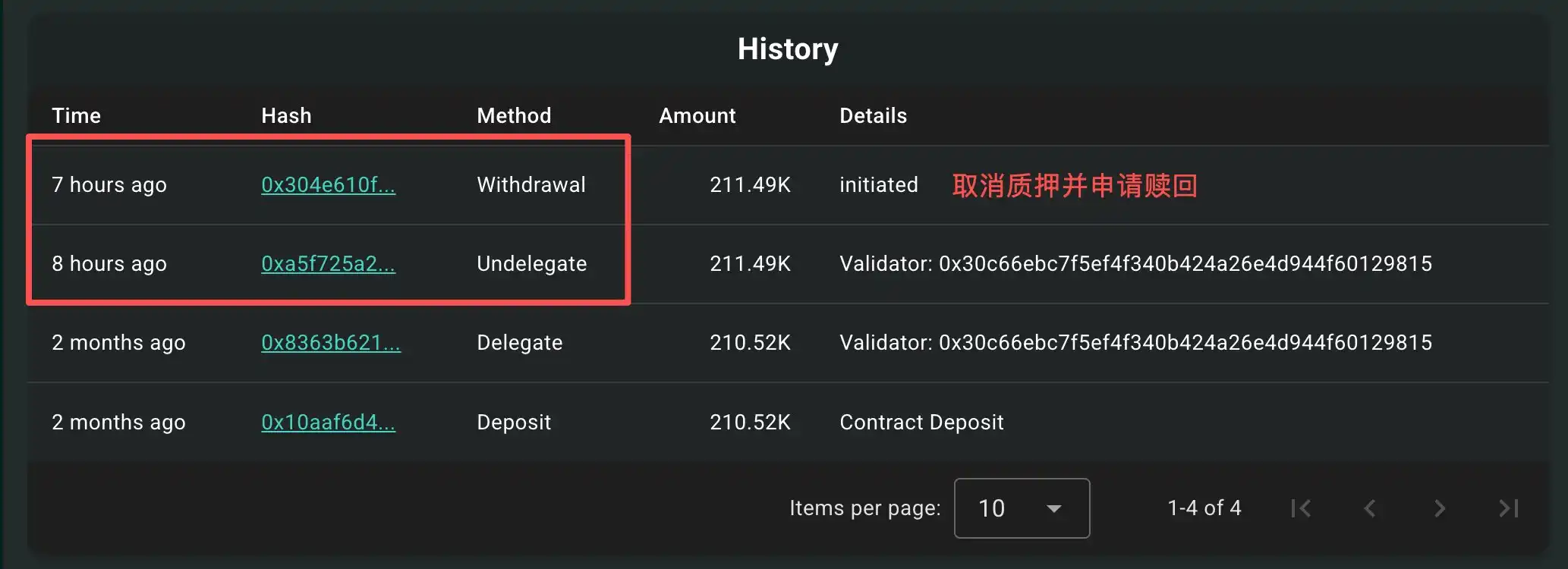
On July 22, on-chain monitoring by Yu Jin showed that a suspected Multicoin Capital-related address (starting with 0xaB3) sold 607,000 HYPE tokens, worth $37 million. These HYPE tokens were purchased via Galaxy Digital OTC five months prior at a price of $30, with 210,000 HYPE deposited for staking and 395,000 HYPE remaining in the wallet.
Multicoin co-founder Tushar Jain explicitly stated that the unstaking was not for selling, but because the wallet was heavily tracked, and there was a need to periodically rotate addresses for privacy protection.
On July 29, after Multicoin Capital transferred 395,000 HYPE ($37 million) into Coinbase, it continued with more HYPE unstaking redemptions. Additionally, 1.97 million HYPE ($108 million) successfully exited the staking after a 7-day unstaking period. Of the successfully redeemed HYPE, 86,000 tokens ($4.78 million) were transferred into Coinbase Prime.
a16z also engaged in similar activity. On July 1, Onchain Lens monitored that a16z had reduced its holdings by $10.19 million worth of HYPE over the past two days. On July 18, it sold another 421,800 tokens, worth about $25.3 million. By July 30, a16z-associated addresses began buying HYPE tokens again. They withdrew a cumulative 132,056 HYPE tokens, worth about $7.335 million, from various exchanges, at an average withdrawal price of $55.54.
The fund flows for HYPE spot ETFs are also not optimistic.
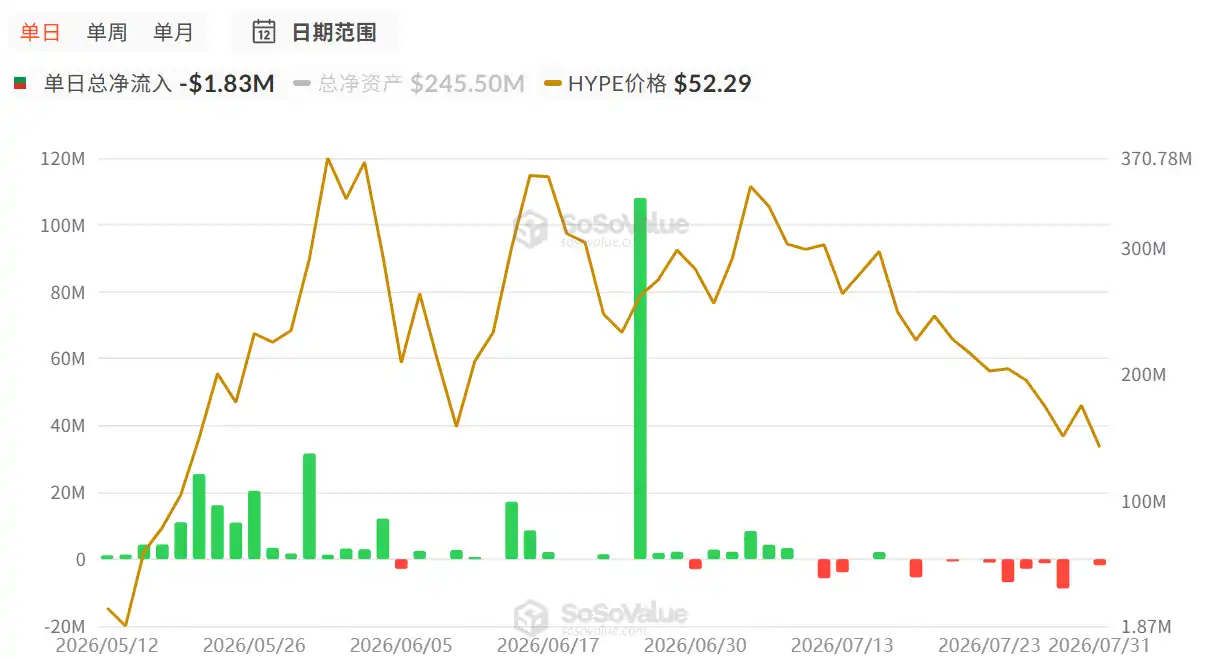
Since early July this year, HYPE spot ETFs have experienced sustained net outflows, averaging around $1 million per day for several weeks. This contrasts sharply with the large net inflows seen in May and June. On June 25 alone, HYPE spot ETFs saw a single-day net inflow of $108.09 million, setting a new historical record for net inflow.
To date, the cumulative total net inflow for its spot ETFs is $277.98 million.