New Fire Group Chief Economist Fu Peng's Latest Speech: Crypto Assets Deeply Bound to Liquidity, Global Assets 'Shrink Circle' with Widening Divergence

链捕手Pubblicato 2026-07-24Pubblicato ultima volta 2026-07-24

Introduzione

The chief economist of Sinovation Group delivered a speech at Wiki Finance EXPO Hong Kong 2026, analyzing the global market through the lens of liquidity. He argues that all major assets, including cryptocurrencies, are fundamentally tied to global liquidity, which is now shifting from an era of extreme post-2008 ease to sustained tightening under new Fed leadership. This marks the end of widespread "asset flooding" and ushers in a "shrinking circle" dynamic: capital is abandoning speculative, low-quality assets and concentrating in a few high-conviction, value-driven core holdings. The only dominant global investment theme is AI, viewed as a 20-25 year productivity cycle. However, a critical inflection point has been reached in Q2, where major tech firms' free cash flow has turned negative. The market narrative has pivoted from rewarding pure capital expenditure growth to demanding proof of future revenue generation and returns. While the AI super-cycle's long-term thesis remains intact, the initial hardware-driven phase (e.g., Nvidia, memory chips) is maturing. The speaker warns of significant volatility risk not from industry fundamentals, but from excessive financial leverage built up in these "certain" assets. He emphasizes that investment strategy must evolve from broad diversification to focused, cyclical allocation within the AI value chain (upstream hardware, midstream, downstream applications), avoiding blind long-term holds on single names. For crypto, this liqui...

Author: New Fire Technology

Mr. Fu Peng, Chief Economist of New Fire Group, was invited to participate in Wiki Finance EXPO Hong Kong 2026 and delivered a keynote speech. Starting from the global liquidity framework, Mr. Fu Peng shared his core views on the current global macro-assets and market trends, and provided a systematic judgment on the underlying logic of the crypto market.
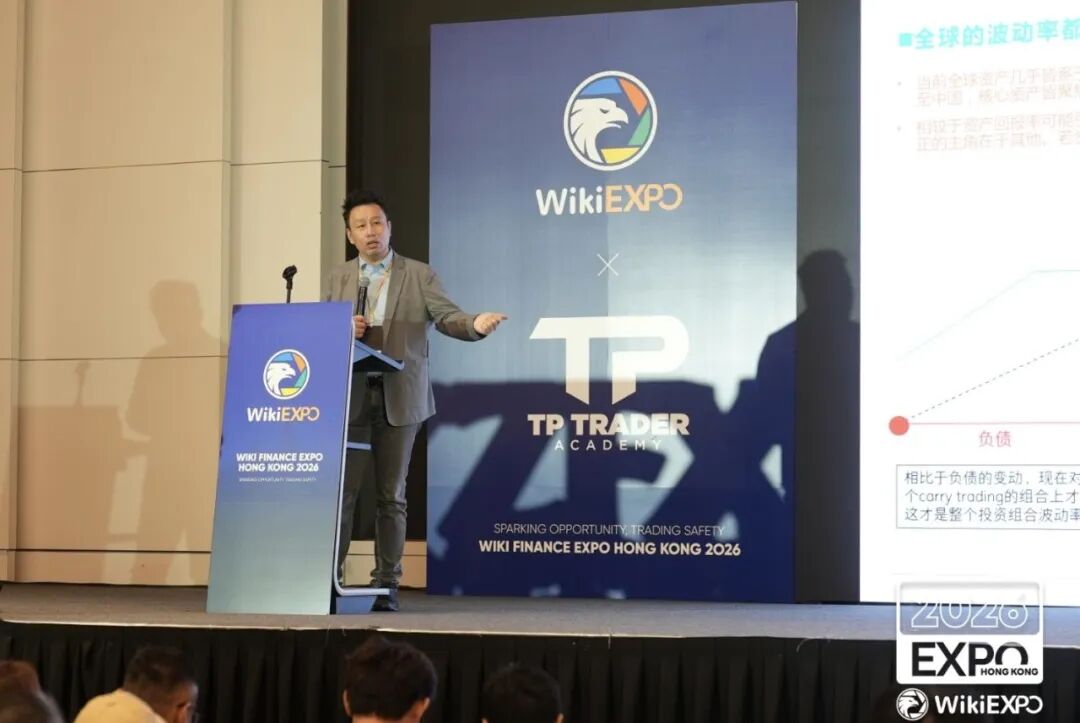
New Fire Group Chief Economist Fu Peng delivering a speech at Wiki Finance EXPO Hong Kong 2026
The following is the full text of the speech:

Today, I will share my views with you from several dimensions regarding the global markets. First, let's start with liquidity. Regardless of the asset class, up to today, including mainstream crypto assets, they are all essentially tied to core global liquidity.

After the 2008 financial crisis, global liquidity reached a temporary peak from 2008 to 2021. Liquidity should not be viewed solely through news about interest rate hikes or cuts; it comprises three dimensions, which you must remember.

Rate hikes and cuts only represent changes at the interest rate curve end and do not represent the complete liquidity environment. Observing liquidity can be broken down into three things: the volume of water in the pool, the water temperature, and the pressure distribution of funds within the pool. The underlying logic can be simply understood as P/Q×G. From a professional perspective, liquidity can be tracked from angles like the interest rate end, interest rate curve, Federal Reserve balance sheet, open market operations, etc. But there's an even simpler observation method: currently, in traditional trading, mainstream crypto assets like Bitcoin are widely regarded as leading indicators for liquidity strength.

01. From "Frenzied Speculation in Inferior Assets" to "Shrink Circle": The Two Faces of the Liquidity Cycle

After the 2020 pandemic, the world entered a window of extreme easing with low interest rates and central bank balance sheet expansion. During easing cycles, global financial assets exhibit typical characteristics: frenzied speculation in inferior assets.

For example, the retail short squeeze on GameStop in US stocks, and the surge of numerous worthless altcoins in the crypto market, are essentially results of excessive liquidity — when money is abundant, any asset can be pumped. However, when overall liquidity begins to contract, the market experiences a "shrink circle" scenario: capital actively distinguishes between good and bad assets, and inferior assets are abandoned. This process of squeezing out bubbles began in the second half of 2021.

From the second half of 2021 to 2022, typical cases include Bitcoin falling from over 70,000 to around 20,000 in the crypto market, and NVIDIA dropping about 64%-65% in 2022 in US stocks. This process is like squeezing water out of a sponge, continuously removing market bubbles.

This year, the real core inflection point occurred last November. 2021 was the peak of central bank balance sheet expansion, while the end of last year was a critical node of dual tightening involving both liquidity and quantitative tightening (QT). To explain simply: when the pool stops adding water, financial pressure doesn't materialize the instant QT begins; only when QT progresses to a certain extent does the market truly feel the funding pressure.

Last November/December, when Bitcoin was around 110,000, I made a bet with Li Lin: crypto assets were likely to halve within the next year. If this materializes, it would again confirm that the underlying logic of crypto assets is completely tied to global liquidity.

The core observation indicator last November: the Fed's Standing Repo Facility (SRF) open market operations. This indicator signifies that when QT reaches a critical point, structural funding pressure has already emerged in the market. It's important to understand that tightening credit and liquidity contraction doesn't mean everyone is short of funds; funding pressure is transmitted in layers: highly leveraged, weaker entities face funding stress first, while high-quality, leading entities still have ample funds. With this layered transmission of liquidity, capital markets experience the "shrink circle": funds first sell off peripheral, liquidity-sensitive weak assets, and continuously concentrate into the most core, highest-certainty assets.

Many retail crypto traders have a misconception: when there's no action in the crypto market, all funds flow into trading US stocks. This is a very retail-oriented mindset. Objectively speaking, during a liquidity tightening cycle, funds will first liquidate all high-volatility, highly speculative assets from their portfolios; cryptocurrencies, small-cap thematic stocks are among the first to be sold. When money is abundant and liquidity is loose, funds are willing to speculate on various junk assets; when money is scarce and liquidity tightens, funds will only focus on truly valuable core assets. This is the essence of the "shrink circle" scenario.

02. The Key Inflection Point for the AI Industry: Free Cash Flow Hits Zero, the Capex Narrative Becomes Ineffective

Since last November, global capital has continuously concentrated into the long-term productivity upgrade theme, namely the artificial intelligence (AI) sector. The logic of the AI sector can be analogized to large-scale fixed asset investment; it's easier to understand using the example of domestic infrastructure.

In 2001, the core market theme was large-scale domestic infrastructure construction, encapsulated by the old saying "to get rich, build roads first." At that time, Justin Yifu Lin and Andy Xie were discussing the driving effect of road and rail infrastructure on the economy. The 2002 Two Sessions set the direction for infrastructure development. In 2003, central and local fiscal funds were fully allocated, nationwide road and bridge projects commenced in batches, entering a long-term capital expenditure cycle. In 2004, the core holdings for institutional allocation were companies like Sany Heavy Industry and Conch Cement, upstream equipment and raw material suppliers in infrastructure.

This analogical logic fully applies to the current AI sector; the underlying industrial rules don't change just because it's named "AI." The first half of the AI wave was driven by the deployment of applications like ChatGPT, which ignited corporate willingness for capital expenditure. Starting in 2023, global tech companies concentrated on laying digital infrastructure, i.e., computing power and data center construction. Large-scale digital infrastructure drives the upstream hardware, storage, optical modules, HBM, and other industrial chain beneficiaries — Samsung Electronics, SK Hynix, TSMC correspond to the steel, cement, and construction machinery of the infrastructure era. However, Q2 of this year is a key inflection point for the entire industrial chain, coinciding with the dual variable of liquidity contraction.

After Google's earnings report yesterday, experienced investors could clearly sense that the market's dominant logic of the past two to three years has become ineffective. The market rules in 2023, 2024, and 2025 were simple: whenever internet giants increased AI infrastructure spending and expanded capital expenditures, the market gave high valuations. But after major companies' Q2 earnings reports this year, even with high capex growth, stock prices fell instead.

The core reason is that investors detected a key data point: free cash flow has dropped to zero for all leading companies heavily investing in AI infrastructure. The most critical indicator in Google's earnings report last night was free cash flow. Many investors still cling to the old logic, believing that as long as capex keeps expanding, stock prices will rise. That era is over.

The market pricing logic has completely shifted: previously, it was about the scale of capital investment; now, capital will interrogate whether infrastructure investments can generate sustained traffic and revenue to recoup costs. Free cash flow hitting zero is a landmark signal for the transition from Phase 1 to Phase 2 of the AI industry. If companies plan to continue increasing capital expenditures, they can only do so through external financing like equity issuance or bond issuance. External funds have costs, and investor scrutiny will become extremely stringent.

Here's a refined tracking metric: the ratio of Capital Expenditures (CapEx) to the growth rate of cloud business revenue. Currently, Google's ratio is about 1.9, meaning for every 1.9 units invested in infrastructure, only 1 unit of cloud revenue is generated. This is the core reason why the capital market is unwilling to continue giving high valuations.

With tightening overall funding conditions, global capital continuously contracts to a few high-certainty assets, coupled with the industrial cycle shift, the "shrink circle" scenario inevitably leads to severe risk volatility in the market.

Let me take NVIDIA as an example to outline the complete industrial cycle: 2022 was the starting point for confirming NVIDIA's industrial cycle, with its market cap falling from trillions to hundreds of billions that year. After the explosive deployment of ChatGPT, NVIDIA officially entered a value-growth phase. In 2023 and 2024, NVIDIA's logic was fully closed-loop: continuous earnings growth, global AI capex driving order expansion, market cap successively breaking through $1 trillion, $2 trillion, $3 trillion, with extremely low stock price volatility and almost no deep correction risks.

However, after returning from a research trip to Singapore in June 2024, I began warning major financial institutions about risks: NVIDIA's business operations, industry supply/demand, and industrial fundamentals were all sound; the risks all came from off-balance-sheet financial leverage.

There is a serious cognitive bias among new-generation post-00s investors: they believe stock price movements must perfectly match fundamentals. This view is completely wrong! Capital market pricing trades on market expectations, which significantly lead actual corporate fundamentals.

Here's an example: the current industry reality is that HBM capacity is tight and supply is insufficient — a correct fundamental fact. But this doesn't lead to the conclusion that stock prices will continue to rise indefinitely. This is a typical cognitive bias: earnings reports and capacity reflect current reality, while stock prices trade future expectations. Fundamental data severely lags behind market pricing. This is practical experience from over twenty years in the industry.

In July 2024, NVIDIA plunged 20% in just a few trading days, and Japanese stocks fell 10% on the same day. Many analysts at the time attributed the decline to the Bank of Japan's rate hike and the unwinding of yen carry trades — these were superficial explanations. The underlying truth was: global capital was concentrated into a few high-certainty assets, extreme certainty breeds extreme greed, directly manifesting as investors aggressively adding leverage.

Here's a simple trading analogy: we are playing cards, your card is a 6, mine is a 5, and you clearly know you have the better hand. An ordinary retail investor might go in with a heavy position, but a qualified trader would go all-in with maximum leverage. The core conclusion must be remembered: certainty breeds greed; everything has two sides; the corresponding action for greed is adding leverage. With a consensus that NVIDIA has ample long-term orders, traders will continuously add leverage to amplify returns — this is traders' instinct. When leverage accumulates to a critical point, it inevitably triggers violent volatility and rapid declines.

The current market is replicating the same pattern: some memory chip stocks experience frequent sharp plunges despite no industry headwinds, stable business operations, full order books, and steady earnings growth. Many young traders in South Korea made significant profits one day, only to suffer large losses the next. The root cause isn't Samsung, SK Hynix, or HBM industry supply/demand; the core issue is excessive accumulated leverage within the market.

The underlying logic is identical to NVIDIA's flash crash in July 2024: high-certainty assets breed leverage bubbles; when leverage hits a critical threshold, a crash is inevitable. There is no such thing as a perpetual leveraged rally. Here's a simple risk assessment standard: when recent graduates with no practical experience pour all their funds and leverage to go all-in on Samsung and SK Hynix, it signals approaching risk. When a previously niche, professional sector is flooded with speculative retail investors, a bubble burst is only a matter of time. The market has been in a capital contraction cycle for several years; everyone recognizes the few core, certain assets. But the risk isn't in the industry fundamentals; it lies hidden at the liquidity and leverage levels. This must be emphasized.

The market has now reached the core inflection point of AI's first phase. The narrative relying solely on capital expenditure expansion has run its course; the market will experience significant volatility and valuation correction for digestion. My overall assessment for US stocks this year: if the index can maintain a sideways consolidation, that's already an optimistic expectation. Some might argue: after the March decline, US stocks rebounded in May and June. But one must distinguish: the May-June rally was an extreme structural move, driven by only a handful of stocks lifting the index, while the vast majority of stocks continued to decline steadily. The structure of the A-share market over the past year is identical: 55% of stocks are trading below their levels when the Shanghai Composite was at 3000 points, with the index solely supported by a few AI sector leaders.

To summarize the current market environment: liquidity tightening, extreme market divergence, and the AI industrial cycle reaching a key inflection point. I reiterate: the long-term development logic of the AI industry hasn't changed; productivity upgrade is the definite theme. But one cannot blindly hold stocks long-term; one must adopt a complete industrial cycle perspective for phased allocation.

I have built a complete five-layer analytical framework: Industrial Layer, Economic Layer, Inflation Layer, Liquidity Layer, Market Layer. Currently, there's no need to expend great effort dissecting the Economic Layer. The Industrial, Liquidity, and Market Layers are the core of analysis; the weight of macroeconomic analysis has significantly decreased. Some might ask if deep analysis of the US economy is still needed. The answer is absolutely not. The reason: US companies are engaged in massive, continuous capital expenditure expansion, and the household sector completed deleveraging back in 2008. In other words, there's no need to scrutinize high-frequency economic data; the core characteristic of the US economy is just two words: resilience.

03. Global Market Structure: The Only Theme is AI

At the market level, the only global theme is artificial intelligence. Currently, global capital has only this core investment logic. Looking at globally allocable assets, the future core markets are only Japan, South Korea, Taiwan (China), Mainland China, and the United States. Other regions have extremely low allocation value. In Europe, only ASML warrants attention; other assets have no allocation significance.

Consider two questions: Is the current trend of the South Korean stock market related to its domestic real economy? Completely unrelated. Look at the Japanese stock market: is it linked to Japan's domestic economy? Also unrelated. Examining the core assets of the Japanese market reveals they are all upstream equipment manufacturers in the AI industrial chain. Market focus is mostly on Samsung and SK Hynix, but the core production equipment purchased by these two companies comes from Japanese firms. The entire industrial chain's upstream and downstream are fully connected. In Taiwan (China), the only core asset is TSMC; there are no other core industrial companies with allocation value.

The entire AI sector is essentially productivity-driven industrial investment, following fixed cyclical patterns. Let me state the core conclusion clearly: the moment major tech giants' free cash flow hit zero in Q2 is the major market turning point. Before and after this inflection point, the entire market's asset pricing logic completely reverses. This must be remembered.

The AI industrial chain is divided into upstream, midstream, and downstream, each with its own independent industrial lifecycle, featuring clear sector rotation and allocation windows. Do not treat AI as a belief for blind long-term holding; simply speculating on the AI concept will inevitably lead to pitfalls. Many ask me if I'm not bullish on AI; this question itself contains a logical flaw. Over the past decade, the market has reached a consensus: artificial intelligence is the core theme of the next generation of productivity — there is no controversy about this. Being bullish on the sector does not mean blindly holding any single asset at any time. NVIDIA, as an upstream hardware core asset, has completed its high-growth cycle; starting in 2025, it enters a mature blue-chip phase, hence its significant narrowing of gains from last year to this year. It won't be long before Samsung and SK Hynix also enter maturity; the overall growth rate of the upstream hardware sector will slow, and growth potential will gradually shift downstream.

Prediction of the complete AI industry cycle rhythm: 2022 dominated by upstream hardware; 2026 involves software layer valuation digestion and reshaping; around 2030, terminal application layer valuation adjustment and repricing. The complete AI industry super-cycle lasts about 20 to 25 years; 10 years have passed so far. The first decade's theme was upstream hardware infrastructure; the next decade's theme will be terminal applications.

However, there is currently a cyclical gap; the next 10 to 18 months is an industrial transition window. During this window period, do not go all-in. Strictly follow industrial cycle patterns for phased allocation to avoid significant volatility risks. Let's distinguish a key concept: from a programmer's perspective, AI coding tools, development aids, etc., belong to the industrial supporting tools layer, not the terminal application layer. Their valuation logic differs vastly.

04. Karen Walsh and the Liquidity Paradigm Shift: The Central Bank No Longer Backstops, Crypto Assets Enter Maturation

Finally, I return to the liquidity dimension, a core variable highly relevant to crypto assets. Why is the new Fed Chair, Karen Walsh, a key signal? His appointment declares the complete rewriting of the central bank's core policy framework established by Ben Bernanke after the 2008 financial crisis.

I wrote an analysis note in January: this personnel change signifies a return to the pre-2008 policy path. Briefly summarizing the policy background: the 2008 financial crisis exposed massive systemic financial risks. Policymakers learned from the 1929 Great Depression: completely放任自由市场 (letting the free market run its course) during a crisis means the market cannot stabilize itself. Therefore, post-2008, Keynesian stimulus policies were implemented on a massive global scale.

All Fed Chairs from Bernanke to Yellen followed the same core idea: when a financial crisis erupts, the central bank must intervene to support and rescue the market. But any policy has two sides, just like leverage in investing. Leverage can quickly放大收益 (amplify returns) but can also directly lead to账户爆仓归零 (account liquidation to zero). Central bank rescue can quickly calm market panic and avoid a repeat of the Great Depression, but long-term unconditional market backstopping by the central bank breeds market speculation and催生大规模资产泡沫 (gives rise to large-scale asset bubbles).

The market has a professional term called the "Fed Put": whenever the market falls, capital dares to buy indiscriminately, as all traders bet the central bank will intervene. When the market forms a unified expectation: profits belong to investors, losses are backstopped by the central bank, all financial assets become severely overvalued.

The core message of all Karen Walsh's public speeches can be summarized in one sentence: the central bank only performs its法定分内职责 (mandated duties). The central bank has two法定核心目标 (core statutory goals): stable employment and inflation control; it will not routinely prop up the stock market. With ongoing technological progress and steady productivity提升 (improvement), the central bank has the conditions to exit the long-term backstopping model.

This can be analogized to家庭教育 (family education): when a child enters high school and gains independent living ability, parents cannot handle everything, fostering dependency. After Karen took office, many market participants superficially interpreted it as expectations for rate cuts or QT; the core focus is actually the QT operation, with less correlation to short-term rate movements. The core issue is how to complete QT orderly, returning central bank functions to their standard pre-2008 positioning.

This signifies the definitive end of the largest global liquidity easing cycle in human history from 2008 until Karen's appointment. Therefore, do not entertain illusions: the next 5 to 10 years will not replicate the 2008-2026 scenario of universal大水漫灌 (flood-like easing) and broad-based asset appreciation. Capital will flow back to truly valuable core assets with long-term value. This is a key turning point at the liquidity level that will fundamentally rewrite everyone's investment strategy. Investment logic shifts from过去全面分散布局、各类资产同步上涨 (past broad diversification and synchronous asset class gains) to focusing on a few high-quality core assets.

Similar changes will occur in the crypto market. Many traders have already observed: Bitcoin and Ethereum market caps are stabilizing, volatility is declining, market liquidity is stabilizing, and participation is becoming institutionalized. These are typical characteristics of core assets that survive post-bubble cleansing. The narrative logic of speculating on worthless altcoins has彻底失效 (completely lost effectiveness).

Liquidity is the topmost core influencing factor for all financial assets; this year everyone must thoroughly understand this analytical framework. Analyzing industries, corporate fundamentals, and various assets becomes much clearer by following this liquidity framework first. Time is limited today, so I cannot dissect each of the five analytical layers in detail.

I prefer to discuss underlying logic and analytical methodology. Once the foundational thinking is sorted out, viewing short-term market micro-volatility won't lead to excessive confusion. My sharing ends here. I hope it provides you with insights. Thank you all.


Crypto di tendenza

Domande pertinenti

QWhat are the two distinct phases of the liquidity cycle, and how does market behavior differ between them according to Fu Peng's speech?

AFu Peng describes two phases: the 'Crazy Speculation on Inferior Assets' phase during periods of ultra-loose liquidity (like post-2020), where abundant capital drives up prices of even low-quality assets. This is followed by the 'Shrinking Circle' phase when liquidity contracts. In this phase, capital actively differentiates asset quality, abandoning speculative and peripheral assets and concentrating only on core, high-quality assets with the highest certainty.

QWhat is the key turning point and critical signal for the AI industry's investment logic shift, as identified in the speech?

AThe key turning point occurred in Q2 2026 (referred to as 'this year' in the speech). The critical signal was major tech companies like Google reporting zero or negative free cash flow. This marks the end of the 'capital expenditure expansion' narrative. The market's valuation logic switched from rewarding spending to demanding proof that investments generate sustainable revenue and traffic, indicating a move from the infrastructure-building phase to the application/commercialization phase.

QWhat is the primary risk for high-certainty assets like Nvidia in the current 'shrinking circle' market, according to the economist's analysis?

AThe primary risk is not related to corporate fundamentals or industry supply/demand, but to off-balance-sheet financial leverage piled up by investors. Extreme certainty in these assets breeds greed, which manifests as investors adding excessive leverage to amplify returns. When this leverage reaches a critical point, it inevitably triggers sharp price corrections and volatility, as seen with Nvidia's 20% drop in July 2024.

QWhat major change in central bank policy framework does the appointment of the new Fed Chair, Karen Walsh, signify, and what is its implication for future markets?

AKaren Walsh's appointment signifies a fundamental shift away from the post-2008 crisis framework established by Ben Bernanke, where central banks actively intervened to backstop markets ('the Fed put'). Walsh's stance is that the central bank should only focus on its dual mandate of stable employment and inflation control, not routinely propping up asset prices. This implies the end of the era of unlimited liquidity support. Consequently, the future market will not see the broad-based, everything-rises bull market of 2008-2026, and investment strategy must focus on a narrower set of truly valuable core assets.

QHow does Fu Peng characterize the current relationship between crypto assets (like Bitcoin) and global liquidity, and what trend is he observing in the crypto market?

AHe states that mainstream crypto assets are fundamentally tied to global core liquidity. Their price action serves as a leading indicator for liquidity conditions. He observes that the crypto market is maturing: Bitcoin and Ethereum's market capitalization is stabilizing, volatility is decreasing, market liquidity is becoming more stable, and participation is becoming more institutionalized. The narrative of speculating on low-quality 'air' tokens has completely失效 (become invalid), mirroring the broader market's 'shrinking circle' phenomenon where focus shifts to core assets.

Letture associate

Shing-Tung Yau Invites Wang Hong and Deng Yu to Teach Back Home, After 20 Years of Rivalry, Tsinghua and Peking University Realize the Opponent Isn't Each Other

On July 23, the Fields Medal, the highest global mathematics award, was awarded to two Chinese mathematicians, Wang Hong and Deng Yu, both undergraduate classmates from Peking University's class of 2007. This marks the first time mathematicians who completed their undergraduate studies in mainland China have won the prize, with two laureates in the same year. Following the announcement, renowned mathematician Shing-Tung Yau publicly invited Wang and Deng to return to China to teach at Tsinghua University's Qiuzhen College. This invitation is the latest episode in a decades-long rivalry between Tsinghua and Peking University (PKU) for supremacy in Chinese mathematics. The competition traces back to a 1952 national university restructuring that transferred Tsinghua's entire mathematics department to PKU, leaving Tsinghua without a math program for nearly 30 years until its reinstatement in 1979. The rivalry intensified in 2005 with a public falling-out between Yau and his former student, PKU professor Gang Tian. Subsequently, Yau shifted his efforts to building Tsinghua's mathematics program from the ground up. He established the Yau Mathematical Sciences Center in 2009 and founded the Qiuzhen College in 2021, implementing an elite, accelerated "Math Leadership Program" to recruit prodigies as young as middle school students. The competition spans multiple fronts: recruiting top junior high and high school students from math olympiads, luring renowned scholars from overseas, and securing research funding. A new and fierce battleground has emerged in AI and mathematical reasoning. Both universities are heavily investing in AI research to enhance large language models' mathematical capabilities, with Tsinghua collaborating on projects like the STARE algorithm and PKU developing specialized models for geometry. Despite the intense competition, this rivalry has arguably elevated China's overall standing in mathematics. Chinese mathematicians now frequently publish in top journals and win major international awards. At the recent 17th Yau College Students Mathematics Contests, PKU students swept the top individual awards. Yau, presenting the awards, emphasized the need for inter-university collaboration to advance Chinese mathematics. The landscape is now shifting with the rise of AI in mathematical research. As AI begins to generate proofs at an unprecedented rate, the traditional metrics of competition between institutions may become less relevant. The future for mathematicians, as noted by Terence Tao, is navigating an era of "proof surplus" driven by AI, presenting a new common challenge that transcends university rivalries.

marsbit6 min fa

Shing-Tung Yau Invites Wang Hong and Deng Yu to Teach Back Home, After 20 Years of Rivalry, Tsinghua and Peking University Realize the Opponent Isn't Each Other

marsbit6 min fa

UBS Interpretation: Public Funds' Tech Holdings Hit Record High, Electronics Becomes Core Increase in Q2

According to UBS's latest China equity strategy report, in Q2 2026, mutual funds' allocations to A-share "hard tech" reached a historical high. The electronics and telecommunications sectors, along with the STAR and ChiNext boards, were the primary focus of increased holdings. The standout figure is the mutual fund allocation to the major technology sector (encompassing electronics, telecom, computers, and defense), which rose to 57.3%, with an overweight position of 18.5%—both setting new records. UBS calculations show the electronics sector alone saw a 20.2 percentage point increase in allocation for the quarter, making it the strongest area of buying. Telecom and machinery allocations also rose. This trend was reinforced by foreign capital inflows. Estimates from major securities firms indicate northbound capital turned to a net inflow of over 2.1 trillion yuan in Q2, a sharp reversal from Q1 outflows. According to UBS's sector classification, industrials and IT were the main destinations for these inflows. The shift wasn't broad-based but concentrated in specific tech areas. Concurrently, holdings in traditional sectors like consumer staples and certain cyclicals declined. The allocation to the STAR and ChiNext boards also hit record highs, indicating a broader exposure to high-growth tech assets beyond just leading industries. Furthermore, the expansion of actively managed technology-themed funds—now constituting 27.5% of total active mutual fund AUM—suggests this is a structural shift in fund focus, not merely short-term portfolio rotation. While this concentration of institutional capital can provide valuation support and liquidity for the hard tech sector, the report cautions that historically high positioning also increases susceptibility to short-term volatility, profit-taking, and external market shocks. The sustainability of the trend will depend on the concurrent realization of upward earnings revisions, stabilization of leverage, and continued foreign capital inflows, all against a backdrop of supportive policies for AI, semiconductors, and advanced manufacturing.

marsbit14 min fa

UBS Interpretation: Public Funds' Tech Holdings Hit Record High, Electronics Becomes Core Increase in Q2

marsbit14 min fa

Trading

Spot

Articoli Popolari

Cosa è $S$

Comprendere SPERO: Una Panoramica Completa Introduzione a SPERO Mentre il panorama dell'innovazione continua a evolversi, l'emergere delle tecnologie web3 e dei progetti di criptovaluta gioca un ruolo fondamentale nel plasmare il futuro digitale. Un progetto che ha attirato l'attenzione in questo campo dinamico è SPERO, denotato come SPERO,$$s$. Questo articolo mira a raccogliere e presentare informazioni dettagliate su SPERO, per aiutare gli appassionati e gli investitori a comprendere le sue basi, obiettivi e innovazioni nei domini web3 e crypto. Che cos'è SPERO,$$s$? SPERO,$$s$ è un progetto unico all'interno dello spazio crypto che cerca di sfruttare i principi della decentralizzazione e della tecnologia blockchain per creare un ecosistema che promuove l'impegno, l'utilità e l'inclusione finanziaria. Il progetto è progettato per facilitare interazioni peer-to-peer in modi nuovi, fornendo agli utenti soluzioni e servizi finanziari innovativi. Al suo interno, SPERO,$$s$ mira a responsabilizzare gli individui fornendo strumenti e piattaforme che migliorano l'esperienza dell'utente nello spazio delle criptovalute. Questo include la possibilità di metodi di transazione più flessibili, la promozione di iniziative guidate dalla comunità e la creazione di percorsi per opportunità finanziarie attraverso applicazioni decentralizzate (dApps). La visione sottostante di SPERO,$$s$ ruota attorno all'inclusività, cercando di colmare le lacune all'interno della finanza tradizionale mentre sfrutta i vantaggi della tecnologia blockchain. Chi è il Creatore di SPERO,$$s$? L'identità del creatore di SPERO,$$s$ rimane piuttosto oscura, poiché ci sono risorse pubblicamente disponibili limitate che forniscono informazioni dettagliate sul suo fondatore o fondatori. Questa mancanza di trasparenza può derivare dall'impegno del progetto per la decentralizzazione—un ethos che molti progetti web3 condividono, dando priorità ai contributi collettivi rispetto al riconoscimento individuale. Centrando le discussioni attorno alla comunità e ai suoi obiettivi collettivi, SPERO,$$s$ incarna l'essenza dell'empowerment senza mettere in evidenza individui specifici. Pertanto, comprendere l'etica e la missione di SPERO rimane più importante che identificare un creatore singolo. Chi sono gli Investitori di SPERO,$$s$? SPERO,$$s$ è supportato da una varietà di investitori che vanno dai capitalisti di rischio agli investitori angelici dedicati a promuovere l'innovazione nel settore crypto. Il focus di questi investitori generalmente si allinea con la missione di SPERO—dando priorità a progetti che promettono avanzamenti tecnologici sociali, inclusività finanziaria e governance decentralizzata. Queste fondazioni di investitori sono tipicamente interessate a progetti che non solo offrono prodotti innovativi, ma contribuiscono anche positivamente alla comunità blockchain e ai suoi ecosistemi. Il supporto di questi investitori rafforza SPERO,$$s$ come un concorrente degno di nota nel dominio in rapida evoluzione dei progetti crypto. Come Funziona SPERO,$$s$? SPERO,$$s$ impiega un framework multifunzionale che lo distingue dai progetti di criptovaluta convenzionali. Ecco alcune delle caratteristiche chiave che sottolineano la sua unicità e innovazione: Governance Decentralizzata: SPERO,$$s$ integra modelli di governance decentralizzati, responsabilizzando gli utenti a partecipare attivamente ai processi decisionali riguardanti il futuro del progetto. Questo approccio favorisce un senso di proprietà e responsabilità tra i membri della comunità. Utilità del Token: SPERO,$$s$ utilizza il proprio token di criptovaluta, progettato per servire varie funzioni all'interno dell'ecosistema. Questi token abilitano transazioni, premi e la facilitazione dei servizi offerti sulla piattaforma, migliorando l'impegno e l'utilità complessivi. Architettura Stratificata: L'architettura tecnica di SPERO,$$s$ supporta la modularità e la scalabilità, consentendo un'integrazione fluida di funzionalità e applicazioni aggiuntive man mano che il progetto evolve. Questa adattabilità è fondamentale per mantenere la rilevanza nel panorama crypto in continua evoluzione. Coinvolgimento della Comunità: Il progetto enfatizza iniziative guidate dalla comunità, impiegando meccanismi che incentivano la collaborazione e il feedback. Nutrendo una comunità forte, SPERO,$$s$ può affrontare meglio le esigenze degli utenti e adattarsi alle tendenze di mercato. Focus sull'Inclusione: Offrendo basse commissioni di transazione e interfacce user-friendly, SPERO,$$s$ mira ad attrarre una base utenti diversificata, inclusi individui che potrebbero non aver precedentemente interagito nello spazio crypto. Questo impegno per l'inclusione si allinea con la sua missione generale di empowerment attraverso l'accessibilità. Cronologia di SPERO,$$s$ Comprendere la storia di un progetto fornisce preziose intuizioni sulla sua traiettoria di sviluppo e sui traguardi. Di seguito è riportata una cronologia suggerita che mappa eventi significativi nell'evoluzione di SPERO,$$s$: Fase di Concettualizzazione e Ideazione: Le idee iniziali che formano la base di SPERO,$$s$ sono state concepite, allineandosi strettamente con i principi di decentralizzazione e focus sulla comunità all'interno dell'industria blockchain. Lancio del Whitepaper del Progetto: Dopo la fase concettuale, è stato rilasciato un whitepaper completo che dettaglia la visione, gli obiettivi e l'infrastruttura tecnologica di SPERO,$$s$ per suscitare interesse e feedback dalla comunità. Costruzione della Comunità e Prime Interazioni: Sono stati effettuati sforzi attivi di outreach per costruire una comunità di early adopters e potenziali investitori, facilitando discussioni attorno agli obiettivi del progetto e ottenendo supporto. Evento di Generazione del Token: SPERO,$$s$ ha condotto un evento di generazione del token (TGE) per distribuire i propri token nativi ai primi sostenitori e stabilire una liquidità iniziale all'interno dell'ecosistema. Lancio della Prima dApp: La prima applicazione decentralizzata (dApp) associata a SPERO,$$s$ è stata attivata, consentendo agli utenti di interagire con le funzionalità principali della piattaforma. Sviluppo Continuo e Partnership: Aggiornamenti e miglioramenti continui alle offerte del progetto, inclusi partnership strategiche con altri attori nello spazio blockchain, hanno plasmato SPERO,$$s$ in un concorrente competitivo e in evoluzione nel mercato crypto. Conclusione SPERO,$$s$ rappresenta una testimonianza del potenziale del web3 e delle criptovalute di rivoluzionare i sistemi finanziari e responsabilizzare gli individui. Con un impegno per la governance decentralizzata, il coinvolgimento della comunità e funzionalità progettate in modo innovativo, apre la strada verso un panorama finanziario più inclusivo. Come per qualsiasi investimento nello spazio crypto in rapida evoluzione, si incoraggiano potenziali investitori e utenti a ricercare approfonditamente e a impegnarsi in modo riflessivo con gli sviluppi in corso all'interno di SPERO,$$s$. Il progetto mostra lo spirito innovativo dell'industria crypto, invitando a ulteriori esplorazioni delle sue innumerevoli possibilità. Mentre il percorso di SPERO,$$s$ è ancora in fase di sviluppo, i suoi principi fondamentali potrebbero effettivamente influenzare il futuro di come interagiamo con la tecnologia, la finanza e tra di noi in ecosistemi digitali interconnessi.

132 Totale visualizzazioniPubblicato il 2024.12.17Aggiornato il 2024.12.17

Cosa è $S$

Cosa è AGENT S

Agent S: Il Futuro dell'Interazione Autonoma in Web3 Introduzione Nel panorama in continua evoluzione di Web3 e criptovalute, le innovazioni stanno costantemente ridefinendo il modo in cui gli individui interagiscono con le piattaforme digitali. Uno di questi progetti pionieristici, Agent S, promette di rivoluzionare l'interazione uomo-computer attraverso il suo framework agentico aperto. Aprendo la strada a interazioni autonome, Agent S mira a semplificare compiti complessi, offrendo applicazioni trasformative nell'intelligenza artificiale (AI). Questa esplorazione dettagliata approfondirà le complessità del progetto, le sue caratteristiche uniche e le implicazioni per il dominio delle criptovalute. Cos'è Agent S? Agent S si presenta come un innovativo framework agentico aperto, progettato specificamente per affrontare tre sfide fondamentali nell'automazione dei compiti informatici: Acquisizione di Conoscenze Specifiche del Dominio: Il framework apprende in modo intelligente da varie fonti di conoscenza esterne ed esperienze interne. Questo approccio duale gli consente di costruire un ricco repository di conoscenze specifiche del dominio, migliorando le sue prestazioni nell'esecuzione dei compiti. Pianificazione su Lungo Orizzonte di Compiti: Agent S impiega una pianificazione gerarchica potenziata dall'esperienza, un approccio strategico che facilita la suddivisione e l'esecuzione efficiente di compiti complessi. Questa caratteristica migliora significativamente la sua capacità di gestire più sottocompiti in modo efficiente ed efficace. Gestione di Interfacce Dinamiche e Non Uniformi: Il progetto introduce l'Interfaccia Agente-Computer (ACI), una soluzione innovativa che migliora l'interazione tra agenti e utenti. Utilizzando Modelli Linguistici Multimodali di Grandi Dimensioni (MLLM), Agent S può navigare e manipolare senza sforzo diverse interfacce grafiche utente. Attraverso queste caratteristiche pionieristiche, Agent S fornisce un framework robusto che affronta le complessità coinvolte nell'automazione dell'interazione umana con le macchine, preparando il terreno per innumerevoli applicazioni nell'AI e oltre. Chi è il Creatore di Agent S? Sebbene il concetto di Agent S sia fondamentalmente innovativo, informazioni specifiche sul suo creatore rimangono elusive. Il creatore è attualmente sconosciuto, il che evidenzia sia la fase embrionale del progetto sia la scelta strategica di mantenere i membri fondatori sotto anonimato. Indipendentemente dall'anonimato, l'attenzione rimane sulle capacità e sul potenziale del framework. Chi sono gli Investitori di Agent S? Poiché Agent S è relativamente nuovo nell'ecosistema crittografico, informazioni dettagliate riguardanti i suoi investitori e sostenitori finanziari non sono documentate esplicitamente. La mancanza di approfondimenti pubblicamente disponibili sulle fondazioni di investimento o sulle organizzazioni che supportano il progetto solleva interrogativi sulla sua struttura di finanziamento e sulla roadmap di sviluppo. Comprendere il supporto è cruciale per valutare la sostenibilità del progetto e il suo potenziale impatto sul mercato. Come Funziona Agent S? Al centro di Agent S si trova una tecnologia all'avanguardia che gli consente di funzionare efficacemente in contesti diversi. Il suo modello operativo è costruito attorno a diverse caratteristiche chiave: Interazione Uomo-Computer Simile a Quella Umana: Il framework offre una pianificazione AI avanzata, cercando di rendere le interazioni con i computer più intuitive. Mimando il comportamento umano nell'esecuzione dei compiti, promette di elevare le esperienze degli utenti. Memoria Narrativa: Utilizzata per sfruttare esperienze di alto livello, Agent S utilizza la memoria narrativa per tenere traccia delle storie dei compiti, migliorando così i suoi processi decisionali. Memoria Episodica: Questa caratteristica fornisce agli utenti una guida passo-passo, consentendo al framework di offrire supporto contestuale mentre i compiti si sviluppano. Supporto per OpenACI: Con la capacità di funzionare localmente, Agent S consente agli utenti di mantenere il controllo sulle proprie interazioni e flussi di lavoro, allineandosi con l'etica decentralizzata di Web3. Facile Integrazione con API Esterne: La sua versatilità e compatibilità con varie piattaforme AI garantiscono che Agent S possa adattarsi senza problemi agli ecosistemi tecnologici esistenti, rendendolo una scelta attraente per sviluppatori e organizzazioni. Queste funzionalità contribuiscono collettivamente alla posizione unica di Agent S all'interno dello spazio crittografico, poiché automatizza compiti complessi e multi-fase con un intervento umano minimo. Man mano che il progetto evolve, le sue potenziali applicazioni in Web3 potrebbero ridefinire il modo in cui si svolgono le interazioni digitali. Cronologia di Agent S Lo sviluppo e le tappe di Agent S possono essere riassunti in una cronologia che evidenzia i suoi eventi significativi: 27 Settembre 2024: Il concetto di Agent S è stato lanciato in un documento di ricerca completo intitolato “Un Framework Agentico Aperto che Usa i Computer Come un Umano”, mostrando le basi per il progetto. 10 Ottobre 2024: Il documento di ricerca è stato reso pubblicamente disponibile su arXiv, offrendo un'esplorazione approfondita del framework e della sua valutazione delle prestazioni basata sul benchmark OSWorld. 12 Ottobre 2024: È stata rilasciata una presentazione video, fornendo un'idea visiva delle capacità e delle caratteristiche di Agent S, coinvolgendo ulteriormente potenziali utenti e investitori. Questi indicatori nella cronologia non solo illustrano i progressi di Agent S, ma indicano anche il suo impegno per la trasparenza e il coinvolgimento della comunità. Punti Chiave su Agent S Man mano che il framework Agent S continua a evolversi, diversi attributi chiave si distinguono, sottolineando la sua natura innovativa e il potenziale: Framework Innovativo: Progettato per fornire un uso intuitivo dei computer simile all'interazione umana, Agent S porta un approccio nuovo all'automazione dei compiti. Interazione Autonoma: La capacità di interagire autonomamente con i computer attraverso GUI segna un passo avanti verso soluzioni informatiche più intelligenti ed efficienti. Automazione di Compiti Complessi: Con la sua metodologia robusta, può automatizzare compiti complessi e multi-fase, rendendo i processi più veloci e meno soggetti a errori. Miglioramento Continuo: I meccanismi di apprendimento consentono ad Agent S di migliorare dalle esperienze passate, migliorando continuamente le sue prestazioni e la sua efficacia. Versatilità: La sua adattabilità attraverso diversi ambienti operativi come OSWorld e WindowsAgentArena garantisce che possa servire un'ampia gamma di applicazioni. Man mano che Agent S si posiziona nel panorama di Web3 e delle criptovalute, il suo potenziale per migliorare le capacità di interazione e automatizzare i processi segna un significativo avanzamento nelle tecnologie AI. Attraverso il suo framework innovativo, Agent S esemplifica il futuro delle interazioni digitali, promettendo un'esperienza più fluida ed efficiente per gli utenti in vari settori. Conclusione Agent S rappresenta un audace passo avanti nell'unione tra AI e Web3, con la capacità di ridefinire il modo in cui interagiamo con la tecnologia. Sebbene sia ancora nelle sue fasi iniziali, le possibilità per la sua applicazione sono vaste e coinvolgenti. Attraverso il suo framework completo che affronta sfide critiche, Agent S mira a portare le interazioni autonome al centro dell'esperienza digitale. Man mano che ci addentriamo nei regni delle criptovalute e della decentralizzazione, progetti come Agent S giocheranno senza dubbio un ruolo cruciale nel plasmare il futuro della tecnologia e della collaborazione uomo-computer.

586 Totale visualizzazioniPubblicato il 2025.01.14Aggiornato il 2025.01.14

Cosa è AGENT S

Come comprare S

Benvenuto in HTX.com! Abbiamo reso l'acquisto di Sonic (S) semplice e conveniente. Segui la nostra guida passo passo per intraprendere il tuo viaggio nel mondo delle criptovalute.Step 1: Crea il tuo Account HTXUsa la tua email o numero di telefono per registrarti il tuo account gratuito su HTX. Vivi un'esperienza facile e sblocca tutte le funzionalità,Crea il mio accountStep 2: Vai in Acquista crypto e seleziona il tuo metodo di pagamentoCarta di credito/debito: utilizza la tua Visa o Mastercard per acquistare immediatamente SonicS.Bilancio: Usa i fondi dal bilancio del tuo account HTX per fare trading senza problemi.Terze parti: abbiamo aggiunto metodi di pagamento molto utilizzati come Google Pay e Apple Pay per maggiore comodità.P2P: Fai trading direttamente con altri utenti HTX.Over-the-Counter (OTC): Offriamo servizi su misura e tassi di cambio competitivi per i trader.Step 3: Conserva Sonic (S)Dopo aver acquistato Sonic (S), conserva nel tuo account HTX. In alternativa, puoi inviare tramite trasferimento blockchain o scambiare per altre criptovalute.Step 4: Scambia Sonic (S)Scambia facilmente Sonic (S) nel mercato spot di HTX. Accedi al tuo account, seleziona la tua coppia di trading, esegui le tue operazioni e monitora in tempo reale. Offriamo un'esperienza user-friendly sia per chi ha appena iniziato che per i trader più esperti.

1.2k Totale visualizzazioniPubblicato il 2025.01.15Aggiornato il 2026.06.02

Come comprare S

Discussioni

Benvenuto nella Community HTX. Qui puoi rimanere informato sugli ultimi sviluppi della piattaforma e accedere ad approfondimenti esperti sul mercato. Le opinioni degli utenti sul prezzo di S S sono presentate come di seguito.

活动图片