# Пов'язані статті щодо Ecosystem

Центр новин HTX надає останні статті та поглиблений аналіз на тему "Ecosystem", що охоплює ринкові тренди, оновлення проєктів, технологічні розробки та регуляторну політику в криптоіндустрії.

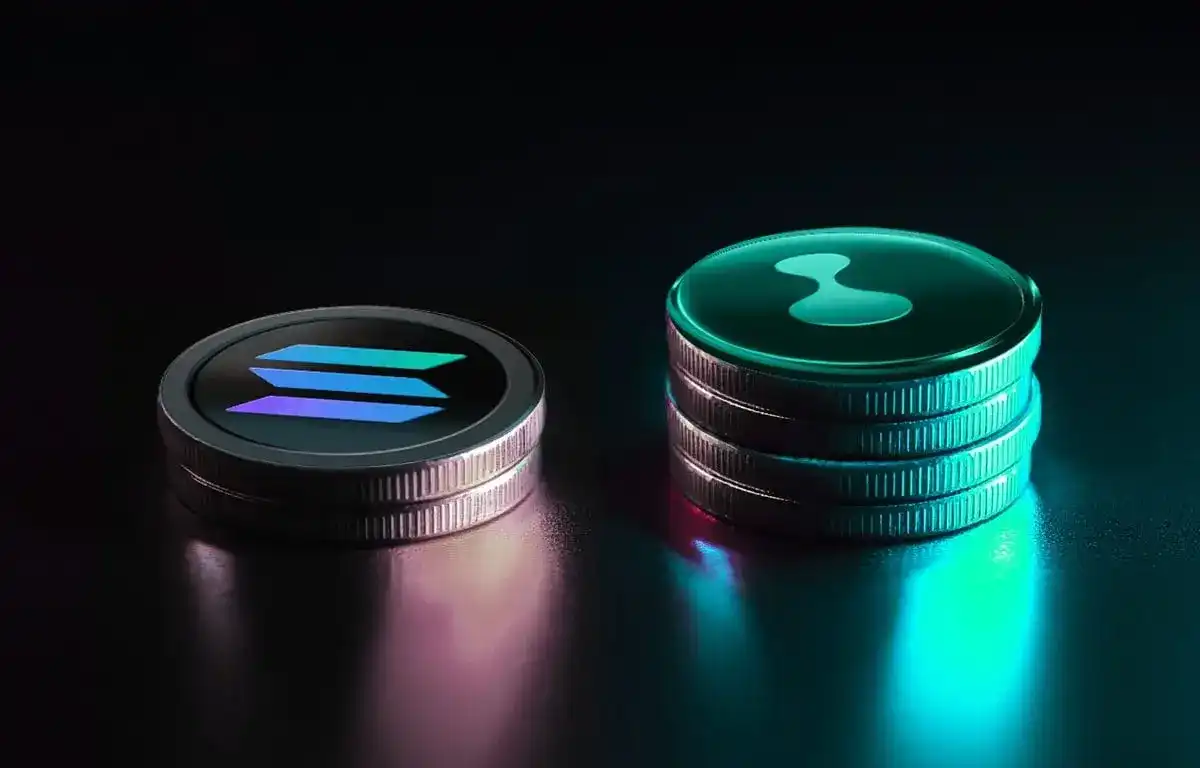
When Hyperliquid Takes Away Solana's "Internet Capital Markets" Script

The article discusses how Solana's vision of becoming the "Internet Capital Markets" is being challenged, primarily by the rise of Hyperliquid. While Solana positioned itself as a high-performance blockchain for tokenizing all global assets, its native token SOL has significantly underperformed, and its core narrative faces pressure. Hyperliquid, initially a perpetual contracts platform, has evolved into a specialized Layer 1 financial network. Its focused, trading-optimized design is attracting users and capital, suggesting a vertical L1 may be better suited for a core capital market than a general-purpose chain like Solana. This external competition was compounded by an internal $200M+ exploit on Solana's key derivatives protocol, Drift, creating a strategic vacuum. In response, Solana founder Anatoly Yakovenko heavily promoted the Phoenix protocol as a decentralized, composable alternative. However, Phoenix's trading volume remains far behind leading platforms. Solana supporters also launched critiques against Hyperliquid's decentralization, citing its limited validators and closed-source code. Critics countered that Solana's own decentralization metrics have weakened, and the foundation's overt backing of Phoenix caused friction with other ecosystem builders. The piece concludes that Solana risks losing the "Internet Capital Markets" race if it cannot regain dominance in derivatives, potentially remaining a meme coin hub rather than achieving its grand ambition of hosting all global assets.

marsbit1 год тому

When Hyperliquid Takes Away Solana's "Internet Capital Markets" Script

marsbit1 год тому

Google's 2026 Roadmap is Hidden in This Keynote Speech

Google I/O 2026 was not merely a product launch, but a strategic unveiling of the company's decade-long roadmap. The core signal is that Google is evolving its AI, Gemini, from a feature within products into a foundational operating layer that integrates and reshapes its entire ecosystem—Search, Android, Chrome, YouTube, Workspace, XR, and developer tools. The traditional paradigms of digital interaction are being redefined. Search is shifting from finding links to understanding intent and completing tasks. Android is transforming from an app-centric OS into an AI-native platform that orchestrates workflows across services. Chrome is becoming an AI reasoning layer over the web, while YouTube is evolving into a conversational knowledge engine. Google is heavily investing in Agentic AI, aiming for AI to act as a digital operator that executes tasks autonomously. Underlying this vision is the integration of Gemini across all products, making it the central nervous system. Key developments include Gemini Omni for multimodal generation, deeper product integrations, and a push into XR glasses for contextual, ambient computing. Google is positioning AI not as an optional feature but as essential infrastructure, akin to electricity. The broader implication is a competition for the next computing interface. Google's goal is not just to win in chatbots or models, but to become the operating system for the AI era by controlling the primary entry points—search, assistant, OS, and browser—and weaving them into a unified, intelligent layer. This represents a fundamental shift in computing paradigms that will impact creators, developers, businesses, and how all users interact with technology.

marsbit3 год тому
Google's 2026 Roadmap is Hidden in This Keynote Speech

marsbit3 год тому

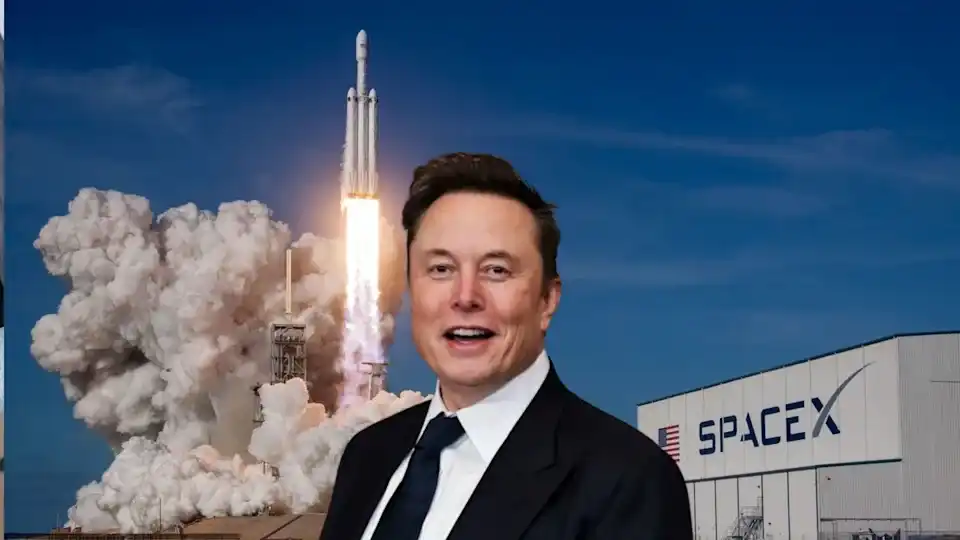
SpaceX IPO Rush: A Capital Feast That Could Reshape the Landscape of AI and Crypto

SpaceX's potential IPO is emerging as a pivotal event that could reshape the landscape for both AI and Crypto markets. Far more than a traditional aerospace offering, SpaceX represents the core of Musk's future-tech ecosystem, with its Starlink satellite network positioning it as a global digital infrastructure company. This shift could redefine the foundational layers of the internet, communication, and data flow. Historically, major tech capital market movements, like AI booms or Bitcoin ETF approvals, have profoundly influenced crypto cycles. The SpaceX IPO could trigger a similar "super-narrative" fusion, boosting investor sentiment toward future digital infrastructure. This is particularly relevant for Crypto, which aims to build decentralized versions of such global systems. Key crypto sectors likely to benefit include: * **DePIN (Decentralized Physical Infrastructure Networks):** Projects like Render, Filecoin, and Helium, which incentivize real-world infrastructure for compute, storage, and connectivity. * **AI Crypto:** Platforms such as Bittensor and Fetch.ai, which leverage blockchain for decentralized AI computation, data markets, and agent economies. * **On-chain Payments & SocialFi:** Ecosystems like Solana and Ton, which could gain traction if Musk's X platform integrates digital payments and stablecoins. Ultimately, the IPO symbolizes a broader capital re-evaluation of core digital-age assets—networks, AI, data, and decentralized systems—aligning closely with crypto's long-term vision. It may act as a catalyst, redirecting global tech investment flows toward the crypto space as the next chapter in digital infrastructure unfolds.

marsbit18 год тому

SpaceX IPO Rush: A Capital Feast That Could Reshape the Landscape of AI and Crypto

marsbit18 год тому

Why Did OpenAI Decide to Make a Phone? ChatGPT Is Taking the Permissions Apple Won't Give

The article discusses OpenAI's surprising move into developing its own AI-powered smartphone, reportedly targeting a 2027 launch. Initially driven by faith that superior AI models alone would secure its dominance—evidenced by ChatGPT's viral success—OpenAI now faces a strategic pivot. Key challenges include slower-than-expected revenue growth and competition from rivals like Anthropic's Claude Code, which successfully monetized a specific, high-value user base (developers) by deeply integrating into workflows. OpenAI recognizes that for ChatGPT to evolve from a conversational tool into a true "AI Agent" that completes tasks (e.g., booking travel, managing files), it needs direct system-level permissions and a default user interface. Currently, as a service integrated into platforms like Apple's iOS and Microsoft's Windows, ChatGPT lacks the necessary access and control ("sovereignty") over hardware, data, and user interactions. Building its own device is seen as a way to give ChatGPT its "first body"—a dedicated terminal where it can operate with full autonomy, bypassing the limitations imposed by partner ecosystems. This shift underscores a broader realization: in the AI Agent era, owning the end-user device and experience is critical to capturing value and maintaining competitive advantage, even if it means directly competing with former allies like Apple.

marsbit2 дні тому 10:19

Why Did OpenAI Decide to Make a Phone? ChatGPT Is Taking the Permissions Apple Won't Give

marsbit2 дні тому 10:19

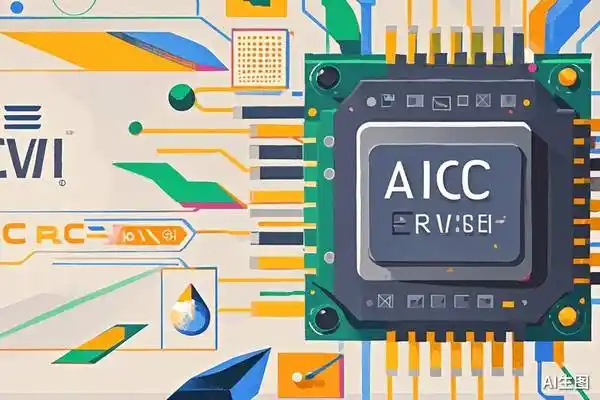
This Chip Sector Is on Fire

The global AI chip market is undergoing a significant paradigm shift, with ASICs (Application-Specific Integrated Circuits) emerging from a niche to a mainstream force, challenging the long-held dominance of GPUs in AI training. This "golden era" for ASICs is primarily driven by the industry's pivot from training to inference, where the cost and energy efficiency advantages of custom chips become critical for scaling to billions of users. Key signals include Google's TPU capturing 78% of its AI server shipments in Q1 2026, OpenAI's plans for a massive custom ASIC cluster with Broadcom, and cloud providers (CSPs) increasingly favoring in-house or custom designs for supply chain control and cost efficiency. Market forecasts are bullish: AI ASIC revenue is projected to hit $300 billion by 2027, with a 34% CAGR, potentially reaching a 45% share of the AI chip market. The competitive landscape is expanding beyond traditional leaders Broadcom and Marvell. MediaTek is aggressively targeting the data center ASIC market, projecting over $10 billion in 2026 revenue, while Qualcomm, leveraging its AlphaWave acquisition, is launching customized inference chips. These mobile chip giants are leveraging their SoC design expertise for a cloud-side transition. In China, companies like VeriSilicon and ASR Microelectronics are capitalizing on this trend as pivotal "enablers," providing full-stack ASIC design services and experiencing explosive order growth, particularly for cloud-side AI projects. However, challenges remain: high development costs, software ecosystem gaps compared to NVIDIA's CUDA, dependency on advanced packaging capacity (like TSMC's CoWoS), and the fundamental trade-off between customization and flexibility. The future is not a simple replacement of GPUs by ASICs but a more specialized coexistence. The consensus points toward "GPUs for training, ASICs for inference," or hybrid clusters. Ultimately, the rise of ASICs represents a democratization of computing power, shifting definition authority from a single chip giant to a broader ecosystem of cloud providers and end-users, offering the industry more choice in the silicon that powers AI.

marsbit05/18 00:29

This Chip Sector Is on Fire

marsbit05/18 00:29

活动图片