The AI Mirror Behind DeepSeek's Financing: Alibaba to the Left, Tencent to the Right

marsbitОпубліковано о 2026-05-18Востаннє оновлено о 2026-05-18

Анотація

The DeepSeek financing round exposed a strategic divergence in AI approaches between Alibaba and Tencent. When the AI startup sought external funding, Alibaba reportedly sought "ecosystem control," wanting to deeply integrate DeepSeek's technology into its own platforms like Taobao and Aliyun. Tencent, in contrast, offered a minority financial investment without demands for exclusivity or control over the startup's technical direction, aligning with its historical "open ecosystem" strategy. ByteDance, largely absent from these talks, pursues a third path: massive in-house investment in its own model, Doubao. These choices stem from corporate DNA: Alibaba's e-commerce and cloud heritage favors closed-loop control, while Tencent's social and investment background prefers open connection. Alibaba, with its mature in-house AI stack (Tongyi Qianwen, Pingtouge chips), could afford to walk away. Tencent's self-developed Hunyuan model, though catching up, allows it to engage externally from a position of greater flexibility. The article posits these strategies—Alibaba's "castle" of vertical integration, Tencent's "port" of open ecosystems, and ByteDance's aggressive C-end push—will lead to a sustained, multi-polar competitive landscape in China's AI sector, rather than a single winner-takes-all outcome.

When a company simultaneously brings Alibaba and Tencent to the negotiation table, and then asks them to leave one after another, that in itself is a signal.

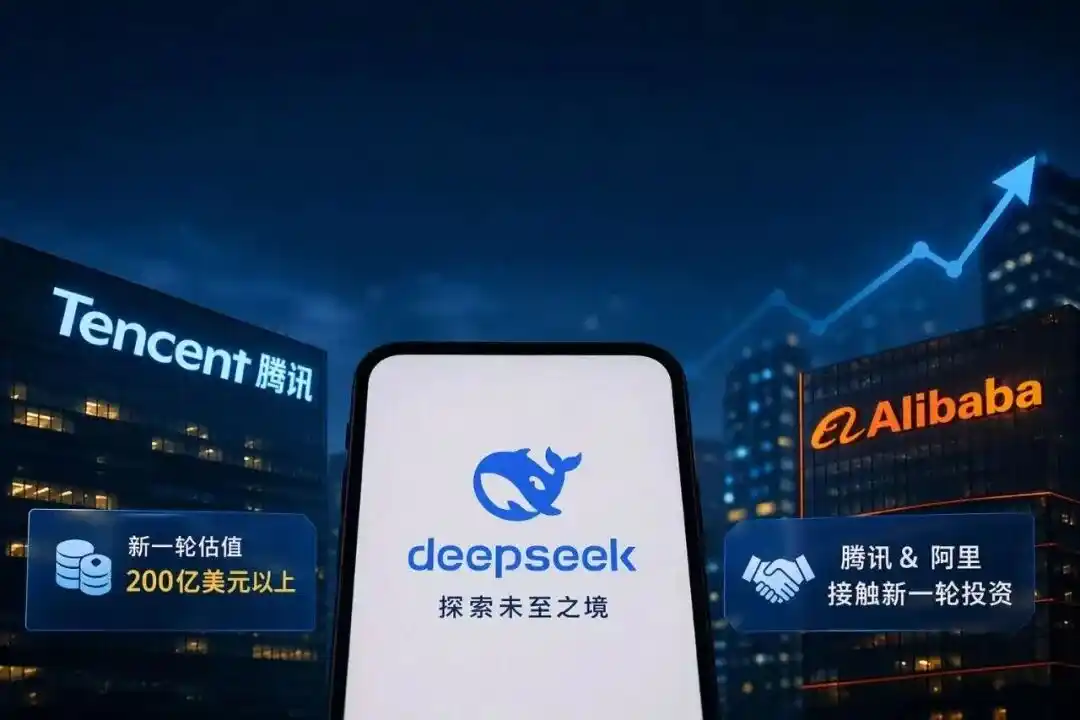
In May of this year, DeepSeek exceptionally launched its first round of external financing. The 50 billion RMB fundraising target, 350 billion RMB valuation, founder personally contributing 20 billion, and the National Big Fund leading the investment—these numbers were explosive enough, but what really caught the industry's attention was the follow-up: Alibaba withdrew, while Tencent is poised to join as a small-scale financial investor. Alibaba perhaps sought an ecosystem lock-in, Tencent only wants a financial stake without interfering with the technical direction, but both sides seem to have failed to reach an agreement.

One exits, one enters. This is not a coincidence of who bid higher or lower, but a mirror moment reflecting the strategic divergence of the two giants in the AI era. Reviewing the ins and outs of this financing, deconstructing the underlying logic of Alibaba's iron-fisted self-research and Tencent's ecosystem embedding, might be more interesting than chasing the valuation numbers themselves.

Self-Developed Closed Loop vs. Ecosystem Embedding: Three Distinct AI Approaches

For Alibaba and Tencent, these two internet giants with a combined market cap nearing a trillion dollars, hitting a wall in front of a startup isn't surprising to many in the industry. They know well that the big players' calculations when investing in AI are never simply about financial returns.

This approach has a vivid name in the industry: "Cloud Cashback Investment." The rules are roughly this: a big company claims to invest 1 billion in an AI company, but more than half of that is to "flow back" to the big company's cloud business in the form of purchasing cloud computing power.

In other words, the cash the AI company actually receives is far less, while the big company completes the book entry for external investment and boosts its own cloud revenue. More crucially, taking the money means accepting "ecosystem binding": models are deployed on the big company's servers, APIs are prioritized for integration into the big company's product system, and the technical roadmap and commercialization pace must align with the big company's strategic rhythm.

Let's further dissect the starkly different motivations of Alibaba and Tencent, who were simultaneously at the negotiating table.

Alibaba wanted "ecosystem control." This logic isn't new in the industry: investment equals procurement, equity participation equals binding. Alibaba's terms implicitly required deep integration of the DeepSeek model into its own product lines like Taobao/Tmall, Amap, Alibaba Cloud, etc.

A potential possible version was: DeepSeek's API prioritized deployment on Alibaba Cloud, inference traffic prioritized for Taobao's smart shopping guide, and the technical roadmap needed customized optimization for Alibaba's e-commerce scenarios. For Alibaba, this wasn't a financial investment, but a capital-driven attempt to "weld" external cutting-edge technology onto its own commercial foundation. This continues Alibaba's consistent strategy, similar to Alibaba Cloud's early acquisition of Changting Technology and investment in Shumeng Gongchang, all requiring deep coupling of technical teams with the Alibaba ecosystem.

However, the author believes that the consequence of this "welding" integration is likely that the investee company's technical roadmap gradually loses generality, eventually becoming a "custom model" serving only Alibaba's scenarios, its industry influence paradoxically narrowed. Yet, in the AI era, Alibaba's anxiety is concrete: if it doesn't "lock" the best model into its own fortress, competitors might use it to arm their own e-commerce and cloud businesses.

Tencent's calculations are a different story. Tencent historically built a vast ecosystem through investments but never forced investee companies to be "exclusive."

In the AI field, Tencent continues this style: financial investment is primary, no interference in technical direction, no demand for ecosystem exclusivity. Sources close to the deal revealed that Tencent's terms didn't even require DeepSeek to prioritize using Tencent Cloud, only hoping for cooperation priority in areas like WeChat smart assistants and game NPCs in the future.

This "light-touch" posture reflects Tencent's different positioning of AI. It doesn't count on an external model to restructure its own business but hopes to use external cutting-edge technology to "lubricate" its existing social and content scenarios. Tencent's confidence lies in WeChat, a super entry point. Regardless of who invests in DeepSeek, as long as users want to use the best AI capabilities within WeChat, Tencent can achieve it through cooperation, not control.

DeepSeek's temporary refusal to clearly choose a side precisely indicates it neither wants to be "locked down" nor is satisfied with being just a "plugin". It wants to become societal infrastructure, not a subsidiary of any single giant.
ByteDance's continued heavy investment makes this situation more complex. ByteDance has hardly appeared in DeepSeek financing rumors, not because it's uninterested, but because it's taken another path: self-developing Doubao, heavily investing in C-end entry points. In 2026, ByteDance pushed AI capital expenditure to 200 billion RMB, almost five to six times Tencent's AI investment. ByteDance's logic is straightforward: the ultimate battlefield for AI is user time. Whoever captures the C-end super entry point first holds the initiative. It doesn't need to invest in DeepSeek because Doubao itself is DeepSeek's competitor.

Three companies, three ways of treating external cutting-edge technology. Alibaba wants to "buy, use, and lock it in"; Tencent wants to "buy and use, but not lock"; ByteDance wants to "build it themselves, no need to buy." Behind these three choices are their distinct corporate DNA, resource endowments, and judgments about the AI endgame. DeepSeek's refusal precisely tears open this seam, allowing us a glimpse: in this AI card game, the giants hold different cards, and their play logic naturally differs. To understand where this difference comes from, we must return to the respective starting points of the three companies.

DNA, Foundation, and Strategic Logic: The Two Paths of Alibaba and Tencent

The differences didn't arise from thin air. The AI layouts of internet giants are almost written in their DNA.

Alibaba's DNA is e-commerce, cloud computing, and industrial services. The logic of Taobao is a closed loop: from product to transaction, from payment to logistics, keeping the chain within its own hands as much as possible. This DNA dictates that Alibaba is accustomed to being a controller, not a connector.

So is Alibaba Cloud, insisting on self-research from underlying tech to upper-layer services. Therefore, when DeepSeek emerged, Alibaba could hardly be just a financial investor. It needed a functional module that could integrate into its own AI system, not an independent kingdom.

Tencent follows another logic. Tencent's DNA is social networking, traffic, and ecosystem win-win, accustomed to building open platforms, using capital to connect rather than control.

Whether JD.com, Meituan, or Pinduoduo, Tencent's e-commerce layout relies on investment, not building its own. One core lesson Pony Ma learned from the 3Q War is that "openness is more viable than being closed," which in AI investment means Tencent won't insist on locking DeepSeek into its own drawer.

The maturity of their technological foundations also determines their bargaining power. Alibaba's self-developed AI system has already proven its full-chain capability; T-Head chips are mass-produced and delivered; Tongyi Qianwen is in the same tier as GPT-4o. For Alibaba, an external large model is icing on the cake, not a savior in a snowstorm. Withdrawing from DeepSeek financing is less "talks collapsed" and more that strategically there was no longer an absolute must-invest reason. DeepSeek wanted independent development and financial investment; Alibaba wanted technical integration and ecosystem binding—their demands were fundamentally not on the same dimension.
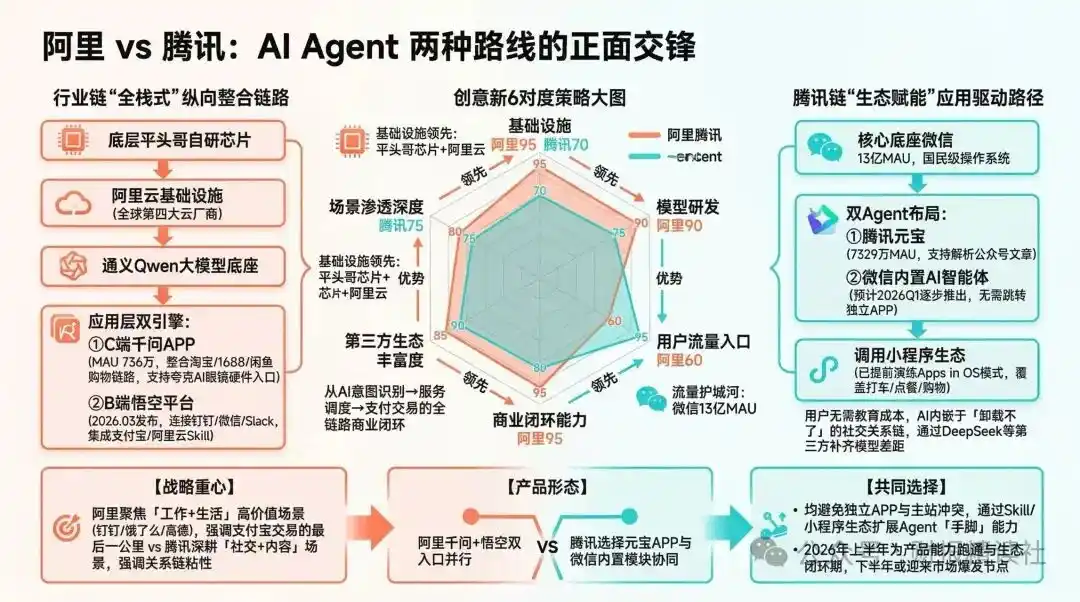
Tencent's Hunyuan took a different, comeback path. In early 2025, when DeepSeek went viral, Tencent once fully embraced it, and the priority of its self-developed Hunyuan was downgraded. But after heavily poaching former OpenAI scientist Yao Shunyu, Hunyuan was "scrapped and rebuilt," establishing a "co-design" methodology where model and product development advance simultaneously. The Hunyuan Hy3 preview released in April 2026 saw token usage volume exceeding the previous generation by 10 times, taking the "double first" in both usage volume and market share on the OpenRouter platform. Although still lagging behind Doubao and Tongyi Qianwen, the gap has significantly narrowed. Hunyuan's progress makes Tencent more at ease facing DeepSeek: it can acquire top-tier capabilities externally while not losing bargaining power due to lack of self-research.

ByteDance's AI foundation is the most unique among the three. It has no baggage of self-developed large models, no industrial inertia for B-end monetization. Its core goal is to seize the C-end AI entry point by any means. To this end, ByteDance even, against the backdrop of net profit plummeting over 70%, dramatically increased its AI budget to 200 billion RMB. This almost cost-blind investment puts pressure on both Alibaba and Tencent. But Alibaba's budget is scattered across chips, cloud, models, applications, etc., while ByteDance's 200 billion is almost entirely poured into C-end applications and computing power reserves. This focus allowed Doubao to rapidly approach Tongyi Qianwen's monthly active user scale in a short time.

ByteDance's "all-in" gamble is forcing the entire industry to rethink AI's commercialization pace. When a company is willing to trade short-term profits for a long-term entry point, others must either follow suit in burning money or find another path.

A thought-provoking insight is: in the rapidly changing field of AI, the window of technological leadership is getting shorter and shorter. Alibaba uses heavy-asset self-research to build long-term barriers, at the cost of reduced flexibility and narrowed space for external cooperation; Tencent uses light-asset ecosystems to maintain openness, at the cost of needing to continuously catch up in self-research capability; ByteDance uses extreme investment to buy a time window, at the cost of significant short-term profit pressure. None of the three strategies is absolutely superior or inferior.

In summary, DNA determines the path, the foundation determines bargaining power, and strategic logic determines the timing of moves. The advance and retreat at DeepSeek's financing table are all projections of these three multiple-choice questions onto the backdrop of capital.

Closed-Loop Deep Cultivation and Open Integration: Two Parallel AI Futures

Shifting focus away from the financing negotiations, the AI futures of Alibaba and Tencent are actually clear: two paths, unlikely to converge in the short term, and not necessarily one devouring the other in the long run.

Alibaba will continue moving forward along the path of full-stack self-researched closed loops. CEO Wu Yongming has set the tone: making AI Alibaba's main growth engine. Alibaba Cloud's AI-related revenue has seen triple-digit growth for ten consecutive quarters, with a five-year goal of exceeding $100 billion in annual revenue from cloud and AI commercialization. In chips, T-Head is doubling down on domestic GPUs, gradually reducing reliance on Nvidia. Tongyi Qianwen has formed complete capabilities from inference to Agent to multimodal. The Qianwen App has 300 million monthly active users, and WuKong is accelerating penetration in the enterprise market. The three monetization methods—computing power leasing, token fees, and application subscriptions—form a sufficiently deep moat.

Tencent's approach is completely different. On the C-end, it anchors on WeChat, its largest ecosystem, moving towards a "decentralized intelligent entry point"—users don't need to specifically open an AI app but naturally use AI while chatting or browsing videos. On the B-end, WorkBuddy and CodeBuddy are already integrated into WeCom and Tencent Cloud, helping customers improve efficiency. Judging from Hunyuan Hy3's performance, Tencent cares more about whether the model can truly be used, not topping leaderboards. Tencent will continue to strategically place financial investments in quality AI companies, integrating external models into its own scenarios. If the DeepSeek investment materializes, it will be a continuation of this strategy. Tencent's path to profit is more direct: advertising efficiency improvement, game R&D cost reduction, accelerated monetization through cloud and WeChat. In 2026, Tencent Cloud completed three price adjustments, indicating it's gaining pricing power in the AI office domain.

Agents are becoming the next common focal point for both. Alibaba focuses Agent capability as a key breakthrough, with the Qianwen App integrated into ecosystems like Taobao, Alipay, and Fliggy, pioneering AI handling of complex life tasks. Tencent focuses Agent efforts on B-end productivity implementation and platform governance. In multimodal direction, both companies are pushing simultaneously: on April 16, 2026, they both released their respective world model products on the same day, moving the AI competition from language parameters to spatial intelligence. While strategic paths diverge, their judgment on technical direction is surprisingly aligned.

In this protracted war, Alibaba holds two trump cards: computing infrastructure and B-end ecosystem; Tencent occupies the nation's largest C-end traffic pool; ByteDance presses forward on the C-end with 200 billion in heavy investment and Doubao's nearly 400 million monthly active users. Each has its weakness: Alibaba's full-stack barriers are high but hard to dominate the C-end short-term; Tencent's ecosystem is flexible but its Hunyuan self-research still needs to catch up; ByteDance's investment is fierce but net profit pressure will eventually impact its decision-making.

A possible mid-term pattern is: Alibaba guards the B-end and cloud infrastructure; Tencent guards AI embedding in social scenarios; ByteDance captures the C-end independent entry point. The three form a staggered competition, not a fight to the death. For the entire industry, this multipolar pattern is more conducive to technological diversity and innovation vitality than a single monopoly.

What truly decides victory may not be whose model is stronger, but who can first turn AI from a "tool" into a "lifestyle." Alibaba bets that enterprises and developers can't do without its computing power; Tencent bets that users can't do without intelligent assistants within WeChat; ByteDance bets that Doubao becomes the next national-level entry point. All three paths are tough, but none can be easily dismissed.

Returning to the DeepSeek financing negotiation table: Alibaba leaves, Tencent approaches. This is not a disagreement over DeepSeek's pricing, but different answers from two sets of business philosophies. Alibaba builds a "castle": high walls, deep moats, self-sufficient. Tencent builds a "port": ships freely come and go, water surface prosperous. In the rapidly changing field of AI, there is no absolute superiority between "castle" and "port." The only certainty is that DeepSeek's massive financing in May is destined to become the page marking the fork in the AI road for China's internet giants.

This article is from the WeChat public account "BizWhale" (ID: bizwhale), author: Hu Duzhi

Пов'язані питання

QWhat are the three distinct approaches to AI investment and development described for Alibaba, Tencent, and ByteDance?

AAlibaba adopts a 'self-developed closed-loop' approach, seeking 'ecological control' by binding acquired technology deeply into its ecosystem. Tencent prefers an 'embedded ecosystem' approach with financial investments, avoiding control over the technology's direction. ByteDance follows a 'build it ourselves, no need to buy' strategy, focusing heavily on independent R&D and capturing the consumer-facing AI entry point.

QAccording to the article, why did Alibaba reportedly withdraw from the DeepSeek investment negotiations?

AAlibaba withdrew because its demand for deep 'ecological binding'—integrating DeepSeek's model into its product lines like Taobao and Aliyun and controlling its technical roadmap—clashed with DeepSeek's desire for independent development and a purely financial investment.

QHow does Tencent's strategy in the AI field differ from its past investment philosophy, and what are its current goals?

ATencent's AI strategy is consistent with its historical 'open platform' philosophy of using capital to connect rather than control ecosystems. Its current goal is to use external top-tier technology to 'lubricate' existing social and content scenarios, such as within WeChat, through financial investments without demanding exclusivity.

QWhat key factor is driving ByteDance's aggressive AI strategy, and what potential risk does it entail?

AByteDance's strategy is driven by the goal of capturing the consumer-facing (C-end) AI super entry point and user engagement time. The major risk is significant short-term profit pressure, as seen with its net profit reportedly plunging over 70% while massively increasing its AI budget.

QWhat does the article suggest is the potential mid-term competitive landscape for Alibaba, Tencent, and ByteDance in AI?

AThe article suggests a potential mid-term landscape of differentiated competition: Alibaba secures the enterprise (B-end) and cloud infrastructure, Tencent maintains AI integration within its social scenarios (like WeChat), and ByteDance captures the independent C-end entry point with Doubao, forming a multipolar rather than a monopolistic structure.

Пов'язані матеріали

Topping GitHub's Trending, the Essential Guide for Claude Code Users

The CLAUDE.md file, trending on GitHub, is a project-level guide for Claude Code designed to dramatically improve its accuracy and efficiency. It addresses key issues like repetitive context explanations, unauthorized code changes, and forgotten decisions across sessions. By placing this plain-text file in a project root, Claude Code reads it automatically at the start of each session. The guide includes rules to eliminate redundant explanations, enforce strict behavioral constraints (e.g., no modifications outside the requested scope without confirmation), and establish a "memory" system using companion files like MEMORY.md and ERRORS.md to log past decisions and failures. It also locks in the project's specific tech stack to prevent inappropriate tool recommendations. Highlighted are four foundational rules from Andrej Karpathy that reportedly increased coding accuracy from 65% to 94%: always ask for clarity first, implement the simplest solution, never touch unrelated code, and explicitly flag uncertainties. The article quantifies significant weekly cost savings for developers and teams by eliminating wasted time on re-explaining context, rolling back unauthorized edits, and re-evaluating previously rejected solutions. The core message is that a small, upfront investment in creating a CLAUDE.md file leads to a more predictable, controlled, and cost-effective AI programming assistant.

marsbit8 хв тому

Topping GitHub's Trending, the Essential Guide for Claude Code Users

marsbit8 хв тому

When Computing Power Becomes Commoditized, How Long Until a GPU Futures Market Emerges?

"When Will GPU Futures Arrive? A Framework for Assessing Compute as a Commodity" The article explores the potential for a robust futures market for compute power (GPUs), arguing that such a market is not yet mature but may emerge. It analyzes the landscape using a five-part framework developed for new commodity futures markets. The analysis scores the current state: * **Fragmented Supply (Red)**: Supply is highly concentrated among hyperscale cloud providers (AWS, Azure, GCP, Oracle), limiting the need for price discovery. * **Price Volatility (Green)**: GPU pricing is already highly volatile due to uncertain supply and surging demand. * **Physical Settlement Infrastructure (Green)**: Early infrastructure exists via OTC brokers and price indices (e.g., Ornn, Silicon Data) standardizing contracts. * **Standardized Unit (Red)**: A lack of standardized, tradable units hinders markets; a GPU instance hour varies by region, configuration, and contract terms. * **Lack of Alternatives (Yellow)**: Large players hedge internally via vertical integration, while smaller players bear spot market risk. Overall, the market shows promise (volatility, early infrastructure) but lacks the fragmented supply and standardization needed for large-scale futures trading. Most activity remains OTC. Key open questions and hypotheses: 1. Supply is expected to fragment moderately in 1-2 years, driven by new cloud providers, cheap power locations, and demand from non-frontier labs and AI startups using open-source models. 2. Standardization is most likely to emerge around inference workloads (forecast to be >65% of AI compute demand by 2029), which have simpler, more homogeneous hardware needs than training. Widespread adoption of open-source model weights could accelerate this by democratizing inference and creating demand for optimized, standardized infrastructure. 3. The primary traded unit will likely be the **"chip instance hour"** (akin to electricity, traded regionally), not the physical chip or the downstream AI output (tokens).

marsbit37 хв тому

When Computing Power Becomes Commoditized, How Long Until a GPU Futures Market Emerges?

marsbit37 хв тому

When Computing Power Becomes Commoditized, How Long Until a GPU Futures Market?

When Compute is Commoditized: How Far Away is a GPU Futures Market? The article explores the potential emergence of a futures market for computing power ("compute"), akin to markets for commodities like oil or electricity. It uses a five-dimension framework to assess the market's maturity for sustaining robust futures trading. **Current Market Assessment (Scorecard):** * **Supply Fragmentation:** 🔴 **Red.** Supply is highly concentrated, dominated by a few hyperscale cloud providers. * **Price Volatility:** 🟢 **Green.** GPU pricing is already highly volatile. * **Physical Settlement Infrastructure:** 🟢 **Green.** Early infrastructure exists at the OTC/broker level. * **Standardization:** 🔴 **Red.** Compute lacks a standardized, tradable unit (e.g., an H100 hour is not uniform). * **Lack of Substitutes:** 🟡 **Yellow.** Vertically integrated players can hedge internally, while others are forced to be long. **Conclusion:** The overall scorecard suggests a robust futures market is premature. The market has volatility and early settlement infrastructure but lacks the necessary supply fragmentation and standardization for large-scale price discovery. Most activity remains OTC. **Key Unanswered Questions & Hypotheses:** The article posits that the market could evolve in the next 1-2 years: 1. **Supply:** May become *moderately more fragmented* due to new cloud providers, cheaper power locations, and demand from long-tail users (e.g., startups running open-source model inference). 2. **Standardization:** Could emerge from the growing **inference** workload (expected to be >65% of AI compute demand by 2029), which has more homogeneous hardware requirements than custom training workloads. Widespread adoption of **open-source model weights** is seen as a key catalyst for democratizing inference and driving infrastructure standardization. 3. **Traded Unit:** The most viable layer for trading is likely the **"chip-instance-hour"** (powered, usable compute time), traded similarly to electricity in regional contracts with spot/futures overlays. Trading at the upstream "chip" layer is unlikely due to supply concentration, while the downstream "token" layer faces challenges due to lack of uniformity across AI models.

链捕手43 хв тому

When Computing Power Becomes Commoditized, How Long Until a GPU Futures Market?

链捕手43 хв тому

Торгівля

Спот
Ф'ючерси

Популярні статті

Що таке GROK AI

Grok AI: Революція в розмовних технологіях ери Web3 Вступ У швидко змінюваному ландшафті штучного інтелекту Grok AI вирізняється як помітний проєкт, що поєднує сфери передових технологій та взаємодії з користувачами. Розроблений компанією xAI, яку очолює відомий підприємець Ілон Маск, Grok AI прагне переосмислити, як ми взаємодіємо зі штучним інтелектом. Оскільки рух Web3 продовжує процвітати, Grok AI має на меті використати потужність розмовного ШІ для відповіді на складні запитання, надаючи користувачам досвід, який є не лише інформативним, але й розважальним. Що таке Grok AI? Grok AI — це складний розмовний чат-бот, розроблений для динамічної взаємодії з користувачами. На відміну від багатьох традиційних систем ШІ, Grok AI охоплює ширший спектр запитів, включаючи ті, які зазвичай вважаються недоречними або виходять за межі стандартних відповідей. Основні цілі проєкту включають: Надійне міркування: Grok AI акцентує увагу на здоровому глузді, щоб надавати логічні відповіді на основі контекстуального розуміння. Масштабоване управління: Інтеграція допоміжних інструментів забезпечує моніторинг та оптимізацію взаємодій користувачів для покращення якості. Формальна верифікація: Безпека є пріоритетом; Grok AI впроваджує методи формальної верифікації для підвищення надійності своїх результатів. Розуміння довгого контексту: Модель ШІ відзначається здатністю зберігати та згадувати обширну історію розмов, що сприяє змістовним та контекстуально обізнаним дискусіям. Стійкість до атак: Зосереджуючись на покращенні своїх захистів від маніпульованих або зловмисних вхідних даних, Grok AI прагне зберегти цілісність взаємодій з користувачами. По суті, Grok AI — це не просто пристрій для отримання інформації; це занурюючий розмовний партнер, який заохочує динамічний діалог. Творець Grok AI Геній, що стоїть за Grok AI, — це ніхто інший, як Ілон Маск, особа, яка стала синонімом інновацій у різних сферах, включаючи автомобільну промисловість, космічні подорожі та технології. Під егідою xAI, компанії, що зосереджена на розвитку технологій ШІ на користь суспільства, бачення Маска прагне переосмислити розуміння взаємодій з ШІ. Лідерство та основоположна етика глибоко впливають на прагнення Маска розширити технологічні межі. Інвестори Grok AI Хоча конкретні деталі щодо інвесторів, які підтримують Grok AI, залишаються обмеженими, загальновідомо, що xAI, інкубатор проєкту, заснований і підтримується переважно самим Ілоном Маском. Попередні підприємства та активи Маска забезпечують надійну підтримку, що додатково зміцнює довіру до Grok AI та потенціал для зростання. Однак наразі інформація про додаткові інвестиційні фонди або організації, що підтримують Grok AI, не є доступною, що позначає область для потенційного майбутнього дослідження. Як працює Grok AI? Операційна механіка Grok AI є такою ж інноваційною, як і його концептуальна структура. Проєкт інтегрує кілька передових технологій, які сприяють його унікальним функціональним можливостям: Надійна інфраструктура: Grok AI побудований з використанням Kubernetes для оркестрації контейнерів, Rust для продуктивності та безпеки, і JAX для високопродуктивних числових обчислень. Ця трійка забезпечує ефективну роботу чат-бота, його масштабованість та швидке обслуговування користувачів. Доступ до знань у реальному часі: Однією з відмінних рис Grok AI є його здатність отримувати дані в реальному часі через платформу X — раніше відому як Twitter. Ця можливість надає ШІ доступ до останньої інформації, що дозволяє надавати своєчасні відповіді та рекомендації, які можуть бути пропущені іншими моделями ШІ. Два режими взаємодії: Grok AI пропонує користувачам вибір між “Розважальним режимом” та “Звичайним режимом”. Розважальний режим дозволяє більш ігровий та гумористичний стиль взаємодії, тоді як Звичайний режим зосереджується на наданні точних і правильних відповідей. Ця універсальність забезпечує індивідуальний досвід, що відповідає різним уподобанням користувачів. По суті, Grok AI поєднує продуктивність із залученням, створюючи досвід, який є одночасно збагачуючим і розважальним. Хронологія Grok AI Шлях Grok AI відзначений важливими етапами, які відображають його розвиток та етапи впровадження: Початковий розвиток: Фундаментальна фаза Grok AI тривала приблизно два місяці, протягом яких проводилося початкове навчання та налаштування моделі. Випуск бета-версії Grok-2: У значному досягненні була оголошена бета-версія Grok-2. Цей випуск представив дві версії чат-бота — Grok-2 та Grok-2 mini — кожна з яких оснащена можливостями для спілкування, кодування та міркування. Публічний доступ: Після бета-розробки Grok AI став доступним для користувачів платформи X. Ті, хто має акаунти, підтверджені номером телефону та активні принаймні сім днів, можуть отримати доступ до обмеженої версії, що робить технологію доступною для ширшої аудиторії. Ця хронологія відображає систематичний розвиток Grok AI від початку до публічної взаємодії, підкреслюючи його прагнення до постійного вдосконалення та взаємодії з користувачами. Ключові особливості Grok AI Grok AI охоплює кілька ключових особливостей, які сприяють його інноваційній ідентичності: Інтеграція знань у реальному часі: Доступ до актуальної та релевантної інформації відрізняє Grok AI від багатьох статичних моделей, забезпечуючи захоплюючий та точний досвід для користувачів. Універсальні стилі взаємодії: Пропонуючи різні режими взаємодії, Grok AI задовольняє різноманітні уподобання користувачів, запрошуючи до творчості та персоналізації у спілкуванні з ШІ. Передова технологічна основа: Використання Kubernetes, Rust та JAX надає проєкту надійну основу для забезпечення надійності та оптимальної продуктивності. Етичні міркування в дискурсі: Включення функції генерації зображень демонструє інноваційний дух проєкту. Однак це також піднімає етичні питання, пов'язані з авторським правом та поважним зображенням впізнаваних фігур — триваюча дискусія в спільноті ШІ. Висновок Як піонер у сфері розмовного ШІ, Grok AI втілює потенціал трансформаційних користувацьких досвідів в цифрову епоху. Розроблений компанією xAI та керований візією Ілона Маска, Grok AI інтегрує знання в реальному часі з передовими можливостями взаємодії. Він прагне розширити межі того, що може досягти штучний інтелект, зберігаючи при цьому акцент на етичних міркуваннях та безпеці користувачів. Grok AI не лише втілює технологічний прогрес, але й представляє нову парадигму спілкування в ландшафті Web3, обіцяючи залучити користувачів як глибокими знаннями, так і ігровою взаємодією. Оскільки проєкт продовжує розвиватися, він слугує свідченням того, що може досягти перетин технологій, творчості та людської взаємодії.

400 переглядів усьогоОпубліковано 2024.12.26Оновлено 2024.12.26

Що таке GROK AI

Що таке ERC AI

Euruka Tech: Огляд $erc ai та його амбіцій у Web3 Вступ У швидко змінюваному ландшафті технології блокчейн та децентралізованих додатків нові проекти з'являються часто, кожен з унікальними цілями та методологіями. Одним з таких проектів є Euruka Tech, який працює у широкій сфері криптовалют та Web3. Основна увага Euruka Tech, зокрема його токена $erc ai, зосереджена на представленні інноваційних рішень, розроблених для використання зростаючих можливостей децентралізованих технологій. Ця стаття має на меті надати всебічний огляд Euruka Tech, дослідження його цілей, функціональності, ідентичності його творця, потенційних інвесторів та його значення в ширшому контексті Web3. Що таке Euruka Tech, $erc ai? Euruka Tech характеризується як проект, який використовує інструменти та функціональність, що пропонуються середовищем Web3, зосереджуючи увагу на інтеграції штучного інтелекту у своїй діяльності. Хоча конкретні деталі про структуру проекту дещо неясні, він розроблений для покращення залучення користувачів та автоматизації процесів у крипто-просторі. Проект має на меті створити децентралізовану екосистему, яка не лише полегшує транзакції, але й включає прогностичні функції через штучний інтелект, звідси і назва його токена, $erc ai. Мета полягає в тому, щоб надати інтуїтивно зрозумілу платформу, яка сприяє розумнішим взаємодіям та ефективній обробці транзакцій у зростаючій сфері Web3. Хто є творцем Euruka Tech, $erc ai? На даний момент інформація про творця або засновницьку команду Euruka Tech залишається невизначеною та дещо непрозорою. Ця відсутність даних викликає занепокоєння, оскільки знання про бекграунд команди часто є важливим для встановлення довіри в секторі блокчейн. Тому ми класифікували цю інформацію як невідому, поки конкретні деталі не стануть доступними в публічному домені. Хто є інвесторами Euruka Tech, $erc ai? Аналогічно, ідентифікація інвесторів або організацій, які підтримують проект Euruka Tech, не надається через доступні дослідження. Аспект, який є критично важливим для потенційних зацікавлених сторін або користувачів, які розглядають можливість співпраці з Euruka Tech, - це впевненість, що походить від встановлених фінансових партнерств або підтримки від авторитетних інвестиційних компаній. Без розкриття інформації про інвестиційні зв'язки важко зробити всебічні висновки про фінансову безпеку або довговічність проекту. Відповідно до знайденої інформації, цей розділ також має статус невідомий. Як працює Euruka Tech, $erc ai? Незважаючи на відсутність детальних технічних специфікацій для Euruka Tech, важливо враховувати його інноваційні амбіції. Проект прагне використовувати обчислювальну потужність штучного інтелекту для автоматизації та покращення досвіду користувачів у середовищі криптовалют. Інтегруючи ШІ з технологією блокчейн, Euruka Tech має на меті надати такі функції, як автоматизовані угоди, оцінка ризиків та персоналізовані інтерфейси користувачів. Інноваційна суть Euruka Tech полягає в його меті створити безшовний зв'язок між користувачами та величезними можливостями, які пропонують децентралізовані мережі. Завдяки використанню алгоритмів машинного навчання та ШІ, він має на меті мінімізувати труднощі для нових користувачів і спростити транзакційні досвіди в рамках Web3. Ця симбіоз між ШІ та блокчейном підкреслює значення токена $erc ai, який виступає як міст між традиційними інтерфейсами користувачів та розвиненими можливостями децентралізованих технологій. Хронологія Euruka Tech, $erc ai На жаль, через обмежену інформацію про Euruka Tech ми не можемо представити детальну хронологію основних подій або досягнень у подорожі проекту. Ця хронологія, яка зазвичай є безцінною для відстеження еволюції проекту та розуміння його траєкторії зростання, наразі недоступна. Як тільки інформація про значні події, партнерства або функціональні доповнення стане очевидною, оновлення, безумовно, підвищать видимість Euruka Tech у крипто-сфері. Роз'яснення щодо інших проектів “Eureka” Варто зазначити, що кілька проектів та компаній мають схожу назву з “Eureka”. Дослідження виявило ініціативи, такі як AI-агент від NVIDIA Research, який зосереджується на навчанні роботів складним завданням за допомогою генеративних методів, а також Eureka Labs та Eureka AI, які покращують користувацький досвід в освіті та аналітиці обслуговування клієнтів відповідно. Однак ці проекти відрізняються від Euruka Tech і не повинні бути змішані з його цілями чи функціональністю. Висновок Euruka Tech, разом із його токеном $erc ai, представляє обіцяючого, але наразі невідомого гравця в ландшафті Web3. Хоча деталі про його творця та інвесторів залишаються невідомими, основна амбіція поєднання штучного інтелекту з технологією блокчейн є центром інтересу. Унікальні підходи проекту до сприяння залученню користувачів через передову автоматизацію можуть виділити його на фоні прогресу екосистеми Web3. Оскільки крипто-ринок продовжує еволюціонувати, зацікавлені сторони повинні уважно стежити за новинами, пов'язаними з Euruka Tech, оскільки розвиток задокументованих інновацій, партнерств або визначеного дорожньої карти може представити значні можливості в найближчому майбутньому. На даний момент ми чекаємо на більш суттєві інсайти, які можуть розкрити потенціал Euruka Tech та його позицію в конкурентному крипто-ландшафті.

385 переглядів усьогоОпубліковано 2025.01.02Оновлено 2025.01.02

Що таке ERC AI

Що таке DUOLINGO AI

DUOLINGO AI: Інтеграція вивчення мов з Web3 та інноваціями штучного інтелекту В епоху, коли технології змінюють освіту, інтеграція штучного інтелекту (ШІ) та блокчейн-мереж відкриває нові горизонти для вивчення мов. З'являється DUOLINGO AI та його асоційована криптовалюта, $DUOLINGO AI. Цей проект прагне об'єднати освітні можливості провідних платформ для вивчення мов з перевагами децентралізованих технологій Web3. У цій статті розглядаються ключові аспекти DUOLINGO AI, його цілі, технологічна структура, історичний розвиток та майбутній потенціал, зберігаючи чіткість між оригінальним освітнім ресурсом та цією незалежною криптовалютною ініціативою. Огляд DUOLINGO AI В основі DUOLINGO AI лежить прагнення створити децентралізоване середовище, де учні можуть отримувати криптографічні винагороди за досягнення освітніх етапів у мовній компетенції. Застосовуючи смарт-контракти, проект має на меті автоматизувати процеси перевірки навичок та розподілу токенів, дотримуючись принципів Web3, які підкреслюють прозорість та власність користувачів. Модель відрізняється від традиційних підходів до вивчення мов, акцентуючи увагу на структурі управління, що базується на спільноті, що дозволяє власникам токенів пропонувати поліпшення змісту курсів та розподілу винагород. Деякі з помітних цілей DUOLINGO AI включають: Гейміфіковане навчання: Проект інтегрує досягнення на блокчейні та невзаємозамінні токени (NFT), щоб представляти рівні мовної компетенції, сприяючи мотивації через захоплюючі цифрові винагороди. Децентралізоване створення контенту: Це відкриває можливості для викладачів та мовних ентузіастів вносити свої курси, сприяючи моделі розподілу доходів, яка вигідна всім учасникам. Персоналізація на основі ШІ: Використовуючи сучасні моделі машинного навчання, DUOLINGO AI персоналізує уроки, щоб адаптуватися до індивідуального прогресу навчання, подібно до адаптивних функцій, що є в усталених платформах. Творці проекту та управління Станом на квітень 2025 року команда, що стоїть за $DUOLINGO AI, залишається псевдонімною, що є поширеною практикою в децентралізованому криптовалютному середовищі. Ця анонімність має на меті сприяти колективному розвитку та залученню зацікавлених сторін, а не зосереджуватися на окремих розробниках. Смарт-контракт, розгорнутий на блокчейні Solana, зазначає адресу гаманця розробника, що свідчить про зобов'язання до прозорості щодо транзакцій, незважаючи на те, що особи творців залишаються невідомими. Згідно з його дорожньою картою, DUOLINGO AI прагне перетворитися на Децентралізовану Автономну Організацію (DAO). Ця структура управління дозволяє власникам токенів голосувати з важливих питань, таких як реалізація функцій та розподіл скарбниці. Ця модель узгоджується з етикою розширення прав і можливостей спільноти, що спостерігається в різних децентралізованих додатках, підкреслюючи важливість колективного прийняття рішень. Інвестори та стратегічні партнерства На даний момент немає публічно відомих інституційних інвесторів або венчурних капіталістів, пов'язаних з $DUOLINGO AI. Натомість ліквідність проекту в основному походить з децентралізованих бірж (DEX), що є різким контрастом до стратегій фінансування традиційних компаній у сфері освітніх технологій. Ця модель знизу вгору вказує на підхід, орієнтований на спільноту, що відображає зобов'язання проекту до децентралізації. У своєму білому документі DUOLINGO AI згадує про формування співпраці з неуточненими “блокчейн-освітніми платформами”, спрямованими на збагачення своїх курсів. Хоча конкретні партнерства ще не були розкриті, ці спільні зусилля натякають на стратегію поєднання інновацій блокчейну з освітніми ініціативами, розширюючи доступ та залучення користувачів у різноманітні навчальні напрямки. Технологічна архітектура Інтеграція ШІ DUOLINGO AI включає два основні компоненти на основі ШІ для покращення своїх освітніх пропозицій: Адаптивний навчальний двигун: Цей складний двигун навчається на основі взаємодій користувачів, подібно до власних моделей великих освітніх платформ. Він динамічно регулює складність уроків, щоб вирішувати конкретні проблеми учнів, зміцнюючи слабкі місця через цілеспрямовані вправи. Розмовні агенти: Використовуючи чат-боти на базі GPT-4, DUOLINGO AI надає платформу для користувачів, щоб брати участь у симульованих розмовах, сприяючи більш інтерактивному та практичному досвіду вивчення мови. Інфраструктура блокчейну Побудований на блокчейні Solana, $DUOLINGO AI використовує комплексну технологічну структуру, яка включає: Смарт-контракти для перевірки навичок: Ця функція автоматично нагороджує токенами користувачів, які успішно проходять тести на компетентність, підкріплюючи структуру стимулів для справжніх навчальних результатів. NFT значки: Ці цифрові токени позначають різні етапи, яких досягають учні, такі як завершення розділу курсу або оволодіння конкретними навичками, що дозволяє їм обмінюватися або демонструвати свої досягнення в цифровому форматі. Управління DAO: Члени спільноти, наділені токенами, можуть брати участь в управлінні, голосуючи за ключові пропозиції, що сприяє культурі участі, яка заохочує інновації в курсах та функціях платформи. Історичний хронологічний графік 2022–2023: Концептуалізація Основи DUOLINGO AI закладаються з створення білого документа, що підкреслює синергію між досягненнями ШІ у вивченні мов та децентралізованим потенціалом блокчейн-технологій. 2024: Бета-реліз Обмежений бета-реліз представляє пропозиції з популярних мов, винагороджуючи ранніх користувачів токенами в рамках стратегії залучення спільноти проекту. 2025: Перехід до DAO У квітні відбувається повний запуск основної мережі з обігом токенів, що спонукає обговорення в спільноті щодо можливих розширень на азійські мови та інші розробки курсів. Виклики та майбутні напрямки Технічні труднощі Незважаючи на свої амбітні цілі, DUOLINGO AI стикається з суттєвими викликами. Масштабованість залишається постійною проблемою, особливо в балансуванні витрат, пов'язаних із обробкою ШІ, та підтриманням чутливої, децентралізованої мережі. Крім того, забезпечення якості створення контенту та модерації в умовах децентралізованої пропозиції створює складнощі у підтримці освітніх стандартів. Стратегічні можливості Дивлячись у майбутнє, DUOLINGO AI має потенціал використовувати партнерства з мікрокреденційними академічними установами, надаючи блокчейн-верифіковані підтвердження мовних навичок. Крім того, розширення через різні блокчейни може дозволити проекту залучити ширші бази користувачів та додаткові екосистеми блокчейну, покращуючи його взаємодію та охоплення. Висновок DUOLINGO AI представляє інноваційне злиття штучного інтелекту та блокчейн-технологій, пропонуючи альтернативу, орієнтовану на спільноту, традиційним системам вивчення мов. Хоча його псевдонімна розробка та нова економічна модель несуть певні ризики, зобов'язання проекту до гейміфікованого навчання, персоналізованої освіти та децентралізованого управління освітлює шлях вперед для освітніх технологій у сфері Web3. Оскільки ШІ продовжує розвиватися, а екосистема блокчейну еволюціонує, ініціативи на кшталт DUOLINGO AI можуть переосмислити, як користувачі взаємодіють з мовною освітою, наділяючи спільноти та винагороджуючи залучення через інноваційні механізми навчання.

399 переглядів усьогоОпубліковано 2025.04.11Оновлено 2025.04.11

Що таке DUOLINGO AI

Обговорення

Ласкаво просимо до спільноти HTX. Тут ви можете бути в курсі останніх подій розвитку платформи та отримати доступ до професійної ринкової інформації. Нижче представлені думки користувачів щодо ціни AI (AI).

活动图片