Editor's Note: Against the backdrop of the United States' soaring fiscal deficits, escalating geopolitical conflicts, and a renewed scrutiny of the credibility of the U.S. dollar, discussions about America are shifting from "whether it is still the world's strongest economy" to "whether the institutions, debt, and international order supporting U.S. hegemony remain stable."
But when both "The U.S. is still strong" and "The U.S. is descending into disorder" hold true, a more critical question emerges: Is America facing a routine cyclical adjustment, or is it a loosening of the long-term order?
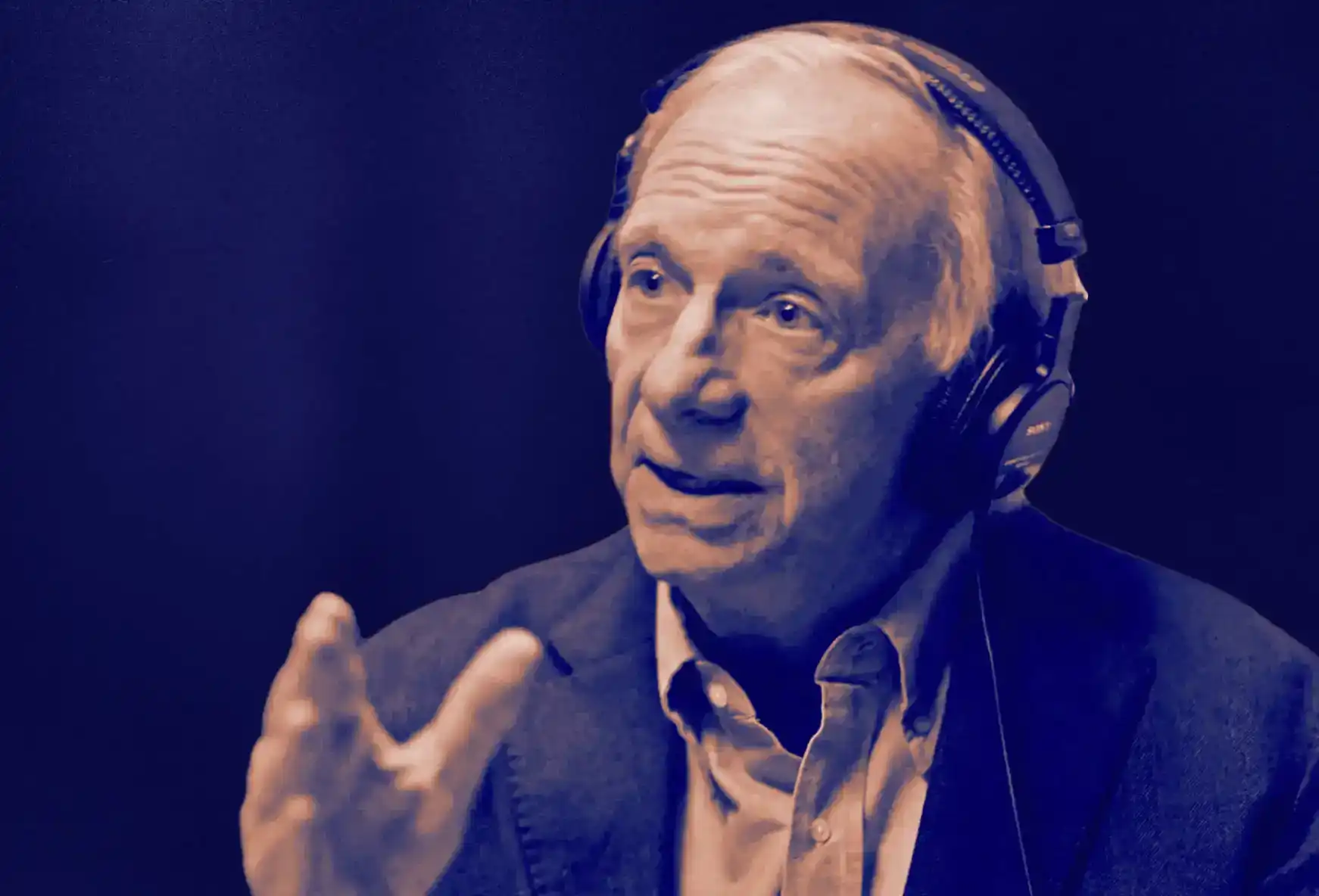
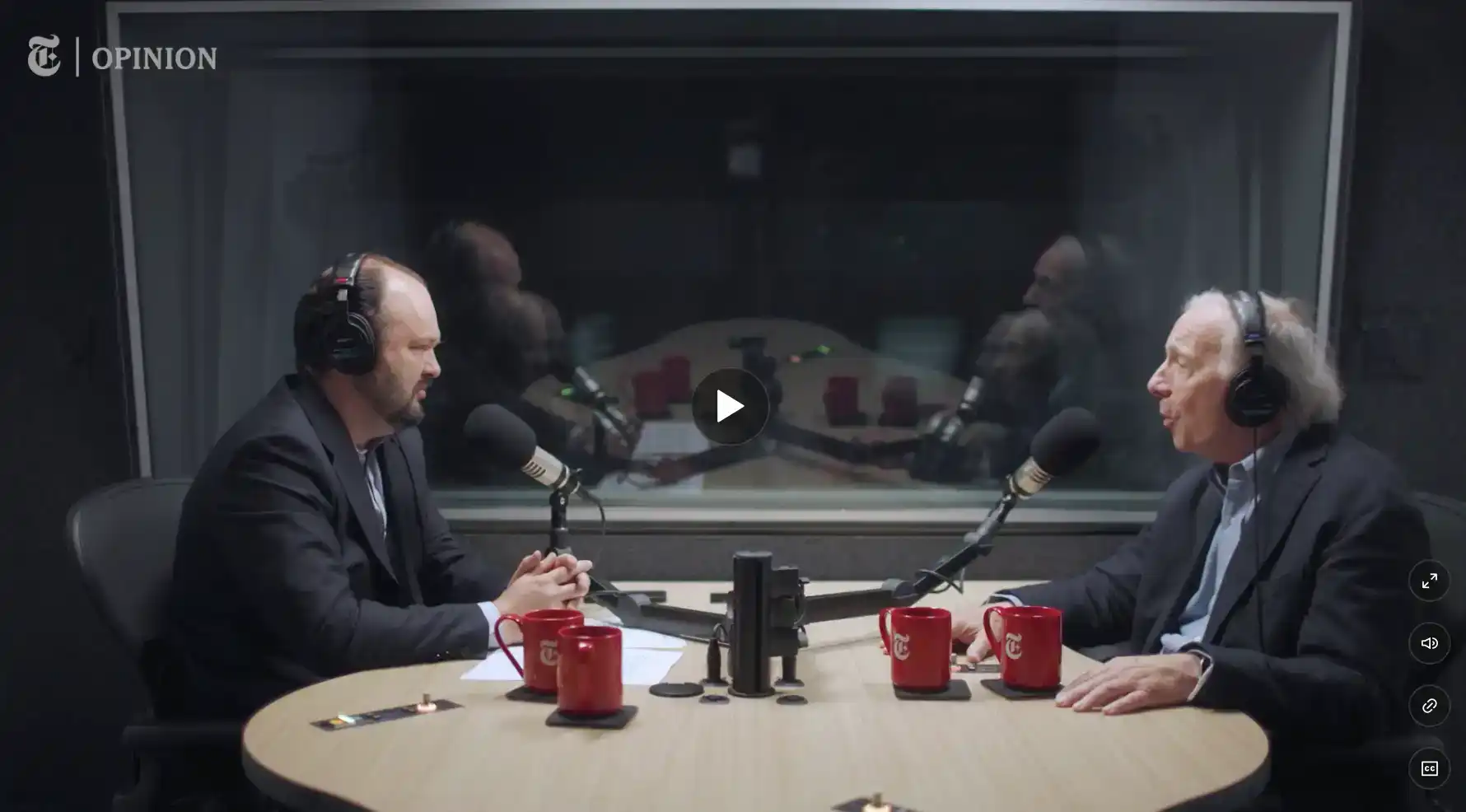
This article is adapted from an interview with Ray Dalio on the New York Times podcast "Interesting Times." Dalio is the founder of Bridgewater Associates and has long observed changes in the macro order from the perspectives of debt cycles, reserve currencies, and the rise and fall of empires.
In this conversation, Dalio breaks down America's challenges into a set of more fundamental structural variables: how debt accumulates, how politics divides, how the international order fails, and whether technology can still provide a new productivity outlet.
First, the debt cycle is altering state capacity. In the past, the U.S. relied on its strong fiscal credit and the dollar's reserve currency status to finance itself at low costs over the long term, maintaining military spending, social welfare, and global commitments. But now, spending chronically exceeds revenue, and the burden of debt and interest payments continues to rise, compressing fiscal space. This means debt is no longer just a number on a balance sheet; it will gradually translate into constraints on state action: whether it can continue to protect allies, maintain welfare, or bear the cost of war will be limited by fiscal realities.
Second, domestic political polarization is becoming tied to the issue of money distribution. In the past, political divisions in the U.S. could be partially absorbed by growth, taxation, and the expansion of welfare; although different groups had conflicting interests, they still shared trust in a common set of institutions. Now, wealth inequality, value conflicts, and the polarization between left and right reinforce each other. Any plan to reduce deficits inevitably touches on the question of "who pays more taxes and who gets less welfare." This means fiscal adjustment is no longer just a technical issue but a question of political legitimacy. The more reform is needed, the harder it is to build consensus.
Third, the international order is reverting from rules to power. After 1945, the U.S. led the establishment of a world order centered on multilateral institutions, a rules-based system, and dollar credibility. In the past, even during the Cold War, the U.S. held overwhelming advantages in the financial and institutional arenas. But now, geopolitical conflicts, bloc realignments, and supply chain security concerns are eroding the stability of this order. The analogy of Iran, the Strait of Hormuz, and even the Suez Crisis points to the same question: when rules cannot be enforced, markets will ultimately reassess the relationship between power, credit, and security.
Fourth, pressure on the dollar does not equate to the Chinese yuan directly taking its place. Dalio's judgment is more nuanced: the yuan may become a medium of exchange in more trade scenarios, but this does not mean Chinese debt will become the world's most important store-of-wealth asset. The real question is, as fiat currencies generally face depreciation pressure, what safe assets will capital seek? Gold's renewed prominence as a major component of central bank reserves is a manifestation of this uncertainty.
Fifth, AI could both mitigate and amplify crises. Historically, technological progress has often been seen as a key way for the U.S. to address debt and growth problems. If AI can significantly increase productivity, it could indeed improve income, growth, and debt-servicing capacity. But now, AI is also creating new wealth concentration, job displacement, and security risks. It could be a buffer against fiscal stress or a new amplifier for social division and geopolitical competition.
If this conversation is condensed into one assessment, it is this: America's problem is not a single crisis, but the simultaneous entry into a re-evaluation period of debt, political, international order, and technological variables.
In this sense, the subject discussed in this article is no longer just whether the U.S. is in decline, but a larger structural question: when the old order can still function, but its underlying conditions are loosening, how should markets, states, and individuals reinterpret "safety" and "credit."
The following is the original content (edited for readability):
TL;DR
·Dalio's core judgment: The U.S. is not weakening in the short term; it is entering a downward phase of its big cycle.
·The real risk for the U.S. is not lack of money, but excessive debt, which will slowly hollow out state capacity.
·The deficit is the hardest to solve because it ultimately becomes a political conflict over "who pays and who gives up benefits."
·The root cause of U.S. political division is not just values, but imbalances in wealth and interest distribution.
·The rules-based order led by the post-war U.S. is failing; the world is returning to power politics.
·The dollar won't be immediately replaced by the yuan, but the world will pay more attention to safe-haven assets like gold.
·AI could rescue growth, but it could also further fracture employment, wealth, and security orders.
·The key to whether America can recover lies not in markets, but in education, social order, and avoiding war.
Original Content
It feels to me like we are currently living in a "Fall of the American Empire" moment.
Partly because of the stalemate in the Iran conflict; partly because Donald Trump is putting pressure on America's alliance relationships; and partly, I suppose, due to a growing sense that America's biggest rival, China, is watching coldly from the sidelines, waiting for its collapse.
This week's guest has long been focused on this question. He has a grand historical theory predicting America's decline. In some ways, he is an atypical Cassandra figure—repeatedly issuing warnings that are not always taken seriously.
Ray Dalio built Bridgewater Associates, one of the world's largest hedge funds, from scratch. But now, what he most wants to talk about is no longer just markets and investing, but the decline of the American empire and whether it's still possible to pull it back from the brink.
The following is an edited transcript of an episode of "Interesting Times." For the full effect, we recommend listening to the original audio. You can do so via the player above, or on The New York Times App, Apple, Spotify, Amazon Music, YouTube, iHeartRadio, and other podcast platforms.
The Cyclical Logic of America's Crisis
Ross Douthat (host): Ray Dalio, welcome to Interesting Times.
Ray Dalio (founder of Bridgewater Associates): Thank you. It's certainly interesting to be on "Interesting Times" during interesting times.
Douthat: Everyone says that. You're someone who's made a career out of placing bets, and over the past few decades, a fair number of your judgments have paid off. Recently, you've been saying that the United States of America at this moment might not be a particularly good bet.
So if someone were looking at the United States right now, trying to judge whether to bet that the "American Empire" will remain dominant in the 21st century, what are the important forces or key factors they should pay attention to?
How Debt Saps State Capacity
Dalio: I would first correct that. I'm not saying America is a bad bet or a good bet. I'm just describing what's happening.
One thing I've learned in my roughly 50 years of investing is that many events that are very important to me never happened in my lifetime before, but they have happened many times in history.
So, I began studying the last 500 years to try to understand why reserve currencies and their empires rise and fall. You see a pattern over and over. There is indeed a "Big Cycle," and the starting point of the big cycle is usually the formation of a new order.
There are three types of order: the monetary order, the domestic political order, and the international world order. These are three important evolving forces.
Let's start with the first force, the monetary order. There is a debt cycle within it. When debt rises relative to income, and debt service payments also rise relative to income, it squeezes out other spending—whether it's a country, an individual—
Douthat: Or an empire.
Dalio: Any entity!
Douthat: Yes.
Behind Political Division Lies the Distribution of Money
Dalio: That's the problem. For example, the U.S. now spends about $7 trillion a year and takes in about $5 trillion—meaning spending exceeds income by about 40%. This deficit has persisted for a while, so the U.S. has accumulated debt about 6 times its revenue—revenue meaning the actual money the government receives.
Exactly. But the consequence of this is that the money itself also gets devalued. That's how the mechanism works. And that's why there are long-term debt cycles, as well as short-term debt cycles, monetary cycles, and business cycles—they drive the economy from recession to overheating to the next recession.
Related to this is the domestic political and social cycle, which is closely tied to monetary issues. When a society develops huge wealth gaps and value differences internally—
Douthat: You mean between the rich and the poor?
Dalio: Between rich and poor, and between people with different values. When these differences become irreconcilable, political conflict arises, severe enough to put the entire system at risk.
So, I think the first cycle is happening. I also think the second cycle is happening—the irreconcilable conflict between the political left and right. We can talk more about that later.
The World Order Is Reverting to the Logic of Power
Douthat: How do international factors come into play?
Dalio: The international level follows the same logic. After a war, a dominant power emerges and establishes a new world order. Order means a system. This current order began in 1945.
Douthat: For us, yes. The U.S. was the dominant power that set up that system.
Dalio: Right. The U.S. created a system largely modeled on its own institutions because it was meant to be representative. The United Nations, for example, is a multilateral world order. Different nations could operate within it, and there was supposed to be a rules-based system.
But the problem is, without enforcement mechanisms, the system isn't truly effective. It's an idealistic system, and when it worked, it was a great system. But now, we no longer have a truly multilateral, rules-based system.
We are returning to what existed before 1945 and for most of history: geopolitical conflicts arise, like what's happening now with Iran.
How are these conflicts resolved? You don't take it to the International Court of Justice, wait for a ruling, and then enforce it. What ultimately matters is power.
Douthat: Right. But even at the height of the "rules-based international order" as we understood it, first, for most of that history, the U.S. was also in conflict with the Soviet Union.
Dalio: Correct.
Douthat: That is, the Cold War was ongoing. The window where the system operated purely without major power conflict was relatively short. And even then, American power was ultimately the decisive power, right?
Dalio: Of course. Because the Soviet Union didn't really have the means. It had military strength, but at the end of WWII, the U.S. held about 80% of the world's monetary wealth, had half the world's GDP, and was also the dominant military power. So, we had the ability to provide money outward, and those who received it valued that money. The Soviet system, in contrast, was a very limited part. Financially, it was nearly bankrupt and certainly not a major player.
Douthat: So, there was a real balance in military power, but in terms of financial power balance, it was essentially the U.S. calling the shots.
Dalio: Yes. Fortunately, under the principle of "mutually assured destruction," we never actually used that military power. Still, I remember the Cuban Missile Crisis—I was a kid watching it unfold, we didn't know if there would be a nuclear exchange. But it didn't happen, and later the Soviet Union collapsed.
Douthat: In your cyclical view of history, what role does contingency play?
Dalio: All events occur in succession. The key question, I think, is: do they trigger disputes? And in a world without a court system to resolve disputes—whether domestic or international—how are these disputes resolved?
Like what's happening in the Middle East now, especially concerning Iran. There is a conflict, which then escalates into war because there is no other way to resolve it. And what the world is watching now is: can the U.S. win this war, or will it lose?
We look at this almost in black-and-white terms: Who will control the Strait of Hormuz? Who will control nuclear materials? Can the U.S. win this war?
We should also see the bloc relationships behind this. Russia and Iran tend to lean towards supporting each other, just as there are supporting forces on the other side.
Douthat: To reiterate, what makes this moment most distinct from the past few decades, is it that the power of the other side is stronger?
Dalio: It's the change in relative strength, and the breakdown of the existing order. Also, there is the entanglement of vast creditor-debtor relationships. For example, when the U.S. runs large deficits over a long period, it must borrow. And in times of conflict, this becomes very risky. Interdependence is similar.
In other words, in a higher-risk world, you must have self-sufficiency. Because history tells us you can be cut off at any time. Either side can be cut off.
Douthat: Yes. I'm interested in how these factors interlock. Suppose the eventual outcome of the Iran issue is that people perceive the U.S. lost the war, or at least didn't achieve its goals. Perhaps the Strait of Hormuz remains open, but the Iranian regime stays in power, and an impression forms: the U.S. tried something and failed. Do you think that impression would, in turn, affect how people judge America's creditworthiness in paying its debts?
Dalio: I was just in Asia for about a month, meeting leaders and others from various countries. This matter has a huge impact, very similar to the impact when Britain lost the Suez Canal—when Egypt took control of it. That was seen as the marker for the end of the British Empire. In other words, it's a very big deal.
Douthat: Yes, that was in the 1950s.
Dalio: Right. And that was also when people became unwilling to hold British debt and other assets. Now, different countries are asking: Will America still protect us? Or has America lost the ability to protect us? Because the American people don't want a protracted war, so wars must end quickly, not be too costly, and—
Douthat: And be popular, right?
Dalio: Be popular.
Douthat: And our wars usually aren't very popular these days. But I want to stay with the Suez analogy because I find it interesting. I've heard many people use it. In the Suez Crisis, Britain, France, and Israel essentially tried to retake control of the canal after Egypt nationalized it.
So obviously there's a parallel with Iran: a key global trade chokepoint, conflict between Western powers and a regional power over it. But it seems to me the key in Suez was that Dwight Eisenhower and the U.S. basically told Britain: No, you can't do that.
Therefore, the crisis of confidence in the British Empire, the pound, and everything else stemmed partly from the realization that, as you said, this was the post-WWII order, and the U.S. was the dominant power.
So, does a similar role need to be played by China today? Does there need to be a similar moment for people to truly lose confidence in the U.S.? To abandon the old hegemon, must a new hegemon first appear?
Dalio: By the way, I don't think China will ultimately become that traditional kind of hegemonic power. We can discuss that more later.
Douthat: I'm interested in that.
Dalio: But what I'm saying is, back then, Britain's debt problem was coupled with its clear loss of power. Britain's decline had actually started even before Suez, because people had already realized America was not only a world power but also in a better financial position.
Douthat: So, if the analogy holds value, what's the equivalent today? If people conclude the U.S. is no longer as trustworthy as we thought, that its ability to repay debt is diminished, etc.—maybe this relates to your point about China and whether it will become the new hegemon—will people turn to China? Will they abandon the dollar as a reserve currency? If people lose confidence in America, where does the money go?
Dalio: I'll give my view. But I also want to say this is typical in every cycle. For instance, when Britain replaced the Netherlands, the process was similar. Britain was financially stronger and had greater overall capability. The Netherlands lost, and there was a transfer from the Dutch Empire to the British Empire; the Netherlands had the reserve currency and debt at the time. This happens over and over in the same way.
So, you don't necessarily need a specific figure, like President Eisenhower—
Douthat: No, but you need a successor power. That's what I'm asking.
Dalio: Well, what I think happens next—to answer your question about where money goes, where wealth goes—a country can still be the dominant power while also having serious financial problems.
Like in 1971 when the monetary system broke down, the U.S. was still the dominant power. In 1971, U.S. debt was too high to fulfill the promise of delivering gold, and the monetary system collapsed. Then we had the stagflation of the 1970s. Something like that can still happen.
The Dollar, Gold, and Wealth Safety
Douthat: So that's one scenario: you have a crisis, but no successor power emerges. The Soviet Union didn't replace the U.S. in the '70s.
Dalio: Right.
Douthat: The U.S. just had about a decade that was really bad.
Dalio: Your fiscal condition would still be bad. And that means holding bonds isn't a good store of wealth. To answer your question, money has two functions: a medium of exchange and a store of wealth.
I think what you'll see now is that Chinese currency is increasingly becoming a medium of exchange for various reasons. But I very much doubt Chinese debt or similar assets will become a serious store of wealth, because historically they haven't been good at protecting wealth.
Douthat: Right.
Dalio: And I don't think any fiat currency will be an effective store of wealth.
Douthat: For our listeners, a fiat currency is one issued by a nation-state but not backed by gold or other assets, correct?
Dalio: It's money they can print themselves.
Douthat: They can print money.
Dalio: So, looking back at history, in all similar periods, all fiat currencies depreciate, and gold rises. Now, gold is already the second-largest reserve asset for central banks. In other words, the dollar is first, then gold, then the euro, then the yen.
So I think the real question is: what currency can serve as a store of wealth? Gold becomes the leading candidate largely by default because it has proven itself the winner over thousands of years.
Douthat: So alternatives to the dollar become more attractive, but that doesn't mean directly switching to "let's buy Chinese debt"?
Dalio: In terms of transactions, the traditional way it works is: when countries start transacting in a currency, they gradually build reserves of that currency. It's like their cash account—they need enough on hand to pay for the goods or services they just bought. So I expect those reserves to increase.
The problem is storing wealth in such debt assets becomes a puzzle. So we're entering a new world where everyone is asking: what is a safe store of wealth?
Douthat: For the average American, if they look at this cycle you describe and think: Okay, this has happened before, it's happening again. We're going through a period of living beyond our means, overspending, and an adjustment is inevitable—what do you expect that adjustment to look like?
One possibility is the 1970s: high inflation, slow growth, i.e., stagflation. Another is the Great Depression model: financial market crash, triggering a crisis, leading to poverty and deflation. In the current environment, which should we worry about most?
Dalio: I think what everyone should worry most about are the parts of the future they don't understand, okay?
Douthat: Got it. That's what worries me too. That's why I'm asking you.
Dalio: So I mean: we don't know what the world will look like three to five years from now. What we don't know far exceeds what we do know. I think what we can be certain of is that we are entering an increasingly disorderly period, and that is the greater risk.
So, what should the answer be? I think the answer is knowing how to build a well-diversified portfolio that can broadly withstand such uncertainty.
Simply put, if you ask, "What should my typical portfolio look like?" It would include stocks, bonds, and investments in other countries—diversification is good. I can't go into specifics here. But I think any portfolio should have 5% to 15% in gold because when other assets truly enter bad times, gold tends to perform best. In any case, that's one reason gold has been a good investment in recent years, because the market is moving in that direction.
So I'd say: stay balanced, learn to have a well-diversified portfolio to hedge other risks.
Douthat: As an investor, I do want investment advice. But as a commentator, columnist—whatever I am—I'm more interested in describing or anticipating reality. Even admitting we can't know the future for sure, if history has these lessons, if these cycles repeat, and we are heading for some kind of bottom or reset, maybe followed by a bounce-back, I'm just trying to figure out what life at the bottom of the cycle looks like to you. Is it more like long-term stagnation and persistent discontent, or more like crisis, street clashes? Because the '70s and '30s seem like two very different examples. That's my question.
Dalio: I can tell you what I worry about. I think we have several major problems now: monetary problems, domestic political and social problems, and international geopolitical problems. Looking at the calendar, we are approaching midterm elections. I think the Republicans are likely to lose control of the House. After that, you'll see political and social conflict intensify, especially between that election and the 2028 presidential election.
I worry these divisions could become irreconcilable. I don't know how things will play out. I don't know if respect for rules, laws, order, etc., will sustain law and order.
I worry—I'm not predicting—wider violence. Wider violence could indeed occur. There are more guns in America than people.
Douthat: Population—
Dalio: I'm not predicting—let me finish.
Douthat: Okay.
Dalio: I'm just seeing these possibilities. I think everyone can look around and judge for themselves. Overall, in answer to your question, my reaction is: we are entering a more disorderly period. I think the risks are higher than before and it's developing along that trajectory. We're discussing this verbally, but I typically observe these patterns in charts, and these things are fitting those historical patterns.
You asked me this question, and I'm giving my answer. For these reasons, I think people should keep their portfolios well-diversified and be alert to such things.
Douthat: Talk about how the debt picture and the political/social picture interact in your view. Because if you ask people now what they're divided over, they usually don't cite interest payments on the national debt. They list a series of things they disagree on.
I'm just curious: what are the economic forces at work when interest payments rise and squeeze out other forms of investment, and how do they interact with social disorder?
Dalio: Their division is essentially about "who has how much money, and who gets that money," and this is closely tied to the fiscal deficit.
I recently wrote a book trying to explain this mechanism through 35 case studies, called "Why Nations Go Broke." I've also been speaking with top figures in both the Democratic and Republican parties, and everyone agrees on the mechanics themselves.
When I sit down with them and say you have to bring the fiscal deficit down to 3% of GDP through some combination—raising taxes, cutting spending, controlling interest rates—because mechanically, that's what's needed.
Then they say, Ray, you don't understand. To win an election, I at least have to promise one of two things: "I won't raise your taxes," and "I won't cut your benefits."
The division in this country exists, for example, between the billionaire class and those struggling financially, between the left and the right, between populism, etc.—and all this contains monetary and financial elements. So, the fiscal deficit and monetary issues are a very important part of the social conflict.
Douthat: So, when you talk to politicians and they explain they can't raise taxes or cut spending, I imagine they'd next say people interpret these things as threats to opportunity or equality. Those dependent on Medicare and Social Security see them as guarantees of equality; those reliant on low taxes for entrepreneurship see them as guarantees of opportunity.
If you want to convince these people to cut the deficit to 3% of GDP, what would you tell them they're being saved from?
Dalio: Saved from a financial crisis.
Douthat: And if the U.S. had a financial crisis, what would it look like? What specifically would happen?
Dalio: A financial crisis means the government's ability to spend becomes very constrained. In other words, you can't afford military spending, social welfare spending, etc.; finances are severely constrained. Interest rates would rise because demand wouldn't match supply, which would suppress borrowing, hit markets, etc. This would then force the central bank to try to balance things by printing money, leading to currency depreciation and a stagflationary environment.
Douthat: I see. So the worst-case scenario sounds like: a financial crisis similar to 2008 that ends up turning into 1970s-style stagflation? Sorry, I'm not trying to pin you down to—
Dalio: No, no, I'm happy to answer as best I can.
Douthat: I just want to give context: I'm 46, and my entire life has been lived in the shadow of predictions that "U.S. fiscal deficits are unsustainable." The first presidential election I really remember is Ross Perot's campaign in 1992, which was largely centered on these themes.
But like many Americans, this also means I tend to tune out arguments about the fiscal deficit on autopilot. The first time since the '90s that I felt deficits and overspending really hit the average person's pocket was the inflation surge during the first few years of the Biden administration.
So I think it's helpful for me and listeners to specifically understand this: why would the 2030s, or the late 2020s, be different from the last 20 years? After all, we've had these deficits throughout the last 20 years.
Dalio: Thank you for your curiosity! And I feel I must answer this. It's like plaque building up in your arteries. Like you say, "I haven't had a heart attack yet."
Douthat: "I feel fine."
Dalio: And I could say: Okay, I get it, you haven't had a heart attack. But can I show you the MRI images so you can see this plaque accumulating in your system? Can you understand what I'm saying this plaque means—if it continues, you will have a heart attack. Can you understand? Can you understand what these numbers mean, where you are now? Listen, this is your life, your choice. You have to ask yourself: "Is this right or wrong?" This is something you must do for your own well-being.
Douthat: In your narrative, combining this diagnosis with your assessment—which I share—of how the U.S. political system currently operates, it seems to suggest America will at least experience a mild "heart attack" before any real change happens.
You said at the beginning that despite me framing the question as a podcast host, you're not actually betting against America. So are you optimistic that America might have a so-called "mild heart attack" and then recover?
Can AI Alleviate America's Predicament?
Dalio: I think we will enter a more disorderly period because several forces are converging: monetary problems; irreconcilable domestic social and political divisions; and international world order problems. I would add two other factors. One is the natural forces that have recurred throughout history—
Douthat: Like pandemics.
Dalio: Droughts, floods, pandemics. And if you look at most people's judgment on climate trends, it's not improving; it's deteriorating. Then there's technology and AI.
We must include technology and AI in this picture because they will play a role. And they will play a role in three ways. First, it could greatly enhance productivity, thus helping alleviate some of the debt problem—maybe. We can continue on that. But I don't think it will happen that quickly.
Douthat: I often hear this from people in the AI field. They say, in the best case, if AI just adds X percentage points to GDP growth, X points to productivity growth, it would ease the problem you initially mentioned.
Dalio: Exactly, exactly.
Douthat: It would make debt more bearable.
Dalio: That's precisely what I mean. Because it can generate income, which can help service debt, etc. So that's one of three effects of AI.
The second effect of AI is that it's creating huge wealth gaps. Those who benefit from it are approaching the question of "who will be the first trillionaire." Wealth gaps have already widened dramatically, and AI will replace many jobs. So that's the second factor. These gaps will be a problem however we handle them. They must be addressed, and it's likely to become a political issue, but it is indeed a problem.
Third, the technology itself can be used to harm people—it has immense power. It can be used by other countries, by those who want to cause harm, by those who want to steal funds. It can be used to inflict damage.
Douthat: Right. But in your model, your cycle theory, from this last point, technology could exacerbate geopolitical tensions. It could reinforce Cold War dynamics and intensify domestic tensions.
Dalio: Correct.
Douthat: But it could also ease fiscal pressure.
Dalio: Yes, it could bring productivity gains.
Douthat: But if it brings some bad effects, it likely also brings some good effects.
Dalio: The key is how these effects ultimately offset and balance each other.
Douthat: Yes.
Dalio: And we don't know what the future will be like because human capacity isn't sufficient to predict what the world will be like three to five years from now. Over the next five years, with these five forces converging, the world will go through a time warp. The next five years will see tremendous change; all these forces will come together. And after we go through this period, the world on the other side will be almost unrecognizable. It will be very different; it will be a period of dramatic change, dramatic turbulence.
So, what should one do? Knowing you can't truly know what the future holds, my own approach—and my advice—is to know how to balance your positions.
Douthat: However, for politicians hearing this, they might think: Okay, I know Ray Dalio wants us to cut the deficit to 3% of GDP, but he also believes we are going through a five-year "time warp" unprecedented in human history. So maybe we should wait and see what the world looks like in five years before painfully restructuring Medicare and Social Security.
Dalio: I don't think they care what Ray Dalio thinks. (Laughs)
Douthat: Well, not that. But—
Dalio: I think they care more about what the ballot box thinks.
Douthat: Yes, of course. I've spoken with some people in Washington D.C., and there are always those sincerely worried about the deficit and trying to take action.
What I'm really interested in is, in your narrative about the rise and fall of empires—Spanish, British, Dutch "mini-empire," etc.—there doesn't seem to be a case where a great power went through this cycle, fell to the bottom as you describe, then bounced back to start a new upward cycle. Or is there such a case?
Because, look, as Americans, that's our goal. If someone accepts your narrative, they'd say: Okay, but history isn't deterministic. We can make choices, we can get ourselves into another cycle, right?
Dalio: Yes. I think it's possible. But the issue is that something must happen—and history suggests this too. Plato talked about this cycle—
Douthat: Yes.
Dalio: In "The Republic." He talked about democracy and its problems because people don't always vote for what is truly beneficial for them or for national strength. About 60% of Americans read below a sixth-grade level, and there are issues with productivity, etc. Yet they vote and largely decide the outcome.
The question is: How does change happen in a democracy? In Plato's view, ideally, this is when you need a "benevolent autocrat"—someone strong enough to take control, willing to make sacrifices for the country. In a sense, they can reunite people.
However it happens, what you need is a strong leader from the middle. Someone who recognizes that partisanship and conflict are inherently problematic, but also has the strength to get people and the system functioning in the necessary way. Then some form of debt restructuring becomes possible, the education system could improve, structural reforms for efficiency could proceed.
Running a big company is hard enough. Imagine how hard it is to run and run well this country. So you need an extraordinary person with great strength; you need strong leadership that can be followed, not continuously undermined by either side.
Douthat: So you're looking for a Franklin D. Roosevelt, or perhaps a Ronald Reagan, for this particular crisis?
Dalio: Hmm, I think it's harder now than ever.
Douthat: Because we've gone further down—
Dalio: Everyone has their own viewpoint. Do you know how hard leadership is? (Chuckles) I mean, can you imagine? So, can you lead people toward the middle, unite them, and get them willing to do the hard things?
Douthat: Right. But in these discussions, I often think of one point: we are also incredibly wealthy. The U.S. today is even wealthier than in the 1980s, and certainly wealthier than during the Great Depression. While people feel inflationary pressures, or hardship if unemployment suddenly spikes, this wealth itself is also a stabilizer.
You could also see another scenario. Like Japan. Japan is a country with massive long-term debt; I wouldn't say it has handled it very successfully. Its economic dynamism has declined, it's become more stagnant, no longer the Japan of the 1980s or '90s thought capable of "taking over the world." But it has maintained the stability of a wealthy, aging society. Do you think that's a plausible scenario for the U.S.?
Dalio: I think you're raising two questions, though related, but I'll answer them separately. The first question is about higher living standards and America being richer. That's always been true historically. All those periods before WWII also had this. The crucial question is really how people get along with each other.
Douthat: You mean, at the peak of debt, empires are often wealthier than ever?
Dalio: Yes. If you look at per capita income, many metrics—life expectancy, any measure of well-being—and plot a chart from the 15th century, or from the Dark Ages, you see these metrics were relatively flat early on. That is, at every historical moment, we, as a whole world, a whole society, are wealthier than before. Your point holds.
But that didn't prevent WWII, didn't prevent debt problems, didn't prevent those other things from happening. Because the most important issue is how people get along. Can they tackle these problems together? Realistically, what if our living standards drop 10% as part of a healthy adjustment?
I'm almost done, but I want to be clear. So that's point one. Wealth doesn't mitigate the debt problem or the struggle over "who controls"—
Douthat: But perhaps it mitigates a bit. Like in the '30s—
Dalio: No, no, no. Wait. I didn't interrupt you earlier. Please don't—
Douthat: Okay, go on. Sorry.
Dalio: Let me finish, then you can respond. As for Japan—or do you want me to answer that first, then talk about Japan?
Douthat: Hold on Japan for a moment. I just want to ask one more thing on the previous point: if you look at the '30s, '70s, and the post-2008 financial crisis period, they were all economic crises of some sort, but things seem to have gotten better. The '30s were worse than the '70s, the '70s worse than the 2010s. So, perhaps because we've grown wealthier, things can stabilize to some degree, right?
Dalio: Yes. If you look at per capita income, life expectancy—any standard of living or similar metric—you see a line—
Douthat: I'm just saying, even social conflict, the '70s weren't as severe as the '30s. That's all I mean.
Dalio: Hmm, I wouldn't overemphasize that.
Douthat: Okay.
Dalio: In other words, based on several measures, I'd say it's more like the '30s now. If you look at the severity of debt, the severity of internal conflict—I've lived through these periods. And I'd say—
Douthat: So you think we're worse off now than in the '70s?
Dalio: Our debt situation is worse.
Douthat: That's true.
Dalio: And the U.S. position in the world order and related conflicts are worse than then.
Douthat: Got it.
Dalio: So I think that's objectively the case. I'm not trying to be pessimistic; I'm trying to do analysis because my job is to bet correctly.
Douthat: Okay. What about our "Japan-like future"? Is a Japan-like future possible for us?
Dalio: Japan's case has two main points, very interesting. Japan's debt is mostly internal. In that specific case, their approach was: the central bank printed a lot of money and bought the debt. That's what they did. The result was yen depreciation. As the currency and debt value fell, Japanese wealth value also shrank dramatically.
So yes, we could see something similar happen. But our situation is different: one-third of U.S. debt is held by foreigners. That's different. As a country, we owe money to other countries.
Douthat: I'd like to—
Dalio: If you think that's a good outcome (chuckles).
Douthat: No, I don't think so. Well, I think—
Dalio: It's like the decline of the British Empire. You might go through a process similar to the British Empire's decline. That's roughly it.
Douthat: No, I don't think that's a good outcome. The reason I'm interested is that in Japan's case, it was more like sustainable stagnation, not crisis and collapse. But I guess on one point I'd agree: for various reasons—beyond this conversation—Japanese society seems more likely to accept a decline in living standards than American society. In that sense, it's probably not a suitable model for the U.S.
Let me pose a final question with a comment on my own optimism, and you can respond. I mentioned earlier that I've lived my whole life in a world where people constantly worried about deficits and deficit spending. I think, as you say, the crisis not having arrived yet doesn't mean you won't have a heart attack tomorrow. That's perfectly reasonable. So I fully expect the problems you describe to have a significantly negative impact on the U.S.
But at the same time, I do think it's a strange moment: by some metrics, the U.S. looks fragile; but in many ways, the U.S. is very, very strong. Looking at the past 10 or 15 years, U.S. GDP growth has clearly outpaced Western Europe, Canada, and other comparable economies. We still have the world's most profitable, cutting-edge tech companies. We still have the world's most capable military. Socially, we have many problems, but what other major country is better than the U.S. at absorbing immigrants, has a higher birth rate, is geographically distant from major wars and refugee flows? I'm not sure there's a better bet than the U.S.
If I look ahead 50 years, in the context of the whole world order, isn't the U.S. still a place one can have some confidence in? What do you think?
Dalio: I think we shouldn't frame the question the way I objected to at the beginning, as "will the U.S. win or lose" or the like.
I think we know what health is. Looking at history, for any country to remain healthy, it only needs to do three things well. First, educate children well so they are capable, have high-quality productive capacity, and possess civic literacy. Second, have them grow up in an orderly country where people can cooperate, create productivity, leading to broad productivity gains and shared prosperity. Third, avoid getting into wars. No civil war, no international war. You just need those.
Then you can look at these fundamentals. Are we educating children well so they are productive and capable, and can interact civilly? Do we have a civically literate population? Do we have an environment that enhances productivity and allows people to get along?
I think we are in a very bad state now. I live in Connecticut; my wife has been helping the poorest kids get through high school. The education gap, and gaps in these areas, including civic literacy, are real problems. So I think it really comes back to these things.
And these are the most basic things. Is your income greater than your spending? What's your income situation? What does your balance sheet look like? These are basic questions. You know these basics. So if we can have these foundations—yes, I thank God I grew up in America, because my goodness, it was incredible. It was a place where anyone from anywhere in the world could truly become a citizen, so it had that true meritocracy. I came from a lower-middle-class family. My father was a jazz musician. I could go to a good school, I could make my own way, understand? I think of that creativity, all those wonderful things—broad education, a middle-class society—we had a middle class, we had those things.
So I've seen the difference. I know what the fundamentals are. I look at the metrics, and they worry me.
Douthat: Okay. Ray Dalio, thank you for being on the show.
Dalio: Thank you for having me.