Technology Trends

Explores the latest innovations, protocol upgrades, cross-chain solutions, and security mechanisms in the blockchain space. It provides a developer-focused perspective to analyze emerging technological trends and potential breakthroughs.


Anthropic Starts Poaching Scientists? $27K Weekly Onsite Stipend to Fix Claude's Expert-Level Errors

Anthropic has launched a new STEM Fellow program, offering $3,800 per week for a three-month, in-person residency in San Francisco. The role targets experts from science, technology, engineering, and mathematics (STEM) fields—machine learning experience is helpful but not required. Instead, Anthropic values scientific judgment and a willingness to learn quickly. Fellows will work with Claude models and internal tools under the guidance of an Anthropic researcher. Example projects include a materials scientist identifying errors in Claude’s reasoning or a climate scientist integrating atmospheric modeling software with Claude. The goal is to have experts "tell Claude where it's wrong" and improve its scientific capabilities. This initiative is part of Anthropic’s broader strategy to strengthen its scientific ecosystem, following earlier programs like the AI Safety Fellows and AI for Science programs. The company acknowledges that current AI models, while powerful, still produce high-confidence errors and lack end-to-end research autonomy. The program aims to embed domain expertise directly into model development, turning scientists into "high-level reviewers" for AI. Anthropic CEO Dario Amodei has previously emphasized AI’s potential to accelerate scientific breakthroughs, particularly in biology and healthcare. The company believes that the next phase of AI competition will depend not on scaling parameters, but on integrating human expertise to refine model accuracy and reliability.

marsbit5h ago

Anthropic Starts Poaching Scientists? $27K Weekly Onsite Stipend to Fix Claude's Expert-Level Errors

marsbit5h ago

Three Frameworks for Ordinary People to Achieve AI Capability Leap: Say Goodbye to the Dilemma of 'Repeating Inputs Every Day'

Summary: This article outlines three frameworks for maximizing AI efficiency, moving beyond basic prompt usage. 1. **Three-Layer Evolution**: Users progress from (1) **Prompt** (one-off instructions, reset each session), to (2) **Project** (context-aware within a specific project), to (3) **Skill** (permanent, auto-applied knowledge). Most users stagnate at the first layer, repeating the same instructions daily with no cumulative improvement. Skills transform the AI from a chat tool into a personalized work system. 2. **Transaction vs. Compound Interest Mindset**: Using prompts is a linear transaction—effort and output are 1:1, and stopping resets progress. Investing time in building Skills is compound interest; a small initial time investment pays continuous dividends, as each Skill permanently elevates the AI's baseline performance. 3. **Thin Harness, Fat Skills**: The system architecture should prioritize thick, well-defined Skills (90% of the value—containing processes, standards, and domain knowledge) and a thin "harness" (the minimal technical environment). Avoid over-engineering the toolchain while neglecting the AI's actual knowledge. Skills are permanent assets that automatically improve with model updates. The key takeaway: Identify tasks you repeat, encode them into Skills (using tools like Claude's Skill Creator), and shift focus from daily prompting to building a compounding, self-improving AI system.

marsbit6h ago

Three Frameworks for Ordinary People to Achieve AI Capability Leap: Say Goodbye to the Dilemma of 'Repeating Inputs Every Day'

marsbit6h ago

How Blockchain Fills the Identity, Payment, and Trust Gaps for AI Agents?

AI Agents are rapidly evolving into autonomous economic participants, but they face critical gaps in identity, payment, and trust infrastructure. They currently lack standardized ways to prove who they are, what they are authorized to do, and how they should be compensated across different environments. Blockchain technology is emerging as a solution to these challenges by providing a neutral coordination layer. Public ledgers offer auditable credentials, wallets enable portable identities, and stablecoins serve as a programmable settlement layer. A key bottleneck is the absence of a universal identity standard for non-human entities—akin to "Know Your Agent" (KYA)—which would allow Agents to operate with verifiable, cryptographically signed credentials. Without this, Agents remain fragmented and face barriers to interoperability. Additionally, as AI systems take on governance roles, there is a risk that centralized control over models could undermine decentralized governance in practice. Cryptographic guarantees on training data, prompts, and behavior logs are essential to ensure Agents act in users' interests. Stablecoins and crypto-native payment rails are becoming the default for Agent-to-Agent commerce, enabling seamless, low-cost transactions for AI-native services. These systems support permissionless, programmable payments without traditional merchant onboarding. Finally, as AI scales, human oversight becomes impractical. Trust must be built into system architecture through verifiable provenance, on-chain attestations, and decentralized identity systems. The future of Agent economies depends on cryptographically enforced accountability, allowing users to delegate tasks with clearly defined constraints and transparent operation logs.

marsbitYesterday 09:19

How Blockchain Fills the Identity, Payment, and Trust Gaps for AI Agents?

marsbitYesterday 09:19

When Wallets Start Embedding AI Agent: The New Interaction Paradigm of ERC-8211, Why Is It Worth Attention?

The article discusses ERC-8211, a new Ethereum standard developed by Biconomy and the Ethereum Foundation, aimed at enabling dynamic, multi-step on-chain execution for AI agents and complex DeFi workflows. Currently, AI agents can plan multi-step operations (e.g., swapping ETH for USDC, bridging, and depositing into a protocol), but execution fails due to static parameters in existing batch processing standards like ERC-4337. These static batches freeze values (e.g., swap amounts) at signing, making them vulnerable to slippage, gas changes, and chain state shifts, often resulting in partial or failed transactions. ERC-8211 introduces a programmatic approach ("From transactions to programs") with three primitives: - **Fetchers**: Retrieve real-time on-chain values (e.g., current balance) during execution. - **Constraints**: Enforce conditions (e.g., minimum output amount) before proceeding. - **Predicates**: Act as gatekeepers between steps (e.g., wait for cross-chain funds to arrive). This allows atomic execution of multi-step transactions with dynamic, condition-based flow, reducing failure risks and idle capital. The standard is compatible with account abstraction (e.g., ERC-4337) and shifts wallets from mere signers to interpreters of intent-based programs, enhancing security and usability for AI-driven DeFi. It represents the next evolution in on-chain interaction, enabling one signature to execute a dynamic, outcome-oriented program.

marsbit2 days ago 10:21

When Wallets Start Embedding AI Agent: The New Interaction Paradigm of ERC-8211, Why Is It Worth Attention?

marsbit2 days ago 10:21

a16z Founder: In the Agent Era, What Truly Matters Has Changed

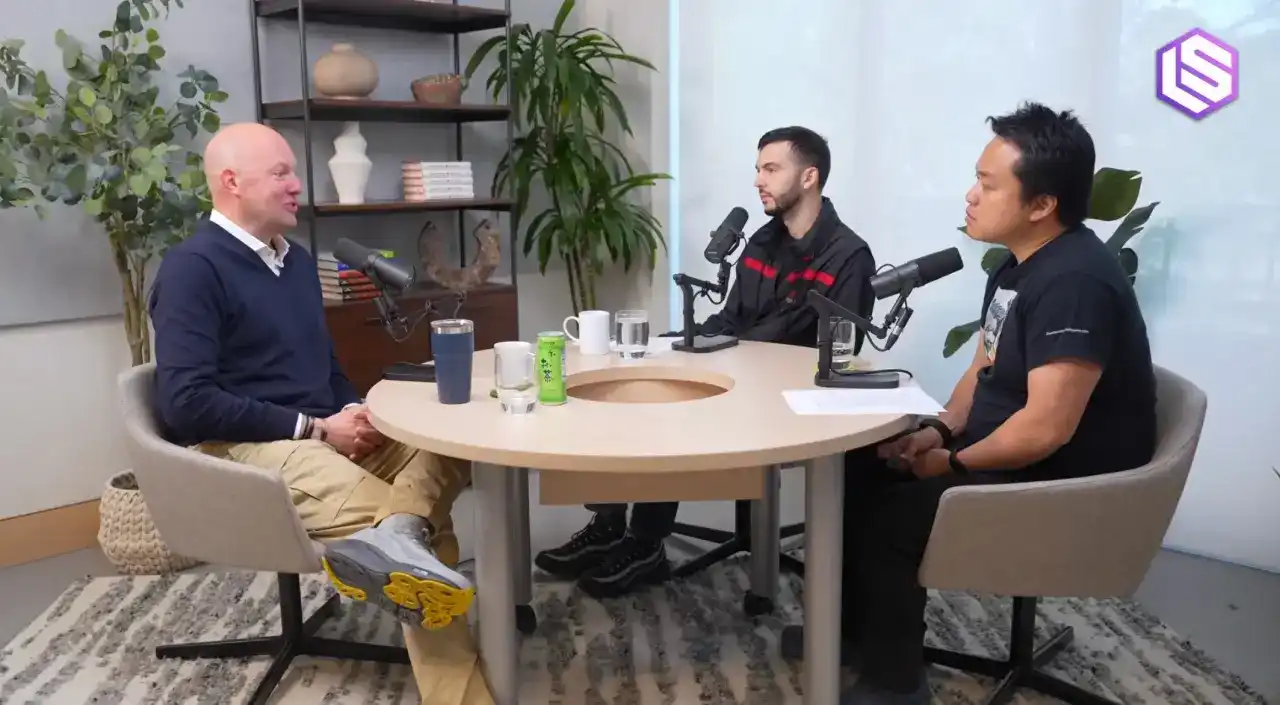
Marc Andreessen, co-founder of a16z, argues that the current AI boom is not an overnight success but the culmination of 80 years of research, now delivering practical results. He emphasizes that this era is defined by the convergence of four key capabilities: large language models (LLMs), reasoning, coding, and agents capable of recursive self-improvement. Andreessen describes the agent architecture—combining an LLM with a shell, file system, markdown, and cron/loop—as a fundamental shift beyond chatbots. This structure leverages existing software components, allowing agents to maintain state, introspect, and extend their own functionality. He predicts a move away from traditional GUI and browser-based interactions toward an "agent-first" world where software is primarily operated by bots, not humans, with people simply stating their goals. He draws parallels to the 2000 internet bubble but notes key differences: current AI infrastructure investments are led by cash-rich giants and quickly monetized. He highlights that scaling constraints involve not just GPUs but the entire chip ecosystem. Open source and edge inference are crucial for democratizing knowledge and enabling low-latency, cost-effective applications on local hardware. Finally, Andreessen identifies significant non-technical challenges: potential short-term cybersecurity crises, the need for "proof of human" identity solutions, financial infrastructure for agents, and institutional resistance from sectors like education and healthcare. He cautions that societal adoption will be slower than technological change.

marsbit2 days ago 00:02

a16z Founder: In the Agent Era, What Truly Matters Has Changed

marsbit2 days ago 00:02

The More Frequently They Are Updated, the More Similar Claude Code and Codex Become

OpenAI's recent release of GPT-5.4-Cyber demonstrates a striking convergence with Anthropic's Claude Mythos, reflecting a broader trend of product and strategic alignment between the two AI giants. This is particularly evident in their flagship coding assistants, Codex and Claude Code, which have evolved from distinct philosophies into increasingly similar tools. Initially, Codex emphasized speed and real-time interaction, acting like a fast, junior developer, while Claude Code focused on handling extreme complexity with methodical, large-context analysis. However, both have adopted near-identical solutions to core challenges, such as using isolated sub-tasks or agent teams to prevent context pollution during large-scale code modifications. Benchmark results show a tight race: Codex leads in terminal tasks, while Claude Code excels in complex software engineering benchmarks. Community feedback highlights nuanced differences; Claude Code is faster but can accumulate technical debt, whereas Codex is slower but more deliberate and autonomous. The open-source framework OpenClaw has accelerated this homogenization by standardizing workflows, eroding proprietary advantages. Ultimately, the competition has shifted from pure capability to ecosystem strategy, pricing, and user experience. As these tools become ubiquitous, the developer's role evolves toward higher-level problem definition and architectural thinking, beyond automated code generation.

marsbit2 days ago 23:55

The More Frequently They Are Updated, the More Similar Claude Code and Codex Become

marsbit2 days ago 23:55

活动图片