zcashd shuts down, Zcash enters Ironwood era: Is quantum-resistant privacy the future?

ambcryptoPublished on 2026-07-20Last updated on 2026-07-20

Abstract

Zcash has completed its infrastructure transition by retiring the original zcashd software and fully adopting the Rust-based Zebra and Zakura node implementations. This shift, finalizing in July 2024, enhances network maintainability and prepares for the upcoming Ironwood era. Despite a previously disclosed vulnerability in the Orchard shielded pool, user confidence appears resilient. Shielded transaction volume grew 11.1% quarter-over-quarter, and the anonymity set expanded significantly, even as total shielded balances saw a moderate decline. The prompt containment of the Orchard flaw, which did not threaten total ZEC supply, demonstrated effective protocol safeguards. The incoming Ironwood upgrade aims to further strengthen long-term security through formal verification and quantum-resistant features, moving Zcash from reactive fixes to proactive, verifiable security assurances.

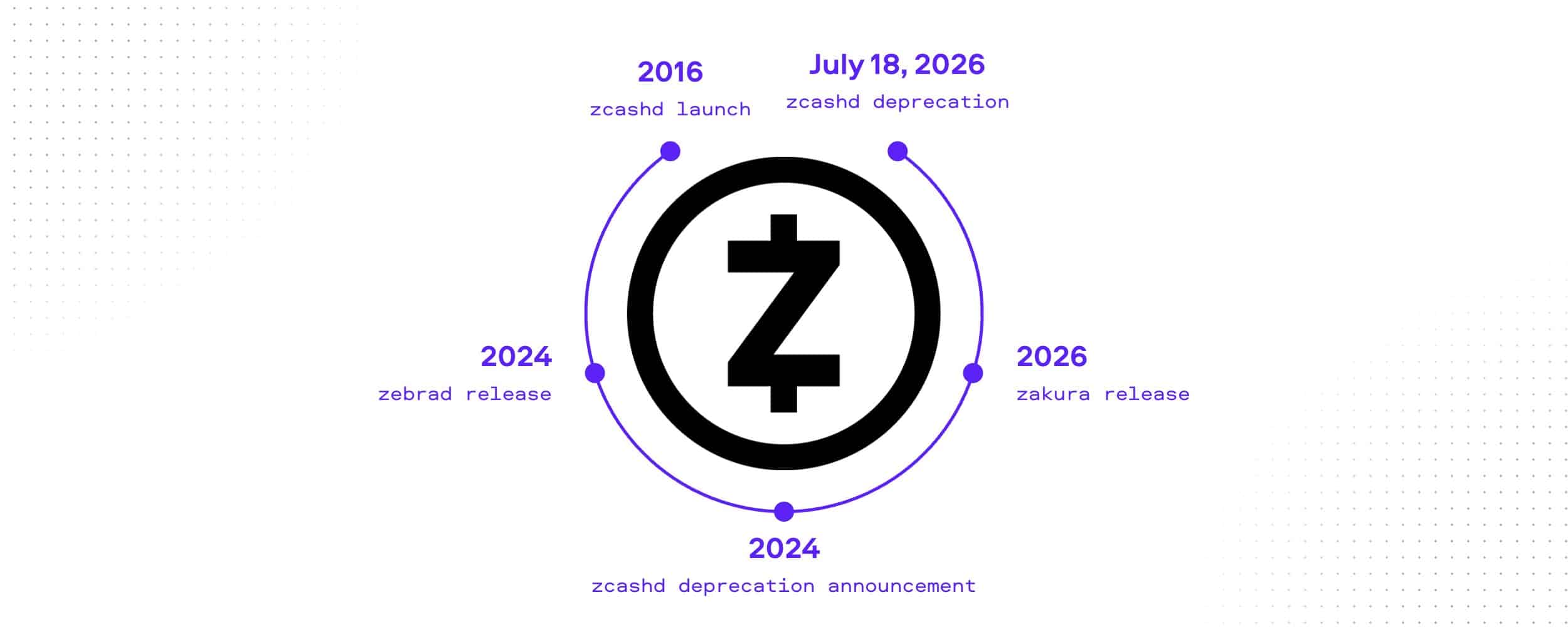
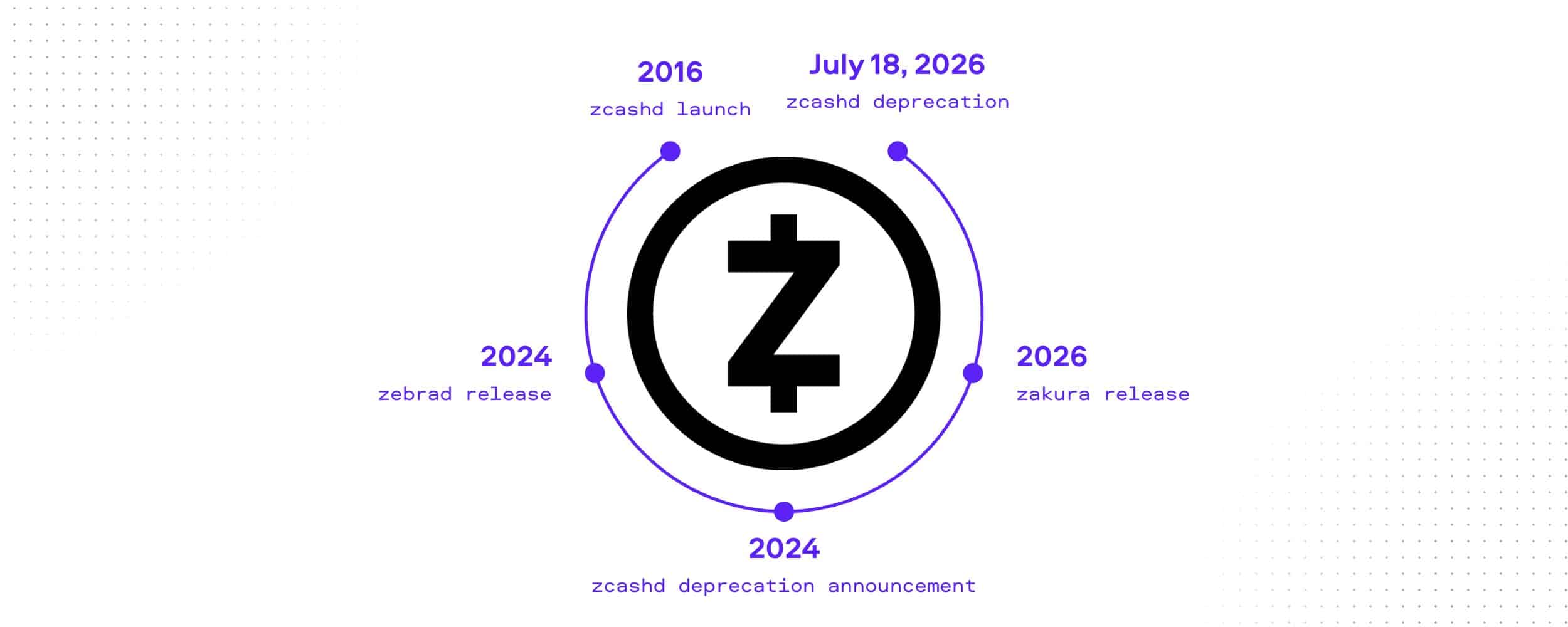
Zcash’s infrastructure has entered a new phase as the network completes its transition away from its original software implementation. That evolution took nearly a decade, beginning with zcashd’s 2016 launch before Zebra’s 2024 release introduced a Rust-based alternative.

After the 2024 deprecation notice, node operators had enough time to switch over before the planned retirement. On the 18th of July, zcashd reached end of support at block height 3417100.
Source: X

Meanwhile, Zakura completed the new node ecosystem. Rather than simply replacing legacy software, the transition strengthens maintainability, prepares the network for Ironwood, and reduces long-term operational risk.

Zcash’s adoption remains intact

Completing Zcash’s infrastructure transition did not remove the market’s biggest question. Instead, it shifted attention to whether users still trusted the network after the Orchard vulnerability. Early activity suggests that confidence largely held.

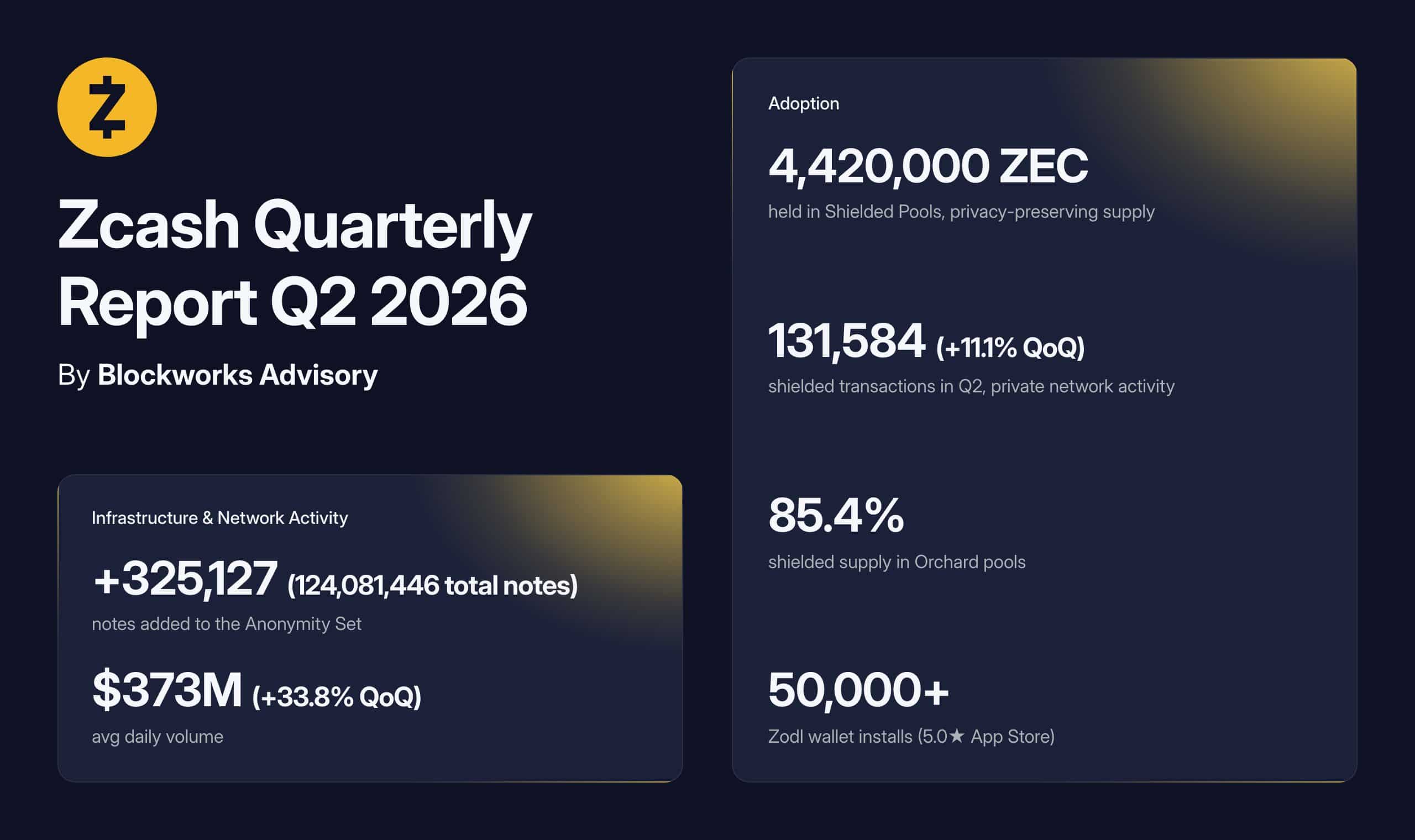
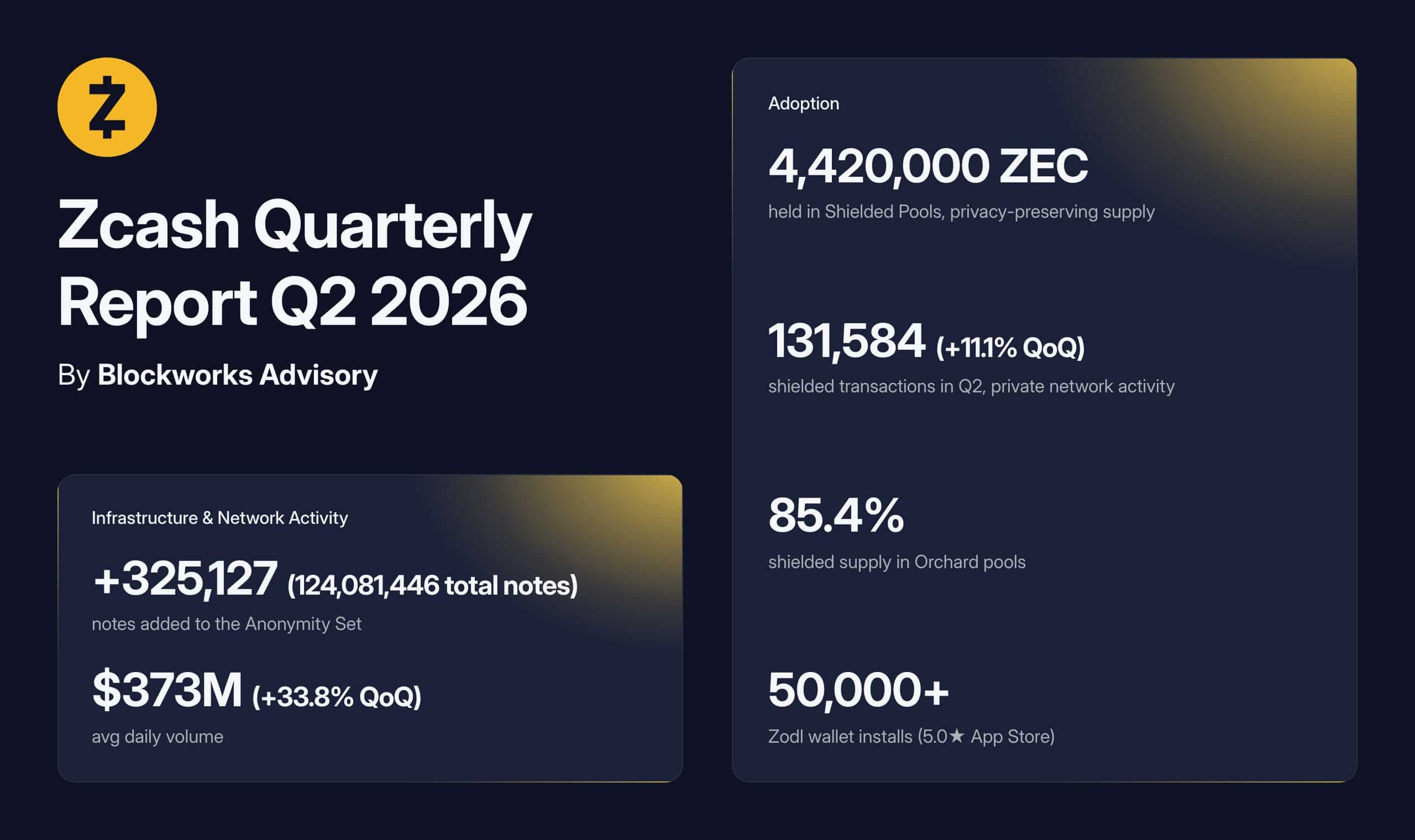
Although shielded balances declined 14% to 4.42 million ZEC, users continued relying on private transactions, which rose 11.1% QoQ to 131,584.
Source: Zcash on X

This trend became even more significant as the anonymity set for ZCash expanded by 325,127 units to 124.08 million.

This indicated an increase in participants using ZCash for privacy purposes. In addition, average daily trading volume increased by 33.8% QoQ to $373 million. This further reinforces that overall use of the network has been increasing.

Rather than reflecting weakening adoption, these trends point to cautious capital repositioning while confidence in Zcash’s privacy infrastructure remained intact.

Formal verification reinforces protocol integrity

Even resilient blockchain networks are ultimately judged by how they respond to critical security threats. Zcash faced such a test when researchers found a flaw in Orchard shielded pools that secured roughly 85% of shielded value.

But the flaw stayed contained because disclosure was coordinated, and developers were able to release an emergency fix within days. More importantly, this flaw allowed forgery inside Orchard rather than inflating the total supply of ZEC.

The turnstile mechanism prevented forged funds from leaving the pool other than legitimate deposits. Looking ahead, Ironwood strengthens this protection through formal verification and quantum recovery too.

Together these upgrades move Zcash from reactive fixes towards stronger assurances of long-term security and confidence within the ecosystem.


Final Summary

  • Zcash [ZEC] completed its migration to Zebra and Zakura, strengthening infrastructure while maintaining resilient network activity.
  • Zcash enters the Ironwood era with formal verification and quantum recovery, reinforcing long-term protocol security.


Trending Cryptos

Related Questions

QWhat was the original software implementation of Zcash that has now been retired?

AThe original software implementation was zcashd, which was launched in 2016 and reached end of support on July 18th at block height 3417100.

QWhat are the two new software components mentioned that complete Zcash's node ecosystem?

AThe two new software components are Zebra, a Rust-based alternative released in 2024, and Zakura, which completed the new node ecosystem.

QDespite a 14% decline in shielded balances, what positive trends in network usage were observed?

APositive trends included an 11.1% quarterly increase in private transactions to 131,584, a significant expansion of the anonymity set by 325,127 units to 124.08 million, and a 33.8% QoQ increase in average daily trading volume to $373 million.

QWhat was the nature of the vulnerability found in the Orchard shielded pools, and how was it contained?

AThe vulnerability was a flaw that allowed forgery within the Orchard shielded pools. It was contained through coordinated disclosure, an emergency fix released within days, and the existing turnstile mechanism that prevented the forged funds from leaving the pool.

QWhat two key features does the upcoming Ironwood era introduce to strengthen Zcash's protocol?

AThe Ironwood era introduces formal verification and quantum recovery features to reinforce long-term protocol security and confidence.

Related Reads

The Verdict in Choi Tae-won's Divorce Case: Revealing the Inheritance Undercurrent Behind SK Hynix's Trillion-Won Empire

SK Group Chairman Chey Tae-won's high-profile divorce case, involving a record 1.38 trillion won settlement, has drawn attention to the succession plans for Korea's second-largest conglomerate, especially its crown jewel, SK hynix. Unlike traditional chaebol scripts centered on the eldest son, Chey's three children from his marriage to former President Roh Tae-woo's daughter, Roh Soh-yeong, are carving distinct, non-traditional paths. Eldest daughter Chey Yun-jung (b. 1989) is seen as the most evident successor. With a scientific and consulting background, she holds executive roles at SK bioscience and SK Inc.'s growth support department, focusing on future strategy and biopharma. Her marriage is to an AI infrastructure entrepreneur, not a traditional business alliance. Second daughter Chey Min-jung (b. 1991) took a unique route, voluntarily serving as a South Korean naval officer, including an anti-piracy deployment. She later worked on policy and strategy for SK hynix in Washington D.C. before co-founding an AI-driven healthcare startup. She married a former U.S. Marine Corps officer, connecting her to U.S. defense and policy circles—networks crucial for a global semiconductor giant. The only son, Chey In-geun (b. 1995), who studied physics like his father, worked briefly at SK E&S before joining McKinsey. Despite fitting the traditional "heir" profile as the eldest son, he remains silent and holds no public position or shares in SK, suggesting the old succession playbook is obsolete. As SK hynix's valuation soars, becoming a geopolitical asset in the AI era, the heirs' legitimacy is no longer automatic. They must prove themselves in fields like AI biotech, global policy, and strategic consulting. Their marriages also reflect new elite networks in tech and defense, not old political alliances. Their inheritance is the complex challenge of navigating a globalized, tech-driven world, not just a corporate throne.

marsbit17h ago

The Verdict in Choi Tae-won's Divorce Case: Revealing the Inheritance Undercurrent Behind SK Hynix's Trillion-Won Empire

marsbit17h ago

From OpenSea to OpenRouter: Is Alex Atallah Repeating His 'Exit at the Peak' Playbook?

From OpenSea to OpenRouter: Is Alex Atallah Repeating His "Exit at the Peak" Playbook? According to the Wall Street Journal, payments giant Stripe is in talks to acquire the AI model aggregation platform OpenRouter in a potential deal valuing the company near $100 billion. This would mark founder Alex Atallah's second creation of a company reaching a $100 billion valuation, following his co-founding of NFT marketplace OpenSea. OpenRouter, founded just over three years ago, has grown rapidly by acting as a unified gateway for developers to access over 400 AI models. It currently has about 10 million users and processes over 200 trillion tokens monthly. While the platform's annualized revenue is around $50 million, its valuation has skyrocketed from $1.3 billion in March 2026. The potential acquisition by Stripe, a company OpenRouter's founder once likened it to, represents a major expansion into AI infrastructure for the payments leader. This move echoes Atallah's previous timing with OpenSea, where he departed before the NFT market's significant downturn. For OpenRouter, selling now may be strategic. Despite its scale, its business model—charging a 5-5.5% fee on AI inference calls—faces pressure from competition, open-source models, and potential price wars among model providers, limiting its profitability narrative for an IPO. A key asset for potential acquirers like Stripe is OpenRouter's vast repository of real-world AI usage data, which offers unique insights into model performance and developer preferences that are difficult to replicate. Whether this potential deal signifies a new valuation benchmark for AI infrastructure or another market peak signal remains to be seen.

链捕手17h ago

From OpenSea to OpenRouter: Is Alex Atallah Repeating His 'Exit at the Peak' Playbook?

链捕手17h ago

Trading

Spot

Hot Articles

Ethena: Building a New Era of Web3‑Native Digital Dollars

Ethena is an Ethereum‑based synthetic dollar protocol that delivers crypto‑native monetary solutions, including USDe, a synthetic dollar, and sUSDe, a globally accessible U.S. dollar savings asset.

53.6k Total ViewsPublished 2026.03.16Updated 2026.03.16

Ethena: Building a New Era of Web3‑Native Digital Dollars

Discussions

Welcome to the HTX Community. Here, you can stay informed about the latest platform developments and gain access to professional market insights. Users' opinions on the price of ERA (ERA) are presented below.

活动图片