YZi Labs Invests of Tens of Millions, CZ as Advisor: How to Earn Genius Points?

Odaily星球日报Pubblicato 2026-01-14Pubblicato ultima volta 2026-01-14

Introduzione

An article titled "YZi Labs Invests Tens of Millions, CZ as Advisor: How to Earn Genius Points?" reports on a major investment in the decentralized exchange Genius. YZi Labs has invested tens of millions of dollars, and former Binance CEO CZ will serve as an advisor. Genius is a privacy-focused DEX supporting spot, perpetual contracts, and copy trading across over 10 blockchains, including BNB Chain and Solana. It aims to offer a CEX-like experience with self-custody and has processed over $60 million in testnet volume. CZ and Genius's team clarified that Genius is not a direct competitor to Aster, another YZi Labs portfolio project, but rather a trading terminal that enables cross-chain token access with privacy features. The article provides a step-by-step guide for users to interact with the platform and earn GP points through trading and referrals. A recommended "low-cost points strategy" involves trading the USDC-USDT pair to minimize volatility impact, executing larger trades to reduce gas fee ratios, and spinning a daily bonus wheel after reaching $10,000 in trading volume. Users can also earn additional rewards through referrals and social tasks. The platform is currently in a test phase, with a public testnet for its privacy protocol planned for Q2 2026.

Original | Odaily Planet Daily (@OdailyChina)

Author | Asher (@Asher_ 0210)
Last night, a blockbuster news rocked the community—YZi Labs has invested "tens of millions of dollars" in DEX Genius, and CZ will also personally join as an advisor.

Odaily Planet Daily is here to give you the first look at Genius, a step-by-step guide to interacting with Genius, and the current interaction strategy based on personal testing.

Project Introduction
Genius is a privacy-centric decentralized exchange (DEX) offering spot, perpetual contracts, and copy trading, supporting over 10 public chains including BNB Chain and Solana. Its goal is to become an on-chain alternative to Binance—bringing the speed, liquidity, and privacy experience of a CEX on-chain while remaining fully self-custodial and non-custodial (users hold their private keys). The platform has already processed over $60 million in trading volume during its testing phase and plans to launch a public test of its privacy protocol in Q2 2026. Back in October 2024, Genius announced the completion of a $6 million seed funding round led by CMCC Global, with participation from Cadenza Ventures, AVA Labs, Arca, Flow Traders, and other institutions.

In response to the community's view that "YZi Labs' investment in Genius is bearish for Aster," CZ posted on X, stating, "Genius is a trading terminal connected to exchanges, not a competitor to Aster."

Additionally, Genius's CMO Ryan also addressed a similar question in the community—"What's the difference between Aster and Genius? Why would YZi Labs invest in another project doing Perp DEX?" Ryan stated, "I think both are important; Aster is a very important perpetual exchange. I believe YZi Labs' motivation for investing in Genius is to enable everyone to access any token on any chain (and soon, privately)."
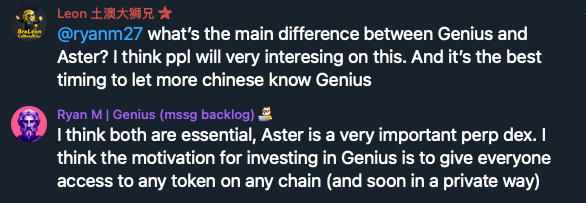
Genius CMO Ryan discusses the relationship between Aster and Genius

It's clear that both CZ and the Genius team believe Genius and Aster have different positioning and are not in direct competition.

Step-by-Step Guide

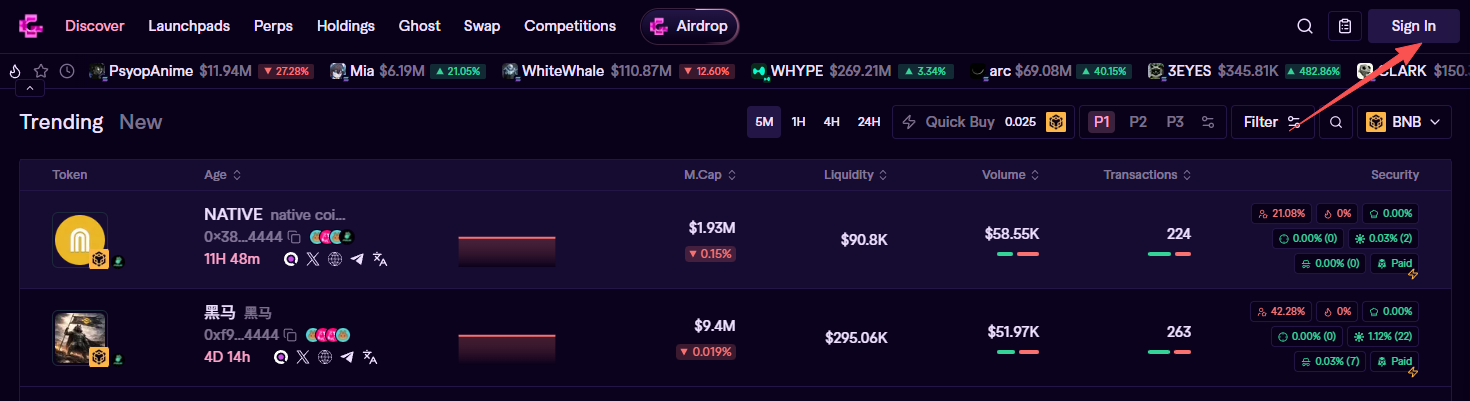
STEP 1. Go to the official website (Link: https://www.tradegenius.com/ref/NY8SYH). Using this referral link gives you 500 GP points. Click "Start Trading," then click "Sign In" at the top to log in with your wallet.
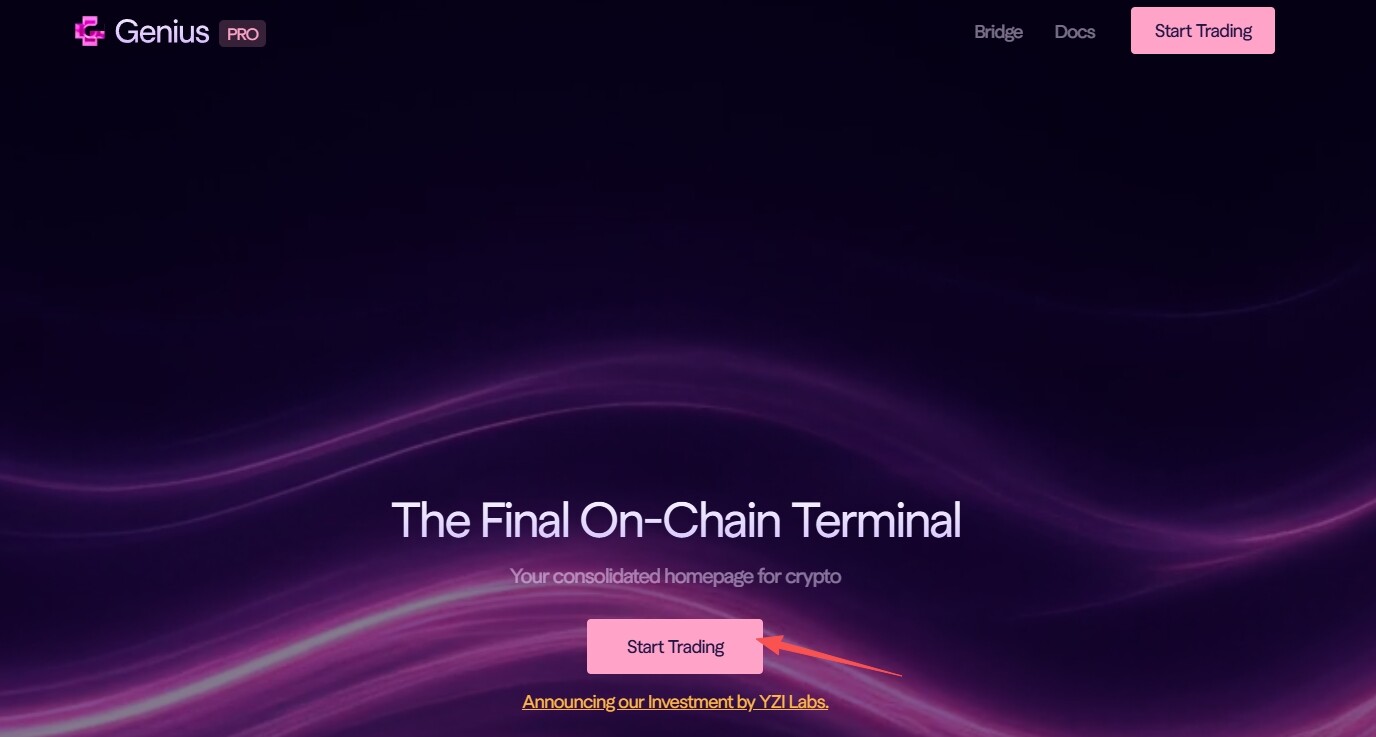
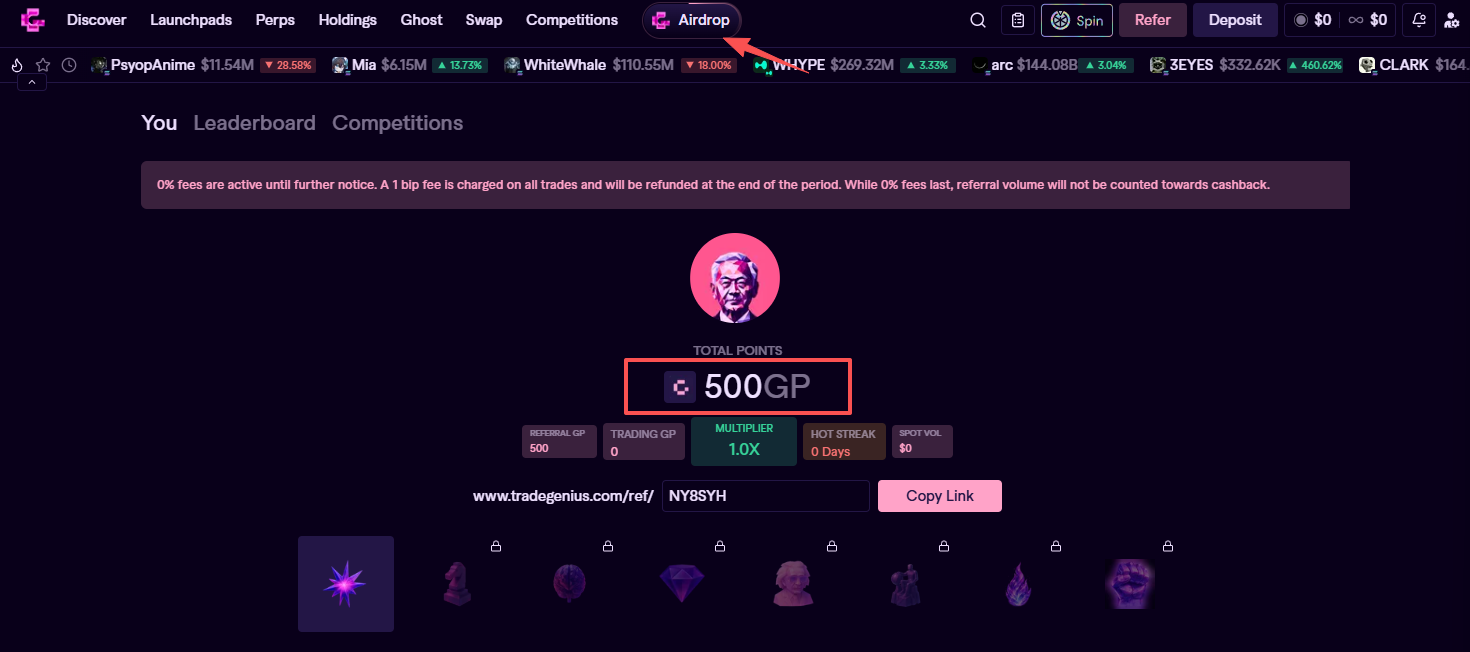
STEP 2. Click on "Airdrop" at the top to see your current GP points and personal referral link.
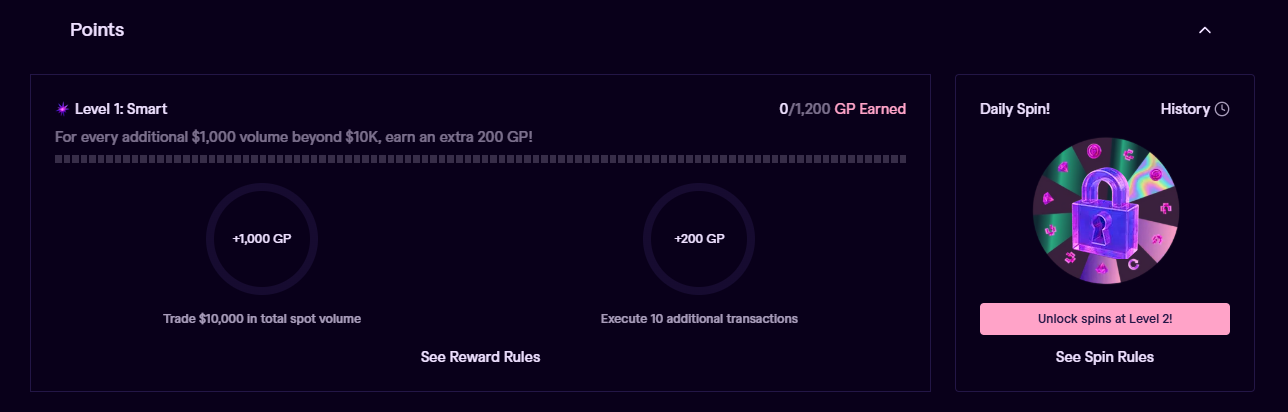
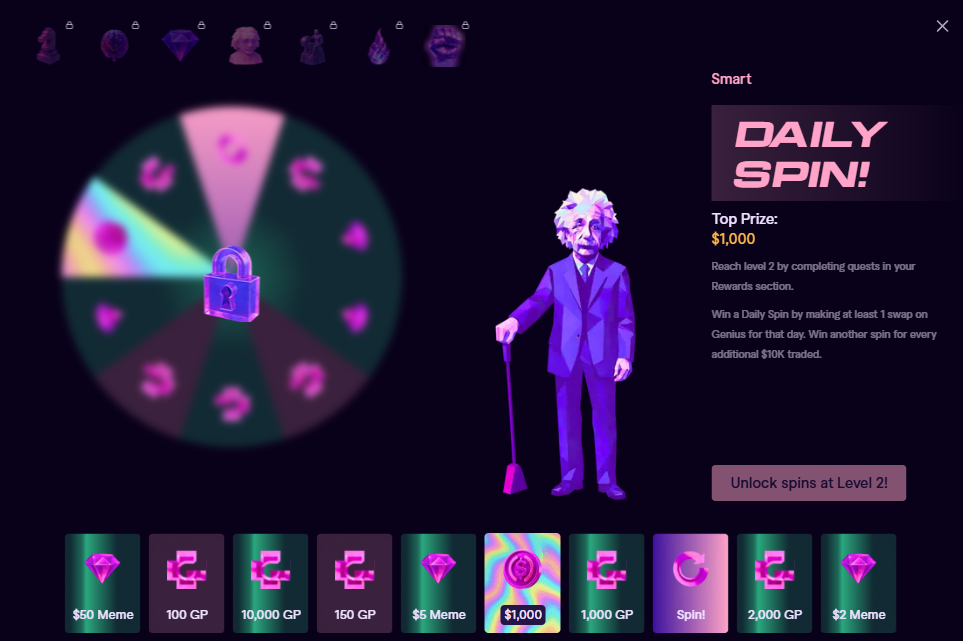
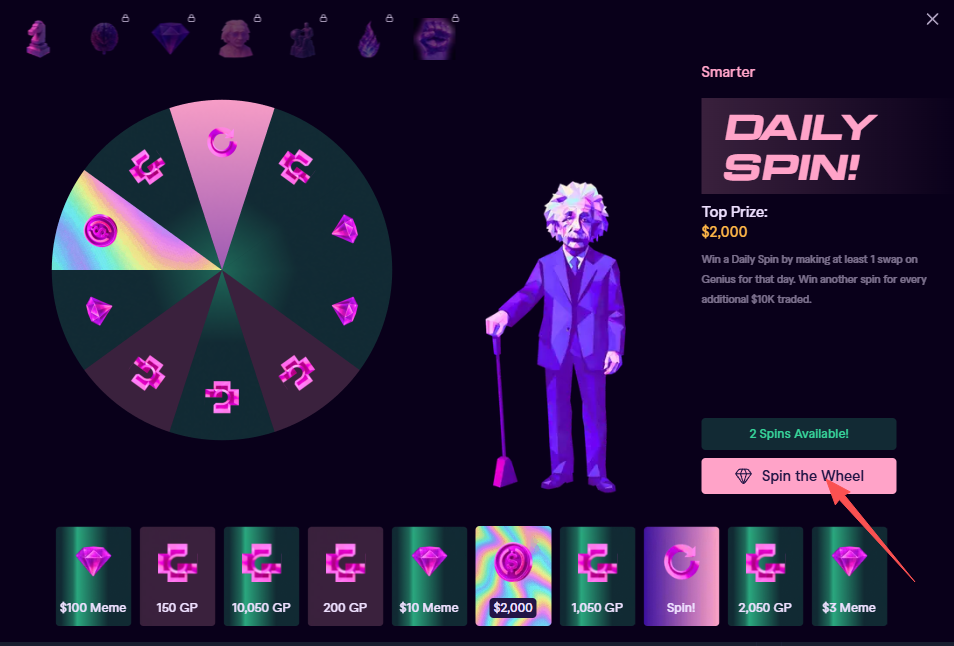
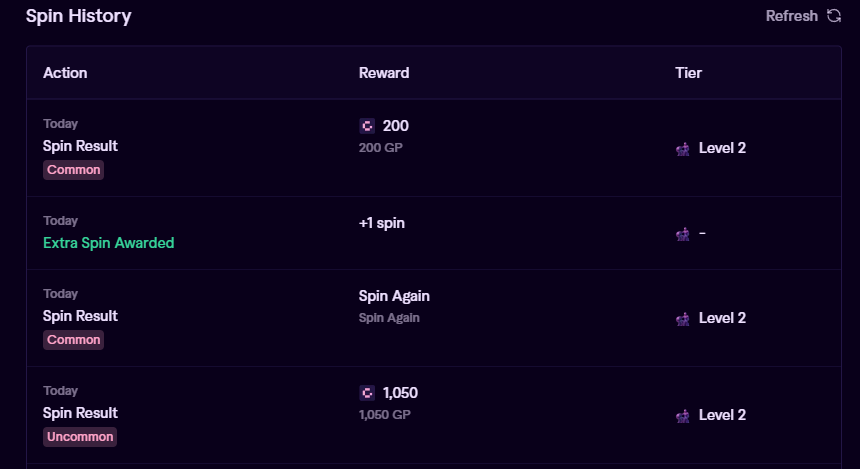
STEP 3. Under the "Airdrop" section, first is "Points." Accumulate $10,000 in trading volume to get 1200 GP points. After exceeding $10,000, every additional $1000 in trading volume earns 200 GP points. Additionally, trading at least once daily gives you one free spin on the wheel. Every additional $10,000 in trading volume grants an extra spin, with no upper limit.
Other rules for earning points through trading:

  • Users earn 1 GP point for every $100 in spot trading volume / $1000 in perpetual contract trading volume;
  • Trade consecutively for 7 days to earn a win streak multiplier (resets after one day without trading);
  • Base multiplier and win streak multiplier apply to user's spot and perpetual contract trading (referral points not included).
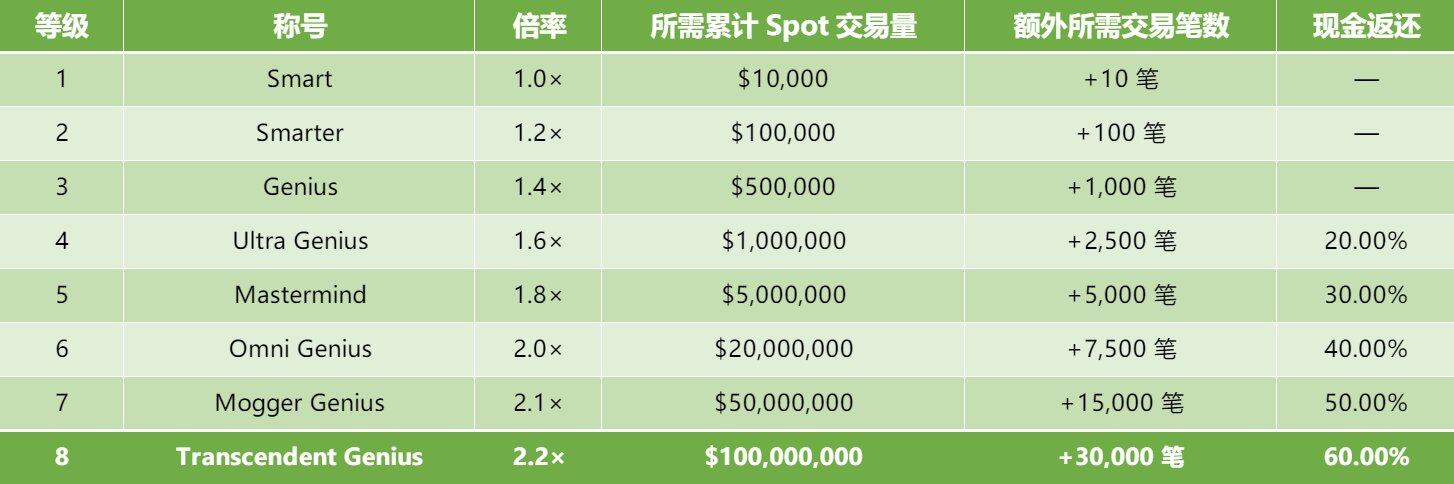
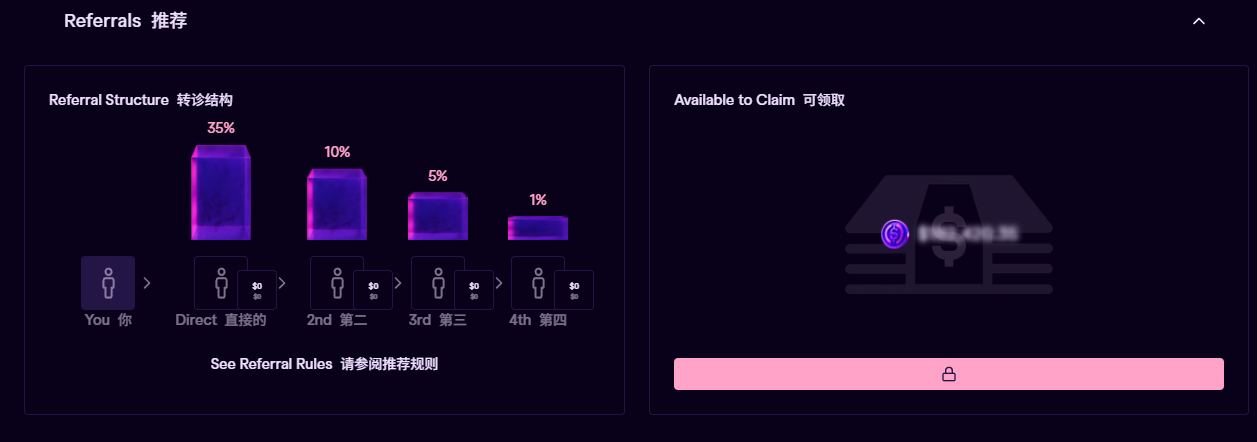
STEP 4. Under the "Airdrop" section, next is "Referrals." Invite friends to earn more GP points.
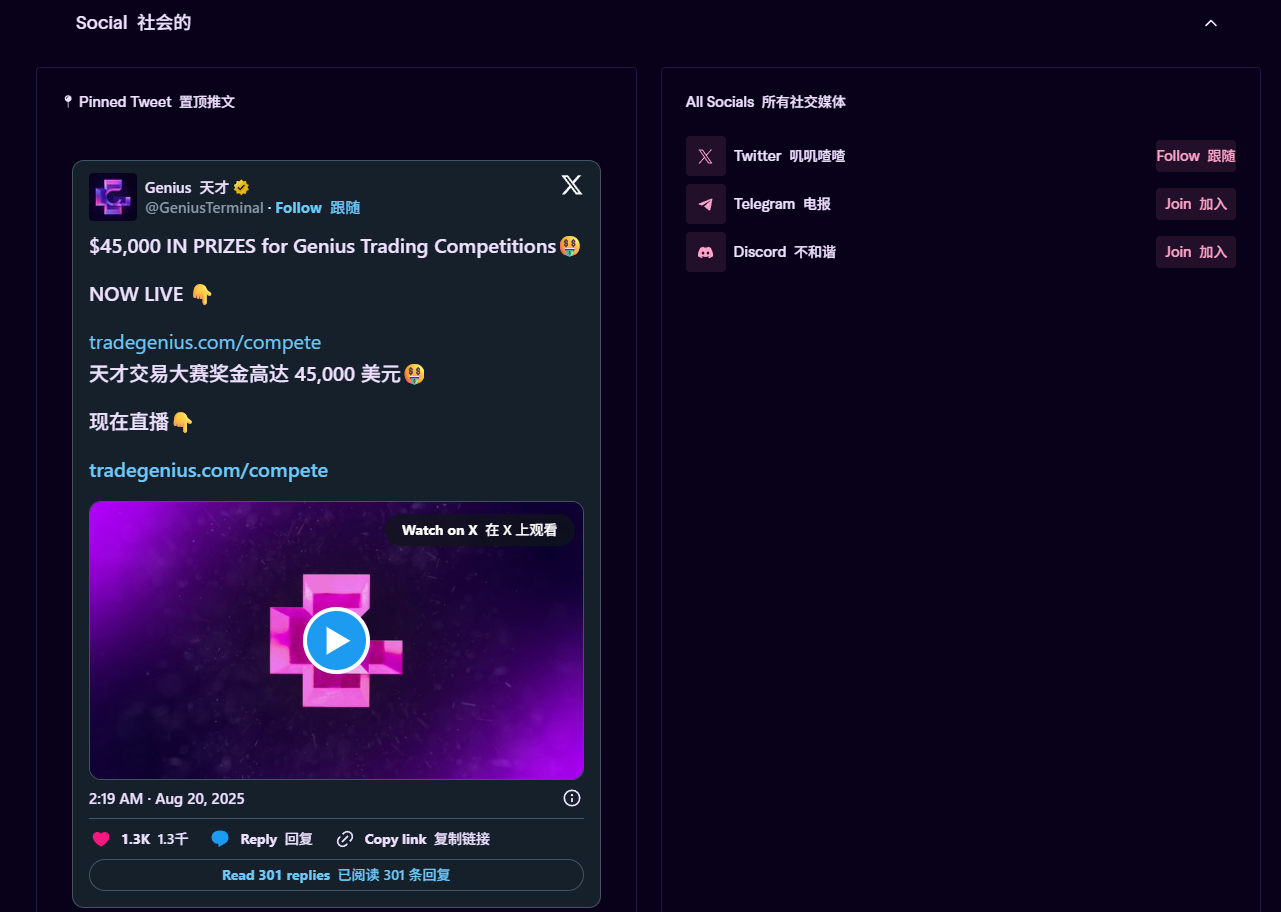
STEP 5. Under the "Airdrop" section, lastly is "Social" (the "Token Rewards" section is not yet open, skip for now), which contains official social media information.
STEP 6. Click on "Deposit" at the top. Supports deposits of EVM, Solana, and SUI assets. Official recommendation is to send ETH or USDC.

Current "Basic Income Points Earning" Strategy Sharing

Based on actual interaction, I've summarized a "basic income points earning" strategy. The specific operational思路 is as follows:

1、To minimize wear and tear from token price fluctuations, choose spot trading for USDC-USDT.
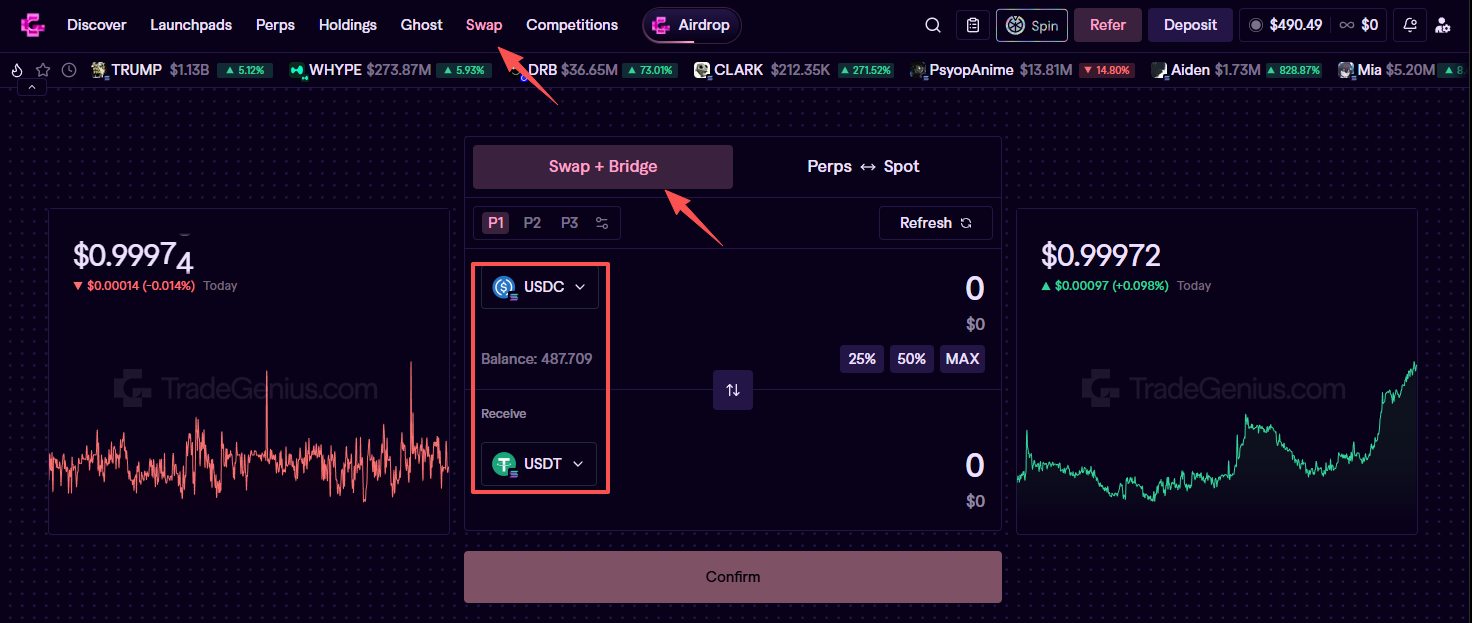
2、Try to make the single transaction amount larger. The Gas fee paid for a test transaction of $400 and $100 is almost the same, as shown below.
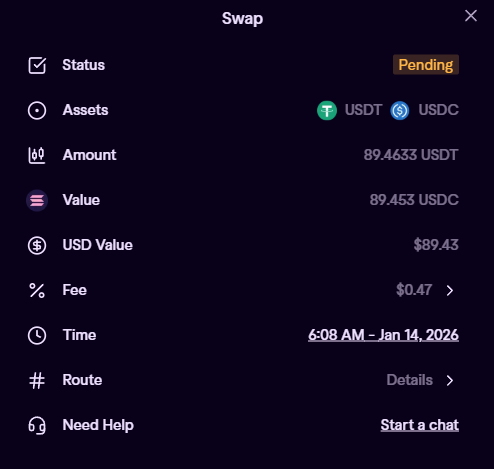
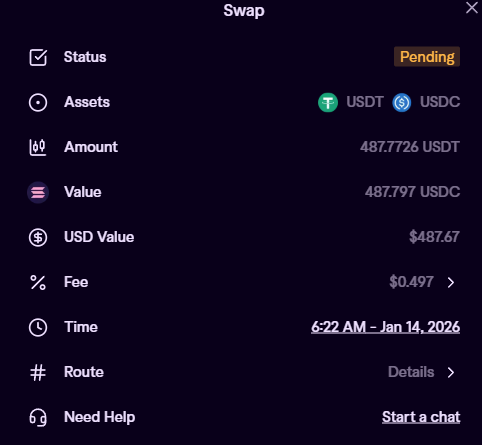
3、Once you unlock the wheel spin by reaching $10,000 in trading volume, just make one trade per day to qualify for the spin. There's no need to "frantically increase trading volume."
Domande pertinenti

QWhat is Genius and what is its primary focus?

AGenius is a privacy-focused decentralized exchange (DEX) that offers spot trading, perpetual contracts, and copy trading. It supports over 10 blockchains, including BNB Chain and Solana, and aims to provide a chain-based alternative to centralized exchanges like Binance by combining CEX-like speed, liquidity, and privacy with self-custody and non-custodial features.

QWhy did CZ and YZi Labs invest in Genius, and how is it different from Aster?

ACZ and YZi Labs invested in Genius because it is a trading terminal that connects to exchanges, not a direct competitor to Aster. Genius focuses on enabling access to any token on any chain, soon with privacy features, while Aster is primarily a perpetual contract exchange. The investments and advisory role highlight the complementary rather than competitive nature of the two projects.

QHow can users earn GP points on the Genius platform?

AUsers can earn GP points by trading: 1 GP point for every $100 in spot trading volume or $1000 in perpetual contract volume. Additional points come from a 1200 GP bonus for reaching $10,000 in cumulative trading volume, with 200 GP for every additional $1,000. Daily trading grants a spin-the-wheel chance, and more spins are earned per $10,000 in trading. Inviting friends via a personal link also rewards points.

QWhat is the recommended 'low-cost points earning' strategy mentioned in the article?

AThe recommended strategy to minimize costs while earning points is to: 1) Trade the USDC-USDT pair to reduce price volatility wear. 2) Execute larger single transactions (e.g., $400 instead of $100) to optimize gas fees, which are similar for both amounts. 3) Reach $10,000 in trading to unlock the daily spin-the-wheel feature, then only trade once daily to maintain the spin opportunity without excessive volume.

QWhat are the steps to start using Genius platform and earn the sign-up bonus?

ATo start using Genius and earn the 500 GP sign-up bonus: 1) Visit the official website via an invite link (e.g., https://www.tradegenius.com/ref/NY8SYH). 2) Click 'Start Trading' and then 'Sign In' to connect a wallet. 3) Navigate to the 'Airdrop' section to view points and your referral link. 4) Deposit assets like ETH or USDC via supported chains (EVM, Solana, SUI). 5) Begin trading to accumulate points and bonuses.

Letture associate

From South Korea to the United States: Blue-Collar Jobs Are Becoming Increasingly Popular, Thanks to AI

AI is reshaping the labor market's value proposition. The traditional four-year college degree is losing its appeal as a guaranteed career path, while skilled blue-collar trades like electricians, welders, and plumbers are experiencing historic demand and wage premiums. This shift is driven by dual pressures: AI's displacement of certain white-collar roles and a booming need for physical infrastructure and data center construction. Data confirms the trend. In the U.S., vocational school revenue surged, and a significant portion of recent layoffs are AI-related. Surveys show a majority of Gen Z adults plan to pursue blue-collar work, citing better job security against AI automation. Vocational education interest has exploded recently. Experts cite a psychological shift as younger generations seek tangible, AI-resistant careers and avoid high student debt. In many cases, salaries for skilled trades now match or exceed those requiring a bachelor's degree. In South Korea, semiconductor vocational high schools boast near-total employment, with graduates securing high-paying roles at companies like Samsung. The shortage is structural, exacerbated by a retiring baby boomer workforce and massive infrastructure projects. Companies like JPMorgan Chase, Meta, and Lowe's are investing heavily in training programs. However, overcoming historical stigma and a "perception gap" around trade careers remains a key challenge to closing the talent gap.

marsbit1 h fa

From South Korea to the United States: Blue-Collar Jobs Are Becoming Increasingly Popular, Thanks to AI

marsbit1 h fa

Qualcomm: AI Hype Subsides, When Will Smartphones Emerge from the Gloom?

Qualcomm reported its Q3 FY2026 results (ending June 2026), with revenue of $9.95B, down 4% YoY but above expectations. Gross margin declined to 53.1%, pressured by rising costs across manufacturing and memory. Key business segments showed mixed performance: Handset revenue fell 19.6% YoY to $5.09B, dragged by an 11% decline in non-Apple Android shipments and weaker high-end mix. Conversely, Automotive revenue surged 61% to $1.59B, and IoT grew 9% to $1.83B. Core operating profit dropped 41% YoY due to margin compression and higher expenses. Management's Q4 FY2026 guidance projects revenue of $9.7B-$10.5B, in line with consensus, but Non-GAAP EPS guidance of $2.05-$2.25 fell short of expectations. Amidst persistent weakness in its core handset market, Qualcomm is pursuing growth in AI, focusing on Edge AI (smartphones, PCs, automotive) and Data Center AI. Its data center strategy includes four pillars: AI accelerators (e.g., AI200), commercial CPUs (Dragonfly C1000), custom silicon, and connectivity solutions. While these initiatives initially boosted its stock, concerns over AI capital expenditure sustainability have since erased those gains. The company targets $5B in data center revenue for FY2027 and $15B for FY2029. The report concludes that with the traditional handset business still under pressure, the data center opportunity is currently viewed as a longer-term option, and a more conservative valuation based on core operations may be warranted until AI contributions materialize.

marsbit1 h fa

Qualcomm: AI Hype Subsides, When Will Smartphones Emerge from the Gloom?

marsbit1 h fa

From TPU to Self-Evolving Agents: How Jeff Dean Predicts the Next Step in AI

At the 2026 YC Startup School, Jeff Dean outlined his vision for AI's next phase, shifting focus from simply scaling models to building intelligent, autonomous systems. He believes AI's progress is no longer just about creating smarter models, but about integrating them into systems capable of long-term, iterative work, automated experimentation, and continuous learning. This evolution moves the competition from "who has the bigger model" to "who can best organize intelligence." Dean suggests AI capabilities are now comparable to a junior engineer, enabling the automation of complex workflows. However, the true challenge and opportunity lie in managing these AI "workers" at scale. He emphasizes the importance of **context engineering**—structuring tools, memory, and feedback loops—over raw model power. For startups, this means building deep expertise in niche domains where general models currently fail (near 0-1% success rates), leveraging proprietary data, specialized tools, and domain-specific evaluators. A recurring theme is re-examining fundamental constraints. Dean's past work, like moving Google's search index to memory or creating the TPU, stemmed from questioning outdated assumptions about hardware and cost. He sees similar inflection points today, particularly in **specialized inference hardware** to drastically reduce latency and energy consumption for real-time Agent operation. Notably, he points out that in modern AI systems, the dominant cost is often not computation but **data movement**. Reliable, long-running Agents require robust system design, borrowing concepts from distributed computing like checkpointing, state management, and parallel exploration to handle failures and maintain progress over days or weeks. As AI automates execution, the scarcest human skills will shift to **defining clear specifications**, **judging what problems are worth solving** (taste), and designing effective feedback loops. Ultimately, Dean's framework prioritizes understanding the problem deeply, identifying the true bottlenecks, and systematically building closed-loop systems where AI can not only perform tasks but also improve AI itself.

marsbit1 h fa

From TPU to Self-Evolving Agents: How Jeff Dean Predicts the Next Step in AI

marsbit1 h fa

Trading

Spot
活动图片





