XRP Has Overtaken Solana And Ethereum In This Major Metric

bitcoinistPubblicato 2026-05-22Pubblicato ultima volta 2026-05-22

Introduzione

The article reports that XRP has surpassed both Solana and Ethereum in Real World Asset (RWA) growth over the past month. According to data from RWA.xyz, the XRP Ledger's total RWA value surged by approximately 55.4% to $3.9 billion, driven largely by a single commodity product, the Justoken Megawatt Hour (JMWH). In contrast, Ethereum's RWA value declined by 7.4%, while Solana's grew by 13.5%. This growth has propelled XRP from the 8th to the 5th position in global RWA rankings, ahead of chains like Solana, ZKSync Era, and BNB Chain. The network also saw significant increases in RWA transfer volume, distributed assets, and holder count.

The Real World Asset (RWA) sector has seen remarkable growth over the past month, with the XRP, Solana (SOL), and Ethereum (ETH) ecosystems recording a significant increase in market value and adoption. However, among these three leading cryptocurrencies, XRP stands above with the highest growth rate. The cryptocurrency has surpassed ETH and SOL’s RWA expansion by a wide margin, solidifying its position as one of the fastest-growing chains in the tokenization asset space.

XRP Beats Solana And Ethereum In RWA Growth

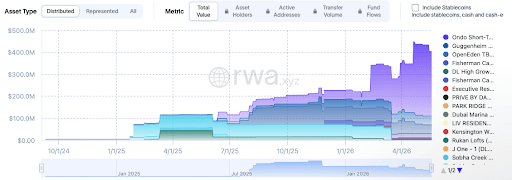
XRP has overtaken Solana and Ethereum to record the fastest RWA growth in the last 30 days. According to data from RWA.xyz, XRP Ledger’s (XRPL) total RWA value grew by approximately 55.4%, soaring to $3.9 billion after about $1.4 billion was added within that single period. As of this writing, the latest data show that the RWA value is up 57.03%.

This level of growth is striking because not only did XRP surpass two of the top altcoins, but it also outstripped Canton, a privacy-labeled L1 blockchain network that holds the number one position in global RWA tokenization rankings.
Source: RWA.xyz

While XRP recorded a 55.4% increase, Ethereum and Canton actually declined by 7.4% to $18.9 billion and 4.8% to $313.7 billion, respectively, in that same period. On the other hand, Solana’s RWA growth rate increased by 13.5%, reaching $2.8 billion.

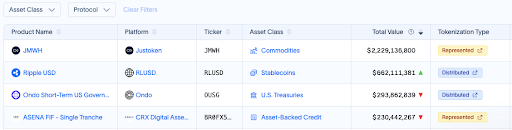
A significant portion of the growth in the XRP Ledger was reportedly driven by a single commodity product, the Justoken Megawatt Hour (JMWH), launched by the blockchain infrastructure firm Justoken. The product is issued exclusively on XRPL and currently accounts for roughly half of the network’s total RWA value.

Within a single day, JMWH’s value had spiked by nearly $900 million, rising from $861 million to $1.76 billion, serving as the primary catalyst behind XRP’s record-breaking RWA growth. At the time of writing, the XRP Ledger has exceeded the $4 billion RWA growth milestone, surpassing BNB Chain (BNB), which currently has a total RWA tokenization value of $3.6 billion.
Source: RWA.xyz

XRP Jumps From 8th To 5th In RWA Rankings Globally

About 30 days ago, the XRP Ledger held approximately $2.51 billion in total tokenized real-world assets, making it the eighth-largest chain by RWA value. At the time, the blockchain network had been ranked below ZKSync Era and Solana, with the former growing by about 5.45% to $3.2 billion while XRP skyrocketed by over 57%.

Since then, XRPL has witnessed a massive expansion, ranking fifth globally in total tokenized asset value. The latest figures now place the blockchain network ahead of ZKSync Era, Solana, Stella, and Avalanche in the rankings. Meanwhile, Ethereum still holds the position as the second-largest RWA tokenization network.

Beyond raw asset value, on-chain activity shows that RWA 30-day transfer volume on the XRP Ledger has risen to $145.1 million, up over 50% from the previous period. Moreover, the most recent data shows that XRPL has also recorded a 120.9% surge in distributed RWA over the last 30 days. Meanwhile, the number of RWA holders on the ledger grew by 151.72% over the past month, bringing the network to roughly 302 distinct RWA products.

Price continues sideways movements | Source: XRPUSDT on Tradingview.com

Crypto di tendenza

Domande pertinenti

QAccording to the article, which cryptocurrency recorded the highest growth rate in the Real World Asset (RWA) sector over the past month?

AXRP recorded the highest growth rate in the RWA sector over the past month, surpassing both Ethereum (ETH) and Solana (SOL).

QWhat was the reported percentage increase in RWA value for the XRP Ledger (XRPL) according to data from RWA.xyz?

AThe XRP Ledger's total RWA value grew by approximately 55.4% (with later data showing a 57.03% increase) over the 30-day period.

QWhat specific commodity product was primarily responsible for driving the massive RWA growth on the XRP Ledger?

AThe growth was primarily driven by the Justoken Megawatt Hour (JMWH), a commodity product launched by Justoken, whose value spiked by nearly $900 million in a single day.

QHow did the RWA growth of Ethereum and Solana compare to XRP's during the same period?

AEthereum's RWA value actually declined by 7.4%, while Solana's increased by 13.5%. Both were significantly lower than XRP's 55.4%+ growth.

QWhat global ranking did the XRP Ledger achieve in total tokenized asset value after its recent growth, and what was its previous rank?

AThe XRP Ledger jumped from the 8th largest chain by RWA value to the 5th largest globally after its recent expansion.

Letture associate

Collateral Dollars: How Does a 'Second-Layer Dollar' Above Stablecoins Form?

Collateral Dollars: How Does a "Second Layer of Dollars" Form on Top of Stablecoins? Most assume stablecoins replicate Eurodollar functions, expanding the offshore dollar system. However, stablecoins primarily replace specific functions like operational dollar balances for settlement. They do not inherently create new dollar credit; they substitute existing claims. The key question is: what happens when financial intermediaries use stablecoins as collateral to create a new layer of dollar-denominated claims? This "collateral dollar" channel operates through secured lending, not direct money creation. A money-like event only occurs when a liability issued against the controlled stablecoin is funded, rolled over, or accepted at near-par value by another balance sheet. The discount (haircut) prices the gap between "effective control over the token" and "reliable convertibility to bank dollars." Elasticity stems not from the stablecoin itself but from the liability issued against it and the willingness of third-party balance sheets to treat that liability as a near-par asset. Compared to the traditional Eurodollar system—where elasticity originates from bank deposit creation—the stablecoin collateral chain is structurally different. Eurodollar deposits are credit-expansive from inception. Stablecoins are initially substitutive; elasticity emerges later if an intermediary's liability against them gains monetary acceptance. Stablecoins disrupt specific tiers of the offshore dollar system, mainly replacing operational settlement balances. They do not replace the need for full dollar balance-sheet capacity (credit lines, hedging, maturity transformation). For systemic impact, the second-layer liability must pass three tests: transferability, funding capacity, and monetary acceptance (being fundable or held at par by others). Pressure transmission also differs. In the Eurodollar system, stress moves up a hierarchy of claims. In a stablecoin collateral chain, the second-layer liability can lose its money-like status well before the underlying stablecoin faces a run, often triggered by haircut increases and margin calls that create a dynamic spiral of falling token prices and rising discounts. In conclusion, the "collateral dollar" is not the stablecoin itself. It is the second-layer liability issued against a controlled token balance that is willing to be funded and maintained at near-par value. Its existence depends on that liability surviving the leap from "token liquidity" to "bank dollar liquidity."

marsbit40 min fa

Collateral Dollars: How Does a 'Second-Layer Dollar' Above Stablecoins Form?

marsbit40 min fa

Collateral Dollars: How the 'Second-Layer Dollar' Above Stablecoins Takes Shape?

"Collateralized Dollars: How a 'Second Layer of Dollars' Forms on Top of Stablecoins" Most assume stablecoins replicate Eurodollars and expand the offshore dollar system, but this is not accurate. Stablecoins primarily replace certain functions within the existing system, especially operational dollar balances for daily settlement. The critical question is what happens when financial intermediaries create a new layer of dollar claims *on top of* stablecoins. This article explains how this new collateralized funding channel works. Stablecoins introduce tokenized private dollar claims. Even if issuers and reserves are within the US legal perimeter, their circulation and use as collateral can become economically "offshore." Enforceable control over collateral opens a secured credit channel but does not itself create a monetary claim. A true monetary event occurs only when another balance sheet funds, rolls over, or accepts a liability issued against the controlled token at near-par value. The discount prices the gap between "effective control over the token" and "reliable convertibility into bank dollars." Elasticity comes from the balance sheet issuing the liability against the token and from third-party willingness to treat that liability as a near-par asset. Collateralized Dollars are not the stablecoins themselves; they are the second-layer liability that another balance sheet is willing to issue, fund, and maintain at near-par against a controlled token balance. The Eurodollar system is a hierarchy of claims, with elasticity originating in expandable bank liabilities. In contrast, the stablecoin collateral chain starts with a tokenized asset. It gains systemic significance only when an intermediary's liability against that token is treated as money-like by other balance sheets. Key determining factors include: who has effective control, the legal/operational path to bank dollars, and whether the resulting claim can still be financed near-par under stress. Pressure in this new channel manifests differently. The upper-layer (intermediary) claim fails first, losing its money-like status, potentially while the underlying stablecoin remains solvent. Increased haircuts and forced sales can create a destructive feedback loop, widening the very gap the discount measures. In conclusion, the Eurodollar analogy has limits. Reserve quality supports the underlying token's solvency, but the leverage, credit, and liabilities built atop it face a separate test. Collateral eligibility is not monetary acceptance. Only when a claim built on stablecoins survives the leap from "token liquidity" to "bank dollar liquidity" do Collateralized Dollars truly exist.

链捕手46 min fa

Collateral Dollars: How the 'Second-Layer Dollar' Above Stablecoins Takes Shape?

链捕手46 min fa

Don't Be Misled by the $1.25 Billion Cap: MicroStrategy's Three-Pronged Bitcoin Sale Pools Hide Massive Selling Pressure

Don't Be Misled by the $1.25B Cap: Strategy's Three-Tier Bitcoin Sales Plan Hides Massive Potential Selling Pressure Strategy recently sold 3,588 BTC (~$216M) to fund a dividend and replenish its dollar reserve, while claiming its $1.25B "reserve build" capacity remains fully available. This highlights a key nuance: the widely cited $1.25B limit applies only to sales for "Building" the reserve. Strategy's broader capital framework, however, allows Bitcoin sales for three primary purposes, each with different scales: 1. **Building the Reserve:** Selling BTC to raise up to $1.25B for the reserve. 2. **Covering Priority Share Expenses:** Selling BTC to pay dividends/interest or to replenish the reserve after such payments are made from it (no specified limit). 3. **Share Repurchase Funding:** Selling BTC to fund up to $1B each in convertible note and common stock repurchases (totaling $2B potential). Combined, just the capped "Build" and "Repurchase" channels could facilitate over $3B in Bitcoin sales, excluding the uncapped "Cover Expenses" channel. The accounting distinction between "Building" (adding cash before a payout) and "Replenishing" (adding cash after a payout) is operationally blurry but allows sales like the recent $216M transaction without touching the $1.25B "Build" quota. This gives Strategy significant flexibility. The move signifies a strategic shift: Strategy is transforming from a simple Bitcoin accumulator into an active capital manager, akin to a hedge fund. Bitcoin is now a financial lever to balance pressures between common stock, convertible notes, dollar reserves, and Bitcoin holdings. This creates inherent tensions—actions benefiting one part of the capital structure may harm another. Investors must understand that the potential Bitcoin sales are far greater than the surface-level $1.25B figure. Strategy has become a complex financial entity where every term in its disclosures matters. Betting on it now is a wager on its active capital management skill to navigate these internal contradictions without a systemic failure.

Foresight News53 min fa

Don't Be Misled by the $1.25 Billion Cap: MicroStrategy's Three-Pronged Bitcoin Sale Pools Hide Massive Selling Pressure

Foresight News53 min fa

When the Largest BTC Buyer Becomes a Seller, Who's Buying After MicroStrategy Sells 3,588 Bitcoin?

MicroStrategy, once the largest corporate buyer of Bitcoin, sold 3,588 BTC for approximately $216 million to fund its preferred stock dividends, marking a significant shift from buyer to seller. This move occurred after its market-to-NAV premium vanished, breaking its "print stock to buy Bitcoin" financial model. A roundtable discussion featuring Austin Campbell, Ram Ahluwalia, and Chris Perkins analyzed the implications. They noted that MicroStrategy's dominance has become a narrative bottleneck for the broader crypto market, with some speculating that Bitcoin's price might only surge significantly after the company's influence wanes. The conversation expanded to examine the capital structure conflict between traditional equity and crypto tokens, arguing that most current tokens will fail as they don't fit neatly into existing debt/equity frameworks. A "stablecoin war" was identified as a major trend, with entities like Tether, Robinhood, and the OUSD alliance competing. Tether's decision to abandon the European MiCA market highlights strategic divergences. The panelists argued that bank-issued stablecoins could revolutionize global finance by allowing US banks to capture net interest margins from international transactions, potentially making JPMorgan the first trillion-dollar bank. They concluded that while capital is currently being siphoned by AI/semiconductors, markets will eventually refocus on fundamentals and cash flow, which could benefit cryptocurrencies with real utility.

marsbit1 h fa

When the Largest BTC Buyer Becomes a Seller, Who's Buying After MicroStrategy Sells 3,588 Bitcoin?

marsbit1 h fa

Trading

Spot

Articoli Popolari

Cosa è XRP 2.0

XRP 2.0: Una Nuova Frontiera nel Paesaggio delle Criptovalute Introduzione a XRP 2.0 Nel mondo in continua evoluzione delle criptovalute, nuovi progetti emergono continuamente, cercando attenzione e adozione. Una tale iniziativa promettente è XRP 2.0, un nuovo progetto di criptovaluta progettato per sfruttare avanzate tecnologie blockchain e metodologie di crittografia robuste. Anche se il nome richiama alla mente l'XRP di Ripple, è fondamentale notare che XRP 2.0 opera in modo indipendente, concentrandosi sul miglioramento della sicurezza delle transazioni, della privacy e della scalabilità. Mentre il panorama finanziario digitale abbraccia sempre di più soluzioni decentralizzate, XRP 2.0 mira a contribuire in modo significativo al web3 e all'espansione generale dei progetti crypto. Cos'è XRP 2.0? Alla sua base, XRP 2.0 è un progetto di criptovaluta che mira a creare un ecosistema di valuta digitale sicuro e decentralizzato. La sua tecnologia fondamentale integra principi di blockchain sofisticati con tecniche di crittografia all'avanguardia. L'obiettivo principale di XRP 2.0 è quello di affermarsi come una piattaforma affidabile ed efficiente in grado di consentire un'esecuzione rapida delle transazioni, dando priorità a migliori protezioni della privacy per i suoi utenti. Il progetto è promosso come una soluzione a molte limitazioni affrontate dalle criptovalute esistenti, proponendo un sistema in grado di gestire un volume maggiore di transazioni con migliorata velocità e privacy. Questa versatilità pone XRP 2.0 come un significativo competitor in un mercato affollato di varie valute digitali. Chi è il Creatore di XRP 2.0? L'identità del creatore dietro XRP 2.0 è stata segnalata come 'Wilbur'. Tuttavia, i dettagli completi riguardanti Wilbur o l'entità associata rimangono sfuggenti. L'anonimato di molti creatori di criptovalute non è un fenomeno raro nel settore, spesso progettato per mantenere un certo grado di privacy e sicurezza. Chi sono gli Investitori di XRP 2.0? Al momento, informazioni specifiche relative alle fondazioni o organizzazioni di investimento a supporto di XRP 2.0 non sono disponibili pubblicamente. Nel settore delle criptovalute, il supporto di investitori rinomati può influenzare significativamente la credibilità e il successo di un progetto, tuttavia la trasparenza riguardo ai sostenitori finanziari di XRP 2.0 non è stata stabilita. Come Funziona XRP 2.0? XRP 2.0 si distingue per l'impiego di una combinazione di tecnologia blockchain e algoritmi di crittografia avanzati che garantiscono transazioni sicure e decentralizzate. La sua struttura innovativa include caratteristiche uniche progettate per promuovere il coinvolgimento degli utenti e ampliare le funzionalità oltre le transazioni convenzionali delle criptovalute. Tra queste caratteristiche, XRP 2.0 incorpora capacità alimentate da intelligenza artificiale, come funzionalità di testo in immagini e testo in voce. Queste aggiunte sono progettate per migliorare l'esperienza interattiva per gli utenti, promuovendo una maggiore applicabilità in vari settori. Unendo progressi tecnologici con design incentrati sugli utenti, XRP 2.0 mira a catturare l'attenzione di una vasta gamma di individui e aziende che cercano di integrare soluzioni di criptovaluta nei loro framework operativi. Cronologia di XRP 2.0 Comprendere XRP 2.0 richiede di esaminare i traguardi che hanno definito il suo percorso fino ad ora: 23 luglio 2023: XRP 2.0 viene introdotto come un nuovo progetto di criptovaluta, mirante a rivoluzionare le capacità di transazione sicura e decentralizzata nel dominio blockchain. 8 settembre 2023: Si verifica il lancio di un altro progetto, XRP20, marcando l'emergere di un token ERC-20 sulla blockchain di Ethereum che resta non correlato a XRP 2.0. 13 novembre 2023: Il ledger XRP subisce un significativo aggiornamento con il rilascio della versione 2.0.0 del software server rippled. È essenziale notare che questo sviluppo è scollegato dal progetto di criptovaluta XRP 2.0. Punti Chiave su XRP 2.0 Per distillare l'essenza di XRP 2.0, emergono diversi fattori critici: Caratteristiche Uniche: L'inclusione di funzionalità come il testo in immagini e testo in voce alimentato da intelligenza artificiale diversifica ulteriormente le potenziali applicazioni di XRP 2.0. Tecnologia Blockchain: Il framework utilizza meccanismi blockchain avanzati e protocolli di crittografia, garantendo un ambiente sicuro e decentralizzato per le transazioni. Scalabilità e Privacy: XRP 2.0 dà priorità a migliori protezioni della privacy nei processi di transazione e alla scalabilità necessaria per accogliere una base di utenti in crescita. Nessuna Affiliazione con Ripple: È importante notare che, nonostante il suo nome, XRP 2.0 non ha alcuna fedeltà o collaborazione con l'XRP di Ripple, distinguendo il proprio framework operativo e obiettivi all'interno dell'ecosistema delle criptovalute. Conclusione XRP 2.0 rappresenta un'ambiziosa venture nell'ambito delle criptovalute, mirante a offrire una combinazione di sicurezza, privacy ed efficienza nelle transazioni digitali. Integrando tecnologie sofisticate e caratteristiche user-friendly, il progetto si propone di ampliare gli orizzonti di ciò che le criptovalute possono realizzare nell'economia digitale odierna. Sebbene l'anonimato del suo creatore e la mancanza di investitori dichiarati possano sollevare domande per alcuni, il focus di XRP 2.0 su funzionalità avanzate e decentralizzazione ne amplifica l'appeal in un mercato crypto sempre più affollato. Man mano che il panorama delle criptovalute continua a evolversi, XRP 2.0 potrebbe emergere come un attore decisivo nell'espansione di soluzioni blockchain sicure e scalabili.

189 Totale visualizzazioniPubblicato il 2024.04.05Aggiornato il 2024.12.03

Cosa è XRP 2.0

Come comprare XRP

Benvenuto in HTX.com! Abbiamo reso l'acquisto di XRP (XRP) semplice e conveniente. Segui la nostra guida passo passo per intraprendere il tuo viaggio nel mondo delle criptovalute.Step 1: Crea il tuo Account HTXUsa la tua email o numero di telefono per registrarti il tuo account gratuito su HTX. Vivi un'esperienza facile e sblocca tutte le funzionalità,Crea il mio accountStep 2: Vai in Acquista crypto e seleziona il tuo metodo di pagamentoCarta di credito/debito: utilizza la tua Visa o Mastercard per acquistare immediatamente XRPXRP.Bilancio: Usa i fondi dal bilancio del tuo account HTX per fare trading senza problemi.Terze parti: abbiamo aggiunto metodi di pagamento molto utilizzati come Google Pay e Apple Pay per maggiore comodità.P2P: Fai trading direttamente con altri utenti HTX.Over-the-Counter (OTC): Offriamo servizi su misura e tassi di cambio competitivi per i trader.Step 3: Conserva XRP (XRP)Dopo aver acquistato XRP (XRP), conserva nel tuo account HTX. In alternativa, puoi inviare tramite trasferimento blockchain o scambiare per altre criptovalute.Step 4: Scambia XRP (XRP)Scambia facilmente XRP (XRP) nel mercato spot di HTX. Accedi al tuo account, seleziona la tua coppia di trading, esegui le tue operazioni e monitora in tempo reale. Offriamo un'esperienza user-friendly sia per chi ha appena iniziato che per i trader più esperti.

1.6k Totale visualizzazioniPubblicato il 2024.12.10Aggiornato il 2026.06.02

Come comprare XRP

Discussioni

Benvenuto nella Community HTX. Qui puoi rimanere informato sugli ultimi sviluppi della piattaforma e accedere ad approfondimenti esperti sul mercato. Le opinioni degli utenti sul prezzo di XRP XRP sono presentate come di seguito.

活动图片