Xinjiang's Computing Power Resurges, Then Gets Cleared Out Within 48 Hours: What Exactly Happened to the Bitcoin Network This Time?

marsbitPubblicato 2025-12-16Pubblicato ultima volta 2025-12-16

Introduzione

On December 16, Bitcoin network hashrate dropped sharply within 48 hours, widely attributed to the concentrated shutdown and clearance of mining facilities in Xinjiang. Estimates suggest between 200,000 to 400,000 mining machines went offline, causing a hashrate decline of nearly 30%, from around 1200 EH/s to approximately 836 EH/s at its lowest. The resurgence of mining in Xinjiang was driven by three factors: surplus energy capacity and low electricity prices, underutilized data center infrastructure seeking revenue, and shorter ROI periods for miners amid rising Bitcoin prices. Despite China’s clear policy against cryptocurrency mining—classifying it as an obsolete industry—mining resurfaced periodically due to economic pressures and infrastructure availability. The recent crackdown was swift and severe, following a multi-department regulatory meeting emphasizing continued strict oversight of crypto-related activities, including anti-money laundering and cross-border capital risks. The concentrated nature of mining operations in specific regions meant that regulatory actions led to large-scale, simultaneous shutdowns. Short-term impacts include disrupted cash flows for miners and potential market volatility due to heightened policy sensitivity. In the medium term, the Bitcoin network will adjust mining difficulty, and hashrate is likely to migrate to other regions. The event underscores that mining in China remains a high-risk, grey-area activity driven by economic ince...

On December 16th, Beijing time, the Bitcoin network suddenly slammed on the brakes. The hashrate curve showed a significant drop within two days, and the mining community's explanation was highly consistent: concentrated shutdowns occurred at multiple mining farms in Xinjiang, with some equipment being confiscated or cleared out, leading to a sudden "chunk" of the total network hashrate being pulled away. The market's debate wasn't about whether the shutdowns happened, but about the actual scale—rumored figures ranged from over 200,000 to 400,000 units.
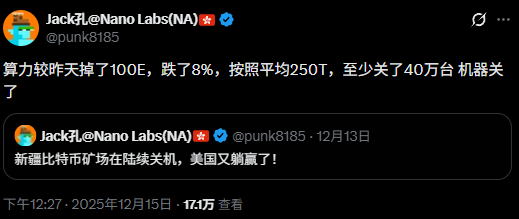
The most commonly cited estimate comes from an engineer's algorithm in the mining circle: roughly calculated based on contemporary mainstay machines at about 250 TH/s each, if 400,000 units were successively powered down, the corresponding hashrate gap would be enough to cause a drop on the order of hundreds of EH/s for the entire network. Some put the more aggressive hashrate point more bluntly: the total hashrate once dropped from nearly 1200 EH/s to around 836.75 EH/s, a decline of nearly 30%. Different platforms and different calibers don't completely agree on the "lowest point," but one fact is hard to ignore: this isn't the fluctuation of a few mining farms "turning off a few rows of cabinets," but a widespread concentrated shutdown.

What's truly worth追问 is the two halves of this story: Why did mining in Xinjiang resurge under the ban? And why did the clearance come so quickly and so fiercely?


Why Did Mining in Xinjiang Come Back?

The underlying driving force behind the "resurgence" of Xinjiang's computing power wasn't a sudden policy shift, but three real-world pressures being squeezed into the same outlet.

The first pressure comes from the energy structure. Xinjiang has large-scale power supply and industrial power distribution systems. During certain periods and in some regions, the marginal value of power consumption is not very high. For transmission channels, dispatch, and demand-side承接 capacity, this is a long-term tug-of-war: electricity can be generated, but it can't always be sold in an "ideal way." For asset owners, the most painful thing isn't low electricity prices, but electricity that can't be sold; for miners, this恰恰 constitutes an energy洼地—as long as they can get electricity, they can directly convert it into cash flow.

The second pressure comes from data center facilities and infrastructure. The rapid expansion of data centers across various regions in recent years has left a large amount of存量 capacity where "power is already connected, and facilities are already built." The AI narrative is hot, but AI isn't a case of having a data center就能赚钱: it requires compute cards, big clients, and long-term stable load. The reality is, some data centers haven't secured enough AI orders nor enough compute card resources; equipment sitting idle for a day means real losses from depreciation. Thus, some asset owners see "filling load" as a rigid demand—in the gray area, mining happens to be the easiest application to deploy for filling capacity: it doesn't挑剔 clients or business models, it runs as long as there's power, cooling, and an internet connection.

The third pressure comes from the temptation of ROI and the supply chain. When Bitcoin's price rises, the payback period for miners is significantly compressed; faced with the诱惑 of "breaking even in about six months," many people treat the risks in the gray area as a cost rather than a red line. More crucially, the miner supply chain hasn't disappeared: machines can be bought, transported, and installed, giving the gray area resurgence the physical conditions.

The result of these three pressures converging is a shadow resurgence: local assets (power + facilities) need cash flow, miners need low-cost electricity, the supply chain can deliver the equipment, so Xinjiang once again becomes a magnet for computing power. It's not a gathering place for miner sentiment, but a place where an energy洼地 and an infrastructure洼地 overlap.

This also explains a seemingly contradictory phenomenon: the ban never disappeared, but mining still periodically surfaces. It's not because the red line loosened, but because the constraints of real-world assets never stop: electricity, facilities, power distribution, depreciation, cash flow—all force participants to repeatedly test the boundaries.


Is Mining Illegal in China: An Eliminated Item Doesn't Equal a Criminal Crime, But the Red Line Persists

In China, the policy positioning of mining is not an encouraged industry, but an item that must be rectified and pushed for exit. The relevant authorities' rectification documents core requirements are to strictly prohibit new additions, properly handle existing stock, promote orderly exit, and explicitly list virtual currency mining as an eliminated industry, while also emphasizing precise identification through methods like abnormal electricity consumption monitoring and park inspections, and prohibiting mining under the name of data centers.

Looking at real-world governance methods, it's more like a combination of administrative and energy-side measures: differentiated electricity prices or punitive fees, cancellation of preferential policies, cessation of fiscal and financial support, restrictions on power connection and participation in the electricity market, etc. Therefore, the direct consequences for many mining farms when handled are often power cuts, clearance, back payment of electricity fees, and cancellation of policy benefits—this is not the same as legal operation, but it also doesn't equate to "mining itself必然触犯刑法" (necessarily violating criminal law).

What truly escalates the risk are usually actions附带 to mining: electricity theft, illegal power supply, fraudulently claiming subsidies, obtaining support funds under the guise of supercomputing centers or data centers, illegal fundraising, money laundering channels, etc. Once these issues are triggered, it quickly moves from industrial rectification into the realm of public security or criminal law.

At the same time, financial regulation has maintained a tougher stance on virtual currency-related businesses, continuously emphasizing the crackdown on illegal activities related to virtual currency and focusing on anti-money laundering and cross-border capital risks. Putting these two lines together, one can understand why such clearance actions happen repeatedly: mining has long been within the red line of rectification, and once the enforcement end tightens its口径, the power switch is faster than any announcement.


Why Did This Clearance Come So Fiercely

The speed and force of the clearance often depend on two things: whether the signals are unified, and whether the leverage points are clear.
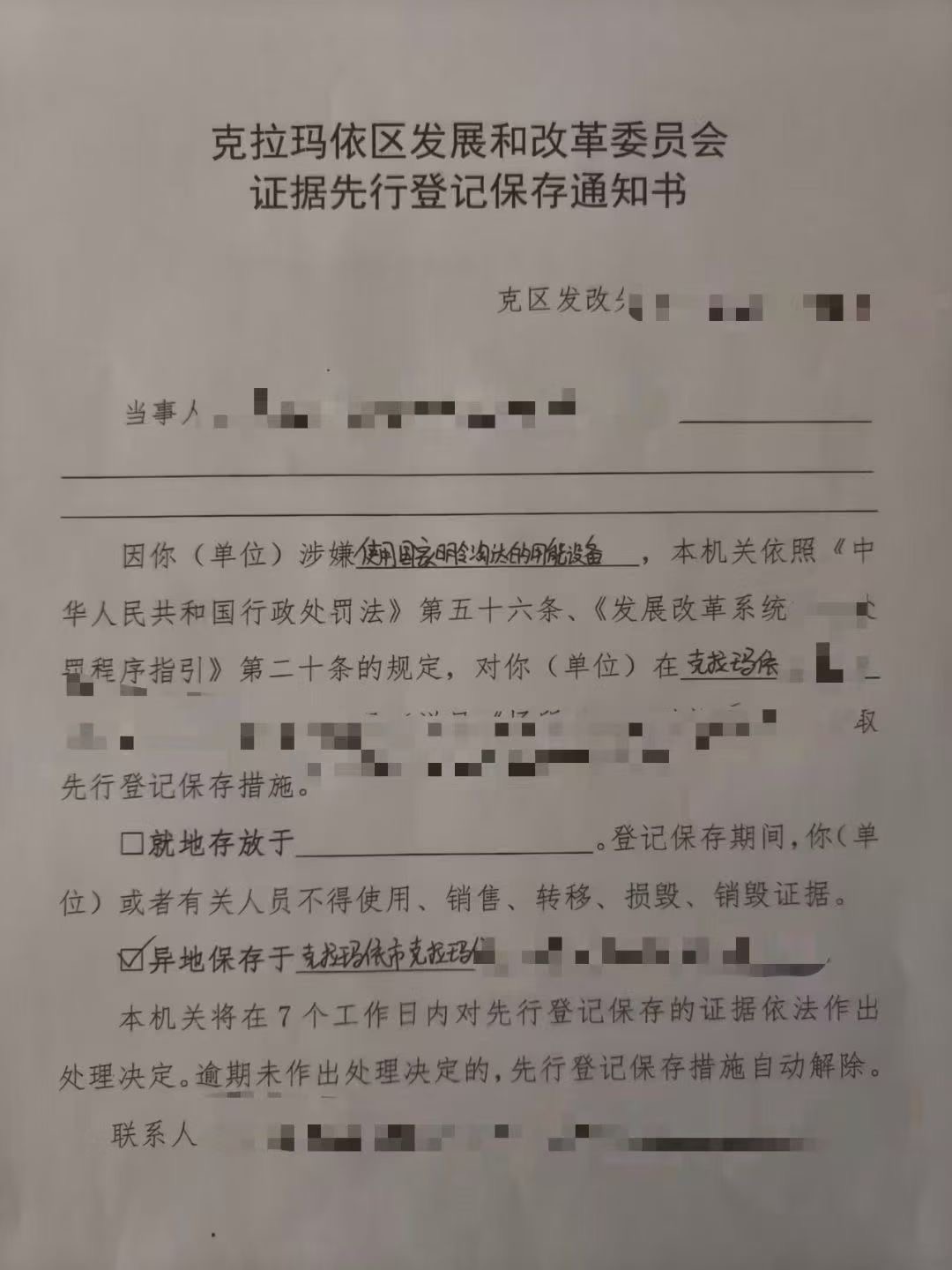
A coordination mechanism meeting led by the central bank with participation from multiple departments in late November was seen as an important node by the mining circle. It released not emotion, but a unification of enforcement port口径: continue to maintain high pressure on virtual currency-related activities, strengthen the narrative on anti-money laundering and cross-border capital risks, and bring issues like stablecoins into a more stringent regulatory view. For gray area industries, this meant "the scope of being watched expanded," and more importantly, local systems knew what to check next, how to check it, who would lead, and who would cooperate.

At the same time, mining in China has long been handled within an industrial policy framework, not just a financial regulatory framework. It is classified as an eliminated industry, with common governance methods including differentiated electricity prices, punitive fees, park inspections, abnormal electricity consumption monitoring, etc. A more realistic risk point is: simply running hashrate might be treated as an eliminated industry, but once it involves electricity theft, fraudulently claiming subsidies, or obtaining support funds under the name of other projects, the nature quickly turns from gray to accountable black.

Therefore, when systems like development and reform, energy, power, and parks start to联动, the clearance often presents a "sudden" feeling: it was running yesterday, but today there's a collective shutdown. To the outside world, this is news; to miners, it's the power switch, and the power switch never needs an advance announcement.


Why Did the Hashrate Drop So Dramatically: Concentrated Power Cuts Get "Amplified" on the Curve

The dramatic drop in hashrate isn't核心ly about "number jitter," but about "concentrated power cuts." After entering the ZH era, the total network hashrate fluctuates daily, but most fluctuations are like ocean waves: rising and falling, looking back it's just noise. This time was more like pulling out a beam—a阶梯式 (stepped) plunge occurring in a short time, combined with highly consistent on-the-ground information from the mining circle pointing to concentrated shutdowns in Xinjiang. This combination is what made the market treat it as a hard event, not normal jitter.
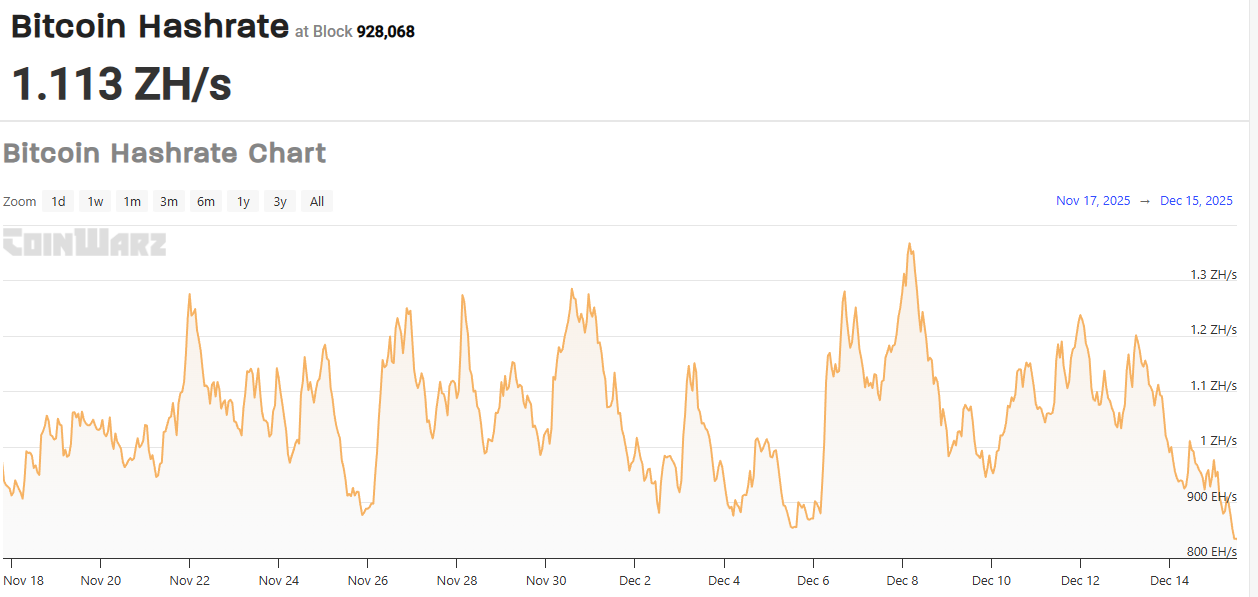
More crucial is the structure. When the resurgence happens in a concentrated form of "few regions + few parks + few data centers," its advantage is fast expansion, its disadvantage is fragility: once the switch is pulled, what drops isn't sporadic mining farms, but an entire chunk of hashrate coming loose together. In other words, the market isn't debating whether the hashrate is an estimate, but reading one thing: what was cut off this time was likely a highly concentrated hashrate pool.

There's another layer of perceptual amplification. Hashrate is estimated based on block production speed: when large-scale shutdowns happen in a short period, the block interval first becomes unstable, and short-term estimates are more prone to exaggerated spikes and deep pits; once the difficulty completes its self-healing in subsequent adjustment cycles, the curve will slowly smooth out. Therefore, this "seemingly scary" plunge is essentially the immediate projection of a regional concentrated shutdown on the network level—it's not a false alarm, but an amplification effect brought by concentration.


What Happens After the Clearance: Miners Hurt Most, Market Most Sensitive, Hashrate Will Continue Migrating

The short-term impact will first land on miner cash flow. Machines being confiscated or shut down means the payback period is instantly interrupted; hosting providers and the power side will become more cautious, and the costs of relocation, restarting, and finding new sockets will increase sharply. These costs will ultimately manifest in two ways: some miners are forced to exit, while other miners raise their risk premium, only willing to restart under higher profit expectations.

At the market level, the most common说法 is that miners will sell coins. This conclusion doesn't always hold directly: whether it's a集中处置 (concentrated disposal), what the disposal path is, whether it enters the secondary market, how long it drags on—all depend on the specific execution method. But the clearance will form a clear signal in sentiment: the policy risk premium is back. Especially in a phase already marked by increased volatility, any news带有 (carrying) the color of concentrated clearance will be amplified, becoming an amplifier for price fluctuations.

In the medium term, the Bitcoin network will use difficulty adjustment to self-heal: after the hashrate declines, block production slows, then the difficulty下调 (drops), short-term收益 (profits) improve for the remaining miners, and hashrate will regrow elsewhere. The protocol doesn't care about Xinjiang or Texas, it only cares about producing a block on average every ten minutes. But for Chinese miners, this means the next migration will be more dispersed, more hidden, more socket-based.

The significance of this clearance in Xinjiang isn't whether the lowest point was exactly 836.75 or some other number, but that it laid bare the true structure of the shadow resurgence: this wasn't an above-board industrial recovery, but a gray area arbitrage driven by electricity, facilities, depreciation, and cash flow. Arbitrage is fast, of course, but when the switch falls, it's equally fast.


Domande pertinenti

QWhat caused the sudden drop in Bitcoin's network hashrate in mid-December?

AThe sudden drop in Bitcoin's network hashrate was caused by the concentrated shutdown of mining operations in Xinjiang, with reports of between 200,000 to 400,000 mining machines being powered down or seized within 48 hours.

QWhat were the three main pressures that led to the resurgence of mining in Xinjiang despite the ban?

AThe three main pressures were: 1) The region's energy structure, where excess electricity created a low-cost 'energy洼地' (energy洼地); 2) Underutilized data center infrastructure seeking any revenue-generating load; and 3) The tempting return-on-investment cycle for miners when Bitcoin's price rises, making the risk seem worth the cost.

QIs cryptocurrency mining illegal in China according to the article?

ACryptocurrency mining is not classified as a criminal offense per se, but it is explicitly listed as an industry that must be eliminated and phased out. The primary enforcement measures are administrative and energy-based, such as punitive electricity pricing, power cuts, and revoking policy benefits, rather than direct criminal charges, unless it involves ancillary illegal acts like electricity theft or fraud.

QWhy did the crackdown and shutdown of mines happen so quickly and forcefully?

AThe crackdown was swift and forceful due to a unified signal from a high-level multi-departmental coordination meeting led by the central bank, which mandated continued high-pressure scrutiny on virtual currency activities. This provided clear guidance for local authorities in energy, development, and industrial parks to act in concert, leading to coordinated power cuts without prior warning.

QWhat is the expected medium-term impact on the Bitcoin network after this crackdown?

AThe medium-term impact is that the Bitcoin network will self-correct through a difficulty adjustment, making mining more profitable for remaining miners and causing the hashrate to regrow in other regions. For Chinese miners, this will lead to more dispersed, hidden, and 'socketized' mining operations in the future.

Letture associate

First Batch of Keynote Speakers and Partners Announced! Web2+3 Summit: Defining the Next Generation of Digital Economy

Web2+3 Summit: Defining the Next Generation of Digital Economy The 6th BEYOND International Technology Innovation Expo (BEYOND Expo 2026), Asia's largest tech and ecosystem exhibition, is launching a dedicated Web2+3 stage for the first time. Co-hosted by BEYOND Expo and ChainNeXT Group, the Web3 Summit will take place from May 28–30, 2026. Against the backdrop of accelerating global tech integration, the boundaries between Web2 and Web3 are rapidly blurring. With clearer global regulations for blockchain-driven internet (Web3) and the special issuance of a Hong Kong dollar stable币 license by the Hong Kong SAR government on April 10, 2026, Web3's decentralized principles are quickly merging with traditional industries (Web2) such as e-commerce, finance, and artificial intelligence. Focused on blockchain-driven digital economy elements, the summit will center on three core principles—implementability, commercial viability, and compliance. It will bring together top Web3 experts to discuss key integration areas like stablecoin payment finance (PayFi), real-world asset tokenization (RWA), and decentralized AI (DeAI), unveiling new opportunities for industrial innovation. The first wave of confirmed speakers includes Jack Kong (Director of Hong Kong Cyberport, Chairman of Nano Labs), Yat Siu (Chairman of Animoca Brands), Michael Wu (Co-founder & CEO of Amber Group), Michael Heinrich (Co-founder & CEO of 0G), and Art Abal (Co-founder of Vana). More Web3 ecosystem pioneers, AI, and fintech experts will be announced soon. Core forum topics include: - Web2+DeAI: New AI Paradigms Driven by Decentralized Infrastructure - Web2+RWA: Real-World Asset Tokenization and Global Liquidity - Web2+PayFi: Cross-Border Payments and Financial Innovation Powered by Crypto Infrastructure - Web2+3 AI: Autonomous Agents and the Crypto Economy - Web2+3 Wealth: On-Chain and Off-Chain Integrated Investment Ecosystems - Web2+3 Commerce: A New Landscape for Global Trade Driven by Stablecoins Additional agenda details will be released in the near future.

marsbit2 h fa

First Batch of Keynote Speakers and Partners Announced! Web2+3 Summit: Defining the Next Generation of Digital Economy

marsbit2 h fa

Trading

Spot
Futures

Articoli Popolari

Cosa è $S$

Comprendere SPERO: Una Panoramica Completa Introduzione a SPERO Mentre il panorama dell'innovazione continua a evolversi, l'emergere delle tecnologie web3 e dei progetti di criptovaluta gioca un ruolo fondamentale nel plasmare il futuro digitale. Un progetto che ha attirato l'attenzione in questo campo dinamico è SPERO, denotato come SPERO,$$s$. Questo articolo mira a raccogliere e presentare informazioni dettagliate su SPERO, per aiutare gli appassionati e gli investitori a comprendere le sue basi, obiettivi e innovazioni nei domini web3 e crypto. Che cos'è SPERO,$$s$? SPERO,$$s$ è un progetto unico all'interno dello spazio crypto che cerca di sfruttare i principi della decentralizzazione e della tecnologia blockchain per creare un ecosistema che promuove l'impegno, l'utilità e l'inclusione finanziaria. Il progetto è progettato per facilitare interazioni peer-to-peer in modi nuovi, fornendo agli utenti soluzioni e servizi finanziari innovativi. Al suo interno, SPERO,$$s$ mira a responsabilizzare gli individui fornendo strumenti e piattaforme che migliorano l'esperienza dell'utente nello spazio delle criptovalute. Questo include la possibilità di metodi di transazione più flessibili, la promozione di iniziative guidate dalla comunità e la creazione di percorsi per opportunità finanziarie attraverso applicazioni decentralizzate (dApps). La visione sottostante di SPERO,$$s$ ruota attorno all'inclusività, cercando di colmare le lacune all'interno della finanza tradizionale mentre sfrutta i vantaggi della tecnologia blockchain. Chi è il Creatore di SPERO,$$s$? L'identità del creatore di SPERO,$$s$ rimane piuttosto oscura, poiché ci sono risorse pubblicamente disponibili limitate che forniscono informazioni dettagliate sul suo fondatore o fondatori. Questa mancanza di trasparenza può derivare dall'impegno del progetto per la decentralizzazione—un ethos che molti progetti web3 condividono, dando priorità ai contributi collettivi rispetto al riconoscimento individuale. Centrando le discussioni attorno alla comunità e ai suoi obiettivi collettivi, SPERO,$$s$ incarna l'essenza dell'empowerment senza mettere in evidenza individui specifici. Pertanto, comprendere l'etica e la missione di SPERO rimane più importante che identificare un creatore singolo. Chi sono gli Investitori di SPERO,$$s$? SPERO,$$s$ è supportato da una varietà di investitori che vanno dai capitalisti di rischio agli investitori angelici dedicati a promuovere l'innovazione nel settore crypto. Il focus di questi investitori generalmente si allinea con la missione di SPERO—dando priorità a progetti che promettono avanzamenti tecnologici sociali, inclusività finanziaria e governance decentralizzata. Queste fondazioni di investitori sono tipicamente interessate a progetti che non solo offrono prodotti innovativi, ma contribuiscono anche positivamente alla comunità blockchain e ai suoi ecosistemi. Il supporto di questi investitori rafforza SPERO,$$s$ come un concorrente degno di nota nel dominio in rapida evoluzione dei progetti crypto. Come Funziona SPERO,$$s$? SPERO,$$s$ impiega un framework multifunzionale che lo distingue dai progetti di criptovaluta convenzionali. Ecco alcune delle caratteristiche chiave che sottolineano la sua unicità e innovazione: Governance Decentralizzata: SPERO,$$s$ integra modelli di governance decentralizzati, responsabilizzando gli utenti a partecipare attivamente ai processi decisionali riguardanti il futuro del progetto. Questo approccio favorisce un senso di proprietà e responsabilità tra i membri della comunità. Utilità del Token: SPERO,$$s$ utilizza il proprio token di criptovaluta, progettato per servire varie funzioni all'interno dell'ecosistema. Questi token abilitano transazioni, premi e la facilitazione dei servizi offerti sulla piattaforma, migliorando l'impegno e l'utilità complessivi. Architettura Stratificata: L'architettura tecnica di SPERO,$$s$ supporta la modularità e la scalabilità, consentendo un'integrazione fluida di funzionalità e applicazioni aggiuntive man mano che il progetto evolve. Questa adattabilità è fondamentale per mantenere la rilevanza nel panorama crypto in continua evoluzione. Coinvolgimento della Comunità: Il progetto enfatizza iniziative guidate dalla comunità, impiegando meccanismi che incentivano la collaborazione e il feedback. Nutrendo una comunità forte, SPERO,$$s$ può affrontare meglio le esigenze degli utenti e adattarsi alle tendenze di mercato. Focus sull'Inclusione: Offrendo basse commissioni di transazione e interfacce user-friendly, SPERO,$$s$ mira ad attrarre una base utenti diversificata, inclusi individui che potrebbero non aver precedentemente interagito nello spazio crypto. Questo impegno per l'inclusione si allinea con la sua missione generale di empowerment attraverso l'accessibilità. Cronologia di SPERO,$$s$ Comprendere la storia di un progetto fornisce preziose intuizioni sulla sua traiettoria di sviluppo e sui traguardi. Di seguito è riportata una cronologia suggerita che mappa eventi significativi nell'evoluzione di SPERO,$$s$: Fase di Concettualizzazione e Ideazione: Le idee iniziali che formano la base di SPERO,$$s$ sono state concepite, allineandosi strettamente con i principi di decentralizzazione e focus sulla comunità all'interno dell'industria blockchain. Lancio del Whitepaper del Progetto: Dopo la fase concettuale, è stato rilasciato un whitepaper completo che dettaglia la visione, gli obiettivi e l'infrastruttura tecnologica di SPERO,$$s$ per suscitare interesse e feedback dalla comunità. Costruzione della Comunità e Prime Interazioni: Sono stati effettuati sforzi attivi di outreach per costruire una comunità di early adopters e potenziali investitori, facilitando discussioni attorno agli obiettivi del progetto e ottenendo supporto. Evento di Generazione del Token: SPERO,$$s$ ha condotto un evento di generazione del token (TGE) per distribuire i propri token nativi ai primi sostenitori e stabilire una liquidità iniziale all'interno dell'ecosistema. Lancio della Prima dApp: La prima applicazione decentralizzata (dApp) associata a SPERO,$$s$ è stata attivata, consentendo agli utenti di interagire con le funzionalità principali della piattaforma. Sviluppo Continuo e Partnership: Aggiornamenti e miglioramenti continui alle offerte del progetto, inclusi partnership strategiche con altri attori nello spazio blockchain, hanno plasmato SPERO,$$s$ in un concorrente competitivo e in evoluzione nel mercato crypto. Conclusione SPERO,$$s$ rappresenta una testimonianza del potenziale del web3 e delle criptovalute di rivoluzionare i sistemi finanziari e responsabilizzare gli individui. Con un impegno per la governance decentralizzata, il coinvolgimento della comunità e funzionalità progettate in modo innovativo, apre la strada verso un panorama finanziario più inclusivo. Come per qualsiasi investimento nello spazio crypto in rapida evoluzione, si incoraggiano potenziali investitori e utenti a ricercare approfonditamente e a impegnarsi in modo riflessivo con gli sviluppi in corso all'interno di SPERO,$$s$. Il progetto mostra lo spirito innovativo dell'industria crypto, invitando a ulteriori esplorazioni delle sue innumerevoli possibilità. Mentre il percorso di SPERO,$$s$ è ancora in fase di sviluppo, i suoi principi fondamentali potrebbero effettivamente influenzare il futuro di come interagiamo con la tecnologia, la finanza e tra di noi in ecosistemi digitali interconnessi.

75 Totale visualizzazioniPubblicato il 2024.12.17Aggiornato il 2024.12.17

Cosa è $S$

Cosa è AGENT S

Agent S: Il Futuro dell'Interazione Autonoma in Web3 Introduzione Nel panorama in continua evoluzione di Web3 e criptovalute, le innovazioni stanno costantemente ridefinendo il modo in cui gli individui interagiscono con le piattaforme digitali. Uno di questi progetti pionieristici, Agent S, promette di rivoluzionare l'interazione uomo-computer attraverso il suo framework agentico aperto. Aprendo la strada a interazioni autonome, Agent S mira a semplificare compiti complessi, offrendo applicazioni trasformative nell'intelligenza artificiale (AI). Questa esplorazione dettagliata approfondirà le complessità del progetto, le sue caratteristiche uniche e le implicazioni per il dominio delle criptovalute. Cos'è Agent S? Agent S si presenta come un innovativo framework agentico aperto, progettato specificamente per affrontare tre sfide fondamentali nell'automazione dei compiti informatici: Acquisizione di Conoscenze Specifiche del Dominio: Il framework apprende in modo intelligente da varie fonti di conoscenza esterne ed esperienze interne. Questo approccio duale gli consente di costruire un ricco repository di conoscenze specifiche del dominio, migliorando le sue prestazioni nell'esecuzione dei compiti. Pianificazione su Lungo Orizzonte di Compiti: Agent S impiega una pianificazione gerarchica potenziata dall'esperienza, un approccio strategico che facilita la suddivisione e l'esecuzione efficiente di compiti complessi. Questa caratteristica migliora significativamente la sua capacità di gestire più sottocompiti in modo efficiente ed efficace. Gestione di Interfacce Dinamiche e Non Uniformi: Il progetto introduce l'Interfaccia Agente-Computer (ACI), una soluzione innovativa che migliora l'interazione tra agenti e utenti. Utilizzando Modelli Linguistici Multimodali di Grandi Dimensioni (MLLM), Agent S può navigare e manipolare senza sforzo diverse interfacce grafiche utente. Attraverso queste caratteristiche pionieristiche, Agent S fornisce un framework robusto che affronta le complessità coinvolte nell'automazione dell'interazione umana con le macchine, preparando il terreno per innumerevoli applicazioni nell'AI e oltre. Chi è il Creatore di Agent S? Sebbene il concetto di Agent S sia fondamentalmente innovativo, informazioni specifiche sul suo creatore rimangono elusive. Il creatore è attualmente sconosciuto, il che evidenzia sia la fase embrionale del progetto sia la scelta strategica di mantenere i membri fondatori sotto anonimato. Indipendentemente dall'anonimato, l'attenzione rimane sulle capacità e sul potenziale del framework. Chi sono gli Investitori di Agent S? Poiché Agent S è relativamente nuovo nell'ecosistema crittografico, informazioni dettagliate riguardanti i suoi investitori e sostenitori finanziari non sono documentate esplicitamente. La mancanza di approfondimenti pubblicamente disponibili sulle fondazioni di investimento o sulle organizzazioni che supportano il progetto solleva interrogativi sulla sua struttura di finanziamento e sulla roadmap di sviluppo. Comprendere il supporto è cruciale per valutare la sostenibilità del progetto e il suo potenziale impatto sul mercato. Come Funziona Agent S? Al centro di Agent S si trova una tecnologia all'avanguardia che gli consente di funzionare efficacemente in contesti diversi. Il suo modello operativo è costruito attorno a diverse caratteristiche chiave: Interazione Uomo-Computer Simile a Quella Umana: Il framework offre una pianificazione AI avanzata, cercando di rendere le interazioni con i computer più intuitive. Mimando il comportamento umano nell'esecuzione dei compiti, promette di elevare le esperienze degli utenti. Memoria Narrativa: Utilizzata per sfruttare esperienze di alto livello, Agent S utilizza la memoria narrativa per tenere traccia delle storie dei compiti, migliorando così i suoi processi decisionali. Memoria Episodica: Questa caratteristica fornisce agli utenti una guida passo-passo, consentendo al framework di offrire supporto contestuale mentre i compiti si sviluppano. Supporto per OpenACI: Con la capacità di funzionare localmente, Agent S consente agli utenti di mantenere il controllo sulle proprie interazioni e flussi di lavoro, allineandosi con l'etica decentralizzata di Web3. Facile Integrazione con API Esterne: La sua versatilità e compatibilità con varie piattaforme AI garantiscono che Agent S possa adattarsi senza problemi agli ecosistemi tecnologici esistenti, rendendolo una scelta attraente per sviluppatori e organizzazioni. Queste funzionalità contribuiscono collettivamente alla posizione unica di Agent S all'interno dello spazio crittografico, poiché automatizza compiti complessi e multi-fase con un intervento umano minimo. Man mano che il progetto evolve, le sue potenziali applicazioni in Web3 potrebbero ridefinire il modo in cui si svolgono le interazioni digitali. Cronologia di Agent S Lo sviluppo e le tappe di Agent S possono essere riassunti in una cronologia che evidenzia i suoi eventi significativi: 27 Settembre 2024: Il concetto di Agent S è stato lanciato in un documento di ricerca completo intitolato “Un Framework Agentico Aperto che Usa i Computer Come un Umano”, mostrando le basi per il progetto. 10 Ottobre 2024: Il documento di ricerca è stato reso pubblicamente disponibile su arXiv, offrendo un'esplorazione approfondita del framework e della sua valutazione delle prestazioni basata sul benchmark OSWorld. 12 Ottobre 2024: È stata rilasciata una presentazione video, fornendo un'idea visiva delle capacità e delle caratteristiche di Agent S, coinvolgendo ulteriormente potenziali utenti e investitori. Questi indicatori nella cronologia non solo illustrano i progressi di Agent S, ma indicano anche il suo impegno per la trasparenza e il coinvolgimento della comunità. Punti Chiave su Agent S Man mano che il framework Agent S continua a evolversi, diversi attributi chiave si distinguono, sottolineando la sua natura innovativa e il potenziale: Framework Innovativo: Progettato per fornire un uso intuitivo dei computer simile all'interazione umana, Agent S porta un approccio nuovo all'automazione dei compiti. Interazione Autonoma: La capacità di interagire autonomamente con i computer attraverso GUI segna un passo avanti verso soluzioni informatiche più intelligenti ed efficienti. Automazione di Compiti Complessi: Con la sua metodologia robusta, può automatizzare compiti complessi e multi-fase, rendendo i processi più veloci e meno soggetti a errori. Miglioramento Continuo: I meccanismi di apprendimento consentono ad Agent S di migliorare dalle esperienze passate, migliorando continuamente le sue prestazioni e la sua efficacia. Versatilità: La sua adattabilità attraverso diversi ambienti operativi come OSWorld e WindowsAgentArena garantisce che possa servire un'ampia gamma di applicazioni. Man mano che Agent S si posiziona nel panorama di Web3 e delle criptovalute, il suo potenziale per migliorare le capacità di interazione e automatizzare i processi segna un significativo avanzamento nelle tecnologie AI. Attraverso il suo framework innovativo, Agent S esemplifica il futuro delle interazioni digitali, promettendo un'esperienza più fluida ed efficiente per gli utenti in vari settori. Conclusione Agent S rappresenta un audace passo avanti nell'unione tra AI e Web3, con la capacità di ridefinire il modo in cui interagiamo con la tecnologia. Sebbene sia ancora nelle sue fasi iniziali, le possibilità per la sua applicazione sono vaste e coinvolgenti. Attraverso il suo framework completo che affronta sfide critiche, Agent S mira a portare le interazioni autonome al centro dell'esperienza digitale. Man mano che ci addentriamo nei regni delle criptovalute e della decentralizzazione, progetti come Agent S giocheranno senza dubbio un ruolo cruciale nel plasmare il futuro della tecnologia e della collaborazione uomo-computer.

396 Totale visualizzazioniPubblicato il 2025.01.14Aggiornato il 2025.01.14

Cosa è AGENT S

Come comprare S

Benvenuto in HTX.com! Abbiamo reso l'acquisto di Sonic (S) semplice e conveniente. Segui la nostra guida passo passo per intraprendere il tuo viaggio nel mondo delle criptovalute.Step 1: Crea il tuo Account HTXUsa la tua email o numero di telefono per registrarti il tuo account gratuito su HTX. Vivi un'esperienza facile e sblocca tutte le funzionalità,Crea il mio accountStep 2: Vai in Acquista crypto e seleziona il tuo metodo di pagamentoCarta di credito/debito: utilizza la tua Visa o Mastercard per acquistare immediatamente SonicS.Bilancio: Usa i fondi dal bilancio del tuo account HTX per fare trading senza problemi.Terze parti: abbiamo aggiunto metodi di pagamento molto utilizzati come Google Pay e Apple Pay per maggiore comodità.P2P: Fai trading direttamente con altri utenti HTX.Over-the-Counter (OTC): Offriamo servizi su misura e tassi di cambio competitivi per i trader.Step 3: Conserva Sonic (S)Dopo aver acquistato Sonic (S), conserva nel tuo account HTX. In alternativa, puoi inviare tramite trasferimento blockchain o scambiare per altre criptovalute.Step 4: Scambia Sonic (S)Scambia facilmente Sonic (S) nel mercato spot di HTX. Accedi al tuo account, seleziona la tua coppia di trading, esegui le tue operazioni e monitora in tempo reale. Offriamo un'esperienza user-friendly sia per chi ha appena iniziato che per i trader più esperti.

781 Totale visualizzazioniPubblicato il 2025.01.15Aggiornato il 2025.03.21

Come comprare S

Discussioni

Benvenuto nella Community HTX. Qui puoi rimanere informato sugli ultimi sviluppi della piattaforma e accedere ad approfondimenti esperti sul mercato. Le opinioni degli utenti sul prezzo di S S sono presentate come di seguito.

活动图片













