WSJ: Unveiling the Secret Jury That Controls Disputes on Polymarket

marsbitPubblicato 2026-05-18Pubblicato ultima volta 2026-05-18

Introduzione

Last month, Garrick Wilhelm lost a $567 bet on the Polymarket prediction platform about whether a ceasefire would be reached with Hezbollah. When a truce was announced, some traders argued it counted, but Wilhelm disagreed. The dispute was settled not by Polymarket, but by a decentralized group of UMA token holders who vote on such disagreements. As trading surges, resolving ambiguous outcomes is a growing challenge for prediction markets. Unlike competitors like Kalshi that decide internally, Polymarket outsources dispute resolution to UMA. Its token holders, mostly anonymous and with voting power weighted by holdings, arbitrate cases. Critics argue this system is prone to manipulation, as voters can also bet on the same markets they judge. A Wall Street Journal analysis found that over the past year, at least 60% of active UMA voters had corresponding Polymarket accounts and held positions in disputes they voted on. Voting power is also concentrated among a few large holders. Polymarket says only 0.2% of bets go to UMA and that the system disperses authority. Its founder has acknowledged flaws and promised fixes. UMA's backers deny any proven manipulation, dismissing critics as sore losers. The platform penalizes voters in the minority to incentivize "correct" outcomes. Disputes are rising, covering topics from a streamer's pregnancy announcement to Iran. This model also helps Polymarket argue it's an offshore platform outside U.S. regulation, a shift made after a 2022 s...

Last month, Garrick Wilhelm joined the rush into prediction market trading, but he soon began to regret it. This user based in British Columbia, Canada, registered on the Polymarket platform and started placing bets on events related to the Middle East situation, with one betting option being whether Israel and Hezbollah could reach a ceasefire agreement.

Wilhelm put in $567 on a losing bet, convinced that the armed group would absolutely not sign a ceasefire agreement, calling it a sure win.

Subsequently, Israel and the Lebanese government reached a truce agreement. Some traders deemed this equivalent to reaching a ceasefire with Hezbollah. After carefully studying the platform rules, Wilhelm firmly disagreed with this determination.

The outcome of this bet involving millions of dollars was not ultimately decided by the Polymarket platform. Wilhelm then learned that the resolution of his trade was to be arbitrated by a loosely organized group holding cryptocurrency tokens.

With a massive influx of new users and explosive growth in trading volume, trading disputes have become an increasingly thorny problem for prediction market platforms like Polymarket. Platforms originally strive to frame betting topics as clear-cut, black-and-white questions, but real-world events are complex, and the line between win and loss is often blurry.

Most other similar prediction market platforms, like Kalshi, resolve controversies and determine final outcomes themselves; but Polymarket chooses to outsource its dispute arbitration business to a third-party service called UMA. When parties to a trade disagree on the payout result, the UMA voting arbitration mechanism is triggered. Voting power is controlled by UMA token holders, with more tokens conferring greater voting weight, and the vast majority of voters remain anonymous.

Polymarket explicitly states in its user agreement that the platform assumes no responsibility for arbitrating disputes related to trading contracts.

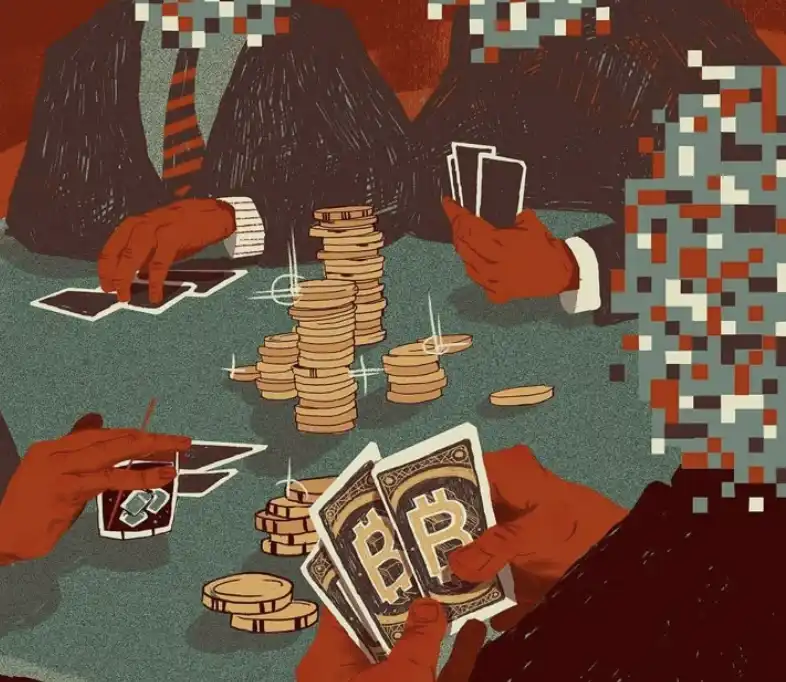
Many traders and crypto industry veterans point out that this UMA voting system is highly susceptible to manipulation. Token holders can freely vote on contentious bets in which they have a financial stake, with no institutional constraints.

Analysis by The Wall Street Journal, combining Polymarket trading data and on-chain information, found: Over the past year, at least 60% of active UMA voters could be matched to Polymarket trading accounts; in over 300 dispute cases during the same period, UMA voters were found to hold financial positions in the very bets under dispute.

UMA bills itself as decentralized, but on-chain data shows voting power is highly concentrated among a few "whales." Statistics indicate that in the vast majority of dispute votes, the top ten wallet addresses account for over half the votes.

Nic Carter, founding partner of venture capital firm Castle Island Ventures, bluntly stated that Polymarket shouldn't shirk its dispute resolution responsibilities. "Arbitrating disputes is inherently part of Polymarket's job. It shouldn't be outsourced to this anonymous, unidentified third-party group of token holders."

A Polymarket spokesperson responded that only 0.2% of betting contracts on the platform trigger UMA voting arbitration, and added that UMA disperses adjudication authority into an open market system rather than leaving it to a single entity.

In March of this year, Polymarket founder Shayne Coplan admitted at a Harvard Business School forum that the platform's current dispute resolution mechanism indeed has many flaws. "Related optimization solutions are about to be implemented," he said, but did not reveal specific reform details. It is reported that Polymarket has entered into a data partnership with Dow Jones, the parent company of The Wall Street Journal.

UMA was co-founded by two former Goldman Sachs traders and is managed by the Risk Labs Foundation, registered in the Cayman Islands. Foundation spokesperson James Fry stated that no conclusive evidence has been found to suggest UMA manipulates trades. "Much of the external skepticism is just losing traders looking for excuses."

When disputes arise, UMA token holders debate on the Discord social platform, citing various pieces of evidence to support their views. UMA also has a penalty mechanism that financially penalizes users who vote in the minority, a move the platform says aims to guide voters toward factually correct determinations.

According to statistics from Polymarket's dedicated trading terminal Betmoar, from the beginning of 2026 to now, the platform has seen over 1,150 betting disputes, a number that has already surpassed the total for all of 2025.

A recent popular dispute involved a bet on whether streamer Clavicular would officially announce a pregnancy: the streamer did publicly announce a partner's pregnancy, but many traders argued this announcement didn't meet the contract's requirement of a "formal and valid declaration." Ultimately, UMA voting ruled the announcement was compliant. Additionally, multiple arbitration disagreements have erupted over bets related to the situation in Iran.

Public regulatory filings show that Polymarket initially handled various disputes internally; in early 2022, the platform reached a settlement with the U.S. Commodity Futures Trading Commission over alleged violations of U.S. financial regulations and subsequently handed over all dispute arbitration work to UMA.

This model of adjudication by a dispersed group of token holders also serves as a key basis for Polymarket to argue it is an offshore platform, not subject to U.S. domestic regulation.

However, Polymarket occasionally overturns UMA's final rulings and also proactively adds supplementary clarifications to betting contract details to avoid potential disputes.

The novice trader Wilhelm mentioned earlier ultimately lost his bet related to the ceasefire agreement; 87% of UMA token voters determined that the Israel-Lebanon truce agreement applied to the Hezbollah-related bet. Despite reasoned arguments from Wilhelm and others, they were powerless to change the ruling.

A group of losing traders formed a Discord community called "Whale Hunters," collectively accusing top UMA voting users of suspected backroom dealings.

Traders have pointed fingers at the startup project UMA.rocks, a platform that allows UMA token holders to pool their voting tokens and delegate voting authority to a specialized decision committee. Its votes recently accounted for about 8% in various dispute votes and are also seen by the market as an important indicator of UMA's overall ruling trends.

UMA.rocks founder Lancelot Chardonnet responded: "Many traders' losses are essentially because they didn't seriously read the betting rules, but afterward they shift all the blame to UMA and our platform. We are the easiest targets."

At the end of April, UMA.rocks formally expelled voting committee member Scout, citing his past suspected market manipulation behavior.

Contacted via Discord, Scout denied manipulating the market or deliberately guiding incorrect voting outcomes but readily admitted to participating in Polymarket bets on disputed markets while exercising UMA dispute voting power.

Scout believes that voters with such conflicting interests can actually make rulings more aligned with the facts. "Voters with no skin in the game might spend at most 5 minutes casually looking into the matter; but we, as stakeholders, driven by our own financial interests, will verify the full picture of the event to make an accurate judgment."

He acknowledged the industry faces a dilemma: "Either use traders with conflicting interests in the adjudication, or let complete outsiders with no expertise drive the voting. There's currently no perfect answer."


Domande pertinenti

QAccording to the article, what is the main difference between how Polymarket and other prediction markets like Kalshi handle trade disputes?

AMost prediction markets like Kalshi resolve disputes internally. In contrast, Polymarket outsources the arbitration of disputes to a third-party service called UMA, where voting power is held by anonymous holders of UMA tokens.

QWhat finding did the Wall Street Journal's analysis reveal about UMA voters and their activity on Polymarket?

AThe Wall Street Journal's analysis found that over the past year, at least 60% of active UMA voters could be linked to trading accounts on Polymarket, and in more than 300 dispute cases, UMA voters themselves held financial positions in the contested markets.

QWhat did Polymarket's founder, Shayne Coplan, admit about the platform's current dispute resolution mechanism?

AShayne Coplan admitted at a Harvard Business School forum that the platform's current dispute resolution system has many flaws and stated that improvements are on the way, though he did not provide specific details.

QHow does UMA claim its system encourages accurate voting outcomes?

AUMA has a penalty mechanism that financially punishes users who vote with the minority opinion. The platform claims this is designed to incentivize voters to make factually correct decisions.

QWhat dilemma does the expelled UMA.rocks committee member Scout highlight regarding the dispute resolution system?

AScout highlights a dilemma: the system must either use arbitrators who have a conflict of interest (because they are also traders in the market) or rely on outsiders with no professional stake or deep understanding of the event, suggesting there is currently no perfect solution.

Letture associate

Bitwise: Crypto Becomes a Contrarian Investment, Three Logics to Understand the Current Market

**Summary** Matt Hougan, Bitwise's CIO, analyzes the current crypto market through three key lenses, arguing it has shifted from a momentum-driven to a contrarian investment. **1) Crypto Becomes a Contrarian Play:** The market is weak, with major assets like Bitcoin and Ethereum down significantly. Capital has moved to hot sectors like AI, leaving crypto as an "unloved" asset class. This transforms crypto investing from trend-following to a test of patience and fundamental analysis. Investors now favor projects with solid fundamentals (e.g., Hyperliquid) over speculative ones. **2) Regulatory Overhang:** The uncertain fate of the U.S. CLARITY Act, a major crypto regulatory framework, is a key headwind. With its passage in 2024 seen as far from guaranteed (estimates range from 30-55%), institutional capital remains on the sidelines, choosing less risky alternatives like AI stocks. The market needs clarity—whether the bill passes or fails—more than any specific outcome to move decisively. **3) Capital Rotates to New Fundamentals:** This cycle differs from past bear markets where money fled to Bitcoin. Now, capital seeks smaller assets with strong use cases. While major cryptos fell in May 2024, tokens like Hyperliquid (+72%), Zcash (+50%), and XLM (+44%) rallied on their specific fundamentals. This rotation confirms the new contrarian, fundamentals-driven logic and signals the bear market may be in its later stages. **Conclusion:** Short-term pressure persists due to regulatory uncertainty and competition from AI narratives. Investing in crypto now requires a contrarian mindset—acting against the crowd and focusing on fundamental value. Patience and targeting high-quality projects based on their merits are essential for capturing long-term gains.

marsbit42 min fa

Bitwise: Crypto Becomes a Contrarian Investment, Three Logics to Understand the Current Market

marsbit42 min fa

ChatGPT Might Be Disappearing Soon

OpenAI announced at its "Intelligence at Work" event that its coding assistant, Codex, will be fully integrated into the ChatGPT app within weeks. This move marks a strategic shift from a conversational AI (Chat) towards a unified "agentic" platform capable of execution. Codex, originally launched to compete with Anthropic's Claude Code, has grown rapidly to 5 million weekly active users, with 20% being non-developers like analysts and designers. Its enterprise revenue now constitutes 40% of OpenAI's total. The integration is the first step in creating a super-app combining ChatGPT (interface), Codex (execution engine), and the Atlas browser (web access). OpenAI also unveiled new Codex features: specialized Agent plugins for six professional roles, an "Annotations" tool for direct document editing, and a "Sites" function to turn work into shareable web apps. Internally, this reflects a power shift; the Codex team now leads core product strategy. While the ChatGPT brand remains for its vast user base, the platform's future is focused on autonomous agents that perform tasks, not just chat. The article notes that competition with Claude Code pushed OpenAI's development, with Codex competing on cost-effectiveness and accessibility rather than raw coding quality. It concludes that the essence of "ChatGPT" is evolving from a chatbot into an AI agent platform, with the name potentially becoming a legacy symbol of its original function.

marsbit53 min fa

ChatGPT Might Be Disappearing Soon

marsbit53 min fa

WWDC26 Ultimate Preview: The All-New Siri is the Main Course, iOS 27 is Another Year of Refinements

Apple has confirmed WWDC26 will begin on June 8, with the keynote at 10 AM PT (1 AM Beijing Time, June 9). This year's focus is expected to shift significantly from routine OS updates to Apple's progress in AI, particularly a major overhaul of Siri. Reports indicate the highlight will be a new Siri, reportedly powered by Google's Gemini technology. This upgraded assistant is expected to appear as a lightweight bubble from the Dynamic Island and be accessible via a unified "Search or Ask" system-wide entry point. It aims to deeply integrate with iOS 27, iPadOS 27, and macOS 27, accessing personal data like messages, photos, and documents, with a potential standalone Siri app also in development. For iOS 27, leaks suggest incremental improvements rather than major redesigns. Key updates may include a redesigned, more customizable Camera app, enhanced photo editing tools within the Photos app, and potential early system optimizations for a future foldable iPhone. The update is also rumored to prioritize bug fixes, stability, and performance optimization. iPadOS 27 is anticipated to focus on improving productivity features like window management, file systems, and external display support to better utilize the iPad's hardware. macOS 27 is seen as a core platform for Apple Intelligence, likely receiving an optimized Siri, new AI features, and continued refinement of the "Liquid Glass" design language. Notably, macOS 27 may finally drop support for Intel-based Macs. The overarching theme for WWDC26 is whether Apple can effectively integrate AI across its ecosystem. The success of the new Siri and Apple Intelligence will be judged on their ability to move beyond standalone features and become a cohesive, context-aware system layer that understands user workflows across iPhone, iPad, Mac, and other devices, while maintaining Apple's emphasis on privacy and stability. The conference represents Apple's critical attempt to catch up and redefine the AI assistant experience after a perceived slow start in the generative AI era.

marsbit1 h fa

WWDC26 Ultimate Preview: The All-New Siri is the Main Course, iOS 27 is Another Year of Refinements

marsbit1 h fa

Trading

Spot
Futures
活动图片