Wall Street Morning Report: Nvidia Falls for 7 Consecutive Days, AI Stocks Continue to Bleed Out; U.S. Treasury Buybacks Criticized as Temporary Fix, Inflation and Deficit Are the Real Big Problems

marsbitPubblicato 2026-08-25Pubblicato ultima volta 2026-08-25

Introduzione

Wall Street Morning Report: Tech and Treasury Tensions U.S. stocks were mixed. The Dow gained 0.26%, supported by defensive and consumer staples stocks, while the S&P 500 fell 0.28% and the Nasdaq dropped 0.76% amid a sell-off in AI hardware. The U.S. announced new sanctions targeting Iran's key economic sectors, temporarily easing oil prices (Brent -2.35%). However, concerns over potential disruption to the Strait of Hormuz could pressure European natural gas prices. Meanwhile, the Treasury's upcoming bond buyback plan faced criticism from major banks (Goldman Sachs, Deutsche Bank, Citadel), who argue it doesn't address the root causes of high long-term yields: persistent inflation and the massive fiscal deficit. The 10-year Treasury yield dipped slightly to around 4.70%. Gold rose, with Citi raising its short-term target to $4,800/oz. The AI hardware and semiconductor sector saw intense selling. The Philadelphia Semiconductor Index fell nearly 3%. NVIDIA dropped 2.91%, marking its seventh consecutive daily decline—its longest losing streak since 2022—due to pre-earnings caution despite strong analyst estimates. Memory chip stocks (Micron -6%, others down 5-6%) fell after Samsung's shareholder returns disappointed, raising cycle peak fears. Optical communications was also a big loser, led by Applied Optoelectronics (-14%) on equity dilution concerns. Wall Street is growing wary of off-balance-sheet credit risks in AI infrastructure financing. In other moves, Tesla fell 3...

From Monday to Friday morning, focusing on macro trends, U.S. stocks, AI, precious metals, and crude oil, we use data to review the markets and trends to seize opportunities. Produced by PANews.

Policy Temporarily Caps Oil Prices, But Cannot Disperse Fiscal Clouds
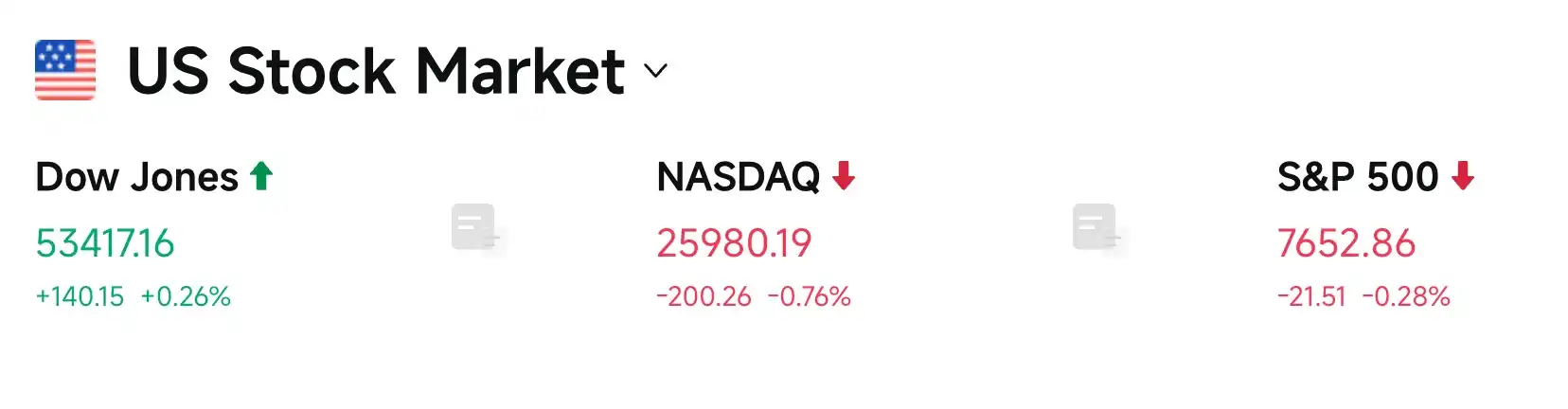
The three major U.S. stock indices diverged: the Dow Jones Industrial Average rose 0.26%, supported by financials, consumer staples, and defensive blue chips; the S&P 500 fell 0.28%; and the Nasdaq Composite fell 0.76%, with the AI hardware sector becoming the center of selling pressure.

Bessent launched the "Economic Orphan Action" on Monday, targeting five "lifelines" of Iran's digital assets, technology, gold, aviation, and shipping, and threatening secondary sanctions on countries that continue dealings with Tehran. Trump is communicating with leaders of various countries, demanding they sever economic interactions. Relevant parties will be given a grace period for rectification, otherwise the Treasury will act unilaterally. Iranian Supreme Leader's advisor Mohber swiftly countered: the response will be more resolute than ever. Sanctions and wars over the past 47 years have not worked; now they are facing internal unity and the Strait of Hormuz deterrent. The parliamentary speaker said trade partners "will not take seriously" the U.S.'s nonsense.

The market quickly "bought the rumor and sold the news": Brent crude fell 2.35% to $92.17 per barrel, with WTI falling in tandem to around $85.01, temporarily easing inflation premiums. Goldman Sachs warned that if the Strait of Hormuz crisis persists into winter, pressure on European natural gas inventories could further intensify, with TTF natural gas prices potentially needing to rise above €100 per megawatt-hour to attract sufficient LNG supplies. Current European gas storage is only about 62%, the lowest for this time of year in nearly two decades.

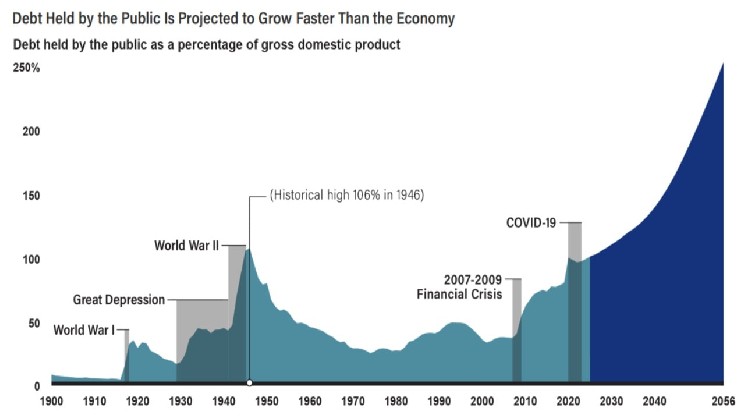
On the same day, Bessent remained restrained regarding U.S. Treasury operations: "We haven't even bought a single bond yet," with the next buyback not scheduled until September 9. Previous reports suggested the Treasury might use nearly $1 trillion from the TGA (Treasury General Account, balance approx. $935-950 billion) to fund the expanded long-term bond buyback. Morgan Stanley interest rate strategist Martin Tobias estimated the available scale between $80 billion and $200 billion. Goldman Sachs, Deutsche Bank, and Citadel Securities collectively poured cold water on the idea: buybacks cannot fundamentally reset long-term rates; the root causes are the U.S.'s $40 trillion debt, fiscal deficit, and inflation. Citadel Securities bluntly called this move "financial repression," stating pressure would only shift to the dollar, inflation, and other assets. The 10-year Treasury yield fell about 3 basis points to around 4.70%, with the 30-year also falling to 5.24%.

The U.S. Dollar Index rose slightly by about 0.20% to near 99. The dollar's strength mainly stemmed from safe-haven demand due to the Iran sanctions, but the market is also starting to worry that if the Treasury forcibly depresses long-term rates, the dollar could face pressure in the future. Data shows the premium of dollar put options over call options for the next month has risen to its highest level since February.

Gold continued to strengthen, hitting an intraday high of $4,696, reaching a nearly three-month high; New York gold futures were further pushed to $4,755. Citigroup has raised its 0-3 month gold target price to $4,800 per ounce and maintains its 6-12 month target of $5,000 per ounce. JPMorgan cautions that if PCE inflation exceeds expectations, gold may first pull back, but if the data is mild and Jackson Hole doesn't signal a strongly hawkish stance, gold prices could quickly approach $5,000.

Additionally, Trump continues to create pressure on the trade market, criticizing Canada for "taking advantage of the U.S." and warning of more serious consequences if Canada doesn't play by the rules. Market sources suggest the U.S. may raise tariffs on Canadian autos, parts, and steel to 50% starting in 2027, which would affect North American auto supply chain costs.

AI Hardware Sector Bleeds Out Comprehensively; Memory and Optical Communication Hit Hard, Funds Shift to More Stable Tech Platforms

Last night and this morning, U.S. AI hardware and semiconductor stocks faced intense selling pressure. The Philadelphia Semiconductor Index plunged nearly 3%, the memory sector fell about 5.5% overall, with the optical communication sector leading the decline.

Nvidia fell 2.91%, marking its seventh consecutive day of decline, its longest losing streak since 2022. The stock decline shows a clear divergence from fundamental expectations: Nvidia executives stated the Groq 3 LPX racks are now in full production, focusing on low-latency AI inference, and will be deployed alongside Vera CPU and Rubin GPU in Nebius data centers. Moreover, Wall Street earnings estimates for the past three months have actually been revised upward by about 13%, with the vast majority of 82 analysts maintaining buy ratings.

However, traders are more focused on risks ahead of earnings. Nvidia reports earnings this week, and the market worries that even if the results are strong, they might not be strong enough to support current valuations. Goldman Sachs believes Nvidia's demand data in Wednesday's earnings report might be "absurdly strong," but the real issues lie in memory costs and AI infrastructure financing. If hardware costs continue to rise, Nvidia will ultimately have to choose between absorbing costs, raising prices to customers, and reducing memory dependency.

Wall Street is increasingly alert to the credit risks of AI infrastructure. Broadcom's 5-year CDS has risen 28 basis points since August, with the yield on its bonds maturing in 2031 rising about 14 basis points over the same period; its risk premium even exceeds that of Oracle and SpaceX. JPMorgan strategists warn that off-balance-sheet credit support involved in the AI ecosystem—such as lease contracts, purchase commitments, and residual value guarantees—could ultimately reach trillions of dollars, raising deep concerns about "compute loans" and off-balance-sheet leverage risks.

The memory chain was a disaster area. Samsung Electronics' shareholder return plan falling short of expectations triggered a second wave of selling in global memory stocks. Micron, SanDisk, Seagate, Western Digital, and SK Hynix all plunged significantly. The market worries that the previous price increase cycle driven by HBM and AI servers has already been overpriced into stock valuations. The optical communication sector also faced pressure. Applied Optoelectronics fell nearly 14% after announcing its third ATM financing this year, planning to raise $600 million, raising investor concerns about cash flow and equity dilution. This dragged down Ciena, Lumentum, and Coherent.

Specific Project Actions and Stock Price Movements:
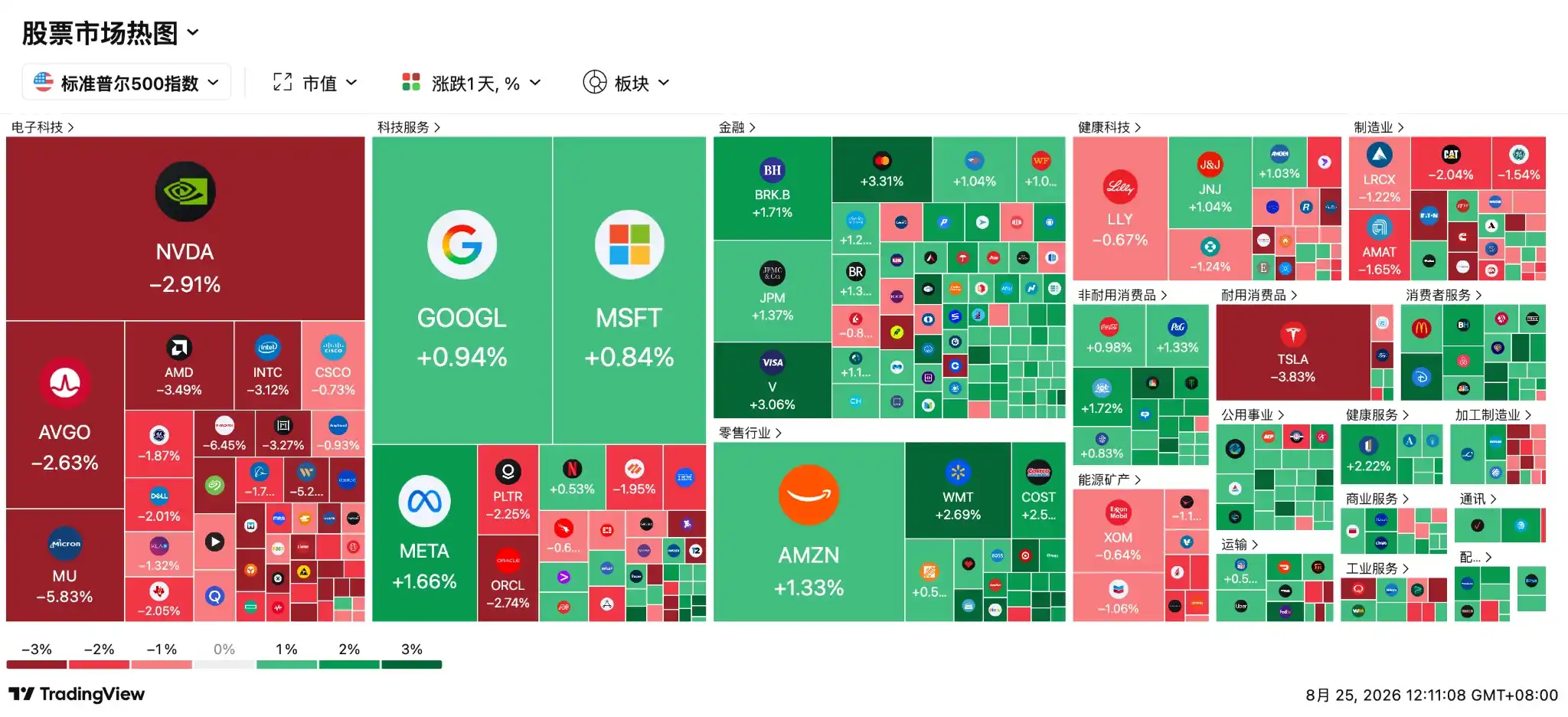
  • Nvidia closed down 2.91%, its seventh consecutive day of decline, marking its longest losing streak since 2022, with a cumulative drop of over 7% during the period. Risk-off selling dominated ahead of earnings, despite analysts raising earnings estimates by 13% over the past three months, most maintaining buy ratings, and target prices implying over 50% upside, with forward P/E having fallen to around 18x.

  • Semiconductor sector fell in unison, Broadcom down 2.63%: The yield on its 2031 bonds surged 14 basis points, and its CDS jumped 28 basis points in a month. Wall Street warns of massive off-balance-sheet credit risk accumulating from the residual value guarantees it provides for AI data center leases and purchase contracts. The Philadelphia Semiconductor Index fell 2.7%; AMD fell over 3%, Intel fell over 3%, TSMC fell over 2%.

  • Memory chips collectively sold off, Micron down nearly 6%: Samsung's shareholder returns falling short of expectations exacerbated market concerns about the memory cycle peaking. SanDisk down 6.45%, Seagate down over 6%, Western Digital down over 5%, SK Hynix down nearly 5%.

  • Optical communication was a disaster area, Applied Optoelectronics down nearly 14%: The company plans to raise $600 million via ATM financing, raising market concerns about equity dilution and funding pressure. Ciena down over 6%, Lumentum down over 4%, Coherent down over 4%, Marvell Technology down over 3%.

  • Tesla closed down 3.83%: Mainly impacted by a voluntary recall of about 3 million cars in China due to door handle and driving monitor hazards (a single-brand record). Despite the company scheduling a Cybercab event for September 3, traders predict only a 17% probability of delivering to retail customers this year. Related sectors: XPeng down over 8%, NIO down nearly 6%, Chinese new energy vehicle chains under pressure overall.

  • Meta rose 1.66% against the trend: Meta plans to launch the "Hatch" AI agent platform in the coming weeks, an intelligent shopping tool on Instagram, and plans to release the latest AI model "Watermelon" in October; the premium subscription version may cost up to $199.99 per month. Related sectors: Amazon up 1.33% (AWS launched Glue 6.0 with a 30% price reduction), Microsoft up 0.84%, Google up nearly 1%, Apple up 0.32%. Major platform stocks showed clear resilience.

  • SpaceX down 1.44%: SpaceX AI will adopt Nvidia Vera CPU to advance Agentic AI and plans to extend the optimized Vera Rubin NVL72 to space for Starmind AI satellites. Meanwhile, NASA's Roman Space Telescope is scheduled for launch on August 30 via a Falcon Heavy rocket.

  • Other giants: Bloom Energy up 1.28%, as Pelosi disclosed for the first time buying Bloom Energy stocks and options while adding to Intel, betting on AI power and chips; Boeing down 1.75%, with after-hours news that Boeing secured a U.S. Air Force F-15 contract worth up to $131.2 billion; Visa up 3.07%, Walmart up 2.69%, Disney up 2.62%, providing important support for the Dow's two-day gain against the trend.

What to Watch Next:

August 25 (Tuesday)

  • Jefferies Semiconductor, IT Hardware & Communications Tech Summit, August 25-26: Many well-known semiconductor and tech companies including TSMC, FormFactor, Aehr Test Systems, Arbe Robotics will participate. Industry discussions will focus on AI accelerators, HBM, advanced packaging, data center demand, and automotive semiconductor iteration.

August 26 (Wednesday)

  • Gamescom in Cologne, Germany, August 26-30, Opening at 02:00: Microsoft, Nintendo, Tencent, NetEase, CDPR and others will gather. Market focus on new game releases, AI game tools, cloud gaming, and hardware ecosystem news, potentially affecting sentiment in gaming, graphics cards, consoles, and content platforms.

  • Deutsche Bank California Technology Conference, August 26-27 in Dana Point, California.

  • Shenzhen AGIC General Artificial Intelligence Expo, August 26-28, overlapping with the Digital Expo (August 28-30) in Tongzhou. Dense AI industry conferences, focus on embodied intelligence and AI application progress.


Domande pertinenti

QWhat is the main reason for the sharp decline in the AI hardware and semiconductor stock sectors mentioned in the article?

AThe main reasons are broad profit-taking and risk aversion ahead of earnings reports, particularly for Nvidia. Additionally, concerns are growing about the fundamental valuation support for these stocks even if earnings are strong. Specific pressures include heightened market worries about 'compute debt' and off-balance-sheet leverage risks in the AI ecosystem, a disappointing shareholder return plan from Samsung triggering a sell-off in memory stocks, and equity dilution concerns from companies like Applied Optoelectronics raising capital via ATM offerings.

QWhy are financial institutions like Goldman Sachs and Deutsche Bank skeptical about the US Treasury's long-term bond buyback plan?

AThey are skeptical because they believe the buyback plan is a superficial fix that fails to address the root causes of high long-term interest rates. They argue that the core problems are the US's $40 trillion debt, persistent fiscal deficits, and underlying inflation pressures. Castle Securities even described the measure as a form of 'financial repression,' suggesting the pressure would merely shift to the US dollar, inflation, and other assets.

QWhat were the key factors driving the price of gold higher, according to the article?

AGold prices rose due to several factors: geopolitical tensions arising from new US sanctions threats against Iran, which increased safe-haven demand. Additionally, market concerns about potential future US dollar weakness if the Treasury's actions suppress long-term yields contributed. Citigroup raised its short-term gold price target to $4,800 per ounce, citing these supportive conditions.

QWhich major tech platform stocks performed relatively well despite the overall market sell-off, and what were the reasons?

AMeta (up 1.66%), Amazon (up 1.33%), Microsoft (up 0.84%), Google (up nearly 1%), and Apple (up 0.32%) performed relatively well. The article suggests investors shifted funds from volatile AI hardware stocks toward these more stable, large-cap technology platform companies. Specific catalysts mentioned include Meta's upcoming 'Hatch' AI agent platform and new AI model, as well as AWS's launch of Glue 6.0 with a 30% price reduction.

QWhat specific event is causing market concern for European energy markets beyond the immediate oil price reaction to Iran sanctions?

AAnalysts from Goldman Sachs warned that if the geopolitical crisis in the Strait of Hormuz persists into the winter, it could exacerbate pressure on European natural gas storage. With storage levels around 62% (a 20-year low for this time of year), the TTF gas price might need to rise above 100 euros per megawatt-hour to attract sufficient LNG supplies to meet demand.

Letture associate

Grain Prices Haven't Taken Off Yet, So Why Have Fertilizer Prices Risen First?

Fertilizer prices are rising ahead of a potential global food price surge, driven primarily by supply-side constraints rather than current agricultural demand. While a strong El Niño is forecast for late 2026, its impact is expected to be initially limited to specific crops like palm oil and rubber, not leading to immediate, broad-based grain shortages. The fertilizer market is currently propelled by its own dynamics: **Urea** faces domestic oversupply in China, with its price reliant on the potential to export to higher-priced international markets. **Phosphate fertilizers** are experiencing a rare "supply-led" cycle due to global sulfur shortages, shipping disruptions, and production cuts overseas, placing Chinese producers with integrated resources and export channels in a key position. **Potash** supply is tightening due to planned maintenance and production cuts at major global producers, underpinning its long-term resource scarcity narrative. Looking ahead to 2027, a prolonged El Niño could shift the market into a second phase of "demand-supply resonance." If extreme weather significantly impacts crop yields and global grain inventories, rising food prices and farmer income would boost fertilizer application demand. This potential demand surge, layered onto the existing supply constraints, could amplify the price cycle. The overarching theme is that **food security is redefining the strategic value of fertilizers**, particularly for resource-constrained phosphate and potash. Policy priorities balancing domestic supply guarantees with export opportunities, coupled with resource ownership and global supply chain access, are becoming critical determinants of profitability beyond short-term weather cycles.

marsbit5 min fa

Grain Prices Haven't Taken Off Yet, So Why Have Fertilizer Prices Risen First?

marsbit5 min fa

He Xiaopeng Breaks Unitree's Record

He Xiaopeng Breaks Unitree's Record: Xiaopeng Group's Humanoid Robot Arm Valued at $6.3 Billion In a landmark deal mirroring Unitree's recent listing, Xiaopeng Group has announced the completion of the first private equity financing round for its humanoid robotics business, led by IDG Capital. The funding round raised over $900 million (approximately 6.5 billion RMB), resulting in a post-investment valuation exceeding $6.3 billion (approximately 43 billion RMB). This surpasses the total funds raised by Unitree Technology in its recent IPO. He Xiaopeng, founder of XPeng Motors, is personally leading the robotics venture as its CEO. Established in 2020, the company has quickly become a super unicorn. Its latest robot model, IRON, debuted in late 2025 with a highly realistic, human-proportioned design and the ability to perform complex movements like a "catwalk," sparking significant online attention. The round saw participation from IDG Capital, Gaorong Capital, and strategic investors Tencent and Alibaba. He Xiaopeng stated that Xiaopeng IRON is on the cusp of mass production, with plans for commercial deployment starting from XPeng's own stores and campuses by the end of 2026, followed by official market launch in 2027. He believes each IRON robot's lifetime revenue and profit contribution will significantly exceed that of the current automotive business per vehicle. This development comes amidst a heated race in China's embodied AI sector, following Unitree's recent listing as the "first humanoid robot stock." Major automotive giants, including Tesla, GAC Group, Changan, Li Auto, and BYD, are now entering the field. Leveraging their existing expertise in autonomous driving, supply chains, and mass manufacturing, these companies pose a formidable challenge to standalone robotics startups. The competition signals a shift in the industry, where future success will depend on demonstrable commercialization, mass production capabilities, and clear revenue paths rather than just technological concepts.

marsbit10 min fa

He Xiaopeng Breaks Unitree's Record

marsbit10 min fa

Coinbase Uses Chainlink to Deeper Integrate Tokenized Stocks into DeFi

Coinbase has selected Chainlink to provide pricing infrastructure for its tokenized stocks, enabling blockchain-based versions of stocks like Apple and NVIDIA to be used freely on decentralized lending and trading markets. This is particularly significant for non-U.S. cryptocurrency users, allowing them to utilize tokenized U.S. equities similarly to how DeFi currently uses stablecoins and tokenized Treasuries. The integration aims to move these tokens beyond mere storage—making them viable as collateral, liquidity, and building blocks within DeFi protocols. For tokenized stocks to hold value or function in DeFi, protocols require reliable price determination. Chainlink’s oracles will supply this critical data, addressing a key gap—especially in lending markets where accurate collateral valuation and liquidation mechanisms depend on trusted price feeds. The stocks, which trade on Coinbase’s Ethereum Layer-2 network Base using the B20 token standard, are structured to mirror real-world equities, with bankruptcy-remote protections. Holders can own fractional shares, trade them on platforms like Aerodrome, and use positions (e.g., in NVIDIA) as loan collateral on Aave. Legally, the initiative operates outside the U.S., with Coinbase securing regulatory approval from Abu Dhabi’s FSRA to run its global tokenization hub. Token holders receive dividends and voting rights, though access remains limited to eligible non-U.S. users, and transfers are subject to sanctions screening and wallet-level freezes. The tokenized equity market has grown rapidly, with its market cap soaring from $329 million in June 2025 to around $1.7 billion by June 2026, and monthly on-chain transfer volume exploding from $53 million to $9.22 billion over the same period. Despite an overall decline in DeFi deposits, risk-weighted deposits for tokenized real-world assets on DeFi lending platforms tripled from $2.3 billion in Q2 2025 to $7.4 billion in Q2 2026. While Coinbase faces competition from players like Nasdaq (partnering with Kraken’s parent) and Robinhood Chain (a current leader in tokenized stock holders), the key challenge is driving active use—transforming tokenized shares from static digital representations into productive components of the blockchain financial ecosystem. As noted by industry observers, the goal is for these assets to “do something on the blockchain,” with Chainlink’s reliable data enabling that crucial DeFi interoperability.

cryptonews.ru12 min fa

Coinbase Uses Chainlink to Deeper Integrate Tokenized Stocks into DeFi

cryptonews.ru12 min fa

Bitwise's XRP ETF Trading Volume Surpasses $200 Million Over Three Trading Sessions

Bitwise XRP ETF Trading Volume Surges, Exceeds $200 Million Over Three Sessions Trading activity in the Bitwise XRP ETF ($XRP) accelerated sharply over the three sessions ending August 24, marking its most active period since launching in November 2025. According to Bitwise President Teddy Fusaro, volume topped $80 million on August 24, after exceeding $60 million on each of the two prior days, bringing the three-day total over $200 million. This secondary market trading surge coincided with a sharp price recovery for XRP in August. The record volumes followed a rally that boosted the fund's Net Asset Value per share by 11.71% to $15.36 by August 20. The broader crypto market uptick was partly attributed to a U.S. Treasury announcement to significantly increase long-term bond buybacks starting September 9. As of August 23, the fund held approximately 328.2 million XRP valued at $484.6 million. The article notes that high ETF trading volume reflects secondary market activity and does not necessarily equate to new capital inflows or additional token purchases. It highlights a separate challenge for XRP: whether demand can absorb the token's increasing circulating supply, which grew 5.5% year-over-year from escrow releases. In H1 2026, U.S. spot XRP exchange-traded products absorbed an estimated 14.8% of this supply increase. Other potential demand sources mentioned include AI agents potentially using the XRP Ledger for settlements and institutional payments, though digital assets currently represent a negligible portion of the vast payment volumes processed by Ripple's acquired companies. The Bitwise XRP ETF, trading on NYSE Arca, provides investors with traditional brokerage account access to XRP, which is custodied by Coinbase Custody Trust Co.

cryptonews.ru14 min fa

Bitwise's XRP ETF Trading Volume Surpasses $200 Million Over Three Trading Sessions

cryptonews.ru14 min fa

Trading

Spot
活动图片