Coinbase has chosen Chainlink to provide price infrastructure for its tokenized stocks, enabling stocks of companies like Apple and NVIDIA to flow freely across decentralized lending and trading markets.
This agreement is particularly significant for cryptocurrency users outside the US, as it allows them to use blockchain versions of US stocks in the same way the decentralized finance (DeFi) sector already does with stablecoins and tokenized treasury bonds.
Timing is crucial for the entire cryptocurrency market. The tokenized stock sector has been one of the most developed areas in blockchain finance this year, but many of these tokens have remained idle in wallets. New reliable price sources are changing the situation. They will facilitate the use of these tokens as collateral, liquidity, and building blocks for other protocols.
Why the Oracle is the Missing Element
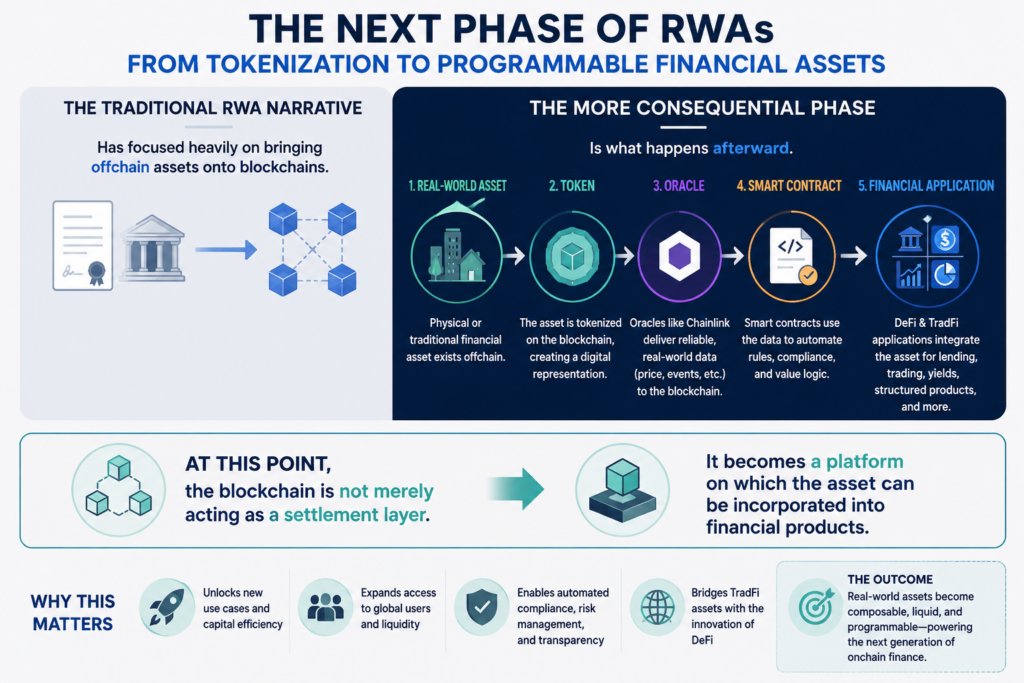
For tokenized stocks to have any value or be usable in DeFi, protocols must first determine their price. According to the Base technical documentation, the token price reflects the stock price but is adjusted via an on-chain multiplier adjustment to account for dividends and stock splits without actually changing the number of tokens in the wallet.
In lending markets, the absence of a reliable price information source leads to the market's inability to accurately value collateral or liquidate positions when their value falls below required thresholds.
Chainlink will take on this function for Coinbase. A Galaxy report noted that Chainlink was already integrated into Robinhood Chain since its launch in July, as obtaining accurate price information became critical for delivering tokenized stock-based solutions.
Apple and NVIDIA as Collateral on Base
Stocks are already trading directly on Base, Coinbase's Ethereum Layer-2 network. Base claims the stocks precisely match real stocks regulated by Alpaca, with a structure providing bankruptcy-remote protection.
Using self-custody wallets, users can own fractional shares in companies like Apple and NVIDIA, trade them via Aerodrome, and use their tokenized position (in NVIDIA's case) as loan collateral on Aave.
The stocks use Base's B20 standard, an ERC-20 extension. Once issued, they can interact with DeFi like any other on-chain asset. There are no whitelisted wallets in the secondary market, allowing tokens to move between compatible DeFi protocols.
The Regulating Authority is in Abu Dhabi
The legal framework is outside the US. On August 11, Coinbase announced receiving approval from the Abu Dhabi Global Market's regulator, FSRA, to operate its global tokenization hub.
Coinbase stated that tokens issued under this system are backed by the underlying stocks, and verified holders receive dividends and voting rights.
Access remains limited to non-US users in eligible jurisdictions. Coinbase also stated that transfers are subject to sanctions screening and that assets can be frozen at the wallet level.
Tokenized Assets Are Being Used, Not Just Issued
These figures help explain why the collateral aspect is important. By the end of June 2026, the market capitalization of tokenized stocks, RWA, reached approximately $1.7 billion, more than five times the $329 million recorded at the end of June 2025. The monthly on-chain transfer volume grew from $53 million in June 2025 to $9.22 billion in June 2026.
| Metric | Earlier Period | Later Period | Change |
| Tokenized Stock Market Cap | $329M, end of June 2025 | ~$1.7B, end of June 2026 | More than 5x |
| Monthly On-Chain Transfer Volume of Tokenized Stocks | $53M, June 2025 | $9.22B, June 2026 | More than 170x |
| Risk-Weighted Assets (RWA) Deposits on DeFi Lending Platforms and Exchanges | $2.3B, Q2 2025 | $7.4B, Q2 2026 | More than 3x |
According to data from CoinShares and Token Terminal, the volume of tokenized real-world asset deposits on DeFi lending platforms and exchanges also grew from $2.3 billion in Q2 2025 to $7.4 billion in Q2 2026, despite the overall DeFi deposit volume declining by approximately 15%.
Coinbase is not the only company addressing this demand. Nasdaq, in partnership with Payward, the parent company of Kraken, is building a gateway to connect tokenized stocks to blockchain networks, and Robinhood Chain already leads in the number of tokenized stock holders.
The real challenge for Coinbase will be whether users do more than just hold these assets. If tokens representing equity continue to become collateral and liquidity within the DeFi ecosystem, the Chainlink integration will play a role in transforming tokenized shares from a mere digital representation of stocks into a more active part of on-chain finance.
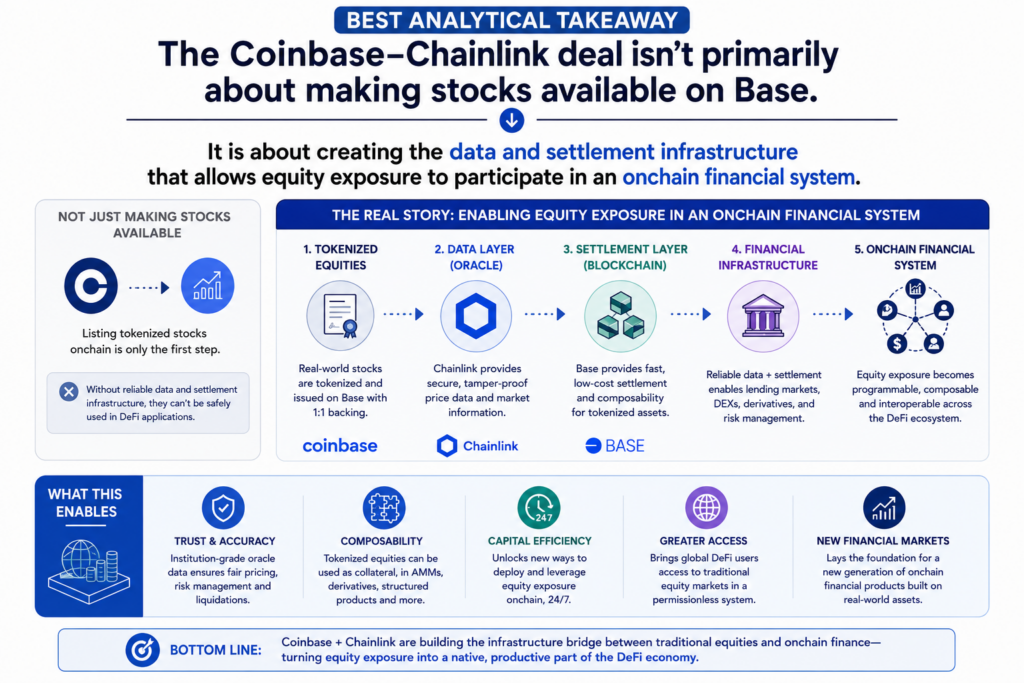
end-contentThe idea is not entirely new. Sentora co-founder Jesus Rodriguez argued that tokenized stocks should not just "exist on the blockchain" but also "do something on the blockchain," including serving as productive collateral. Chainlink points to the same next stage, where reliable market data and on-chain computations enable interaction with DeFi applications.