US Media Reveals the Inside Story of Sora's Shutdown: Losing Millions Daily, User Base Halved, and Facing Talent Poaching from Competitors

marsbitPubblicato 2026-03-30Pubblicato ultima volta 2026-03-30

Introduzione

OpenAI has abruptly shut down its Sora video-generation tool, a project once hailed as the next consumer AI frontier after ChatGPT. Initially launched with high expectations, including a major partnership with Disney, Sora allowed users to insert themselves into various video scenes. However, it quickly became a significant financial drain, reportedly losing about $1 million daily. Its user base peaked at roughly one million before halving, and it consumed excessive computational resources needed for OpenAI's core priorities, such as its upcoming "Spud" AI model and enterprise productivity tools. Facing stiff competition from rivals like Anthropic and a strategic shift towards AI agents and coding tools ahead of its IPO, OpenAI decided to reallocate resources. Key researchers behind Sora were also targeted in a Silicon Valley talent war, with Meta's CEO personally attempting to recruit them. The shutdown shocked Disney, which had planned to invest $1 billion and use Sora across its operations. The deal has now collapsed, and Disney is exploring other AI partnerships. OpenAI will focus its efforts on robotics and other long-term projects.

Earlier this month, when OpenAI CEO Sam Altman arrived in Los Angeles to attend Vanity Fair's post-Oscars party, his company was just weeks away from licensing the Sora video generation tool to major Hollywood studios.

Following the massive success of ChatGPT, Sora was hyped as the next consumer-facing AI frontier. This simple app allowed users to place themselves and their friends into various video scenes, whether dribbling like the Harlem Globetrotters or engaging in a lightsaber duel with the Star Wars character Darth Vader.

Then-Disney CEO Bob Iger was also optimistic about its prospects, agreeing to invest $1 billion in OpenAI and allowing characters from the studio's Marvel, Pixar Animation, and other properties to appear in Sora-generated videos. Equally important, amid widespread industry concerns about AI's threat to creative work, he lent the emerging technology the valuable seal of approval from Disney.

Computational Burden

However, OpenAI suddenly decided to shut down Sora.

Disney executives were shocked, many of them learning of the decision less than an hour before it was announced. What they didn't know was that Sora had quietly become a major burden for OpenAI in the months following its launch, especially as the startup was tightening its business focus ahead of its initial public offering (IPO).

At the time, OpenAI was just weeks away from completing a new AI model codenamed "Spud" and needed to free up more computational resources to support the coding tools and enterprise products running on that model. AI chips are the most precious resource for any top research lab, and at OpenAI, Sora was consuming too many of them.

Moreover, Sora was not yet profitable, and every user who "stitched" themselves into a WWII newsreel or a Hollywood chase scene was consuming finite computing resources.

Strategic Miscalculation

Today, Sora looks like a costly strategic miscalculation, and the key employees who led the project are at the center of the AI talent war sweeping Silicon Valley.

Altman described the decision to shut down Sora as a difficult but necessary sacrifice for the company to achieve its larger goals. In a memo to employees, he wrote that he was encouraged to see everyone willing to make "tough trade-offs" for the company's benefit.
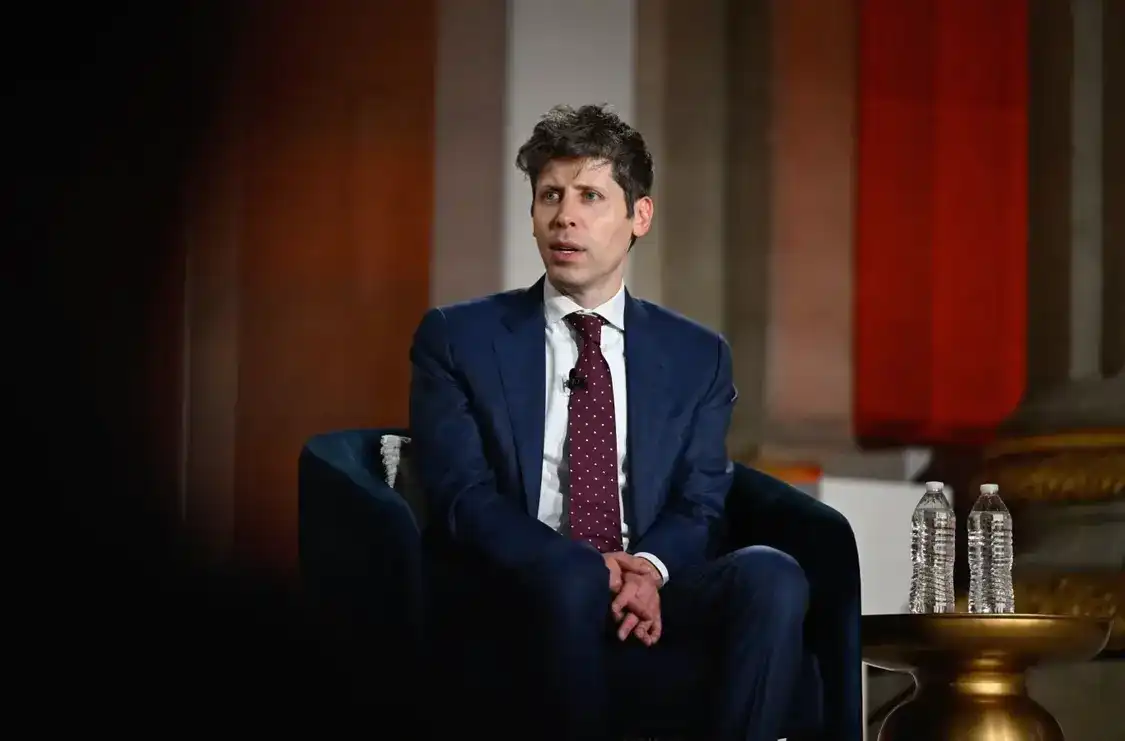
Altman

The decision marked a stunning conclusion to a project Altman had once pinned high hopes on. He had dreamed of using Sora to position OpenAI as the creative pioneer of the AI era and bring in substantial new revenue streams for the company.

Two years ago, OpenAI first showcased Sora to the world, presenting dreamlike landscapes generated by the technology, reminiscent of Hayao Miyazaki's fantasy worlds or the surrealist paintings of Salvador Dalí. When OpenAI launched the standalone Sora app for consumers last September, Altman compared it to the company's initial release of ChatGPT.

However, the app never became as popular as its developers envisioned. It was more akin to low-quality AI-generated content than an AI creative marvel. By the end of last year, its usage had plateaued.

Shortly after its launch, the global user base peaked at around 1 million but never reached that level again. According to data from AI research firm Similarweb, user numbers dropped below 500,000 in the following months.

A person familiar with the matter revealed that Sora was losing approximately $1 million per day. As OpenAI tightened its purse strings ahead of the IPO, company executives began scrutinizing Sora more strictly, and the results were not to their satisfaction.

At the time, OpenAI's research team was about to begin training a new model designed to power video generation features for ChatGPT. Unlike language models that learn from text, video models need to understand the entire dynamic world, making their creation significantly more expensive. After carefully calculating the required costs, OpenAI decided to cancel Sora.

OpenAI plans to shift its focus to a new type of "super app" it is building, which will integrate so-called AI agent tools capable of autonomously performing tasks for users, such as writing software, analyzing data, and booking travel. These productivity-focused products are gradually gaining widespread adoption in the labor market, and OpenAI currently lags behind competitor Anthropic in the race for this market, posing a threat to its leading position in the AI competition.

Altman told employees that the Sora team would next focus on longer-term strategic initiatives like robotics.

An OpenAI spokesperson said the company is rigorously prioritizing computational resources based on the areas that can deliver the greatest long-term economic value. She stated: "This careful focus on where we deploy compute allows us to achieve growth, accelerate innovation, and serve businesses and developers more efficiently."

Zuckerberg's Talent Poaching

Sora was the brainchild of Tim Brooks and Bill Peebles. The two researchers became close friends while pursuing their PhDs at UC Berkeley. They joined OpenAI in early 2023 with the goal of building models capable of simulating the physical world by generating high-quality video from text.

Sora was part of OpenAI's World Simulations team, led by Aditya Ramesh. This department operated independently from OpenAI's core research team, which builds the large language models powering ChatGPT.

Last spring, Meta CEO Mark Zuckerberg launched a full-scale talent war against OpenAI, personally contacting dozens of OpenAI's top researchers with lucrative compensation packages to lure them to his new AI lab. One of his targets was Peebles, who received an offer and briefly considered joining Meta.

According to people familiar with the matter, OpenAI managed to retain Peebles by giving him a raise. Shortly thereafter, his responsibilities on the Sora project expanded. Peebles oversaw the training of a new version of the video generation model and the development of the Sora consumer app.

Disney's AI Dream

Despite Sora's daily losses of $1 million, OpenAI had tried to find a viable path for it. Last December, it announced a multi-year agreement with Disney, securing licensing rights to use over 200 characters from the entertainment giant's film library. As part of the deal, Disney agreed to become a major customer of OpenAI and invest $1 billion in it.

Iger, in an interview with CNBC, said the deal gave Disney an opportunity to participate in the rapid development of AI and new forms of media entertainment. Altman said he hoped the collaboration would offer users a new way to engage in creative expression with AI.
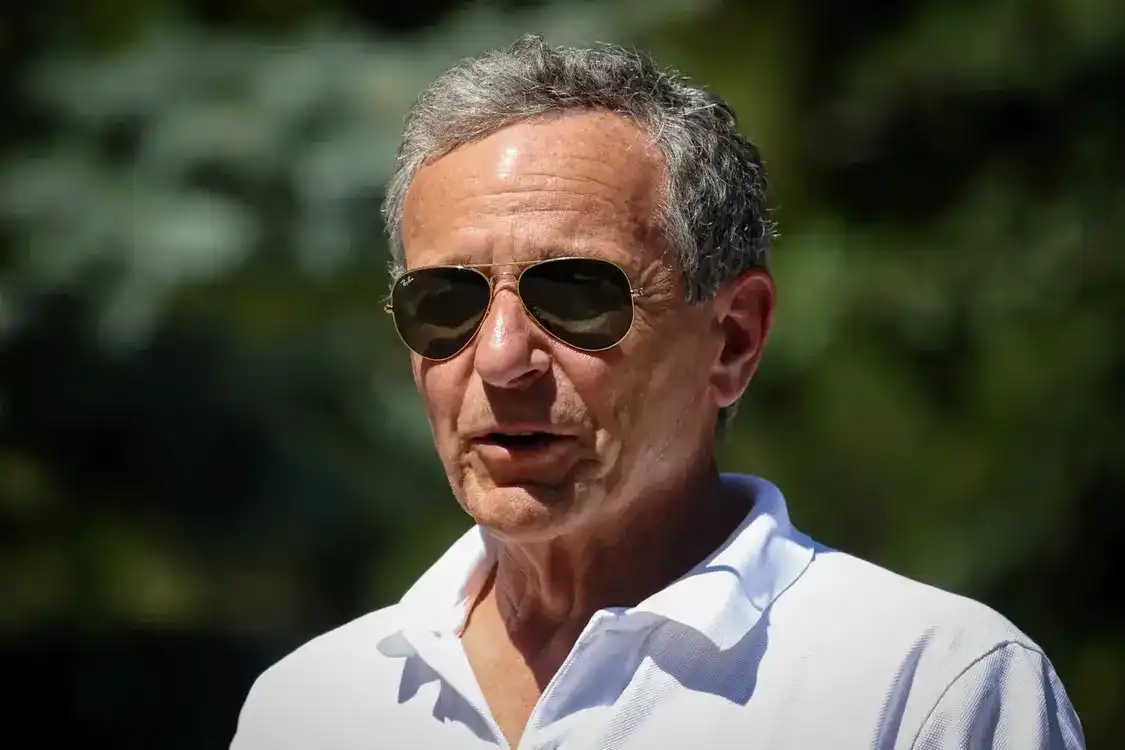
Then-Disney CEO Iger

For Disney, the deal demonstrated a viable business model for AI licensing around its intellectual property. Just a day before announcing the agreement with OpenAI, Disney had sent a cease-and-desist letter to Google, accusing the tech giant of "massive copyright infringement of Disney's works."

Cloud Service Solution

In February, Iger said on an earnings call that short videos generated by Sora would soon appear on the Disney+ streaming platform, which was preparing to launch a vertical video feed. According to people familiar with the matter, Disney was also in talks with OpenAI about using ChatGPT company-wide.

In recent weeks, OpenAI began piloting an enterprise version of Sora, allowing companies like Disney to use the tool with security guarantees. Disney had expected to roll out this tool as early as this spring. It would have allowed select Disney executives to use Sora for everything from marketing campaign design to special effects production, without OpenAI having access to their work.

However, OpenAI was already considering how to withdraw from the Sora project. The gap with competitor Anthropic widened further. Anthropic's recent technical progress reignited concerns that AI could replace traditional software and services, briefly causing a dip in software stocks. OpenAI realized it needed to devote more resources to building these so-called productivity tools and began deprioritizing certain areas.

After initially planning to continue offering video generation features through ChatGPT, the company ultimately decided to shut down Sora completely.

Disney's planned $1 billion investment in OpenAI ultimately did not materialize, and the relationship between the two is effectively stalled.

According to a person familiar with the matter, under new CEO Josh D'Amaro, Disney is actively discussing the application of other AI tools with more than a dozen partners.

Real-time Information Push

Disney said in a statement: "As the emerging AI field develops rapidly, we respect OpenAI's decision to exit the video generation business and realign its priorities. We appreciate the constructive collaboration between our teams and the lessons learned from it."

On Sora's X account, its team posted a message reminiscent of a digital obituary: "To everyone who ever created, shared, and built a community around Sora: thank you."


Domande pertinenti

QWhat were the main reasons behind OpenAI's decision to shut down Sora?

AOpenAI shut down Sora primarily due to its excessive consumption of limited and expensive AI computing resources (chips), its failure to become profitable (reportedly losing about $1 million daily), and a strategic shift in company priorities. The resources were needed for the upcoming 'Spud' AI model, coding tools, and enterprise products, especially as OpenAI focused on its IPO preparation and fell behind competitors like Anthropic in productivity-focused AI agent tools.

QHow did the user base of the Sora consumer app perform after its launch?

AThe Sora consumer app initially reached a peak of around 1 million users shortly after its launch. However, its user base subsequently declined and never reached that peak again, dropping to under 500,000 users in the following months, according to data from AI research firm Similarweb.

QWhat was the significance of the deal between OpenAI and Disney regarding Sora?

AThe deal was significant as it involved Disney investment of $1 billion in OpenAI and granted OpenAI a license to use over 200 characters from Disney's film library (including Marvel and Pixar) for Sora-generated videos. It was seen as a major endorsement from a creative industry leader and an attempt to establish a viable business model for AI-generated content. However, the investment ultimately did not materialize after Sora was shut down.

QWho were the key researchers behind the Sora project, and what external challenge did they face?

AThe Sora project was the brainchild of researchers Tim Brooks and Bill Peebles. A key external challenge was a talent war from Meta CEO Mark Zuckerberg, who personally contacted dozens of OpenAI's top researchers, including Peebles, offering lucrative compensation to join Meta's AI lab. OpenAI managed to retain Peebles by giving him a raise.

QWhat is OpenAI's new strategic focus after shutting down the Sora project?

AOpenAI is shifting its strategic focus towards developing a new 'super app' that integrates AI agent tools capable of autonomously performing tasks for users, such as writing code, analyzing data, and booking travel. The company is also prioritizing resources for its upcoming 'Spud' AI model and enterprise products, areas where it feels it is lagging behind competitors and which offer greater long-term economic value.

Letture associate

Borrowing Money from a Hundred Years Later, Building Incomprehensible AI

Tech giants like Alphabet, Amazon, Meta, and Microsoft are undergoing a radical financial transformation due to AI. Their traditional "light-asset, high-free-cash-flow" model is being dismantled by staggering capital expenditures on AI infrastructure—data centers, GPUs, and power. Combined 2026 guidance exceeds $700 billion, a 4.5x increase from 2022, causing free cash flow to plummet (e.g., Amazon's fell 95%). To fund this, they are borrowing unprecedented sums through long-dated, multi-currency bonds (e.g., Alphabet's 100-year bond). The world's most conservative capital—pensions, insurers—is now funding Silicon Valley's most speculative bet. This shift makes these companies resemble heavy-asset industrials (railroads, utilities) rather than software firms, threatening their premium valuations. Historically, such infrastructure booms (railroads, fiber optics) followed a pattern: genuine technology, overbuilding fueled by competitive frenzy, aggressive debt financing, and a crash triggered by financial conditions—not technology failure. The infrastructure remained, but many original builders and financiers did not survive. The core gamble is a "time arbitrage": using cheap debt today to build scale and lock in customers before AI capabilities commoditize. They are betting that AI revenue will materialize before debt comes due. Their positions vary: Amazon is under immediate cash pressure; Meta's path to monetization is unclear; Alphabet has a robust core business buffer; Microsoft has the shortest path from infrastructure to revenue. The contract is set: the most risk-averse global capital has lent its time to Silicon Valley, awaiting a future that is promised but uncertain.

marsbit27 min fa

Borrowing Money from a Hundred Years Later, Building Incomprehensible AI

marsbit27 min fa

The 'VVV' Concept Soars 9x in Half a Year, The New AI Narrative on Base Chain

"The article explores the 'VVV' concept as the new AI-focused narrative within the Base ecosystem, centered around the token $VVV of the privacy-focused, uncensored generative AI platform Venice, led by crypto veteran Erik Voorhees. Venice has seen significant growth in 2026, with its API users surging, partly attributed to exposure from OpenClaw. The platform now boasts over 2 million total users and 55,000 paid subscribers. Correspondingly, the $VVV token price has risen over 9x this year. Key to its performance are tokenomics designed for value accrual: reduced annual emissions, subscription revenue used for buyback-and-burn, and a unique staking mechanism. Staking $VVV yields $sVVV, which can be used to mint $DIEM tokens. Each staked $DIEM provides a daily $1 credit for using Venice's API services, creating tangible utility. The article also highlights other tokens associated with the 'VVV' narrative. $POD, the token of distributed AI network Dolphin (which co-developed Venice's default AI model), saw a massive price surge. $cyb3rwr3n, a project for a Venice credit auction market, gained attention due to perceived connections to Venice's team despite official denials. Finally, $SR of robotics platform STRIKEROBOT.AI rose after announcing a partnership with Venice for robot vision-language model development. Overall, the 'VVV' ecosystem combines AI platform growth, deflationary tokenomics, and innovative utility mechanisms, driving significant investor interest and price action in related tokens."

marsbit36 min fa

The 'VVV' Concept Soars 9x in Half a Year, The New AI Narrative on Base Chain

marsbit36 min fa

Anthropic and OpenAI Have Single-Handedly Severed the Logic of Pre-IPO Stock Tokenization

The pre-IPO stock token market is experiencing significant turmoil following strong statements from AI giants Anthropic and OpenAI. Both companies have updated their official policies, declaring that any transfer of their company shares—including sales, transfers, or assignments of share interests—without prior board approval is "invalid" and will not be recognized in their corporate records. This means buyers in such unauthorized transactions would not be recognized as shareholders and would have no shareholder rights. A major point of contention is the use of Special Purpose Vehicles (SPVs), which are legal entities commonly used by pre-IPO token platforms to pool investor funds and indirectly acquire shares from employees or early investors. The companies explicitly state they do not permit SPVs to acquire their shares, and any such transfer violates their restrictions. They warn that third parties selling shares through SPVs, direct sales, forward contracts, or stock tokens are likely engaged in fraud or are offering worthless investments due to these transfer limits. This stance directly threatens the core model of many pre-IPO token platforms, which rely on SPV structures. The announcement revealed additional risks within this model, such as complex "SPV-within-SPV" layering that obscures legal transparency, increases management fees, and creates a chain reaction risk of invalidation. Following the news, tokens like ANTHROPIC and OPENAI on platforms like PreStocks fell sharply (over 20%). The market reaction highlights a divergence: while asset-backed pre-IPO tokens plummeted, purely speculative pre-IPO futures contracts, which are bilateral bets on future IPO prices with no claim to actual shares, remained relatively stable as they are unaffected by the transfer restrictions. The industry is split on the implications. Some believe the fundamental logic of pre-IPO token trading is broken if leading companies reject SPV-held shares, potentially causing a domino effect. Others, like Rivet founder Nick Abouzeid, argue that buyers of such unofficial tokens always knowingly accepted the risk of non-recognition by the company. The statements serve as a stark risk warning and a corrective measure for a market where valuations for some AI-related pre-IPO tokens had soared to irrational levels, far exceeding recent funding round valuations.

marsbit1 h fa

Anthropic and OpenAI Have Single-Handedly Severed the Logic of Pre-IPO Stock Tokenization

marsbit1 h fa

Anthropic and OpenAI Personally Sever the Logic of Pre-IPO Crypto-Stocks

The pre-IPO token market has been rocked by strong statements from Anthropic and OpenAI. Both AI giants have updated official warnings, declaring that any sale or transfer of their company shares without explicit board approval is "invalid" and will not be recognized on their corporate records. This directly targets Special Purpose Vehicles (SPVs), the common legal structure used by pre-IPO token platforms. These platforms typically use an SPV to acquire shares from employees or early investors, then issue blockchain-based tokens representing a claim on the SPV's economic benefits. Anthropic and OpenAI's position means that if an SPV's share purchase lacked authorization, the underlying asset could be deemed worthless, nullifying the token's value. Anthropic explicitly warned that any third party selling its shares—via direct sales, forwards, or tokens—is likely fraudulent or offering a valueless investment. The crackdown highlights risks in the popular SPV model, including complex multi-layered "Russian doll" SPV structures that obscure legal ownership, add fees, and concentrate risk. If one layer is invalidated, the entire chain could collapse. Following the announcements, tokens like ANTHROPIC and OPENAI on platforms like PreStocks fell sharply (over 20%). In contrast, purely speculative pre-IPO prediction contracts remained stable, as they involve no actual share ownership. The move is seen as a corrective measure amid a market frenzy where some pre-IPO token valuations (e.g., Anthropic's token hitting a $1.4 trillion implied valuation) far exceeded recent official funding rounds. Opinions are split: some believe this undermines the core logic of pre-IPO token trading if top companies reject SPVs, while others argue buyers always assumed this legal risk when accessing unofficial channels. The statements serve as a stark warning and a potential catalyst for market de-leveraging and clearer boundaries.

Odaily星球日报1 h fa

Anthropic and OpenAI Personally Sever the Logic of Pre-IPO Crypto-Stocks

Odaily星球日报1 h fa

The Waged Worker Driven to Poverty by AI Subscriptions

"AI Membership: The Hidden Cost Pushing Workers Toward 'Poverty'" The widespread corporate push for AI adoption is creating a hidden financial burden for employees. Companies, from giants like Alibaba to small firms, are mandating AI use, often tying token consumption to KPIs, but frequently refuse to cover the costs. Workers are forced to pay for subscriptions out of pocket to stay competitive and avoid being replaced. Front-end developer Long Shen spends up to 2000 RMB monthly on tools like Cursor and ChatGPT Plus, seeing it as a necessary 3% salary investment to handle 90% of his coding tasks. While it boosted his performance and led to promotions, he now faces idle time at work, pretending to be busy. Designer Peng Peng navigates strict company firewalls by using personal devices and accounts for AI image generation tools like Midjourney, spending hundreds monthly without reimbursement, while her boss demands faster, more numerous revisions. The pressure creates workplace anxiety and suspicion. Programmer Li Huahua, after a friend's experience of raised KPIs following AI success, fears being branded a "traitor" for using it yet worries about falling behind if she doesn't. The dynamic allows management to demand results without understanding the tools or covering expenses, treating employees like AI "agents." While some, like entrepreneur Jin Tu, find high value in paid AI, building entire systems and winning competitions, for most, it's a trap. Free tools like Kimi and Doubao are introducing fees, closing off alternatives. The initial efficiency gains individual advantage, but as AI becomes ubiquitous, the personal edge disappears, workloads increase, and a cycle of dependency begins. Workers like Long Shen realize they cannot maintain AI-generated code without AI, making stopping harder than continuing to pay. The tool promising liberation is instead becoming a compulsory, costly chain in the modern workplace.

marsbit2 h fa

The Waged Worker Driven to Poverty by AI Subscriptions

marsbit2 h fa

Trading

Spot
Futures
活动图片




