US Debt Spiral Eyes $39T: Why Bitcoin Hyper ($HYPER) Is The Hedge to Watch

bitcoinistPubblicato 2026-02-10Pubblicato ultima volta 2026-02-10

Introduzione

The US national debt is projected to hit $39 trillion, accelerating concerns about currency debasement and driving investors toward Bitcoin as a hedge. However, the market is shifting from simply holding Bitcoin to seeking utility through Bitcoin Layer 2 solutions that unlock its dormant $1.7 trillion economy. Bitcoin Hyper ($HYPER) emerges as a key player by integrating the Solana Virtual Machine (SVM) with Bitcoin’s blockchain, enabling sub-second transaction speeds, smart contracts, and DeFi applications without sacrificing Bitcoin’s security. The project has raised over $31 million in its presale, attracting significant whale activity, including a $500,000 single transaction. This reflects growing smart money interest in Bitcoin-based infrastructure that offers both inflation protection and yield potential.

Trusted Editorial content, reviewed by leading industry experts and seasoned editors. Ad Disclosure

Quick Facts:

  • ➡️ With US national debt projected to hit $3T, the case for Bitcoin as a hedge against currency debasement is stronger than ever.
  • ➡️ The market is rotating from pure holding to ‘Bitcoin DeFi,’ seeking Layer 2s that unlock the $2T dormant $BTC economy.
  • ➡️ Bitcoin Hyper uses the Solana Virtual Machine (SVM) to bring sub-second transaction speeds and smart contracts to the Bitcoin network.
  • ➡️ Smart money is active, with over $31M raised in presale and significant whale buys, including a $500K single-transaction entry in mid-January.

The US national debt isn’t just growing. It’s accelerating at a pace that frankly defies logic.

With the ticker currently near the $39T milestone, the macro ground is shifting beneath investors’ feet.
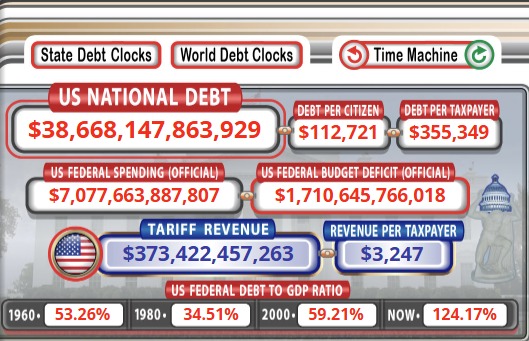
Source: US Debt Clock

Debt servicing costs are now consuming a terrifying slice of federal revenue, forcing the Federal Reserve into a corner where currency debasement looks like the only exit strategy.

For savvy market participants, the ‘debasement trade’ is no longer just a theory. Bitcoin ($BTC) hovering near $70,000 isn’t speculative frenzy, it’s a structural flight to safety.

But holding Bitcoin is only step one.

Smart money is looking beyond simple store-of-value plays to the infrastructure that unlocks Bitcoin’s dormant capital. If Bitcoin is the digital gold vault, the market is desperately seeking the high-speed rails to actually move that value.

This demand for utility on the world’s most secure blockchain is driving capital into Layer 2 solutions. While established players like Stacks laid the groundwork, a new contender, Bitcoin Hyper ($HYPER), is turning heads (and wallets) by integrating the Solana Virtual Machine (SVM) directly with Bitcoin’s settlement layer.

The premise is punchy: combine Bitcoin’s security with Solana’s speed to create a hedge that works as both a shield against inflation and a sword for yield.

Read more about $HYPER here.

Bitcoin Hyper Brings SVM Velocity to the $1.7t Bitcoin Economy

Here’s the friction in the current crypto ecosystem: usually, you have to choose. You get Bitcoin’s security or Solana’s speed, but rarely both.
Bitcoin Hyper ($HYPER) attacks this trade-off by operating as the first-ever Bitcoin Layer 2 with SVM integration.

That technical architecture matters. It allows developers to write smart contracts in Rust, the same language powering Solana’s high-performance dApps, while anchoring final settlement on the Bitcoin blockchain.

For the average user, this means transaction finality that feels instant (we’re talking sub-second) rather than the sluggish 10-minute block times of the Bitcoin mainnet. By using a decentralized canonical bridge, Bitcoin Hyper enables users to move $BTC into a high-speed execution environment.
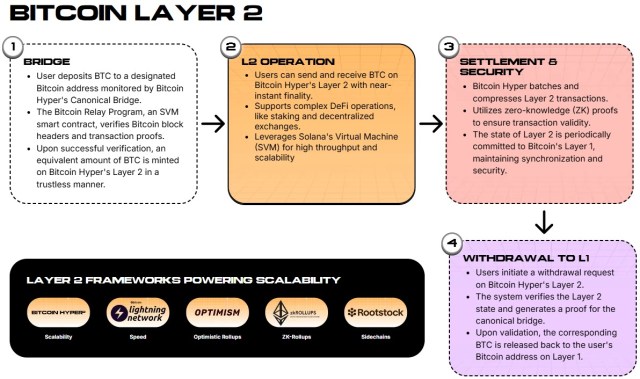
Suddenly, Bitcoin is usable for DeFi, gaming, and payments without the prohibitive fees associated with Ordinals or BRC-20 tokens.
The modular design, separating execution (SVM) from settlement (Bitcoin L1), mirrors the successful roadmap of Ethereum rollups. But there’s a key difference: it applies that logic to a market cap three times larger.

By solving the lack of programmability on Bitcoin, $HYPER positions itself not just as a token, but as essential infrastructure for the next cycle of institutional adoption.

You can buy $HYPER here.

Smart Money Rotation: Whales Target $31M Presale Milestone

Retail investors often chase green candles. Smart money? They front-run infrastructure shifts.

On-chain data surrounding the Bitcoin Hyper presale suggests a decisive move by high-net-worth wallets to secure early positions.

According to the official presale page, the project has already raised an impressive $31.3M. That figure underscores a significant market appetite for Bitcoin-native DeFi solutions.

What stands out is the scale of individual allocations. Etherscan records reveal that three whale wallets have accumulated $1M+ in $HYPER tokens in recent transactions ($500K, $379.9K, $274K).

When sophisticated actors accumulate heavily during a presale phase, where the token is priced at a modest $0.0136754, it often signals a bet on a high multiple repricing once the token lists on major exchanges.

Investors are also drawn to the immediate utility of their capital. Unlike many ICOs that leave funds idle, Bitcoin Hyper offers immediate staking with high APY for presale participants. Coupled with a 7-day vesting period for stakers, the tokenomics reward conviction over speculation.

As the US debt clock ticks louder, the rotation into assets that offer both hard-money properties and high-growth potential is accelerating.

Buy your $HYPER today.

This article is for informational purposes only and does not constitute financial advice. Cryptocurrency investments, including presales and initial coin offerings, carry inherent risks and are subject to market volatility. Always conduct your own due diligence before investing.

Editorial Process for bitcoinist is centered on delivering thoroughly researched, accurate, and unbiased content. We uphold strict sourcing standards, and each page undergoes diligent review by our team of top technology experts and seasoned editors. This process ensures the integrity, relevance, and value of our content for our readers.

patrubogdan

Follow

Full Profile

Related Posts

Dogecoin Tries to Hold $0.09370 – Is 2026 the Doge Year or Will $MAXI Take Over?

Crypto Exchange Backpack Targets Token Launch Soon, as BMIC Fires Up Quantum Defense

Ethereum Foundation Backs SEAL Initiative as LiquidChain L3 Protocol Gains Traction

Vitalik Buterin Outlines Ethereum’s AI Future, While SUBBD Token Targets the Creator Economy

Binance Dominates Trump’s USD1 Supply as Bitcoin Hyper Breaks Records

Cathie Wood’s Ark Invest Buys More Bullish Assets Just Days After Last Purchase, While LiquidChain Turns Heads

Domande pertinenti

QWhat is the main argument presented in the article for investing in Bitcoin and related technologies like Bitcoin Hyper?

AThe main argument is that the rapidly accelerating US national debt, projected to hit $39 trillion, is forcing the Federal Reserve into currency debasement. This makes it a structural flight to safety, and while holding Bitcoin is a hedge, smart money is now moving into Bitcoin Layer 2 infrastructure like Bitcoin Hyper to unlock the dormant value of the $1.7T Bitcoin economy for yield and utility.

QWhat specific technological solution does Bitcoin Hyper ($HYPER) provide to the Bitcoin ecosystem?

ABitcoin Hyper is the first Bitcoin Layer 2 that integrates the Solana Virtual Machine (SVM). This allows it to bring sub-second transaction speeds and smart contract functionality (written in Rust) to the Bitcoin network, solving its lack of programmability and high fees while still using Bitcoin's blockchain for secure settlement.

QWhat evidence does the article provide to show 'smart money' or whale interest in the Bitcoin Hyper project?

AThe article cites that the project's presale has raised over $31 million. It also references on-chain data from Etherscan showing significant whale purchases, including specific single transactions of $500K, $379.9K, and $274K, indicating high-net-worth investors are accumulating the token early.

QAccording to the article, what is the current presale price of the $HYPER token and what benefit do presale participants get?

AThe current presale price of the $HYPER token is $0.0136754. Presale participants receive the immediate benefit of being able to stake their tokens for a high Annual Percentage Yield (APY).

QHow does the article characterize the current state of the US national debt and its implications?

AThe article characterizes the US national debt as accelerating at a pace that 'defies logic,' nearing $39 trillion. It states that debt servicing costs are consuming a 'terrifying slice of federal revenue,' which corners the Federal Reserve and makes currency debasement appear to be the only viable exit strategy.

Letture associate

Will the Next Crypto Bull Run Start with On-Chain Trading of SpaceX?

This article presents a scenario-based forecast for the crypto industry from 2026 to 2029, arguing that the next major cycle will be driven not by technological narratives but by legal access to real-world assets. The author predicts that by mid-2026, pre-IPO perpetual contracts for top private companies like SpaceX, OpenAI, and Anthropic on platforms like Hyperliquid will become the primary gateway for accessing quality assets, as most crypto-native tokens fail to capture real value. The much-hyped AI x Crypto intersection largely fails except for prediction markets, which thrive on betting on AI model supremacy. By 2027, public blockchain foundations are forced to choose between catering to retail speculation or building compliant infrastructure for institutions, with many opting for the latter. Growth in stablecoins and tokenized private credit/equity hits a "triple ceiling" due to regulatory and political uncertainty rather than market demand. The pivotal shift is forecast for 2028. A major liquidation event in pre-IPO perpetuals exposes the structural flaw of synthetic markets lacking a real underlying asset anchor. In response, regulatory changes finally allow the public solicitation of private securities resales to verified accredited investors. This creates a legitimate secondary market for real company equity, which then becomes the core asset class of the new bull market, relegating synthetic perps to a niche role. By 2029, the industry becomes "boring" but foundational. Tokens without claims on real cash flows or assets cease trading. Stablecoin growth is steady but politically capped. Crypto infrastructure fades from view as it gets absorbed into traditional finance backends. The article's central thesis is that the key bottleneck for crypto's next phase is legal and regulatory channels for real asset ownership, not technology.

marsbit38 min fa

Will the Next Crypto Bull Run Start with On-Chain Trading of SpaceX?

marsbit38 min fa

The Value Distribution of Stablecoins

**Summary: The Value Distribution of Stablecoins** The article argues that stablecoins are evolving from mere trading tools into broader channels for dollar access. It divides the stablecoin ecosystem into four layers to analyze how value is distributed: 1. **Issuance Layer:** Mints stablecoins, holds reserve assets, and captures the spread between reserve yield and user costs (e.g., Tether, Circle). This layer currently earns the largest profit margin. 2. **Infrastructure Layer:** Connects stablecoins to the traditional financial system, handling fiat on/off-ramps, banking integration, compliance (KYC/AML), and asset management (e.g., Bridge, BVNK). This is the "unglamorous" but critical work, building the essential bridges between crypto and real-world finance. 3. **Acquiring/Distribution Layer:** Integrates stablecoins into merchant systems, manages payment flows, and provides enterprise financial software (e.g., Stripe, Coinbase). They act as the access point for businesses. 4. **Application Layer:** The end-users and businesses that ultimately use stablecoins for payments, settlements, or as a store of value. They benefit from convenience but have little pricing power. The core thesis is that while the issuance layer currently dominates profits, the often-overlooked **infrastructure layer holds significant long-term potential**. The real challenge and barrier to mass adoption is not the on-chain transfer of stablecoins (which is simple), but the complex "last mile" integration into existing business workflows, banking systems, and regulatory frameworks across different countries. Companies in this layer are currently in a "land grab" phase, investing heavily to build networks, secure bank partnerships, and establish compliance pathways. While their position is currently pressured by the profitable issuers above and distribution platforms below, the article suggests that if stablecoins become a default financial rail for businesses, the infrastructure providers who have done the hard work of integration will ultimately gain strong pricing power and become entrenched, essential players.

marsbit7 h fa

The Value Distribution of Stablecoins

marsbit7 h fa

The Value Distribution of Stablecoins

The Value Distribution of Stablecoins The article argues that stablecoins are evolving from a mere trading tool into a broad "dollar channel." It analyzes the industry's value chain through four layers: 1. **Issuance Layer (e.g., Tether, Circle):** The top layer that mints stablecoins, holds reserve assets, and captures the thickest interest rate spread. 2. **Infrastructure Layer (e.g., Bridge, BVNK):** Connects stablecoins to the traditional financial system, handling critical but complex "dirty work" like fiat on/off-ramps, banking integration, compliance (KYC/AML), and cross-border settlement. 3. **Acquiring/Distribution Layer (e.g., Stripe, Coinbase):** Embeds stablecoins into merchant systems, manages payment flows, and integrates with enterprise software. 4. **Application Layer:** End-users and businesses that ultimately use stablecoins for payments, settlement, or storing value. The author posits that while the issuance layer currently captures the most profit, the most overlooked and potentially critical layer is infrastructure. The core challenge for stablecoin adoption isn't the on-chain transfer (which is simple), but bridging the gap between blockchain and the real-world financial system. This involves solving practical problems for businesses: fiat conversion, reconciliation, tax handling, and user onboarding. Infrastructure companies are currently in a difficult "land-grab" phase—building networks, securing banking relationships, and achieving compliance country-by-country. They face pressure from both the profitable issuance layer above and distribution platforms below. However, the author suggests this layer is building a crucial moat. Once stablecoins become a default business rail, the infrastructure players who have done the hard work of integration may gain significant, durable value and pricing power.

链捕手7 h fa

The Value Distribution of Stablecoins

链捕手7 h fa

Trading

Spot
Futures
活动图片





