How to Make Yourself Irreplaceable by AI Forever

marsbitPubblicato 2026-08-02Pubblicato ultima volta 2026-08-02

Introduzione

This article argues that the primary threat from AI is not job replacement, but remaining trapped in "wage slavery"—financial dependence on employers. The path to becoming irreplaceable is not resisting AI, but becoming an "unemployable" individual who builds their own meaningful enterprise. The author identifies five key elements for this: Agency (acting without permission), Taste (judging what's worthwhile), Persuasion, Persistence, and Iteration. The solution is to stop being a "pawn" in someone else's game. To start, you must fundamentally change your identity and environment, then engage in rapid, real-world trial and error. While both coding and creating media (content) are powerful, content is more crucial. AI can generate assets, but true value lies in subjective, human-driven content that builds trust and narrative. The actionable advice is to carve out 15 minutes to answer foundational questions: 1) Uncover your "raw material"—what you know deeply or solve effortlessly. 2) Define your contrarian perspective—what common beliefs you think are wrong. The intersection of these answers is your direction. Finally, you must launch by publishing your first core idea immediately, using the feedback to iterate and develop the skills needed for a self-directed life and career.

Translation Agency is a translation team under 36Kr, focusing on technology, business, workplace, and life, primarily introducing new technologies, new perspectives, and new trends from abroad.

Editor's Note: Instead of lamenting on social media about jobs being taken over by AI, become an 'unemployable' super-individual and turn the tables outside others' chessboards with your content. The article is from a translation.

Unfortunately, all jobs will probably disappear within the next 5 seconds.

At least, that's what it feels like if you take the alarmists on social media too seriously.

You might even adopt an 'anti-AI' ideology as your new label, shouting 'Screw AI!' to make yourself feel like you're changing the world. But in reality, you haven't made any behavioral changes, expanded your skill set, or adapted to this new world—after all, who would bother changing when you can stick to the status quo and cry about being a poor victim?

AI is not the threat you think it is.

The real threat remains the same as always:

For survival and well-being, you rely on everyone except yourself. Your employer and government have their own survival issues to consider, and when something threatens that, their thinking narrows, and they quickly try to neutralize the threat. It's human nature. You can argue they 'should' care about your well-being, but if you blindly believe they'll take care of you, you're destined to be very, very disappointed.

AI's momentum is too strong to control by complaining.

Venting on social media about how much you hate AI won't stop jobs from being replaced, nor will it halt the evolution of the skills needed for success.

The purpose of this article is to offer you a perspective and a potential solution (one that has existed since ancient times).

I have 4 points to share with you, covering wage slavery, becoming a person of high agency, and why none of this matters if you don't fundamentally change yourself.

At the end of the article, I've also prepared a short exercise with 6 questions that might open the door to a whole new way of life—even if it seems deceptively simple.

1. How to Escape Wage Slavery

Wage slavery is doing meaningless, boring drudgery for someone else—work you didn't voluntarily choose—just to survive.

I'm not against having a job.

I think work is a valuable springboard for gaining practical experience and mastering skills.

But whenever I talk about work in a somewhat 'negative' light, some people inevitably jump in and say, 'You idiot! I actually love my job!'

That's great. But I'm not talking to you (and to some extent, I think you're lying to avoid confronting your potential, and you might not even realize it).

I'm talking to those who understand the psychology of true happiness and can't stand the vision: for over 40 years, one-third of life spent on work they didn't choose, one-third mentally exhausted and unable to do anything valuable, and the remaining third sleeping...
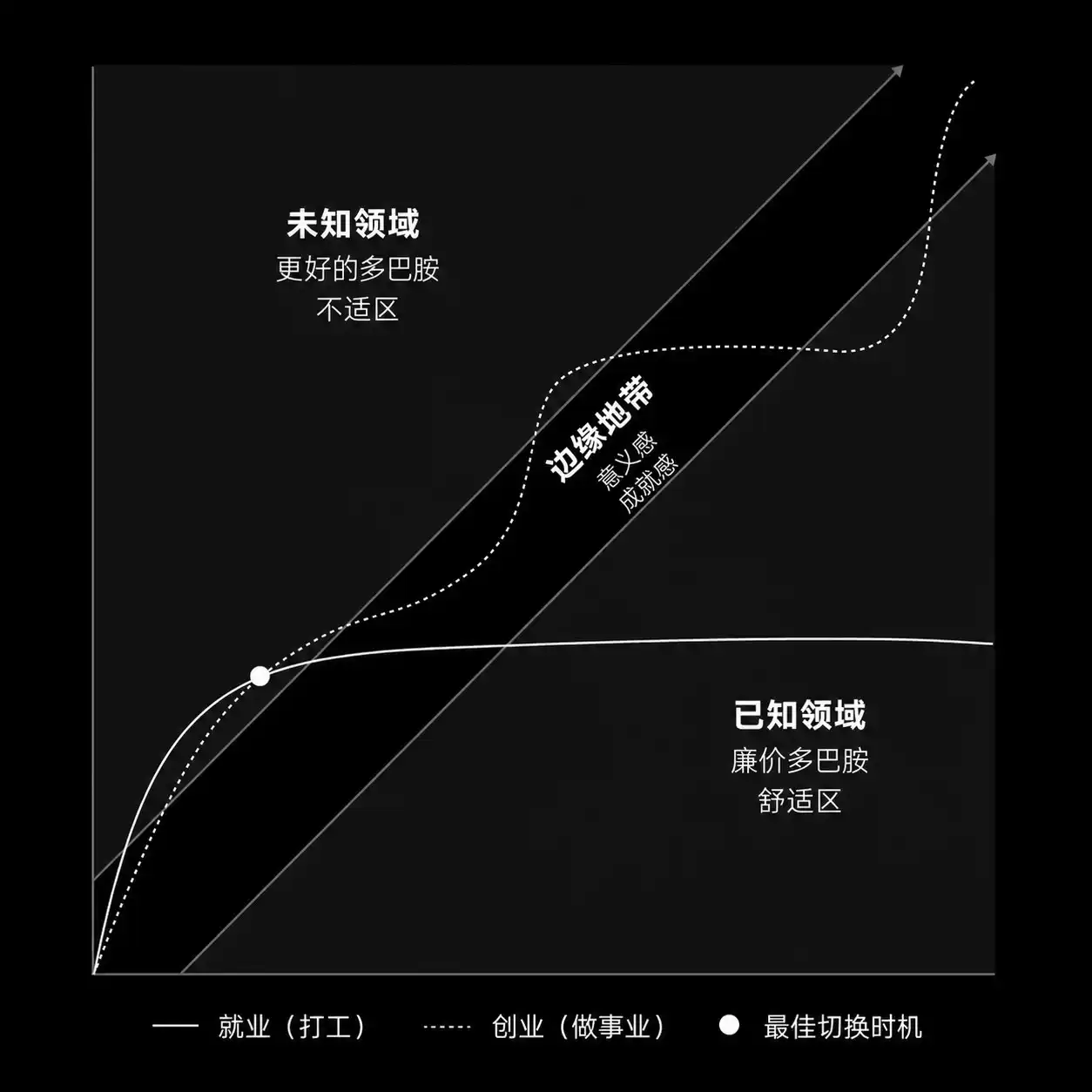
You see, happiness, meaning, and a sense of accomplishment come from testing the limits of your abilities. The research on this is clear. No, I won't cite it. Happiness comes from pursuing a challenge that is just slightly above your current skill level. It can't be so hard it causes anxiety, nor so easy it's boring. Video games exploit this. The tasks you take on are often just the right difficulty because if a level 1 character tackled a level 100 quest, you'd die instantly and hate the game. This is the single biggest driver of entering a flow state. If you can structure your life to increase the probability of triggering this flow, happiness becomes a continuous stream.

The problem with work is that after a few months, you've learned everything you need to know. You just clock in, complete the tasks, clock out. You start getting bored. This goes against your nature. You can feel it. Your attention is no longer immersed in the task; it shifts to: 'What else can I do for fun?' For most people, that 'something else' doesn't involve meaningful goals. It's just opening their phones and letting their brains rot. Very few jobs require you to continuously improve your skills to meet greater challenges.

Climbing the corporate ladder might help, but again, you don't control the difficulty level. You're not working on your own projects. Curiosity, passion, purpose, autonomy, and mastery are destined to be missing—precisely the five key drivers of flow.

What does this have to do with wage slavery?

It can be said that human civilization is built on tribes enslaving other tribes. This dynamic has never disappeared. Instead, it evolved into employment relationships, laws, and culture. Society is essentially a pyramid scheme (Ponzi scheme). There are always more people at the bottom than at the top; mathematically, it's impossible for everyone to reach the top. One boss, many employees, and employees depend on the boss for survival.

Most of us grew up indoctrinated with industrial standards.

Become a specialist. Dive deep into one field. Get a high-paying job so my friends think my son/daughter is successful. And because you did the same, you are blind to most of how the system operates. You mastered only one skill for your job but never tried to understand the system that pays you. You didn't invest time in other areas, so you don't know how to build your own business. All you know is how to be a pawn in someone else's game.

Unknowingly, your ability to think is stifled, even if you were considered 'smart' in your chosen skill. You earn a decent salary but don't feel financially secure, falling into a vicious cycle of stress. Stress narrows your perspective. This makes it even harder to imagine a life where you truly create your own business.

You don't have the capital to do what you want. You don't have time to develop yourself. And you're probably too tired (mentally, not physically) to re-educate yourself because most of your waking life is spent contributing to someone else's vision.

By the way, this is precisely how you survive a massive upheaval: by diving headfirst into your own business.

The problem is, slaves don't know they are slaves.

This goes far beyond wage slavery. To some extent, we are all slaves, often trapped in some ideology and belief system.

Slavery is often associated with coercion, and when we hear the word, we think of physical confinement. But wage slavery is financial confinement. If not working leads to disaster, and you have no skills to create alternative income, then you perfectly fit the definition of a slave—no matter how your 'feelings' deny it.

Worse, if you've fused your identity with your job, you might perceive this as a direct attack. You'll become defensive. You'll want to argue with me. That's fine, but it further proves my point.

You get the idea.

It sucks. It disgusts me just thinking about it.

Now, let's talk about what's possible now and what you can do about it.

2. The Five Elements of Success

If you don't set your own routine, someone will assign you one.

Most people spend the majority of their lives being trained to learn things they don't want to learn, to get a job they don't care about, working for people they'd never want anything to do with in daily life.

While I think AI, technology, and social media have accelerated our awareness that school and a 9-to-5 aren't the only paths, I also believe people are simply tired of the utter emptiness and meaninglessness of the world around them.

For those tired of the conventional path, there are five elements that make you invincible, allowing you to engage in meaningful work even if all jobs are replaced:

  1. Agency — The ability to 'just do it' without permission. To spot opportunities and act decisively when no one asked you to.

  2. Taste — The wisdom, through experience, of what's worth putting out into the world.

  3. Persuasion — The skill of getting people to pay attention to and value what you do, distinct from manipulation.

  4. Persistence — The profound understanding that making mistakes doesn't equal death, and that errors are part of the journey.

  5. Iteration — The process of continuously correcting mistakes and moving toward a goal based on feedback (if something doesn't work, learn the lesson and pivot until it does).

Now everyone is obsessed with becoming a 'high-agency' person.

I get it. It's important. You need the ability to initiate action toward a goal yourself. This is one of the core differences between an entrepreneur and a regular employee. Entrepreneurs are those who bring into the world things no one asked for.

But this is just one piece of the entrepreneurial puzzle.

The five elements above really boil down to two core abilities: problem-solving and the experience to know what to do.

So far, AI is very good at 'asset creation' (content generation), but creating a 'hit' is not the same as ordinary asset creation. Asset creation is a necessary but not sufficient condition for a hit.

Last week, anyone could make a video game, just like anyone could 5 years ago. The technology is available, commoditized, democratized. Do you know how many mobile games are released in a year? Thousands. Do you know how many hits are generated in a year? 0 to 5.

— Strauss Zelnick

Now anyone can build anything, which means the barrier to entry for entrepreneurship (the antidote to wage slavery) is continuously lowering, but that's actually not the important part:
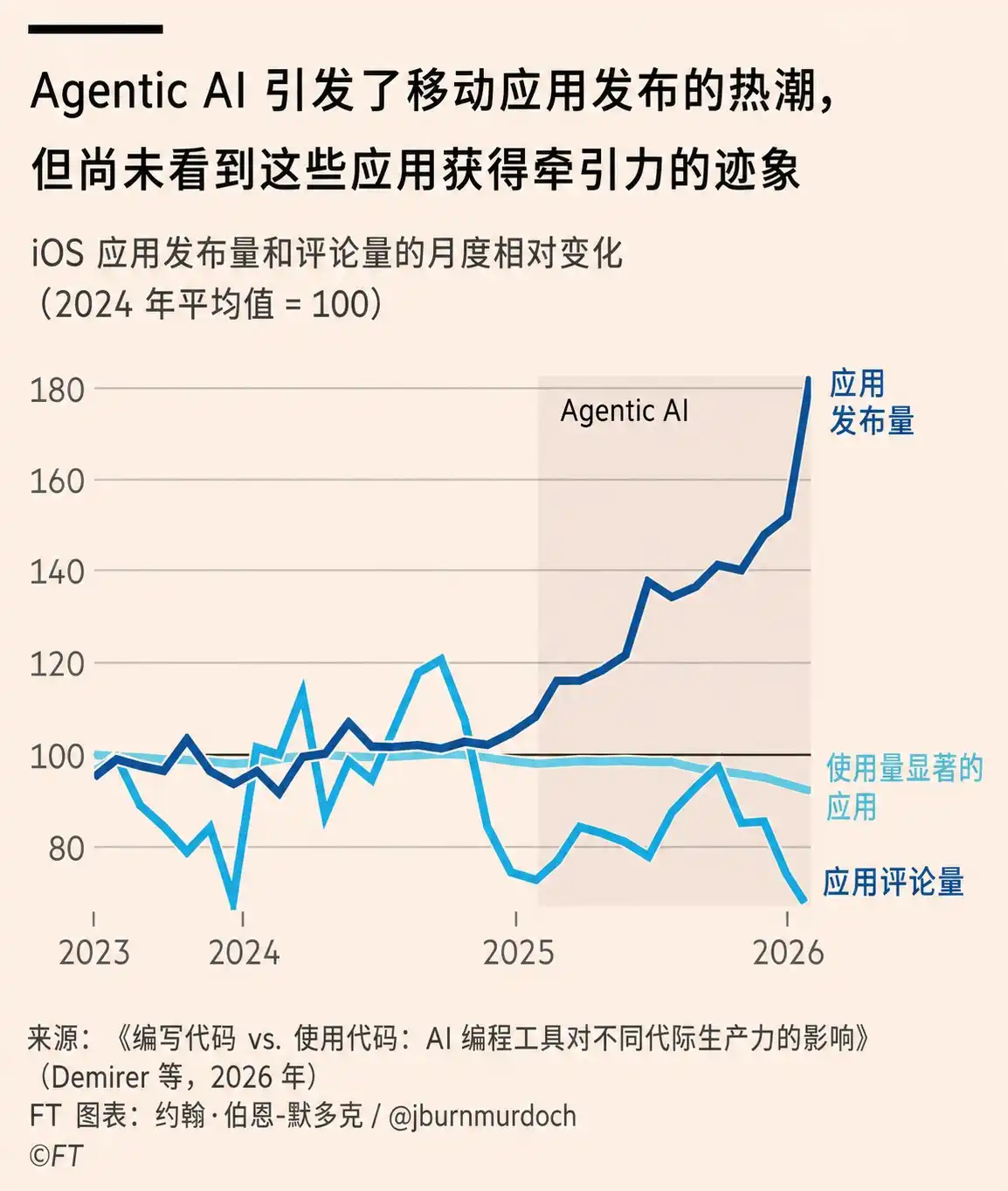
You, right now, can go build an app.

Not the next Notion, but a manageable-scale app or tool focused on something people can genuinely benefit from. Something that doesn't need to be a super-hit to be immensely valuable.

I highly recommend doing this. I think software will become the next 'information product.' What I mean is, building software will become the default choice for creators, soloists (solopreneurs), and other one-person businesses. Information products have been popular for so long because anyone can make them, but of course, that doesn't mean everyone succeeds.

The problem is the picture above (the current state).

You can build anything, but that doesn't mean: (1) it's worth building; (2) people will care; (3) you have the ability to iterate based on feedback and persist until it becomes something truly worth building and that people care about.

If you can truly internalize this sentence, you will thrive.

The second problem is that agency, taste, persuasion, persistence, and iteration are not typical 'high-value skills' you can just learn by watching a few YouTube videos.

Spouting theory and Twitter threads about how to become high-agency won't make you more agential.

The only way to practice them is to start making your own things.

3. The Antidote to Being Employed is to Make Yourself 'Unemployable'

I still remember the day I got my first web design client.

I remember they paid me $300 for an ugly static site I hand-coded. It was a local mattress company that just wanted a webpage where people could see their mattresses.

That's it.

$300.

That was the moment a light bulb went off. I knew that if I could replicate, improve, and continuously iterate the actions I just used to earn that money, I could somehow have more control over my future lifestyle and destiny. It made me 'unemployable.' It planted a deep belief in me: I could never accept going to work again; I would fight for my own survival!

But the number '$300' alone doesn't explain all the precursors to that moment—the identity shift and the initial self-belief that this could work. Nor does it encompass everything I learned in the subsequent 7 years.

I want to give you two things: a catalyst for an identity shift to become truly unwilling and unemployable, not just someone who 'likes the idea'; and an action plan that everyone can execute in their own unique way.

1) Throw yourself into an environment that forces you to grow

The fastest way to change your life is to physically and digitally rip yourself out of your current environment. Change everything overnight. The places you go, the accounts you follow, the information you consume, etc. It's hard, but it absolutely works.

Behavior change = Identity change.

You can try to diet and lose 30 pounds, but if you're not someone who intrinsically values health and enjoys a healthy lifestyle, you'll always feel like you're swimming upstream. Unless you fundamentally change your character, you'll eventually regain all the weight, just like most people.

How do you do it?

First, understanding how you became who you are today helps.

  • You were born into a family and culture with specific values.

  • You were indoctrinated with these values, even if your parents didn't force them on you.

  • You went to a school with specific values, taught by teachers with specific values.

  • You were exposed to a barrage of information that may have subtly nudged your values toward rebellion, laziness, and victimhood.

  • You got a phone, and with the help of social media and our primal 'monkey brain' that simply can't self-regulate, this subtle conditioning process began to amplify exponentially.

Sure, there's more nuance, but you get the core idea.

This isn't necessarily bad; it's somewhat essential.

I've heard many 'authentic' guys say they hate 'copying' or imitating, yet they still walk on two feet and speak English—because that's how you grow up. You must imitate; it's called learning.

But it becomes a problem when your behavior starts blocking the life you truly, deeply desire. The one that whispers, 'You're meant for more.'

To start this re-conditioning, re-creation process, begin with your environment.

You must be hyper-aware of all external stimuli because they are all subtly shaping who you are now.

Here's what you do:

Flip the old switches off overnight.

Wake up tomorrow and, for at least that day, do nothing you normally do.

Set your alarm for a completely different time. Plan every step after you wake up precisely. Eat different food. Talk to different people. Consume different content. Change everything.

As we go deeper, you'll gradually understand which direction to deliberately construct your surroundings.

2) Choose a medium where feedback is as close to reality as possible

The most dangerous way to live is to be completely detached from continuous trial and error.

Being detached from the process of correcting errors means you're detached from challenge, exploration, and the hard-won wisdom that comes from struggle—the very wisdom that brings growth and, subsequently, a sense of accomplishment.

This applies not only to jobs where the challenge plateaus rapidly once you're proficient but also to business and entrepreneurship, even to those who bring an 'employee mindset' into their ventures: always needing someone to tell them what to do or an employee handbook to take confident steps.

I want to ask you a question:

Before the internet, how did people figure things out? Before the flood of 'hand-holding' tutorials and step-by-step guides, how was the first rocket built?

By trying. By facing failure. But they didn't let failure convince them 'it's impossible,' nor did they let it derail them into instant gratification. They adjusted their course based on the information reality fed back to them. Eventually, they found the needle in the haystack.

They were wise.

Because the hallmark of a wise system is its ability to correct its course based on feedback. They had a lighthouse in their minds, and when storms blew them off course, they never gave up.

Whenever I talk about entrepreneurship, this is what I truly mean.

I mean returning to your most natural state. Immersing yourself in creation. Pursuing unknown goals that can only be achieved through failure.

This is the only common trait among most successful people.

For them, failure is never a negative concept; it's an essential, normal part of a good life.

This all sounds fantastic, but in today's world, how do you actually put this into practice?

3) If you want to thrive in the future, learn one of these two skills

Code and media are permissionless leverage. They are the super-leverage behind the new rich. You can create software and media that earn money for you while you sleep.

— Naval

As a novice, an individual, you have no idea how much leverage you have at your fingertips, especially with AI now.

I'm not talking about low-level AI use, like casual ChatGPT chatters or artists furious that AI 'stole' their work.

I'm talking about a higher-order understanding—knowing you can build almost anything because AI plunges you into a torrent of trial and error and rapid feedback. Sure, the initial output may be largely unsatisfactory, but if you have agency, if you know how to iterate, if you're persistent, if you cultivate taste, you can build almost anything, and it only gets easier over time. Then, if you can persuade others, what you build can earn you consistent income while you sleep.

Of course, this was possible before AI. The core issue is that most people don't understand that given a long enough time horizon and possessing these five elements of success, anything is possible. AI just lets you do more, faster, and grants you capabilities you couldn't access before—like software development and a supercharged way to learn and research.

That said, I think Media is more important than Code.

And when we talk about media, we're really talking about Content.

Posts, videos, podcasts, or articles that you publish once and can be seen by thousands, even millions. In my view, this is the most valuable core skill to have, especially in an era where more and more people are trying to rely entirely on AI for all creation.

Because with content, you must have an eye for what's truly 'good.'

You still need the discernment and judgment that AI can't directly give you because you haven't personally embarked on the journey of trial and error. You don't even know what questions to ask.

The value of content is subjective. Everyone who reads any sentence in it will interpret it differently. In other words, there is no single correct path to achieving results.

In contrast, the value of code is relatively objective. As long as it produces the desired outcome, how you write it isn't that important. As we saw earlier, there are more mobile game apps than ever, but their downloads and actual usage are declining.

Why?

Because they lack Distribution. They don't understand media and content. They can't attract people to use their creations, nor can they make people care enough to pay for them.

By the way, I'm not talking about the kind of content that hypes on Instagram, like 'I gave my social media permissions to Claude, and it grew my account by 100k followers overnight.' That content is almost worthless unless you can build genuine trust and loyalty through narrative and authority.

As JK Molina says: Likes don't pay bills.

Truly smart content creators operate on a much larger scale than posting clickbait or rage-bait just for likes and follows.

Also, as you might have guessed, exposing yourself to an environment of people, places, and habit triggers aligned with the life you aspire to is a crucial part of completing the identity shift.

4. How to Start — Take 15 Minutes to Change Your Life Trajectory

You've changed your environment.

You've chosen your medium.

You know media trumps code because the value of content is entirely subjective to the audience, making AI-generated content rapidly homogenized and commoditized as it becomes ubiquitous, thereby opening up massive space for true creative talent to grow wildly—whether they use AI or not, because I'll say it again, AI itself was never the problem.

Now, you need to answer the only truly important question:

What is your life's work?

This is what we're going to build. A lifelong pursuit worth dedicating yourself to, not a cold 'personal brand.'

Peterson, Huberman, Watts—they all have so-called 'personal brands,' but these brands are deeply congruent with their life missions. They know exactly what they want and use social media as a tool to achieve it. Because in the current environment, it's the best technological means for you as an individual, amplified by AI, to make a breakthrough, especially if you're starting from scratch—it's hard to make a dent on TV, radio, or with traditional publishers.

(Sure, Alan Watts didn't deliberately build a 'personal brand' back then, but he effectively formed one, so the point still stands.)

Their personal brand is their lived self.

That's their identity tag.

Most people aspire to this but get stuck quickly. They crave instant dopamine hits, constantly searching online for 'what's the most profitable niche for making 6 figures with content creation,' instead of excavating the immensely valuable experience and stories already accumulated over years within themselves—often dismissing them as worthless because they seem too ordinary to them.

The raw material for your life's work is already buried deep within you, just layered over by years of conditioning to 'specialize,' 'be practical,' and 'stop asking so many questions.' The process of discovery isn't about stuffing you with novel, strange ideas. Instead, it's about revealing the treasure you already possess.

Take this seriously.

Close all browser tabs. Open a blank document. Set a 15-minute timer. Answer the following questions in writing one by one. Do not skip the questions that make you uncomfortable.

Step 1: Mine Your Raw Material

Most of what makes you interesting has been ground out of you through past growth and training. Your curiosity was seen as distraction. Your broad interests were labeled as lack of focus. Because the old system only needed a compliant cog.

The only way your content can resonate is if it originates from genuinely authentic material that is truly yours.

Answer these questions. If an answer doesn't come immediately, skip it and let it simmer in your subconscious:

  • What do you know so well it absolutely couldn't be an accident? What topic have you devoured countless materials on, studying relentlessly for years, even when no one was paying you?

  • What problem have you solved for yourself that you previously blindly assumed everyone else had already solved? What comes effortlessly to you as instinct yet seems to frustrate everyone around you?

  • What 'transgressive' thing were you criticized for as a child that was actually the seed of your early unique taste? What were you obsessed with before someone jumped in to tell you 'it's not practical'?

Now, circle one answer. The one that truly stirs something, creates a ripple inside you. This is your core raw material.

Don't worry about niche, content pillars, or other operational jargon. Focus on the depth of your core idea, because in the end, winning comes down to depth of thought.

Step 2: Establish Your 'Contrarian Thesis'

The world doesn't need another person repackaging common sense and dumping it back out. Your content must have a unique perspective only you can see. And this perspective comes precisely from what you firmly believe the mainstream society has gotten wrong.

Taste isn't about knowing what's good. It's about seeing what's flawed, what's broken, and being unable to let it slide.

Answer these questions:

  • What conventional workplace or life advice, widely accepted as gospel, has actually messed up your life? What deep-seated beliefs did you have to 'uninstall' to get back on track and feel alive again?

  • In your field of expertise, what ideas do you hold that might be laughed at as naive by so-called experts, but you can't be shaken from them?

  • What is the 'emperor's new clothes' in your entire industry that everyone tacitly agrees to ignore?

Examine the answers from Step 1 and Step 2 together. Where they intersect is the direction you should go full speed ahead.

Your answers to these questions are the perfect material for your first post.

The world's top brands are essentially the public, open exploration of one living person's inner world.

Step 3: Publish Your First Core Idea Tomorrow

This is a long article, but not a comprehensive course.

I wish I could list 20 detailed modules here, but I can't. That's what a bootcamp is for.

The final element—use it as your starting point to formally bid farewell to dependence on handouts and step into a new era of financial independence—is to actually do it. And actually doing it starts with publishing your first post.

Literally, you just wrote excellent post material in black and white in the previous step.

Pick one.

Think about how to write the opening line (the hook) to instantly grab attention.

Refine the wording of the body to make it most penetrating and impactful.

Accept that your first version might be terrible—remember, you can't optimize something that doesn't exist.

If you need a little help, here's a small trick/prompt to help you brainstorm and draft a few versions from different angles, giving you a feel for what 'good' content is. These are all based on market-validated methodologies.

Your mission is clear.

Pick one answer from Step 1 and one from Step 2. Fuse them organically into a single, highly distinctive sentence that only you could write. Then publish it tomorrow as your first piece of work. A post, a short video, or a long article. The medium is irrelevant at this stage.

At this point, you'll get real feedback from the real world.

If it doesn't make a splash, great, it means you need to learn. You need to research and find a persuasion strategy to try in your next or next-next post until you master this skill—because mastering a skill is essentially the cumulative process of stacking tactical solutions as you continuously run into new problems.

If you're the type currently thinking, 'I wish this were more practical and actionable,' you're really missing the point. Because I just gave you the universal ultimate underlying formula that can be extrapolated to accomplish anything.

And that complaint that just flashed through your mind is a mental error you failed to catch and correct in time.

Alright, that's it for today. Talk next time.

Translator: boxi.

Crypto di tendenza

Domande pertinenti

QAccording to the article, what are the five key elements that make someone 'unstoppable' and able to do meaningful work even if all jobs are replaced?

AThe five key elements are Agency (the ability to act without permission), Taste (knowing what is worth presenting to the world through experience), Persuasion (the skill to get people to care about what you do), Persistence (understanding that mistakes are part of the journey), and Iteration (the process of course-correcting based on feedback).

QWhat two core skills does the author recommend learning to thrive in the future?

AThe author recommends learning either Code or Media (Content). While code is important, the author argues that media (creating content like posts, videos, or articles) is more crucial as it allows for subjective value creation, distribution, and building genuine connection in a world where AI-generated content becomes homogenous.

QWhat is the proposed first practical step to begin the journey of becoming 'unemployable' and building one's own life's work?

AThe first practical step is a 15-minute exercise to answer specific questions that dig into one's 'raw materials' (unique experiences and deep knowledge) and 'contrarian thesis' (strongly held beliefs that go against mainstream advice). The goal is to combine these answers into a core idea and publish it as your first piece of content the next day.

QHow does the author define 'wage slavery' in the context of the article?

AThe author defines 'wage slavery' as being financially trapped in a situation where you have to do boring, meaningless work you didn't choose to do, for someone else, just to survive. It's the state of being dependent on an employer with no alternative skills to create replacement income, making you a slave to the wage.

QWhat does the author suggest is the real threat, as opposed to AI itself?

AThe real threat is not AI, but the individual's continued dependence on others (employers, the government) for survival and well-being. The author argues these entities will act in their own self-interest when threatened. The other core threat is the individual's own failure to fundamentally change their mindset, build agency, and develop the skills necessary to create their own work and income.

Letture associate

In Conversation with Ray Dalio: We Are Currently in an AI Bubble, with 1% of My Portfolio in Bitcoin

Ray Dalio, founder of Bridgewater Associates, warns in an interview that the current AI boom shows classic bubble characteristics, which could lead to significant economic downturns as seen in past cycles like 1929 or 2000. He explains that speculative enthusiasm, fueled by debt and overvaluation, often precedes a crash when rising rates or taxation force asset sales, causing widespread losses and recession. Dalio also outlines his "Big Cycle" theory, describing an approximate 80-year pattern where widening wealth gaps, massive government deficits, and shifting geopolitical power (like China's rise) create internal conflict and global instability. He emphasizes that we are in a late-cycle, transitional phase where traditional powers like the US and UK face decline. For personal wealth protection, Dalio advises diversification beyond cash into assets like stocks, bonds, real estate, and particularly gold, which he prefers over Bitcoin. While he holds about 1% of his portfolio in Bitcoin as a non-printable hard asset, he views gold as more secure from technological or governmental threats. Regarding AI's impact, Dalio believes it will disproportionately benefit capital owners, worsening inequality by replacing both physical and cognitive labor. He suggests that human intuition and emotional intelligence, combined with AI, will be key for future workers. On taxation, Dalio argues that wealth taxes are impractical and risk triggering asset sell-offs, reducing productive investment. He points to the UK as a cautionary example of debt, low productivity, and political strife. Geopolitically, Dalio foresees a more regionalized world, with the US showing weakness in prolonged conflicts like with Iran, akin to past imperial declines. The ideal outcome, he suggests, is coexisting powerful blocs (e.g., Americas, China-Asia Pacific) without major war.

marsbit12 min fa

In Conversation with Ray Dalio: We Are Currently in an AI Bubble, with 1% of My Portfolio in Bitcoin

marsbit12 min fa

Daily 7.2 Trillion KRW: Foreign Capital's Record Net Buying on Friday! Wall Street Says Headwinds for Korean Stock Fund Flows Have Subsided

South Korean stock market sees a dramatic shift in fund flows. On July 31, foreign investors made a record net purchase of approximately KRW 7.2 trillion in KOSPI stocks, marking a fundamental reversal from the persistent large-scale net outflows seen in previous months. This contributed to a significant narrowing of foreign net selling in July to KRW 9.8 trillion, down sharply from KRW 48.4 trillion in June and KRW 44.5 trillion in May. Simultaneously, domestic institutional pressure eased. South Korean pension funds and asset managers turned to a net buying position in July, purchasing KRW 1.0 trillion worth of KOSPI shares, contrasting with net sales in May and June. Market volatility is expected to be dampened by new financial regulations. Effective July 31, the Financial Services Commission tightened access for retail investors to single-stock leveraged ETFs by raising the minimum cash deposit requirement. Trading volumes for these products subsequently dropped to about 50% of their monthly average. Citigroup Research maintains its year-end KOSPI target of 10,000 points. The firm cites several supportive factors: the substantial easing of headwinds from capital outflows, a robust fundamental outlook for the semiconductor sector, historically low market valuations, strong economic fundamentals, and the potential for policy support from financial authorities if needed.

marsbit12 min fa

Daily 7.2 Trillion KRW: Foreign Capital's Record Net Buying on Friday! Wall Street Says Headwinds for Korean Stock Fund Flows Have Subsided

marsbit12 min fa

Thanks to Dice Rolls, Bitcoin Keys Are Stored Offline, But Not Everyone Will Do It

The article discusses using dice rolls to generate secure Bitcoin wallet seeds, providing entropy independent of potentially flawed hardware random number generators. It explains that each fair dice roll offers about 2.585 bits of entropy, with around 50 rolls needed for a standard 12-word seed phrase and 99+ recommended for higher security. This method gained attention after a vulnerability was revealed in some Coldcard hardware wallets, where a faulty firmware RNG (dating back to 2021) compromised generated keys. The analysis notes that while a dice-generated main seed was safe from this specific flaw, other Coldcard functions (like creating paper wallets, backup keys, or passwords) could still be vulnerable if they used the defective RNG. The piece argues that while dice-based entropy is technically robust, the manual process is error-prone, tedious, and unrealistic for most new users, who might make mistakes in recording or inputting rolls. It concludes that while manual entropy generation should remain an option for advanced users, the long-term goal is to develop reliable, user-friendly hardware and software that securely generates randomness without requiring specialized knowledge. Coldcard users are advised to check their firmware version and replace any secondary secrets (like paper wallet keys) created with vulnerable devices, while also considering multi-signature setups with devices from different manufacturers for added security.

cryptonews.ru5 h fa

Thanks to Dice Rolls, Bitcoin Keys Are Stored Offline, But Not Everyone Will Do It

cryptonews.ru5 h fa

Trading

Spot

Articoli Popolari

Cosa è GROK AI

Grok AI: Rivoluzionare la Tecnologia Conversazionale nell'Era Web3 Introduzione Nel panorama in rapida evoluzione dell'intelligenza artificiale, Grok AI si distingue come un progetto notevole che collega i domini della tecnologia avanzata e dell'interazione con l'utente. Sviluppato da xAI, un'azienda guidata dal rinomato imprenditore Elon Musk, Grok AI cerca di ridefinire il modo in cui interagiamo con l'intelligenza artificiale. Mentre il movimento Web3 continua a prosperare, Grok AI mira a sfruttare il potere dell'IA conversazionale per rispondere a query complesse, offrendo agli utenti un'esperienza che è non solo informativa ma anche divertente. Cos'è Grok AI? Grok AI è un sofisticato chatbot di intelligenza artificiale conversazionale progettato per interagire dinamicamente con gli utenti. A differenza di molti sistemi di intelligenza artificiale tradizionali, Grok AI abbraccia un'ampia gamma di domande, comprese quelle tipicamente considerate inappropriate o al di fuori delle risposte standard. Gli obiettivi principali del progetto includono: Ragionamento Affidabile: Grok AI enfatizza il ragionamento di buon senso per fornire risposte logiche basate sulla comprensione contestuale. Supervisione Scalabile: L'integrazione dell'assistenza degli strumenti garantisce che le interazioni degli utenti siano sia monitorate che ottimizzate per la qualità. Verifica Formale: La sicurezza è fondamentale; Grok AI incorpora metodi di verifica formale per migliorare l'affidabilità delle sue uscite. Comprensione del Lungo Contesto: Il modello di IA eccelle nel trattenere e richiamare una vasta storia di conversazione, facilitando discussioni significative e consapevoli del contesto. Robustezza Adversariale: Concentrandosi sul miglioramento delle sue difese contro input manipolati o malevoli, Grok AI mira a mantenere l'integrità delle interazioni degli utenti. In sostanza, Grok AI non è solo un dispositivo di recupero informazioni; è un partner conversazionale immersivo che incoraggia un dialogo dinamico. Creatore di Grok AI Il cervello dietro Grok AI non è altri che Elon Musk, un individuo sinonimo di innovazione in vari campi, tra cui automotive, viaggi spaziali e tecnologia. Sotto l'egida di xAI, un'azienda focalizzata sull'avanzamento della tecnologia AI in modi benefici, la visione di Musk mira a rimodellare la comprensione delle interazioni con l'IA. La leadership e l'etica fondamentale sono profondamente influenzate dall'impegno di Musk nel superare i confini tecnologici. Investitori di Grok AI Sebbene i dettagli specifici riguardanti gli investitori che sostengono Grok AI rimangano limitati, è pubblicamente riconosciuto che xAI, l'incubatore del progetto, è fondato e supportato principalmente dallo stesso Elon Musk. Le precedenti imprese e partecipazioni di Musk forniscono un robusto sostegno, rafforzando ulteriormente la credibilità e il potenziale di crescita di Grok AI. Tuttavia, al momento, le informazioni riguardanti ulteriori fondazioni di investimento o organizzazioni che supportano Grok AI non sono facilmente accessibili, segnando un'area per potenziali esplorazioni future. Come Funziona Grok AI? Le meccaniche operative di Grok AI sono innovative quanto il suo framework concettuale. Il progetto integra diverse tecnologie all'avanguardia che facilitano le sue funzionalità uniche: Infrastruttura Robusta: Grok AI è costruito utilizzando Kubernetes per l'orchestrazione dei container, Rust per prestazioni e sicurezza, e JAX per il calcolo numerico ad alte prestazioni. Questo trio garantisce che il chatbot operi in modo efficiente, si scaldi efficacemente e serva gli utenti prontamente. Accesso alla Conoscenza in Tempo Reale: Una delle caratteristiche distintive di Grok AI è la sua capacità di attingere a dati in tempo reale attraverso la piattaforma X—precedentemente nota come Twitter. Questa capacità consente all'IA di accedere alle informazioni più recenti, permettendole di fornire risposte e raccomandazioni tempestive che altri modelli di IA potrebbero perdere. Due Modalità di Interazione: Grok AI offre agli utenti la scelta tra “Modalità Divertente” e “Modalità Normale”. La Modalità Divertente consente uno stile di interazione più giocoso e umoristico, mentre la Modalità Normale si concentra sulla fornitura di risposte precise e accurate. Questa versatilità garantisce un'esperienza su misura che soddisfa varie preferenze degli utenti. In sostanza, Grok AI sposa prestazioni con coinvolgimento, creando un'esperienza che è sia arricchente che divertente. Cronologia di Grok AI Il viaggio di Grok AI è segnato da traguardi fondamentali che riflettono le sue fasi di sviluppo e distribuzione: Sviluppo Iniziale: La fase fondamentale di Grok AI si è svolta in circa due mesi, durante i quali sono stati condotti l'addestramento iniziale e il perfezionamento del modello. Rilascio Beta di Grok-2: In un significativo avanzamento, è stata annunciata la beta di Grok-2. Questo rilascio ha introdotto due versioni del chatbot—Grok-2 e Grok-2 mini—ognuna dotata delle capacità per chattare, programmare e ragionare. Accesso Pubblico: Dopo lo sviluppo beta, Grok AI è diventato disponibile per gli utenti della piattaforma X. Coloro che hanno account verificati tramite un numero di telefono e attivi per almeno sette giorni possono accedere a una versione limitata, rendendo la tecnologia disponibile a un pubblico più ampio. Questa cronologia racchiude la crescita sistematica di Grok AI dall'inizio all'impegno pubblico, enfatizzando il suo impegno per il miglioramento continuo e l'interazione con gli utenti. Caratteristiche Chiave di Grok AI Grok AI comprende diverse caratteristiche chiave che contribuiscono alla sua identità innovativa: Integrazione della Conoscenza in Tempo Reale: L'accesso a informazioni attuali e rilevanti differenzia Grok AI da molti modelli statici, consentendo un'esperienza utente coinvolgente e accurata. Stili di Interazione Versatili: Offrendo modalità di interazione distinte, Grok AI soddisfa varie preferenze degli utenti, invitando alla creatività e alla personalizzazione nella conversazione con l'IA. Avanzata Struttura Tecnologica: L'utilizzo di Kubernetes, Rust e JAX fornisce al progetto un solido framework per garantire affidabilità e prestazioni ottimali. Considerazione del Discorso Etico: L'inclusione di una funzione di generazione di immagini mette in mostra lo spirito innovativo del progetto. Tuttavia, solleva anche considerazioni etiche riguardanti il copyright e la rappresentazione rispettosa di figure riconoscibili—una discussione in corso all'interno della comunità AI. Conclusione Come entità pionieristica nel campo dell'IA conversazionale, Grok AI incarna il potenziale per esperienze utente trasformative nell'era digitale. Sviluppato da xAI e guidato dall'approccio visionario di Elon Musk, Grok AI integra conoscenze in tempo reale con capacità di interazione avanzate. Si sforza di spingere i confini di ciò che l'intelligenza artificiale può realizzare, mantenendo un focus su considerazioni etiche e sicurezza degli utenti. Grok AI non solo incarna il progresso tecnologico, ma rappresenta anche un nuovo paradigma conversazionale nel panorama Web3, promettendo di coinvolgere gli utenti con sia conoscenze esperte che interazioni giocose. Man mano che il progetto continua a evolversi, si erge come testimonianza di ciò che l'incrocio tra tecnologia, creatività e interazione simile a quella umana può realizzare.

533 Totale visualizzazioniPubblicato il 2024.12.26Aggiornato il 2024.12.26

Cosa è GROK AI

Cosa è ERC AI

Euruka Tech: Una Panoramica di $erc ai e delle sue Ambizioni in Web3 Introduzione Nel panorama in rapida evoluzione della tecnologia blockchain e delle applicazioni decentralizzate, nuovi progetti emergono frequentemente, ciascuno con obiettivi e metodologie uniche. Uno di questi progetti è Euruka Tech, che opera nel vasto dominio delle criptovalute e del Web3. L'obiettivo principale di Euruka Tech, in particolare del suo token $erc ai, è presentare soluzioni innovative progettate per sfruttare le crescenti capacità della tecnologia decentralizzata. Questo articolo si propone di fornire una panoramica completa di Euruka Tech, un'esplorazione dei suoi obiettivi, della funzionalità, dell'identità del suo creatore, dei potenziali investitori e della sua importanza nel contesto più ampio del Web3. Cos'è Euruka Tech, $erc ai? Euruka Tech è caratterizzato come un progetto che sfrutta gli strumenti e le funzionalità offerte dall'ambiente Web3, concentrandosi sull'integrazione dell'intelligenza artificiale nelle sue operazioni. Sebbene i dettagli specifici sul framework del progetto siano piuttosto sfuggenti, è progettato per migliorare l'engagement degli utenti e automatizzare i processi nello spazio crypto. Il progetto mira a creare un ecosistema decentralizzato che non solo faciliti le transazioni, ma incorpori anche funzionalità predittive attraverso l'intelligenza artificiale, da cui il nome del suo token, $erc ai. L'obiettivo è fornire una piattaforma intuitiva che faciliti interazioni più intelligenti e un'elaborazione delle transazioni più efficiente all'interno della crescente sfera del Web3. Chi è il Creatore di Euruka Tech, $erc ai? Attualmente, le informazioni riguardanti il creatore o il team fondatore di Euruka Tech rimangono non specificate e piuttosto opache. Questa assenza di dati solleva preoccupazioni, poiché la conoscenza del background del team è spesso essenziale per stabilire credibilità nel settore blockchain. Pertanto, abbiamo classificato queste informazioni come sconosciute fino a quando dettagli concreti non saranno resi disponibili nel dominio pubblico. Chi sono gli Investitori di Euruka Tech, $erc ai? Allo stesso modo, l'identificazione degli investitori o delle organizzazioni di supporto per il progetto Euruka Tech non è prontamente fornita attraverso la ricerca disponibile. Un aspetto cruciale per i potenziali stakeholder o utenti che considerano di impegnarsi con Euruka Tech è la garanzia che deriva da partnership finanziarie consolidate o dal supporto di società di investimento rispettabili. Senza divulgazioni sulle affiliazioni di investimento, è difficile trarre conclusioni complete sulla sicurezza finanziaria o sulla longevità del progetto. In linea con le informazioni trovate, anche questa sezione rimane allo stato di sconosciuto. Come funziona Euruka Tech, $erc ai? Nonostante la mancanza di specifiche tecniche dettagliate per Euruka Tech, è essenziale considerare le sue ambizioni innovative. Il progetto cerca di sfruttare la potenza computazionale dell'intelligenza artificiale per automatizzare e migliorare l'esperienza dell'utente all'interno dell'ambiente delle criptovalute. Integrando l'IA con la tecnologia blockchain, Euruka Tech mira a fornire funzionalità come operazioni automatizzate, valutazioni del rischio e interfacce utente personalizzate. L'essenza innovativa di Euruka Tech risiede nel suo obiettivo di creare una connessione fluida tra gli utenti e le vaste possibilità presentate dalle reti decentralizzate. Attraverso l'utilizzo di algoritmi di apprendimento automatico e IA, mira a ridurre le sfide degli utenti alle prime armi e semplificare le esperienze transazionali all'interno del framework Web3. Questa simbiosi tra IA e blockchain sottolinea l'importanza del token $erc ai, fungendo da ponte tra le interfacce utente tradizionali e le avanzate capacità delle tecnologie decentralizzate. Cronologia di Euruka Tech, $erc ai Sfortunatamente, a causa delle limitate informazioni disponibili riguardo a Euruka Tech, non siamo in grado di presentare una cronologia dettagliata dei principali sviluppi o traguardi nel percorso del progetto. Questa cronologia, tipicamente preziosa per tracciare l'evoluzione di un progetto e comprendere la sua traiettoria di crescita, non è attualmente disponibile. Man mano che le informazioni su eventi notevoli, partnership o aggiunte funzionali diventano evidenti, gli aggiornamenti miglioreranno sicuramente la visibilità di Euruka Tech nella sfera crypto. Chiarimento su Altri Progetti “Eureka” È importante sottolineare che più progetti e aziende condividono una nomenclatura simile con “Eureka.” La ricerca ha identificato iniziative come un agente IA della NVIDIA Research, che si concentra sull'insegnamento ai robot di compiti complessi utilizzando metodi generativi, così come Eureka Labs ed Eureka AI, che migliorano l'esperienza utente nell'istruzione e nell'analisi del servizio clienti, rispettivamente. Tuttavia, questi progetti sono distinti da Euruka Tech e non dovrebbero essere confusi con i suoi obiettivi o funzionalità. Conclusione Euruka Tech, insieme al suo token $erc ai, rappresenta un attore promettente ma attualmente oscuro nel panorama del Web3. Sebbene i dettagli sul suo creatore e sugli investitori rimangano non divulgati, l'ambizione centrale di combinare intelligenza artificiale e tecnologia blockchain si erge come un punto focale di interesse. Gli approcci unici del progetto nel promuovere l'engagement degli utenti attraverso l'automazione avanzata potrebbero distinguerlo mentre l'ecosistema Web3 progredisce. Con l'evoluzione continua del mercato crypto, gli stakeholder dovrebbero tenere d'occhio gli sviluppi riguardanti Euruka Tech, poiché lo sviluppo di innovazioni documentate, partnership o una roadmap definita potrebbe presentare opportunità significative nel prossimo futuro. Così com'è, attendiamo ulteriori approfondimenti sostanziali che potrebbero svelare il potenziale di Euruka Tech e la sua posizione nel competitivo panorama crypto.

564 Totale visualizzazioniPubblicato il 2025.01.02Aggiornato il 2025.01.02

Cosa è ERC AI

Cosa è DUOLINGO AI

DUOLINGO AI: Integrare l'apprendimento delle lingue con Web3 e innovazione AI In un'era in cui la tecnologia rimodella l'istruzione, l'integrazione dell'intelligenza artificiale (AI) e delle reti blockchain annuncia una nuova frontiera per l'apprendimento delle lingue. Entra in scena DUOLINGO AI e la sua criptovaluta associata, $DUOLINGO AI. Questo progetto aspira a fondere la potenza educativa delle principali piattaforme di apprendimento delle lingue con i benefici della tecnologia decentralizzata Web3. Questo articolo esplora gli aspetti chiave di DUOLINGO AI, esaminando i suoi obiettivi, il framework tecnologico, lo sviluppo storico e il potenziale futuro, mantenendo chiarezza tra la risorsa educativa originale e questa iniziativa indipendente di criptovaluta. Panoramica di DUOLINGO AI Alla sua base, DUOLINGO AI cerca di stabilire un ambiente decentralizzato in cui gli studenti possono guadagnare ricompense crittografiche per il raggiungimento di traguardi educativi nella competenza linguistica. Applicando smart contracts, il progetto mira ad automatizzare i processi di verifica delle competenze e le allocazioni di token, aderendo ai principi di Web3 che enfatizzano la trasparenza e la proprietà da parte degli utenti. Il modello si discosta dagli approcci tradizionali all'acquisizione linguistica, facendo forte affidamento su una struttura di governance guidata dalla comunità, che consente ai detentori di token di suggerire miglioramenti ai contenuti dei corsi e alle distribuzioni delle ricompense. Alcuni degli obiettivi notevoli di DUOLINGO AI includono: Apprendimento Gamificato: Il progetto integra traguardi blockchain e token non fungibili (NFT) per rappresentare i livelli di competenza linguistica, promuovendo la motivazione attraverso ricompense digitali coinvolgenti. Creazione di Contenuti Decentralizzati: Apre opportunità per educatori e appassionati di lingue di contribuire con i propri corsi, facilitando un modello di condivisione dei ricavi che beneficia tutti i collaboratori. Personalizzazione Guidata dall'AI: Utilizzando modelli avanzati di machine learning, DUOLINGO AI personalizza le lezioni per adattarsi ai progressi individuali, simile alle funzionalità adattive presenti nelle piattaforme consolidate. Creatori del Progetto e Governance A partire da aprile 2025, il team dietro $DUOLINGO AI rimane pseudonimo, una pratica comune nel panorama decentralizzato delle criptovalute. Questa anonimato è inteso a promuovere la crescita collettiva e il coinvolgimento degli stakeholder piuttosto che concentrarsi su sviluppatori individuali. Lo smart contract distribuito sulla blockchain di Solana annota l'indirizzo del wallet dello sviluppatore, che segna l'impegno verso la trasparenza riguardo alle transazioni, nonostante l'identità dei creatori sia sconosciuta. Secondo la sua roadmap, DUOLINGO AI mira a evolversi in un'Organizzazione Autonoma Decentralizzata (DAO). Questa struttura di governance consente ai detentori di token di votare su questioni critiche come l'implementazione di funzionalità e le allocazioni del tesoro. Questo modello si allinea con l'etica dell'empowerment della comunità presente in varie applicazioni decentralizzate, enfatizzando l'importanza del processo decisionale collettivo. Investitori e Partnership Strategiche Attualmente, non ci sono investitori istituzionali o capitalisti di rischio identificabili pubblicamente legati a $DUOLINGO AI. Invece, la liquidità del progetto proviene principalmente da scambi decentralizzati (DEX), segnando un netto contrasto con le strategie di finanziamento delle aziende tradizionali di tecnologia educativa. Questo modello di base indica un approccio guidato dalla comunità, riflettendo l'impegno del progetto verso la decentralizzazione. Nel suo whitepaper, DUOLINGO AI menziona la formazione di collaborazioni con “piattaforme educative blockchain” non specificate, mirate ad arricchire la sua offerta di corsi. Sebbene partnership specifiche non siano ancora state divulgate, questi sforzi collaborativi suggeriscono una strategia per mescolare innovazione blockchain con iniziative educative, ampliando l'accesso e il coinvolgimento degli utenti attraverso diverse vie di apprendimento. Architettura Tecnologica Integrazione AI DUOLINGO AI incorpora due componenti principali guidate dall'AI per migliorare la sua offerta educativa: Motore di Apprendimento Adattivo: Questo sofisticato motore apprende dalle interazioni degli utenti, simile ai modelli proprietari delle principali piattaforme educative. Regola dinamicamente la difficoltà delle lezioni per affrontare le sfide specifiche degli studenti, rinforzando le aree deboli attraverso esercizi mirati. Agenti Conversazionali: Utilizzando chatbot alimentati da GPT-4, DUOLINGO AI offre una piattaforma per gli utenti per impegnarsi in conversazioni simulate, promuovendo un'esperienza di apprendimento linguistico più interattiva e pratica. Infrastruttura Blockchain Costruito sulla blockchain di Solana, $DUOLINGO AI utilizza un framework tecnologico completo che include: Smart Contracts per la Verifica delle Competenze: Questa funzionalità assegna automaticamente token agli utenti che superano con successo i test di competenza, rinforzando la struttura di incentivi per risultati di apprendimento genuini. Badge NFT: Questi token digitali significano vari traguardi che gli studenti raggiungono, come completare una sezione del loro corso o padroneggiare competenze specifiche, consentendo loro di scambiare o mostrare digitalmente i loro successi. Governance DAO: I membri della comunità dotati di token possono partecipare alla governance votando su proposte chiave, facilitando una cultura partecipativa che incoraggia l'innovazione nell'offerta di corsi e nelle funzionalità della piattaforma. Cronologia Storica 2022–2023: Concettualizzazione I lavori per DUOLINGO AI iniziano con la creazione di un whitepaper, evidenziando la sinergia tra i progressi dell'AI nell'apprendimento delle lingue e il potenziale decentralizzato della tecnologia blockchain. 2024: Lancio Beta Un lancio beta limitato introduce offerte in lingue popolari, premiando i primi utenti con incentivi in token come parte della strategia di coinvolgimento della comunità del progetto. 2025: Transizione DAO Ad aprile, avviene un lancio completo della mainnet con la circolazione di token, stimolando discussioni nella comunità riguardo a possibili espansioni nelle lingue asiatiche e ad altri sviluppi dei corsi. Sfide e Direzioni Future Ostacoli Tecnici Nonostante i suoi obiettivi ambiziosi, DUOLINGO AI affronta sfide significative. La scalabilità rimane una preoccupazione costante, in particolare nel bilanciare i costi associati all'elaborazione dell'AI e nel mantenere una rete decentralizzata reattiva. Inoltre, garantire la creazione e la moderazione di contenuti di qualità in un'offerta decentralizzata presenta complessità nel mantenere standard educativi. Opportunità Strategiche Guardando al futuro, DUOLINGO AI ha il potenziale per sfruttare partnership di micro-credentialing con istituzioni accademiche, fornendo validazioni verificate dalla blockchain delle competenze linguistiche. Inoltre, l'espansione cross-chain potrebbe consentire al progetto di attingere a basi utenti più ampie e a ulteriori ecosistemi blockchain, migliorando la sua interoperabilità e portata. Conclusione DUOLINGO AI rappresenta una fusione innovativa di intelligenza artificiale e tecnologia blockchain, presentando un'alternativa focalizzata sulla comunità ai sistemi tradizionali di apprendimento delle lingue. Sebbene il suo sviluppo pseudonimo e il modello economico emergente comportino alcuni rischi, l'impegno del progetto verso l'apprendimento gamificato, l'istruzione personalizzata e la governance decentralizzata illumina un percorso per la tecnologia educativa nel regno di Web3. Man mano che l'AI continua a progredire e l'ecosistema blockchain evolve, iniziative come DUOLINGO AI potrebbero ridefinire il modo in cui gli utenti interagiscono con l'istruzione linguistica, potenziando le comunità e premiando il coinvolgimento attraverso meccanismi di apprendimento innovativi.

518 Totale visualizzazioniPubblicato il 2025.04.11Aggiornato il 2025.04.11

Cosa è DUOLINGO AI

Discussioni

Benvenuto nella Community HTX. Qui puoi rimanere informato sugli ultimi sviluppi della piattaforma e accedere ad approfondimenti esperti sul mercato. Le opinioni degli utenti sul prezzo di AI AI sono presentate come di seguito.

活动图片













