Understanding x402 and MPP: Two Approaches to Agent Payments

marsbitPubblicato 2026-03-22Pubblicato ultima volta 2026-03-22

Introduzione

Stripe's MPP and x402 represent two competing approaches to enabling machine-to-machine payments, both leveraging the long-dormant HTTP 402 status code ("Payment Required"). x402, led by Coinbase, is a minimalist protocol that embeds payment directly into HTTP requests. It requires no accounts, API keys, or intermediaries. A server returns a 402 response with payment details; the client pays on-chain and resubmits the request with a proof. It's open-source, chain-agnostic (currently supporting Base, Polygon, Solana), and designed for open, permissionless systems. However, current usage is low, with small microtransactions. MPP, developed by Stripe and Tempo, is a full-stack solution built for high-frequency agent transactions. Its core innovation is sessions, allowing an agent to pre-authorize a spending limit and make numerous micro-payments within it without repeated on-chain transactions. It runs on the Tempo blockchain, optimized for high throughput and sub-second confirmations. Crucially, it integrates with Stripe's existing compliance, risk, and fiat infrastructure, including support for credit cards via Shared Payment Tokens (SPTs). While x402 offers simplicity and decentralization, MPP provides scalability and enterprise-grade features. Stripe supports both, aiming to capture agent payment flows regardless of the underlying protocol. The ecosystem is still experimental, but major players like Google, Visa, and Anthropic are involved. The choice depends on the use ...

Original Title: Stripe's MPP vs. x402: What Actually Happened Today
Original Author: Nick Sawinyh,defiprime.com
Compiled by: Peggy,Blockbeats

Editor's Note: Regarding the question of how agents should pay, x402 and MPP present two almost opposite approaches.

x402 takes a minimalist protocol approach: embedding payment directly into HTTP requests, achieving pay-per-request in the simplest way. No accounts, no intermediaries, more like the open, permissionless design of the early internet, suitable for long-tail developers and decentralized scenarios.

MPP is a maximalist system approach: addressing high-frequency transactions, risk control, and fiat integration through sessions, streaming payments, and a compliance framework. It doesn't pursue purity but prioritizes meeting real-world business needs, making it more suitable for enterprise-level and large-scale applications.

The difference between the two is essentially two solutions to the same problem: whether to make payment part of the protocol or a layer of the system.

Therefore, they are not entirely competitive but rather distributed across different segments: x402 covers the long-tail needs of the open network, while MPP handles high-frequency and commercial traffic. In an yet-to-be-formed Agent economy, this divergence is perhaps inevitable.

Below is the original text:

The HTTP status code 402 has been waiting for a use case since it was defined in the HTTP/1.1 specification in the late 1990s. It means Payment Required. The original idea was to embed payment capabilities into the protocol layer of the Web, allowing machines to purchase resources as easily as requesting a webpage.

But this vision largely did not materialize. Over the years, this status code has only occasionally appeared in edge cases, such as Shopify's rate-limiting responses or Apple Mobile Me's billing errors, but no one ever truly built the micro-payment future it hinted at. Instead, credit cards, subscription paywalls, and API Key mechanisms took over, systems essentially designed for humans with manual operation.

Today, two competing implementations of this future emerged, both announced on the same day. Next, I want to梳理 what they are, their differences, and why Stripe is betting on both paths simultaneously.

x402: The Simpler Solution
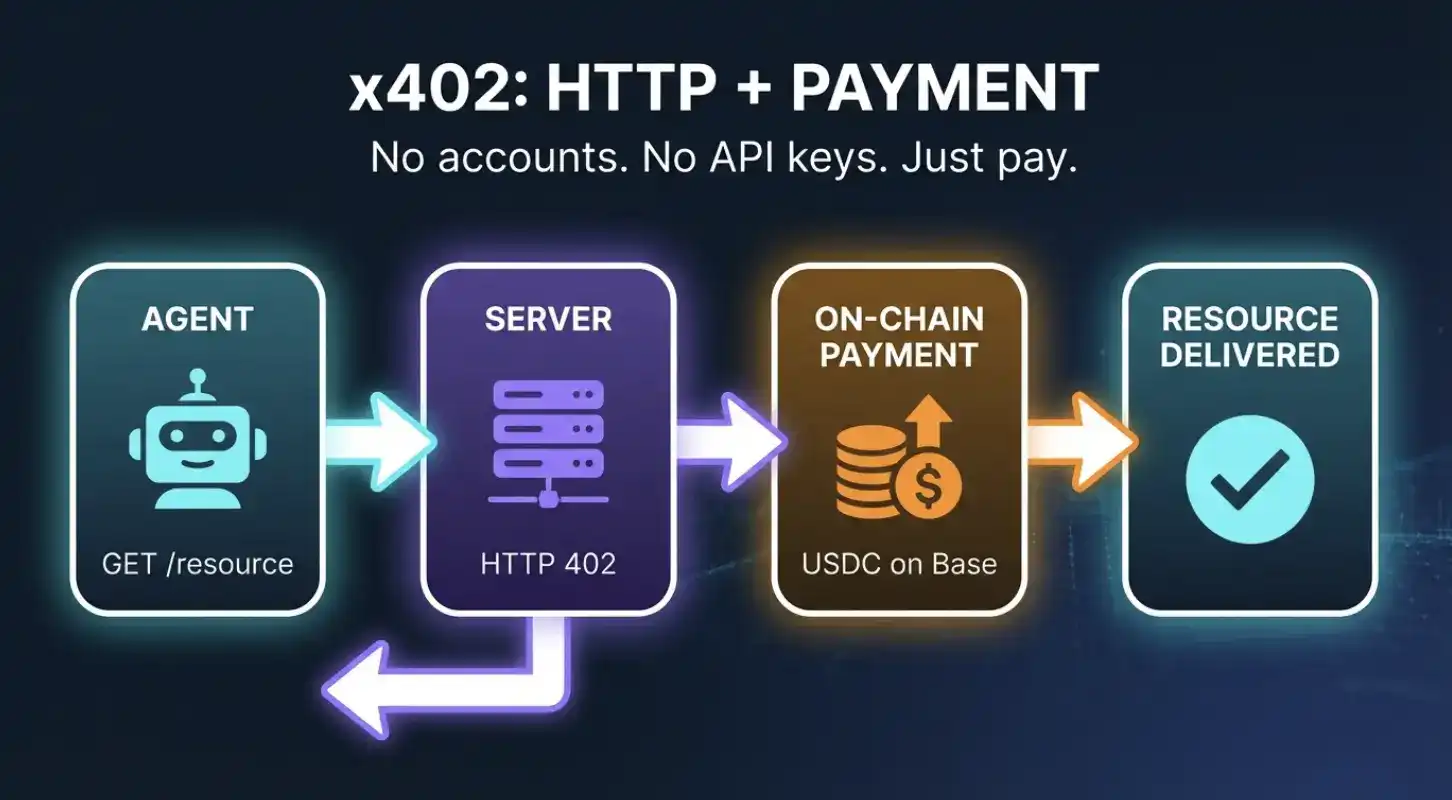
Coinbase officially launched x402 in May 2025. Its core idea is almost radically minimalist. A client requests a resource; the server returns HTTP 402, informing the client: how much to pay, which token to use, and on which chain to complete the payment. The client completes the payment on-chain, attaches the payment proof to the re-initiated request, and the server delivers the resource.

It's that simple. No account system, no API Key, no subscription mechanism. Just one HTTP request round trip, with a payment inserted in the middle.

Stripe now provides native support for x402 in its payment system, allowing merchants to receive such payments directly through their existing backend. However,本质上, x402 is still a protocol led by Coinbase, governed by the x402 Foundation co-founded by Coinbase and Cloudflare in September 2025. The protocol is fully open source (Apache 2.0 license) and provides multi-language SDKs like TypeScript, Go, and Python.

In terms of support, Coinbase's official documentation shows current support for ERC-20 payments on Base, Polygon, and Solana. Meanwhile, the ecosystem is exploring expansion to other chains like Avalanche, Sui, and Near, but maturity varies.

Looking at adoption data, it gets slightly more complex. Coinbase states that x402 has processed over 50 million transactions through its Agentic Wallet infrastructure. Sounds impressive, but according to CoinDesk on March 11th, citing Artemis on-chain analysis data: daily transaction volume is about 131,000, total amount about $28,000, average payment per transaction is only about $0.20, and about half of them seem more like testing or gamification rather than real commercial transactions.

But this might not be a bad thing. Because this protocol is designed for a market that doesn't truly exist yet—a world where AI agents make micro-payments (even below 1 cent) for API calls and data queries. And the services serving this market are just beginning to emerge.

For example, Google's Agentic Payments Protocol (AP2, part of the A2A framework) has integrated x402; Lowe's Innovation Labs demonstrated a demo where an AI agent can complete the entire process from product discovery, research to placing an order in one flow. Also, World (initiated by Sam Altman) released AgentKit this week, adding human identity verification capabilities to x402 wallets.

The core assumption is: if you make payments as lightweight as HTTP requests, use cases will naturally emerge. Whether this holds true remains to be seen.

MPP: The Full-Stack Solution

Stripe and Tempo have chosen a different path. The Machine Payments Protocol (MPP) was released today alongside the Tempo mainnet launch. Unlike x402, which is a lightweight wrapper on existing blockchains, MPP is specifically designed for the scenario of high-frequency trading agents.

Its core mechanism is sessions. Instead of initiating an on-chain transaction for every resource request, an agent can pre-authorize a spending limit and then make continuous micro-payments within that limit. If you are an AI that needs to query thousands of sources per hour, you absolutely do not want to sign and broadcast an on-chain transaction each time, and sessions are designed to solve this problem.

The Tempo chain is also built around this need. It supports tens of thousands of transactions per second, has sub-second confirmation times, and has no native gas token. Users can pay fees directly with stablecoins, eliminating the hassle of having to buy some random token just to make a transfer.

Another component worth understanding is: Stripe's Agentic Commerce Suite includes Shared Payment Tokens (SPTs). This is not part of MPP itself, but an extension mechanism from Stripe that can work with it. SPTs allow an agent to securely pass a user's bank card or wallet credentials to a merchant without exposing the real data. These credentials are single-use and time-limited, essentially a programmable, self-destructing authorization. In practice, this means an agent paying via MPP can use either USDC on Tempo or the user's linked Visa card, or even a combination of both.

According to the Tempo mainnet launch blog, its partners include Anthropic, DoorDash, Mastercard, Nubank, OpenAI, Ramp, Revolut, Shopify, Standard Chartered, and Visa. The Block reported that the MPP launch payment directory already includes over 100 services, including Alchemy, Dune Analytics, Merit Systems, and Parallel Web Systems. Matt Huang, co-founder of Tempo and Paradigm, told Fortune in an interview that this field is still in its early stages, and MPP is designed to eventually scale to environments beyond Tempo.

Why Stripe Supports Both

If you are already integrated with Stripe, the most practical answer is: you don't need to choose between them.

Stripe supports x402 and MPP through two separate integration paths, rather than abstracting them into a unified interface. For x402, its documentation mainly covers the process of generating deposit addresses, monitoring the chain, and settling funds into Stripe accounts—you are responsible for returning the 402 response, while the underlying crypto payment infrastructure is handled by Stripe. Currently supports USDC on Base, with more to come. For MPP, merchants can use the same PaymentIntents API to receive session-based streaming payments.

Stripe's Agentic Commerce Suite, released in December 2025, is built on these two payment rails. Merchants simply upload their product catalog, select the AI agents they want to connect with, and Stripe handles product discovery, checkout flow, fraud prevention, and tax processing. Currently used by URBN, Etsy, Coach, Kate Spade, and Ashley Furniture, with platforms like Wix, WooCommerce, BigCommerce, Squarespace, and commercetools already integrated.

The strategy is actually quite clear: control the abstraction layer and let the underlying protocols compete freely.

Comparison

Macroscopically, these two protocols are doing the same thing: enabling machines to pay for resources via HTTP. But the real differences lie in the details.

x402 (Led by Coinbase) vs MPP (Stripe + Tempo)

Standardization
x402: Fully open source (Apache 2.0), promoted by the x402 Foundation with multi-party participation (Coinbase, Cloudflare, Visa, Google).
MPP: Open standard, jointly defined by Stripe and Tempo, part of the Stripe Agentic Commerce Suite.

HTTP Mechanism
x402: Revives HTTP 402, initiates requests via PAYMENT-REQUIRED header, uses PAYMENT-SIGNATURE for retry.
MPP: Also uses a challenge-response mechanism, but employs the Payment HTTP Authentication Scheme (IETF draft), binding challenge ID via HMAC.

Payment Rails
x402: Designed to be chain-agnostic, currently supported on Base, Polygon, Solana, exploration ongoing for other chains.
MPP: Based on the Tempo blockchain—an L1 optimized for payments, supporting 10k+ TPS, sub-second confirmation, no native gas token; long-term goal is cross-chain compatibility.

Payment Methods
x402: Pure stablecoins, fully on-chain.
MPP: Supports USDC on Tempo + SPT (Stripe's mechanism), enabling crypto-fiat hybrid (card, wallet, BNPL).

Settlement
x402: On-chain settlement (~200ms to several seconds), validation and settlement handled by facilitators like Coinbase.
MPP: Tempo sub-second confirmation, Stripe automatically credits accounts and handles compliance.

Merchant Integration
x402: Open-source middleware (Express, Hono, Next.js, etc.), can self-host or use a facilitator.
MPP: Direct integration with Stripe's PaymentIntents API, risk control, tax, refunds, reporting all built-in.

Core Innovation
x402: Extreme simplicity, no vendor lock-in,类似支付领域的 Unix 哲学 (like the Unix philosophy for payments).
MPP: High throughput + fiat integration,实现流式支付、微支付聚合 (enables streaming payments, micro-payment aggregation) via session, and programmable spending control based on SPT.

Key Partners
x402: Coinbase, Cloudflare, Google (A2A/AP2), Visa, World, Anthropic (MCP).
MPP: Stripe, Visa, Lightspark, Anthropic, DoorDash, Mastercard, OpenAI, Shopify, Revolut, Standard Chartered.

x402 is more like your首选方案 when building open systems: indie developer APIs, decentralized data markets, or any service that doesn't want to rely on a payment processor. Its spec can be written in a whitepaper, integration just requires middleware and a wallet address. This purity is attractive—though the纯加密的限制 (purely crypto limitation) also means its audience is narrower.

MPP is a completely different paradigm. If your agent needs to make hundreds or even thousands of transactions in one session without going on-chain each time, then it's the more reasonable choice. The session mechanism keeps most interactions off-chain until final settlement; Stripe's compliance system handles risk and taxes; and the hybrid model with SPT allows agents to go beyond stablecoins and directly call the user's payment methods. It's less elegant but closer to reality.

Interestingly, they are not entirely competitive. x402 covers long-tail open scenarios, MPP covers enterprise-level high-frequency traffic. Stripe's strategy is also clear: don't bet on a single protocol, but ensure that no matter which path wins, funds ultimately flow into Stripe's account system.

Reality Check: Where Are We Actually At Now?

Honestly, there is almost no real scaled transaction volume yet.

According to Coinbase's x402 launch information, early partners include Hyperbolic (GPU inference payment) and Anthropic (MCP protocol integration). Stripe's blog mentions agent scenarios paying per API call (e.g., CoinGecko). Tempo's launch directory has 100+ services. Cloudflare's Agents SDK natively supports x402, and some small projects on Base L2 are also trying to use x402 as a payment gateway.

But overall: transaction volume is small, merchant count is limited, most activity is still in the experimental stage.

This is not surprising. Any new payment infrastructure is like this early on. So-called partner lists sometimes have a big gap between signing a letter of intent and being in production, and these announcements usually don't特别区分.

What's more值得关注 is the heavyweight players behind the infrastructure. Stripe processed $1.9 trillion in payments in 2025, with total volume growing 34% year-over-year. Meanwhile, Coinbase, Cloudflare, Visa, Google, and Tempo's entire partner network have entered the field.

In other words, the rails are laid. The only question left is: In 2026, will AI agents really need to transact on these rails at scale? Or is this more like laying fiber optics in 1998—demand isn't here yet, but infrastructure comes first.

Which One Should You Choose?

If you are building an open, permissionless system—x402 is the more natural choice. No platform registration, no payment processor integration, just import middleware, bind a wallet, and start receiving payments. The cost is handling compliance, risk control, and fiat settlement yourself.

If you are already within the Stripe ecosystem and want to接入 agent traffic—MPP is more suitable. Sessions, streaming payments, crypto+fiat hybrid, and a full compliance system are essentially more like a configuration upgrade than a system重构.

If you only care about one thing: no matter which protocol the agent uses, I can get paid. Then the answer is simply: use Stripe. It supports both.

HTTP 402 has finally found its use. It just took about 27 years.

Domande pertinenti

QWhat is the core difference between x402 and MPP in terms of their approach to agent payments?

Ax402 follows a protocol-minimalist approach, embedding payment directly into HTTP requests with no accounts or intermediaries, ideal for open, permissionless, and long-tail decentralized scenarios. MPP is a full-stack, system-maximalist solution that uses sessions, streaming payments, and a compliance framework to handle high-frequency transactions and fiat integration, prioritizing real-world commercial needs and enterprise-scale applications.

QHow does the x402 protocol work in a simple transaction flow?

AA client requests a resource. The server returns an HTTP 402 status code, specifying the required payment amount, token, and blockchain. The client completes the payment on-chain, attaches the payment credential to a new request, and the server then delivers the resource. There are no accounts, API keys, or subscriptions.

QWhat key innovation does MPP introduce to solve the problem of high-frequency agent transactions?

AMPP introduces the concept of 'sessions.' Instead of initiating a separate on-chain transaction for every resource request, an agent can pre-authorize a spending limit and then perform numerous micro-payments within that session off-chain, only settling finally on-chain. This enables high throughput and sub-second confirmations.

QWhy is Stripe supporting both the x402 and MPP protocols simultaneously?

AStripe's strategy is to control the abstraction layer and let the underlying protocols compete. By offering separate integration paths for both x402 and MPP, they ensure that regardless of which protocol gains traction for different use cases (open web vs. enterprise), the funds ultimately flow into Stripe's account system and compliance framework.

QWhat is the current state of adoption and transaction volume for these agent payment protocols?

AAs of the article's information, adoption is still in its early experimental phase. x402 handles around 131,000 daily transactions with a total value of approximately $28,000, many of which are tests. MPP launched with a directory of over 100 services. While infrastructure from major players is in place, widespread,规模化 commercial transactions from AI agents are not yet a reality.

Letture associate

First Batch of Keynote Speakers and Partners Announced! Web2+3 Summit: Defining the Next Generation of Digital Economy

Web2+3 Summit: Defining the Next Generation of Digital Economy The 6th BEYOND International Technology Innovation Expo (BEYOND Expo 2026), Asia's largest tech and ecosystem exhibition, is launching a dedicated Web2+3 stage for the first time. Co-hosted by BEYOND Expo and ChainNeXT Group, the Web3 Summit will take place from May 28–30, 2026. Against the backdrop of accelerating global tech integration, the boundaries between Web2 and Web3 are rapidly blurring. With clearer global regulations for blockchain-driven internet (Web3) and the special issuance of a Hong Kong dollar stable币 license by the Hong Kong SAR government on April 10, 2026, Web3's decentralized principles are quickly merging with traditional industries (Web2) such as e-commerce, finance, and artificial intelligence. Focused on blockchain-driven digital economy elements, the summit will center on three core principles—implementability, commercial viability, and compliance. It will bring together top Web3 experts to discuss key integration areas like stablecoin payment finance (PayFi), real-world asset tokenization (RWA), and decentralized AI (DeAI), unveiling new opportunities for industrial innovation. The first wave of confirmed speakers includes Jack Kong (Director of Hong Kong Cyberport, Chairman of Nano Labs), Yat Siu (Chairman of Animoca Brands), Michael Wu (Co-founder & CEO of Amber Group), Michael Heinrich (Co-founder & CEO of 0G), and Art Abal (Co-founder of Vana). More Web3 ecosystem pioneers, AI, and fintech experts will be announced soon. Core forum topics include: - Web2+DeAI: New AI Paradigms Driven by Decentralized Infrastructure - Web2+RWA: Real-World Asset Tokenization and Global Liquidity - Web2+PayFi: Cross-Border Payments and Financial Innovation Powered by Crypto Infrastructure - Web2+3 AI: Autonomous Agents and the Crypto Economy - Web2+3 Wealth: On-Chain and Off-Chain Integrated Investment Ecosystems - Web2+3 Commerce: A New Landscape for Global Trade Driven by Stablecoins Additional agenda details will be released in the near future.

marsbit1 h fa

First Batch of Keynote Speakers and Partners Announced! Web2+3 Summit: Defining the Next Generation of Digital Economy

marsbit1 h fa

Trading

Spot
Futures

Articoli Popolari

Cosa è $S$

Comprendere SPERO: Una Panoramica Completa Introduzione a SPERO Mentre il panorama dell'innovazione continua a evolversi, l'emergere delle tecnologie web3 e dei progetti di criptovaluta gioca un ruolo fondamentale nel plasmare il futuro digitale. Un progetto che ha attirato l'attenzione in questo campo dinamico è SPERO, denotato come SPERO,$$s$. Questo articolo mira a raccogliere e presentare informazioni dettagliate su SPERO, per aiutare gli appassionati e gli investitori a comprendere le sue basi, obiettivi e innovazioni nei domini web3 e crypto. Che cos'è SPERO,$$s$? SPERO,$$s$ è un progetto unico all'interno dello spazio crypto che cerca di sfruttare i principi della decentralizzazione e della tecnologia blockchain per creare un ecosistema che promuove l'impegno, l'utilità e l'inclusione finanziaria. Il progetto è progettato per facilitare interazioni peer-to-peer in modi nuovi, fornendo agli utenti soluzioni e servizi finanziari innovativi. Al suo interno, SPERO,$$s$ mira a responsabilizzare gli individui fornendo strumenti e piattaforme che migliorano l'esperienza dell'utente nello spazio delle criptovalute. Questo include la possibilità di metodi di transazione più flessibili, la promozione di iniziative guidate dalla comunità e la creazione di percorsi per opportunità finanziarie attraverso applicazioni decentralizzate (dApps). La visione sottostante di SPERO,$$s$ ruota attorno all'inclusività, cercando di colmare le lacune all'interno della finanza tradizionale mentre sfrutta i vantaggi della tecnologia blockchain. Chi è il Creatore di SPERO,$$s$? L'identità del creatore di SPERO,$$s$ rimane piuttosto oscura, poiché ci sono risorse pubblicamente disponibili limitate che forniscono informazioni dettagliate sul suo fondatore o fondatori. Questa mancanza di trasparenza può derivare dall'impegno del progetto per la decentralizzazione—un ethos che molti progetti web3 condividono, dando priorità ai contributi collettivi rispetto al riconoscimento individuale. Centrando le discussioni attorno alla comunità e ai suoi obiettivi collettivi, SPERO,$$s$ incarna l'essenza dell'empowerment senza mettere in evidenza individui specifici. Pertanto, comprendere l'etica e la missione di SPERO rimane più importante che identificare un creatore singolo. Chi sono gli Investitori di SPERO,$$s$? SPERO,$$s$ è supportato da una varietà di investitori che vanno dai capitalisti di rischio agli investitori angelici dedicati a promuovere l'innovazione nel settore crypto. Il focus di questi investitori generalmente si allinea con la missione di SPERO—dando priorità a progetti che promettono avanzamenti tecnologici sociali, inclusività finanziaria e governance decentralizzata. Queste fondazioni di investitori sono tipicamente interessate a progetti che non solo offrono prodotti innovativi, ma contribuiscono anche positivamente alla comunità blockchain e ai suoi ecosistemi. Il supporto di questi investitori rafforza SPERO,$$s$ come un concorrente degno di nota nel dominio in rapida evoluzione dei progetti crypto. Come Funziona SPERO,$$s$? SPERO,$$s$ impiega un framework multifunzionale che lo distingue dai progetti di criptovaluta convenzionali. Ecco alcune delle caratteristiche chiave che sottolineano la sua unicità e innovazione: Governance Decentralizzata: SPERO,$$s$ integra modelli di governance decentralizzati, responsabilizzando gli utenti a partecipare attivamente ai processi decisionali riguardanti il futuro del progetto. Questo approccio favorisce un senso di proprietà e responsabilità tra i membri della comunità. Utilità del Token: SPERO,$$s$ utilizza il proprio token di criptovaluta, progettato per servire varie funzioni all'interno dell'ecosistema. Questi token abilitano transazioni, premi e la facilitazione dei servizi offerti sulla piattaforma, migliorando l'impegno e l'utilità complessivi. Architettura Stratificata: L'architettura tecnica di SPERO,$$s$ supporta la modularità e la scalabilità, consentendo un'integrazione fluida di funzionalità e applicazioni aggiuntive man mano che il progetto evolve. Questa adattabilità è fondamentale per mantenere la rilevanza nel panorama crypto in continua evoluzione. Coinvolgimento della Comunità: Il progetto enfatizza iniziative guidate dalla comunità, impiegando meccanismi che incentivano la collaborazione e il feedback. Nutrendo una comunità forte, SPERO,$$s$ può affrontare meglio le esigenze degli utenti e adattarsi alle tendenze di mercato. Focus sull'Inclusione: Offrendo basse commissioni di transazione e interfacce user-friendly, SPERO,$$s$ mira ad attrarre una base utenti diversificata, inclusi individui che potrebbero non aver precedentemente interagito nello spazio crypto. Questo impegno per l'inclusione si allinea con la sua missione generale di empowerment attraverso l'accessibilità. Cronologia di SPERO,$$s$ Comprendere la storia di un progetto fornisce preziose intuizioni sulla sua traiettoria di sviluppo e sui traguardi. Di seguito è riportata una cronologia suggerita che mappa eventi significativi nell'evoluzione di SPERO,$$s$: Fase di Concettualizzazione e Ideazione: Le idee iniziali che formano la base di SPERO,$$s$ sono state concepite, allineandosi strettamente con i principi di decentralizzazione e focus sulla comunità all'interno dell'industria blockchain. Lancio del Whitepaper del Progetto: Dopo la fase concettuale, è stato rilasciato un whitepaper completo che dettaglia la visione, gli obiettivi e l'infrastruttura tecnologica di SPERO,$$s$ per suscitare interesse e feedback dalla comunità. Costruzione della Comunità e Prime Interazioni: Sono stati effettuati sforzi attivi di outreach per costruire una comunità di early adopters e potenziali investitori, facilitando discussioni attorno agli obiettivi del progetto e ottenendo supporto. Evento di Generazione del Token: SPERO,$$s$ ha condotto un evento di generazione del token (TGE) per distribuire i propri token nativi ai primi sostenitori e stabilire una liquidità iniziale all'interno dell'ecosistema. Lancio della Prima dApp: La prima applicazione decentralizzata (dApp) associata a SPERO,$$s$ è stata attivata, consentendo agli utenti di interagire con le funzionalità principali della piattaforma. Sviluppo Continuo e Partnership: Aggiornamenti e miglioramenti continui alle offerte del progetto, inclusi partnership strategiche con altri attori nello spazio blockchain, hanno plasmato SPERO,$$s$ in un concorrente competitivo e in evoluzione nel mercato crypto. Conclusione SPERO,$$s$ rappresenta una testimonianza del potenziale del web3 e delle criptovalute di rivoluzionare i sistemi finanziari e responsabilizzare gli individui. Con un impegno per la governance decentralizzata, il coinvolgimento della comunità e funzionalità progettate in modo innovativo, apre la strada verso un panorama finanziario più inclusivo. Come per qualsiasi investimento nello spazio crypto in rapida evoluzione, si incoraggiano potenziali investitori e utenti a ricercare approfonditamente e a impegnarsi in modo riflessivo con gli sviluppi in corso all'interno di SPERO,$$s$. Il progetto mostra lo spirito innovativo dell'industria crypto, invitando a ulteriori esplorazioni delle sue innumerevoli possibilità. Mentre il percorso di SPERO,$$s$ è ancora in fase di sviluppo, i suoi principi fondamentali potrebbero effettivamente influenzare il futuro di come interagiamo con la tecnologia, la finanza e tra di noi in ecosistemi digitali interconnessi.

75 Totale visualizzazioniPubblicato il 2024.12.17Aggiornato il 2024.12.17

Cosa è $S$

Cosa è AGENT S

Agent S: Il Futuro dell'Interazione Autonoma in Web3 Introduzione Nel panorama in continua evoluzione di Web3 e criptovalute, le innovazioni stanno costantemente ridefinendo il modo in cui gli individui interagiscono con le piattaforme digitali. Uno di questi progetti pionieristici, Agent S, promette di rivoluzionare l'interazione uomo-computer attraverso il suo framework agentico aperto. Aprendo la strada a interazioni autonome, Agent S mira a semplificare compiti complessi, offrendo applicazioni trasformative nell'intelligenza artificiale (AI). Questa esplorazione dettagliata approfondirà le complessità del progetto, le sue caratteristiche uniche e le implicazioni per il dominio delle criptovalute. Cos'è Agent S? Agent S si presenta come un innovativo framework agentico aperto, progettato specificamente per affrontare tre sfide fondamentali nell'automazione dei compiti informatici: Acquisizione di Conoscenze Specifiche del Dominio: Il framework apprende in modo intelligente da varie fonti di conoscenza esterne ed esperienze interne. Questo approccio duale gli consente di costruire un ricco repository di conoscenze specifiche del dominio, migliorando le sue prestazioni nell'esecuzione dei compiti. Pianificazione su Lungo Orizzonte di Compiti: Agent S impiega una pianificazione gerarchica potenziata dall'esperienza, un approccio strategico che facilita la suddivisione e l'esecuzione efficiente di compiti complessi. Questa caratteristica migliora significativamente la sua capacità di gestire più sottocompiti in modo efficiente ed efficace. Gestione di Interfacce Dinamiche e Non Uniformi: Il progetto introduce l'Interfaccia Agente-Computer (ACI), una soluzione innovativa che migliora l'interazione tra agenti e utenti. Utilizzando Modelli Linguistici Multimodali di Grandi Dimensioni (MLLM), Agent S può navigare e manipolare senza sforzo diverse interfacce grafiche utente. Attraverso queste caratteristiche pionieristiche, Agent S fornisce un framework robusto che affronta le complessità coinvolte nell'automazione dell'interazione umana con le macchine, preparando il terreno per innumerevoli applicazioni nell'AI e oltre. Chi è il Creatore di Agent S? Sebbene il concetto di Agent S sia fondamentalmente innovativo, informazioni specifiche sul suo creatore rimangono elusive. Il creatore è attualmente sconosciuto, il che evidenzia sia la fase embrionale del progetto sia la scelta strategica di mantenere i membri fondatori sotto anonimato. Indipendentemente dall'anonimato, l'attenzione rimane sulle capacità e sul potenziale del framework. Chi sono gli Investitori di Agent S? Poiché Agent S è relativamente nuovo nell'ecosistema crittografico, informazioni dettagliate riguardanti i suoi investitori e sostenitori finanziari non sono documentate esplicitamente. La mancanza di approfondimenti pubblicamente disponibili sulle fondazioni di investimento o sulle organizzazioni che supportano il progetto solleva interrogativi sulla sua struttura di finanziamento e sulla roadmap di sviluppo. Comprendere il supporto è cruciale per valutare la sostenibilità del progetto e il suo potenziale impatto sul mercato. Come Funziona Agent S? Al centro di Agent S si trova una tecnologia all'avanguardia che gli consente di funzionare efficacemente in contesti diversi. Il suo modello operativo è costruito attorno a diverse caratteristiche chiave: Interazione Uomo-Computer Simile a Quella Umana: Il framework offre una pianificazione AI avanzata, cercando di rendere le interazioni con i computer più intuitive. Mimando il comportamento umano nell'esecuzione dei compiti, promette di elevare le esperienze degli utenti. Memoria Narrativa: Utilizzata per sfruttare esperienze di alto livello, Agent S utilizza la memoria narrativa per tenere traccia delle storie dei compiti, migliorando così i suoi processi decisionali. Memoria Episodica: Questa caratteristica fornisce agli utenti una guida passo-passo, consentendo al framework di offrire supporto contestuale mentre i compiti si sviluppano. Supporto per OpenACI: Con la capacità di funzionare localmente, Agent S consente agli utenti di mantenere il controllo sulle proprie interazioni e flussi di lavoro, allineandosi con l'etica decentralizzata di Web3. Facile Integrazione con API Esterne: La sua versatilità e compatibilità con varie piattaforme AI garantiscono che Agent S possa adattarsi senza problemi agli ecosistemi tecnologici esistenti, rendendolo una scelta attraente per sviluppatori e organizzazioni. Queste funzionalità contribuiscono collettivamente alla posizione unica di Agent S all'interno dello spazio crittografico, poiché automatizza compiti complessi e multi-fase con un intervento umano minimo. Man mano che il progetto evolve, le sue potenziali applicazioni in Web3 potrebbero ridefinire il modo in cui si svolgono le interazioni digitali. Cronologia di Agent S Lo sviluppo e le tappe di Agent S possono essere riassunti in una cronologia che evidenzia i suoi eventi significativi: 27 Settembre 2024: Il concetto di Agent S è stato lanciato in un documento di ricerca completo intitolato “Un Framework Agentico Aperto che Usa i Computer Come un Umano”, mostrando le basi per il progetto. 10 Ottobre 2024: Il documento di ricerca è stato reso pubblicamente disponibile su arXiv, offrendo un'esplorazione approfondita del framework e della sua valutazione delle prestazioni basata sul benchmark OSWorld. 12 Ottobre 2024: È stata rilasciata una presentazione video, fornendo un'idea visiva delle capacità e delle caratteristiche di Agent S, coinvolgendo ulteriormente potenziali utenti e investitori. Questi indicatori nella cronologia non solo illustrano i progressi di Agent S, ma indicano anche il suo impegno per la trasparenza e il coinvolgimento della comunità. Punti Chiave su Agent S Man mano che il framework Agent S continua a evolversi, diversi attributi chiave si distinguono, sottolineando la sua natura innovativa e il potenziale: Framework Innovativo: Progettato per fornire un uso intuitivo dei computer simile all'interazione umana, Agent S porta un approccio nuovo all'automazione dei compiti. Interazione Autonoma: La capacità di interagire autonomamente con i computer attraverso GUI segna un passo avanti verso soluzioni informatiche più intelligenti ed efficienti. Automazione di Compiti Complessi: Con la sua metodologia robusta, può automatizzare compiti complessi e multi-fase, rendendo i processi più veloci e meno soggetti a errori. Miglioramento Continuo: I meccanismi di apprendimento consentono ad Agent S di migliorare dalle esperienze passate, migliorando continuamente le sue prestazioni e la sua efficacia. Versatilità: La sua adattabilità attraverso diversi ambienti operativi come OSWorld e WindowsAgentArena garantisce che possa servire un'ampia gamma di applicazioni. Man mano che Agent S si posiziona nel panorama di Web3 e delle criptovalute, il suo potenziale per migliorare le capacità di interazione e automatizzare i processi segna un significativo avanzamento nelle tecnologie AI. Attraverso il suo framework innovativo, Agent S esemplifica il futuro delle interazioni digitali, promettendo un'esperienza più fluida ed efficiente per gli utenti in vari settori. Conclusione Agent S rappresenta un audace passo avanti nell'unione tra AI e Web3, con la capacità di ridefinire il modo in cui interagiamo con la tecnologia. Sebbene sia ancora nelle sue fasi iniziali, le possibilità per la sua applicazione sono vaste e coinvolgenti. Attraverso il suo framework completo che affronta sfide critiche, Agent S mira a portare le interazioni autonome al centro dell'esperienza digitale. Man mano che ci addentriamo nei regni delle criptovalute e della decentralizzazione, progetti come Agent S giocheranno senza dubbio un ruolo cruciale nel plasmare il futuro della tecnologia e della collaborazione uomo-computer.

396 Totale visualizzazioniPubblicato il 2025.01.14Aggiornato il 2025.01.14

Cosa è AGENT S

Come comprare S

Benvenuto in HTX.com! Abbiamo reso l'acquisto di Sonic (S) semplice e conveniente. Segui la nostra guida passo passo per intraprendere il tuo viaggio nel mondo delle criptovalute.Step 1: Crea il tuo Account HTXUsa la tua email o numero di telefono per registrarti il tuo account gratuito su HTX. Vivi un'esperienza facile e sblocca tutte le funzionalità,Crea il mio accountStep 2: Vai in Acquista crypto e seleziona il tuo metodo di pagamentoCarta di credito/debito: utilizza la tua Visa o Mastercard per acquistare immediatamente SonicS.Bilancio: Usa i fondi dal bilancio del tuo account HTX per fare trading senza problemi.Terze parti: abbiamo aggiunto metodi di pagamento molto utilizzati come Google Pay e Apple Pay per maggiore comodità.P2P: Fai trading direttamente con altri utenti HTX.Over-the-Counter (OTC): Offriamo servizi su misura e tassi di cambio competitivi per i trader.Step 3: Conserva Sonic (S)Dopo aver acquistato Sonic (S), conserva nel tuo account HTX. In alternativa, puoi inviare tramite trasferimento blockchain o scambiare per altre criptovalute.Step 4: Scambia Sonic (S)Scambia facilmente Sonic (S) nel mercato spot di HTX. Accedi al tuo account, seleziona la tua coppia di trading, esegui le tue operazioni e monitora in tempo reale. Offriamo un'esperienza user-friendly sia per chi ha appena iniziato che per i trader più esperti.

781 Totale visualizzazioniPubblicato il 2025.01.15Aggiornato il 2025.03.21

Come comprare S

Discussioni

Benvenuto nella Community HTX. Qui puoi rimanere informato sugli ultimi sviluppi della piattaforma e accedere ad approfondimenti esperti sul mercato. Le opinioni degli utenti sul prezzo di S S sono presentate come di seguito.

活动图片