Trends in US Stocks (June 22): Strait of Hormuz Agreement Changes Course, Thursday's PCE and Micron to Determine Chip Sector Direction

marsbitPubblicato 2026-06-22Pubblicato ultima volta 2026-06-22

Introduzione

U.S. Stock Market Outlook (June 22): Strait of Hormuz Deal Falters, Thursday's PCE & Micron to Set Chip Sector Direction. Geopolitical tensions resurged over the weekend as Iran's IRGC announced the closure of the Strait of Hormuz, and its negotiation team walked out after threats from Trump, pausing U.S.-Iran talks. This renewed risk premium is weighing on U.S. equity futures ahead of the open. Last week's market was driven by chip stocks, with the Philly Semiconductor Index hitting a record high. While the Fed's hawkish tone was overshadowed by initial deal optimism, the S&P 500 gained 0.9% for the week. SpaceX debuted strongly but ended with two down days. Key events this week: The status of U.S.-Iran negotiations remains the immediate variable for oil and energy stocks. Monday sees Marvell and Flex added to the S&P 500. Tuesday's MSCI reclassification could benefit South Korean semiconductors and memory stocks. **Thursday, June 25th, is the critical day**, featuring the May Core PCE report and Micron's earnings. Hotter PCE data could solidify expectations for two 2024 rate hikes, while softer data would rapidly reprice rate cut bets. Micron's report is a key test for the AI narrative; the market will scrutinize its 2027 HBM supply visibility, HBM4 progress, and its position in Nvidia's Vera Rubin supply chain. Nvidia's AGM and a potential OpenAI GPT-5.6 release will make Thursday a pivotal 24 hours for AI. Friday concludes with the Russell reconstitution, elevating sm...

Author: Tide Research
Over the weekend, the US-Iran agreement has already begun to falter. Iran's IRGC announced the closure of the Strait of Hormuz on Saturday, and the negotiation delegation walked out angrily on Sunday after Trump issued threats. The US-Iran talks in Switzerland are currently still suspended. US stock futures for the three major indices were all lower in pre-market trading, with geopolitical risk premiums starting to accumulate again. The direction of the negotiations is the most immediate pricing variable for today's market open.

Market Performance

Last week, chip stocks were the main theme. The Philadelphia Semiconductor Index hit a record high on Thursday, overshadowing the hawkish FOMC with the US-Iran deal signing. The S&P 500 gained 0.9% for the week. SpaceX finished its debut week up 37%, but ended with two consecutive down days; a $20 billion bond issuance plan was revealed, indicating its honeymoon period is over. Accenture plunged 18% on Thursday, making it the worst-performing large-cap blue-chip last week.

Macro & Outlook

Latest status of US-Iran talks: The Strait of Hormuz remains closed. The Iranian delegation left the venue on Sunday in protest of Trump's threatening remarks. US media reports indicate Iranian personnel are still in contact with the US, but talks are effectively suspended. Iran's condition is for Israel to halt military operations in Lebanon, while Trump publicly warned of potentially taking over the Strait to collect tolls and threatened more severe strikes. Both sides are applying pressure. Progress in negotiations before today's market open is the most direct pricing variable for oil and energy stocks.

Marvell and Flex are added to the S&P 500 effective Monday. Most passive fund weight alignment was completed by last Friday's close. Today's open will see residual position adjustments; watch for liquidity premiums in the first few minutes for these two stocks.

MSCI's annual market classification review is announced Tuesday. If South Korea enters the watchlist for developed markets, billions in passive funds could flow into semiconductor ETFs. SK Hynix ADR application is expected to receive SEC approval as early as this week. Both events share a beneficial direction, likely creating a resonance effect in the memory sector.

Thursday, June 25th is the heaviest day of the week, with May PCE and Micron's earnings report landing on the same day. Core PCE is expected to rise year-over-year from 3.3% to 3.4%. Deutsche Bank already predicts two rate hikes totaling 50 bps this year, with the first potentially in July. If PCE data comes in hot, a September hike moves from probability to consensus, giving the hawkish Waller a data-backed boost; if it softens, the repricing of rate cut expectations could be faster than anyone expects.

Micron's earnings are the most direct litmus test for the AI narrative this week. Wall Street currently expects Q3 revenue around $34.5B, EPS around $19.72, and gross margin around 81%. Its full-year HBM capacity is reportedly locked by customers through late 2026 and into early 2027. The market is most focused this time on 2027 HBM supply visibility, HBM4 mass production ramp progress, and whether Micron can maintain its share in Nvidia's Vera Rubin supply chain. Micron has confirmed being included as a certified HBM4 supplier for Vera Rubin, the biggest narrative upgrade last quarter. Any language suggesting capacity constraints or conservative guidance will be amplified by bears, as the Philly Semiconductor Index just hit a record high, leaving little room for error.

Nvidia's annual shareholders meeting is held at Beijing time early morning. Blackwell and Vera architecture ramp-up is the core focus; any below-expectations commentary will directly impact the AI capital expenditure narrative. OpenAI's GPT-5.6 is expected to debut this week, evolving from model to executable Agent. If its timing overlaps with Micron's earnings and Nvidia's meeting, Thursday will be the most intensive 24 hours for the AI narrative this week.

The Russell Reconstitution takes effect at Friday's close, systematically raising volatility for small-cap stocks.

Tide's Perspective

Last week's answer was temporary; this week is the real test for the pricing framework. Two lines are running simultaneously: the geopolitical line watches if US-Iran talks can restart, and the AI line watches Micron's guidance and Nvidia's capacity. Chip stocks hit a record high last week. Whether this level can hold depends on the outcome of two key reports landing simultaneously on Thursday. Deutsche Bank has already capitulated to Waller, predicting 50 bps of hikes within the year. If PCE comes in hot again and Micron offers conservative guidance, last week's biggest gainers could become this week's deepest decliners. If both deliver the answers the market wants, the pricing framework for the AI narrative will be re-established, and this week's volatility will present an entry window.

Crypto di tendenza

Domande pertinenti

QWhat is the most direct pricing variable for the market opening on June 22nd, according to the article?

AThe most direct pricing variable for the market opening is the progress of US-Iran negotiations regarding the Strait of Hormuz, as the talks are currently paused and their direction will impact oil prices and energy stocks.

QWhat two major events are happening on Thursday, June 25th, that make it the heaviest day of the week?

ATwo major events on Thursday, June 25th are: 1) The release of the May Core PCE inflation data, and 2) Micron Technology's earnings report.

QWhat key information is the market focused on in Micron's upcoming earnings report?

AThe market is focused on Micron's visibility for HBM supply in 2027, the progress of HBM4 mass production ramp-up, and whether Micron can maintain its share in Nvidia's Vera Rubin supply chain.

QAccording to the article, what will be the consequence for the Russell 2000 small-cap stocks on Friday?

AOn Friday, the Russell Reconstitution will take effect at the market close, which will systematically increase volatility for small-cap stocks.

QHow does Deutsche Bank's forecast relate to the upcoming PCE data and Federal Reserve policy?

ADeutsche Bank has forecast two rate hikes totaling 50 basis points this year, possibly starting in July. If the upcoming PCE data comes in hotter than expected, this forecast would gain stronger support, solidifying market consensus for a September rate hike.

Letture associate

Blood Loss of $55 Million Selling 3,588 BTC, Strategy Becomes a Literal Scumbag

On July 6th, Strategy (formerly MicroStrategy) disclosed in an SEC filing that it sold 3,588 Bitcoin (BTC) between June 29th and July 5th for approximately $216 million, at an average price of ~$60,200. This marked the company's largest net sale since initiating its Bitcoin strategy in 2020 and its first institutionalized reduction of its core holding. The sale resulted in a realized loss of about $54.8 million, as the selling price was below its average cost basis of ~$75,476 per BTC. The proceeds were used to pay preferred stock dividends and replenish USD reserves. This move follows a new "Digital Credit Capital Framework" approved on June 29th, authorizing the sale of up to $1.25 billion in Bitcoin. The sale consumes roughly 17% of this authorized amount in its first week. Strategy's foundational narrative, built by founder Michael Saylor, was a commitment to "never sell" Bitcoin. The recent institutionalized selling framework and these substantial sales represent a significant shift from that original promise. While the amount sold is only 0.4% of Strategy's total holdings of 843,775 BTC, the action challenges the premium at which its stock (MSTR) trades relative to its Bitcoin holdings. Investors had priced in the "never sell" narrative. The company now faces a contradiction: it sells Bitcoin at a loss to pay dividends on the preferred stock it issued to fund Bitcoin purchases. Saylor has framed selling as a tool for future strategic purchases, but each sale erodes the credibility of the original commitment, potentially threatening the premium valuation of MSTR shares.

Foresight News57 min fa

Blood Loss of $55 Million Selling 3,588 BTC, Strategy Becomes a Literal Scumbag

Foresight News57 min fa

Dialogue with Yihui Capital, SoundAI Technology, Ling Universe, and Zhongbo Jili: Opportunities and Challenges in the AI Smart Hardware Track

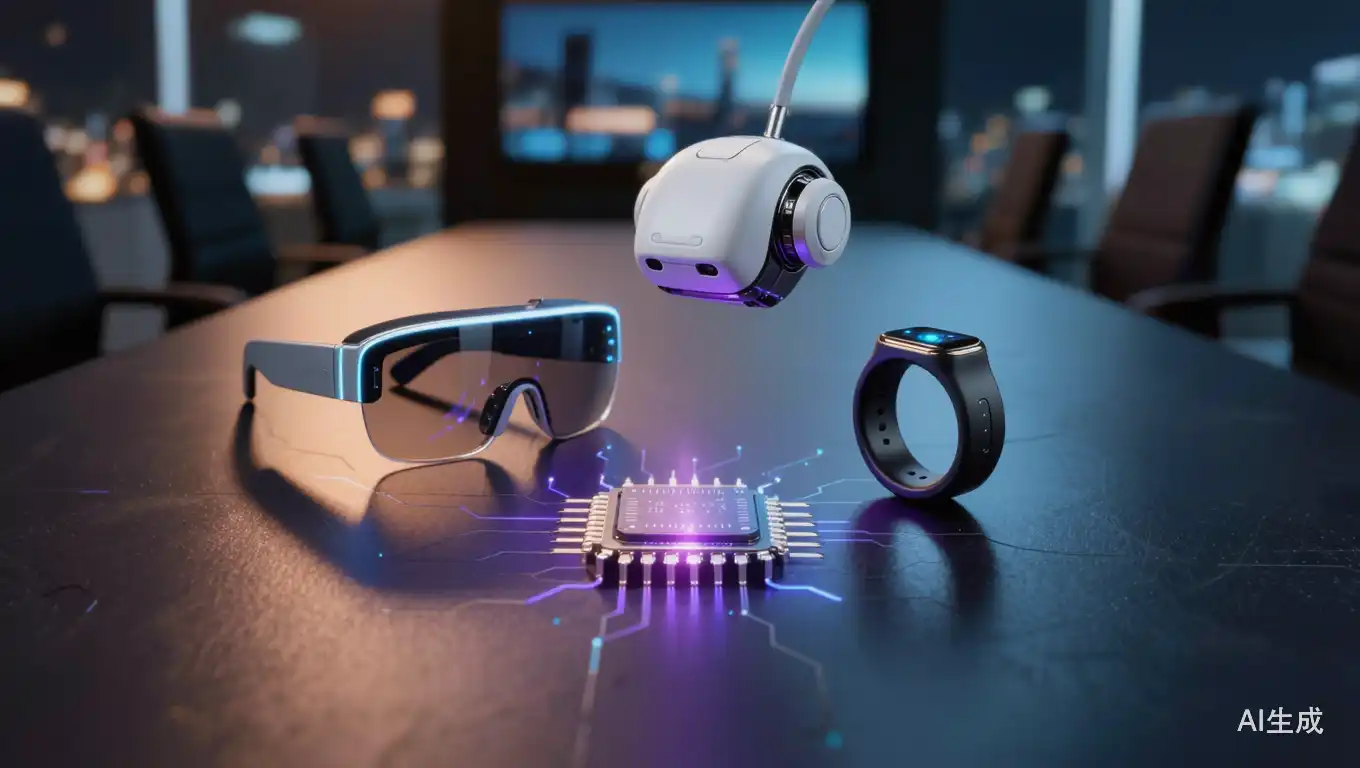
On June 28, 2026, an event titled "New Opportunities in AI Hardware: The Battle for Interactive Entry Points Begins" was held in Beijing. It featured a report from ITJuzi and discussions with experts from SoundAI, Ling Universe, One Reed Capital, and Zhongbo Juli on the opportunities and challenges in China's AI hardware sector. Key report findings highlight the sector's intense activity: 327 out of 431 startups founded post-2023 have secured funding, with 179 investments in H1 2026 alone. The landscape is dominated by embodied intelligent robots, while wearable tech like smart rings and AI glasses shows rapid growth. Geographically, Shenzhen leads, leveraging its superior hardware supply chain, followed by Beijing and Shanghai. The overarching trend is for companies to focus on micro-innovations within specific scenarios rather than reinventing foundational technology. Industry leaders shared several critical insights: 1. **Balancing Innovation & Market Readiness**: Entrepreneurs face the "hammer looking for a nail" dilemma. Success requires balancing technical capability with user acceptance, cost control, and incremental design improvements rather than chasing disruptive innovation. 2. **Competitive Landscape**: The future interactive entry point may not be a single super-device but a mix of universal terminals and specialized, scenario-specific hardware. While large companies have ecosystem advantages, startups can win by deeply targeting vertical markets and specific user groups. 3. **Core Challenges & Business Models**: Key hurdles include deep understanding of AI models and navigating non-transparent hardware supply chains. Viable business models may involve selling hardware at cost and generating revenue through software subscriptions, but this requires tight control over both hardware BOM and model inference costs. 4. **The Road to Commercialization**: The ultimate test is market validation—achieving sales growth and sustainable cash flow. Companies must find the right application scenario, use edge computing effectively, and close the loop from technology to commercial success. 5. **The Future of Interaction**: Proactive, context-aware interaction is the next frontier, though it's currently limited by issues like model hallucinations and environmental perception. The near-term focus should be on identifying target users and creating a coherent experience in specific domains, such as health wearables. In summary, to succeed in the competitive AI hardware arena, companies must strategically choose their niche, build a team with the right geographical advantages (e.g., leveraging Shenzhen's supply chain), and most importantly, execute a flawless commercialization strategy that translates technology into market-accepted products and sustainable business growth.

marsbit1 h fa

Dialogue with Yihui Capital, SoundAI Technology, Ling Universe, and Zhongbo Jili: Opportunities and Challenges in the AI Smart Hardware Track

marsbit1 h fa

Trading

Spot

Articoli Popolari

Come comprare CHIP

Benvenuto in HTX.com! Abbiamo reso l'acquisto di USD.AI (CHIP) semplice e conveniente. Segui la nostra guida passo passo per intraprendere il tuo viaggio nel mondo delle criptovalute.Step 1: Crea il tuo Account HTXUsa la tua email o numero di telefono per registrarti il tuo account gratuito su HTX. Vivi un'esperienza facile e sblocca tutte le funzionalità,Crea il mio accountStep 2: Vai in Acquista crypto e seleziona il tuo metodo di pagamentoCarta di credito/debito: utilizza la tua Visa o Mastercard per acquistare immediatamente USD.AICHIP.Bilancio: Usa i fondi dal bilancio del tuo account HTX per fare trading senza problemi.Terze parti: abbiamo aggiunto metodi di pagamento molto utilizzati come Google Pay e Apple Pay per maggiore comodità.P2P: Fai trading direttamente con altri utenti HTX.Over-the-Counter (OTC): Offriamo servizi su misura e tassi di cambio competitivi per i trader.Step 3: Conserva USD.AI (CHIP)Dopo aver acquistato USD.AI (CHIP), conserva nel tuo account HTX. In alternativa, puoi inviare tramite trasferimento blockchain o scambiare per altre criptovalute.Step 4: Scambia USD.AI (CHIP)Scambia facilmente USD.AI (CHIP) nel mercato spot di HTX. Accedi al tuo account, seleziona la tua coppia di trading, esegui le tue operazioni e monitora in tempo reale. Offriamo un'esperienza user-friendly sia per chi ha appena iniziato che per i trader più esperti.

310 Totale visualizzazioniPubblicato il 2026.04.21Aggiornato il 2026.06.02

Come comprare CHIP

Discussioni

Benvenuto nella Community HTX. Qui puoi rimanere informato sugli ultimi sviluppi della piattaforma e accedere ad approfondimenti esperti sul mercato. Le opinioni degli utenti sul prezzo di CHIP CHIP sono presentate come di seguito.

活动图片