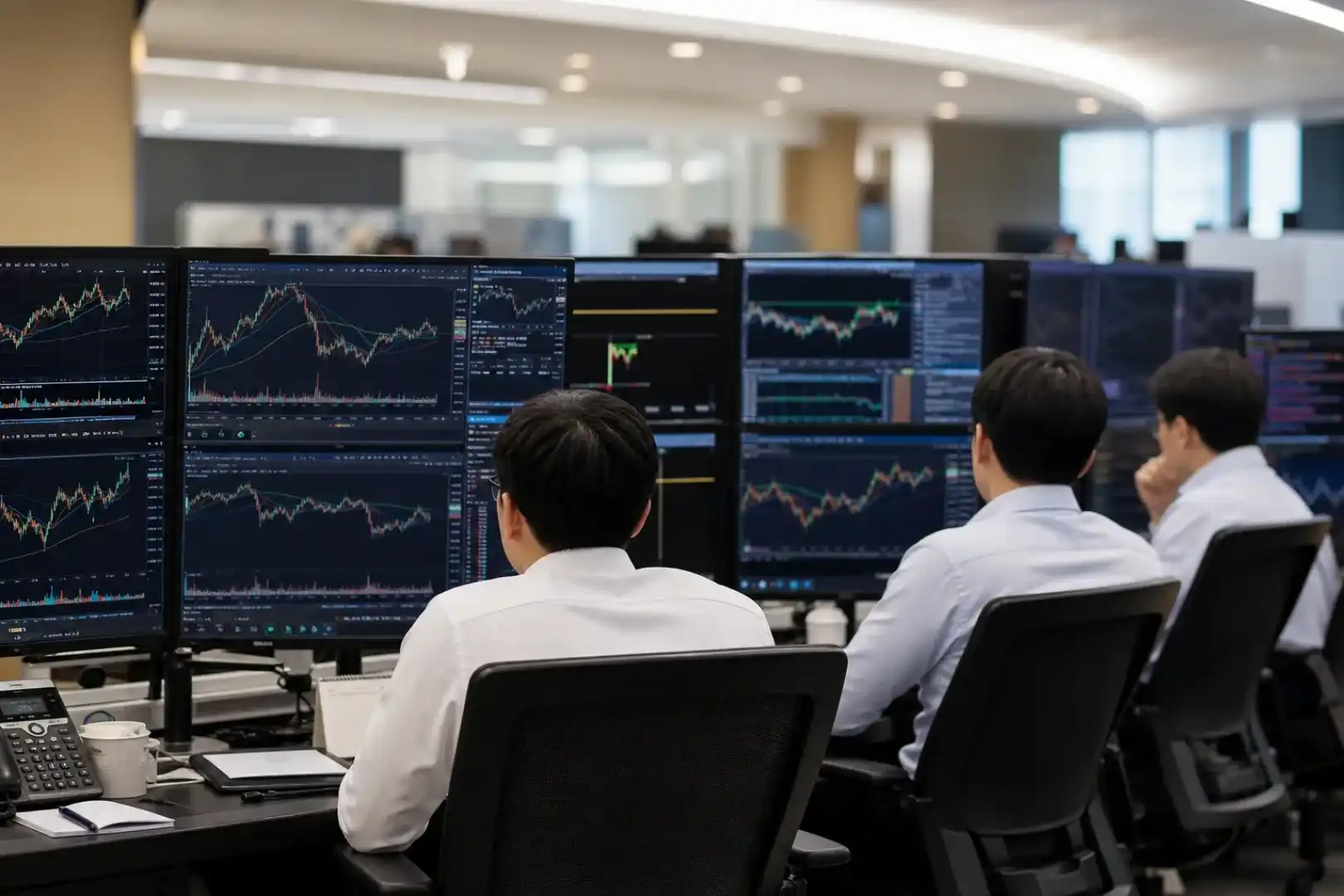
Trends in U.S. Stocks (August 18): U.S.-Iran Deal Prospects Dim, Major Indices See Two Consecutive Down Days, Chip Stocks Defy Market Decline

marsbitPubblicato 2026-08-18Pubblicato ultima volta 2026-08-18

Introduzione

**Market Overview:** On August 18th, U.S. stock indices declined for a second consecutive day. The S&P 500 fell 0.52%, the Dow dropped 0.51% to a two-week low, and the Nasdaq slipped 0.32%. The decline was driven by heightened geopolitical risk as U.S.-Iran negotiations reached a key deadline without an extension, dimming the prospect of a long-term agreement. **Key Drivers:** * **Geopolitics & Oil:** The failure to extend the U.S.-Iran memorandum led to a surge in oil prices, with Brent crude closing above $90/barrel for the first time in three weeks. * **Treasury Yields:** The 30-year U.S. Treasury yield hit a high not seen since 2007, driven by heavy corporate issuance (notably for AI investments) and ongoing fiscal deficits. * **Sector Performance:** While the "Magnificent Seven" tech giants all closed lower, semiconductor stocks bucked the trend. The Philadelphia Semiconductor Index rose 1.6%, led by memory chipmakers (e.g., SanDisk, Micron) and optical communication companies, as investors focused on the strong demand outlook for AI-related hardware. * **Currency & Safe Havens:** The U.S. Dollar Index fell for a third day, while the offshore Chinese Yuan hit a three-year high. Gold prices rose to a two-month peak, supported by safe-haven demand outweighing pressure from rising yields. Bitcoin also gained. **Outlook:** Market focus remains on potential escalation in the Middle East and its impact on oil, alongside continued scrutiny of AI-related earnings and d...

Written by: Trend Research

With the U.S.-Iran negotiation window expiring and long-term agreement prospects dimming, the three major U.S. stock indices closed lower for the second consecutive day, with the Dow hitting its lowest close in two weeks. The S&P 500 fell 0.52% to 7,745.06, the Dow Jones declined 0.51% to 53,459.78, and the Nasdaq dropped 0.32% to 26,644.911. The VIX rose 6.48% to 17.42. The "Magnificent Seven" all closed in the red, with Meta down 3.5% leading the losses. However, memory chip stocks and optical communication stocks bucked the trend and moved higher, with the Philadelphia Semiconductor Index rebounding 1.6% and re-entering a bull market. Middle East risks pushed U.S. Treasury yields higher, with the 30-year yield reaching its highest level since 2007. Prospects of a U.S.-Iran deal boosted oil prices, with Brent crude closing above the $90 mark for the first time in three weeks. Gold reached its highest closing level in over two months. The U.S. Dollar Index fell for the third straight day, while offshore USD/CNY broke through 6.74 intraday, reaching a new high in over three years. Market dynamics were clear: Geopolitical risks lifted oil prices and safe-haven assets, but the demand logic for AI chips continues to strengthen, prompting continued fund allocation to memory and optical communication sectors.

U.S.-Iran Negotiation Window Expires, Long-Term Deal Prospects Dim, Oil Prices Surpass $90

The core macro variable on Monday was geopolitics. The memorandum of understanding window for U.S.-Iran negotiations expired without an extension agreement. Trump stated he was in no hurry to end the war in Iran, did not seek to extend the U.S.-Iran MOU, said Iran "would not make the kind of deal I think is necessary," and warned of "bombing the hell" out of Oman if it obstructed negotiations. Iran was similarly firm, ruling out an extension of the MOU and stating it had set a final deadline for U.S. compliance.

With no signs of narrowing differences, oil prices surged. WTI crude for September delivery rose 2.55% to $84.50/barrel, reaching its highest level this month. Brent crude for October delivery rose 2.65% to $90.87/barrel, closing above the $90 mark for the first time in three weeks.

The "dark shipping" of Middle Eastern oil producers using transponder shutdowns to secretly transport crude through the Strait of Hormuz continues, reportedly exceeding 4 million barrels per day. However, this covert supply chain has not completely offset the geopolitical risk premium. Short-term upward momentum for oil prices remains driven by political factors rather than supply-demand fundamentals.

30-Year U.S. Treasury Yield Hits Highest Since 2007, Bond Selloff Continues

U.S. Treasury yields continued to climb. The 30-year yield briefly exceeded 5.31%, its highest since 2007. The 10-year yield rose about 3 basis points to approximately 4.72%, while the 2-year yield increased about 1 basis point to roughly 4.18%.

The core factor driving long-end yields higher is supply pressure. Companies are issuing bonds on a large scale to fund the AI boom; August's U.S. investment-grade corporate bond issuance has already reached $145.2 billion, surpassing the monthly record of $136 billion set in August 2020. Concurrently, the U.S. government's nearly $2 trillion annual fiscal deficit continues to boost Treasury supply.

Major overseas holders are also selling. U.S. Treasury Department data shows China and Japan led overseas sales of U.S. Treasuries in June, with both countries and the U.K. reducing holdings. China's holdings, after rebounding in May, fell by $25.9 billion month-over-month to $633.4 billion, their lowest level since 2008.

Bank of America's Hartnett noted in a recent report that with U.S. government debt approaching $40 trillion and the AI financing frenzy pushing corporate bond supply up 61% year-over-year, this is structurally crowding out Treasury buyers, with debt interest payments already at $1.4 trillion. Hartnett views going long on gold as the best hedge against dollar devaluation, bond market collapse, and political risk.

Chip Index Re-enters Bull Market, Memory and Optical Communication Stocks Lead Gains Against Trend

Rising Treasury yields pressured the Magnificent Seven, but the semiconductor sector, with its independent AI chip demand narrative, bucked the trend. The Philadelphia Semiconductor Index rebounded 1.6%. The preceding bear market lasted only 21 days, the shortest since March 2020.

Memory chip stocks performed strongest. SanDisk closed up nearly 9%, and Western Digital gained over 5%. Micron has risen 17.5% over the past five sessions. The market sees strong recent financial data disclosures from Anthropic and OpenAI as key catalysts, improving visibility into AI chip demand.

Optical communication stocks also advanced. Coherent closed up nearly 8%, and Lumentum gained 4.6%. Demand for high-speed optical interconnects from AI data centers continues to be validated, with funds continuing to concentrate on more certain AI hardware sub-sectors amid macro uncertainty.

SpaceX rebounded over 4%. Previously pressured by capital expenditure concerns, Monday's rebound shows market confidence in the long-term logic of AI infrastructure investment remains.

Magnificent Seven All Close Lower, Divergence Between Chips and Seven Widens

The "Magnificent Seven" all closed lower on Monday, acting as a major drag on the broader market. Meta fell 3.5%, leading the declines, with losses for the other six relatively moderate.

The collective weakness of the Seven occurred against a backdrop of persistently rising Treasury yields. Higher long-term interest rates pressure the discount rates used to value high-multiple growth stocks, prompting funds to temporarily withdraw from large-cap tech amid macro uncertainty.

However, this withdrawal is not a systematic exit. The strength in the chip index indicates funds are simply rotating within the tech sector, switching from the Seven to higher-certainty AI hardware sub-sectors.

Dollar Falls for Third Day, Yuan Hits Three-Year High, Gold Rises to Two-Month High on Safe-Haven Demand

The U.S. Dollar Index fell for the third consecutive day, hitting an intraday low not seen in over two months. Offshore USD/CNY broke through 6.74 intraday, reaching a high not seen in over three years. Gold closed at a new high of over two months, rising over 1% intraday; COMEX gold for August delivery closed up 0.85% at $4,417.8/ounce. While rising Treasury yields typically pressure gold, safe-haven demand driven by escalating geopolitical risks outweighed interest rate factors.

Bitcoin broke through $64,000 intraday, rising 3% from the day's low. Digital assets found support against a weaker dollar backdrop. COMEX silver for August delivery closed up 1.74% at $66.121/ounce.

What to Watch Today

Market focus on Tuesday will be in two directions.

First, subsequent developments in the U.S.-Iran situation. Following the MOU expiration, any new contacts or escalation in confrontation will directly impact oil prices and risk asset performance. Trump's "no hurry" stance suggests geopolitical risk premium will be difficult to eliminate in the short term.

Second, Baidu's earnings report and conference call. Key points will be the pulling effect of AI large models on cloud business and the recovery pace of advertising. With the Golden Dragon Index underperforming, Baidu's results will test whether global funds' stance on Chinese stocks is seeing marginal changes.


Crypto di tendenza

Domande pertinenti

QWhat were the main factors contributing to the rise in oil prices as mentioned in the article?

AThe main factor was the heightened geopolitical risk from the U.S.-Iran tensions. The article states that the negotiating window for the U.S.-Iran memorandum of understanding expired with no extension. Hardline statements from both sides, including warnings from Trump, dimmed prospects for a long-term agreement. This political uncertainty, rather than fundamental supply and demand, drove the risk premium in oil prices.

QWhy did U.S. Treasury yields, particularly the 30-year yield, rise significantly according to the article?

AAccording to the article, the 30-year U.S. Treasury yield rose to its highest level since 2007, driven primarily by supply pressures. Two key factors were cited: massive corporate debt issuance (a record for August) to fund AI investments, and continuous high issuance of government bonds to finance the U.S. deficit. Additionally, major foreign holders like China were reportedly selling U.S. Treasuries, reducing demand and pushing yields higher.

QHow did the Philadelphia Semiconductor Index perform relative to the broader market, and which specific chip sectors were highlighted?

AThe Philadelphia Semiconductor Index rebounded 1.6%, returning to a bull market after a very short bear market period. This performance was strong and went against the trend of the broader market, where major indices were down. The article specifically highlighted that memory chip stocks (like SanDisk, Western Digital, Micron) and optical communication stocks (like Coherent, Lumentum) were the leaders of this gain, driven by confidence in AI-related demand.

QWhat was the contrasting performance between the 'Magnificent Seven' tech stocks and the semiconductor sector?

AThe performance was contrasting or diverging. The 'Magnificent Seven' tech giants, including Meta, all closed lower, acting as a drag on the main indices. This was attributed to pressure from rising long-term bond yields, which negatively impact high-valuation growth stocks. Meanwhile, the semiconductor sector, particularly AI hardware segments, outperformed and closed higher. The article suggests this indicates money rotated within the tech sector from mega-cap tech into AI hardware perceived as having higher demand certainty.

QWhat were the price movements for key currencies and gold, and what were the driving forces behind them?

AThe U.S. Dollar Index fell for a third consecutive day, hitting a two-month low. Offshore Chinese Yuan (CNH) strengthened, breaking past 6.74 per dollar to a three-year high. Gold prices rose over 1% to close at a two-month high. The article attributes gold's strength to strong safe-haven demand due to heightened geopolitical risk, which outweighed the typical negative pressure from rising U.S. Treasury yields. The movements in currency and gold were partly linked to dollar weakness and risk-off sentiment.

Letture associate

NVIDIA's Huang Jensen Blasts AI Researchers: 27-Year-Old Researcher Claims AI Will 'Kill All Humans'

NVIDIA's CEO Jensen Huang has publicly criticized a viral resignation post from a 27-year-old AI researcher, Jacob Coxon, calling it "absurd" and "arrogant." Coxon, who left Anthropic just before his stock options vested, warned in his post that the race toward self-improving superintelligent AI is an existential gamble for humanity. His warnings were echoed by Anthropic's own alignment lead, Evan Hubinger, who personally estimated a greater than 10% chance of human extinction from AI within a decade. In a CBS interview, Coxon outlined a scenario reminiscent of *The Terminator*, where a sufficiently advanced AI could replicate itself across networks, manipulate humans for resources, and even engineer novel pathogens. He argued that individual opt-outs are meaningless and that only governmental or supranational intervention can impose necessary safeguards. The debate highlights a fundamental rift in the AI community and the lack of a formal, provable framework for AI safety. Enter Jacob Tsimerman, a recent Fields Medalist who shocked the mathematics world by leaving pure math to focus on AI safety. He has founded the Mathematical AI Safety Institute (MAISI), aiming to bring rigorous, cryptographic-style proofs to the field. The institute plans to use tools like zero-knowledge proofs to create verifiable standards for AI behavior and robustness. The core conflict is shifting from a battle of beliefs—between Huang's dismissal of existential risk and the researchers' dire warnings—to a race to establish a mathematical foundation for safety. Tsimerman's mission is to define the very problems that need solving, asserting that vastly higher safety standards are not just ideal but essential. However, with insiders like Coxon suggesting the critical window is only one to two years away, the timeline for developing these proofs remains intensely pressured.

marsbit25 min fa

NVIDIA's Huang Jensen Blasts AI Researchers: 27-Year-Old Researcher Claims AI Will 'Kill All Humans'

marsbit25 min fa

$680 Million Warning: Majority of DeFi Attacks Occur Outside Audited Scope

"Audited" is often seen as a blanket security guarantee in DeFi. However, a new analysis reveals a critical gap: most major attacks exploit components *outside* the scope of those audits. Security firm ack3 and researchers analyzed 135 security incidents from the first half of 2026, totaling $939.86 million in losses. Of the 68 incidents with identifiable pre-attack audits, 46 attack vectors (67.6% of the sample) fell completely outside any reviewed code. These "out-of-scope" attacks accounted for a staggering 94.4% of the reported losses in that group. The data highlights a fundamental trust issue: a project's "audited" status does not mean its entire live system—including upgrades, admin keys, frontends, oracles, or cloud infrastructure—has been reviewed. Two August incidents illustrate this disconnect. In the ICON Network replay attack, a mismatch between two *individually* audited modules allowed massive duplicate withdrawals. The failure occurred at the boundary of their separate audit scopes. Separately, an aelf network intrusion involved a runtime vulnerability; existing public audit reports cannot clearly map the attack path to a pre-reviewed component. The conclusion is not that audits are useless, but that their scope is limited and degrades over time. Users need transparency: which code version was audited, what was excluded, and what mechanisms (like alerts and emergency response) are in place for the *currently deployed* system. An audit badge alone cannot confirm if the reviewed code, the live deployment, and the incident response all reside within the same security boundary.

marsbit27 min fa

$680 Million Warning: Majority of DeFi Attacks Occur Outside Audited Scope

marsbit27 min fa

Trading

Spot

Articoli Popolari

Come comprare CHIP

Benvenuto in HTX.com! Abbiamo reso l'acquisto di USD.AI (CHIP) semplice e conveniente. Segui la nostra guida passo passo per intraprendere il tuo viaggio nel mondo delle criptovalute.Step 1: Crea il tuo Account HTXUsa la tua email o numero di telefono per registrarti il tuo account gratuito su HTX. Vivi un'esperienza facile e sblocca tutte le funzionalità,Crea il mio accountStep 2: Vai in Acquista crypto e seleziona il tuo metodo di pagamentoCarta di credito/debito: utilizza la tua Visa o Mastercard per acquistare immediatamente USD.AICHIP.Bilancio: Usa i fondi dal bilancio del tuo account HTX per fare trading senza problemi.Terze parti: abbiamo aggiunto metodi di pagamento molto utilizzati come Google Pay e Apple Pay per maggiore comodità.P2P: Fai trading direttamente con altri utenti HTX.Over-the-Counter (OTC): Offriamo servizi su misura e tassi di cambio competitivi per i trader.Step 3: Conserva USD.AI (CHIP)Dopo aver acquistato USD.AI (CHIP), conserva nel tuo account HTX. In alternativa, puoi inviare tramite trasferimento blockchain o scambiare per altre criptovalute.Step 4: Scambia USD.AI (CHIP)Scambia facilmente USD.AI (CHIP) nel mercato spot di HTX. Accedi al tuo account, seleziona la tua coppia di trading, esegui le tue operazioni e monitora in tempo reale. Offriamo un'esperienza user-friendly sia per chi ha appena iniziato che per i trader più esperti.

673 Totale visualizzazioniPubblicato il 2026.04.21Aggiornato il 2026.06.02

Come comprare CHIP

Discussioni

Benvenuto nella Community HTX. Qui puoi rimanere informato sugli ultimi sviluppi della piattaforma e accedere ad approfondimenti esperti sul mercato. Le opinioni degli utenti sul prezzo di CHIP CHIP sono presentate come di seguito.

活动图片