Original author: Ma He, Foresight News
On August 31, UNI briefly broke through $5.4, reaching its highest price since January 2026. After dropping to $2.31 in June this year, UNI's price has been rebounding, with a current three-month increase of over 100%. During the 2020-2021 DeFi boom, Uniswap was the top-tier star DEX protocol. However, in the current cycle, it has fallen from grace, receiving little discussion, and its price has long been in a state of volatile decline.
What exactly is driving renewed market enthusiasm for UNI?
Fee Revenue of $4.29 Million in Past 24 Hours, Stock Token Daily Trading Volume Up 10x in a Month
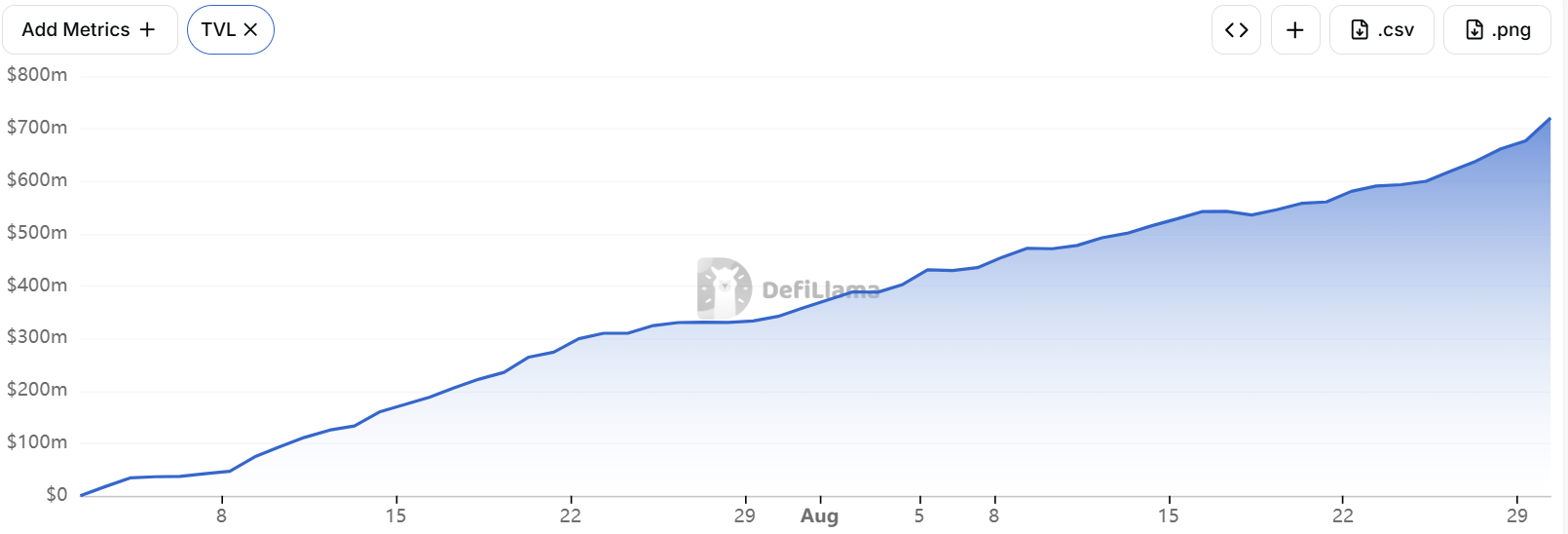
In July this year, the Robinhood Chain mainnet launched. As of August 31, data from DefiLlama shows its total TVL has surged past $700 million.
Uniswap officially announced that its v2, v3, v4, and UniswapX are the primary public AMMs on Robinhood Chain from day one of the chain, accessible via web interface, wallets, and API.
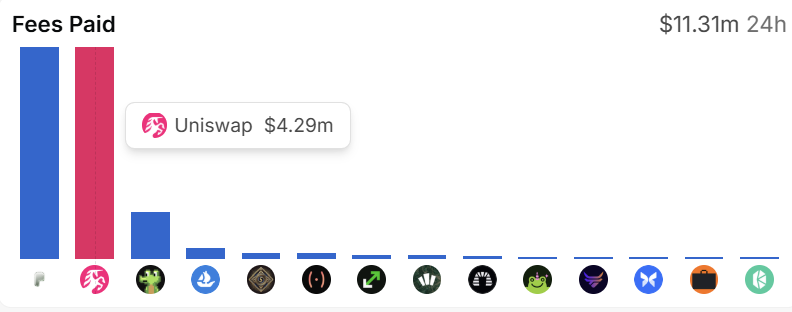
Latest data shows its revenue over the past 24 hours was $4.29 million, accounting for nearly half of Robinhood Chain's fee revenue in the past 24 hours, second only to the token issuance platform Pons and significantly ahead of other competitors.
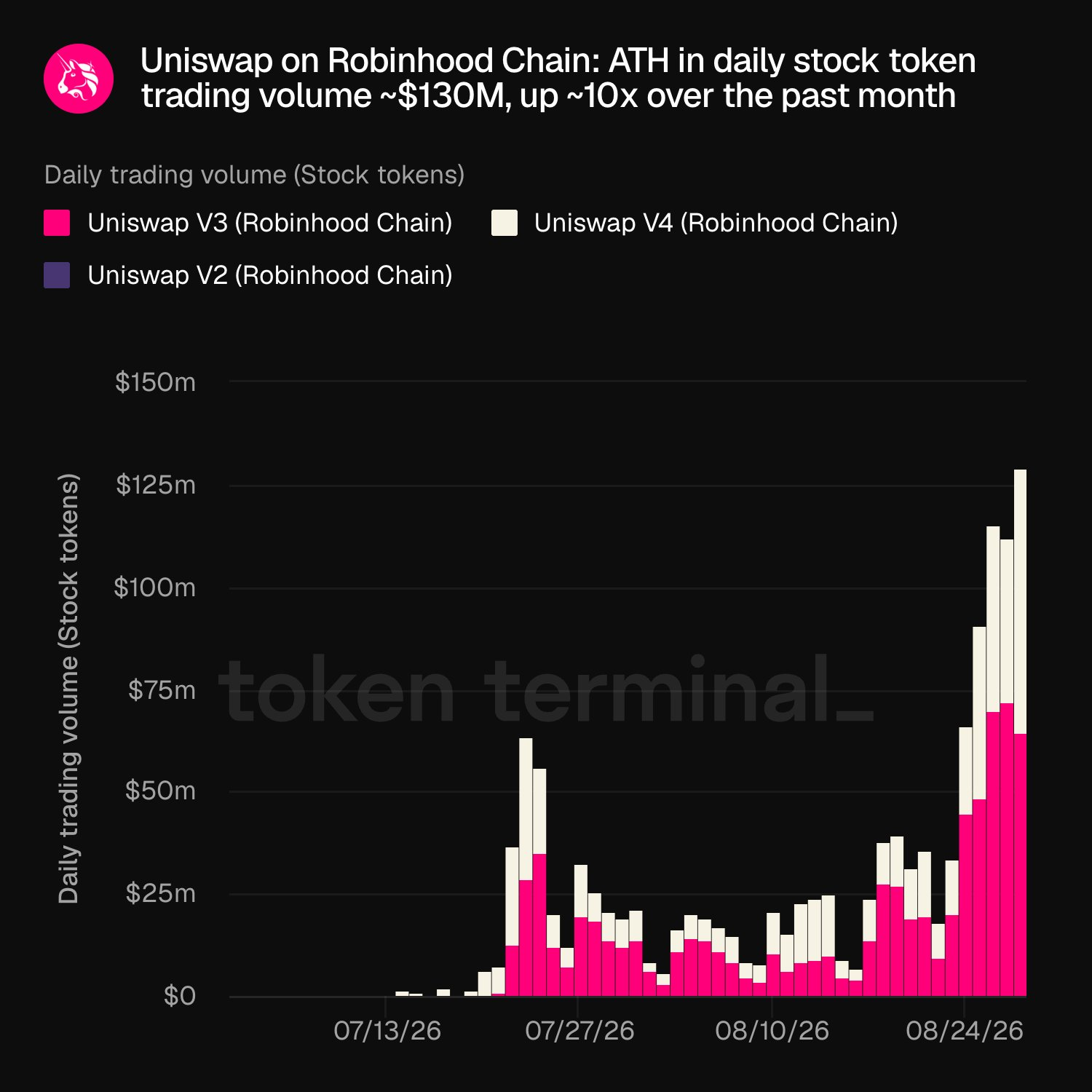
Token Terminal provides even more striking data: Uniswap's daily trading volume for stock tokens on Robinhood Chain hit a new high of approximately $130 million, a roughly 10x increase over the past month, with v3 and v4 volumes nearly equal.
Daily UNI Burn Exceeds $400,000
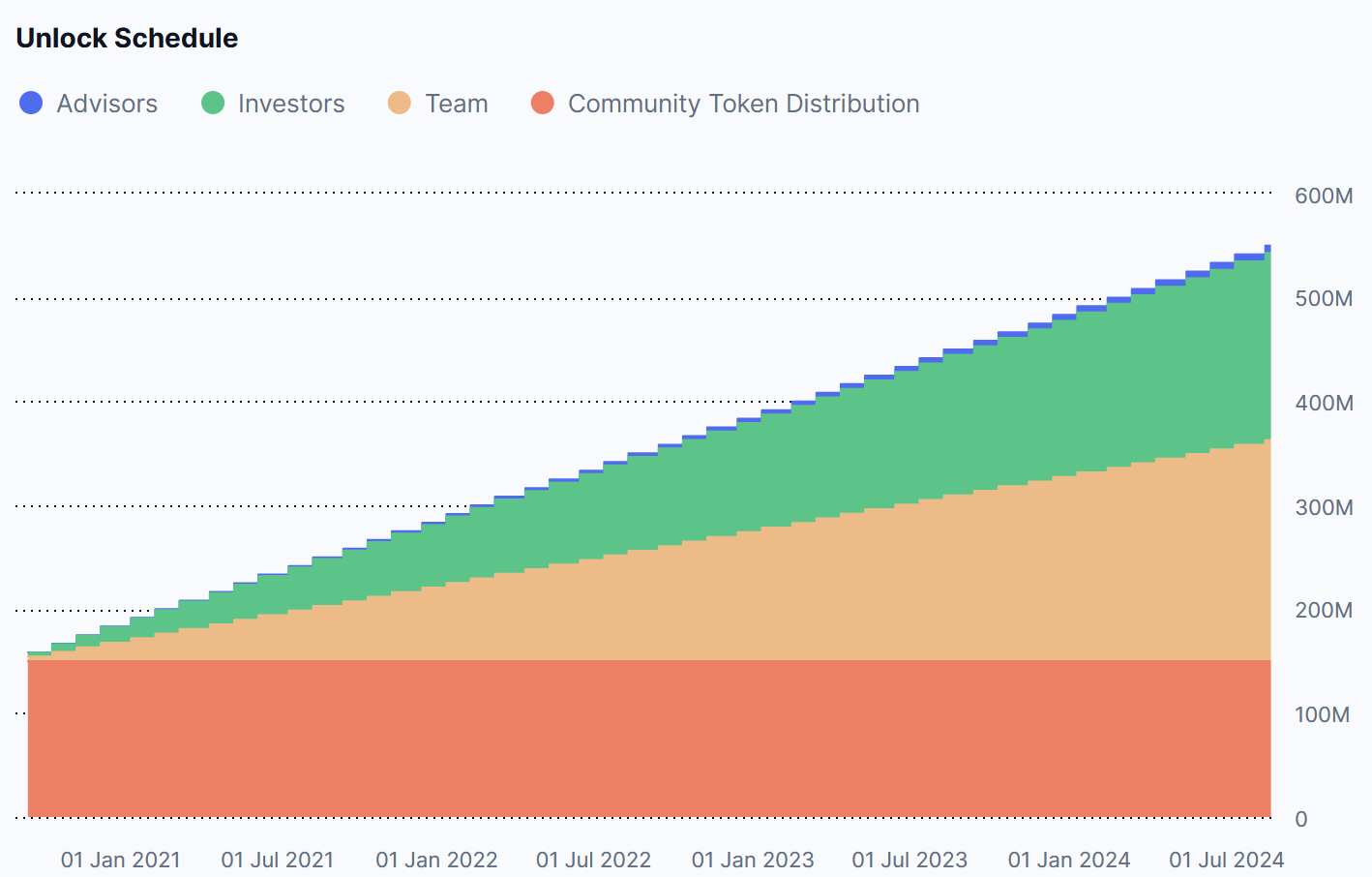
The UNI token was fully unlocked back in 2024, yet its price performance remained lackluster.
Uniswap pools have always generated fees. From 2020 to the end of 2025, this revenue almost entirely went to liquidity providers (LPs). UNI was only used for voting. The protocol could generate hundreds of millions to over a billion dollars in fees annually, while the token itself had zero cash flow. This is the contentious 'fee switch' debated for five years.
In December 2025, UNI's long-criticized tokenomics underwent a final vote and was passed. The core changes included: burning 100 million UNI after a roughly two-day voting period and activating the protocol fee switch.
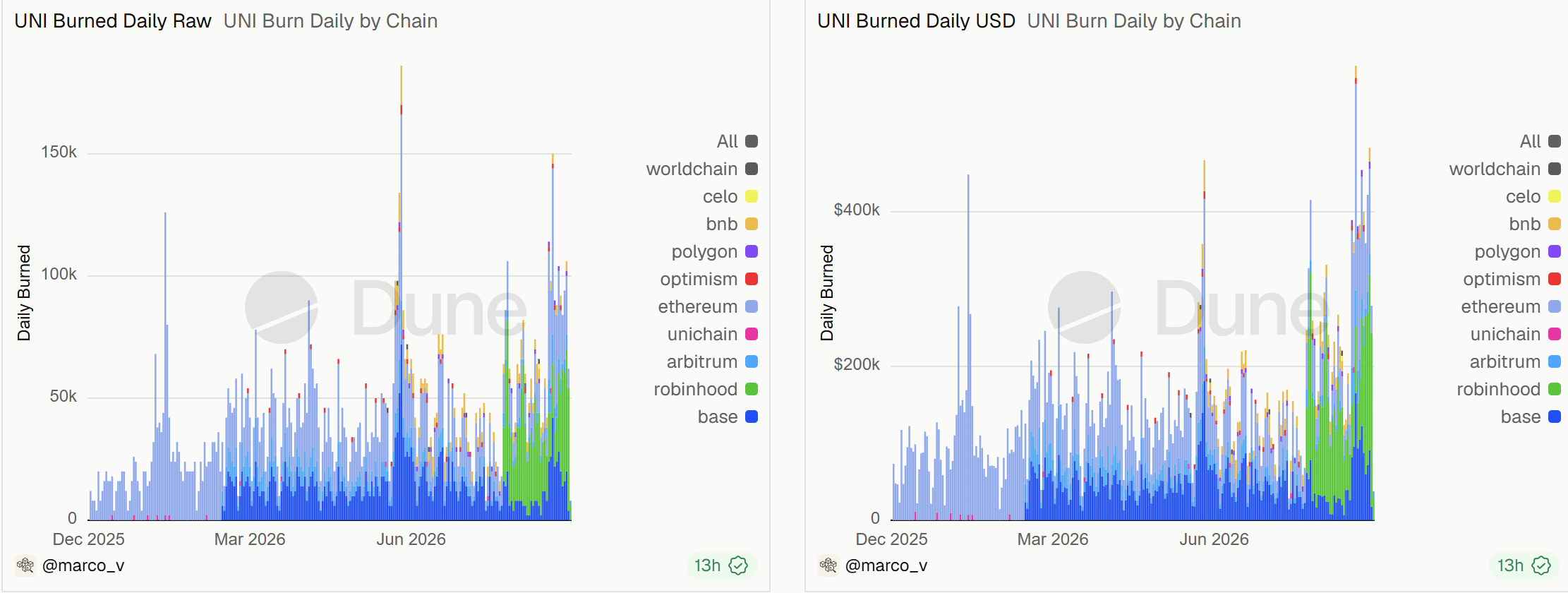
Latest Dune data shows that as of August 31, the cumulative burn amount is approximately 110 million UNI, with a total burn value of $630 million.
Since August this year, there have been multiple days where over 100,000 UNI were burned daily, with an average daily burn value exceeding $400,000. Nearly half of this contribution comes from Robinhood Chain.
The burning of UNI is not a simple direct buyback using USDT/USDC or other stablecoins.
The majority of fees from Uniswap pools still go to LPs. Uniswap only takes a small cut. On Robinhood, it's roughly about 6%. This small cut does not go into Labs' bank account but into a contract jar called TokenJar. The jar contains ETH, stablecoins, altcoins, stock tokens—whatever assets are collected from the pools. Anyone who wants to withdraw assets from the jar must first burn an equivalent value of UNI.
This step is called Firepit.
Arbitrage bots monitor the net asset value within the TokenJar contract in real-time, burn equivalent-value UNI to extract fee assets, and sell them on the secondary market to complete risk-free arbitrage.
On-chain trading activity is positively correlated with the value captured by the protocol, which in turn encourages more arbitrageurs to extract profits by burning UNI, creating a deflationary flywheel for the UNI token.
In other words, the official team turned 'company buybacks' into an 'on-chain auction of protocol revenue'.
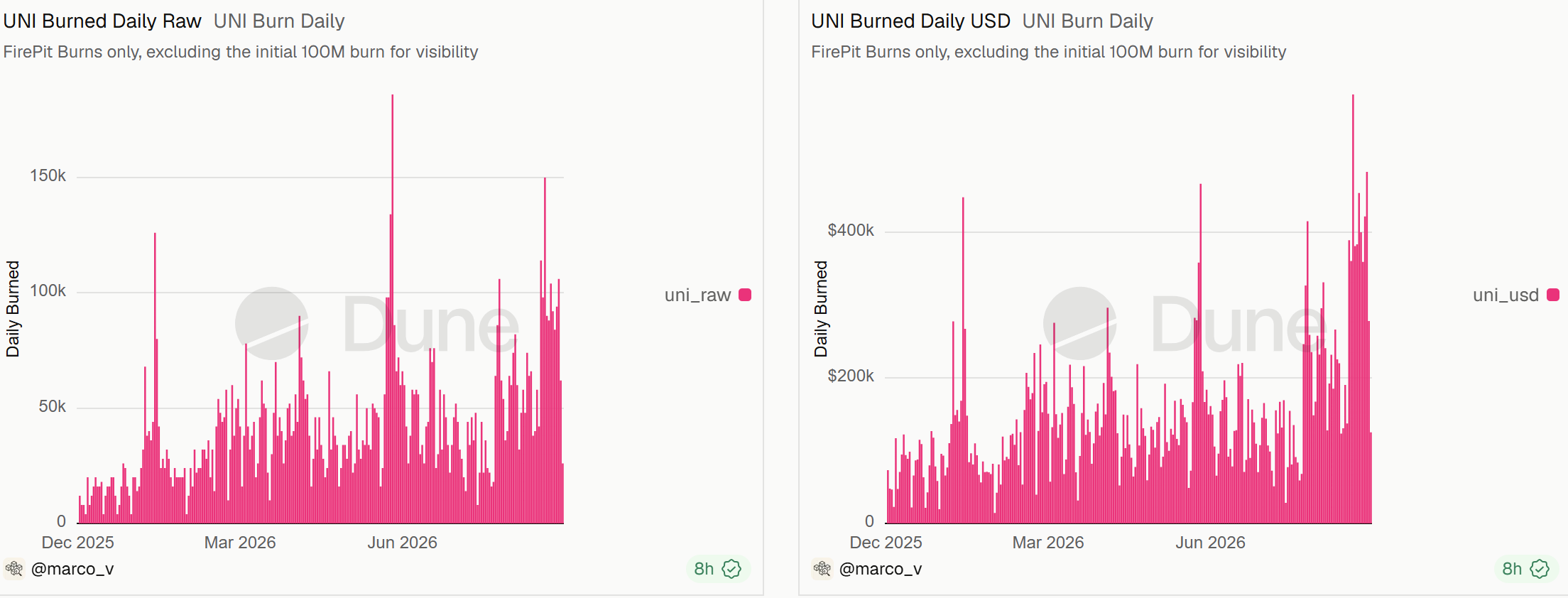
Dune data shows its burn metrics continue to grow steadily.
To save on its own market maker costs and, more importantly, to avoid the SEC's stringent regulations on traditional brokerages listing tokenized securities, Robinhood channeled non-US retail and stock token trades to a public AMM rather than confining them to its own RFQ system. Uniswap holds a significant position on Robinhood Chain. The stable trading volume on Robinhood Chain translates into a net reduction of UNI, thereby driving up its price.
Uniswap has long suffered from criticism that UNI has zero cash flow; it needed genuine external revenue to support its deflationary model. Robinhood, in turn, precisely needed a highly liquid and sufficiently decentralized settlement layer to handle its stock tokens.
TradeFi and DeFi are undergoing deep integration.