Crypto ATM operator CoinFlip has suffered another blow in Tennessee. In a recent statement, Tennessee Attorney General Jonathan Skrmetti confirmed that the ban on crypto ATMs will go into effect.
This move followed a failed attempt by CoinFlip and the broader crypto ATM sector to block the ban after a federal court sided with Tennessee. For AG Skrmetti, cryptocurrency ATMs are “tools for scammers” and “benefit fraudsters” more than citizens.
The General Assembly recognized that these machines benefit fraudsters at the expense of everyday citizens, and the Court recognized the strong public interest in allowing this law to take effect while the case proceeds.
Under Tennessee law, Public Chapter 766 classifies the operation of crypto kiosks or crypto ATMs knowingly as a Class A misdemeanor.
Will the crypto ATM crackdown affect adoption?
The state moved to ban crypto ATMs in April after $4 million in scam losses, mostly targeting elderly people. However, CoinFlip, one of the largest operators, moved to block the ban. However, the injunction motion was denied by the federal court, allowing the ban to go into effect.
Besides Tennessee, crypto ATMs have been banned in Indiana and Minnesota. Although Missouri has not formalized a state-wide ban, operators like CoinFlip have been accused of being ‘gateways for fraud.’
Other states, such as Delaware, New Jersey, and Michigan, are also exploring formal bans against crypto ATMs.
In fact, amid this crackdown, the number of uninstalled crypto ATMs has hit a record level in June 2026. Over 10K specialized crypto kiosks were uninstalled according to data aggregated by CoinATM Radar.
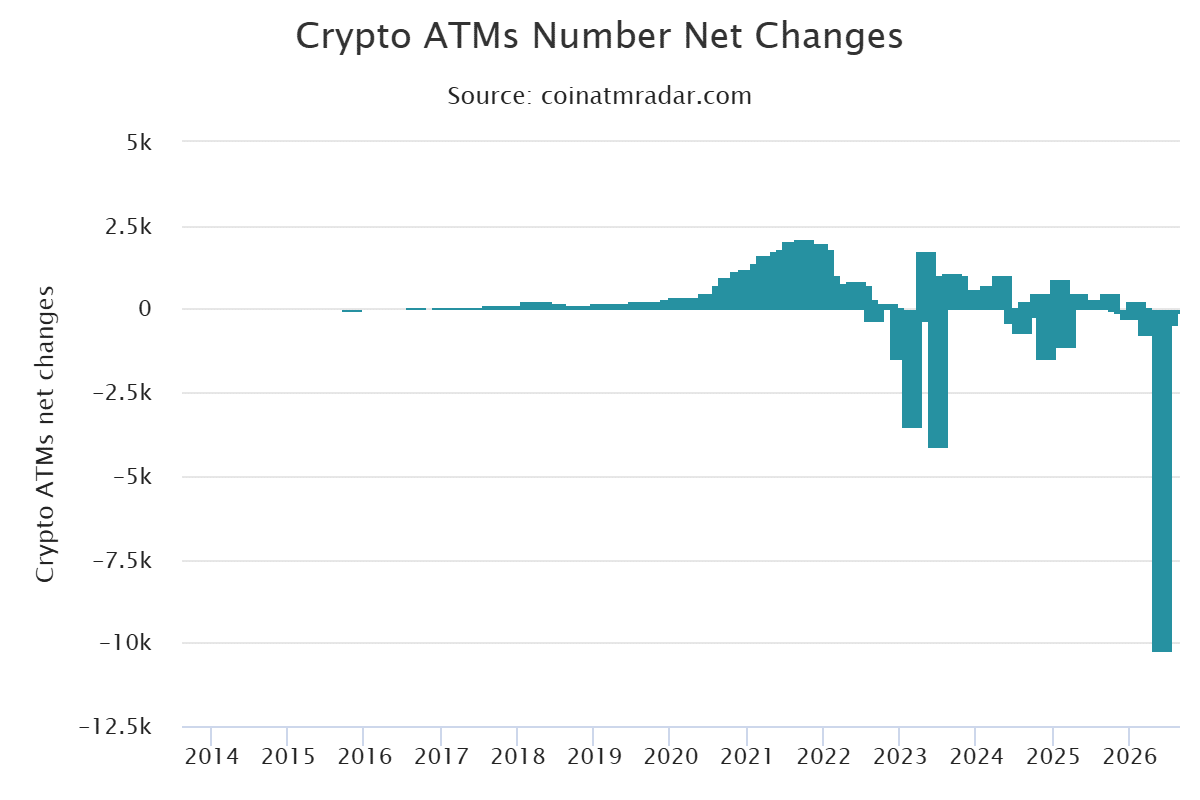
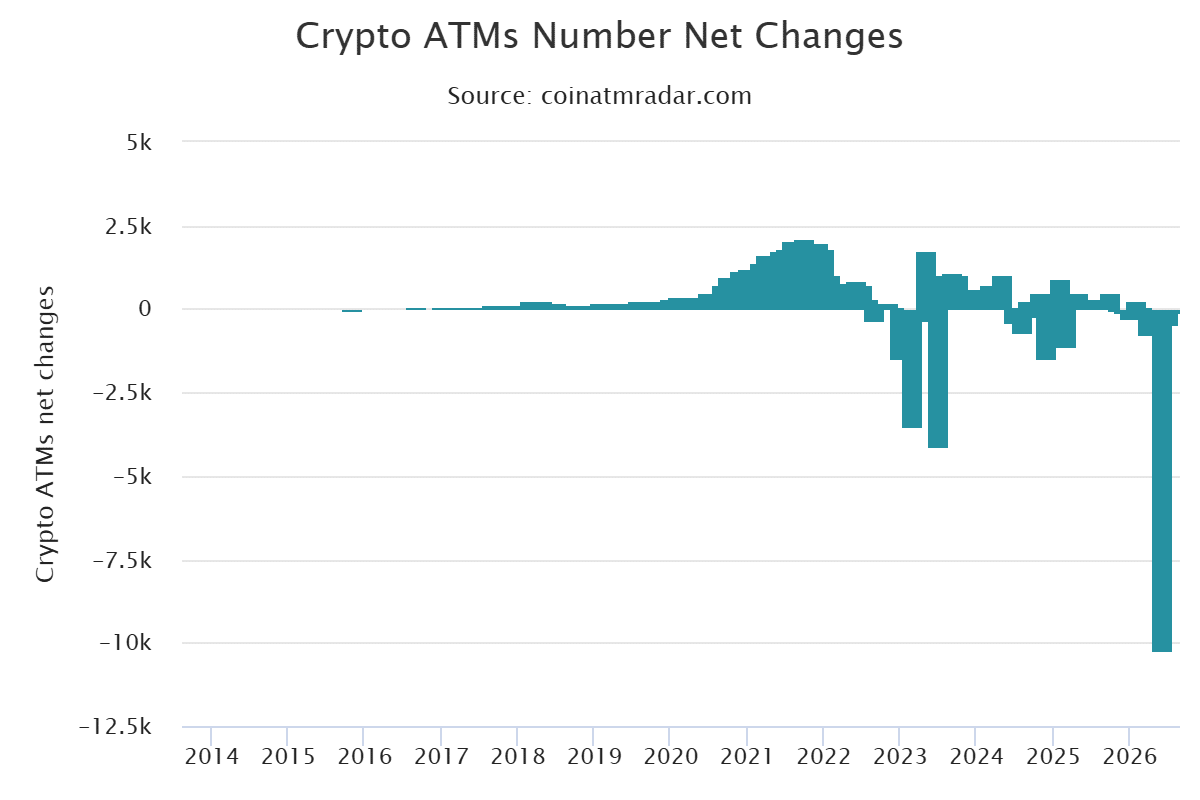
The U.S accounted for 9,798 out of the 10,230 uninstalled crypto ATMs globally, underscoring a close correlation with the ongoing state crackdown.
Will crypto cards replace crypto ATMs?
But this might not negatively affect broader adoption across the U.S as crypto cards are emerging as a safer alternative for crypto spending. For clarification, crypto kiosks or ATMs are purpose-built for crypto or BTC.
On the contrary, crypto cards issued by Mastercard, Visa, and other crypto-focused payment platforms allow users to spend their digital assets via the traditional ATM network.
In fact, crypto card volume increased 106% last year, rivaling P2P stablecoin payments, further underscoring their demand.


Overall, the ongoing crypto ATM crackdown amid growing scams may not affect crypto adoption. Instead, it could help users adopt relatively safer alternatives like crypto cards.
Final Summary
- Tennessee got the green light from the federal court to go ahead with the crypto ATM ban
- Crypto card usage has exploded as the crypto ATM crackdown drives record uninstallations across the U.S.