Zapper, a DeFi asset manager, has announced plans to shut down after nearly seven years of operation.
To quantify the scale of its operation, the asset manager had attracted over 2 million active monthly users while it processed over $13 billion at its peak in transaction volume.
Yet, the strong user adoption did not translate into a sustainable business model as revenue declined due to intensified competition. This competition narrowed the asset manager’s profit margin, crippling its operations.
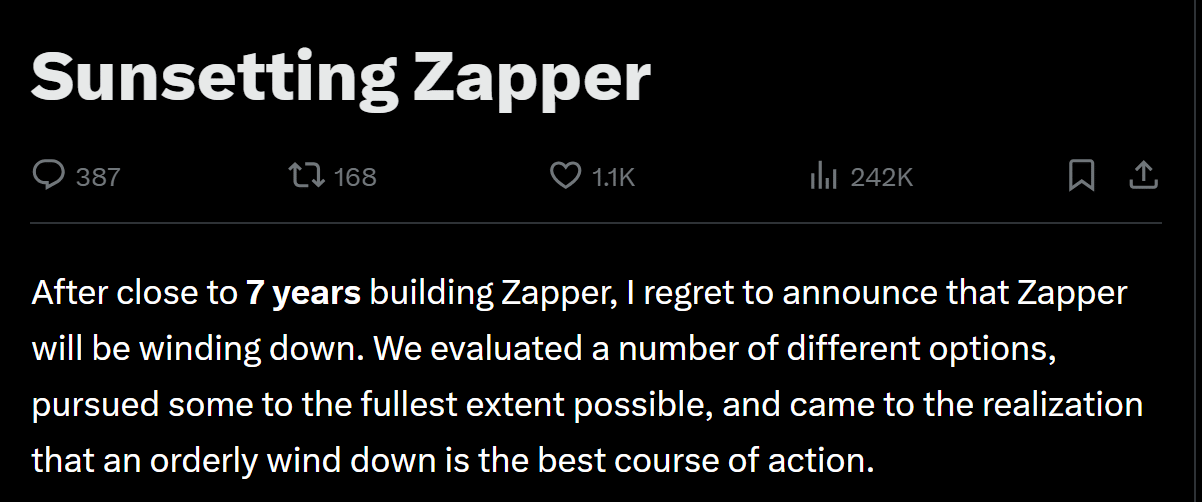
On the 3rd of August, the asset manager will shut down completely, bringing an end to its operations. The platform will assist its users in transitioning.
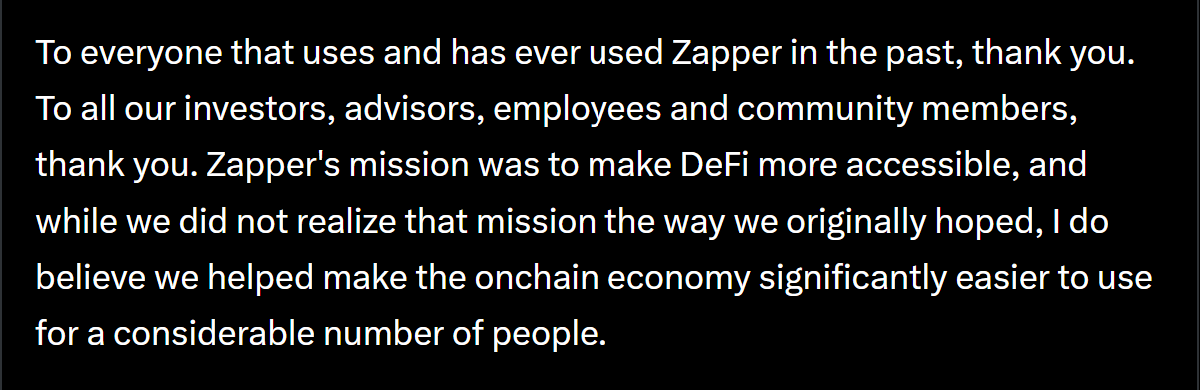
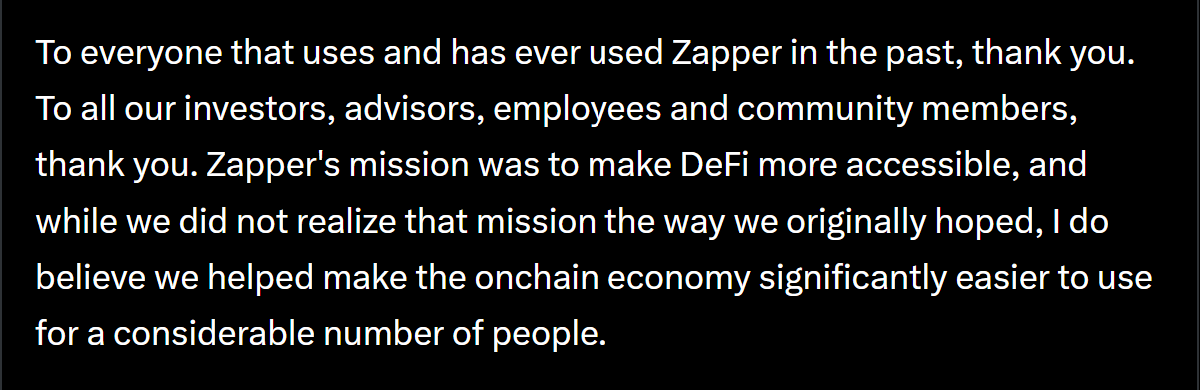
Seb Audet, Co-Founder and CEO of Zapper, acknowledged that Zapper fell short of its mission. On a post on X he stated,
Zapper’s mission was to make DeFi more accessible, and while we did not realize that mission the way we originally hoped...
That shift exposed the growing challenge of monetizing DeFi infrastructure beyond attracting traffic. Zapper’s closure suggests the sector is entering a more demanding phase, where long-term survival increasingly depends on sustainable revenue rather than user growth alone.
Growth outpaced sustainable economics
The Zapper shutdown demonstrates some other major limitations of VC funding to ensure the long-term sustainability of DeFi infrastructure.
In fact, Zapper had secured $15 million in funding from Framework Ventures, Coinbase Ventures, and ParaFi Capital. This was to allow it to continue to grow product offerings as well as increase the rate of adoption.


Despite the funding, Zapper was unable to counter the decline in profitability. Therefore, fee compression increased while the cost of supporting infrastructure increased, ultimately leading to an unsustainable business model for the company.
More importantly, rather than continuously receiving injections of capital to support their operations, investors expected the projects to be able to generate sustainable revenue.
This trend indicates a larger trend within DeFi where success depends on multiple factors beyond just growth.
All in all, successful infrastructure projects will require stronger monetization, disciplined spending, and clear competitive advantages in order to sustain themselves through future market cycles.
Final Summary
- Zapper’s shutdown shows that user growth alone cannot sustain DeFi infrastructure businesses.
- Zapper’s closure highlights the growing importance of sustainable revenue over venture funding.