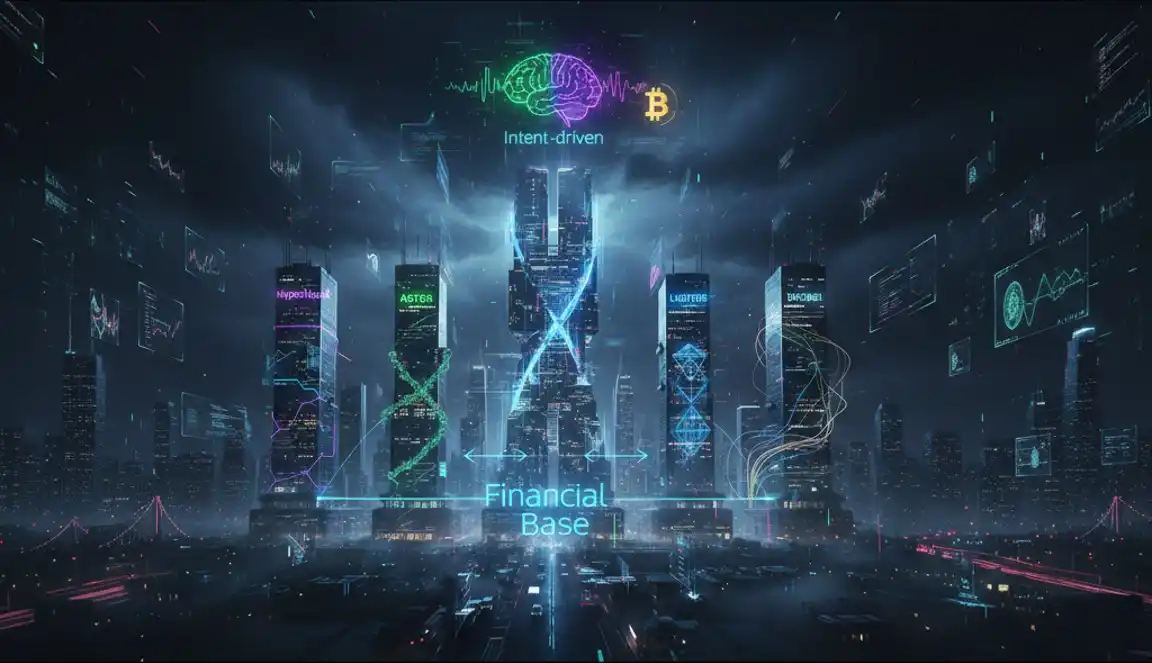
To All Crypto Holders Questioning Life: Navigating the Darkest Hour, Crypto Is Still at the Chaotic Beginning

marsbitPubblicato 2026-02-10Pubblicato ultima volta 2026-02-10

Introduzione

An 8-year crypto veteran reflects on the extreme optimism at the start of 2025 following Trump’s pro-crypto election win, which quickly soured after Trump family meme coin launches damaged credibility. Despite institutional adoption through Bitcoin ETFs and stablecoin integration by major firms, the market crash began with Trump's 100% China tariffs and an MSCI proposal to exclude crypto-heavy companies from indices. A massive Binance outage triggered historic liquidations, decoupling crypto from rising traditional markets. By 2026, crypto fell further as traditional markets sold off, demonstrating deep entanglement with Wall Street—a double-edged sword of institutional adoption. Critics declared crypto dead, but the author argues the market is still immature and intertwined with equities. Macro conditions like potential rate cuts and a weaker dollar could fuel a recovery. The larger narrative remains intact: stablecoins are modernizing finance, blockchain infrastructure is expanding, and regulatory clarity is advancing. The convergence with AI remains an unexplored frontier. Despite risks, the author believes we are still at the "chaotic beginning" of an internet-native financial system.

Author:Connor Dempsey

Compiled by: Deep Tide TechFlow

Deep Tide Introduction: This article reviews the extreme optimism following Trump's victory in early 2025, the subsequent epic crash triggered by the "First Family" issuing tokens, tariff policies, Binance's unexpected downtime, and the stock market stampede. From the perspective of an 8-year industry insider, the author provides a profound analysis of how the crypto market shifted from "independent trends" to a "double-edged sword" scenario deeply intertwined with Wall Street. Despite the current devastation, the author believes that, given the macroeconomic expectations of interest rate cuts and a weak dollar, along with the trend of financial infrastructure moving on-chain, we are still at the "chaotic beginning" of this internet financial revolution.

Full Text Below:

I've been navigating the crypto market for 8 years, and every so often, I encounter days that feel like these past few.

February 5th was one of those days. But this didn't happen overnight. Here's our journey.

Looking Back

Entering 2025, expectations for cryptocurrency were incredibly high. The moment Trump's victory was confirmed in late 2024, Bitcoin (BTC) began breaking new highs. We were transitioning from a Biden administration that actively tried to stifle the U.S. crypto industry to a Trump administration that vowed to make America the "crypto capital of the world." Clear regulations were imminent, Bitcoin had a new institutional narrative, and ETFs were ready, allowing big money easy access.

The Screeching Halt

The world's largest economy was finally embracing the technology we had all been building for 16 years. The vibes were sky-high. Then, the dumbest thing I've seen in my 8 years in crypto happened. The President of the United States—Donald J. Trump—launched his own shitcoin. Then, his wife launched one too.

Public opinion overnight shifted from "cryptocurrency will modernize financial markets" to "the President is running a pump and dump." A massive wave of retail investors rushed into $TRUMP. Most got rekt. Just like that, those who had always hated the industry had another reason to call the whole thing a scam.
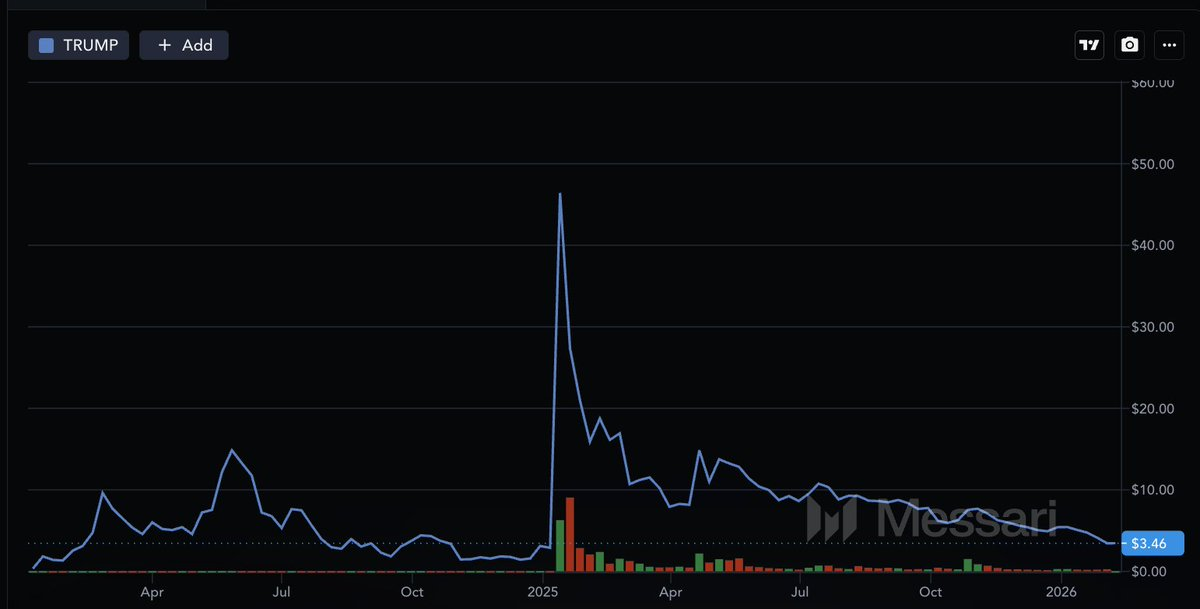
Source:@messaricrypto

Staying Positive

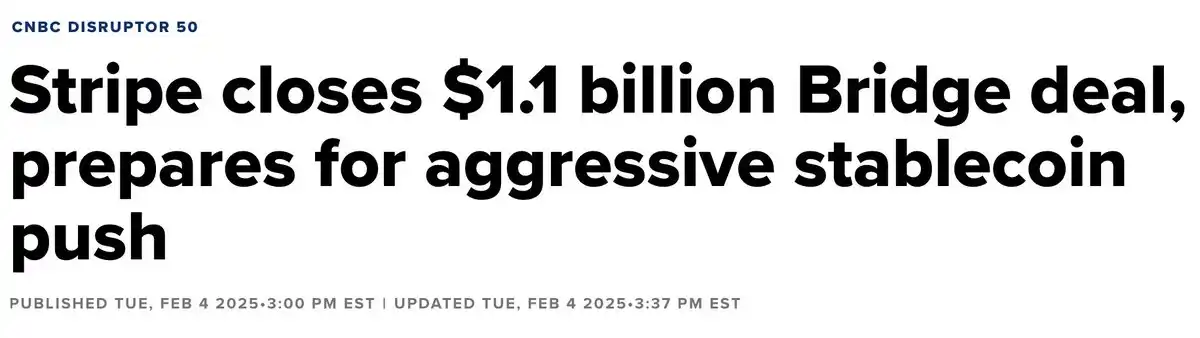
Crypto had shaken off awkward situations before, and there was still plenty to be optimistic about. Billions were flowing into Blackrock's Bitcoin ETF. Stripe, Visa, even century-old companies like MoneyGram were going all-in on stablecoins. The Trump administration enacted federal stablecoin regulations, with a market structure bill (Clarity) aimed at providing clear rules for the entire industry close behind. The game was still on.
October 10th (10/10)

Most market participants (including myself) expected the year to end at all-time highs (ATHs). The Fed was cutting rates, Bitcoin was rechallenging its $125k ATH, experts predicted Bitcoin would hit $250k, Ethereum (ETH) would hit $12k, while stocks and gold would also hit new highs.

Then on October 10th, Trump announced 100% tariffs on China, and MSCI proposed excluding companies with high crypto exposure from indices tracked by pension funds and ETFs. The latter threatened to cut off one of Bitcoin's biggest sources of demand.

The market started selling off, and then the real crypto carnage began. Crypto investors were over-leveraged (as always), and then the world's largest exchange—Binance—experienced a technical glitch, triggering the single largest liquidation event in crypto history. $30-40 billion in forced selling occurred, some altcoins dropped 70% in a day.

The consensus was that this event broke the crypto market, at least temporarily, and we've been decoupled from the rallying stock and commodity markets ever since.
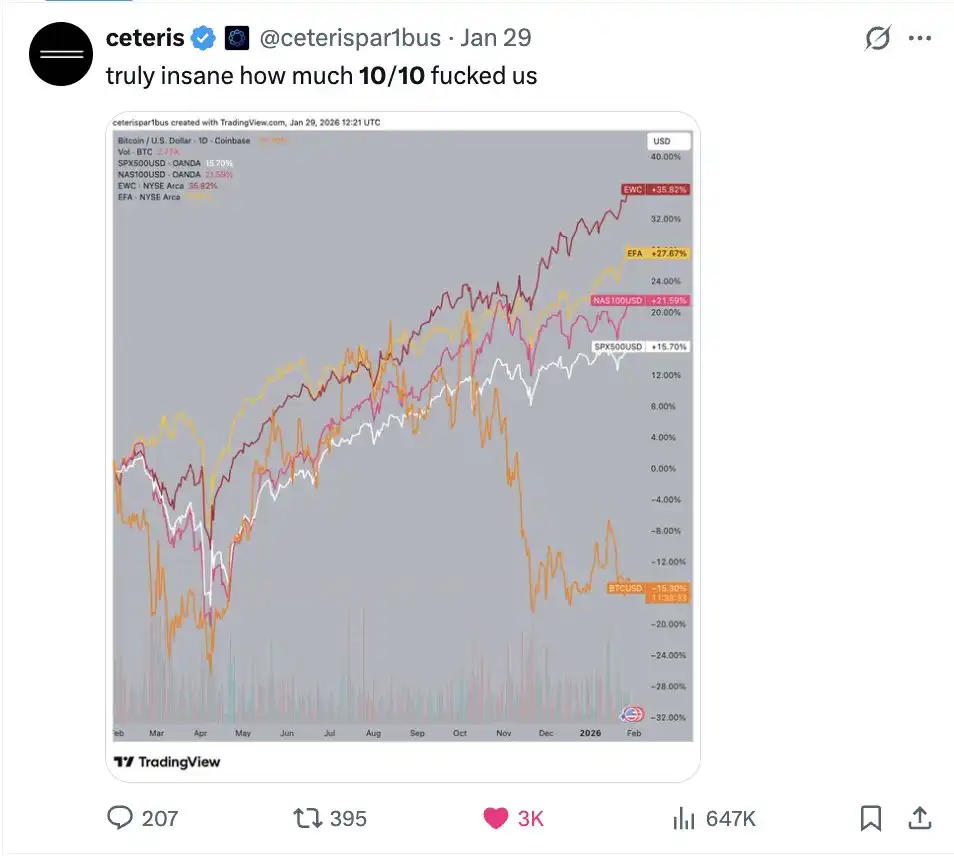
Caption: Thanks to @ceterispar1bus for the great chart

The Grind Lower

Then came the real pain. While other assets were ripping, crypto was grinding lower. The ATH setup predicted by Fundstrat to take us to "Valhalla" was all there: rate cuts, a weak dollar, global risk-on. The S&P 500 closed the year at new all-time highs. Gold and silver embarked on an epic run. Peter Schiff was dancing on our graves. And crypto just sat there bleeding out.

Re-Coupling

By 2026, the rest of the market started selling off too, and crypto went with it. The S&P began giving back trillions in gains, gold and silver experienced their worst selloff in 40+ years. On February 4th, hedge funds got crushed. Many blamed it on a tech selloff due to fears AI would make software companies obsolete. Regardless, risk managers had to step in and cut positions, including the ones they now held heavily in Bitcoin via ETFs, options, etc. The selling pushed Bitcoin lower, which triggered more mechanical selling, which then spread to crypto-native funds. Trend Research reportedly got liquidated on a $2B Ethereum position on Aave, adding fuel to the fire.

Trad-fi selling triggered crypto selling. Not the other way around. The institutional adoption everyone fought for ultimately became a double-edged sword. Which brings us to now.
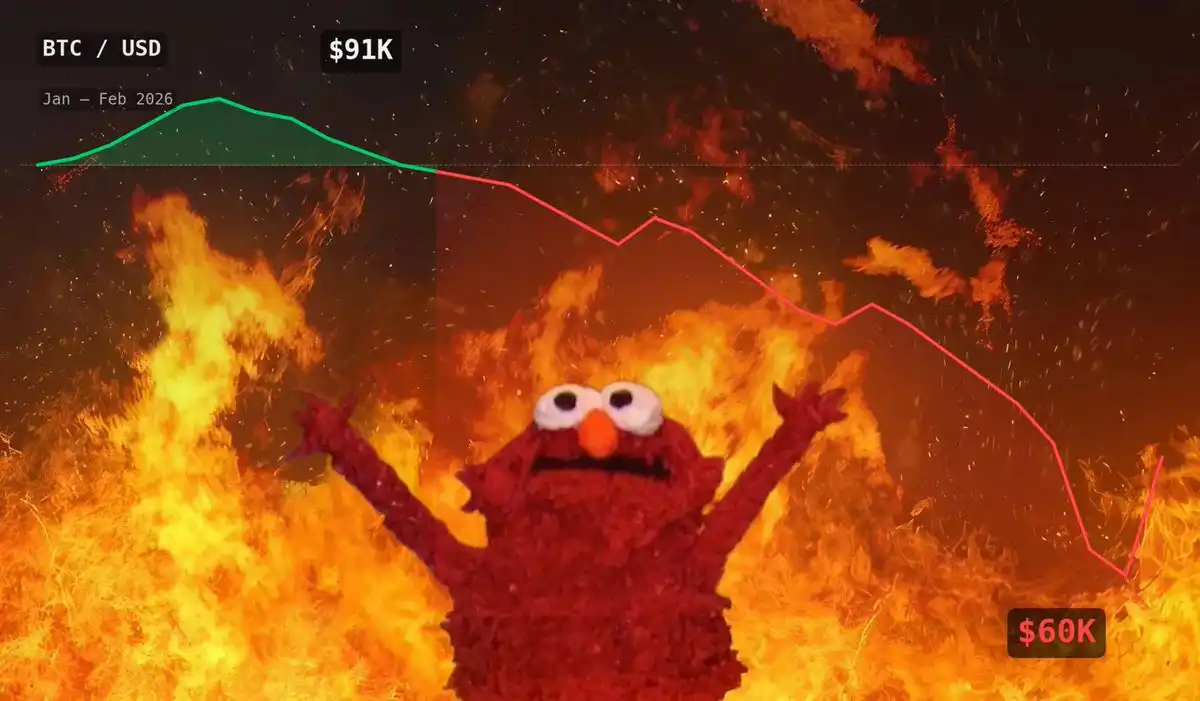
Crypto Is Dead

As expected. Those who have been wrong about crypto for over a decade are crawling out of their holes again, dancing on our graves.
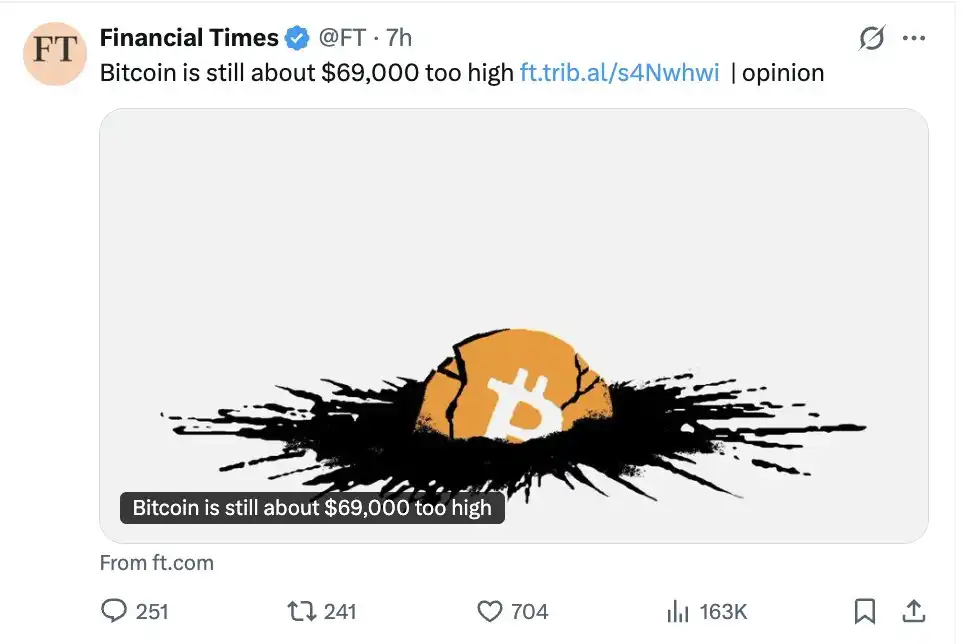
"The digital gold thesis is broken. Crypto is not a hedge against currency debasement. Worse, a miner death spiral is coming and it's going to zero. It was a scam all along." Elizabeth Warren's tweet about how Bitcoin causes cancer is probably coming any day now.

Long Live Crypto

The critics are right, Bitcoin and the rest of the market were a disappointment in 2025. The reality is this is still an immature market, just 17 years old. It largely still trades like a tech stock, and last week showed it's more intertwined with Wall Street than ever. The bright side? The same Wall Street that dragged crypto down last week can ultimately pull it back up.

And the setup is there. The Trump administration and incoming Fed Chair have signaled they plan to run the economy hot with low rates and a weak dollar to address the debt crisis. That's the macro cocktail for pushing risk assets higher, crypto included.

Furthermore, don't forget the bigger narrative. Even our longest critics no longer deny what we've built is real. Stablecoins are upgrading how global money moves. The market structure bill will pass, paving the way for all financial business to be blockchain-backed. The entire financial system is being upgraded, we're just working out the details right now.

Are we out of the woods forever? No. Macro risks could still drag us down. Quantum computing is a real threat to Bitcoin. Trump's antics give Democrats a reason to crack down on the industry again if they regain power.

But a hundred years from now, this will all be noise, and an internet-based financial system will look inevitable. This period will be seen as the chaotic beginning. And there's a real wildcard: the merging of crypto and AI is inevitable. We just don't know what it looks like yet. In short, we are still actually early.

AI-slop free guarantee This article is guaranteed to be free of AI-slop. That is to say, every word was typed by a human. That said, I did use Claude Opus 4.6 as an editing and research partner, which was fed content written by people much smarter than me.


Domande pertinenti

QWhat were the main factors that led to the crypto market crash described in the article?

AThe main factors included the launch of Trump's and his family's meme coins, which damaged credibility; Trump's announcement of 100% tariffs on China; MSCI's proposal to exclude crypto-heavy companies from indices; a major technical failure at Binance causing massive liquidations; and the subsequent decoupling from rising traditional markets followed by a re-coupling during a broader market sell-off.

QHow did institutional adoption become a 'double-edged sword' for the crypto market according to the author?

AInstitutional adoption became a double-edged sword because while it brought massive capital and legitimacy, it also deeply intertwined crypto with traditional finance (TradFi). This meant that when Wall Street faced a sell-off (e.g., in tech stocks), risk managers liquidated positions across assets, including crypto ETFs and derivatives, triggering a cascading sell-off in the crypto market itself.

QWhat macroeconomic conditions does the author believe could help crypto recover?

AThe author points to expected low interest rates and a weak dollar under the Trump administration and the incoming Fed chair, which are seen as a recipe for overheating the economy and boosting risk assets, including cryptocurrencies.

QWhat long-term trend does the author identify that supports the future of crypto, despite short-term volatility?

AThe author identifies the broader narrative of financial infrastructure moving on-chain. This includes the adoption of stablecoins for global money movement, the eventual passing of market structure legislation, and the inevitable upgrade of the entire financial system to be blockchain-based.

QWhat external threat does the author mention that could pose a risk to Bitcoin in the future?

AThe author mentions quantum computing as a realistic future threat to Bitcoin's security.

Letture associate

The Foundation of SpaceX's Trillion-Dollar Valuation: Who is Dividing Up Musk's Annual Tens of Billions in Capital Expenditure?

SpaceX's trillion-dollar valuation is built on its three core businesses: Starlink (profitable, 60% of revenue), rockets (driving down launch costs), and AI (a major investment area). This creates a financial cycle: Starlink funds rocket development, which enables low-cost launches for AI hardware, generating future revenue. This cycle fuels annual capital expenditures of tens of billions, flowing to a vast supply chain. Suppliers are categorized by their replaceability. The first group includes irreplaceable players like NVIDIA (GPU/CUDA ecosystem), Eutelsat (critical radio spectrum), Filtronic (specialized amplifiers), Materion (strategic beryllium), and STMicroelectronics (antenna chips). The second group consists of hard-to-replace suppliers due to high switching costs, such as Honeywell (flight control), Carpenter Technology (specialty alloys), Hexcel (carbon fiber), Broadcom (data exchange), and Linde (industrial gases). The third group comprises high-volume, cost-critical suppliers for mass-produced items like Starlink terminals. Key names include Wistron NeWeb (primary manufacturer) and several A-share companies like Shenzhen Sunway (connectors), Pies New Materials (forgings), Western Superconducting (alloys), and Yingliu (castings). Other niche players include Trimble (timing), Astronics (power distribution), and CTS (thermal management). The article argues that investing in these suppliers, rather than SpaceX stock directly, offers an alternative opportunity. The rationale is threefold: procurement is just beginning to scale, SpaceX's IPO brings new transparency to its supply chain, and the situation mirrors early stages of past "super terminal" ecosystems like Apple or Tesla. While risks exist (commodity cycles, geopolitical factors, technology shifts), the core thesis is that SpaceX's massive, ongoing procurement will translate into reliable revenue for its key suppliers, regardless of its own stock price volatility.

marsbit45 min fa

The Foundation of SpaceX's Trillion-Dollar Valuation: Who is Dividing Up Musk's Annual Tens of Billions in Capital Expenditure?

marsbit45 min fa

SpaceX's Trillion-Dollar Valuation Base: Who's Sharing in Musk's Annual Tens of Billions in Capital Expenditure?

**Title: The Foundation of SpaceX's Trillion-Dollar Valuation: Who Benefits from Musk's Annual $100 Billion Capital Expenditure?** This article argues that investors seeking to benefit from SpaceX's growth might find greater opportunities in its supply chain rather than directly investing in the company itself, drawing parallels to historical successes with Apple, Tesla, and NVIDIA suppliers. **SpaceX's Business Model & Cash Flow:** SpaceX generates revenue from three main areas: 1. **Starlink:** Its profitable core, earning $11.3B in 2023 (60% of revenue), funding other ventures. 2. **Rockets (Falcon/Starship):** Requires $3B+ in annual R&D but achieves the world's lowest launch costs. 3. **AI:** Currently unprofitable (-$6B+ in 2023), investing heavily in ground-based supercomputers (220,000 GPUs) and future orbital data centers. The cycle is: Starlink profits → fund cheaper rockets → low-cost launches deploy AI hardware → AI compute rentals generate future revenue. This cycle drives annual procurement spending of tens of billions of dollars. **The Supply Chain Beneficiaries:** Suppliers are categorized by their replaceability: **1. Nearly Irreplaceable (High Barriers to Entry):** * **NVIDIA:** Powers the Colossus supercomputer; its CUDA ecosystem creates immense switching costs. * **Eutelsat (SATS):** Controls critical radio spectrum for satellite communications; holds a ~3% stake in SpaceX. * **Filtronic (FTC):** Supplies millimeter-wave signal amplifiers for Starlink satellites; SpaceX constitutes 83% of its revenue. * **Materion (MTRN):** Global leader in beryllium production, a strategic material used in Starship structures. * **STMicroelectronics (STM):** Supplies phased-array antenna chips for Starlink satellites. **2. Replaceable, but Switching Cost is Prohibitively High:** * **Honeywell (HON):** Provides flight control and inertial navigation systems with decades of certification. * **Carpenter Technology (CRS):** Manufactures ultra-pure specialty steel alloys for Raptor engines. * **Hexcel (HXL):** Supplies custom carbon fiber composites developed over a decade with SpaceX. * **Broadcom (AVGO):** Manages high-speed data switching. * **Linde Group:** Supplies industrial gases (liquid oxygen/nitrogen) from facilities built near SpaceX launch sites. **3. High-Volume, Cost-Critical Manufacturing:** Focuses on mass-producing components like Starlink user terminals (target: 30 million units). * **Key Players:** Wistron NeWeb (6285, primary terminal manufacturer), several Chinese A-share companies (e.g., Sunway Communication, PAX New Materials, Western Metal Materials, Yingliu Co.), and smaller US firms like Trimble (TRMB, timing systems). **Why Now?** Three factors make the supply chain opportunity timely: 1. **Volume Ramp-Up:** SpaceX plans 100 launches in 2026, aims for 30 million Starlink terminals, and will deploy AI data centers, meaning procurement will accelerate. 2. **Increased Transparency:** The IPO provides public financial data, allowing investors to track supplier order growth. 3. **Historical Precedent:** The current phase is likened to Tesla's early mass-production stage (circa 2018), suggesting a long growth runway for suppliers. **Conclusion:** The article posits that while investing in SpaceX stock is betting on Elon Musk's ambitious vision at a high valuation, investing in its established suppliers is a bet on the tangible, recurring revenue from its massive procurement budget, which is largely decoupled from day-to-day stock price volatility.

链捕手49 min fa

SpaceX's Trillion-Dollar Valuation Base: Who's Sharing in Musk's Annual Tens of Billions in Capital Expenditure?

链捕手49 min fa

The U.S. Government Blocked the Anthropic Model. It Wasn't About 'Jailbreaking' at All.

Last Friday, the U.S. Commerce Department issued an enforcement letter that forced Anthropic to take its two most advanced AI models, Fable 5 and Mythos 5, offline. The stated reason was unspecified national security concerns, initially linked to potential "jailbreaks" of the models' safeguards. However, new details suggest the action stemmed more from a deteriorating relationship between the Trump administration and Anthropic, rather than a genuine technical threat. According to reports, the government cited a little-known export control regulation, compelling Anthropic to block access for all non-U.S. persons, including its own international employees. The company complied, shutting down the models without a court order or specific technical details from the government. Cybersecurity expert Katie Moussouris revealed she was privately shown a research paper detailing a potential safeguard bypass in Fable 5. She argued the described method was minor and did not warrant an export ban, stating that attempts to "fix" it would only weaken the model's defensive capabilities. Moussouris and other experts have since called for the order to be revoked, warning it dangerously removes advanced cybersecurity tools from U.S. defenders. Analysts like Justin Hendrix suggest the move appears retaliatory and sets a dangerous precedent, signaling that the U.S. government can unilaterally shut down a tech company's products. The incident has raised concerns about the reliability of American AI and the potential for political interference in the tech industry, serving as a warning to the broader sector.

marsbit52 min fa

The U.S. Government Blocked the Anthropic Model. It Wasn't About 'Jailbreaking' at All.

marsbit52 min fa

Ray Dalio: AI Bull Market Continues to Soar, Should Investors Go All In or Cash Out and Leave the Field?

In his latest notes, Ray Dalio addresses a critical question for investors amid the AI-driven stock market surge: how should one allocate assets during a transformative technological revolution? Dalio emphasizes that technological advancement does not automatically make related stocks attractive. Historical tech cycles—marked by excitement, crowding, volatility, and eventual shakeouts—show that even long-term winners like Microsoft and Apple experienced severe drawdowns. Today's AI sector faces similar uncertainties: overinvestment, intensifying competition, geopolitical tensions (e.g., Taiwan's chip supply), tax policy shifts, anti-AI sentiment, and potential disruption from future technologies like quantum computing. Dalio's core argument focuses on the highly concentrated market structure, where a few tech giants dominate major indices. He warns investors against unknowingly holding concentrated, correlated exposures. Instead of chasing a handful of AI leaders, he advocates for a robust, diversified portfolio of 15 or more high-quality, uncorrelated investments, risk-balanced to match an investor's volatility tolerance. Mathematically, such diversification significantly improves the risk-return ratio—for example, holding 15 uncorrelated assets can boost the ratio by over four times compared to a single concentrated bet. Dalio cautions that future equity returns appear low, with his bubble indicator suggesting real returns could be negative over the next 5-10 years. He stresses that knowing what you don't know is as important as knowing what you do. In an environment of high uncertainty and concentration, avoiding large, concentrated bets on AI stocks is prudent. The optimal strategy is disciplined diversification—the "holy grail" of investing—to navigate this technologically driven cycle with lower risk and comparable or better returns.

marsbit56 min fa

Ray Dalio: AI Bull Market Continues to Soar, Should Investors Go All In or Cash Out and Leave the Field?

marsbit56 min fa

Trading

Spot
Futures

Articoli Popolari

Come comprare T

Benvenuto in HTX.com! Abbiamo reso l'acquisto di Threshold Network Token (T) semplice e conveniente. Segui la nostra guida passo passo per intraprendere il tuo viaggio nel mondo delle criptovalute.Step 1: Crea il tuo Account HTXUsa la tua email o numero di telefono per registrarti il tuo account gratuito su HTX. Vivi un'esperienza facile e sblocca tutte le funzionalità,Crea il mio accountStep 2: Vai in Acquista crypto e seleziona il tuo metodo di pagamentoCarta di credito/debito: utilizza la tua Visa o Mastercard per acquistare immediatamente Threshold Network TokenT.Bilancio: Usa i fondi dal bilancio del tuo account HTX per fare trading senza problemi.Terze parti: abbiamo aggiunto metodi di pagamento molto utilizzati come Google Pay e Apple Pay per maggiore comodità.P2P: Fai trading direttamente con altri utenti HTX.Over-the-Counter (OTC): Offriamo servizi su misura e tassi di cambio competitivi per i trader.Step 3: Conserva Threshold Network Token (T)Dopo aver acquistato Threshold Network Token (T), conserva nel tuo account HTX. In alternativa, puoi inviare tramite trasferimento blockchain o scambiare per altre criptovalute.Step 4: Scambia Threshold Network Token (T)Scambia facilmente Threshold Network Token (T) nel mercato spot di HTX. Accedi al tuo account, seleziona la tua coppia di trading, esegui le tue operazioni e monitora in tempo reale. Offriamo un'esperienza user-friendly sia per chi ha appena iniziato che per i trader più esperti.

414 Totale visualizzazioniPubblicato il 2024.12.10Aggiornato il 2026.06.02

Come comprare T

Discussioni

Benvenuto nella Community HTX. Qui puoi rimanere informato sugli ultimi sviluppi della piattaforma e accedere ad approfondimenti esperti sul mercato. Le opinioni degli utenti sul prezzo di T T sono presentate come di seguito.

活动图片