The Year Token Economics Were Debunked

marsbitPubblicato 2026-01-21Pubblicato ultima volta 2026-01-21

Introduzione

The year 2025 is portrayed as a turning point where the fundamental economic model of crypto tokens was invalidated. The passage of regulatory frameworks like the CLARITY Act in the US forced projects to choose between being classified as a security (under the SEC) or a commodity (under the CFTC), with most falling into the former category. This led to a crisis of "coin rights" (币权). A key trend emerged: traditional financial institutions began acquiring crypto companies, but only for their technology and talent, explicitly excluding the associated tokens from deals. Examples include Circle's acquisition of Interop Labs (without the AXL token) and similar moves by Kraken and Coinbase. This shattered the investor narrative that buying a project's token was equivalent to owning equity, as tokens held no legal claim to a company's assets or profits. Simultaneously, major DeFi protocols like Aave and Uniswap faced internal conflicts. Aave's developers were accused of diverting front-end fees from the community treasury, while Uniswap had to implement complex legal structures to distribute fees to token holders without attracting SEC scrutiny. This highlighted a core dilemma: providing token dividends risked being classified as a security, while avoiding regulation meant tokens remained valueless. The article concludes that the crypto industry is being assimilated into traditional finance, but this "fusion" means value is flowing toward legally recognized entities—companies, eq...

When the Bitcoin ETF was approved in early 2024, many cryptocurrency practitioners jokingly referred to each other as "distinguished U.S. stock traders." But when the New York Stock Exchange planned to develop on-chain stocks and 24/7 trading, making token integration part of the traditional finance agenda, the crypto community belatedly realized that the crypto industry had not conquered Wall Street.

On the contrary, Wall Street had been betting on integration from the beginning and has now gradually transitioned into an era of two-way acquisitions: crypto companies buying traditional finance licenses, clients, and compliance capabilities; traditional finance buying crypto technology, pipelines, and innovation capabilities. The two sides are mutually infiltrating, and the boundaries are gradually disappearing. In three to five years, there may no longer be a distinction between crypto companies and traditional financial companies—only financial companies.

This co-option and integration is taking place under the legal framework of the Clarity for Digital Assets Act (hereinafter referred to as the CLARITY Act), which is reshaping the wildly growing crypto sphere into a form familiar to Wall Street at the institutional level. The first to be reformed is the concept of "token rights," a purely crypto notion that is not as popular as stablecoins.

The Era of Binary Choices

For a long time, practitioners and investors in the crypto space have been living in an anxiety of illegitimacy, often subjected to enforcement-style regulation by government departments. This tug-of-war not only stifles innovation but also places investors holding tokens in an awkward position, as they hold tokens but possess only token rights. Unlike investors in traditional financial markets, token holders have neither legally protected rights to information nor recourse against insider trading by project teams.

Therefore, when the CLARITY Act was passed with overwhelming support in the U.S. House of Representatives last July, the entire industry placed high hopes on it. The core demand of the market was clear: to define whether tokens are digital commodities or securities, and to end the years-long jurisdictional dispute between the U.S. Securities and Exchange Commission (SEC) and the Commodity Futures Trading Commission (CFTC).

The Act stipulates that only assets that are fully decentralized and have no actual controlling party can be recognized as digital commodities, falling under the jurisdiction of the CFTC, just like gold or soybeans. Any asset with traces of centralized control or used for fundraising by promising returns is classified as a restricted digital asset or security, falling under the iron-fisted jurisdiction of the SEC.

For networks like Bitcoin and Ethereum, which long ago lost any actual controlling party, this is good news. But for the vast majority of DeFi projects and DAOs, it is almost a death knell.

The Act requires any intermediary involved in digital asset transactions to register and implement strict anti-money laundering (AML) and know-your-customer (KYC) procedures. For DeFi protocols running on smart contracts, this is an impossible task.

The Act's summary document explicitly mentions that certain decentralized financial activities related to the operation and maintenance of blockchain networks will be exempted, but it retains enforcement powers against fraud and manipulation. This is a typical regulatory compromise, allowing activities like writing code and developing front-end interfaces to exist, but once they involve transaction matching, profit distribution, and intermediary services, they must fall under a heavier regulatory framework.

Precisely because of this compromise, the CLARITY Act did not truly reassure the industry after the summer of 2025, as it forced all projects to answer a brutal question: What are you, really?

If you claim to be a decentralized protocol and comply with the CLARITY Act, your token cannot have actual value. If you don't want to shortchange token holders, you must acknowledge the importance of equity structure and subject the token to the scrutiny of securities laws.

Take the Team, Not the Token

This choice played out repeatedly in 2025.

In December 2025, a merger and acquisition news story triggered截然不同的 reactions on Wall Street and in the crypto community.

The world's second-largest stablecoin issuer, Circle, announced the acquisition of Interop Labs, the core development team behind the cross-chain protocol Axelar. In the eyes of traditional financial media, this was a standard talent acquisition: Circle gained a top-tier cross-chain technology team to enhance the circulation capability of its stablecoin USDC in multi-chain ecosystems. Circle's valuation solidified, and Interop Labs' founders and early equity investors walked away satisfied with cash or Circle stock.

But in the cryptocurrency secondary market, the news triggered panic selling.

Investors discovered upon dissecting the deal terms that Circle's acquisition target was limited to the development team and explicitly excluded the AXL token, the Axelar network, and the Axelar Foundation. This discovery instantly shattered previous optimistic expectations. Within hours of the announcement, the AXL token not only erased all gains previously made on acquisition rumors but fell even deeper.

For a long time, crypto project investors had defaulted to a narrative: buying tokens was equivalent to investing in the startup. As the development team worked hard, protocol usage would increase, and the token's value would rise accordingly.

Circle's acquisition shattered this illusion, declaring from both a legal and practical standpoint that the development company (Labs) and the protocol network (Network) are two completely separate entities.

"This is legalized robbery," wrote an investor who had held AXL for over two years on social media. But he could not sue anyone because, in the legal disclaimers of the prospectus and whitepaper, the token was never promised residual claim rights to the development company.

Looking back at acquisitions of crypto projects with tokens in 2025, these acquisitions often involved the transfer of technical teams and underlying infrastructure but excluded token权益, causing significant冲击 to investors.

In July, Kraken's Layer 2 network Ink acquired the engineering team and underlying trading architecture of Vertex Protocol. Subsequently, Vertex Protocol announced the shutdown of its services, and its token VRTX was abandoned.

In October, Pump.fun acquired the trading terminal Padre. Simultaneously with the announcement, the project team declared the PADRE token worthless with no future plans.

In November, Coinbase acquired the trading terminal technology built by Tensor Labs; this acquisition同样 did not involve权益 for the TNSR token.

At least in this wave of mergers and acquisitions in 2025, more and more transactions tended to buy only the team and technology, while abandoning the tokens. This has also made more and more investors in the crypto industry indignant: "Either赋予代币 the same value as stocks, or don't issue tokens at all."

DeFi's Dividend Dilemma

If Circle was a tragedy caused by external acquisition, then Uniswap and Aave demonstrated the internal conflicts that have long existed at different stages of the crypto market's development.

Aave, long regarded as the king of the DeFi lending space, found itself embroiled in a fierce internal civil war over money at the end of 2025, with the conflict focusing on the protocol's front-end revenue.

The vast majority of users do not interact directly with the smart contracts on the blockchain but through the web interface developed by Aave Labs. In December 2025, the community敏锐地 discovered that Aave Labs had quietly modified the front-end code, redirecting the high transaction fees generated from token swaps on the webpage to Labs' own corporate account, rather than to the treasury of the decentralized autonomous organization Aave DAO.

Aave Labs' justification aligned with traditional business logic: the website was built by us, the server fees are paid by us, the compliance risks are borne by us, so the monetization of traffic理应 belong to the company. But in the eyes of token holders, this was a betrayal.

"Users are here for the Aave decentralized protocol, not for your HTML webpage." This argument caused Aave's token market capitalization to evaporate by $500 million in a short period.
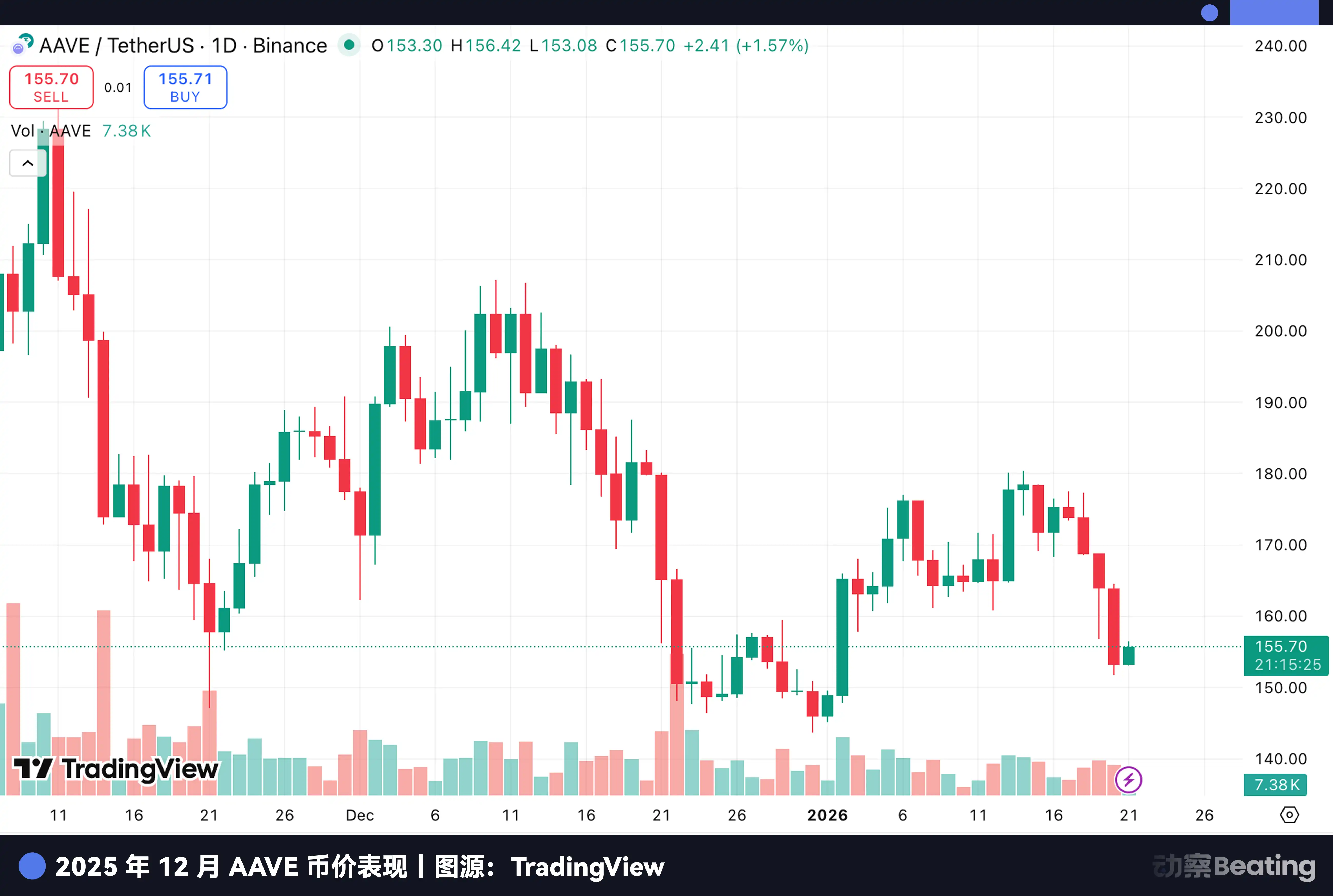
Although the two sides eventually reached a compromise under immense public pressure, with Labs承诺 proposing a plan to share non-protocol revenue with token holders, the rift could not be healed. The protocol may be decentralized, but the entry point for traffic is always centralized. Whoever controls the entry point controls the actual power to tax the protocol's economy.

Meanwhile, the decentralized exchange behemoth Uniswap also had to self-neuter for compliance reasons.

Between 2024 and 2025, Uniswap finally advanced its highly anticipated fee switch proposal, aimed at using a portion of the protocol's transaction fees to repurchase and burn UNI tokens, attempting to transform the token from a useless governance ticket into a deflationary, yield-bearing asset.

However, to avoid being classified as a security by the SEC, Uniswap had to undertake extremely complex structural separation, physically isolating the entity responsible for dividends from the development team. They even registered a new type of entity in Wyoming called a DUNA (Decentralized Unincorporated Nonprofit Association), trying to find a place on the edge of compliance.

On December 26, Uniswap's final governance vote on the fee switch proposal was passed. The core content also included burning 100 million UNI tokens and Uniswap Labs closing front-end fees to further focus on protocol layer development.

Uniswap's struggles and Aave's civil war together point to an awkward reality: the dividends investors crave are precisely the core basis for regulatory agencies to认定证券. Wanting to赋予代币 value invites fines from the SEC; wanting to avoid regulation forces the token to remain in a state of having no actual value.

Empty Rights Mapping, and Then What?

When trying to understand the token rights crisis of 2025, it is helpful to look towards more mature capital markets. There exists a highly illustrative reference point: the American Depositary Receipts (ADS) of Chinese concept stocks and the Variable Interest Entity (VIE) structure.

If you buy Alibaba (BABA) stock on Nasdaq, seasoned traders will tell you that you are not buying direct equity in the operating entity running Taobao in Hangzhou, China. Restricted by law, you hold权益 in a holding company in the Cayman Islands, which in turn controls the operating entities in China through a series of complex agreements.

This sounds very much like some altcoins—you're buying a kind of mapping, not the thing itself.

But the lesson of 2025 tells us that there is a significant difference between ADS and tokens: legal recourse.

The ADS structure, although circuitous, is built on decades of trust in international commercial law, a sound auditing system, and默契 between Wall Street and regulators. Most crucially, ADS holders legally enjoy residual claim rights. This means that if Alibaba is acquired or privatized, the acquirer must follow legal procedures to置换 your ADS with cash or equivalents.

In contrast, tokens, especially those governance tokens originally placed with high hopes, exposed their本质 in the 2025 acquisition wave: they are neither on the liability side of the balance sheet nor on the owner's equity side.

Before the CLARITY Act landed, this fragile relationship was maintained by community consensus and bull market faith. Developers hinted that tokens were like stocks; investors pretended they were doing VC. But when the compliance hammer fell in 2025, everyone had to face the fact that under the traditional corporate law framework, token holders are neither creditors nor shareholders; they are more like fans who bought expensive membership cards.

When assets can be traded, rights can be split. When rights are split, value converges towards the end that is most legally recognized,最能承载现金流, and最能被强制执行.

In this sense, the crypto industry in 2025 did not fail; it was incorporated into financial history. It began to be judged, like all mature financial markets, by capital structure, legal text, and regulatory boundaries.

As crypto's move towards traditional finance becomes an irreversible trend, a sharper question arises: where will the industry's value flow afterwards?

Many people thought that integration meant victory, but historical experience often suggests the opposite. When a new technology is adopted by an old system, it gains scale but does not necessarily retain the originally promised distribution method. What the old system is best at is taming innovation into a form that is regulatable, accountable, and balance-sheetable, and firmly nailing the residual claim rights to the existing power structure.

The合规化 of crypto may not return value to token holders but is more likely to return value to the parts familiar to the law: companies, equity, licenses, regulated accounts, and contracts that can be liquidated and enforced in court.

Token rights will continue to exist, just as ADS will continue to exist; they are both allowed mappings of rights in financial engineering. But the question is, which layer of mapping are you actually buying?

Domande pertinenti

QWhat is the CLARITY Act and how does it impact the classification of digital assets?

AThe CLARITY Act is the Digital Asset Market Clarity Act passed by the U.S. House of Representatives. It mandates that only fully decentralized assets with no actual controller are classified as digital commodities under CFTC jurisdiction, while any asset with centralized control or used for fundraising with promised returns is classified as a restricted digital asset or security under SEC jurisdiction.

QWhy did Circle's acquisition of Interop Labs cause panic in the cryptocurrency market?

ACircle's acquisition only included the development team and explicitly excluded the AXL token, the Axelar network, and its foundation. This shattered the narrative that buying tokens equates to investing in the startup, revealing that development companies and protocol networks are legally separate entities, leading to a panic sell-off of AXL tokens.

QWhat dilemma do DeFi projects like Uniswap and Aave face regarding token value and regulatory compliance?

ADeFi projects face a conflict where investors desire token value (e.g., through dividends or buybacks), but such value-adding mechanisms often trigger SEC scrutiny and potential classification as securities. To avoid regulation, tokens must remain valueless, creating tension between investor expectations and legal compliance.

QHow does the legal status of token holders differ from that of traditional equity shareholders?

AToken holders lack legal protections such as guaranteed information rights or recourse against insider trading. Unlike shareholders who have residual claim rights under corporate law, token holders are not recognized as creditors or equity owners; they hold no enforceable legal rights to a project's assets or cash flows.

QWhat is the article's perspective on the future of token economics amid integration with traditional finance?

AThe article argues that as crypto integrates with traditional finance, value will flow toward legally recognized structures like companies, equity, licenses, and regulated accounts, rather than to token holders. Token economics may be 'disproved' as innovation is驯服ed into traditional frameworks, prioritizing regulatory compliance over decentralized value distribution.

Letture associate

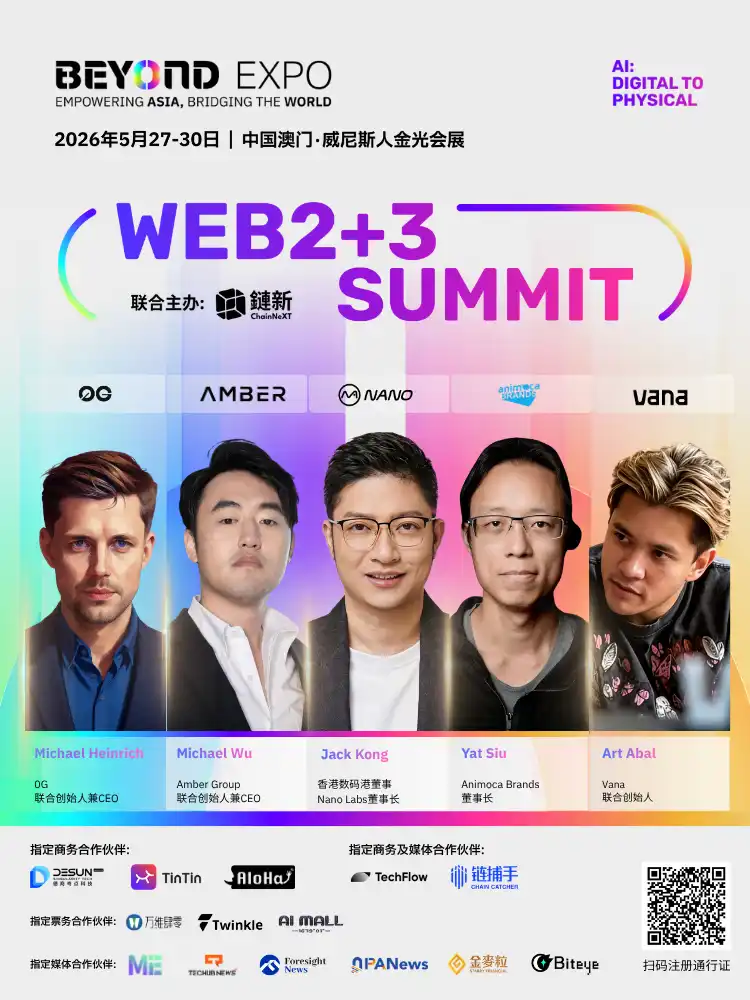
First Batch of Keynote Speakers and Partners Announced! Web2+3 Summit: Defining the Next Generation of Digital Economy

Web2+3 Summit: Defining the Next Generation of Digital Economy The 6th BEYOND International Technology Innovation Expo (BEYOND Expo 2026), Asia's largest tech and ecosystem exhibition, is launching a dedicated Web2+3 stage for the first time. Co-hosted by BEYOND Expo and ChainNeXT Group, the Web3 Summit will take place from May 28–30, 2026. Against the backdrop of accelerating global tech integration, the boundaries between Web2 and Web3 are rapidly blurring. With clearer global regulations for blockchain-driven internet (Web3) and the special issuance of a Hong Kong dollar stable币 license by the Hong Kong SAR government on April 10, 2026, Web3's decentralized principles are quickly merging with traditional industries (Web2) such as e-commerce, finance, and artificial intelligence. Focused on blockchain-driven digital economy elements, the summit will center on three core principles—implementability, commercial viability, and compliance. It will bring together top Web3 experts to discuss key integration areas like stablecoin payment finance (PayFi), real-world asset tokenization (RWA), and decentralized AI (DeAI), unveiling new opportunities for industrial innovation. The first wave of confirmed speakers includes Jack Kong (Director of Hong Kong Cyberport, Chairman of Nano Labs), Yat Siu (Chairman of Animoca Brands), Michael Wu (Co-founder & CEO of Amber Group), Michael Heinrich (Co-founder & CEO of 0G), and Art Abal (Co-founder of Vana). More Web3 ecosystem pioneers, AI, and fintech experts will be announced soon. Core forum topics include: - Web2+DeAI: New AI Paradigms Driven by Decentralized Infrastructure - Web2+RWA: Real-World Asset Tokenization and Global Liquidity - Web2+PayFi: Cross-Border Payments and Financial Innovation Powered by Crypto Infrastructure - Web2+3 AI: Autonomous Agents and the Crypto Economy - Web2+3 Wealth: On-Chain and Off-Chain Integrated Investment Ecosystems - Web2+3 Commerce: A New Landscape for Global Trade Driven by Stablecoins Additional agenda details will be released in the near future.

marsbit52 min fa

First Batch of Keynote Speakers and Partners Announced! Web2+3 Summit: Defining the Next Generation of Digital Economy

marsbit52 min fa

Trading

Spot
Futures

Articoli Popolari

Cosa è BITCOIN

Comprendere HarryPotterObamaSonic10Inu (ERC-20) e la sua posizione nel mondo delle criptovalute Negli ultimi anni, il mercato delle criptovalute ha assistito a un aumento della popolarità delle meme coin, catturando l'interesse non solo dei trader, ma anche di coloro che cercano coinvolgimento comunitario e valore di intrattenimento. Tra questi token unici c'è HarryPotterObamaSonic10Inu (ERC-20), un progetto intrigante che mescola riferimenti culturali nel tessuto delle criptovalute. Questo articolo esplora gli aspetti chiave di HarryPotterObamaSonic10Inu, analizzando i suoi meccanismi, l'etica guidata dalla comunità e il suo coinvolgimento con il panorama crittografico più ampio. Che cos'è HarryPotterObamaSonic10Inu (ERC-20)? Come suggerisce il suo nome, HarryPotterObamaSonic10Inu è una meme coin costruita sulla blockchain di Ethereum, classificata secondo lo standard ERC-20. A differenza delle criptovalute tradizionali che possono enfatizzare l'utilità pratica o il potenziale investimento, questo token prospera grazie al valore di intrattenimento e alla forza della sua comunità. Il progetto mira a creare un ambiente in cui gli utenti coinvolti possono riunirsi, condividere idee e partecipare ad attività ispirate a diversi fenomeni culturali. Una caratteristica notevole di HarryPotterObamaSonic10Inu è la zero tassa sulle transazioni. Questo elemento allettante tende a incoraggiare il trading e il coinvolgimento della comunità, privo di costi aggiuntivi che possono scoraggiare i trader di piccole dimensioni. L'offerta totale della moneta è fissata a un miliardo di token, un numero che segna la sua intenzione di mantenere una circolazione sostanziale all'interno della comunità. Creatore di HarryPotterObamaSonic10Inu (ERC-20) Le origini di HarryPotterObamaSonic10Inu sono avvolte in un certo mistero; i dettagli sul creatore rimangono sconosciuti. Lo sviluppo di questo token non presenta un team identificabile o un piano esplicito, cosa non rara nel settore delle meme coin. Invece, il progetto è emerso organicamente, con il suo progresso fortemente dipendente dall'entusiasmo e dalla partecipazione della sua comunità. Investitori di HarryPotterObamaSonic10Inu (ERC-20) Per quanto riguarda investimenti esterni e finanziamenti, HarryPotterObamaSonic10Inu rimane ambiguo. Il token non elenca alcuna fondazione di investimento conosciuta o un sostegno organizzativo significativo. Invece, la linfa vitale del progetto è la sua comunità di base, che informa la sua crescita e sostenibilità attraverso azioni collettive e coinvolgimento nello spazio crittografico. Come funziona HarryPotterObamaSonic10Inu (ERC-20)? In quanto meme coin, HarryPotterObamaSonic10Inu opera principalmente al di fuori delle strutture tradizionali che governano spesso il valore degli asset. Ci sono diversi aspetti distintivi che definiscono il funzionamento del progetto: Transazioni senza tasse: Senza costi fiscali sulle transazioni, gli utenti possono comprare e vendere liberamente il token senza preoccuparsi di costi nascosti. Coinvolgimento della comunità: Il progetto prospera sull'interazione della comunità, sfruttando le piattaforme social per creare entusiasmo e facilitare il coinvolgimento. Discussioni, condivisione di contenuti e coinvolgimento sono elementi cruciali che aiutano ad espandere la sua portata e a favorire la lealtà tra i sostenitori. Nessuna utilità pratica: Va notato che HarryPotterObamaSonic10Inu non offre un'utilità concreta all'interno dell'ecosistema finanziario. Piuttosto, è classificato come un token principalmente per attività di intrattenimento e comunitarie. Riferimento culturale: Il token incorpora astutamente elementi della cultura pop per attirare interesse, collegandosi a appassionati di meme e seguaci delle criptovalute. HarryPotterObamaSonic10Inu esemplifica come le meme coin operino in modo diverso rispetto ai progetti di criptovalute più tradizionali, entrando nel mercato come costrutti sociali innovativi piuttosto che come asset utilitari. Cronologia di HarryPotterObamaSonic10Inu (ERC-20) La storia di HarryPotterObamaSonic10Inu è segnata da diversi traguardi notevoli: Creazione: Il token è emerso da un meme virale, catturando l'immaginazione di molti appassionati di criptovalute. Le date di creazione specifiche non sono disponibili, sottolineando la sua crescita organica. Inserimento negli scambi: HarryPotterObamaSonic10Inu ha fatto il suo ingresso in vari scambi, consentendo un accesso e un trading più facili da parte della comunità. Iniziative di coinvolgimento della comunità: Attività in corso volte a migliorare l'interazione della comunità, comprese gare, campagne sui social media e generazione di contenuti da parte di fan e sostenitori. Piani di espansione futura: La tabella di marcia del progetto include il lancio di una collezione NFT, merchandising e un sito di eCommerce relativo ai suoi temi culturali, coinvolgendo ulteriormente la comunità e cercando di aggiungere più dimensioni al suo ecosistema. Punti chiave su HarryPotterObamaSonic10Inu (ERC-20) Natura guidata dalla comunità: Il progetto dà priorità al contributo collettivo e alla creatività, garantendo che il coinvolgimento degli utenti sia al centro del suo sviluppo. Classificazione come meme coin: Rappresenta l'epitome delle criptovalute basate sull'intrattenimento, distinguendosi dai veicoli d'investimento tradizionali. Nessuna affiliazione diretta con Bitcoin: Nonostante la somiglianza nel nome del ticker, HarryPotterObamaSonic10Inu è distintivo e non ha alcuna relazione con Bitcoin o altre criptovalute consolidate. Focus sulla collaborazione: HarryPotterObamaSonic10Inu è progettato per creare uno spazio per la collaborazione e la condivisione di storie tra i suoi detentori, fornendo un canale per la creatività e il legame comunitario. Prospettive future: L'ambizione di espandersi oltre il suo presupposto iniziale verso NFT e merchandising delinea un percorso per il progetto per potenzialmente entrare in strade più mainstream all'interno della cultura digitale. Poiché le meme coin continuano a catturare l'immaginazione della comunità crittografica, HarryPotterObamaSonic10Inu (ERC-20) si distingue per i suoi legami culturali e il suo approccio centrato sulla comunità. Anche se potrebbe non adattarsi al modello tipico di un token orientato all'utilità, la sua essenza risiede nella gioia e nella camaraderia coltivate tra i suoi sostenitori, evidenziando la natura in evoluzione delle criptovalute in un'epoca sempre più digitale. Con la continuazione dello sviluppo del progetto, sarà importante osservare come le dinamiche della comunità influenzano la sua traiettoria nel panorama in continuo cambiamento della tecnologia blockchain.

1.1k Totale visualizzazioniPubblicato il 2024.04.01Aggiornato il 2024.12.03

Cosa è BITCOIN

Come comprare BTC

Benvenuto in HTX.com! Abbiamo reso l'acquisto di Bitcoin (BTC) semplice e conveniente. Segui la nostra guida passo passo per intraprendere il tuo viaggio nel mondo delle criptovalute.Step 1: Crea il tuo Account HTXUsa la tua email o numero di telefono per registrarti il tuo account gratuito su HTX. Vivi un'esperienza facile e sblocca tutte le funzionalità,Crea il mio accountStep 2: Vai in Acquista crypto e seleziona il tuo metodo di pagamentoCarta di credito/debito: utilizza la tua Visa o Mastercard per acquistare immediatamente BitcoinBTC.Bilancio: Usa i fondi dal bilancio del tuo account HTX per fare trading senza problemi.Terze parti: abbiamo aggiunto metodi di pagamento molto utilizzati come Google Pay e Apple Pay per maggiore comodità.P2P: Fai trading direttamente con altri utenti HTX.Over-the-Counter (OTC): Offriamo servizi su misura e tassi di cambio competitivi per i trader.Step 3: Conserva Bitcoin (BTC)Dopo aver acquistato Bitcoin (BTC), conserva nel tuo account HTX. In alternativa, puoi inviare tramite trasferimento blockchain o scambiare per altre criptovalute.Step 4: Scambia Bitcoin (BTC)Scambia facilmente Bitcoin (BTC) nel mercato spot di HTX. Accedi al tuo account, seleziona la tua coppia di trading, esegui le tue operazioni e monitora in tempo reale. Offriamo un'esperienza user-friendly sia per chi ha appena iniziato che per i trader più esperti.

3.5k Totale visualizzazioniPubblicato il 2024.12.12Aggiornato il 2025.03.21

Come comprare BTC

Cosa è $BITCOIN

ORO DIGITALE ($BITCOIN): Un'Analisi Completa Introduzione all'ORO DIGITALE ($BITCOIN) L'ORO DIGITALE ($BITCOIN) è un progetto basato su blockchain che opera sulla rete Solana, con l'obiettivo di combinare le caratteristiche dei metalli preziosi tradizionali con l'innovazione delle tecnologie decentralizzate. Sebbene condivida un nome con Bitcoin, spesso definito “oro digitale” a causa della sua percezione come riserva di valore, l'ORO DIGITALE è un token separato progettato per creare un ecosistema unico all'interno del panorama Web3. Il suo obiettivo è posizionarsi come un asset digitale alternativo valido, anche se i dettagli riguardanti le sue applicazioni e funzionalità sono ancora in fase di sviluppo. Cos'è l'ORO DIGITALE ($BITCOIN)? L'ORO DIGITALE ($BITCOIN) è un token di criptovaluta esplicitamente progettato per l'uso sulla blockchain di Solana. A differenza di Bitcoin, che fornisce un ruolo di stoccaggio di valore ampiamente riconosciuto, questo token sembra concentrarsi su applicazioni e caratteristiche più ampie. Aspetti notevoli includono: Infrastruttura Blockchain: Il token è costruito sulla blockchain di Solana, nota per la sua capacità di gestire transazioni ad alta velocità e a basso costo. Dinamiche di Offerta: L'ORO DIGITALE ha un'offerta massima fissata a 100 quadrilioni di token (100P $BITCOIN), sebbene i dettagli riguardanti la sua offerta circolante siano attualmente non divulgati. Utilità: Sebbene le funzionalità precise non siano esplicitamente delineate, ci sono indicazioni che il token potrebbe essere utilizzato per varie applicazioni, potenzialmente coinvolgendo applicazioni decentralizzate (dApp) o strategie di tokenizzazione degli asset. Chi è il Creatore dell'ORO DIGITALE ($BITCOIN)? Attualmente, l'identità dei creatori e del team di sviluppo dietro l'ORO DIGITALE ($BITCOIN) rimane sconosciuta. Questa situazione è tipica tra molti progetti innovativi nel settore blockchain, in particolare quelli allineati con la finanza decentralizzata e i fenomeni delle meme coin. Sebbene tale anonimato possa favorire una cultura guidata dalla comunità, intensifica le preoccupazioni riguardo alla governance e alla responsabilità. Chi sono gli Investitori dell'ORO DIGITALE ($BITCOIN)? Le informazioni disponibili indicano che l'ORO DIGITALE ($BITCOIN) non ha alcun sostenitore istituzionale noto o investimenti di venture capital prominenti. Il progetto sembra operare su un modello peer-to-peer incentrato sul supporto e sull'adozione della comunità piuttosto che su percorsi di finanziamento tradizionali. La sua attività e liquidità si trovano principalmente su exchange decentralizzati (DEX), come PumpSwap, piuttosto che su piattaforme di trading centralizzate consolidate, evidenziando ulteriormente il suo approccio di base. Come Funziona l'ORO DIGITALE ($BITCOIN) Le meccaniche operative dell'ORO DIGITALE ($BITCOIN) possono essere elaborate in base al suo design blockchain e alle caratteristiche della rete: Meccanismo di Consenso: Sfruttando il proof-of-history (PoH) unico di Solana combinato con un modello di proof-of-stake (PoS), il progetto garantisce una validazione efficiente delle transazioni contribuendo all'alta performance della rete. Tokenomics: Sebbene meccanismi deflazionistici specifici non siano stati dettagliati ampiamente, l'ampia offerta massima di token implica che potrebbe soddisfare microtransazioni o casi d'uso di nicchia che devono ancora essere definiti. Interoperabilità: Esiste il potenziale per l'integrazione con l'ecosistema più ampio di Solana, inclusi vari piattaforme di finanza decentralizzata (DeFi). Tuttavia, i dettagli riguardanti integrazioni specifiche rimangono non specificati. Cronologia degli Eventi Chiave Ecco una cronologia che evidenzia traguardi significativi riguardanti l'ORO DIGITALE ($BITCOIN): 2023: Il dispiegamento iniziale del token avviene sulla blockchain di Solana, contrassegnato dal suo indirizzo di contratto. 2024: L'ORO DIGITALE guadagna visibilità poiché diventa disponibile per il trading su exchange decentralizzati come PumpSwap, consentendo agli utenti di scambiarlo contro SOL. 2025: Il progetto assiste a un'attività di trading sporadica e a un potenziale interesse per impegni guidati dalla comunità, sebbene non siano state documentate partnership significative o avanzamenti tecnici fino ad ora. Analisi Critica Punti di Forza Scalabilità: L'infrastruttura sottostante di Solana supporta alti volumi di transazioni, il che potrebbe migliorare l'utilità di $BITCOIN in vari scenari di transazione. Accessibilità: Il potenziale basso prezzo di trading per token potrebbe attrarre investitori al dettaglio, facilitando una partecipazione più ampia grazie a opportunità di proprietà frazionata. Rischi Mancanza di Trasparenza: L'assenza di sostenitori, sviluppatori o di un processo di audit pubblicamente noti potrebbe generare scetticismo riguardo alla sostenibilità e all'affidabilità del progetto. Volatilità del Mercato: L'attività di trading è fortemente dipendente dal comportamento speculativo, il che può comportare una significativa volatilità dei prezzi e incertezze per gli investitori. Conclusione L'ORO DIGITALE ($BITCOIN) emerge come un progetto intrigante ma ambiguo all'interno dell'evolvente ecosistema di Solana. Sebbene tenti di sfruttare la narrativa dell'“oro digitale”, la sua partenza dal ruolo consolidato di Bitcoin come riserva di valore sottolinea la necessità di una chiara differenziazione della sua utilità e struttura di governance. L'accettazione e l'adozione future dipenderanno probabilmente dall'affrontare l'attuale opacità e dalla definizione più esplicita delle sue strategie operative ed economiche. Nota: Questo rapporto comprende informazioni sintetizzate disponibili a ottobre 2023, e potrebbero essersi verificati sviluppi oltre il periodo di ricerca.

99 Totale visualizzazioniPubblicato il 2025.05.13Aggiornato il 2025.05.13

Cosa è $BITCOIN

Discussioni

Benvenuto nella Community HTX. Qui puoi rimanere informato sugli ultimi sviluppi della piattaforma e accedere ad approfondimenti esperti sul mercato. Le opinioni degli utenti sul prezzo di BTC BTC sono presentate come di seguito.

活动图片