The U.S. Government Blocked the Anthropic Model. It Wasn't About 'Jailbreaking' at All.

marsbitPubblicato 2026-06-16Pubblicato ultima volta 2026-06-16

Introduzione

Last Friday, the U.S. Commerce Department issued an enforcement letter that forced Anthropic to take its two most advanced AI models, Fable 5 and Mythos 5, offline. The stated reason was unspecified national security concerns, initially linked to potential "jailbreaks" of the models' safeguards. However, new details suggest the action stemmed more from a deteriorating relationship between the Trump administration and Anthropic, rather than a genuine technical threat. According to reports, the government cited a little-known export control regulation, compelling Anthropic to block access for all non-U.S. persons, including its own international employees. The company complied, shutting down the models without a court order or specific technical details from the government. Cybersecurity expert Katie Moussouris revealed she was privately shown a research paper detailing a potential safeguard bypass in Fable 5. She argued the described method was minor and did not warrant an export ban, stating that attempts to "fix" it would only weaken the model's defensive capabilities. Moussouris and other experts have since called for the order to be revoked, warning it dangerously removes advanced cybersecurity tools from U.S. defenders. Analysts like Justin Hendrix suggest the move appears retaliatory and sets a dangerous precedent, signaling that the U.S. government can unilaterally shut down a tech company's products. The incident has raised concerns about the reliability of American...

Author:Zack Whittaker

Translation: Shenchao TechFlow

Shenchao Insight: Last Friday, a letter from the U.S. Department of Commerce forced Anthropic to take down its two most powerful models, Fable 5 and Mythos 5. The government cited national security, leading outsiders to believe it was about bypassing model safeguards. However, mounting details point to another explanation: this looks more like retaliation following a breakdown in relations between the Trump administration and Anthropic. That a tech company could have its products shut down by a government order without court approval sends a signal to the entire U.S. tech industry.

The enforcement letter sent by the U.S. government to Anthropic, forcing the company to take its latest AI models offline on the eve of the weekend, should serve as a wake-up call for any U.S. tech company, not just AI labs.

First, let's review the timeline of events over the past few days. On Friday afternoon, the U.S. Department of Commerce sent a letter to Anthropic, invoking a little-known export control regulation to prohibit non-U.S. persons (including Anthropic's own employees) from accessing Fable 5 and Mythos 5, citing unspecified national security concerns. Anthropic stated it believed the letter was related to a bypass of the models' safeguards but was uncertain because the letter provided no specific details. The letter has not been made public to this day.

Anthropic's response was to shut down both top-tier models for all customers to ensure compliance. The result is that the U.S. government successfully forced a tech company to take its models offline with a swift, unilateral action that didn't even appear to require court approval.

This intervention by the Trump administration demonstrates that the AI industry is not immune to government action. For the broader tech industry, it's also a warning: comply, or we can shut you and your products down.

Axios, citing sources, described the tense situation between these two major players over the weekend, stating that what truly triggered this export order was a "personality clash" between Anthropic and the Trump administration, rather than any technical issue with the AI products themselves.

New details that emerged over the weekend further undermined the government's already shaky justification.

Veteran cybersecurity researcher and Luta Security founder Katie Moussouris wrote in a blog post that Anthropic recently showed her a private paper authored by several security researchers, describing a so-called safeguard bypass in Fable 5. (The Wall Street Journal reported the paper's authors are security researchers from Amazon.) Moussouris said Anthropic approached her to get her opinion on the paper.

Moussouris outlined in her blog how the researchers triggered this bypass but stated the bypass itself "should not have triggered export controls." The distinction is subtle: prompting the AI to "check code for security issues" versus prompting it to "fix this code"—slightly different phrasing leading to essentially the same outcome.

"The behavior described in the paper cannot truly be fixed; any attempt would only weaken the model's defensive capabilities," Moussouris said. She criticized the export control order as hasty, heavy-handed, and misguided.

Subsequently, Moussouris and dozens of top security researchers and experts called on the Trump administration to revoke the export control order, stating that removing advanced cybersecurity capabilities from U.S. cyber defenders is "dangerous."

Successive administrations have made sweeping decisions based on knowledge gaps. For example, when the U.S. government revised export laws in the 2010s aiming to control cybersecurity tools usable for both defense and offense, the wording was so broad it inadvertently risked criminalizing legitimate security and vulnerability research.

But the Trump administration's order looks like retaliation.

Justin Hendrix, editor of Tech Policy Press, said the Trump administration's move "could well raise alarms among foreign governments about the reliability of U.S. AI for critical applications." The message sent is that U.S. AI companies cannot operate free from U.S. government interference.

The Trump administration has not confirmed why it invoked this export control order. Did officials misread the report and panic? Did Amazon CEO Andy Jassy, out of caution or personal grievance, say something to senior government officials that triggered this reaction? Was it a translation error, or was this itself a tactic to pressure Anthropic—given the already tense relations? It's also possible the White House didn't anticipate the ripple effects of the letter's demands, and officials are now scrambling to clean up a mess of their own making.

In Hendrix's words, "The atmosphere is now one of suspicion, with senior officials seemingly picking favorites based on personal and political factors." The consequence is that the government has set a dangerous precedent regarding "how much control it intends to assert over the release of U.S.-made software."

This time, the government targeted Anthropic. Tomorrow, it could be any other company.

Domande pertinenti

QWhat was the official reason given by the U.S. government for forcing Anthropic to take down its Fable 5 and Mythos 5 models?

AThe official reason cited in the U.S. Commerce Department's enforcement letter was unspecified national security concerns, referenced under a little-known export control regulation.

QAccording to the article, what is the more likely real reason behind the U.S. government's action against Anthropic?

AAccording to the article, the more likely reason is a deteriorating relationship and a 'personality clash' between the Trump administration and Anthropic, suggesting the action was an act of retaliation rather than a genuine technical or security concern.

QWhat was the core argument made by cybersecurity expert Katie Moussouris against the export control order?

AKatie Moussouris argued that the 'jailbreak' or prompt vulnerability described in the research paper shown to her by Anthropic was minor and did not justify an export control order. She stated that any attempt to 'fix' it would only weaken the model's defensive capabilities.

QWhat broader warning does the article issue to the U.S. tech industry based on this event?

AThe article warns that this event sets a dangerous precedent, showing the government can unilaterally and swiftly shut down a tech company's products without court approval. It signals that no tech company, not just in AI, is immune from such government intervention.

QWhat potential international consequence of this government action is highlighted in the article?

AThe article suggests this action could make foreign governments question the reliability of U.S. AI for critical applications, as it demonstrates that American AI companies cannot operate free from U.S. government interference.

Letture associate

A 'Overlooked' Market Event: Joint US-Japan-South Korea Intervention, Rare US Treasury Involvement, and Bessent's Quiet 'Market Rescue'?

Summary: The United States, Japan, and South Korea executed their largest coordinated foreign exchange intervention in nearly 30 years. The action targeted depreciation pressure on the Japanese yen and South Korean won. This move is seen as a significant effort by the US to stabilize the financial markets of its key allies and prevent the spillover of risks. Key details: * Japan reportedly intervened on July 30 using approximately 8.45 trillion yen (about $52.8 billion). South Korean authorities also intervened that day, selling dollars to support the won. * Notably, the US Treasury Department intervened directly in yen markets for the first time in roughly 30 years. The New York Fed, reportedly acting on behalf of the Treasury, sold euros to buy yen via Goldman Sachs and Morgan Stanley on July 31. Analysts view the use of the euro-yen pair as a way to alleviate yen pressure without adding selling pressure to the US dollar. * Prior to the action, the New York Fed conducted "rate checks" on both USD/JPY and EUR/JPY, a newer signaling tool that falls between verbal and physical intervention. The intervention is interpreted as going beyond traditional currency stabilization. Analysts, such as Michael Hartnett of Bank of America, suggest it resembles a "Price Keeping Operation" for the AI era. The core US objectives are perceived to be: 1. Preventing rapid yen depreciation from triggering a sharp rise in Japanese government bond yields. 2. Containing financial stress from spreading across Asian markets like South Korea and Japan. 3. Reducing the risk of disorderly capital flows impacting the US bond market. This coordinated action underscores the importance of Japan and South Korea as critical partners in the US semiconductor and AI supply chain. Stabilizing their financial markets is seen as vital to mitigating risks to the broader tech industry and the US market itself. The intervention coincides with market pressures, including the KOSDAQ index hitting a low since October 2022. While seen as a move to control volatility, some analysts caution it may not fundamentally reverse existing market trends.

marsbit1 min fa

A 'Overlooked' Market Event: Joint US-Japan-South Korea Intervention, Rare US Treasury Involvement, and Bessent's Quiet 'Market Rescue'?

marsbit1 min fa

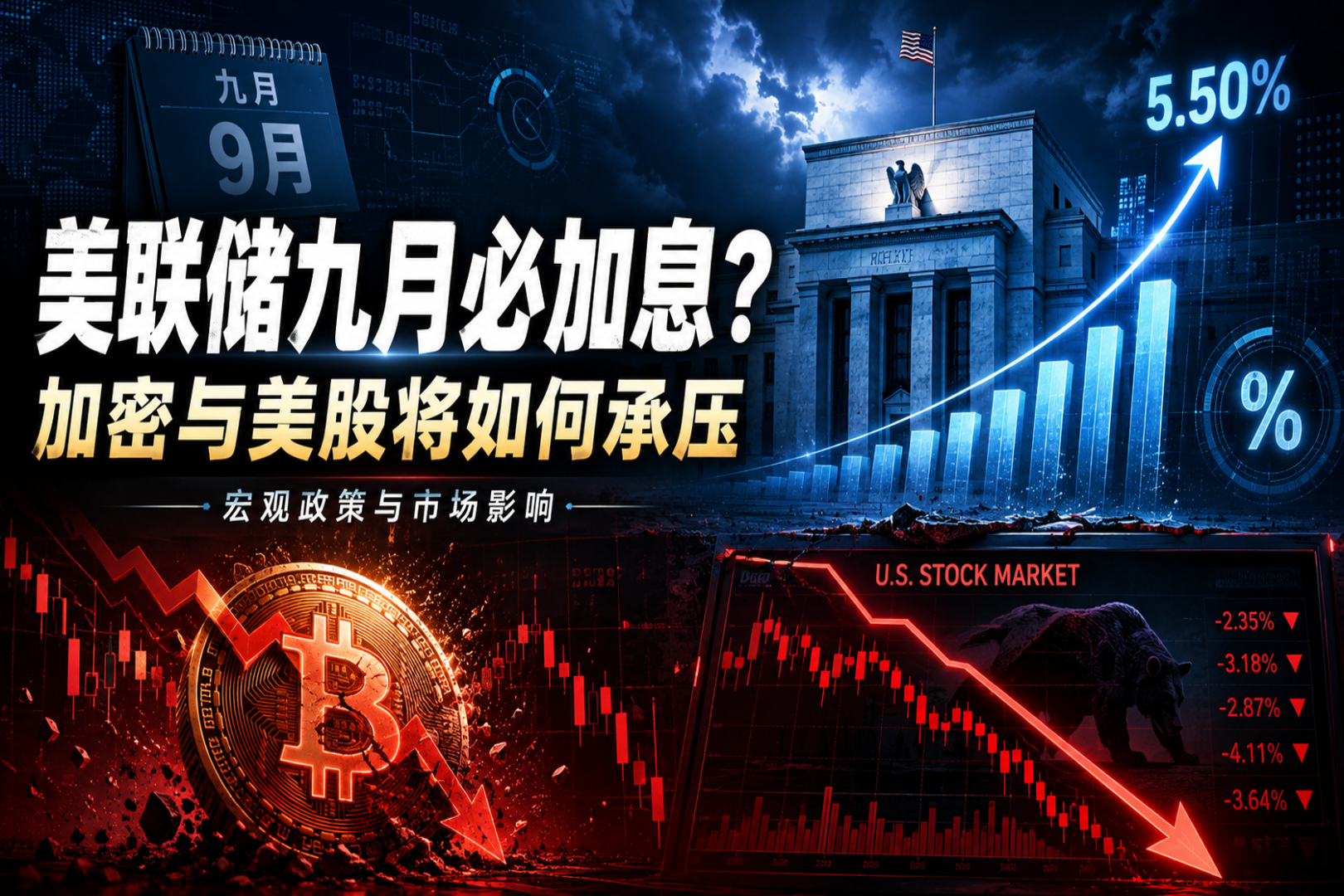
Will the Federal Reserve Definitely Raise Interest Rates in September? How Will Cryptocurrencies and US Stocks Bear the Pressure?

In early August 2024, market expectations for a September Federal Reserve rate hike surged dramatically, from below 50% to over 80%, driven by renewed inflation concerns. This shift followed a contentious July FOMC meeting where a 9-3 vote to hold rates revealed a growing hawkish faction advocating for an immediate hike, citing prolonged above-target inflation. The key catalyst is escalating conflict near the Strait of Hormuz, which has pushed oil prices up approximately 20% in July, threatening to reignite inflation. The next critical data point is the July CPI report on August 12th; a hot reading could solidify hike expectations. For crypto assets, particularly Bitcoin, this represents near-term pressure. Bitcoin continues to exhibit high-beta, risk-on characteristics, making it sensitive to tightening liquidity and higher opportunity costs. However, historical precedent suggests that if a hike is perceived as the cycle's end rather than its start, the negative impact may be brief, with markets quickly pivoting to anticipate future rate cuts. U.S. stocks, especially crypto-linked equities like Coinbase and high-valuation tech stocks, face amplified volatility. Higher rates increase discount rates in valuation models, pressuring growth stocks. This coincides with a pivotal tech earnings season where investor focus has shifted from massive AI capital expenditures to demonstrable revenue and cash flow generation. Companies with negative cash flows and weak growth narratives could see severe pressure if a September hike materializes, as financing costs would rise. Key indicators to watch include oil prices, upcoming inflation data, and Fed commentary at events like the Jackson Hole symposium.

Odaily星球日报1 min fa

Will the Federal Reserve Definitely Raise Interest Rates in September? How Will Cryptocurrencies and US Stocks Bear the Pressure?

Odaily星球日报1 min fa

From South Korea to the United States: Blue-Collar Jobs Are Becoming Increasingly Popular, Thanks to AI

AI is reshaping the labor market's value proposition. The traditional four-year college degree is losing its appeal as a guaranteed career path, while skilled blue-collar trades like electricians, welders, and plumbers are experiencing historic demand and wage premiums. This shift is driven by dual pressures: AI's displacement of certain white-collar roles and a booming need for physical infrastructure and data center construction. Data confirms the trend. In the U.S., vocational school revenue surged, and a significant portion of recent layoffs are AI-related. Surveys show a majority of Gen Z adults plan to pursue blue-collar work, citing better job security against AI automation. Vocational education interest has exploded recently. Experts cite a psychological shift as younger generations seek tangible, AI-resistant careers and avoid high student debt. In many cases, salaries for skilled trades now match or exceed those requiring a bachelor's degree. In South Korea, semiconductor vocational high schools boast near-total employment, with graduates securing high-paying roles at companies like Samsung. The shortage is structural, exacerbated by a retiring baby boomer workforce and massive infrastructure projects. Companies like JPMorgan Chase, Meta, and Lowe's are investing heavily in training programs. However, overcoming historical stigma and a "perception gap" around trade careers remains a key challenge to closing the talent gap.

marsbit1 h fa

From South Korea to the United States: Blue-Collar Jobs Are Becoming Increasingly Popular, Thanks to AI

marsbit1 h fa

Trading

Spot
活动图片