The Robinhood Stock Tokens You Bought Are Just Debts from Jersey Island

Foresight NewsPubblicato 2026-07-07Pubblicato ultima volta 2026-07-07

Introduzione

The Robinhood stock tokens you buy are essentially debt securities issued by a shell company in Jersey, not real equity. These tokens merely track stock prices like NVIDIA or Apple but grant no shareholder rights like voting or dividends. If the underlying company fails, you have no claim on its assets. Instead, you hold a debt instrument from Robinhood Assets (Jersey) Limited, which promises returns based on stock performance. If this Jersey entity goes bankrupt, you become an unsecured creditor. This complex structure stems from Robinhood's past crisis during the 2021 GameStop short squeeze, where T+2 settlement caused liquidity issues. The blockchain-based tokens enable instant settlement, theoretically preventing such trading halts. The product is classified by the SEC as a "linked security" or structured note, carrying counterparty risk not borne by actual shareholders. It is available globally but excluded from the US, UK, and other major markets, while Robinhood offers a fully compliant, asset-backed token model in Europe under MiFID II. The system relies on oracles for pricing, which poses risks like manipulation and faulty liquidations seen in DeFi exploits. Robinhood profits from spreads and aims to become a full-chain settlement layer. Meanwhile, competitors like Ondo have launched SEC-registered, fully compliant equity tokens in the US with actual voting rights and dividends. Robinhood’s Jersey debt model appears as a transitional, regulatory-arbitrage product, ...


Written by: Thejaswini M A

Compiled by: Luffy, Foresight News


Operating illegal private gambling in barbershops has been against the law for a hundred years. But once run by the state, it becomes a legal lottery. How can one monetize a product that is legally prohibited from direct sale? Capital always flows towards channels that exploit loopholes in the rules.


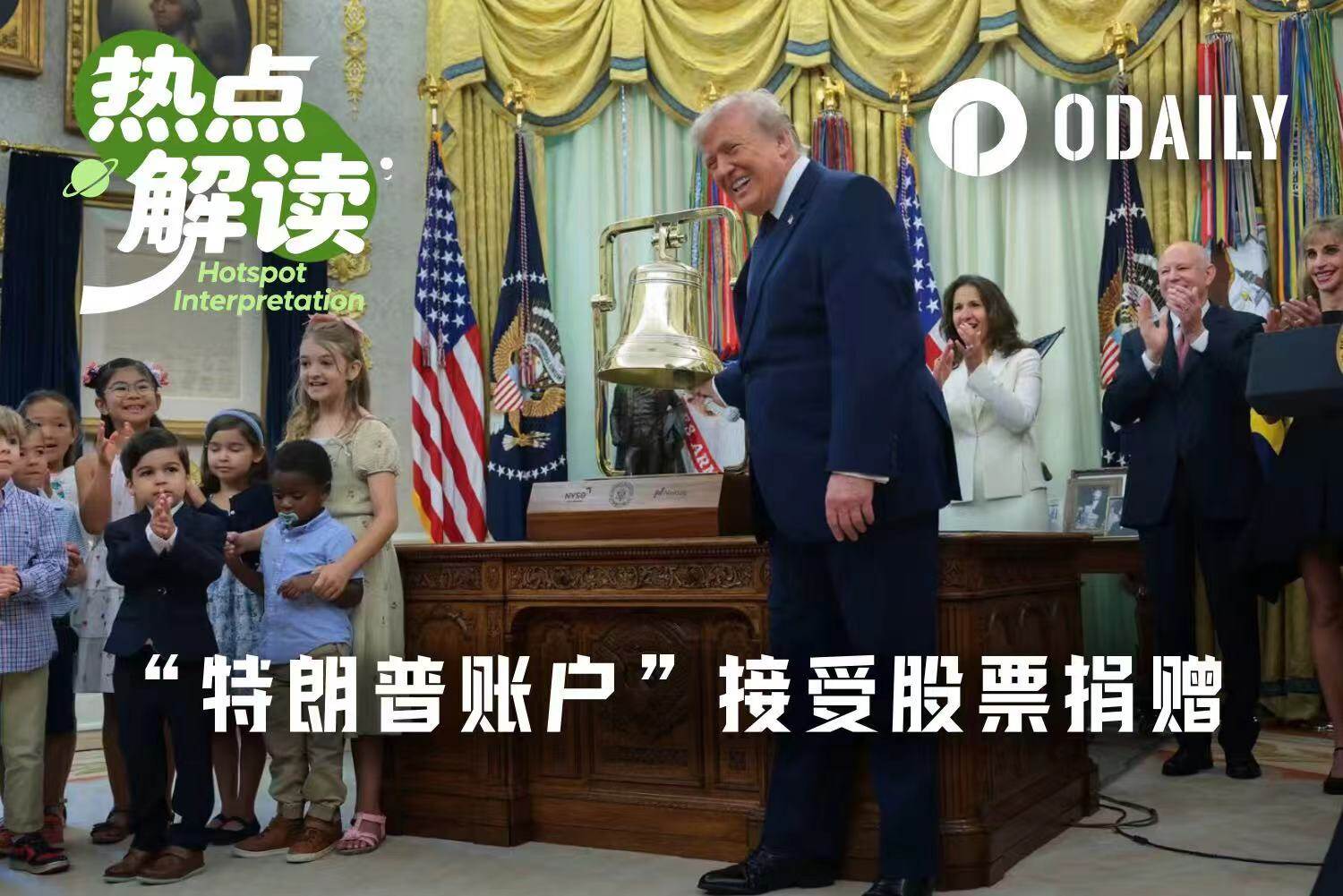
Last week, Robinhood CEO Vlad Tenev officially launched the company's public chain and stock tokens at a release event themed "The World is Flat." The theme sounds clever, but the so-called stock assets users buy are essentially "castles in the air."


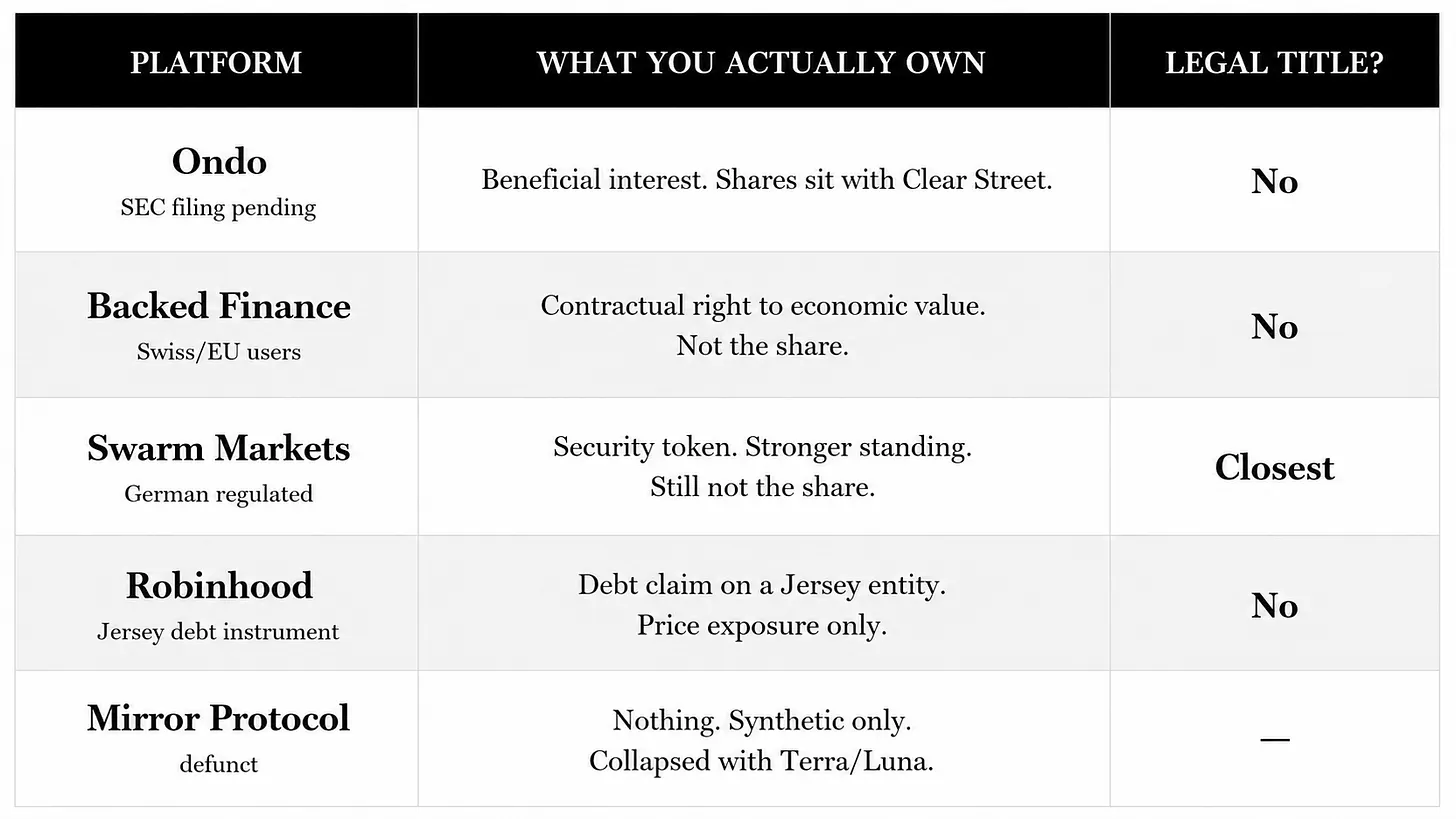
When you buy an Nvidia stock token, you can only track the price fluctuation of Nvidia stock, without enjoying any shareholder legal rights. Once Nvidia collapses operationally, you have no claim on the company's assets. The tokenization model inherently carries such risks. Ondo has already submitted relevant filings to the U.S. SEC, but related regulatory plans remain unresolved.


The truth about Robinhood's product is: what you are buying is not equity, but debt securities.


These debt securities are issued by Robinhood Assets (Jersey) Limited. Users are essentially lending money to this shell company located on the tax haven island in the English Channel. This shell company then pays you returns based on the rise and fall of the corresponding stock price.


Looking back to the June 2025 event in Cannes, Robinhood, to promote the product, distributed free private company stock tokens for OpenAI and SpaceX to European users to attract traffic. Equity in these companies is not publicly available, and ordinary investors have no normal channels to subscribe. After seeing tokens misusing its name, OpenAI publicly issued a risk warning, stating it never authorized the circulation of such assets; OpenAI co-founder Elon Musk directly called such tokens fakes. At that time, Robinhood CEO Tenev also personally admitted that such tokens are, strictly speaking, not equity; they only allow users to gain price exposure.


Since direct equity tokens are possible, why package them as debt and issue them through a Jersey Island shell company? The answer lies within the regulatory rules of the U.S. SEC. Equity represents ownership in a company, enjoying shareholder rights such as voting, dividends, and claims on assets in liquidation. Debt is an obligation the company owes you, where creditors do not possess ownership of the company.


Robinhood stock tokens are "equity-like debt instruments." Holders are not the legal shareholders of the listed company. Even if you buy an Nvidia token, Nvidia itself is completely unaware of your existence.


What you actually hold is a debt certificate issued by the Jersey shell company, which promises to settle returns with you based on, say, Apple's stock price. If Apple's stock price rises 20%, the company pays a corresponding 20% return. However, if this Jersey shell company goes bankrupt, you become merely an ordinary creditor, waiting in line for liquidation repayments. The real Apple stock held by the shell company might cover your claim, or it might be insufficient, ultimately resulting in a total loss of principal, all depending on the complex bankruptcy liquidation process.


If Apple itself declares bankruptcy, your situation becomes even more passive: you don't hold Apple stock; you only hold a debt instrument pegged to Apple's stock price. The underlying asset's value drops to zero, rendering the debt worthless.


The root of Robinhood's effort to design this complex structure can be traced back to the company's most devastating crisis: the January 2021 GameStop short squeeze. A large number of retail investors rushed to buy the stock, but Robinhood directly shut down the buy button. The U.S. stock market's T+2 settlement mechanism caused the platform to face a margin shortfall of tens of billions of dollars, unable to meet clearing guarantee requirements, forcing an emergency trading restriction. Many retail investors felt abandoned by the platform. Congress specifically subpoenaed Tenev for questioning, and the brand's trust has never fully recovered since.


Five years later, this token product is seen as Tenev's solution: blockchain enables second-level settlement, completely abolishing the T+2 settlement cycle, no longer generating huge margin call demands, and theoretically never needing to shut down the buy button again. Since early 2026, he has continuously promoted this logic externally. Robinhood also submitted a 42-page token asset regulatory proposal to the SEC back in 2025, advocating for dedicated industry rules.


In January 2026, three divisions of the SEC jointly issued guidance on the classification of token securities, categorizing such products into two types. First, Native Equity Tokens: Companies directly tokenize their own stock on-chain, and holders possess full shareholder rights. Second, Linked Securities: Third parties issue tokens that simulate stock prices, without carrying any shareholder legal rights or responsibilities. The SEC explicitly stated that such products can be packaged as structured notes (debt products), where holders bear counterparty risks that ordinary shareholders do not face. If the issuer goes bankrupt, all losses are borne by the investors themselves.


In March of the same year, the SEC and the U.S. Commodity Futures Trading Commission (CFTC) jointly announced maintaining the classification and regulatory framework issued in January unchanged. Robinhood deliberately chose to issue the second type—Linked Securities—from Jersey Island, precisely to sidestep regulatory red lines.


The regulatory document also mentioned a similar product: security-based swap contracts, which are essentially over-the-counter bets on stock prices. However, federal regulations strictly limit participation to qualified institutions and high-net-worth professional investors; ordinary retail investors cannot purchase them.


Debt-based structured notes have no investor threshold restrictions, allowing even a 19-year-old with only $10 to participate. Robinhood ultimately chose this packaging model with the broadest audience and the least regulatory resistance.


At the same time, U.S. domestic users are completely excluded. The stock tokens are open to over 120 countries worldwide, with the United States, Canada, the United Kingdom, Switzerland, and the UAE not within the service scope.


The European market adopts a different compliance structure. The classic stock tokens launched in Cannes in 2025 comply with EU MiFID II regulations, issued by Robinhood's European entity, with tokens backed 1:1 by real stocks held in custody. The number of underlying assets has now expanded from 200 to over 2,000, with entry possible with as little as 1 Euro. This means Robinhood can indeed offer compliant real-stock tokens in Europe; the Jersey debt structure is an active choice.


This model heavily relies on the transparent pricing logic of public markets. Only publicly traded companies like U.S. stocks with real-time trading have fair market prices. For private, unlisted companies like Anthropic and OpenAI, there is no publicly traded price. Token valuation can only rely on subjective institutional estimates, with no obligation for the companies to disclose externally, making risks entirely uncontrollable.


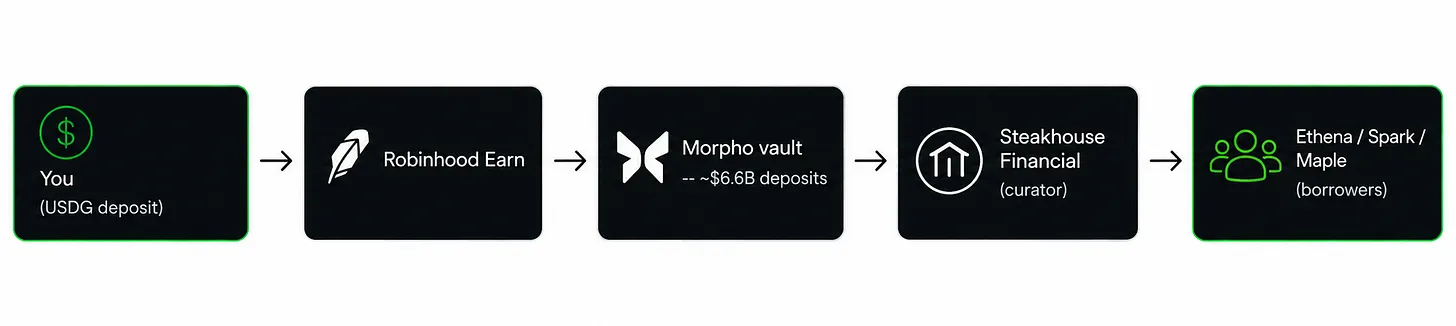
Additionally, Robinhood's separate Robinhood Earn product independently offers a 7% annualized yield, available only to U.S. users. Users lend the stablecoin USDG, with funds first flowing into a Morpho lending vault operated by Steakhouse Financial, then distributed to various DeFi protocols like Ethena and Maple. The Morpho vault deposit size is about $6.6 billion, with yields floating based on market lending demand.


Robinhood has insured smart contract theft with London's Lloyd's, but the policy does not cover the risk of yield dropping to zero. When market lending demand shrinks, yields will decline alongside money market fund rates. User funds pass through multiple intermediaries: Robinhood, Steakhouse, Morpho. Once USDG depegs or a large-scale borrower default occurs, insurance cannot cover it at all. These are common causes of principal loss in such products.


Tokens are stored on-chain and support staking and lending, seemingly convenient. However, smart contracts cannot directly read stock prices and must rely on oracles for price feeds. If an oracle feeds false prices, the contract will incorrectly liquidate user assets or issue loans improperly. From 2024 to 2025, oracle price manipulation was a core method for large DeFi thefts, causing losses of tens of millions of dollars for numerous projects.


Within the entire product ecosystem, the only orthodox, full-voting-right equity is Robinhood's own stock, HOOD, traded on traditional Nasdaq channels. The platform keeps the real equity for itself.


The underlying business logic is clear. Robinhood earns a spread on every token transaction; the public chain belongs to itself. The overseas new business can continuously beautify the financial reports of the listed company, all without being constrained by U.S. domestic regulations. A token business without actual equity has lower regulatory costs and cleaner profits.


The Robinhood Chain is built on the Arbitrum Orbit network, using ETH to pay Gas fees. It has not issued a native platform token, avoiding token speculation risks, and the platform does not need to profit from a native token. The company's long-term plan is to build a one-stop settlement channel, enabling 7x24 on-chain trading for stocks, ETFs, stablecoins, commodity perpetual contracts, and future private equity. Robinhood was originally just an order routing intermediary. If the plan materializes, it will combine the functions of an exchange and a clearinghouse.


Objectively speaking, current regulatory rules are rapidly evolving. The new SEC Chairman Atkins has overturned the previous "sue first, regulate later" approach and is drafting an innovative regulatory sandbox exemption bill. The "CLARITY Act" has been submitted to the Senate for review since June. Once enacted, the regulatory gray area Robinhood currently occupies will continue to narrow.


This playbook is already familiar in the industry. Coinbase and Kraken expanded their businesses early in regulatory gaps, then strengthened compliance qualifications after regulations detailed and industry demand was validated. The current Jersey debt tokens are more like a transitional, semi-finished product for Robinhood.


Just two days before Robinhood's stock token launch, on July 2nd, Ondo launched compliant tokenized stocks on Ethereum, issued through an SEC-registered transfer agent. The tokens are fully backed by real stocks held in custody, with holders enjoying on-chain voting rights, covering over 250 companies. Coinbase simultaneously listed the product, allowing U.S. users to trade legally, with dividends distributed directly to user accounts.


Operating a fully compliant model in the U.S. costs more and is subject to regulatory constraints throughout. Robinhood already bears these compliance costs in Europe. Therefore, the Jersey Island debt structure is a choice by Robinhood. In the future, either regulations will force a product upgrade, or competitors will launch U.S.-compliant real-stock tokens to steal customers.


First capture the market, then wait for regulations to mature—this is Robinhood's strategy.

Crypto di tendenza

Domande pertinenti

QWhat is the fundamental nature of the Robinhood stock tokens discussed in the article?

AThey are not actual equities or ownership stakes in the underlying companies. They are debt instruments (structured notes) issued by Robinhood Assets (Jersey) Limited, a shell company in a tax haven. Holders are creditors who receive payments based on the price movements of the referenced stocks but have none of the legal rights of a shareholder.

QWhy does Robinhood use a complex Jersey-based shell company structure for its stock tokens instead of offering direct equity tokens?

ATo navigate U.S. SEC regulations. The SEC has classified tokenized securities, and Robinhood's product falls under 'Linked Securities,' which track a stock's price without granting ownership rights. Structuring them as debt from a Jersey entity allows Robinhood to avoid stricter U.S. regulations that apply to equity securities and security-based swaps, enabling them to offer the product to retail investors globally (excluding the U.S. and several other countries) with lower regulatory hurdles.

QWhat are the key risks for investors holding Robinhood's stock tokens, according to the article?

AInvestors face significant counterparty and structural risks: 1) If the Jersey issuer goes bankrupt, token holders become unsecured creditors in a liquidation process, risking total loss. 2) If the underlying company (e.g., Apple) goes bankrupt, the debt instrument's value is tied to that stock, so it could become worthless. 3) There is no direct recourse to the actual company's assets. 4) The structure relies on oracles for pricing, which could be manipulated, leading to faulty liquidations.

QHow does the article contrast Robinhood's approach with a compliant alternative like Ondo's product?

AOndo's product, launched on Ethereum and listed on Coinbase, is a compliant equity token registered with the SEC. It is backed 1:1 by real, custodied stocks, and token holders possess full shareholder rights, including voting and receiving dividends. This contrasts with Robinhood's debt-based tokens, which offer no ownership rights and are issued from an offshore entity to sidestep the higher costs and regulatory scrutiny of the U.S. compliant model that Robinhood itself uses for its European customers.

QWhat historical event does the article link to Robinhood's motivation for developing its blockchain-based trading system?

AThe GameStop short squeeze crisis of January 2021. During that event, Robinhood faced a massive liquidity shortfall due to the T+2 settlement cycle and was forced to restrict buying. The blockchain system with near-instant settlement is presented as CEO Vlad Tenev's solution to eliminate such settlement risks and theoretically prevent future trading halts, aiming to restore trust after the significant brand damage from that incident.

Letture associate

Goldman Sachs Research Report Analysis: Circle and USDC Are Moving Beyond the Crypto World, Cross-Border Payments and AI Agents Become New Battlegrounds

Goldman Sachs published a summary of its meeting with Circle Internet Group (issuer of USDC) on July 5th. The core takeaway is that stablecoins, led by USDC, are evolving from a crypto-native tool into foundational infrastructure for traditional finance and the AI economy. USDC's use cases are rapidly expanding beyond crypto trading into cross-border payments, e-commerce, capital market settlements, and notably, payments for AI agents. Circle's management emphasized that stablecoin growth is now decoupled from crypto market cycles, driven by this diversification. They outlined five key application layers and highlighted USDC's network effects, global liquidity depth, and regulatory compliance as competitive moats. Circle distinguishes USDC from bank-issued tokenized deposits, arguing the former is an open, internet-native system without bank credit risk. Strategically, Circle is building a broader fintech platform with its Arc Layer 1 blockchain, the Circle Payments Network for cross-border transfers, and an "Agentic Stack" to serve AI agent economies, where USDC already dominates. Regarding regulation, Circle views potential U.S. legislation like the CLARITY Act as a catalyst for growth rather than a constraint, expecting it to encourage broader institutional adoption and active usage. Goldman Sachs maintains a Neutral rating on Circle with a $96 price target, noting the company's shift from a pure stablecoin issuer to a financial infrastructure provider. Key risks include competition from USDT and potential earnings pressure from declining interest rates on its reserve assets.

marsbit41 min fa

Goldman Sachs Research Report Analysis: Circle and USDC Are Moving Beyond the Crypto World, Cross-Border Payments and AI Agents Become New Battlegrounds

marsbit41 min fa

Trading

Spot

Articoli Popolari

Cosa è DOGE M

Doge Matrix ($doge m): La Nuova Razza di Criptovaluta Guidata dalla Comunità Introduzione Nel panorama in continua evoluzione delle criptovalute, nuovi progetti emergono costantemente, ciascuno con l'obiettivo di catturare l'interesse di investitori ed appassionati. Uno degli ultimi ingressi in questo dominio è Doge Matrix, rappresentato dal simbolo ticker $doge m. Questo progetto ha attirato attenzione grazie alle sue radici nella popolare cultura dei meme che circonda Dogecoin, stabilendo il suo posto all'interno dello spazio web3. Questo articolo mira a fornire un'analisi completa di Doge Matrix, coprendo la sua panoramica, il creatore, gli investitori, la funzionalità, la cronologia e gli aspetti notevoli. Cos'è Doge Matrix ($doge m)? Doge Matrix è un progetto di criptovaluta guidato dalla comunità che apparentemente si basa sull'ampio appeal di Dogecoin, una valuta digitale nota per il suo mascotte Shiba Inu e le sue origini nei meme. Sebbene gli obiettivi generali di Doge Matrix non siano ampiamente definiti, è caratterizzato da un impegno a sfruttare il coinvolgimento e il supporto della comunità. A differenza delle criptovalute tradizionali che spesso enfatizzano l'utilità o il valore intrinseco attraverso tecnologie sottostanti, Doge Matrix si posiziona all'interno di uno spazio che abbraccia il fenomeno culturale delle criptovalute, particolarmente attraente per coloro che risuonano con l'etica degli asset basati sui meme. Attraendo i punti di forza della comunità di Dogecoin, Doge Matrix opera come parte di un ecosistema più ampio, invitando alla partecipazione e all'impegno degli utenti che condividono un interesse per le criptovalute e il panorama digitale. Chi è il Creatore di Doge Matrix ($doge m)? L'identità del creatore di Doge Matrix rimane sconosciuta. Questa mancanza di trasparenza non è un evento raro nello spazio delle criptovalute, dove alcuni progetti vengono lanciati senza rivelare le identità dei loro fondatori. L'assenza di informazioni riguardanti il team fondatore può sollevare domande tra i potenziali investitori sulla responsabilità e la direzione del progetto. Chi sono gli Investitori di Doge Matrix ($doge m)? Al momento, non ci sono informazioni pubblicamente disponibili che dettagliano gli investitori o le fondazioni di investimento che supportano Doge Matrix. Il progetto sembra fare affidamento principalmente sul supporto della comunità piuttosto che su investimenti istituzionali. Questo modello si allinea con la natura guidata dalla comunità dell'iniziativa, favorendo un ambiente in cui la direzione del progetto è plasmata dai suoi partecipanti piuttosto che essere dettata da un selezionato gruppo di finanziatori. Come Funziona Doge Matrix ($doge m)? I dettagli riguardanti i meccanismi operativi di Doge Matrix sono piuttosto vaghi, riflettendo una tendenza più ampia di progetti nello spazio delle meme coin in cui le funzionalità innovative non sono sempre chiaramente articolate. Tuttavia, Doge Matrix sembra essere progettato per sfruttare l'ecosistema esistente delle criptovalute incoraggiando la partecipazione degli utenti mentre attinge ai riferimenti culturali familiari associati a Dogecoin. Le sue potenzialmente uniche caratteristiche derivano dalle interazioni della comunità piuttosto che dai progressi tecnologici, enfatizzando esperienze condivise e collaborazione tra i detentori di token. Sebbene le esatte innovazioni non siano state esplicitamente delineate, il progetto sembra creare uno spazio in cui i membri della comunità possono impegnarsi, condividere idee e promuovere il potenziale del progetto. Cronologia di Doge Matrix ($doge m) Riflettendo sulla cronologia del progetto, emergono eventi notevoli che hanno definito il suo percorso fino ad ora: 25 Novembre 2024: Doge Matrix ha raggiunto il suo valore massimo storico, segnando un traguardo significativo nella sua storia iniziale. 1 Gennaio 2025: Al contrario, Doge Matrix ha toccato il suo valore minimo storico, illustrando la volatilità spesso associata alle criptovalute, specialmente nelle prime fasi del ciclo di vita di un progetto. In Corso: Il progetto continua ad essere attivamente scambiato e supportato dalla sua comunità, sebbene specifici traguardi o obiettivi futuri debbano ancora essere divulgati. Punti Chiave su Doge Matrix ($doge m) Focus sulla Comunità Al centro di Doge Matrix c'è un impegno per il coinvolgimento della comunità. Il progetto prospera sulla premessa della collaborazione e degli obiettivi condivisi tra i suoi membri, enfatizzando l'importanza dello sforzo collettivo. A differenza dei progetti centralizzati che spesso hanno una struttura di leadership definita, Doge Matrix attualmente mostra un approccio più fluido alla governance, dove la voce di ogni membro della comunità conta. Volatilità Il mercato delle criptovalute è noto per la sua volatilità, e Doge Matrix non fa eccezione. La sua storia dei prezzi riflette fluttuazioni significative tra valori alti e bassi, il che è tipico di molte nuove criptovalute ma sottolinea i rischi associati all'investimento in token emergenti. Mancanza di Informazioni Dettagliate Una delle caratteristiche più sorprendenti di Doge Matrix è la scarsità di informazioni dettagliate riguardanti le sue fondamenta tecnologiche e i meccanismi operativi. Questa ambiguità richiede che i potenziali investitori conducano un'accurata due diligence prima di impegnarsi con il progetto. Conclusione In sintesi, Doge Matrix ($doge m) illustra una nuova ondata di progetti di criptovaluta che si basano fortemente sul coinvolgimento della comunità e sulla rilevanza culturale. Sebbene manchi di alcuni dettagli—come una leadership chiara, obiettivi definiti e funzionalità dettagliate—il progetto è riuscito a generare interesse all'interno della comunità crypto, sfruttando l'appello consolidato della cultura dei meme. Come per qualsiasi investimento nello spazio delle criptovalute, comprendere i rischi intrinseci e condurre una ricerca approfondita è essenziale per i potenziali partecipanti. Doge Matrix si erge come un promemoria della natura dinamica, a volte imprevedibile, dell'industria crypto, caratterizzata da un'evoluzione costante e dall'entusiasmo per le iniziative guidate dalla comunità.

402 Totale visualizzazioniPubblicato il 2025.02.03Aggiornato il 2025.02.03

Cosa è DOGE M

Cosa è $M

Comprendere Mantis ($M): Una Nuova Era nell'Interoperabilità Cross-Chain Nel panorama in continua evoluzione del Web3 e delle criptovalute, nuovi progetti si sforzano di offrire soluzioni innovative mirate a migliorare l'esperienza dell'utente e ad ampliare le possibilità funzionali all'interno dell'ecosistema finanziario decentralizzato. Uno di questi progetti che sta attirando attenzione è Mantis ($M), un protocollo pionieristico fondato sui principi dell'interoperabilità cross-chain e dei pagamenti basati sull'intento. Questo articolo esplora gli aspetti essenziali di Mantis, inclusa la sua funzionalità principale, i creatori, il supporto agli investimenti, le caratteristiche innovative e le tappe fondamentali. Che cos'è Mantis ($M)? Mantis è descritto come un protocollo di regolamento dell'intento multi-dominio che semplifica le interazioni cross-chain, consentendo agli utenti di eseguire transazioni finanziarie complesse su varie piattaforme blockchain senza soluzione di continuità. Il protocollo opera attraverso tre livelli principali: Espressione dell'Intento: Gli utenti possono articolare i loro obiettivi di transazione utilizzando un linguaggio naturale facilitato dal DISE LLM, un avanzato modello di linguaggio AI. Ad esempio, un utente potrebbe esprimere il desiderio di scambiare Ethereum (ETH) con Solana (SOL) con una tolleranza di slippage specifica dell'1%. Esecuzione: Questo livello impiega una rete di risolutori che competono per soddisfare gli intenti degli utenti. Le transazioni vengono eseguite utilizzando meccanismi come la Coincidenza dei Desideri (CoWs) e le Aste sul Flusso degli Ordini (OFAs), che garantiscono che le richieste degli utenti siano soddisfatte in modo ottimale. Regolamento: Sfruttando il protocollo di Comunicazione Inter-Blockchain (IBC), Mantis consente transazioni atomic cross-chain, permettendo agli utenti di operare su varie catene supportate, tra cui Ethereum, Solana e Cosmos. Mantis è progettato per introdurre generazione di rendimento nativa per asset inattivi, impiegando prove crittografiche per mantenere l'integrità delle transazioni durante l'intero processo. Creatori e Team di Sviluppo Mantis è stato concepito dalla Composable Foundation, un'organizzazione orientata alla ricerca nota per il suo focus sulle soluzioni di interoperabilità blockchain. Questa fondazione collabora con istituzioni accademiche di prestigio, tra cui l'Università di Harvard e l'Università di Lisbona, contribuendo a sforzi di ricerca e sviluppo estesi che informano l'architettura e la funzionalità di Mantis. L'impegno della Composable Foundation a promuovere l'innovazione nello spazio blockchain posiziona Mantis come una soluzione robusta per la crescente domanda di interoperabilità tra più reti blockchain. Investitori e Supporto Sebbene i dettagli specifici sugli investitori individuali non siano stati resi pubblici, Mantis gode di un sostegno sostanziale da parte di vari enti, tra cui: Sovvenzioni ecosistemiche da catene abilitate IBC, che supportano la crescita e l'integrazione del protocollo all'interno degli ecosistemi finanziari decentralizzati. Partnership strategiche con fornitori di infrastrutture che migliorano le capacità di rete e le strategie di distribuzione di Mantis. Finanziamenti attraverso il tesoro della Composable Foundation, garantendo un supporto finanziario sostenuto per lo sviluppo continuo e i costi operativi. Questi sforzi collaborativi riflettono un consenso tra le parti interessate sull'importanza di migliorare la funzionalità cross-chain e il potenziale utilizzo delle innovazioni infrastrutturali di Mantis. Innovazioni Chiave Mantis si distingue attraverso diverse innovazioni pionieristiche che migliorano la sua funzionalità e utilità: Intenti Agnostici alla Catena: Gli utenti possono avviare transazioni da qualsiasi catena supportata mentre si regolano su un'altra. Questa flessibilità potenzia gli utenti, aumentando l'interazione tra diverse piattaforme. Interfaccia Potenziata dall'AI: L'integrazione del DISE LLM consente agli utenti di condurre operazioni DeFi complesse utilizzando un linguaggio naturale, semplificando così le interazioni e rendendo la tecnologia blockchain accessibile a un pubblico più ampio. Cattura MEV Cross-Domain: Mantis crea un mercato interno per il valore massimamente estraibile (MEV) attraverso competizioni tra risolutori. Questo approccio innovativo consente una maggiore efficienza e estrazione di valore in transazioni complesse. Strato di Regolamento Modulare: Il protocollo supporta vari metodi di verifica, comprese le prove a conoscenza zero e i rollup ottimistici, fornendo un framework versatile che può adattarsi alle tecnologie blockchain emergenti. Cronologia Storica Lo sviluppo di Mantis è contrassegnato da diverse tappe fondamentali che tracciano la sua traiettoria e crescita: | Anno | Tappa | |————|————————————————————————| | 2022 | Sviluppo del concetto iniziale all'interno della divisione di ricerca della Composable Foundation. | | Q3 2024 | Lancio del testnet con capacità di bridging tra Solana ed Ethereum. | | Q1 2025 | Evento di Generazione di Token (TGE) previsto insieme al lancio della mainnet. | | Q2 2025 | Integrazione attesa del DISE LLM e espansione delle capacità cross-chain. | | 2025 H2 | Supporto pianificato per oltre 15 catene attraverso ulteriori aggiornamenti IBC. | Questa cronologia delinea l'evoluzione di Mantis, dalle discussioni concettuali all'implementazione attiva e alle fasi di crescita future. Strategia di Crescita dell'Ecosistema La strategia di Mantis per la crescita dell'ecosistema include diverse iniziative progettate per incoraggiare la partecipazione degli utenti e il coinvolgimento degli sviluppatori: Sistema di Crediti: Gli utenti possono guadagnare crediti del protocollo fornendo liquidità e partecipando a programmi di referral. Questi crediti sono riscattabili per incentivi futuri, promuovendo una comunità utente robusta. Kit di Sviluppo Software Modulare (SDK): Questo toolkit consente agli sviluppatori di creare applicazioni basate su modelli guidati dall'intento utilizzando l'infrastruttura di Mantis, promuovendo così l'innovazione all'interno del suo ecosistema. Modello di Governance: Man mano che il protocollo matura, i detentori di token $M avranno voce in capitolo nella governance del protocollo, consentendo loro di votare su aggiornamenti e modifiche proposti, migliorando così il coinvolgimento della comunità e la decentralizzazione. Mantis rappresenta un significativo avanzamento nel campo dell'architettura cross-chain. Integrando senza soluzione di continuità algoritmi AI avanzati con un robusto framework di regolamento, Mantis cerca di affrontare i problemi di frammentazione all'interno degli ecosistemi multi-chain. Il suo approccio innovativo prioritizza il miglioramento delle esperienze degli utenti, mantenendo i principi fondamentali di decentralizzazione e sicurezza, stabilendo un nuovo standard per l'interoperabilità futura delle tecnologie blockchain. Man mano che Mantis continua il suo percorso di crescita e implementazione, promette di essere un progetto da seguire da vicino nel competitivo panorama del Web3 e della finanza decentralizzata. Con il suo focus sul superamento dei confini e sull'elevazione del coinvolgimento degli utenti, Mantis è destinato a diventare una parte integrante dei futuri sviluppi nel campo delle criptovalute.

65 Totale visualizzazioniPubblicato il 2025.03.18Aggiornato il 2025.03.18

Cosa è $M

Come comprare M

Benvenuto in HTX.com! Abbiamo reso l'acquisto di MemeCore (M) semplice e conveniente. Segui la nostra guida passo passo per intraprendere il tuo viaggio nel mondo delle criptovalute.Step 1: Crea il tuo Account HTXUsa la tua email o numero di telefono per registrarti il tuo account gratuito su HTX. Vivi un'esperienza facile e sblocca tutte le funzionalità,Crea il mio accountStep 2: Vai in Acquista crypto e seleziona il tuo metodo di pagamentoCarta di credito/debito: utilizza la tua Visa o Mastercard per acquistare immediatamente MemeCoreM.Bilancio: Usa i fondi dal bilancio del tuo account HTX per fare trading senza problemi.Terze parti: abbiamo aggiunto metodi di pagamento molto utilizzati come Google Pay e Apple Pay per maggiore comodità.P2P: Fai trading direttamente con altri utenti HTX.Over-the-Counter (OTC): Offriamo servizi su misura e tassi di cambio competitivi per i trader.Step 3: Conserva MemeCore (M)Dopo aver acquistato MemeCore (M), conserva nel tuo account HTX. In alternativa, puoi inviare tramite trasferimento blockchain o scambiare per altre criptovalute.Step 4: Scambia MemeCore (M)Scambia facilmente MemeCore (M) nel mercato spot di HTX. Accedi al tuo account, seleziona la tua coppia di trading, esegui le tue operazioni e monitora in tempo reale. Offriamo un'esperienza user-friendly sia per chi ha appena iniziato che per i trader più esperti.

501 Totale visualizzazioniPubblicato il 2025.07.02Aggiornato il 2026.06.02

Come comprare M

Discussioni

Benvenuto nella Community HTX. Qui puoi rimanere informato sugli ultimi sviluppi della piattaforma e accedere ad approfondimenti esperti sul mercato. Le opinioni degli utenti sul prezzo di M M sono presentate come di seguito.

活动图片