NKTsBFR Disclosed Details of the Cryptocurrency Bill Preparation

cryptonews.ruPubblicato 2026-07-31Pubblicato ultima volta 2026-07-31

Introduzione

The head of Ukraine's National Securities and Stock Market Commission (NКЦБФР), Alexey Semenyuk, disclosed that the draft law on virtual assets is approximately 90% complete, with the final text expected in August. However, the bill's parliamentary passage will follow later. Key agreed-upon provisions include establishing the NКЦБФР as the primary regulator, with a clearly defined role for the National Bank, and classifying virtual assets in line with the EU's MiCA regulation. Licensing rules for service providers, prudential requirements, and a special regime for wartime operations are also settled. Major unresolved issues remain, notably the taxation framework for cryptocurrency transactions and the legal status of virtual assets in criminal and enforcement proceedings. Semenyuk noted these areas, outside the commission's direct competence, are progressing the slowest. Consultations on the post-enactment transition period are ongoing. Work on the legislation has spanned several years. The bill passed its first reading in September 2025 but faced significant delays due to thousands of proposed amendments. Officials anticipate the finalized law could take effect from January 1, 2027.

The head of the NKTsBFR, Oleksiy Semeniuk, spoke about the current status of preparing a bill regarding the regulation of the virtual assets market in Ukraine. According to him, the text of the document is approximately 90% ready, and they plan to finalize it in August.

At the same time, a number of key issues, particularly taxation and the legal status of crypto assets in criminal and enforcement proceedings, remain unresolved. Semeniuk stated this in an interview, commenting on the progress of work on the bill after regulators announced during the Incrypted Conference 2026 their intention to finalize the document's text in August.

Provisions of the Bill That Have Already Been Agreed Upon

Commenting on the timeline for preparing the document, Semeniuk emphasized that August pertains specifically to completing work on the text, not its adoption by parliament.

He noted that the distribution of powers among state bodies has been finally agreed upon:

"What is finalized: first and foremost, the distribution of powers – NKTsBFR as the main regulator of the virtual assets market with a clearly reserved list of competencies for the National Bank. This list has been agreed upon and is not a subject of bargaining."

The parties have also agreed on the classification of virtual assets in accordance with the European MiCA regulation. The document provides for division into:

  • asset-referenced tokens;
  • electronic money tokens;
  • other virtual assets.

Furthermore, the rules for licensing service providers related to virtual assets and the prudential requirements for them have been agreed upon. This includes, in particular, capital requirements, the procedure for safekeeping client assets, their separation from companies' own funds, and financial monitoring procedures.

A special regime for the market's operation during martial law and a nine-month period for preparing the necessary by-laws after the law's adoption have been separately agreed upon.

Taxes and Legal Status of Crypto Assets Remain Open Questions

Despite significant progress, several blocks of the bill are still at the stage of coordination.

The first of these concerns the taxation of cryptocurrency transactions, including "the rate, base, moment of tax obligation arising, duration of the grace period."

Another unresolved issue is the legal status of virtual assets in criminal proceedings and enforcement proceedings.

"This is not within our competence, but without it, the law doesn't work – and that's precisely where things are moving the slowest right now," Semeniuk emphasized.

In addition, consultations regarding the transition period after the law comes into force are ongoing.

Work on the legislative regulation of the crypto assets market in Ukraine has been ongoing for several years. In September 2025, the bill on virtual assets passed its first reading in the Verkhovna Rada after a lengthy period of revision and discussions. More details in the article:

Later, in October 2025, MP Yaroslav Zheleznyak reported that 2538 amendments had been made to bill No. 10225-d, causing the preparation of the document for the second reading to be delayed.

During the Incrypted Conference 2026, government representatives stated that they plan to prepare the final version of the bill in August, and the document itself, according to regulators' expectations, could come into force on January 1, 2027. Zheleznyak then confirmed that the NKTsBFR has been designated as the main regulator of the virtual assets market in Ukraine.

end-content

Crypto di tendenza

Domande pertinenti

QWhat is the current status of Ukraine's virtual assets market regulation bill, and by when is the text expected to be finalized?

AAccording to the head of Ukraine's National Securities and Stock Market Commission (NKTSBFR), Alexey Semenyuk, the text of the bill on regulating the virtual assets market is approximately 90% complete. The plan is to finalize the text in August 2026.

QWhich state body has been designated as the main regulator for Ukraine's virtual assets market, and what aspect of its authority is already finalized?

AThe National Securities and Stock Market Commission (NKTSBFR) has been designated as the primary regulator. A finalized and non-negotiable agreement specifies the distribution of powers, including a clearly reserved list of competencies for the National Bank of Ukraine.

QHow will virtual assets be classified according to the agreed-upon provisions of the Ukrainian bill?

AThe classification will align with the European MiCA regulation. Virtual assets will be divided into three categories: asset-referenced tokens, e-money tokens, and other virtual assets.

QWhat are two key unresolved issues still being negotiated for the Ukrainian cryptocurrency regulation bill?

ATwo major unresolved issues are: 1) The taxation of cryptocurrency transactions, including rates, base, timing of tax liability, and the duration of a grace period. 2) The legal status of virtual assets in criminal proceedings and enforcement proceedings.

QWhen do regulators anticipate the finalized virtual assets law could come into effect, according to statements made at the Incrypted Conference 2026?

ADuring the Incrypted Conference 2026, regulators stated they expect the finalized bill to become effective from January 1, 2027.

Letture associate

Has Bitcoin Bottomed, or Is a 'Shakeout' Approaching? What's the Situation with XRP?

Cryptocurrency analytics platform Santiment shared key insights on Bitcoin and altcoin markets, highlighting significant signals from on-chain data. Analysis shows Bitcoin's 365-day MVRV ratio has fallen to -26%, indicating substantial losses for long-term holders, a level historically associated with market bottom formations and long-term buying opportunities. While short-term MVRV is near breakeven, suggesting no clear directional signal, the annual perspective points to a bottom before bullish cycles. On-chain data reveals divergent behavior: large wallets (10-10,000 BTC) have been accumulating, adding ~18,500 BTC in 10 days, while smaller retail investors continue buying dips. Analysts caution that high retail demand can sometimes create a risk of a final market shakeout or correction. The altcoin market shows a mixed picture. Ethereum's 365-day MVRV is around -33%, but recent monthly gains combined with overly optimistic social sentiment pose a short-term correction risk. XRP is in oversold territory with 30-day and 365-day MVRVs at -57.5% and -45.5% respectively, signaling potential for a strong mid-to-long term rebound. Social activity and optimism are rising for Solana, while investor sentiment remains calmer towards Cardano. Future direction for Bitcoin and altcoins depends not only on on-chain metrics but also on macroeconomic and regulatory developments. The Federal Reserve's interest rate decision and upcoming policy rulings are increasing market volatility expectations, while uncertainty around the U.S. Congressional clarity process continues to pressure pricing. *This is not investment advice.

cryptonews.ru1 h fa

Has Bitcoin Bottomed, or Is a 'Shakeout' Approaching? What's the Situation with XRP?

cryptonews.ru1 h fa

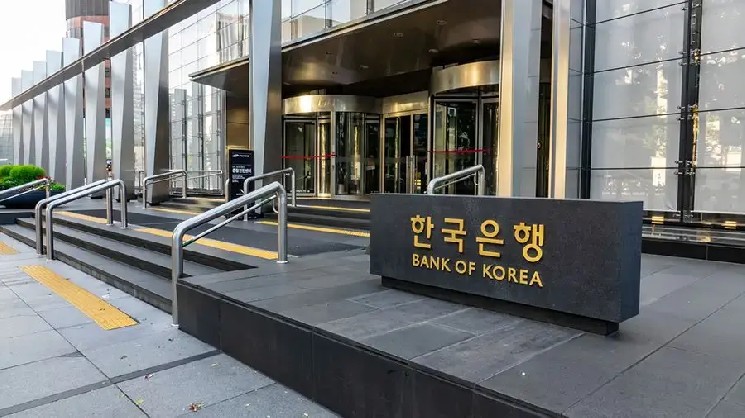
Bank of Korea Reveals Results of Tokenized Deposit Testing

The Bank of Korea has announced the results of its pilot test for tokenized deposits. Involving 28 central banks and international financial organizations, the project saw participation from major South Korean banks including KB Kookmin Bank, NH NongHyup Bank, Shinhan Bank, Woori Bank, and Hana Bank. Transactions, from payment orders to final settlement, were completed in real time, averaging just 80 seconds. The test involved 30 transactions across 17 different scenarios—such as corporate and interbank transfers—and was conducted in six currencies, including the Korean won, US dollar, and euro, with a total transaction value reaching approximately $995,000. The central bank reported that the platform operated stably throughout, despite being only partially connected to the existing banking infrastructure. Settlements using tokenized deposits were executed seamlessly, quickly, and transparently. An internal transfer of 20 million won (about $13,890) between NH NongHyup Bank and Shinhan Bank was also successfully processed via the Project Agora platform, which involved connecting to the Bank of Korea's CBDC test platform, Project Hangang. Additionally, KB Kookmin Bank and Japan's MUFG Bank tested cross-border payments using these deposit tokens—digital certificates issued by commercial banks within the pilot, not directly by the central bank. The Bank of Korea plans to continue testing payments with tokenized deposits. This follows last year's pledge by South Korean authorities to tighten regulations for won-based stablecoins, which will require approval from both the central bank and the Financial Services Commission.

cryptonews.ru3 h fa

Bank of Korea Reveals Results of Tokenized Deposit Testing

cryptonews.ru3 h fa

Trading

Spot

Articoli Popolari

Come comprare BILL

Benvenuto in HTX.com! Abbiamo reso l'acquisto di Billions Network (BILL) semplice e conveniente. Segui la nostra guida passo passo per intraprendere il tuo viaggio nel mondo delle criptovalute.Step 1: Crea il tuo Account HTXUsa la tua email o numero di telefono per registrarti il tuo account gratuito su HTX. Vivi un'esperienza facile e sblocca tutte le funzionalità,Crea il mio accountStep 2: Vai in Acquista crypto e seleziona il tuo metodo di pagamentoCarta di credito/debito: utilizza la tua Visa o Mastercard per acquistare immediatamente Billions NetworkBILL.Bilancio: Usa i fondi dal bilancio del tuo account HTX per fare trading senza problemi.Terze parti: abbiamo aggiunto metodi di pagamento molto utilizzati come Google Pay e Apple Pay per maggiore comodità.P2P: Fai trading direttamente con altri utenti HTX.Over-the-Counter (OTC): Offriamo servizi su misura e tassi di cambio competitivi per i trader.Step 3: Conserva Billions Network (BILL)Dopo aver acquistato Billions Network (BILL), conserva nel tuo account HTX. In alternativa, puoi inviare tramite trasferimento blockchain o scambiare per altre criptovalute.Step 4: Scambia Billions Network (BILL)Scambia facilmente Billions Network (BILL) nel mercato spot di HTX. Accedi al tuo account, seleziona la tua coppia di trading, esegui le tue operazioni e monitora in tempo reale. Offriamo un'esperienza user-friendly sia per chi ha appena iniziato che per i trader più esperti.

383 Totale visualizzazioniPubblicato il 2026.05.07Aggiornato il 2026.06.02

Come comprare BILL

Discussioni

Benvenuto nella Community HTX. Qui puoi rimanere informato sugli ultimi sviluppi della piattaforma e accedere ad approfondimenti esperti sul mercato. Le opinioni degli utenti sul prezzo di BILL BILL sono presentate come di seguito.

活动图片