The Quantum Threat Is Coming—Stellar Reveals Its Defense Strategy

bitcoinistPubblicato 2026-06-10Pubblicato ultima volta 2026-06-10

Introduzione

The Stellar Development Foundation has released a Quantum Preparedness Plan, aiming to migrate the entire Stellar network to quantum-safe cryptography by the end of 2027. The urgency stems from quantum computers potentially using Shor's algorithm to crack the elliptic curve cryptography currently securing blockchains. A significant challenge identified is handling dormant accounts, where quantum attacks could derive private keys from public ones, risking account takeover. Stellar's structural advantage is that its account addresses are separate from signing keys. This allows users to add quantum-safe signers via existing operations without changing their address or moving assets, unlike most other blockchains. The migration will occur in phases: post-quantum signature verification for smart contracts in 2026, native support for classic accounts in 2027, and a future deprecation of the old Ed25519 standard. However, the plan notes that zero-knowledge proof systems on the network remain vulnerable and require further research.

Dormant accounts are the hardest part. That is one of the quiet admissions buried in Stellar’s newly released Quantum Preparedness Plan, a phased roadmap to migrate the entire network to quantum-safe cryptography by the end of 2027.

The Stellar Development Foundation said it will seek community input on how to handle accounts that have gone inactive — and whether recovery mechanisms are even possible for them.

A Threat That Starts With Math

The urgency behind the plan traces back to Shor’s algorithm, a mathematical process that sufficiently advanced quantum computers could use to crack elliptic curve cryptography — the same signing method Stellar and most other blockchains rely on today.

Scientists at INRIA have already reduced the number of logical qubits needed to break 256-bit elliptic curves, while the US National Institute of Standards and Technology has revised its risk window to 2029 or earlier. Google is also targeting post-quantum readiness by that same year.

Stellar identified two core risks. The first involves validator signatures, where a breach could destabilize network consensus. The second — and more difficult — is account takeover, where a quantum machine could derive a private key directly from a public one.

With thousands of dormant accounts on the network, addressing that second threat at scale is a problem without an easy answer.

What Sets Stellar Apart

Most blockchains tie an address directly to a public key, which means going quantum-safe typically requires moving assets to an entirely new account.

Stellar works differently. Its account addresses are separate from the signing keys attached to them. Users can add or swap signers through an existing operation called set_options without touching their address, balance, or transaction history.

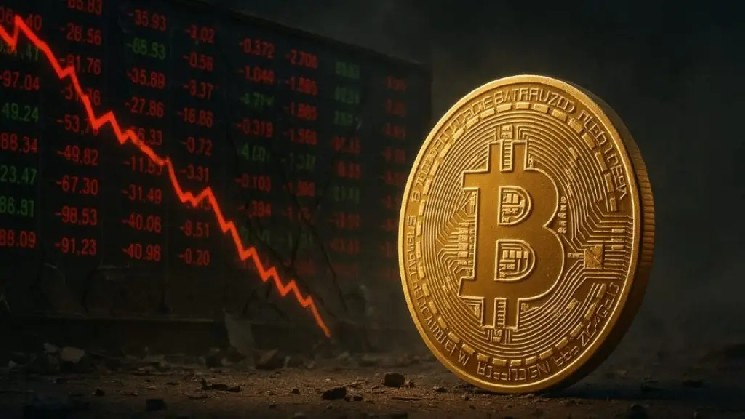
BTCUSD trading at $61,220 on the 24-hour chart: TradingView

According to the foundation, that structural design gives the network a smoother path than many of its peers.

The rollout is structured in three stages. Starting in 2026, post-quantum signature verification using NIST-standard algorithms ML-DSA-44 and ML-DSA-65 will be added to Soroban smart contracts, allowing enterprise wallets to begin migrating.

In 2027, a Core Advancement Proposal will bring quantum-safe signer types to classic accounts natively, letting all existing users add them alongside current keys.

The third stage — deprecation of the old Ed25519 standard — has no fixed date and will depend on how quantum computing develops and how ready the broader ecosystem is.

One Gap Remains Open

Not everything is covered. Reports indicate that zero-knowledge proof systems running on the network use pairing-based curves that are also vulnerable to quantum attack, and the foundation acknowledged that this area still requires further research. Separate collaboration with ZK protocol teams is planned to address it.

Featured image from Trezor, chart from TradingView

Crypto di tendenza

Domande pertinenti

QWhat is the main challenge Stellar faces in implementing its Quantum Preparedness Plan according to the article?

AThe hardest part is dealing with dormant accounts, as they are difficult to migrate to quantum-safe cryptography, and the foundation is seeking community input on how to handle or potentially recover them.

QWhat is the primary cryptographic threat that Stellar's plan aims to address?

AThe threat is Shor's algorithm, which could allow sufficiently advanced quantum computers to break the elliptic curve cryptography that Stellar and most other blockchains currently rely on for digital signatures.

QHow does Stellar's account structure provide an advantage for migrating to quantum-safe cryptography compared to other blockchains?

AOn Stellar, account addresses are separate from their signing keys. This allows users to add or swap to quantum-safe signers using the existing set_options operation without changing their address, balance, or transaction history, unlike chains where the address is tied directly to the public key.

QWhat are the three stages of Stellar's rollout plan for quantum-safe cryptography?

A1. In 2026, add post-quantum signature verification to Soroban smart contracts. 2. In 2027, introduce quantum-safe signer types natively to classic accounts via a Core Advancement Proposal. 3. A future stage to deprecate the old Ed25519 standard, with no fixed date.

QWhat specific vulnerability does the article mention is not yet fully addressed by Stellar's current quantum preparedness roadmap?

AZero-knowledge proof systems running on the network that use pairing-based curves are also vulnerable to quantum attack. The foundation acknowledged this area requires further research and plans separate collaboration with ZK protocol teams.

Letture associate

With Two Consecutive Quarters of Losses, Coinbase Must Rely on Paths Beyond Trading

Coinbase posted its second consecutive quarterly net loss of $359 million on $1.22 billion in revenue for Q2, highlighting its vulnerability to crypto market cycles where weaker prices and lower volatility reduce user trading. However, the report also reveals a strategic shift in its business model. Despite a 25% quarter-over-quarter decline in global spot trading volume, Coinbase increased its market share to a company-record 10.3%. This suggests its position as a compliant U.S. on-ramp is strengthening even in a cooler market. A key development is the diversification of revenue streams. Transaction revenue fell to $599 million, nearly equaling subscription and services revenue of $555 million. Stablecoin services, generating $292 million, are becoming a crucial revenue "floor." This income, derived from interest on the $20 billion average USDC balance held on its platform, is less tied to daily trading activity. Furthermore, while spot trading volume dropped significantly, derivatives volume held steady at $1.03 trillion. Coinbase is pushing to integrate spot, stablecoin, and derivatives liquidity to create a more interconnected and sticky ecosystem for users. The GAAP net loss includes non-cash expenses like stock-based compensation and crypto asset valuation changes. Its adjusted EBITDA remained positive at $208 million for the 14th straight quarter, indicating core operations can cover ongoing costs. The company is also reducing expenses to manage the downturn. The central question moving forward is whether Coinbase's growing market share, stablecoin revenues, and expanding product integration can sufficiently offset the inherent cyclicality of its core trading business during future market contractions.

marsbit11 min fa

With Two Consecutive Quarters of Losses, Coinbase Must Rely on Paths Beyond Trading

marsbit11 min fa

In the Age of Artificial Intelligence, We Need 'Magicians,' Not 'Managers'

In the AI era, leadership must shift from management to magic. As knowledge rapidly expires, value shifts from what leaders know to what they can facilitate. Traditional "inside-out" management, driven by internal experience, is giving way to "outside-in" thinking focused on external opportunities, customer needs, and disruptive change. The core challenge is fostering new ideas that may invalidate existing knowledge. While technologies like steam, electricity, and AI provide the "skeleton" for innovation, it is human vision—connecting technology to customer dreams—that creates magic. Historical figures like Richard Arkwright and Eldridge R. Johnson succeeded not by inventing core technologies, but by reimagining work and business models from the outside in. Leaders must transition from controllers to "architects of flourishing." Their role is to design environments where empowerment, creativity, and adaptive learning thrive. This involves granting autonomy, fostering partnerships, and building resilient systems that scale innovation. Critical leadership qualities now include judgment, creativity, and the ability to learn continuously rather than relying on static expertise. Therefore, cultivating future leaders requires a focus on timeless fundamentals, humanities for broader perspective, and social acuity, rather than over-specialization in quickly outdated technical skills. The future rewards those who respond to the unseen and create conditions for better answers to emerge. Leadership in the AI age is less about having all the answers and more about enabling others to discover them—creating organizations where people explore, imagine, and thrive.

marsbit46 min fa

In the Age of Artificial Intelligence, We Need 'Magicians,' Not 'Managers'

marsbit46 min fa

Trading

Spot

Articoli Popolari

Come comprare ONE

Benvenuto in HTX.com! Abbiamo reso l'acquisto di Harmony (ONE) semplice e conveniente. Segui la nostra guida passo passo per intraprendere il tuo viaggio nel mondo delle criptovalute.Step 1: Crea il tuo Account HTXUsa la tua email o numero di telefono per registrarti il tuo account gratuito su HTX. Vivi un'esperienza facile e sblocca tutte le funzionalità,Crea il mio accountStep 2: Vai in Acquista crypto e seleziona il tuo metodo di pagamentoCarta di credito/debito: utilizza la tua Visa o Mastercard per acquistare immediatamente HarmonyONE.Bilancio: Usa i fondi dal bilancio del tuo account HTX per fare trading senza problemi.Terze parti: abbiamo aggiunto metodi di pagamento molto utilizzati come Google Pay e Apple Pay per maggiore comodità.P2P: Fai trading direttamente con altri utenti HTX.Over-the-Counter (OTC): Offriamo servizi su misura e tassi di cambio competitivi per i trader.Step 3: Conserva Harmony (ONE)Dopo aver acquistato Harmony (ONE), conserva nel tuo account HTX. In alternativa, puoi inviare tramite trasferimento blockchain o scambiare per altre criptovalute.Step 4: Scambia Harmony (ONE)Scambia facilmente Harmony (ONE) nel mercato spot di HTX. Accedi al tuo account, seleziona la tua coppia di trading, esegui le tue operazioni e monitora in tempo reale. Offriamo un'esperienza user-friendly sia per chi ha appena iniziato che per i trader più esperti.

368 Totale visualizzazioniPubblicato il 2024.12.12Aggiornato il 2026.06.02

Come comprare ONE

Discussioni

Benvenuto nella Community HTX. Qui puoi rimanere informato sugli ultimi sviluppi della piattaforma e accedere ad approfondimenti esperti sul mercato. Le opinioni degli utenti sul prezzo di ONE ONE sono presentate come di seguito.

活动图片