CryptoQuant: "Blockchain Data Warns: It's Still Too Early to Call a True Bitcoin Bottom! Here's Why..."

cryptonews.ruPubblicato 2026-07-31Pubblicato ultima volta 2026-07-31

Introduzione

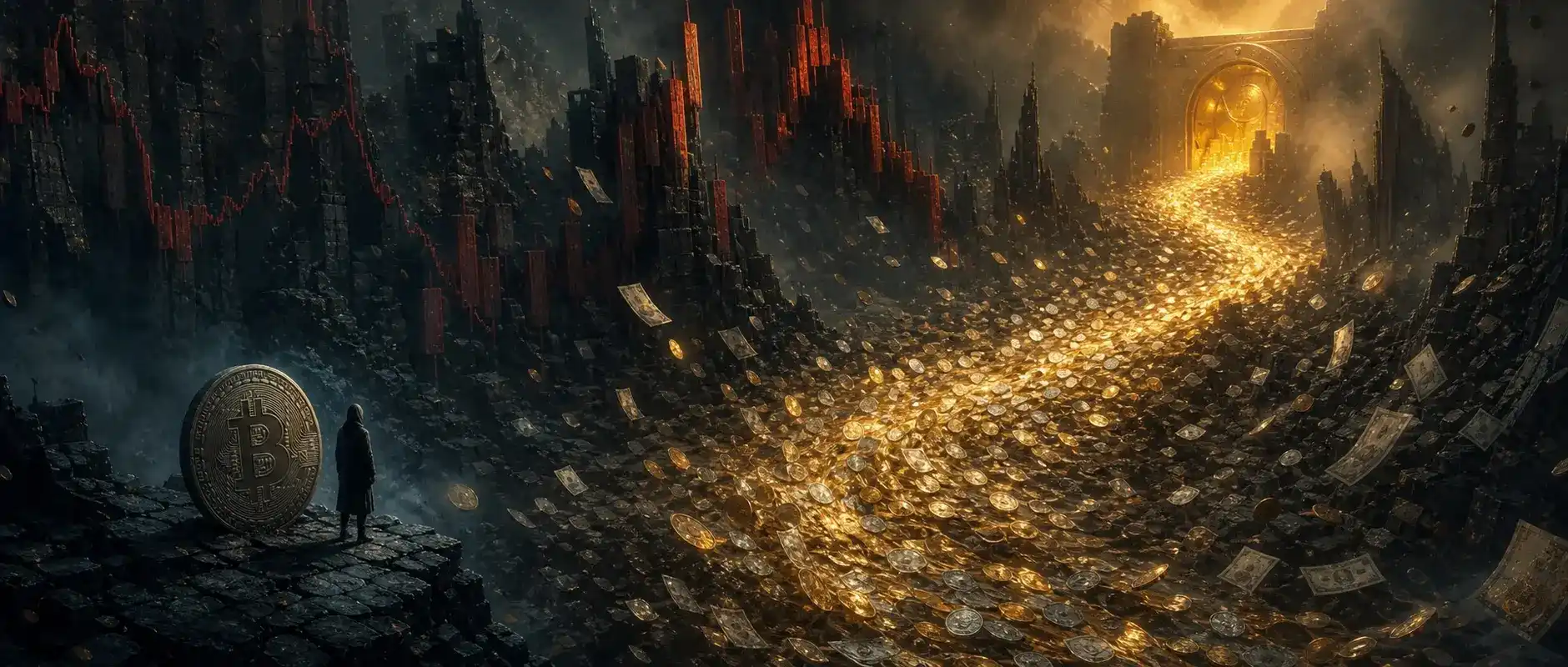
Despite recent price fluctuations in Bitcoin, blockchain data from CryptoQuant suggests the market has not yet reached a classic capitulation phase. According to analyst Julio Moreno, there is no clear sell signal, and Bitcoin has not entered a full-scale capitulation, indicating this is either a minor correction or could lead to further declines. Moreno notes that Bitcoin holders have only recently begun realizing annual losses, currently around 136,000 BTC. Historical cycles, however, saw realized losses bottom at between 1.3 million and 3.7 million BTC. This cycle could become known for the mildest loss phase in Bitcoin's history, or losses could still increase significantly from current levels. Two scenarios are outlined: the current cycle could be the one with the fewest stop-loss sales in Bitcoin's history, or the market could face further selling pressure as it has not yet found its true bottom. Moreno concludes that sell-offs on a scale characteristic of capitulation have not yet been observed, and it is too early to consider current price levels as the definitive cycle bottom.

Despite recent price fluctuations of the leading cryptocurrency Bitcoin, blockchain data indicates that the market has not yet reached the classic capitulation phase.

Julio Moreno, head of research at CryptoQuant, stated in his assessment that there is still no clear signal to sell Bitcoin, and that it has not yet entered a full capitulation phase.

According to Moreno, this suggests that $BTC and the market are either in a minor correction or could face further decline.

The analyst also noted that $BTC holders have only recently started realizing their annual losses, which currently amount to about 136,000 $BTC.

Referencing previous cycles, the analyst added that Bitcoin's annual realized losses hit a bottom when they reached between 1.3 and 3.7 million $BTC.

Moreno added that this cycle could go down in history as the mildest loss phase in Bitcoin's history, but losses could also increase significantly and surpass current levels.

In the analyst's view, the current situation points to two different scenarios. In the first scenario, the current market cycle could become the cycle with the least amount of stop-loss selling on-chain in Bitcoin's entire history. In the second scenario, the market could face further selling pressure as it has not yet reached its true bottom.

In conclusion, Moreno emphasized that selling waves on a scale that could be characterized as capitulation have not been observed yet, and it is still too early to consider current price levels as the final cycle bottom.

*This is not investment advice.

end-content

Crypto di tendenza

Domande pertinenti

QWhat is the main argument of the CryptoQuant analysis regarding the Bitcoin market?

AThe main argument is that blockchain data suggests the market has not yet reached the classic capitulation phase. There is no clear sell signal for Bitcoin, and a full-scale surrender event hasn't been observed, indicating it might be too early to call the current price levels the true bottom of the cycle.

QAccording to Julio Moreno, what are the two possible scenarios for the current Bitcoin cycle?

AThe first scenario is that the current market cycle becomes the one with the smallest amount of stop-loss selling in Bitcoin's history. The second scenario is that the market could face further selling pressure because it has not yet reached its true bottom.

QWhat is the current level of annual realized losses for Bitcoin, and how does it compare to previous cycles?

ABitcoin holders have recently started realizing annual losses of about 136,000 BTC. In previous cycles, the realized annual losses for Bitcoin bottomed between 1.3 million and 3.7 million BTC, making the current level relatively low.

QWhat does the article imply about the recent price fluctuations of Bitcoin?

AThe article implies that despite recent price fluctuations, the market may not be in a state of capitulation. It suggests the current situation could be a minor correction or potentially lead to a further price decline, as the market has not definitively bottomed.

QWhat final warning or disclaimer is provided at the end of the article?

AThe article concludes with the disclaimer: 'This is not investment advice.'

Letture associate

Stocks Fell Even More Violently Than Crypto, Where Did the Money Go?

From June to late July 2026, global stock markets, particularly technology and semiconductor stocks, experienced severe declines, with South Korea's KOSPI index facing historic circuit breakers and shedding 40% from its June peak. Key catalysts included SK Hynix's earnings miss despite record profits and competitive pressures from China's CXMT IPO. A global forced deleveraging event unfolded, devastating highly leveraged instruments like the 2x leveraged SK Hynix ETF, which lost over 80% of its value. Surprisingly, Bitcoin showed relative stability during this period, rising roughly 15% from its July low. The article clarifies this wasn't due to an inflow of equity flight capital but because Bitcoin had already undergone a significant correction in May and June, with U.S. spot Bitcoin ETFs seeing record outflows. True safe-haven flows went to gold, severing Bitcoin's short-term "digital gold" narrative. The sell-off is characterized not as an AI story collapse but a liquidity-driven清算 of crowded leveraged positions, potentially halfway through according to some analysts. For substantial capital to return to Bitcoin, the article cites necessary conditions: eased global liquidity pressure, a soft-landing Fed rate cut, and regulatory clarity from the stalled U.S. CLARITY Act. The conclusion is that Bitcoin is not a current safe haven but a pre-cleared asset. Its decoupling from tech stocks highlights its potential future role as a non-correlated asset for institutional portfolios, positioning it favorably for when global capital reallocates post-crisis.

marsbit1 h fa

Stocks Fell Even More Violently Than Crypto, Where Did the Money Go?

marsbit1 h fa

"The Final Phase Before the New Cycle". What Will Happen to Bitcoin in August

"Bitcoin Faces Crucial Test in August: Experts Predict Consolidation or Further Decline" The price of Bitcoin (BTC) is expected to remain under pressure in August, with experts anticipating either consolidation within a narrow range or a potential drop below $60,000. Despite a double-digit recovery from its July low near $58,000, BTC ended the month trading around $63,500, still roughly 50% below its October 2025 peak of $126,200. Analysts cite several headwinds: a challenging macroeconomic environment with high US interest rates and persistent inflation, which makes fixed-income assets more attractive than speculative ones like crypto. Furthermore, competition for capital is intense, with many investors favoring AI-related stocks. This is reflected in significant outflows from US spot Bitcoin ETFs, with a record $4.5 billion leaving in June and a net outflow of $5.4 billion for the first half of the year. Historically, August is a weak month for crypto, with a median return of -7.49% from 2013 to 2025. Experts also note regulatory uncertainty in the US, particularly the stalled CLARITY Act, as a dampening factor. Despite the bearish near-term outlook, several experts view the current phase as the "last phase before a new Bitcoin cycle" begins, potentially in Q4 2024. This makes it a favorable time for accumulating Bitcoin for the long term. Key price levels to watch are support at $60,000-$61,000, with a break below $58,000 potentially leading to $53,000-$55,000. A move above $67,000 could target $70,000-$75,000, though this is considered a lower probability scenario.

cryptonews.ru1 h fa

"The Final Phase Before the New Cycle". What Will Happen to Bitcoin in August

cryptonews.ru1 h fa

Trading

Spot

Articoli Popolari

Come comprare DATA

Benvenuto in HTX.com! Abbiamo reso l'acquisto di DATA Network (DATA) semplice e conveniente. Segui la nostra guida passo passo per intraprendere il tuo viaggio nel mondo delle criptovalute.Step 1: Crea il tuo Account HTXUsa la tua email o numero di telefono per registrarti il tuo account gratuito su HTX. Vivi un'esperienza facile e sblocca tutte le funzionalità,Crea il mio accountStep 2: Vai in Acquista crypto e seleziona il tuo metodo di pagamentoCarta di credito/debito: utilizza la tua Visa o Mastercard per acquistare immediatamente DATA NetworkDATA.Bilancio: Usa i fondi dal bilancio del tuo account HTX per fare trading senza problemi.Terze parti: abbiamo aggiunto metodi di pagamento molto utilizzati come Google Pay e Apple Pay per maggiore comodità.P2P: Fai trading direttamente con altri utenti HTX.Over-the-Counter (OTC): Offriamo servizi su misura e tassi di cambio competitivi per i trader.Step 3: Conserva DATA Network (DATA)Dopo aver acquistato DATA Network (DATA), conserva nel tuo account HTX. In alternativa, puoi inviare tramite trasferimento blockchain o scambiare per altre criptovalute.Step 4: Scambia DATA Network (DATA)Scambia facilmente DATA Network (DATA) nel mercato spot di HTX. Accedi al tuo account, seleziona la tua coppia di trading, esegui le tue operazioni e monitora in tempo reale. Offriamo un'esperienza user-friendly sia per chi ha appena iniziato che per i trader più esperti.

215 Totale visualizzazioniPubblicato il 2026.07.01Aggiornato il 2026.07.01

Come comprare DATA

Discussioni

Benvenuto nella Community HTX. Qui puoi rimanere informato sugli ultimi sviluppi della piattaforma e accedere ad approfondimenti esperti sul mercato. Le opinioni degli utenti sul prezzo di DATA DATA sono presentate come di seguito.

活动图片