Original | Odaily Planet Daily (@OdailyChina)
Author | Asher (@Asher_ 0210)

Yesterday, the "World Cup Champion" prediction market finally settled with a trading volume of $4.32 billion, surpassing the $3.686 billion volume for "2024 US Presidential Election Winner" to become the single highest-volume prediction event in Polymarket's history.
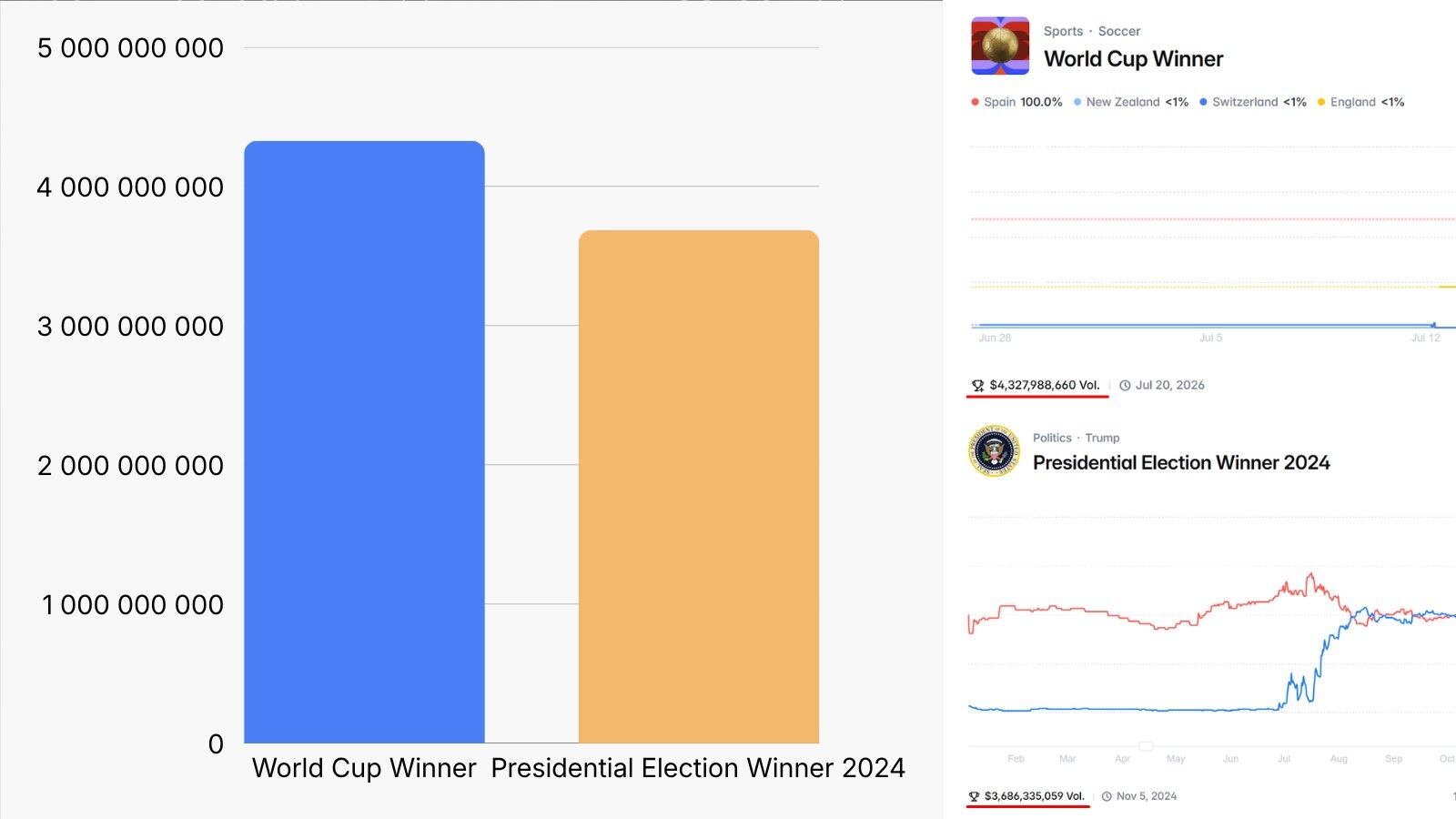
Furthermore, during the six weeks of the World Cup, the football category on Polymarket accumulated a nominal trading volume of $8.5 billion, which is 4 times the total volume of all other sports categories combined during the same period.
The 2024 US election brought Polymarket into the mainstream spotlight, and the 2026 World Cup pushed it into the higher-frequency sports market. With $8.5 billion in six weeks and $4.32 billion for a single market, Polymarket not only broke records but also found a traffic machine that operates even faster than election cycles.
Riding the World Cup Wave, Polymarket "Stealthily" Increased Fees for the Sports Category
On July 10th, towards the end of the World Cup, Polymarket raised the transaction fees for sports markets.
This change was not announced separately to regular users but appeared in the platform developer's Changelog. The Taker fee coefficient for the sports category was increased from 0.03 to 0.05; the Maker rebate ratio was reduced from 25% to 15%.
While the rate change from 0.03 to 0.05 seems small, the actual transaction cost increased by nearly 70%. Taking buying 100 shares of a sports event as an example, fees are highest when the share price is $0.5. Before the adjustment, users paid a maximum of $0.75; after the adjustment, the maximum fee rose to $1.25. As the share price approaches $0.01 or $0.99, the fees decrease symmetrically towards both ends, as shown in the table below.
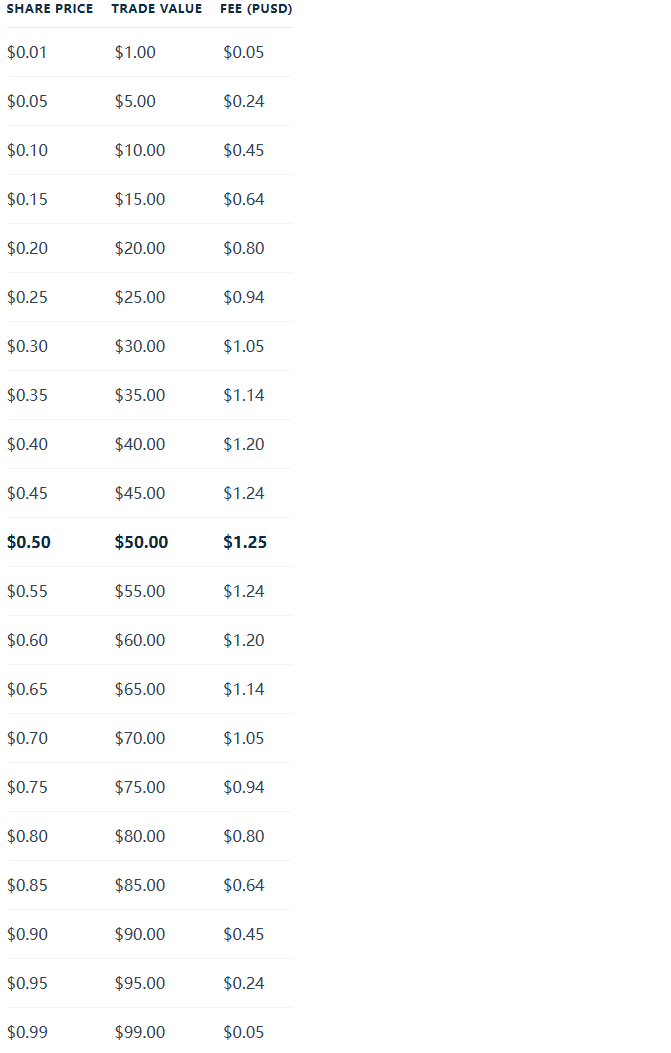
Thus, the sports category also said goodbye to Polymarket's lowest fee tier. Previously, along with politics, finance, and tech, it belonged to the platform's lower-cost transaction categories. After the adjustment, the maximum fee per 100 shares rose to $1.25, placing it in the same tier as economy, culture, and weather, only lower than the cryptocurrency market's $1.75.
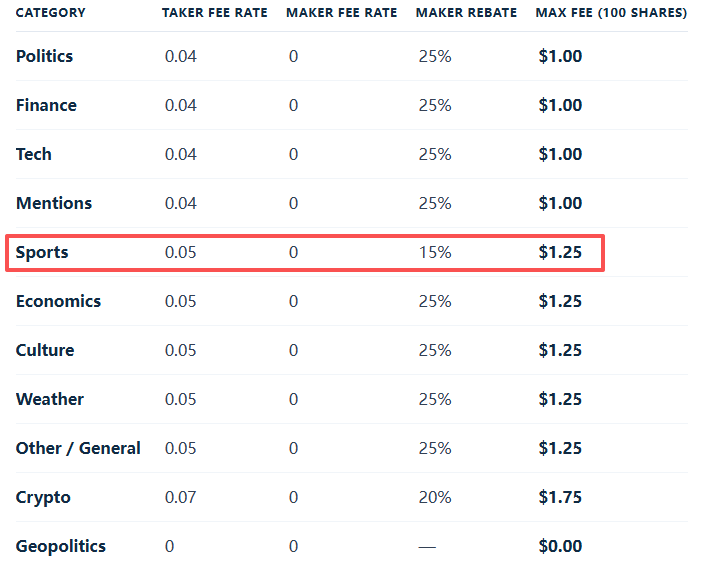
Looking back over the past six months, Polymarket's fee scope has been quietly expanding.
In January 2026, Polymarket first enabled Taker fees for the 15-minute cryptocurrency markets. In February, the fee scope expanded to some college basketball and Serie A markets. In March, all newly listed crypto markets began charging fees. After the launch of Fee Structure V2 at the end of March, categories like politics, finance, economy, culture, weather, and tech were gradually included.
For the platform, once user habits are established, increasing fees doesn't typically lead to large-scale user loss but allows the same trading volume to contribute more revenue.
The POLY Airdrop Controversy Reignites: How Much Longer Do Users Have to Wait?
Recently, the community discovered that Polymarket's official affiliated account, Polymarket Traders, deleted a tweet posted on May 13th. The original tweet had been interpreted by the community as a hint about a POLY airdrop. After the deletion, many users began revisiting the account's historical content, and discussions around "whether the airdrop plan has changed" heated up again.
The market is so sensitive because a Polymarket token launch is no longer baseless speculation. In October 2025, Polymarket's Chief Marketing Officer, Matthew Modabber, explicitly stated in a podcast: "There will be a token, and there will be an airdrop." He also mentioned that Polymarket's top priority at the time was returning to the US market, and the token plan would advance after US operations were established, praising Hyperliquid's token launch approach.
This statement once led the community to believe that POLY was only a matter of time. Since then, metrics like trading volume, market making scale, and active days have been considered by many users as potential airdrop weight factors. Even though the platform never announced snapshot times or distribution rules, users were willing to continue trading, waiting for the token plan to materialize.
The problem is that US operations are progressing, the high-traffic World Cup has ended, yet POLY still has no announced timeline. Observant users noticed that on Polymarket's official website, the help center section recently added a note stating the platform "has not announced any plans for an airdrop or token generation event" and warns users to beware of scams using airdrop claims. This doesn't mean POLY has been canceled, but for users who have waited a long time, the question is no longer *if* Polymarket will issue a token, but how much longer this "future" will be delayed.
Currently, the community has two main interpretations for the delay. One view is that Polymarket is waiting for a more suitable regulatory window. The platform is still expanding its US business, and a token launch/airdrop could bring additional regulatory complications. Deleting overly direct hints from affiliated accounts might also just be about tightening external communication before a formal plan is finalized.
The other view is that Polymarket no longer has an urgent need to issue a token and might become the next OpenSea. In the past, the platform might have relied on airdrop expectations to attract users, increase trading volume, and supplement liquidity. Now, Polymarket already boasts a massive user base and real revenue, with transaction fees steadily increasing. As the platform's reliance on a token diminishes, POLY's priority might naturally continue to be pushed back.
Previously, the community discussed *how* POLY would be airdropped and *if* trading volume would count towards weight. Now, the discussion has shifted to how much longer the wait will be and what the next hoped-for timeframe might be. The platform that lists countless prediction markets cannot seem to set a settlement date for its own airdrop.