The Billionaire Who Bought 30,000 Bitcoins at an Average Price of $632, Is He Also Starting to Sell?

Foresight NewsPubblicato 2026-07-03Pubblicato ultima volta 2026-07-03

Introduzione

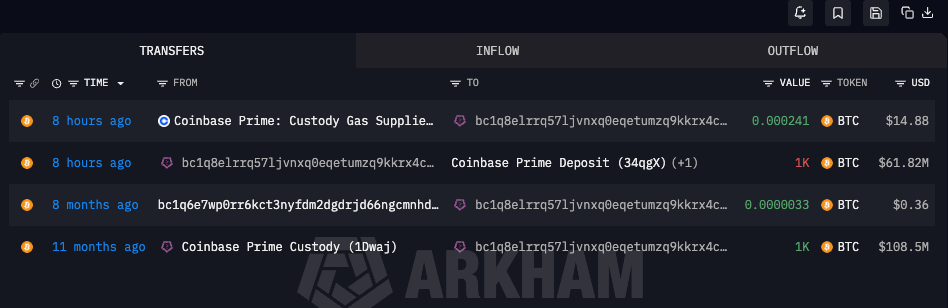
A wallet suspected to be linked to billionaire venture capitalist Tim Draper deposited 1,000 BTC (worth approximately $61.82 million) into Coinbase Prime, sparking speculation that he may be selling. In April, another associated wallet sent 150.84 BTC to Coinbase, likely at a loss. Tim Draper is a renowned Silicon Valley investor in companies like Hotmail, Skype, Tesla, and SpaceX. He is also one of the most prominent Bitcoin whales, having famously purchased 29,656 BTC for roughly $632 each in a 2014 U.S. Marshals Service auction, following a total loss of 40,000 BTC in the Mt. Gox collapse earlier that year. His total cost for approximately 31,657 BTC was about $19.7 million, which is now valued at over $1.8 billion. Draper is widely known for his long-term bullish stance on Bitcoin, famously stating, "Why would I sell the future for the past?" and claiming he is a "net buyer" who never sells. He has repeatedly predicted Bitcoin would reach $250,000, though the timeline has shifted over the years. Despite building a public persona of holding through all market cycles, these recent transfers to exchanges challenge that narrative.


Author: ChandlerZ, Foresight News


On July 3rd, according to on-chain monitoring data, a wallet address suspected to be linked to billionaire venture capitalist Tim Draper deposited 1,000 BTC into Coinbase Prime approximately 7 hours ago, worth about $61.82 million.


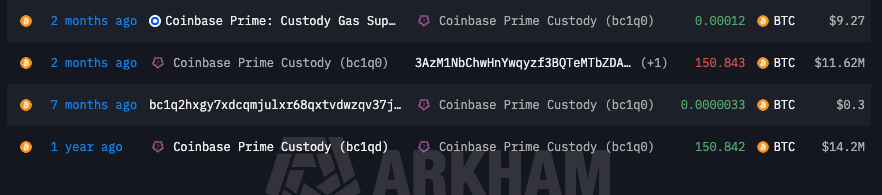
In April, another wallet linked to Tim Draper deposited 150.84 BTC (worth about $11.62 million) into Coinbase after holding for one year, suspected to be a sale, resulting in a loss of approximately $2.57 million.


Tim Draper was born in East Chicago, Indiana, and grew up in Silicon Valley. He holds a bachelor's degree in Electrical Engineering from Stanford University and an MBA from Harvard Business School. His grandfather, William Henry Draper Jr., was a founder of one of the earliest venture capital funds in Silicon Valley. His father, Bill Draper, continued the family business. Tim himself founded Draper Associates in 1985 and later co-founded DFJ (Draper Fisher Jurvetson).


His sister, Polly Draper, is an American actress and screenwriter. Both of his sons, Adam and Billy, entered the venture capital industry, with Adam founding Boost VC, focused on the crypto sector. Four generations have spanned the complete Silicon Valley cycle, from transistors to blockchain. Beyond cryptocurrency, Draper is best known as an early investor in Hotmail, Skype, Tesla, and SpaceX.


Tim Draper is one of Silicon Valley's most well-known Bitcoin whales. In 2014, he bought nearly 29,656 BTC at an average price of about $632 during a U.S. Marshals Service auction, for a total of approximately $18.7 million. At its historical peak, this batch of Bitcoin was worth about $3.74 billion, and is currently worth about $1.82 billion.


40,000 Lost to Zero, and the 30,000 Auctioned Bitcoin


Tim Draper encountered the concept that "digital assets have real value" even before Bitcoin was born.


In a Cointelegraph crypto story video, Tim Draper said that many years ago he met an entrepreneur in South Korea who needed to spend $40 to buy a virtual sword in the online game "Lineage" as a birthday gift for his son. A successful industrialist was using real currency to purchase a digital item that existed only on a server. He later said in an interview that this moment made him realize the boundary between the virtual world and the real economy would eventually blur. Seven years later, when the Bitcoin whitepaper appeared, he almost approached it with a pre-existing cognitive framework.


Tim Draper's first large-scale Bitcoin investment occurred around 2011, buying approximately 41,000 bitcoins at an average price of about $6, for a total investment of about $250,000. At today's price, this holding would be worth over $2.5 billion. But he never had the chance to profit from it. In February 2014, Mt. Gox, then the world's largest Bitcoin exchange, announced that approximately 850,000 bitcoins were stolen and filed for bankruptcy. Tim Draper's roughly 40,000 bitcoins were among those lost.


From $6 to zero, the entire first massive investment was wiped out. Most people would leave the market here. But Tim Draper did the opposite the same year.


On June 27, 2014, the U.S. Marshals Service held a public auction for bitcoins seized from Silk Road. When the FBI arrested Silk Road founder Ross Ulbricht in October 2013, they seized about 144,000 bitcoins. The first batch of about 30,000 was divided into 10 blocks for auction. 45 bidders submitted 63 bids. Participants included Barry Silbert's SecondMarket (which organized a bidding consortium of 42 investors), Pantera Capital, and Binary Financial. The Marshals Service originally planned to sell these bitcoins to different buyers. However, Tim Draper placed the highest bid on every single block, taking all 29,657 bitcoins for himself, paying about $19 million.


This event sparked extensive coverage in tech and financial media at the time: a person who had just lost 40,000 bitcoins on Mt. Gox turned around and bought back 30,000 in a single federal auction. His plan at the time was to partner with an exchange called Vaurum (later renamed Mirror) to provide cryptocurrency liquidity in emerging markets (especially in places like India) using this batch of bitcoins. This project ultimately did not scale up, but those 30,000 bitcoins remained in his possession.


In the second round of the Marshals Service auction in December of the same year, Tim Draper secured another 2,000 BTC, when the price had fallen to about $375. The two rounds combined totaled approximately 31,657 bitcoins, with a total cost of about $19.7 million.


A more ironic follow-up is that the bitcoins Tim Draper purchased were assets confiscated from Ross Ulbricht. Ulbricht was sentenced to life imprisonment without parole for operating Silk Road. Tim Draper later publicly criticized this sentence as "excessively harsh." In January 2025, on his first day in office, President Trump granted Ulbricht a full pardon.


The $250,000 Prediction, the Theranos Stain, and a Bitcoin Tie


Tim Draper gained widespread recognition outside the crypto community through his aggressive Bitcoin price predictions. The most successful one occurred in September 2014. With Bitcoin trading around $413, Tim Draper told Fox Business in an interview that Bitcoin would reach $10,000 within three years. On November 29, 2017, Bitcoin first broke $10,000, almost exactly three years later. This precise prediction established a credibility base for all his bolder judgments thereafter.


In April 2018, at an event at the Draper University he founded, Tim Draper declared that Bitcoin would reach $250,000 by the end of 2022, when Bitcoin was trading around $8,100. Since then, this number became a moving target through bull and bear cycles, with the target date pushed from 2022 to mid-2023, then to June 2025, and then to the end of 2025.


In April 2026, during a keynote speech on the Nakamoto Stage at the Bitcoin 2026 conference in Las Vegas, Tim Draper again stated he had "reason to believe" Bitcoin would reach $250,000 within 18 months. He emphasized that the path of monetary evolution might transition from fiat to stablecoins, and ultimately to Bitcoin. It would be irresponsible for companies not to allocate Bitcoin while holding large cash reserves, suggesting companies allocate at least 5% to 15% of assets to Bitcoin, families reserve at least 6 months' worth of living expenses in Bitcoin, and governments should hold sufficient Bitcoin to cope with currency crises.


Tim Draper has a trait that runs through all his decisions: once he believes in something, he goes all-in, regardless of the outcome.


This trait has made him a lot of money. In the 1990s, he invested in Hotmail, personally designed the signature line "Get your free email at Hotmail," and co-created the concept of "viral marketing" with his partners, later selling it to Microsoft for about $400 million. He invested for about 10% equity in Skype, which was acquired by eBay for $4.1 billion. He also participated in early rounds of Tesla and SpaceX. The Forbes 2026 rich list estimated his net worth at approximately $3.27 billion.


But the same trait also made him a laughingstock. As a former neighbor and close friend of Elizabeth Holmes, Tim Draper provided her with her first $1 million angel investment when Theranos was founded in 2003. After the Theranos scandal broke, Tim Draper publicly defended her multiple times, believing her ideas were great, even describing the investigation against her as a "political persecution" and a "witch hunt."


He appeared as an interviewee in the HBO documentary "The Inventor," but audiences mostly remembered the purple and gold Bitcoin tie on his chest. TIME magazine called him the documentary's "hidden protagonist."


"Why Would I Sell the Future for the Past?"


Tim Draper's most famous quote about Bitcoin comes from a Bloomberg interview. When asked if he would consider selling Bitcoin for dollars, his response later became one of the most cited quotes in the crypto community: "Why would I sell the future for the past?"


He has publicly stated multiple times that only 5% of his net worth is in fiat currency, with the rest entirely in Bitcoin and crypto assets, and that he is a "net buyer," never selling.


In 2018, when Bitcoin fell from $20,000 to $3,000, he said in an interview that "fiat currency is the past," and continued buying. In 2022, when Bitcoin crashed from $69,000 to $16,000, he told Fortune another widely circulated phrase: "Bull markets make me nervous; bear markets are my home turf." Throughout 2022, as the crypto industry faced consecutive implosions with the collapse of FTX, the implosion of Luna, and the bankruptcy of Three Arrows Capital, there is no public record showing Draper sold a single bitcoin.


The bitcoins purchased for $19 million in 2014 are still worth over $1.82 billion today, a return of nearly 100x. Even selling them all would hardly constitute a liquidation. But over 12 years, Draper has built a public persona as someone who "doesn't sell a single coin." Every transfer to an exchange makes this persona harder to maintain.

Crypto di tendenza

Domande pertinenti

QWho is Tim Draper and why is he notable in the cryptocurrency world?

ATim Draper is a billionaire venture capitalist from Silicon Valley. He is notably one of the largest known Bitcoin 'whales,' having purchased nearly 29,656 BTC at an average price of about $632 in a 2014 U.S. Marshals Service auction. He is also an early investor in major companies like Hotmail, Skype, Tesla, and SpaceX.

QWhat recent transaction suggests Tim Draper might be selling Bitcoin?

AOn July 3rd, a wallet address suspected to be linked to Tim Draper deposited 1,000 BTC (worth approximately $61.82 million) to Coinbase Prime. This follows a similar transaction in April where another associated wallet deposited 150.84 BTC (worth about $11.62 million) to Coinbase, resulting in an estimated loss of $2.57 million.

QWhat was Tim Draper's first major Bitcoin investment and what happened to it?

AHis first major Bitcoin investment was around 2011 when he bought approximately 41,000 BTC at an average price of about $6, with a total investment of around $250,000. However, this entire holding was lost in the 2014 collapse of the Mt. Gox exchange, where about 40,000 of his Bitcoins were among the assets declared missing.

QWhat is Tim Draper's famous long-term price prediction for Bitcoin?

ATim Draper is famously known for predicting that Bitcoin's price will reach $250,000. He first made this prediction in April 2018 when Bitcoin was around $8,100. He has since reiterated this target multiple times, most recently at the Bitcoin 2026 conference, stating he had 'reasons to believe' Bitcoin would hit $250,000 within 18 months.

QWhat quote best summarizes Tim Draper's philosophy about not selling Bitcoin?

AWhen asked by a Bloomberg reporter if he would consider selling Bitcoin for U.S. dollars, Draper famously replied: 'Why would I sell the future for the past?' This quote has become widely cited in the crypto community to represent his long-term, bullish stance on holding Bitcoin as the future of money.

Letture associate

Building USDC by Its Own Hands, Why Does Coinbase Turn to Support Competitor OUSD?

Coinbase, a key distributor of the dominant stablecoin USDC, has joined over 140 major companies—including Visa, Mastercard, and BlackRock—as a founding member of the Open USD (OUSD) alliance, a move that directly challenges the current stablecoin economic model. The new project aims to upend the established profit structure by offering zero minting and redemption fees and allocating the majority of reserve interest earnings to distribution partners, rather than the issuer. This shift highlights a growing power struggle in the $320+ billion stablecoin market, where platforms with massive user bases are demanding a larger share of the revenue generated from the underlying reserves. Circle, the issuer of USDC, saw its stock plummet 16% on the day of the OUSD announcement, reflecting investor concern over the potential strain on its crucial partnership with Coinbase. While Coinbase earned over $900 million from its USDC partnership in 2024, its support for a competing model gives it significant leverage as its revenue-sharing agreement with Circle nears expiration in August 2026. Circle CEO Jeremy Allaire defended the USDC model, emphasizing its decade-long development, deep liquidity, and extensive ecosystem integration, which he argues cannot be easily replicated by a large, potentially slow-moving consortium. He also questioned the sustainability of a zero-fee model and warned that diverting all reserve interest would leave issuers without funds for critical compliance and operational infrastructure. Analysts remain skeptical of OUSD's prospects, citing the "cold start" problem of building liquidity, potential governance challenges within a large alliance, and heightened regulatory scrutiny. The emergence of OUSD signals a broader industry bifurcation, where stablecoins are increasingly viewed as backend settlement tools. The core competition is shifting from technology to a direct negotiation over how profits from the network are distributed between issuers and the powerful distribution channels.

Foresight News1 h fa

Building USDC by Its Own Hands, Why Does Coinbase Turn to Support Competitor OUSD?

Foresight News1 h fa

Trading

Spot

Articoli Popolari

Cosa è BITCOIN

Comprendere HarryPotterObamaSonic10Inu (ERC-20) e la sua posizione nel mondo delle criptovalute Negli ultimi anni, il mercato delle criptovalute ha assistito a un aumento della popolarità delle meme coin, catturando l'interesse non solo dei trader, ma anche di coloro che cercano coinvolgimento comunitario e valore di intrattenimento. Tra questi token unici c'è HarryPotterObamaSonic10Inu (ERC-20), un progetto intrigante che mescola riferimenti culturali nel tessuto delle criptovalute. Questo articolo esplora gli aspetti chiave di HarryPotterObamaSonic10Inu, analizzando i suoi meccanismi, l'etica guidata dalla comunità e il suo coinvolgimento con il panorama crittografico più ampio. Che cos'è HarryPotterObamaSonic10Inu (ERC-20)? Come suggerisce il suo nome, HarryPotterObamaSonic10Inu è una meme coin costruita sulla blockchain di Ethereum, classificata secondo lo standard ERC-20. A differenza delle criptovalute tradizionali che possono enfatizzare l'utilità pratica o il potenziale investimento, questo token prospera grazie al valore di intrattenimento e alla forza della sua comunità. Il progetto mira a creare un ambiente in cui gli utenti coinvolti possono riunirsi, condividere idee e partecipare ad attività ispirate a diversi fenomeni culturali. Una caratteristica notevole di HarryPotterObamaSonic10Inu è la zero tassa sulle transazioni. Questo elemento allettante tende a incoraggiare il trading e il coinvolgimento della comunità, privo di costi aggiuntivi che possono scoraggiare i trader di piccole dimensioni. L'offerta totale della moneta è fissata a un miliardo di token, un numero che segna la sua intenzione di mantenere una circolazione sostanziale all'interno della comunità. Creatore di HarryPotterObamaSonic10Inu (ERC-20) Le origini di HarryPotterObamaSonic10Inu sono avvolte in un certo mistero; i dettagli sul creatore rimangono sconosciuti. Lo sviluppo di questo token non presenta un team identificabile o un piano esplicito, cosa non rara nel settore delle meme coin. Invece, il progetto è emerso organicamente, con il suo progresso fortemente dipendente dall'entusiasmo e dalla partecipazione della sua comunità. Investitori di HarryPotterObamaSonic10Inu (ERC-20) Per quanto riguarda investimenti esterni e finanziamenti, HarryPotterObamaSonic10Inu rimane ambiguo. Il token non elenca alcuna fondazione di investimento conosciuta o un sostegno organizzativo significativo. Invece, la linfa vitale del progetto è la sua comunità di base, che informa la sua crescita e sostenibilità attraverso azioni collettive e coinvolgimento nello spazio crittografico. Come funziona HarryPotterObamaSonic10Inu (ERC-20)? In quanto meme coin, HarryPotterObamaSonic10Inu opera principalmente al di fuori delle strutture tradizionali che governano spesso il valore degli asset. Ci sono diversi aspetti distintivi che definiscono il funzionamento del progetto: Transazioni senza tasse: Senza costi fiscali sulle transazioni, gli utenti possono comprare e vendere liberamente il token senza preoccuparsi di costi nascosti. Coinvolgimento della comunità: Il progetto prospera sull'interazione della comunità, sfruttando le piattaforme social per creare entusiasmo e facilitare il coinvolgimento. Discussioni, condivisione di contenuti e coinvolgimento sono elementi cruciali che aiutano ad espandere la sua portata e a favorire la lealtà tra i sostenitori. Nessuna utilità pratica: Va notato che HarryPotterObamaSonic10Inu non offre un'utilità concreta all'interno dell'ecosistema finanziario. Piuttosto, è classificato come un token principalmente per attività di intrattenimento e comunitarie. Riferimento culturale: Il token incorpora astutamente elementi della cultura pop per attirare interesse, collegandosi a appassionati di meme e seguaci delle criptovalute. HarryPotterObamaSonic10Inu esemplifica come le meme coin operino in modo diverso rispetto ai progetti di criptovalute più tradizionali, entrando nel mercato come costrutti sociali innovativi piuttosto che come asset utilitari. Cronologia di HarryPotterObamaSonic10Inu (ERC-20) La storia di HarryPotterObamaSonic10Inu è segnata da diversi traguardi notevoli: Creazione: Il token è emerso da un meme virale, catturando l'immaginazione di molti appassionati di criptovalute. Le date di creazione specifiche non sono disponibili, sottolineando la sua crescita organica. Inserimento negli scambi: HarryPotterObamaSonic10Inu ha fatto il suo ingresso in vari scambi, consentendo un accesso e un trading più facili da parte della comunità. Iniziative di coinvolgimento della comunità: Attività in corso volte a migliorare l'interazione della comunità, comprese gare, campagne sui social media e generazione di contenuti da parte di fan e sostenitori. Piani di espansione futura: La tabella di marcia del progetto include il lancio di una collezione NFT, merchandising e un sito di eCommerce relativo ai suoi temi culturali, coinvolgendo ulteriormente la comunità e cercando di aggiungere più dimensioni al suo ecosistema. Punti chiave su HarryPotterObamaSonic10Inu (ERC-20) Natura guidata dalla comunità: Il progetto dà priorità al contributo collettivo e alla creatività, garantendo che il coinvolgimento degli utenti sia al centro del suo sviluppo. Classificazione come meme coin: Rappresenta l'epitome delle criptovalute basate sull'intrattenimento, distinguendosi dai veicoli d'investimento tradizionali. Nessuna affiliazione diretta con Bitcoin: Nonostante la somiglianza nel nome del ticker, HarryPotterObamaSonic10Inu è distintivo e non ha alcuna relazione con Bitcoin o altre criptovalute consolidate. Focus sulla collaborazione: HarryPotterObamaSonic10Inu è progettato per creare uno spazio per la collaborazione e la condivisione di storie tra i suoi detentori, fornendo un canale per la creatività e il legame comunitario. Prospettive future: L'ambizione di espandersi oltre il suo presupposto iniziale verso NFT e merchandising delinea un percorso per il progetto per potenzialmente entrare in strade più mainstream all'interno della cultura digitale. Poiché le meme coin continuano a catturare l'immaginazione della comunità crittografica, HarryPotterObamaSonic10Inu (ERC-20) si distingue per i suoi legami culturali e il suo approccio centrato sulla comunità. Anche se potrebbe non adattarsi al modello tipico di un token orientato all'utilità, la sua essenza risiede nella gioia e nella camaraderia coltivate tra i suoi sostenitori, evidenziando la natura in evoluzione delle criptovalute in un'epoca sempre più digitale. Con la continuazione dello sviluppo del progetto, sarà importante osservare come le dinamiche della comunità influenzano la sua traiettoria nel panorama in continuo cambiamento della tecnologia blockchain.

1.7k Totale visualizzazioniPubblicato il 2024.04.01Aggiornato il 2024.12.03

Cosa è BITCOIN

Come comprare BTC

Benvenuto in HTX.com! Abbiamo reso l'acquisto di Bitcoin (BTC) semplice e conveniente. Segui la nostra guida passo passo per intraprendere il tuo viaggio nel mondo delle criptovalute.Step 1: Crea il tuo Account HTXUsa la tua email o numero di telefono per registrarti il tuo account gratuito su HTX. Vivi un'esperienza facile e sblocca tutte le funzionalità,Crea il mio accountStep 2: Vai in Acquista crypto e seleziona il tuo metodo di pagamentoCarta di credito/debito: utilizza la tua Visa o Mastercard per acquistare immediatamente BitcoinBTC.Bilancio: Usa i fondi dal bilancio del tuo account HTX per fare trading senza problemi.Terze parti: abbiamo aggiunto metodi di pagamento molto utilizzati come Google Pay e Apple Pay per maggiore comodità.P2P: Fai trading direttamente con altri utenti HTX.Over-the-Counter (OTC): Offriamo servizi su misura e tassi di cambio competitivi per i trader.Step 3: Conserva Bitcoin (BTC)Dopo aver acquistato Bitcoin (BTC), conserva nel tuo account HTX. In alternativa, puoi inviare tramite trasferimento blockchain o scambiare per altre criptovalute.Step 4: Scambia Bitcoin (BTC)Scambia facilmente Bitcoin (BTC) nel mercato spot di HTX. Accedi al tuo account, seleziona la tua coppia di trading, esegui le tue operazioni e monitora in tempo reale. Offriamo un'esperienza user-friendly sia per chi ha appena iniziato che per i trader più esperti.

4.1k Totale visualizzazioniPubblicato il 2024.12.12Aggiornato il 2026.06.02

Come comprare BTC

Cosa è $BITCOIN

ORO DIGITALE ($BITCOIN): Un'Analisi Completa Introduzione all'ORO DIGITALE ($BITCOIN) L'ORO DIGITALE ($BITCOIN) è un progetto basato su blockchain che opera sulla rete Solana, con l'obiettivo di combinare le caratteristiche dei metalli preziosi tradizionali con l'innovazione delle tecnologie decentralizzate. Sebbene condivida un nome con Bitcoin, spesso definito “oro digitale” a causa della sua percezione come riserva di valore, l'ORO DIGITALE è un token separato progettato per creare un ecosistema unico all'interno del panorama Web3. Il suo obiettivo è posizionarsi come un asset digitale alternativo valido, anche se i dettagli riguardanti le sue applicazioni e funzionalità sono ancora in fase di sviluppo. Cos'è l'ORO DIGITALE ($BITCOIN)? L'ORO DIGITALE ($BITCOIN) è un token di criptovaluta esplicitamente progettato per l'uso sulla blockchain di Solana. A differenza di Bitcoin, che fornisce un ruolo di stoccaggio di valore ampiamente riconosciuto, questo token sembra concentrarsi su applicazioni e caratteristiche più ampie. Aspetti notevoli includono: Infrastruttura Blockchain: Il token è costruito sulla blockchain di Solana, nota per la sua capacità di gestire transazioni ad alta velocità e a basso costo. Dinamiche di Offerta: L'ORO DIGITALE ha un'offerta massima fissata a 100 quadrilioni di token (100P $BITCOIN), sebbene i dettagli riguardanti la sua offerta circolante siano attualmente non divulgati. Utilità: Sebbene le funzionalità precise non siano esplicitamente delineate, ci sono indicazioni che il token potrebbe essere utilizzato per varie applicazioni, potenzialmente coinvolgendo applicazioni decentralizzate (dApp) o strategie di tokenizzazione degli asset. Chi è il Creatore dell'ORO DIGITALE ($BITCOIN)? Attualmente, l'identità dei creatori e del team di sviluppo dietro l'ORO DIGITALE ($BITCOIN) rimane sconosciuta. Questa situazione è tipica tra molti progetti innovativi nel settore blockchain, in particolare quelli allineati con la finanza decentralizzata e i fenomeni delle meme coin. Sebbene tale anonimato possa favorire una cultura guidata dalla comunità, intensifica le preoccupazioni riguardo alla governance e alla responsabilità. Chi sono gli Investitori dell'ORO DIGITALE ($BITCOIN)? Le informazioni disponibili indicano che l'ORO DIGITALE ($BITCOIN) non ha alcun sostenitore istituzionale noto o investimenti di venture capital prominenti. Il progetto sembra operare su un modello peer-to-peer incentrato sul supporto e sull'adozione della comunità piuttosto che su percorsi di finanziamento tradizionali. La sua attività e liquidità si trovano principalmente su exchange decentralizzati (DEX), come PumpSwap, piuttosto che su piattaforme di trading centralizzate consolidate, evidenziando ulteriormente il suo approccio di base. Come Funziona l'ORO DIGITALE ($BITCOIN) Le meccaniche operative dell'ORO DIGITALE ($BITCOIN) possono essere elaborate in base al suo design blockchain e alle caratteristiche della rete: Meccanismo di Consenso: Sfruttando il proof-of-history (PoH) unico di Solana combinato con un modello di proof-of-stake (PoS), il progetto garantisce una validazione efficiente delle transazioni contribuendo all'alta performance della rete. Tokenomics: Sebbene meccanismi deflazionistici specifici non siano stati dettagliati ampiamente, l'ampia offerta massima di token implica che potrebbe soddisfare microtransazioni o casi d'uso di nicchia che devono ancora essere definiti. Interoperabilità: Esiste il potenziale per l'integrazione con l'ecosistema più ampio di Solana, inclusi vari piattaforme di finanza decentralizzata (DeFi). Tuttavia, i dettagli riguardanti integrazioni specifiche rimangono non specificati. Cronologia degli Eventi Chiave Ecco una cronologia che evidenzia traguardi significativi riguardanti l'ORO DIGITALE ($BITCOIN): 2023: Il dispiegamento iniziale del token avviene sulla blockchain di Solana, contrassegnato dal suo indirizzo di contratto. 2024: L'ORO DIGITALE guadagna visibilità poiché diventa disponibile per il trading su exchange decentralizzati come PumpSwap, consentendo agli utenti di scambiarlo contro SOL. 2025: Il progetto assiste a un'attività di trading sporadica e a un potenziale interesse per impegni guidati dalla comunità, sebbene non siano state documentate partnership significative o avanzamenti tecnici fino ad ora. Analisi Critica Punti di Forza Scalabilità: L'infrastruttura sottostante di Solana supporta alti volumi di transazioni, il che potrebbe migliorare l'utilità di $BITCOIN in vari scenari di transazione. Accessibilità: Il potenziale basso prezzo di trading per token potrebbe attrarre investitori al dettaglio, facilitando una partecipazione più ampia grazie a opportunità di proprietà frazionata. Rischi Mancanza di Trasparenza: L'assenza di sostenitori, sviluppatori o di un processo di audit pubblicamente noti potrebbe generare scetticismo riguardo alla sostenibilità e all'affidabilità del progetto. Volatilità del Mercato: L'attività di trading è fortemente dipendente dal comportamento speculativo, il che può comportare una significativa volatilità dei prezzi e incertezze per gli investitori. Conclusione L'ORO DIGITALE ($BITCOIN) emerge come un progetto intrigante ma ambiguo all'interno dell'evolvente ecosistema di Solana. Sebbene tenti di sfruttare la narrativa dell'“oro digitale”, la sua partenza dal ruolo consolidato di Bitcoin come riserva di valore sottolinea la necessità di una chiara differenziazione della sua utilità e struttura di governance. L'accettazione e l'adozione future dipenderanno probabilmente dall'affrontare l'attuale opacità e dalla definizione più esplicita delle sue strategie operative ed economiche. Nota: Questo rapporto comprende informazioni sintetizzate disponibili a ottobre 2023, e potrebbero essersi verificati sviluppi oltre il periodo di ricerca.

118 Totale visualizzazioniPubblicato il 2025.05.13Aggiornato il 2025.05.13

Cosa è $BITCOIN

Discussioni

Benvenuto nella Community HTX. Qui puoi rimanere informato sugli ultimi sviluppi della piattaforma e accedere ad approfondimenti esperti sul mercato. Le opinioni degli utenti sul prezzo di BTC BTC sono presentate come di seguito.

活动图片