Author|The Block
Compilation| WuBlockchain
On August 14th, Tether CEO Paolo Ardoino provided a detailed explanation of the comprehensive independent audit conducted by KPMG U.S., one of the Big Four accounting firms, during an exclusive interview with The Starting Block. The audit covered the financial statements of Tether International, S.A. de C.V. for the year ended December 31, 2025. Ardoino stated that Tether's balance sheet is not complex, and the previous delay in completing a full audit was mainly due to the hostile attitude of the previous U.S. administration towards the digital asset industry. In the future, Tether plans to undergo a full financial audit annually while continuing to release quarterly attestation reports.
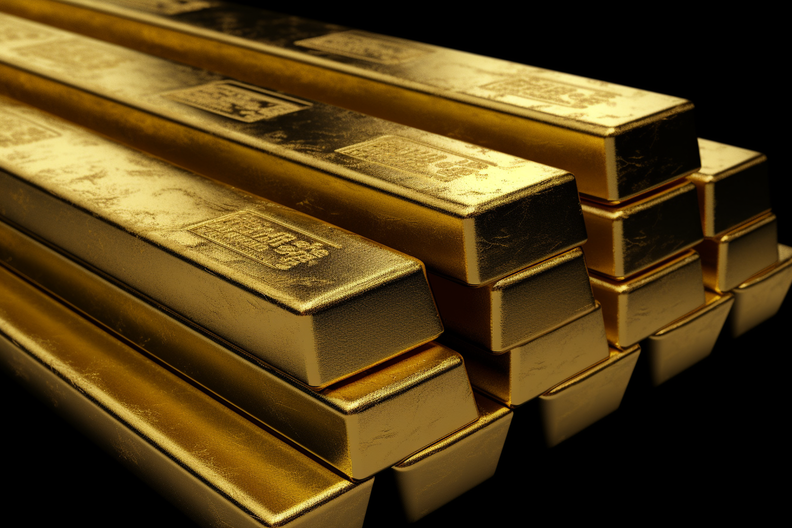
In addition, Ardoino responded to questions surrounding Tether's reserves, equity transparency, and private financing. He said Tether does not need external capital, but there is enormous market interest in its shares, and the company will carefully select potential shareholders aligned with its mission. He also revealed that Tether has accumulated approximately 150 tons of gold and over 100,000 Bitcoins, and intends to allocate budget to support work utilizing AI to audit Bitcoin code and wallet security.
Guest views do not represent WuBlockchain's perspective and do not constitute any investment advice. Please strictly adhere to local laws and regulations. Audio transcription and translation were completed by GPT and may contain errors.
Why Did Tether Only Complete a Full Financial Audit Now?
Gareth Jenkinson: Welcome back to The Starting Block. In this episode, we have an online exclusive interview with Tether CEO Paolo Ardoino. In the past 24 hours, Tether announced receiving a formal audit from a Big Four accounting firm, something critics have demanded for years. We invited Paolo to detail this audit. First, it's great to have you on the show again. How are you feeling?
Paolo Ardoino: Thank you very much, Gareth. For Tether and myself, this is undoubtedly a very important day. Tether was founded in 2014, and we have worked very hard over the years to build an excellent technology. Today, traditional financial institutions are also starting to pay attention to this technology.
Having a Big Four accounting firm complete the full financial audit we previously promised is like the final cherry on top of a beautiful cake. I can't describe how excited the entire team is. Everyone is thrilled. It feels very good.
Gareth Jenkinson: I entered this industry in 2017, much later than you. I still remember in the first couple of years, Tether faced a lot of criticism for not having an audit for a long time. Can you talk about why completing an audit was so difficult in the past and what efforts were made to finally achieve this?
Paolo Ardoino: First, I want to clarify that the entity audited is Tether International, S.A. de C.V., the issuer of USDT. Technically, auditing this entity is actually quite simple because our balance sheet only contains a few types of assets. Therefore, I don't think the operational complexity of conducting such an audit is high.
We have a very robust bookkeeping process, extremely strict management, and are very risk-averse. Everyone should recall what happened in the digital asset industry in 2022 and 2023. Our main competitor was once on the brink of crisis due to several banks and their exposure to those banks, but Tether navigated through these very difficult periods smoothly each time.
However, the situation is different when the world's most important country, the United States, has a government hostile to the industry, as was the case with the previous U.S. administration. Especially when important figures like Elizabeth Warren publicly criticized Tether, even hinting that audit firms should steer clear of us. This created some uncertainty for accounting firms.
The current U.S. government, however, has made it clear that digital assets are very important for the future of the United States and the world. It is excellent technology, and the U.S. wants to lead in this field. Therefore, we almost immediately re-engaged in discussions with several Big Four accounting firms and ultimately decided to sign with KPMG U.S.
Tether Chose KPMG U.S. to Undergo the Most Stringent Scrutiny Possible
Paolo Ardoino: Interestingly, in the past, even choosing a non-U.S. accounting firm like BDO for an attestation report would spark controversy. So, we decided to put ourselves under the most stringent scrutiny possible by partnering with KPMG U.S.
We proved our capability throughout this process and demonstrated that we can handle such scrutiny. The entire team was fully oriented towards completing this task. I have said many times that a full audit would be our top priority. I am very grateful that the change in the U.S. government's stance allowed these accounting firms to return to the negotiating table.
For a company like Tether, the balance sheet itself is not complex. Liabilities on one side are the tokens issued, and on the other side are all the reserves backing those tokens. According to attestation data as of December 31, 2025, we have over $6 billion in surplus equity, a figure also confirmed by the auditor.
These are all very important. Going forward, we will undergo a full financial audit annually while continuing to release quarterly attestation reports. I believe this sets the highest level of transparency standard in this industry.
Ardoino: Tether Redeemed Approximately $7 Billion Within 48 Hours
Gareth Jenkinson: Over the years, I've always found this interesting. One of the main criticisms of Tether has been: how do we know Tether isn't minting massive amounts of USDT without the collateral? This is why the market considered an audit so necessary.
However, even within the past 24 hours, I still see a lot of criticism. For example, some argue Tether should further disclose its equity structure and participants. Now that you've completed an audit by a Big Four firm, how do you view this ongoing atmosphere of criticism?
Paolo Ardoino: Today, I responded to an account I haven't engaged with in a long time: Bitfinex’ed. When I was a kid, I used to watch "Happy Days" on Italian TV. The show was popular worldwide, and it aired in Italy too. The character Fonzie could never say "I was wrong"; he would stutter every time he tried to admit a mistake.
I think many people have the same issue. It's a fundamental problem: many cannot admit they are wrong, so they must constantly find new excuses. Ultimately, that's their own issue. If a person cannot admit a mistake, they can never truly grow. Frankly, I don't care.
We have proven ourselves many times. We have executed larger-scale concentrated redemptions in a day, 24 hours, or 48 hours than any financial institution in history.
In 2022, we redeemed about $7 billion within 48 hours, which was about 10% of our reserve size at the time. Any financial institution or bank facing 10% or higher redemptions in a short period would be in crisis. This performance is unique to Tether.
Frankly, I am willing to keep myself vigilant and accept criticism because criticism makes us better, stronger, and gives us the will, strength, and motivation to wake up every day and prove all the critics wrong. That's good.
In a way, I even like being seen as the "villain" by some because then we can be heroes in the eyes of the 650 million users globally who are not served by the entire financial industry. I can live with myself. Every morning I wake up believing we are doing something good, I am doing the right thing, and my team is doing the right thing.
Therefore, no criticism can discourage us or force us to deviate from our path and mission.
Auditors Physically Counted Each Gold Bar in Tether's Reserves
Gareth Jenkinson: There's another interesting detail about this audit. It's said you had the auditors physically count every single gold bar in the reserves. It sounds humorous, almost like a joke, but is that actually what happened?
Paolo Ardoino: Our goal was to eliminate any possible doubts, except, of course, the stupid ones.
There's a good saying in Bitcoin: "Don't trust, verify." I think gold is a very good tool. Over the past few years, Tether has accumulated about 150 tons of gold and also holds a considerable amount of Bitcoin, over 100,000 coins.
Verifying Bitcoin is relatively easy because you can prove ownership of a Bitcoin address. But verifying gold requires manual work. To confirm the gold's existence, the accuracy of bar information, etc., auditors must be good at moving heavy objects and have decent muscles.
However, this work is necessary and correct. We are very proud of it because it proves once again that we have nothing to hide. As I said, we left no stone unturned, both literally and figuratively.
Tether Doesn't Need Capital, But There is Enormous Interest in Its Shares
Gareth Jenkinson: There have been media reports previously about Tether conducting a private equity funding round. Has this plan been shelved? Can you share more details? Is Tether still considering financing?
Paolo Ardoino: If you pay attention, you'll notice we never made any official announcement. Some media outlets decided the entire narrative themselves; they asked their own questions and then answered them, which is quite interesting.
We generally don't comment on such matters, but there is indeed enormous market interest in Tether shares. There are only 21 million Bitcoins, and Tether shares are similarly very scarce; we currently only have a handful of shareholders. This is very good, and I like this state.
We still receive significant attention. While not every day someone knocks on the door, people do continuously contact us saying they want to buy Tether shares.
However, what's special about Tether is that we don't need capital. We are a highly profitable company, able to choose where we allocate resources well, and have built excellent technology.
Providing AI Tools for Users Outside the Traditional Financial System via QVAC
Paolo Ardoino: Even in the AI field, when people thought the AI industry's development was complete or the winners were decided, we still presented our own story, vision, and technology: QVAC.
This shows we can still build AI tools to serve the approximately 4 billion people outside the traditional financial system. These people might also be overlooked by major AI companies because those who cannot afford bank account fees probably also cannot afford subscriptions to OpenAI or Anthropic.
But we can develop tools that run on edge devices to serve these users. These tools will serve these people, many of whom are already part of the current approximately 650 million USDT users.
These are very unique aspects of Tether. I want to wake up every day thinking about this mission, not having to optimize every penny daily, lest I have another dissatisfied shareholder.
Therefore, those who join Tether must be mission-oriented. We indeed consistently see many investors showing interest, including some mission-oriented investors who want to join us. But we will be very careful in deciding whom to add to the shareholder list.
I believe Tether's most important capability is execution, as we have been for the past 12 years.
We didn't go public; we decided to stay private. Because once a company is public, it faces performance reviews every three months. Look at our competitors; they have to report earnings every quarter. If they miss expectations by even a penny, they can be severely punished by the market.
At the same time, we have built a lot of great technology and brought many new users into the financial ecosystem. Tether is the largest financial inclusion success story in human history, bar none. In this sense, there is no second place that comes close. I need to optimize around this goal.
The company earning one cent more or less doesn't change my life; it's not important. I want to continue on this path. Therefore, we want people joining Tether to align with the company's mission. It's that simple.
Tether Intends to Fund Bitcoin Code and Wallet Security Research
Gareth Jenkinson: I also want to discuss recent events in the Bitcoin ecosystem, especially the Coldcard security incident and the significant impact it has had on the industry.
We see the emergence of Bitcoin Red Team. Researchers are using cutting-edge AI models to examine all open-source Bitcoin code to ensure vulnerabilities can be discovered, disclosed, and fixed as quickly as possible.
Is Tether, yourself, or some affiliated companies interested in participating in and supporting this work to help strengthen Bitcoin's security, especially against the types of security issues that have appeared in recent weeks?
Paolo Ardoino: First, I think we all should be very grateful to these excellent Bitcoin developers for the work done in recent weeks. Tether does indeed intend to provide a budget to support the continuation of this work.
I think quantum computing currently poses a much lower risk compared to software vulnerabilities. With AI nowadays, software vulnerabilities might be easier to discover.
Regarding Bitcoin specifically, and I'm not discussing other altcoins here. Facing quantum computing risks, Bitcoin can always add new quantum-resistant signature schemes in the future, allowing people to migrate funds to addresses using the new scheme. Therefore, we know there is a viable path to address quantum computing risks.
But before that, we must ensure that Bitcoin's own codebase and all the tools and wallets people use daily are secure and reliable. I think what happened with Coinkite and Coldcard made many people aware of the real dangers in this world.
Gareth Jenkinson: One last question still related to the audit by KPMG U.S. In the future, will Tether undergo such an audit annually? What is the specific plan?
Paolo Ardoino: Yes, we will continue down this path. We plan to undergo a full financial audit annually while continuing to release quarterly attestation reports. I believe this will set the highest standard of transparency for the entire industry.