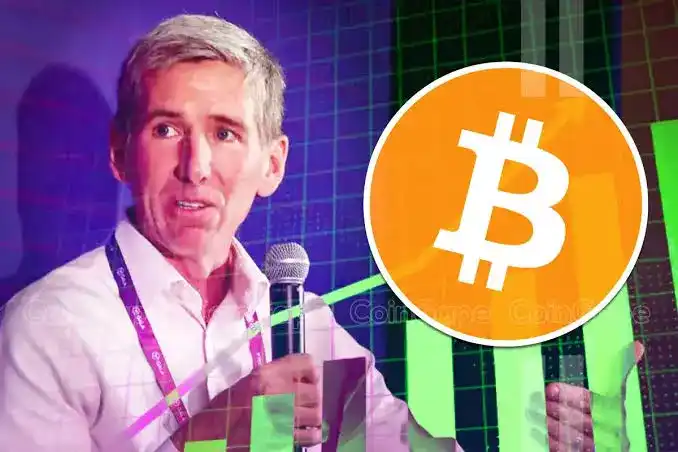
Terraform co-founder sentenced to 15 years in prison after guilty plea

cointelegraphPubblicato 2025-12-11Pubblicato ultima volta 2025-12-11

Introduzione

Terraform Labs co-founder Do Kwon has been sentenced to 15 years in prison by a U.S. court after pleading guilty to wire fraud and conspiracy. The collapse of Terraform in 2022 wiped out an estimated $40 billion from the crypto market. Judge Paul Engelmayer called the fraud "unusually serious," stating that Kwon "publicly lied to the market" for years. Kwon expressed remorse and requested to serve his sentence in South Korea, where he may face additional charges and up to 40 more years in prison. Approximately 16,500 victims were affected, with several testifying about severe financial losses during the sentencing. Kwon is the latest high-profile crypto executive to be convicted, following cases like FTX's Sam Bankman-Fried and Celsius' Alex Mashinsky.

Do Kwon, the co-founder of Terraform Labs, has been sentenced to 15 years in prison after pleading guilty to wire fraud and conspiracy to defraud.

In a Thursday hearing in the US District Court for the Southern District of New York, Judge Paul Engelmayer ordered that Kwon serve 15 years in prison for his role in the collapse of Terraform, which wiped out about $40 billion from the crypto market in 2022.

Prior to making his decision on sentencing, Engelmayer heard from some of Terraform’s victims and questioned what kind of justice Kwon might face in his native South Korea, where authorities are also building a case against him.

“I would like everyone to know that I have spent all my time thinking what I could have done, and what I can do,” said Kwon prior to his sentencing, according to Inner City Press. “It’s been four years since the crash, three years since I’ve seen my family. I’d like to [do] my penance in my home country.”

Engelmayer reportedly said the 12-year recommendation US prosecutors had requested the court impose on Kwon was “unreasonable,” while the five years requested by the co-founder’s lawyers “would be so implausible it would require appellate reversal.”

“To the next Do Kwon, if you commit fraud, you will lose your liberty for a long time as you will here,” said Engelmayer, according to Inner City Press. “You have been bitten by the crypto bug, and I don’t think that’s changed. You must be incapacitated. If not for your guilty plea, my sentence would have been higher.”

The judge added, addressing Kwon:

“Your fraud was unusually serious. For four years you publicly lied to the market [...] The investors were taking a risk, caveat emptor. But they were not taking the risk of being a fraud victim... What makes what you did so despicable is that you traded on trust.”

Kwon could be extradited to South Korea after serving seven and a half years, where he may complete the second half of his US sentence. He could face up to an additional 40 years in prison in his native country.

Several victims have their say during the sentencing hearing

Prosecutors said at the sentencing hearing that there were about 16,500 victims from the collapse of Terraform, according to claims in the company’s ongoing bankruptcy case. Six of them were allowed to address the court via phone before Engelmayer’s decision, describing their financial losses due to Terra.

“I sold my apartment in Moscow to invest with Do Kwon,” said Tatiana Dontsova, one of the victims, according to Inner City Press. “I moved to Tbilisi. $81,000 turned into $13 in the palm of my hand. Kwon came up with Luna 2, calling it LUNC. He is not showing any responsibility for those who invested. I am now officially homeless.”

Related: US judge asks for clarification on Do Kwon’s foreign charges

Kwon, alleged to have had a role in the 2022 collapse of the Terra ecosystem, was handed over to US authorities in December 2024 after his extradition from Montenegro. His legal team delayed proceedings for months by presenting various challenges in the Montenegrin courts.

With Kwon expected to be in prison for years, the Terraform co-founder became the latest former high-profile cryptocurrency executive to enter a plea deal or be found guilty in US courts.

Former FTX CEO Sam Bankman-Fried is serving a 25-year sentence, former Binance CEO Changpeng Zhao served four months — though was later pardoned by US President Donald Trump — and former Celsius CEO Alex Mashinsky was sentenced to 12 years.

Magazine: When privacy and AML laws conflict: Crypto projects’ impossible choice

Domande pertinenti

QWhat was Do Kwon sentenced for and what was the length of his prison term?

ADo Kwon was sentenced to 15 years in prison after pleading guilty to wire fraud and conspiracy to defraud.

QWhich US court district handled the sentencing of Do Kwon and who was the presiding judge?

AThe sentencing was handled by the US District Court for the Southern District of New York, with Judge Paul Engelmayer presiding.

QWhat did Judge Engelmayer say about the sentencing recommendations from the prosecution and defense?

AJudge Engelmayer said the prosecution's recommended 12-year sentence was 'unreasonable' and the defense's requested 5-year sentence was 'so implausible it would require appellate reversal.'

QWhat potential additional legal consequences does Do Kwon face after serving his US sentence?

AAfter serving seven and a half years in the US, Kwon could be extradited to South Korea where he may complete the second half of his US sentence and face up to an additional 40 years in prison.

QHow did one victim, Tatiana Dontsova, describe the impact of the Terraform collapse on her life?

ATatiana Dontsova stated she sold her apartment in Moscow to invest with Do Kwon, saw her $81,000 investment turn into $13, and is now officially homeless.

Letture associate

NVIDIA CPU Advances, China's RISC-V Responds: Semiconductor Deep Dive - Part Four

NVIDIA is set to launch its new Vera AI data center CPU in China as early as August, with high pricing. While this move offers a new option, it highlights China's continued dependence on foreign-controlled Arm architecture. In response, the Chinese semiconductor industry is increasingly turning to RISC-V as a strategic alternative for achieving high-performance computing autonomy. The article explores the concept of the "impossible triangle" in CPU development—balancing prosperity, control, and autonomy—and posits that RISC-V's open-source, modular nature offers a unique path to achieving all three. While RISC-V is already dominant in embedded systems, the focus is now shifting to data centers and AI workloads. China has become a global hotspot for RISC-V development, driven by AI-driven compute demand, supply chain concerns from export controls, cost benefits of open-source, and strong policy support. Multiple Chinese companies have reportedly crossed the key performance threshold of 15 SPECint per GHz, a benchmark for entering the high-performance CPU club. Progress extends beyond single-core benchmarks. Companies are developing complete computing subsystems, including commercial-grade coherent network-on-chip (NoC) technology and server processors with up to 40 cores that strictly adhere to the RVA23 standard to ensure software compatibility. Real-world applications are emerging in areas like video transcoding and edge AI. However, significant challenges remain. The RISC-V ecosystem faces fragmentation, immature toolchains and verification processes, and gaps in single-core performance and energy efficiency compared to mature x86 and Arm architectures. The formidable software moat, epitomized by NVIDIA's CUDA, is a long-term hurdle. In conclusion, while RISC-V cannot immediately replace offerings like NVIDIA's Vera, it represents a viable long-term path for China to develop a self-sufficient, high-performance CPU ecosystem. The journey is acknowledged to be long and arduous, requiring sustained effort to overcome technical and ecosystem challenges.

marsbit5 h fa

NVIDIA CPU Advances, China's RISC-V Responds: Semiconductor Deep Dive - Part Four

marsbit5 h fa

My Coding Betting Dashboard is Profiting, but Polymarket is Truly Not a Good Place for 'Arbitrage'

The author built a custom monitoring dashboard for Polymarket, a prediction market platform, and tested it with $1,600, achieving over 30% returns. However, the core argument is that Polymarket is not a good venue for traditional arbitrage. The dashboard has two main sections: a "Portfolio Dashboard" for tracking active positions with key metrics like total capital, P&L, and a risk-control module using a tier system (T1, T2, T3), and an "Opportunity Watchlist" for monitoring markets. The article details a critical structural trap in binary markets: a bet with a high perceived probability of success still carries a 100% loss risk if wrong. The author's T1/T2/T3 system is designed to manage this by limiting position sizes based on conviction and time horizon, emphasizing that high confidence should not equal high concentration. A key insight is the danger of "pseudo-diversification"—betting on different markets driven by the same underlying variable. The author concludes that Polymarket offers few true low-risk, arbitrage opportunities. It is instead a high-risk environment where wins can create a false sense of mastery, leading to large losses. The platform is better viewed as a training ground for honing judgment through disciplined, framework-driven betting rather than a reliable income source. The tools help transform intuition into structured, rule-based decisions to mitigate the risk of catastrophic errors.

marsbit8 h fa

My Coding Betting Dashboard is Profiting, but Polymarket is Truly Not a Good Place for 'Arbitrage'

marsbit8 h fa

WeChat AI Card Hands-On Guide: Has the AI Shopping Era Arrived?

**"WeChat AI Card" Practical Test Guide: Has the Era of AI Shopping Arrived?** WeChat has officially launched the "AI Exclusive Card," a feature integrated into its Workbuddy AI assistant. This card is designed to handle payments for AI-initiated purchases. Our hands-on test reveals it's not yet a tool for fully autonomous AI shopping, but rather a controlled payment layer for AI agents. The AI Card functions as an isolated sub-wallet within WeChat Pay. Users must bind the card and transfer funds into it from their main wallet. Crucially, every transaction requires explicit user confirmation via smartphone scan; AI cannot spend autonomously. Currently accessible through the Workbuddy agent, the card targets specific digital consumption scenarios: purchasing paid content (reports, data), calling paid APIs/tools, and subscribing to services. Its design prioritizes security and control by separating funds and mandating approval for each payment. We tested a real-world scenario: ordering bubble tea via Workbuddy using a "Meituan Life Assistant" skill. The process encountered multiple hurdles: high "skill" usage costs (exceeding daily free credits), and most importantly, while a payment was successfully initiated, the AI purchased an incorrect product (a mismatched group-buy coupon instead of the desired drink). This highlights the current limitation: the **AI Card only solves the payment step**. The broader challenge lies in the **AI agent's execution chain**—accurately understanding intent, navigating third-party platforms, selecting the right product, and ensuring proper fulfillment. The payment succeeded, but the purchase failed to meet the user's need. In conclusion, the WeChat AI Exclusive Card is a cautious, early-step experiment in AI commerce. It provides a secure, user-controlled payment method for agent interactions but is not yet capable of reliable, end-to-end complex purchases. For now, it's best used for low-value, low-risk digital services with careful user verification at each step. The vision of AI handling complete shopping tasks remains a work in progress.

marsbit10 h fa

WeChat AI Card Hands-On Guide: Has the AI Shopping Era Arrived?

marsbit10 h fa

Trading

Spot
Futures
活动图片