# Work Articoli collegati

Il Centro Notizie HTX fornisce gli articoli più recenti e le analisi più approfondite su "Work", coprendo tendenze di mercato, aggiornamenti sui progetti, sviluppi tecnologici e politiche normative nel settore crypto.

Anthropic's Latest Report Reveals Global Workers' Patterns: Seeking Sleep at 5 AM, Asking for Recipes at 6 PM

A new report from Anthropic analyzes millions of hourly user interactions with Claude AI, revealing detailed patterns in daily life and work. The data shows distinct rhythms: people most frequently ask about sleep help around 5 AM, seek news at 7 AM, and search for dinner recipes at 6 PM—the day's single largest query spike. Usage sharply diverges between weekdays and weekends. Workdays are dominated by professional tasks like business emails and coding (backend, APIs). Weekends see a surge in personal use—nearly 50% of conversations—focused on emotional support, creative writing (especially fan fiction), medical advice, and side projects like AI agent design or game development. Weekend "entrepreneurial" queries peak globally, while job-hunting activity drops. The report introduces "artifact" analysis, finding 93% of conversations produce a tangible output (explanation, document, code, etc.). Blog posts are 81% work-related, while creative writing is over 80% personal. High-wage professionals (e.g., marketing managers, programmers) use Claude more intensively outside work hours, with longer conversations, more tokens consumed, and greater use of deep thinking features compared to lower-wage roles. Interestingly, Claude's responses typically register at a higher reading level than user prompts (by about one educational year on average), except for audience-focused writing like emails or blogs where the gap nearly disappears. The data also captures specific cultural moments, like an 8x spike in tax-related queries on the U.S. filing deadline. Precise hourly data transforms fragmented queries into a collective diary of modern life—mapping not just economic activity, but also cycles of anxiety, creativity, and daily rhythm, with AI acting as both a productivity tool and an intimate, always-available confidant.

marsbit06/29 08:20

Anthropic's Latest Report Reveals Global Workers' Patterns: Seeking Sleep at 5 AM, Asking for Recipes at 6 PM

marsbit06/29 08:20

From Tokens to Machine Labor: AI is Shifting from Tool to "Worker"

The article "From Token to Machine Labor: AI is Evolving from Tool to 'Worker'" argues that the business model for AI is shifting beyond simply selling computational resources (tokens, GPU hours) or model access. Instead, a new "machine labor market" is emerging, where the core economic transaction is the purchase of economically useful work directly performed by software. The central thesis is that AI pricing will evolve through four stages: 1) raw tokens, 2) standardized LLM capabilities (e.g., text generation), 3) industry-specific labor markets (e.g., legal review, radiology), and finally 4) a programmable results market where tasks like resolving a support ticket are bid on and priced based on outcome. In this future, buyers will care less about *which* model or GPU completes a task and more about whether the work meets specified standards for accuracy, latency, and cost. This transition reframes the impact of AI on human labor. Rather than simple replacement, it suggests a re-coordination where machines handle standardized, verifiable work, freeing humans for roles involving oversight, context management, responsibility, and final judgment. In some cases, this "last 1%" of human input becomes more valuable as it enables the other 99% to be automated. Furthermore, as AI reduces the cost of work, demand may expand, creating larger markets (e.g., 24/7 customer service) rather than just cheaper versions of existing ones. The article concludes that while infrastructure (GPUs, models, tokens) remains crucial upstream, the market is converging on a simpler, tradeable unit: machine labor that can be defined, measured, priced, and procured based on contractible specifications.

marsbit05/31 12:33

From Tokens to Machine Labor: AI is Shifting from Tool to "Worker"

marsbit05/31 12:33

The Paradox of Automation: The Stronger the AI, the Busier Humans Become

The Paradox of Automation: The more powerful AI becomes, the more work humans have to do. This article, based on observations from AI-heavy company Every, argues that while AI agents automate tasks like coding, writing, and customer service, they don't eliminate human jobs. Instead, they transform work and create *more* demand for human expertise. AI commoditizes "yesterday's human capabilities" by cheaply generating code, text, and images from past data. This leads to an abundance of similar, generic outputs. Consequently, what becomes scarce and valuable is human judgment in the present moment: knowing *what* is worth doing, *why*, and *how* to do it well. The article identifies two collaboration models: "Agent employees" for delegated tasks and "human-AI collaboration" within tools like Claude Code for complex work. In both cases, humans are essential to set direction, judge quality, and maintain systems. As AI makes execution cheap, human roles shift from executors to designers, reviewers, and meaning-makers. The author addresses "benchmark anxiety" by explaining that AI excels within specific, human-defined problem "frames." As AI masters one frame (e.g., code rewriting), new, more complex frames emerge (e.g., deciding *when* to rewrite). This creates an ongoing cycle where AI chases the frames, but humans remain the "framers." Even with advanced AGI, this dynamic may persist as long as AI lacks true human-like agency and self-directed purpose. The core paradox holds: automation amplifies the need for the very human judgment it seems to replace.

marsbit05/24 07:06

The Paradox of Automation: The Stronger the AI, the Busier Humans Become

marsbit05/24 07:06

Steam, Steel, and Infinite Intelligence

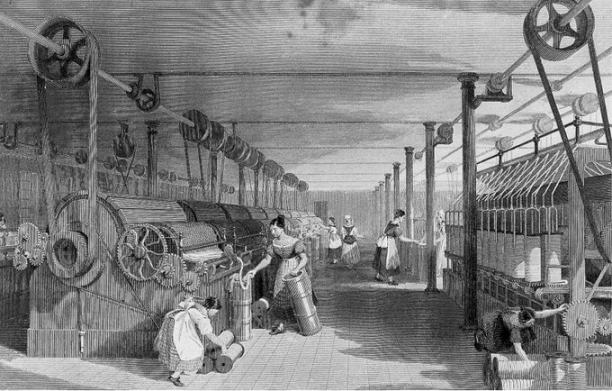
Steam, Steel, and Infinite Intelligence Each era is defined by its core technological material: steel forged the Gilded Age, semiconductors enabled the digital age, and now, AI arrives as infinite intelligence. History shows that those who master the material define the era. Today, AI often resembles a supercharged search engine, but we are in an uncomfortable transition period. The future of knowledge work can be envisioned through historical metaphors. At the individual level, AI transition is like moving from a bicycle to a car. Top practitioners, like programmers, are already becoming managers of infinite intelligence, achieving 30-40x productivity gains. For others to follow, two key problems must be solved: fragmented context across dozens of tools and a lack of verifiability for general knowledge work. Once these are addressed, billions will move from "bicycles" to "cars" and eventually to "autopilot." For organizations, AI is the new steel and steam. Companies historically lose efficiency as they scale, burdened by human-scale communication. AI, like steel, can provide coherent context and decision-making support, allowing companies to scale without decay. Like the steam engine, it will enable a complete reimagining of workflows beyond simply replacing old tools, moving from water wheels to powerful, always-on intelligence. For the entire economy, this shift mirrors the transition from a human-scale city like Florence to a modern megacity. The knowledge economy, which constitutes nearly half of US GDP, still operates on a human scale. With AI, we will build "Tokyo"—organizations of thousands of humans and AIs, operating across time zones, synthesizing decisions with precise human input. This will be faster and more leveraged, though initially disorienting. We are still in the "water wheel" stage of AI, plugging chatbots into human-designed workflows. The challenge is to stop looking through the rearview mirror and start building the next skyline with the new materials of infinite intelligence.

深潮12/29 04:47

Steam, Steel, and Infinite Intelligence

深潮12/29 04:47

活动图片