# Value Chain Articoli collegati

Il Centro Notizie HTX fornisce gli articoli più recenti e le analisi più approfondite su "Value Chain", coprendo tendenze di mercato, aggiornamenti sui progetti, sviluppi tecnologici e politiche normative nel settore crypto.

From Issuance to Yield: Decoding the Hidden Gold Mine in the Trillion-Dollar Stablecoin Race

From Issuance to Yield: Decoding the Hidden Goldmine in the Trillion-Dollar Stablecoin Arena This report shifts focus from the stablecoin issuance duopoly (Tether and Circle) to explore the broader value chain, identifying greater opportunities downstream. It systematically outlines five key stages: Issuance, On-Ramp, Transfer, Payment, and Yield Generation. While issuance is dominated by scale and trust, other layers offer diverse business models. The prevailing strategy isn't rebuilding systems from scratch but integrating stablecoin efficiencies—like instant settlement and low-cost transfers—with existing traditional finance (TradFi) infrastructure, as seen in acquisitions like Stripe's purchase of Bridge. The Yield layer, however, requires specialized, independent capabilities. **Key Stages & Insights:** * **Issuance:** An oligopoly with high barriers; newcomers should focus on specialized functions like licensing or distribution rather than direct competition. * **On-Ramp:** A competitive, commoditized space where providers are expanding into issuance and infrastructure or being acquired to secure recurring revenue. * **Transfer:** Showcases stablecoin's cost advantage for cross-border payments. Winners control end-point exchanges, licenses, and customer relationships (e.g., payroll platforms like Rise). * **Payment:** Core revenue lies not in consumer-facing cards but in underlying issuance infrastructure and the capital efficiency gained from T+0 on-chain settlement. * **Yield:** Evolving into a full-scale on-chain asset management industry. Risk curators design vaults on lending protocols, charging management and performance fees. Demand is shifting toward predictable, treasury-backed yields over high-risk synthetic products. The future lies in controlling specific customer segments and integrating stablecoin technology with TradFi rails. Trends like regional currency adoption and deeper regulatory integration will further expand opportunities in infrastructure layers like card issuance, custody, and asset management. The market is converging, with major players seeking to dominate this fusion of efficiency and established systems.

Foresight News07/27 12:31

From Issuance to Yield: Decoding the Hidden Gold Mine in the Trillion-Dollar Stablecoin Race

Foresight News07/27 12:31

"Shocking" CPO: How Does the Glass Bridge Actually Work? Detailed Explanation from Corning

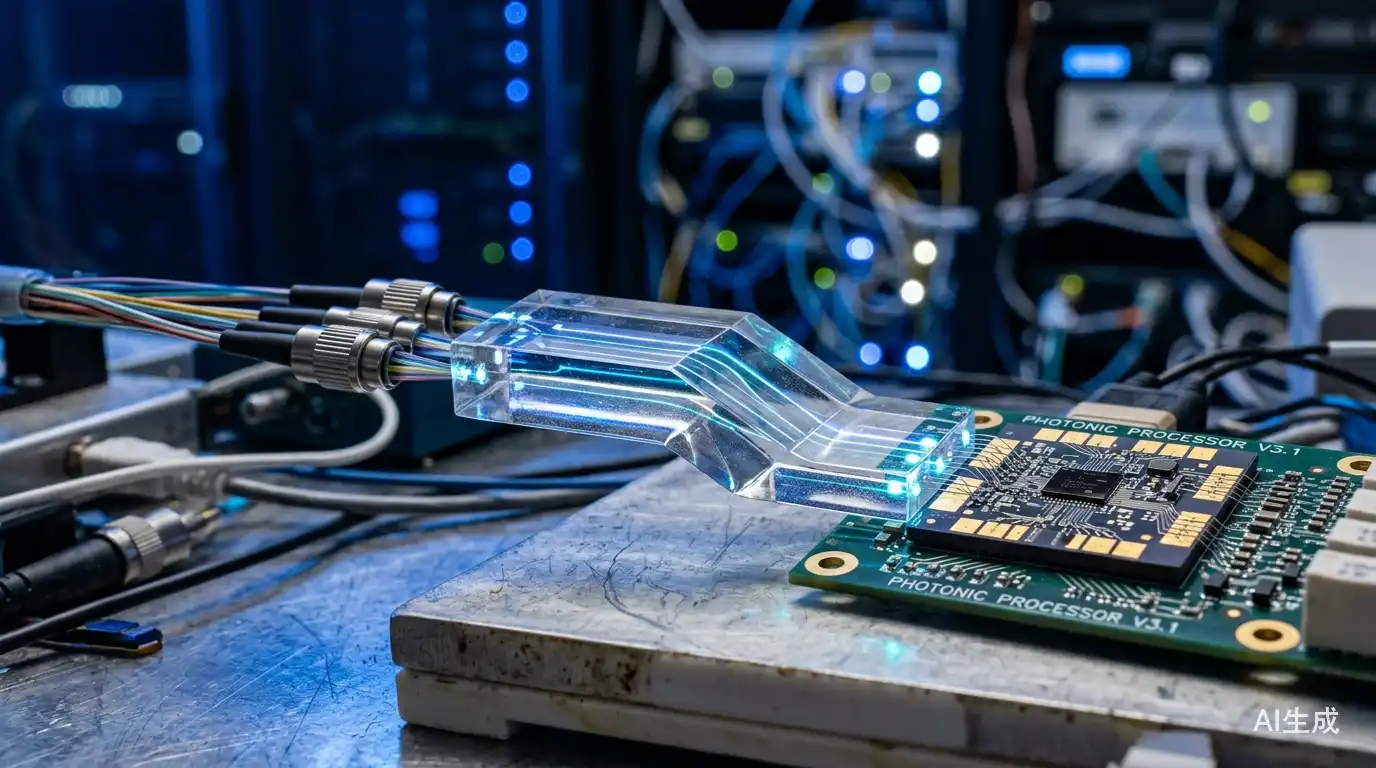
Chinese CPO stocks plunged over 6% following Corning's announcement of its Glass Bridge platform at a Seoul tech conference. The new technology utilizes wafer-level glass ion-exchange waveguides for passive alignment between fibers and photonic chips, potentially simplifying traditional CPO architectures that rely on complex Fiber Array Units and active alignment equipment. This raised market concerns about reduced long-term demand for mid-stream CPO components. Corning's official documentation details Glass Bridge as a platform for fiber-to-PIC connectivity in NPO, CPO, and high-density modules. Its key features include wafer-level manufacturing for consistent, cost-effective production; a standardized, removable MT ferrule interface for ecosystem integration; and a separable high-density connector design supporting over 24 channels for assembly flexibility. Corning positions the technology as complementary to FAUs, addressing limitations in ultra-high-fiber-count scenarios. The market reaction reflects a broader reassessment of the AI optical interconnect value chain. Funds shifted from CPO and PCB manufacturing stocks towards glass substrate concept stocks like Kaisheng Technology and Dyer Laser. Analysts note glass substrates are seen as a next-gen advanced packaging material, offering a potential path for domestic industry differentiation amid AI-driven demand for high-performance, large-scale packaging, marking a structural migration in value towards upstream specialty materials.

marsbit06/28 10:41

"Shocking" CPO: How Does the Glass Bridge Actually Work? Detailed Explanation from Corning

marsbit06/28 10:41

AI Reshapes the Semiconductor "Smile Curve": The Rising Logic Behind the Global Distributed Bull Market

The Philadelphia Semiconductor Index (SOX) has hit a historic high above 14,000 points, driven by a concentrated AI-fueled semiconductor rally. Key drivers are extreme scarcity and pricing power in critical bottlenecks of the AI data center supply chain. Unlike traditional models where manufacturing held lower profits, AI has reshaped the "Smile Curve." Highly complex manufacturing and advanced packaging nodes—like TSMC's CoWoS, SK Hynix's HBM, and ASML's EUV lithography—have become exceptionally scarce and high-margin, rivaling design-side profitability. The market rewards those controlling irreplaceable segments: U.S. firms lead in AI chip design and cloud services; Taiwan and Korea dominate advanced foundry/logic and memory/HBM respectively; Japan and the Netherlands supply vital materials and equipment. Storage, particularly HBM, is the tightest bottleneck, with severe shortages predicted through 2027. While bullish analysts project sustained AI infrastructure spending growth, notable bears like Michael Burry warn of bubble-like exuberance reminiscent of the dot-com era, citing overleveraged private financing for data centers. Key near-term catalysts include earnings guidance from Micron and Nvidia, while longer-term risks hinge on the 2027-2028 capacity expansion wave and persistent geopolitical tensions in concentrated supply chains.

marsbit06/17 04:30

AI Reshapes the Semiconductor "Smile Curve": The Rising Logic Behind the Global Distributed Bull Market

marsbit06/17 04:30

活动图片