# Twitter Articoli collegati

Il Centro Notizie HTX fornisce gli articoli più recenti e le analisi più approfondite su "Twitter", coprendo tendenze di mercato, aggiornamenti sui progetti, sviluppi tecnologici e politiche normative nel settore crypto.

From "Manual Rules" to "AI Mind Reading": X's New Algorithm Reshapes the Information Flow, More Accurate and More Dangerous

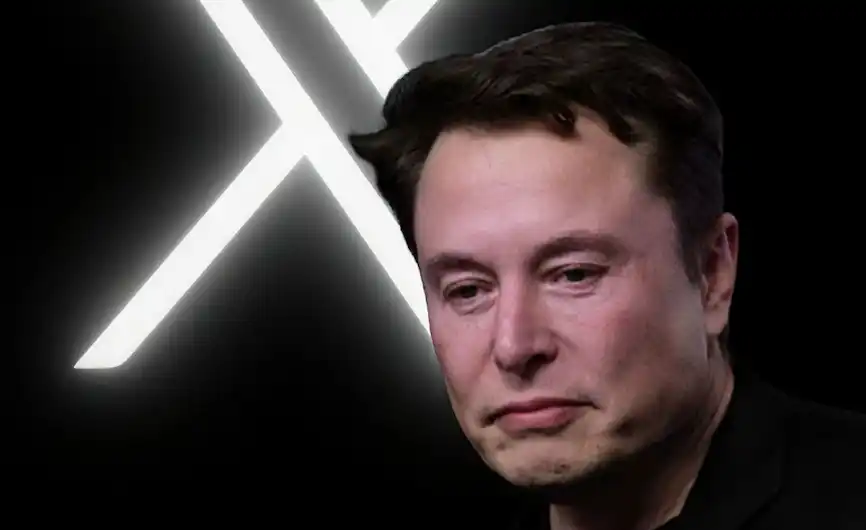
Elon Musk's X (formerly Twitter) has transitioned from a recommendation system based on "manually stacked rules and heuristic algorithms" to one that relies entirely on a large AI model to predict user preferences. The new algorithm, For You," mixes content from accounts a user follows with posts from across the platform that the AI believes the user will like. The process begins by building a user profile based on historical interactions (likes, retweets, dwell time) and user features (following list, preferences). The system then gathers candidate posts from two sources: the user's direct network ("Thunder") and a broader network of potentially interesting content from strangers ("Phoenix"). After data hydration and an initial filtering step to remove duplicates, old posts, or content from blacklisted authors, the core scoring process begins. A Transformer model (Phoenix Grok) predicts the probability of a user taking various positive actions (like, retweet, reply, click) or negative ones (block, mute, report) on each post. A final score is calculated by weighting these probabilities. An Author Diversity Scorer is then applied to reduce the visibility of multiple posts from the same author in a single batch. The highest-scoring posts undergo a final filter to remove policy-violating content and remove duplicates from the same thread before being sorted into the user's feed. The shift represents a move from "telling the machine what to do" to "letting the machine learn what to do." While this can lead to more accurate recommendations and a fairer system that breaks the monopoly of large accounts, it also risks deepening users' "information cocoons" and making them more susceptible to targeted emotional content.

比推01/20 13:38

From "Manual Rules" to "AI Mind Reading": X's New Algorithm Reshapes the Information Flow, More Accurate and More Dangerous

比推01/20 13:38

Give Freedom to Money: The Flow of Information from Binance to Twitter

"Freeing Money: The Flow of Information from Binance to Twitter" by Zuo Ye Web3 argues that in the crypto era, information has become a commodified asset, while financial flows and information streams are increasingly disconnected. The author observes that platforms like Binance, despite dominating the exchange ecosystem, are struggling with "separation anxiety" as they lose control over information dissemination and face stagnating user growth. The piece critiques the crypto industry’s shift from idealistic goals like decentralization to speculative meme-driven trading, where information quality declines even as quantity explodes. Binance’s aggressive meme marketing and attempts to capture链上 (on-chain) users reflect a broader industry anxiety: the breakdown between information flow and capital movement. The author proposes a "Quantity Theory of Crypto Information" — analogous to Irving Fisher’s monetary equation — where information supply multiplied by the velocity of viewpoints equals exposure per project multiplied by the total number of projects. Yet, effective information remains hard to quantify, and the relationship between influencer content and actual trading activity is often unclear. Despite the freedom of capital movement enabled by CEXs and crypto banks, information channels are becoming more closed, fragmented by language, region, and algorithms. The author concludes that the crypto industry, if it loses its ability to set agendas and relies solely on internal capital games, risks becoming an isolated island in the broader financial world — unless it evolves to embrace mainstream, large-scale productization, as perhaps envisioned by Elon Musk’s X.

marsbit01/15 06:39

Give Freedom to Money: The Flow of Information from Binance to Twitter

marsbit01/15 06:39

The Ghost of X.com, Musk's 25-Year Revenge

Elon Musk's 25-year quest to reclaim his original vision for X.com culminated in the acquisition and transformation of Twitter. In 1999, Musk invested his entire $22 million fortune from the sale of Zip2 into X.com, an ambitious online financial platform. The venture merged with Confinity (later PayPal), but Musk was ousted in a board coup while on his honeymoon. The X.com brand was discarded, leaving a "fishbone" of regret in Musk. His 2022 acquisition of Twitter was not primarily about free speech but about复仇 (revenge) for that early betrayal. He systematically rebranded it as X and began a gradual transformation from a microblogging site into an all-in-one "everything app." This involved introducing long-form content, enhanced video, creator monetization, and, most crucially, laying the groundwork for financial services. The key development is the "Smart Cashtags" feature, allowing users to embed asset tickers (e.g., $TSLA) in posts that link to real-time data and, ultimately, enable direct trading. This creates a seamless loop from seeing information to making a financial decision to executing a trade, all within X. To build trust for this financial future, Musk took the unprecedented step of open-sourcing the platform's algorithm. The article frames this as Musk finally realizing his 1999 vision, an idea validated by the success of Chinese super-apps like WeChat. The timing is now perfect, with mature mobile payments, crypto adoption, and shifting regulations. Musk's lifelong obsession with the letter "X" (SpaceX, Model X, xAI, his son's name) is presented as a unifying thread in his mission to control the flow of global capital and information, making X the central nervous system of the digital economy.

marsbit01/14 09:21
The Ghost of X.com, Musk's 25-Year Revenge

marsbit01/14 09:21

活动图片