# Stripe Articoli collegati

Il Centro Notizie HTX fornisce gli articoli più recenti e le analisi più approfondite su "Stripe", coprendo tendenze di mercato, aggiornamenti sui progetti, sviluppi tecnologici e politiche normative nel settore crypto.

Just Now, Overnight Change of the 'AI Lifeline' for Tens of Millions of Developers Worldwide

A landmark acquisition reshapes the AI landscape. Stripe, the online payment giant, has officially announced its agreement to acquire OpenRouter for a reported value exceeding $8 billion. This move grants Stripe control over what is described as the world's largest "token entrance." OpenRouter, hailed as the "Stripe for LLMs," acts as a unified API gateway, connecting developers to over 400 AI models from more than 80 providers. It handles dynamic routing, failover, and optimization for AI inference requests, processing over 10 trillion tokens daily for more than 10 million developers globally. Stripe's CEO, Patrick Collison, framed the acquisition around managing two future flows: revenue and tokens. While Stripe streamlined internet money flow, OpenRouter manages the burgeoning flow of AI "tokens"—the units of computational intelligence. The deal positions Stripe at the nexus of this new "intelligence network," where AI capabilities become a standardized, tradeable commodity. The acquisition underscores a strategic bet on a fragmented AI model market. OpenRouter's founder, Alex Atallah, was inspired by the low-cost emergence of capable open-source models like LLaMA and Alpaca in 2023, predicting a future of multiple models rather than a single winner. In a related disclosure, Stripe informed investors that January 1st marked the "beginning of the singularity" for AI—a fundamental inflection point. Citing this transformative period, Stripe indicated it would remain private to maintain strategic agility, despite strong financial growth. Industry observers, like a16z's Martin Casado, note the profound shift: "Tokens are the new dollars." AI intelligence is becoming a measurable, exchangeable production factor, flowing through a new economic infrastructure that Stripe, with OpenRouter, now aims to dominate. The power in the AI era may belong to those who control the routing of intelligence itself.

marsbit08/20 02:46

Just Now, Overnight Change of the 'AI Lifeline' for Tens of Millions of Developers Worldwide

marsbit08/20 02:46

Is OpenRouter Worth $70 Billion?

Payment giant Stripe has reportedly finalized the acquisition of AI infrastructure startup OpenRouter for over $7 billion, significantly higher than its $1.3 billion valuation from a funding round just months prior. This has sparked intense debate over whether the platform is worth the high price tag. Opponents argue that OpenRouter’s core service — a unified API router that directs user requests to various AI models (like OpenAI, Anthropic, Google) while handling load balancing and cost optimization — is easily replicable and lacks a deep technical moat. With an estimated annual revenue of $50 million, the $7B price implies a staggering 140x price-to-sales multiple. Critics question if OpenRouter is merely a transitional middleman in the evolving AI infrastructure landscape, vulnerable to being bypassed as model providers and cloud platforms integrate similar routing capabilities directly. Proponents, however, see beyond a simple API proxy. They view OpenRouter as a critical and growing "toll booth" for AI inference traffic. While it currently charges only a 5.5% platform fee on user credits, its real value lies in the aggregated user base, payment relationships, traffic data, and distribution power it has amassed. For Stripe, which processes OpenRouter's payments, this acquisition is seen as securing a strategic gateway into the future AI economy, analogous to how it built the payment "toll booth" for the internet commerce era. Ultimately, the debate centers not on OpenRouter's current financials but on two future unknowns: the ultimate size of the AI inference market and OpenRouter's ability to maintain its position as a dominant traffic orchestrator within it. Whether Stripe overpaid or has shrewdly purchased a key to the next era of AI infrastructure remains to be seen.

Odaily星球日报08/17 08:01

Is OpenRouter Worth $70 Billion?

Odaily星球日报08/17 08:01

Illustrating the Cloudflare Wallet: The New Player in Stablecoin Payments Using x402

On August 4th, Cloudflare announced the launch of "Wallets," though the initial offering is limited to claiming a user handle. Full functionality for topping up, making payments, and using a Virtual Wallet via API keys is marked "Soon." The announcement clarifies that this handle is not yet a functional wallet. It represents a key piece in Cloudflare's broader payments strategy, alongside the Stripe Projects service (currently in open beta for agent-assisted purchases) and the Monetization Gateway for merchants (on a waitlist). The Wallet is positioned as the payer-side component for managing identity, balances, and authorization rules. While the underlying x402 protocol shows activity (75.41 million transactions, $24.24M volume in 30 days, averaging ~$0.32 per transaction), this data reflects the open network's usage, not specifically Cloudflare Wallet adoption. These metrics indicate suitability for frequent micro-payments like API calls. Cloudflare's documentation uses a $0.01 per-call example to illustrate the x402 flow: a server returns HTTP 402, the agent signs the payment, a facilitator verifies it, and the server delivers the result. Currently, developers must manage private keys and use test networks/USDC for agent payments. The Wallet roadmap aims to separate the user's Account Wallet from an agent's Virtual Wallet, adding controls for spending limits, whitelists, and per-transaction caps. This design resembles a corporate card with approval rules. However, these controls are not yet available for configuration. In summary, Cloudflare Wallet's current launch is a preliminary step. Critical details like supported stablecoins, blockchains, regions, KYC, custody, and fees remain undisclosed. The announcement primarily establishes a payer identity framework, with the full payment and agent autonomy system still under development.

marsbit08/05 03:35

Illustrating the Cloudflare Wallet: The New Player in Stablecoin Payments Using x402

marsbit08/05 03:35

Stripe in Talks to Acquire OpenRouter: Is AI the New Focus of Future Payment Landscape?

Payment giant Stripe is reportedly in talks to acquire AI model routing platform OpenRouter, potentially valuing the startup at around $10 billion, according to The Wall Street Journal. This move follows Stripe's recent strategic push into AI and crypto infrastructure over the past 18 months, including the acquisitions of stablecoin company Bridge, wallet infrastructure provider Privy, and the launch of its Tempo blockchain with a Machine Payments Protocol. These steps aim to enable AI agents to autonomously handle payments and transactions. OpenRouter, founded by OpenSea co-founder Alex Atallah, aggregates over 300 models from more than 60 providers, handling billions of inference requests. Its integration would complement Stripe's existing AI agent infrastructure—covering ordering, payment, and settlement—creating a comprehensive pipeline for AI-driven commerce. Stripe's goal appears to be positioning itself as the default infrastructure layer for AI-to-user interactions, akin to "AWS for money." The deal is not yet finalized and faces potential competition or disruption. However, it highlights a broader trend where major players like Circle and Google are also developing payment protocols for AI agents. While current on-chain AI agent payment volume remains a tiny fraction of overall stablecoin settlements, the industry is betting on this nascent market to drive future growth and validate the synergy between AI and blockchain.

Foresight News07/27 13:10

Stripe in Talks to Acquire OpenRouter: Is AI the New Focus of Future Payment Landscape?

Foresight News07/27 13:10

From OpenSea to OpenRouter: Is Alex Atallah Repeating His 'Exit at the Peak' Playbook?

From OpenSea to OpenRouter: Is Alex Atallah Repeating His "Exit at the Peak" Playbook? According to the Wall Street Journal, payments giant Stripe is in talks to acquire the AI model aggregation platform OpenRouter in a potential deal valuing the company near $100 billion. This would mark founder Alex Atallah's second creation of a company reaching a $100 billion valuation, following his co-founding of NFT marketplace OpenSea. OpenRouter, founded just over three years ago, has grown rapidly by acting as a unified gateway for developers to access over 400 AI models. It currently has about 10 million users and processes over 200 trillion tokens monthly. While the platform's annualized revenue is around $50 million, its valuation has skyrocketed from $1.3 billion in March 2026. The potential acquisition by Stripe, a company OpenRouter's founder once likened it to, represents a major expansion into AI infrastructure for the payments leader. This move echoes Atallah's previous timing with OpenSea, where he departed before the NFT market's significant downturn. For OpenRouter, selling now may be strategic. Despite its scale, its business model—charging a 5-5.5% fee on AI inference calls—faces pressure from competition, open-source models, and potential price wars among model providers, limiting its profitability narrative for an IPO. A key asset for potential acquirers like Stripe is OpenRouter's vast repository of real-world AI usage data, which offers unique insights into model performance and developer preferences that are difficult to replicate. Whether this potential deal signifies a new valuation benchmark for AI infrastructure or another market peak signal remains to be seen.

链捕手07/24 08:42

From OpenSea to OpenRouter: Is Alex Atallah Repeating His 'Exit at the Peak' Playbook?

链捕手07/24 08:42

The Eternal Fragments of Money: Third-Party Payment Has No First Principle

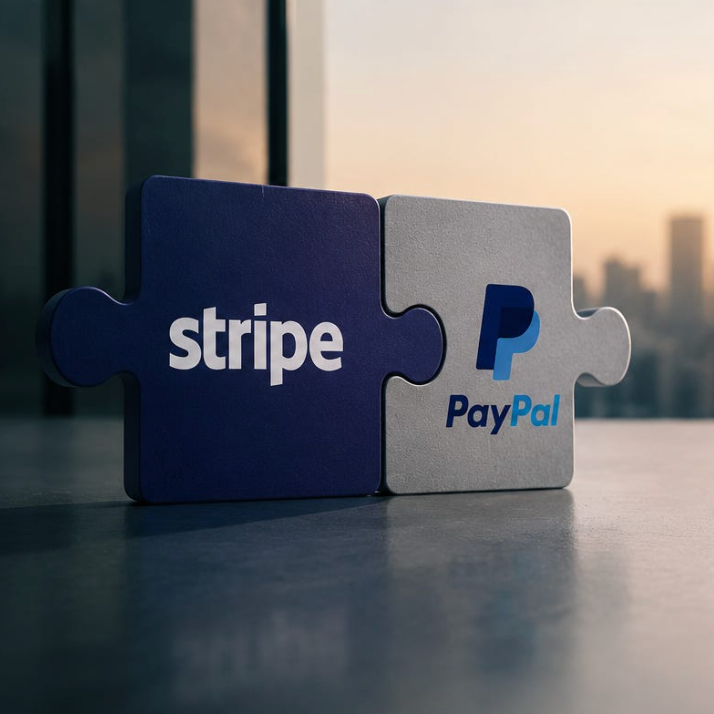
"The Enduring Fragments of Money: Third-Party Payments Lack a First Principle" Stripe is reportedly attempting to acquire PayPal, marking a significant shift reminiscent of PayPal's merger with the original X.com 30 years ago. The article analyzes Stripe's strategic challenges and the broader payments industry landscape. Despite its initial success with a developer-friendly API model, Stripe missed its optimal IPO window during the pandemic and has since seen its valuation decline. Its attempts to expand through acquisitions and new ventures, particularly in stablecoins (like its OUSD project) and Agent-focused payments (ACP/MPP protocols), have faced headwinds. The author argues that the payment industry remains highly fragmented and is ultimately an adjunct to the traditional banking system. This structure limits the potential for any single player, including Stripe, to achieve complete dominance. While stablecoins and the future rise of autonomous Agent economies present potential growth avenues, they are not yet mainstream and still require integration with the existing financial system. For now, Agent-based transactions are largely used for speculative "volume boosting" rather than substantive business applications. Stripe's current move to acquire PayPal is seen as an attempt to bolster its weak consumer-facing (C-side) business after its stablecoin-focused strategies faltered. Meanwhile, PayPal is described as structurally outdated, unable to revive itself through new products like Venmo or PYUSD. The future of payments may lie not in payments themselves but in value-added services like more efficient settlement networks. The author suggests that companies like Stripe and Circle, which are building their own blockchains (Tempo, Arc) and stablecoins, are positioning themselves to eventually profit from high-efficiency settlement systems. These new networks could potentially bypass some traditional banking layers. In conclusion, the article posits that third-party payment is a perpetually fragmented battlefield where scale alone cannot ensure victory. Players must find new models, focusing on efficiency to compete with the entrenched banking system. Stripe's acquisition of PayPal represents a bet on this uncertain future.

链捕手07/21 15:30

The Eternal Fragments of Money: Third-Party Payment Has No First Principle

链捕手07/21 15:30

Behind the $53.4 Billion Proposal to Acquire PayPal: Stripe's Ambitions in Crypto Payments

Payment giant Stripe, reportedly alongside private equity firm Advent International, has made a $53.4 billion acquisition offer for PayPal. This potential deal, the largest in fintech history, is seen as a strategic move to advance Stripe's ambitions in the crypto payments sector. Stripe has been quietly building a comprehensive stablecoin ecosystem, acquiring infrastructure like stablecoin issuer Bridge and wallet service Privy, co-incubating the Tempo blockchain for payments, and backing the new Open USD (OUSD) stablecoin. However, it lacks direct access to a mass consumer base—a gap that PayPal, with its hundreds of millions of active accounts, Venmo app, and own PYUSD stablecoin, perfectly fills. The core motivation for the acquisition is speculated to be securing a massive distribution channel for Stripe’s stablecoin infrastructure. The integration could create a closed-loop system: Stripe serving merchants, PayPal/Venmo reaching consumers, and stablecoins facilitating low-cost, direct settlements, bypassing traditional card networks. This signals a strategic shift in the crypto industry, where competition is moving from building superior payment rails to capturing user-facing traffic portals. Key unresolved questions remain, including the future of PYUSD and Venmo's potential role as a front-end for the Tempo blockchain. While the deal's success is uncertain and faces challenges like cost-control priorities from Advent, its mere proposal underscores Stripe's long-term vision. A successful acquisition would not only reshape traditional finance but also significantly boost Tempo's position in the competitive blockchain landscape by giving it mainstream reach. Regardless of the outcome, Stripe's methodical buildup indicates its stablecoin-powered commercial empire is just beginning.

Foresight News07/20 02:12

Behind the $53.4 Billion Proposal to Acquire PayPal: Stripe's Ambitions in Crypto Payments

Foresight News07/20 02:12

活动图片