# Solana Articoli collegati

Il Centro Notizie HTX fornisce gli articoli più recenti e le analisi più approfondite su "Solana", coprendo tendenze di mercato, aggiornamenti sui progetti, sviluppi tecnologici e politiche normative nel settore crypto.


DeFi Sector Rebounds Most Strongly, Which High-Revenue Projects Can Be a Good Opportunity to 'Get On Board'?

**Title: DeFi Sector Leads Market Rebound: High-Revenue Projects to Watch** The recent surge in Bitcoin and Ethereum has revitalized the altcoin market, with DeFi emerging as one of the most active sectors. Beyond chasing price rallies, a key fundamental metric for evaluating DeFi projects is their protocol revenue—the actual income retained after paying liquidity providers. This indicates genuine user demand and sustainable business models. **Top Revenue-Generating DeFi Projects:** * **DEX (Decentralized Exchanges):** * **Uniswap (UNI):** Leads with $7.18M in 30-day revenue. It accrues income from protocol fees, which are now active on multiple chains and used to buy back and burn UNI. * **Solana Ecosystem:** Jupiter ($4.69M), Meteora ($1.67M), and Raydium ($1.13M) are top performers, with substantial revenues driven by Solana's vibrant trading activity. Jupiter and Raydium use a portion of fees for token buybacks, while Meteora has also executed significant buybacks. * **PancakeSwap (CAKE):** Generated $5.16M recently, maintaining a strong position on BNB Chain and other networks. Its token CAKE continues a net deflationary trend through buybacks and burns. * **Aerodrome (AERO):** On Base chain, it earned $4.11M. Its revenue is directly distributed to veAERO holders instead of funding buybacks. * **Lending:** * **World Liberty Financial (WLFI):** Topped the lending sector with $10.47M in 30-day revenue. A proposal to use fees from its proprietary market making for WLFI buybacks passed, but token holders' net income remains zero currently. * **Aave (AAVE):** Earned $4.12M. It had an active buyback program until it was paused in April 2026 following a security incident. * **ETH Staking:** * **ether.fi (ETHFI):** Generated $3.03M. Revenue from eETH withdrawals is fully used to buy back ETHFI, which is then distributed to sETHFI stakers. * **Lido (LDO):** Earned $2.31M. Its recently activated NEST mechanism automatically uses 50% of annual revenue above $40M to buy back LDO. In summary, during the market rebound, several DeFi protocols across DEXs, lending, and staking are demonstrating strong revenue generation. Key models include direct fee collection, token buyback/burn programs, and revenue distribution to governance token stakers, providing fundamental strength amidst market volatility.

Odaily星球日报10 min fa

DeFi Sector Rebounds Most Strongly, Which High-Revenue Projects Can Be a Good Opportunity to 'Get On Board'?

Odaily星球日报10 min fa

From Bitcoin to Solana: How 8 Cryptocurrency Networks Achieve Consensus

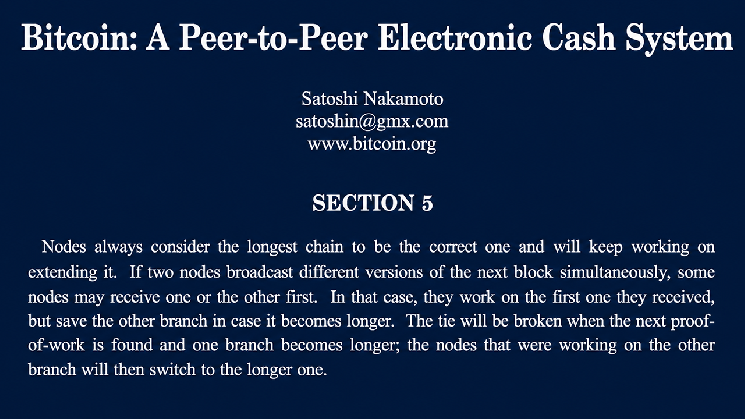
This article explains how eight major cryptocurrency networks achieve consensus, moving beyond the simple proof-of-work (PoW) vs. proof-of-stake (PoS) distinction. Bitcoin established the "Nakamoto consensus" model, where miners compete through PoW, and the valid chain is the one with the most cumulative computational work. Dogecoin and Zcash follow this core model but use different mining algorithms (Scrypt and Equihash, respectively) and have faster difficulty adjustment periods. Ethereum transitioned to a PoS system called Gasper after The Merge. Validators stake ETH to propose and vote on blocks, with finality reached in about 12.8 minutes through a combination of the LMD-GHOST fork-choice rule and Casper FFG. Other networks employ more delegated or permissioned structures. BNB Smart Chain uses a Proof-of-Staked-Authority model with 45 elected validators for high speed, achieving finality in under a second. Solana combines Proof-of-History (a cryptographic clock) with a stake-weighted Tower BFT algorithm for voting, targeting finality in about 12.8 seconds. Tron uses delegated PoS where 27 super representatives take turns producing blocks on a schedule, with finality requiring confirmation by 19 of them. The XRP Ledger takes a unique approach, relying on Unique Node Lists (UNLs). Each server maintains a list of trusted validators, and consensus is reached through repeated rounds of voting until an 80% quorum agrees, typically within 4-5 seconds, without mining or staking lotteries. The core takeaway is that consensus mechanisms fundamentally define who or what the network trusts: anonymous miners' computational work (Bitcoin), economic stake (Ethereum), elected validator committees (BNB Chain, Solana, Tron), or pre-vetted validator lists (XRPL). The trade-offs involve balancing decentralization, speed, and security assumptions.

cryptonews.ru9 h fa

From Bitcoin to Solana: How 8 Cryptocurrency Networks Achieve Consensus

cryptonews.ru9 h fa

ETF on Altcoins: Which Funds Are Seeing Inflows and Which Are Outperforming Bitcoin

Altcoin ETFs are gaining traction in the U.S. crypto market, with certain funds showing stronger capital inflows than Bitcoin and Ethereum ETFs. While the latter two have displayed inconsistent flows, ETFs for XRP, Solana, Hyperliquid (HYPE), and Chainlink (LINK) are attracting significant investment. The XRP ETF leads with approximately $1.5 billion in cumulative inflows since its November 2025 launch. Compared to their market capitalization, ETFs for Solana, XRP, and HYPE have even outpaced Bitcoin in the rate of capital accumulation. For instance, HYPE ETFs reached a significant share of its asset's market cap in under three months, a feat that took Bitcoin funds around 600 days. In contrast, ETFs for other altcoins like Hedera, Avalanche, Dogecoin, Polkadot, Litecoin, and BNB Chain have seen negligible investor activity. The growing interest in prominent altcoin ETFs is driven by institutional demand for regulated, exchange-traded exposure to diversify beyond Bitcoin and Ethereum. However, these funds carry risks including high volatility, regulatory uncertainty, and potential liquidity or tracking discrepancies. Major players like Grayscale, BlackRock, and Fidelity are active in this segment. The trend indicates that while Bitcoin and Ethereum dominate in total fund size, select altcoin ETFs are developing their own momentum and becoming significant holders within their respective crypto ecosystems.

cryptonews.ru20 h fa

ETF on Altcoins: Which Funds Are Seeing Inflows and Which Are Outperforming Bitcoin

cryptonews.ru20 h fa

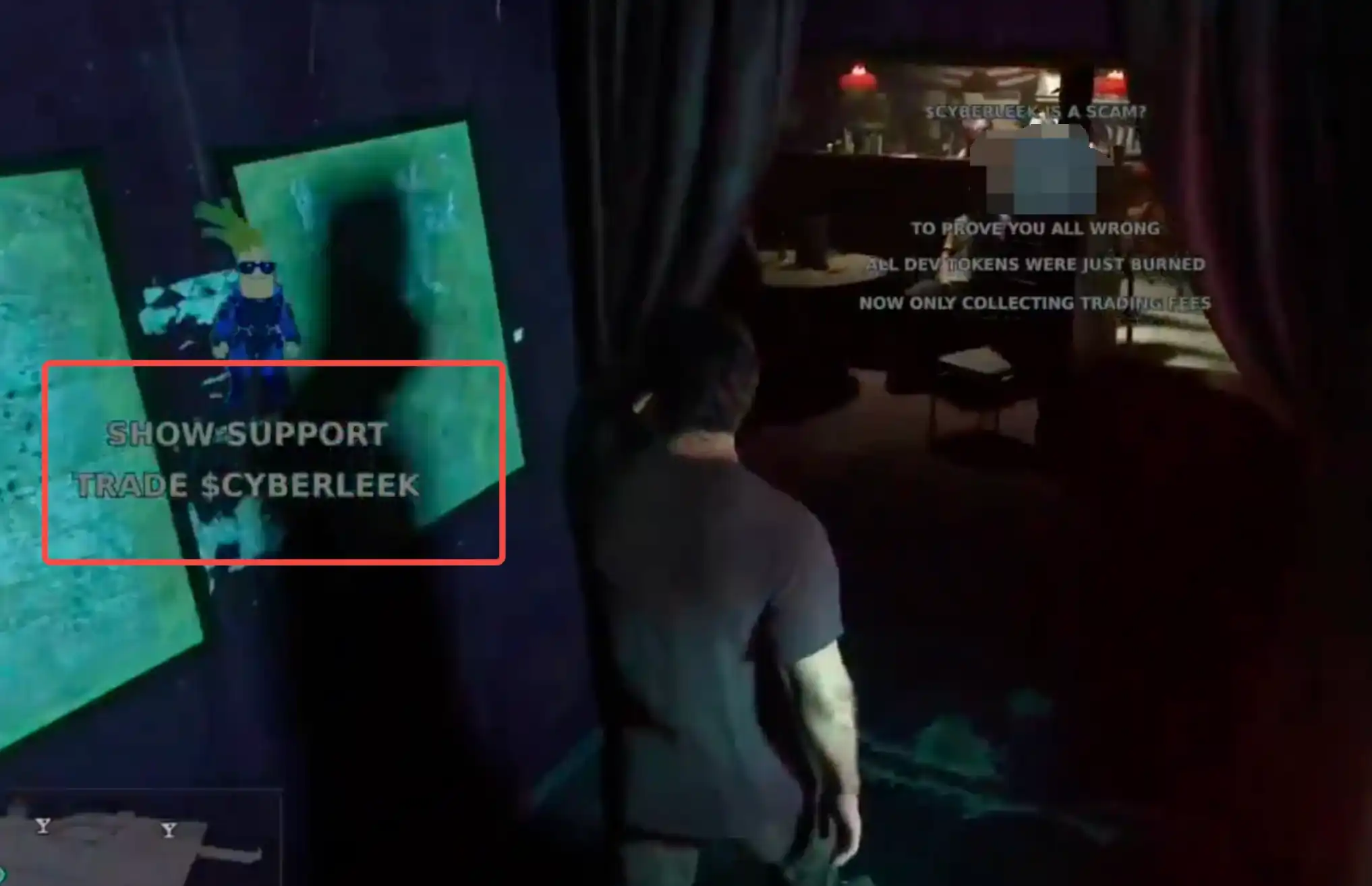
Hacker Leaks GTA6 and Launches a Token: Leaked Videos Become Ad Space for $CYBERLEEK, Must Buy Tokens to Vote for Next Clip

A hacker group called "CyberLeek" has leaked gameplay footage of the highly anticipated video game *GTA 6*, which is slated for release in 2026. Simultaneously, the group launched a meme token, $CYBERLEEK, on Solana. The leaks, which include maps and gameplay clips, are heavily watermarked with advertisements urging viewers to buy the token. Investigations of blockchain data reveal that the token was created and funded from a single wallet approximately eight hours before the first leak was released, suggesting a coordinated plan. The group has implemented a voting system where token holders can "vote" for the next type of content to be leaked by sending $CYBERLEEK tokens to a designated wallet—a process that permanently transfers the tokens to the hackers. This creates a self-sustaining cycle where interest in the leaks drives token purchases. Financially, the operation involved minimal upfront costs (less than $3,500 in out-of-pocket expenses) but generated significant revenue. On its first day, the token saw $15 million in trading volume, netting the creators an estimated $30,000 from transaction fees alone. While the group later burned a large portion of its developer-held tokens (worth over $1 million) to build trust, the fee-generating mechanism remains intact. The game's publisher, Take-Two Interactive, has initiated legal proceedings to identify the hackers. Despite this, the case demonstrates a new model where leaked intellectual property is used as leverage to promote and profit from a cryptocurrency, with meme token markets serving as an additional revenue stream.

marsbitIeri 10:11

Hacker Leaks GTA6 and Launches a Token: Leaked Videos Become Ad Space for $CYBERLEEK, Must Buy Tokens to Vote for Next Clip

marsbitIeri 10:11

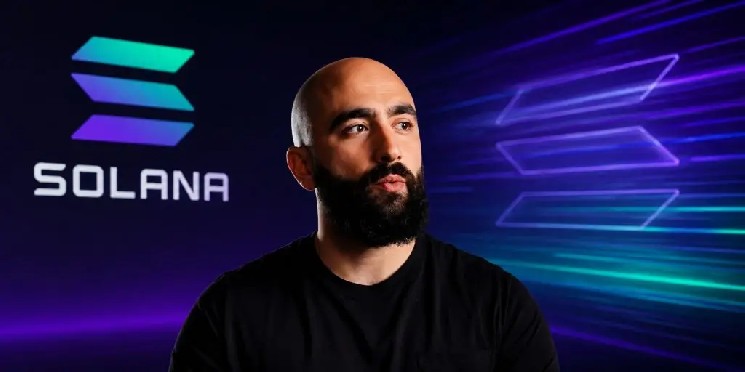
Solana Developer Mert Mumtaz Highly Praises Altcoin!

In the world of cryptocurrencies and finance, where privacy is a major focus, significant developments are underway. Valor Group founder Dev and notable crypto ecosystem figure Mert Mumtaz participated in a program on The Rollup crypto broadcasting platform, discussing the latest developments for the Zcash (ZEC) network and its important future roadmap. The conversation covered network scalability, security updates, and measures taken against quantum threats. The recent Ironwood update implemented in the Zcash network is considered a crucial milestone for the project. During the event, Mert highlighted that internal security audits using 'red team' methods and AI identified a potential vulnerability in the Orchard pool that could have allowed the creation of counterfeit notes. Extensive work and formal verification proved the code mathematically perfect according to specifications. The seamless migration of funds from the Orchard pool to the new Ironwood pool has completely eliminated the risk of counterfeit coin creation in the network. Dev shared important technical details about Zcash's future vision, emphasizing that Valor Group's main goal is for Zcash to achieve transaction volumes comparable to credit cards. He stated they aim to process over 50,000 transactions per second with sub-second latency while maintaining the full proof-of-work mechanism. The main scaling bottleneck was identified not as the nodes themselves, but wallet scanning processes. A new wallet architecture and synchronization delay optimization are expected to resolve this issue. The upcoming Tachion update promises to provide complete protection for Zcash against quantum computing threats. This update will integrate recursive zero-knowledge proofs into the network. It is reported to reduce transaction sizes by more than five times, eliminate node data processing overhead, and address state growth issues. With Tachion, the network is claimed to achieve not just 'quantum-resilient' but a truly 'quantum-secure' privacy structure.

cryptonews.ru2 giorni fa 20:40

Solana Developer Mert Mumtaz Highly Praises Altcoin!

cryptonews.ru2 giorni fa 20:40

活动图片