# SEC CFTC Articoli collegati

Il Centro Notizie HTX fornisce gli articoli più recenti e le analisi più approfondite su "SEC CFTC", coprendo tendenze di mercato, aggiornamenti sui progetti, sviluppi tecnologici e politiche normative nel settore crypto.

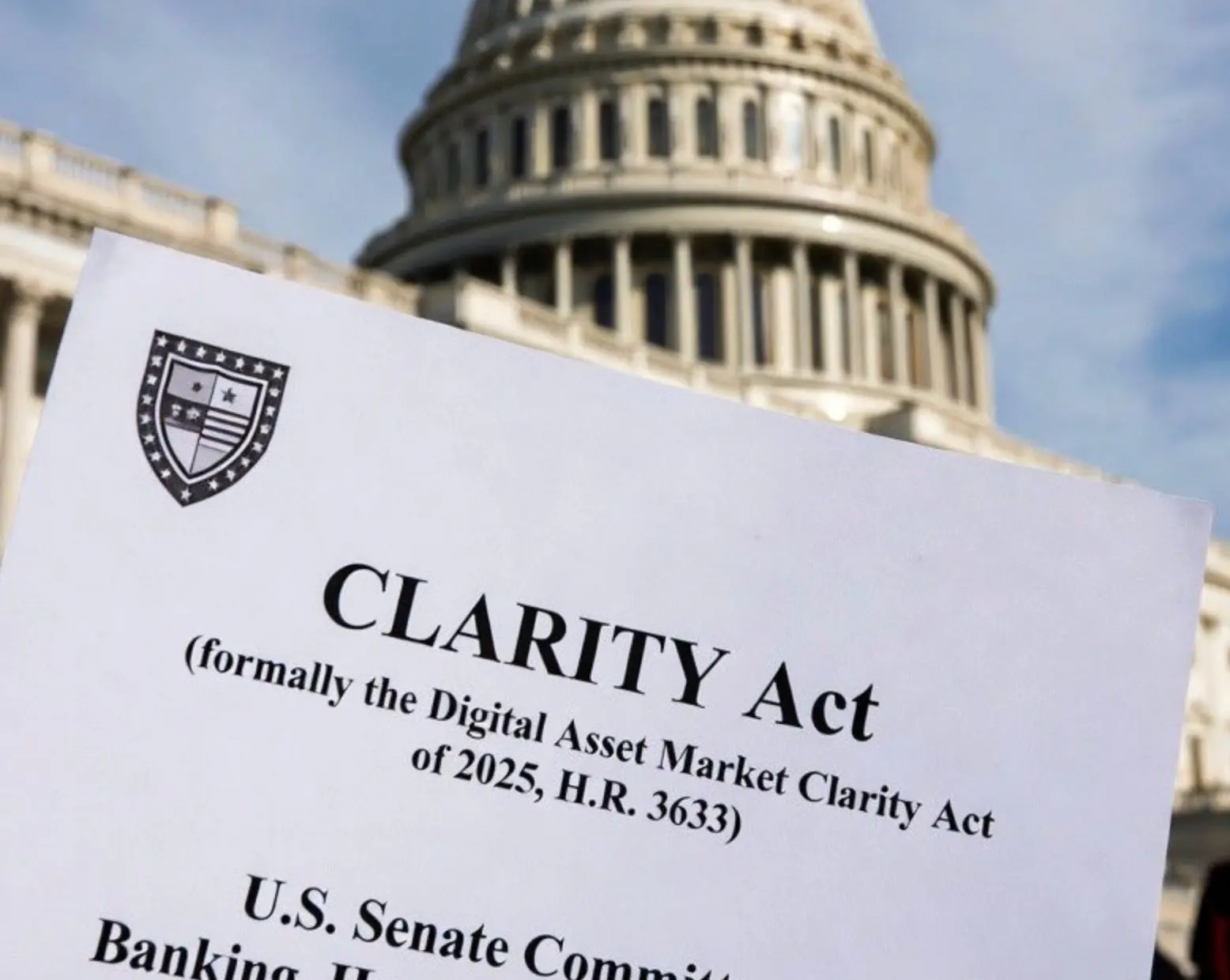
CLARITY Act Delays Have Become a Compliance Crisis, Not Just a Political Stalemate

The article discusses the ongoing delay in the US Senate regarding the CLARITY Act, a bill intended to clarify the regulatory status of digital assets as either securities under the SEC or commodities under the CFTC. A year after the House passed it, this inaction is creating a concrete governance, risk, and compliance crisis for businesses, moving beyond mere political gridlock. While related bills for stablecoins and CBDC prohibitions have become law, the comprehensive CLARITY Act remains stalled. The delay creates profound uncertainty for companies on fundamental rules for exchanges, custodians, and all market participants. Without clear congressional action, regulatory classification depends on shifting enforcement actions and presidential administrations, making stable compliance impossible. The Senate's window for action is narrowing, with key votes needed before the August recess. Several major issues are blocking passage, including ethical concerns over crypto holdings by officials, law enforcement opposition to certain provisions, perceived loopholes for stablecoin rewards, and regulatory agency vacancies at the SEC and CFTC. Bipartisan support is fragile. Further delay risks postponing the legislation until 2030, perpetuating a costly "regulation by enforcement" environment. In contrast, passage would provide a durable regulatory framework. Regardless of the outcome, compliance leaders are urged to immediately map their digital asset exposures, prepare governance materials for both scenarios, and stress-test their arrangements. The article concludes that while the Senate's action is uncertain, corporate preparedness is not.

Foresight News07/17 09:31

CLARITY Act Delays Have Become a Compliance Crisis, Not Just a Political Stalemate

Foresight News07/17 09:31

Global Crypto Regulation "Closing the Net": Hong Kong, EU, US Simultaneously Take Action, Is the Compliance Window Closing?

Global Crypto Regulation Tightens: Hong Kong, EU, and US Simultaneously Enforce Rules, Closing the Compliance Window? The global virtual asset regulatory landscape is shifting from rule-making to enforcement. Recent moves by Hong Kong, the EU, and the US signal a coordinated push towards market restructuring based on licensing, product classification, custody, and client segmentation. **Hong Kong**'s SFC issued a circular on "Relevant Stablecoins" on May 27, formally establishing a two-tier regulatory architecture where the HKMA oversees issuance and the SFC oversees trading and distribution. This creates differentiated, often lighter-touch, rules for compliant, licensed stablecoins compared to other virtual assets, fitting into a broader strategy to develop stablecoins as settlement infrastructure, tokenized securities as investment products, and licensed VATP platforms as distribution channels. The **European Union** is approaching a critical deadline, with the MiCA transition period ending on July 1. After this date, unlicensed Crypto-Asset Service Providers (CASPs) must cease serving EU clients. With only about 210 authorized CASPs across 23 member states so far, a significant market consolidation is expected, as the application process now takes 6-9 months. In the **United States**, the CLARITY Act passed a key Senate committee vote on May 14. This landmark bill aims to clarify jurisdiction between the SEC and CFTC, establish registration rules for trading platforms and custodians, and create a federal framework for stablecoin regulation. A key compromise prohibits "passive yield" on stablecoin balances but allows "activity rewards" tied to specific functions like payments. The convergence of these regulatory actions highlights a fundamental shift: stablecoins, with a payment volume rivaling major card networks, are being treated as critical financial infrastructure rather than unregulated digital assets. The core message is clear: compliance is transitioning from an operational cost to a mandatory license for market access, determining which players will participate in the next phase of the digital asset economy.

marsbit06/03 13:51
Global Crypto Regulation "Closing the Net": Hong Kong, EU, US Simultaneously Take Action, Is the Compliance Window Closing?

marsbit06/03 13:51

CLARITY Act Passes Crucial Hurdle, But a Long Road Remains Ahead

The CLARITY Act, a major U.S. digital asset market structure bill, has advanced from the Senate Banking Committee with a 15-9 bipartisan vote, ending a four-month legislative standstill. The bill's core aim is to resolve the long-standing jurisdictional conflict between the SEC and CFTC by clearly defining which digital assets are securities or commodities. It also establishes rules for exchanges and custodians while providing protections for non-custodial software developers and blockchain validators, shielding them from being classified as money transmitters. The committee's approval triggered a positive market reaction, with Bitcoin rising and crypto-related stocks outperforming the broader market. However, the passage was secured only after last-minute negotiations and compromises, including the addition of amendments on investor protection, bank activities, and defining "truly decentralized" DeFi projects. Two key Democratic senators provided the crucial swing votes but cautioned that their future support in a full Senate vote is not guaranteed. Significant hurdles remain. The bill must still pass the full Senate, requiring 60 votes, and a major point of contention is a Democratic demand for an ethics clause restricting financial ties between high-level government officials and crypto firms—a provision opposed by Republicans and the White House. Additionally, the bill must be reconciled with a version from the Senate Agriculture Committee. If not passed before the August congressional recess, the next viable legislative window might not open until 2030. The legislation also faced, and ultimately withstood, last-minute lobbying opposition from traditional banking groups concerned about deposit outflows to crypto. If ultimately enacted, the CLARITY Act would initiate a multi-year rulemaking process, with new regulations likely not taking full effect until 2027 or later. While a critical milestone, the path to becoming law remains a challenging race against time.

链捕手05/15 04:54

CLARITY Act Passes Crucial Hurdle, But a Long Road Remains Ahead

链捕手05/15 04:54

活动图片