# Product Articoli collegati

Il Centro Notizie HTX fornisce gli articoli più recenti e le analisi più approfondite su "Product", coprendo tendenze di mercato, aggiornamenti sui progetti, sviluppi tecnologici e politiche normative nel settore crypto.

Alliance's Co-Founder's Letter to Entrepreneurs: Written on the Occasion of Cursor's $60 Billion Sale

In this letter to entrepreneurs, Alliance reflects on the success of Cursor's $60 billion sale to Elon Musk, using it as a case study to counter the misconception that opportunities in crowded fields like AI or crypto are exhausted. The piece argues that great companies like Cursor, Stripe, Figma, and Shopify are not built by geniuses with perfect ideas, but by founders who start with a non-consensus belief about the future and build for years before that future becomes obvious to everyone. They identify long-term shifts, find overlooked entry points, and execute relentlessly. The framework for success involves: 1. **Identifying your place in the technology cycle**: Early-stage opportunities focus on making new tech usable for power users (e.g., Coinbase, Cursor). Later-stage opportunities involve finding the "yin" to an existing "yang"—the blind spots of first-generation players (e.g., Stripe vs. PayPal, Figma vs. Adobe). 2. **Cultivating unique insights**: Immerse yourself deeply in the market. Use every product, talk to users, and build an audience. Insights will emerge naturally from deep engagement. 3. **Finding a "hair-on-fire" problem**: Look for a 10x improvement or a severe, urgent pain point. The strongest signal is people already building clumsy workarounds. 4. **Building a focused MVP**: Don't just add features because you can. Ask why users would abandon their current tool for yours. The best startups rarely force new behaviors; they improve familiar workflows with drastically lower friction. 5. **Winning a distribution channel**: Distribution is often the moat. Before product-market fit, achieve channel-market fit. Find where your customers are and build an engine to reach them, even through unscalable, manual efforts initially. 6. **Persistence**: The final, unteachable ingredient is resilience. Success stories like Cursor, Airbnb, and Nvidia involved years of grinding, rejection, and perseverance when the path forward seemed unclear. The conclusion is that there is no secret. Most people fail to consistently execute these steps over the long term. The few who do build the companies that define the next era. The world is yours to create.

链捕手06/20 03:37

Alliance's Co-Founder's Letter to Entrepreneurs: Written on the Occasion of Cursor's $60 Billion Sale

链捕手06/20 03:37

Y Combinator Co-founder: How to Make a Billion Dollars?

The Y Combinator co-founder argues that becoming a billionaire by founding a successful startup is not only possible but demonstrably achievable without unfair or unethical practices. He disputes a politician's claim to the contrary, using the example of a founder whose company grew at 93% monthly solely through creating a product users loved and recommended. The core mechanism is exponential growth. A conservative 15% monthly growth rate compounds to a 4384x increase over five years, which can easily lead to billion-dollar valuations and founder wealth. The process depends on two key variables: the growth rate and the duration it can be sustained. A high growth rate stems from a great product that users naturally promote, while a long duration requires a large enough market. For aspiring founders, especially young ones, the simplest path is to build something they and their friends genuinely need. Young people's current needs often predict future mass-market trends. He advises against actively "searching" for ideas, as this tends to filter out unconventional but promising ones. Instead, inspiration should come from working on interesting projects with friends, as many iconic companies (e.g., Apple, Facebook) started this way. Ultimately, building a massively valuable startup is not about exploitation but empathy: deeply understanding a user group and building a product that significantly improves their lives. This, powered by exponential growth in a large market, is the legitimate path to immense wealth creation.

Foresight News06/15 10:01

Y Combinator Co-founder: How to Make a Billion Dollars?

Foresight News06/15 10:01

From Return to Resignation: Chen Hang's 437 Days at DingTalk

The 437-Day Return and Departure of Chen Hang at DingTalk This article chronicles the 437-day period from March 31, 2025, to June 11, 2026, when Chen Hang (also known as "No Move") returned as CEO of DingTalk, the enterprise communication platform he originally founded, only to later step down. Chen Hang, the creator of DingTalk in 2015, was brought back by Alibaba in 2025 after the company acquired his subsequent startup, HHO. His return was driven by Alibaba's renewed focus on AI and DingTalk's strategic role as its key to-B AI application. However, his aggressive management style, marked by strict work policies like mandatory clock-ins and extended hours, quickly caused internal friction and was criticized as being at odds with Alibaba's culture. Despite the internal turmoil, Chen Hang drove significant product launches. In August 2025, he unveiled "AI DingTalk 1.0," featuring new products like the AI-native entry point "DingTalk ONE." By March 2026, he announced "Wukong," touted as the world's first enterprise-grade AI-native work platform, representing a fundamental rebuild of DingTalk's architecture. The turning point came in early June 2026. A detailed internal post criticizing DingTalk's work culture went viral, followed by a public critique from a former executive. This prompted an unprecedented public rebuke from the Alibaba Partners Committee, which stated such management was not aligned with company values. One day later, on June 11, Alibaba announced Chen Hang's departure. He was succeeded by Chen Yusen, a 32-year-old technical expert known for founding cybersecurity firm Changting Technology. While Chen Hang's tenure laid the technical foundation for DingTalk's AI transformation with "Wukong," his leadership style ultimately led to his replacement as the company seeks a new direction under younger leadership.

marsbit06/11 10:23

From Return to Resignation: Chen Hang's 437 Days at DingTalk

marsbit06/11 10:23

Insider: DeepSeek Is Forming a Harness Team to Benchmark Against Claude Code

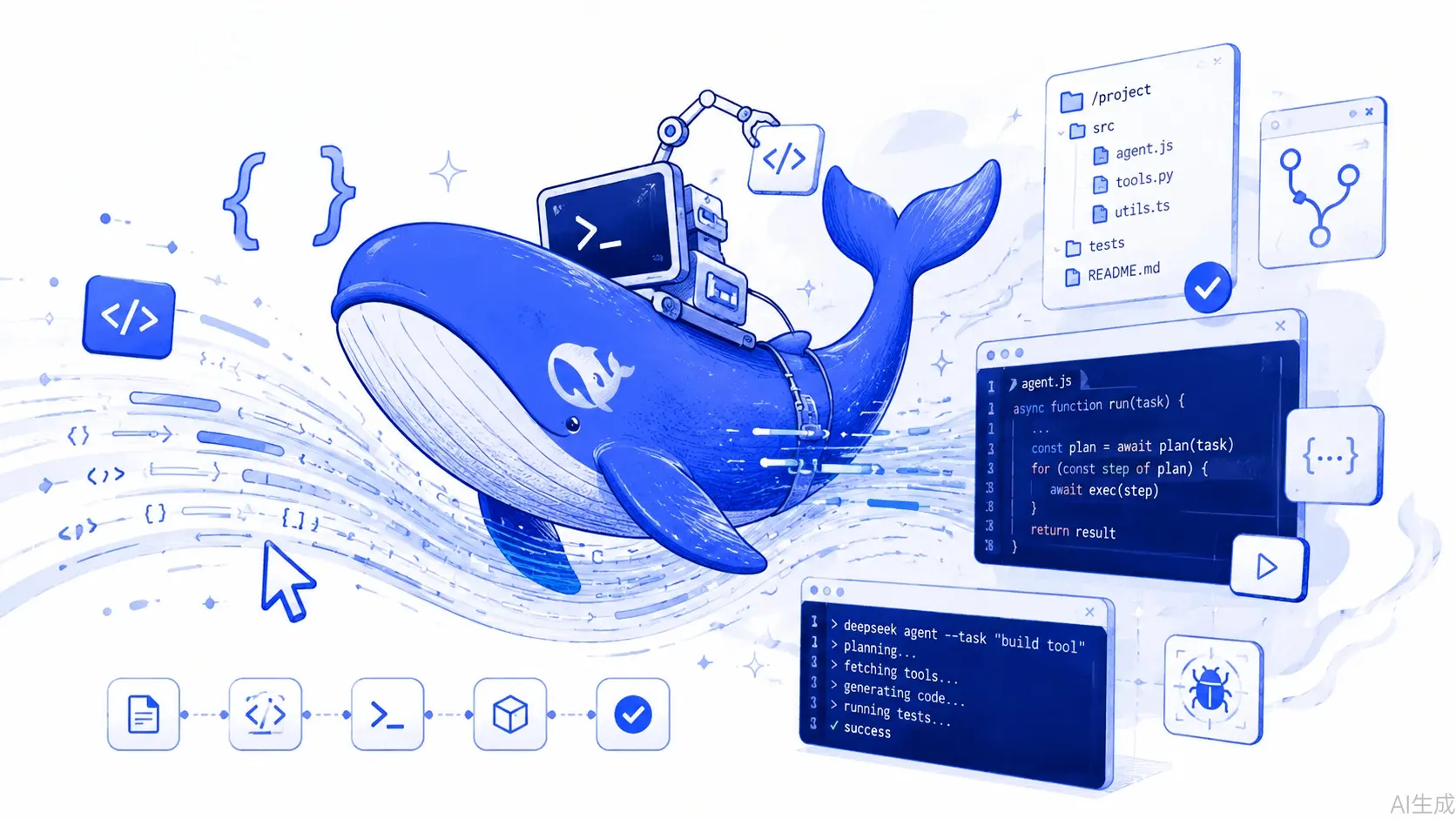
DeepSeek is reportedly forming a dedicated "Harness" team to develop a code agent product, directly targeting Anthropic's Claude Code. According to internal sources and a social media post by DeepSeek senior researcher Chen Deli, the team will focus on building "DeepSeek Code Harness." The initiative involves recruiting for key roles like Harness Product Manager and Harness R&D Engineer in Beijing. DeepSeek defines its approach with the core formula: Model + Harness = Agent. This signifies a strategic shift from merely offering a powerful coding model to creating the essential middleware that connects the model to real-world developer workflows. The Harness will handle context management, tool calls, task planning, file operations, code editing, terminal execution, and feedback loops. The move highlights that competition in AI-assisted coding is evolving from pure model capability to ownership of the developer workflow entry point. While DeepSeek has strong foundational models (e.g., DeepSeek-Coder series), it has lacked an integrated, productized agent experience. The popularity of a community-built project, DeepSeek-TUI, demonstrated developer demand for a Claude Code-like tool using DeepSeek's models, but also revealed the limitations of unofficial solutions. By building its official Code Harness, DeepSeek aims to leverage its unique advantages: direct collaboration with its model training team, control over APIs and design, the ability to create a data feedback loop for model improvement, and access to real internal task scenarios. This step is seen as crucial for DeepSeek to transform its advanced models into a leading agent product that can deeply integrate into and enhance the actual software development process.

链捕手05/22 02:14

Insider: DeepSeek Is Forming a Harness Team to Benchmark Against Claude Code

链捕手05/22 02:14

The Last Time I'll Talk About Backpack, and Also Discussing My Airdrop Farming Principles

The author outlines two primary approaches to airdrop farming (referred to as "撸毛"): a labor-intensive" method of mass participation in many projects, and their own "sniper" method. The sniper approach relies on a rigorous four-point checklist to filter projects and avoid "industrial garbage." The checklist evaluates: 1. **Team (People):** Founders must be intelligent, have strong execution skills, and be genuinely well-intentioned. This is assessed through their social media content and, if possible, personal interactions. 2. **Product (Product-Market Fit):** The product must have a clear market fit, be delivered competently, and the team must show a responsible attitude towards its quality, avoiding releases full of basic errors. 3. **Narrative (Story):** The project should operate in a promising, unproven narrative within Web3 that also aligns with major investment trends in Web2 (e.g., AI). 4. **Timing & Cost (Market Conditions):** Avoid participating when market sentiment is overly FOMO-driven and participation costs are high. If an opportunity causes hesitation, it's best to skip it, as overcrowded airdrops yield minimal or negative returns. Applying this framework, the author explains why they avoided heavily farming the Backpack exchange airdrop: * **Narrative:** They are skeptical of the "compliant CEX" narrative, questioning its unique selling point against giants like Binance and OKX. * **Product:** They criticize Backpack's frequent technical failures, rollbacks, and what they perceive as a lack of product development rigor, comparing it unfavorably to competitors like Hyperliquid. * **Timing & Cost:** The participation cost was high compared to zero-fee alternatives available at the time. The author concludes that Backpack lacks the technical and operational prowess of a serious exchange and views its token more as a "VC-backed meme coin" for secondary market speculation rather than a worthwhile airdrop target.

比推03/23 20:38

The Last Time I'll Talk About Backpack, and Also Discussing My Airdrop Farming Principles

比推03/23 20:38

活动图片