# Networks Articoli collegati

Il Centro Notizie HTX fornisce gli articoli più recenti e le analisi più approfondite su "Networks", coprendo tendenze di mercato, aggiornamenti sui progetti, sviluppi tecnologici e politiche normative nel settore crypto.

Optical Modules Soar, Why Is NOK the Second Leader After MRVL?

Nokia's stock has surged nearly 170% to around $16.8 since Nvidia's $1 billion investment and AI-RAN partnership in October 2025, reflecting a market re-rating from a cyclical telecom equipment provider to an AI infrastructure player. This rise, adding roughly $60 billion in market cap, is driven by AI capex expansion into telecom edge, RAN, and optical networks. The company's Q1 2026 results showed strong momentum, with AI & Cloud net sales up 49% and 10 billion euros in new orders, prompting Nokia to raise its AI & Cloud market growth forecast to a 27% CAGR (2025-2028). Optical network growth of 20% further strengthens its position in connecting AI data centers. Recent tests with operators like T-Mobile and the opening of an AI Networking Innovation Lab demonstrate progress from concept to early commercial deployment. Nokia's strategy integrates Nvidia GPUs into its network hardware, enabling concurrent AI processing and RAN tasks for real-time optimization and new edge services. However, with a trailing P/E nearing 100x and consensus price targets lagging the current stock price, significant future growth is already priced in. The key constraint now is the pace and scale of large-scale operator deployments. While execution signals remain positive and the company's position in AI edge infrastructure is established, high valuation leaves limited room for error, making tangible commercial contracts the critical factor for further stock performance.

marsbit06/03 04:39
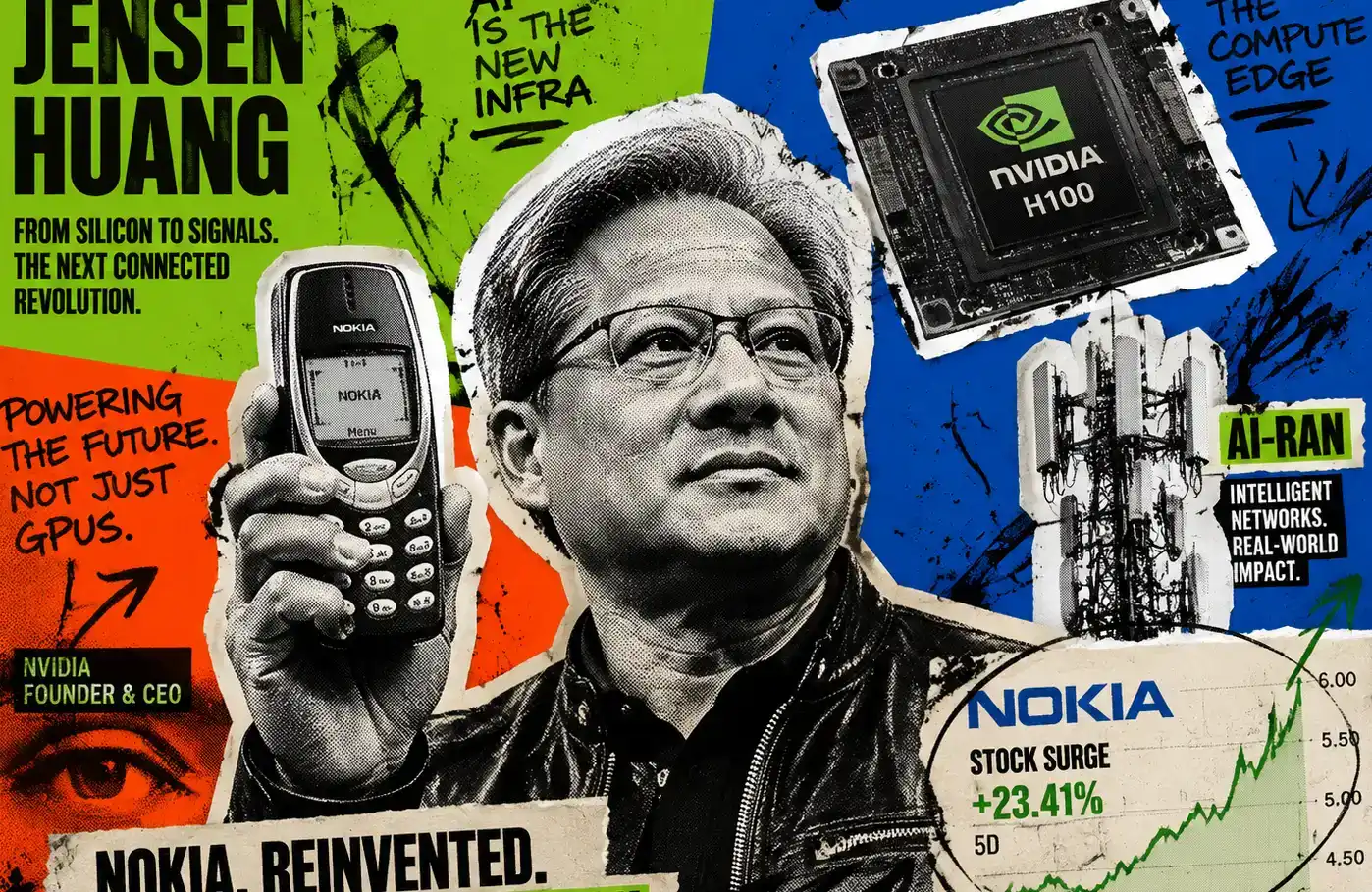
Optical Modules Soar, Why Is NOK the Second Leader After MRVL?

marsbit06/03 04:39

a16z: Three Major AI Trends for 2026

a16z: Three AI Trends for 2026 1. AI Takes on Substantial Research Tasks: AI models are evolving to handle complex, abstract instructions and assist in research, particularly in reasoning. They are beginning to solve difficult problems and foster a new "generalist" research style that focuses on connecting ideas and making inferences from hypothetical answers. This requires new "nested agent" workflows where models collaborate and refine each other's outputs, though better model interoperability and compensation methods (potentially via blockchain) are needed. 2. The Shift from KYC to KYA (Know Your Agent): The bottleneck in the agent economy is shifting from intelligence to identity verification. With non-human identities vastly outnumbering humans in finance, there's a critical need for a "Know Your Agent" infrastructure. Agents require cryptographically signed credentials to transact, linking them to their principals, constraints, and liabilities. 3. Solving the Open Web's "Invisible Tax": AI agents are disrupting the economic foundation of the open web by extracting data from ad-supported sites (the context layer) while bypassing their revenue models. This creates an "invisible tax" that threatens content creation. Solutions are needed to automatically reward content creators, moving from static licensing to real-time compensation systems using technologies like nanopayments and attribution standards, potentially blockchain-enabled.

marsbit01/12 08:09

a16z: Three Major AI Trends for 2026

marsbit01/12 08:09

活动图片