# Microsoft Articoli collegati

Il Centro Notizie HTX fornisce gli articoli più recenti e le analisi più approfondite su "Microsoft", coprendo tendenze di mercato, aggiornamenti sui progetti, sviluppi tecnologici e politiche normative nel settore crypto.

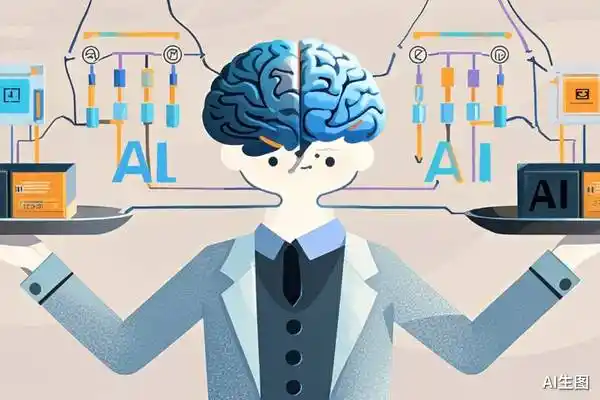
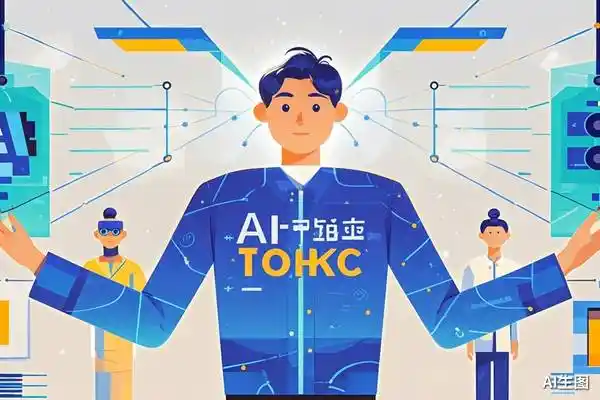
Microsoft CEO Satya Nadella's Latest Warning: Betting Entirely on a Single AI Model Hands Over a Company's Lifeblood

Microsoft CEO Satya Nadella warns that companies relying solely on a single AI model could jeopardize their survival. He argues that over-dependence leads to "vendor lock-in," where businesses risk ceding control over their core data, memory, contextual history, and AI usage patterns. This dependence essentially outsources a company's critical thinking and operational know-how to an external provider. The deeper a company integrates with one AI system—feeding it prompts, internal data, and workflows—the more it reveals its unique business methods and competitive edge. This accumulated knowledge could become accessible to the AI supplier. Furthermore, switching providers becomes extremely costly and complex, as companies would need to rebuild their entire AI-augmented workflow, memory, and tool integrations from scratch. Nadella's solution is "decoupling." Companies should separate their proprietary data, memory, and control layer (or "harness") from the underlying AI models. By retaining metadata from every AI interaction, businesses can preserve their operational "brain" or institutional knowledge. This allows them to flexibly use different AI models (e.g., from OpenAI, Anthropic, Microsoft) for specific tasks without losing their accumulated expertise. The core idea: companies can rent the smartest models available, but they must keep their own "brain" and operational control firmly in-house.

marsbit07/28 11:36

Microsoft CEO Satya Nadella's Latest Warning: Betting Entirely on a Single AI Model Hands Over a Company's Lifeblood

marsbit07/28 11:36

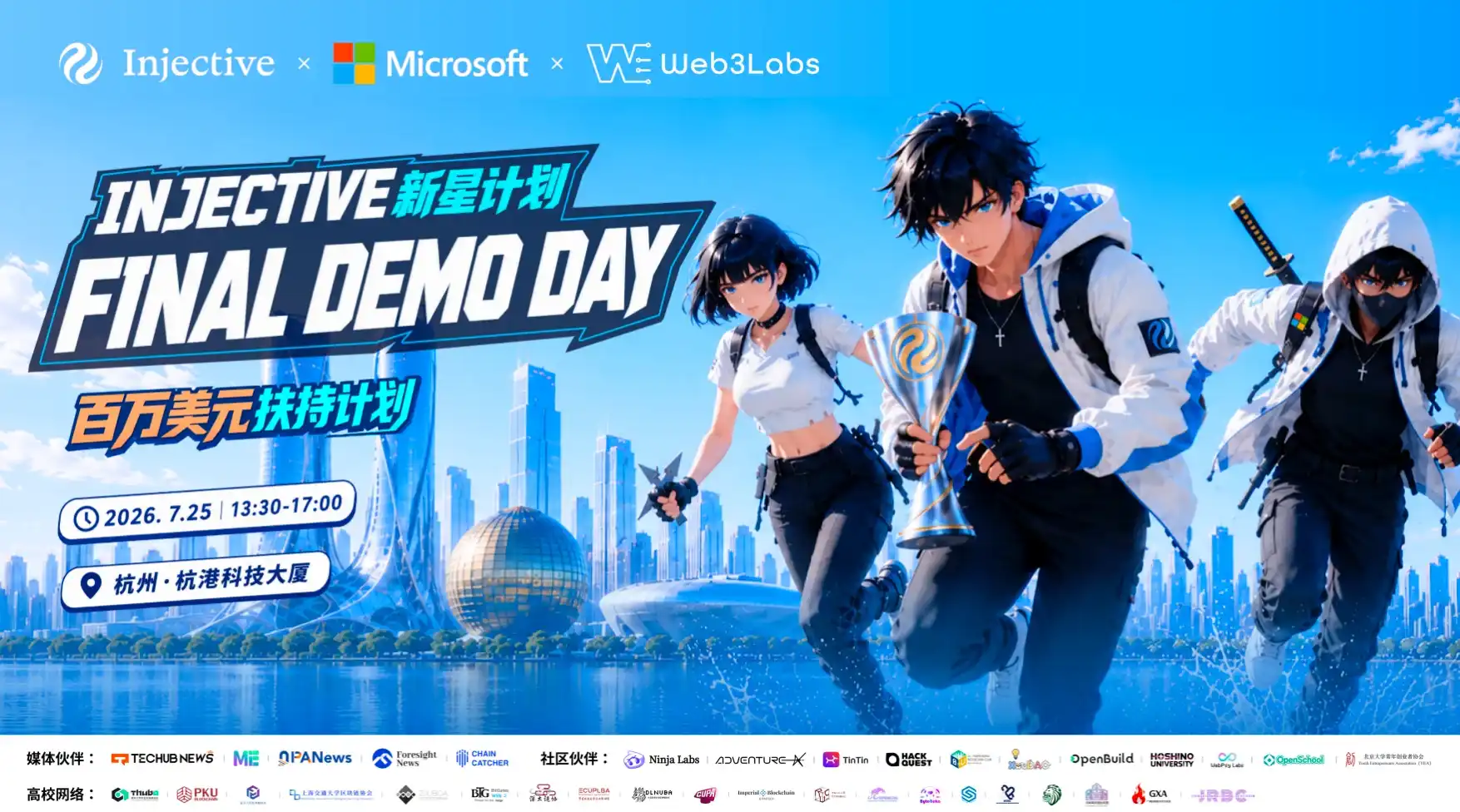
"Injective Nova Program" Final Demo Day Summit Finals Successfully Concluded: TOP3 Teams Announced, Co-creating a New Paradigm of AI × Web3

"Injective Nova Program" Final Demo Day Successfully Concludes in Hangzhou: Top 3 Teams Announced, Shaping the New Paradigm of AI × Web3 On July 25, 2026, the Final Demo Day of the "Injective Nova Program," jointly launched by Injective, Microsoft, and Web3Labs, was successfully held in Hangzhou. The event gathered global blockchain experts, AI developers, top VC representatives, and ecosystem partners to witness innovations at the intersection of AI and decentralized networks. The program generated significant global interest, receiving 89 applications from over 10 countries and achieving over 1,000,000 ecosystem impressions. After a rigorous review, a global Top 10 was announced on July 10. These teams participated in an exclusive visit to Microsoft's Beijing headquarters for deep technical exchanges on July 16. At the final demo day, the Top 10 teams delivered live presentations. The jury evaluated projects based on technological innovation, commercial potential, and synergy with the Injective ecosystem, ultimately awarding the top three positions. All winning and shortlisted projects will receive comprehensive incubation support, technical resources, and capital access from Injective, Microsoft, and Web3Labs. The successful conclusion of the Final Demo Day marks a significant milestone for the first phase of the Injective Nova Program. The organizers plan to continue supporting global builders and exploring the limitless possibilities of AI and decentralized technology integration.

marsbit07/27 11:27
"Injective Nova Program" Final Demo Day Summit Finals Successfully Concluded: TOP3 Teams Announced, Co-creating a New Paradigm of AI × Web3

marsbit07/27 11:27

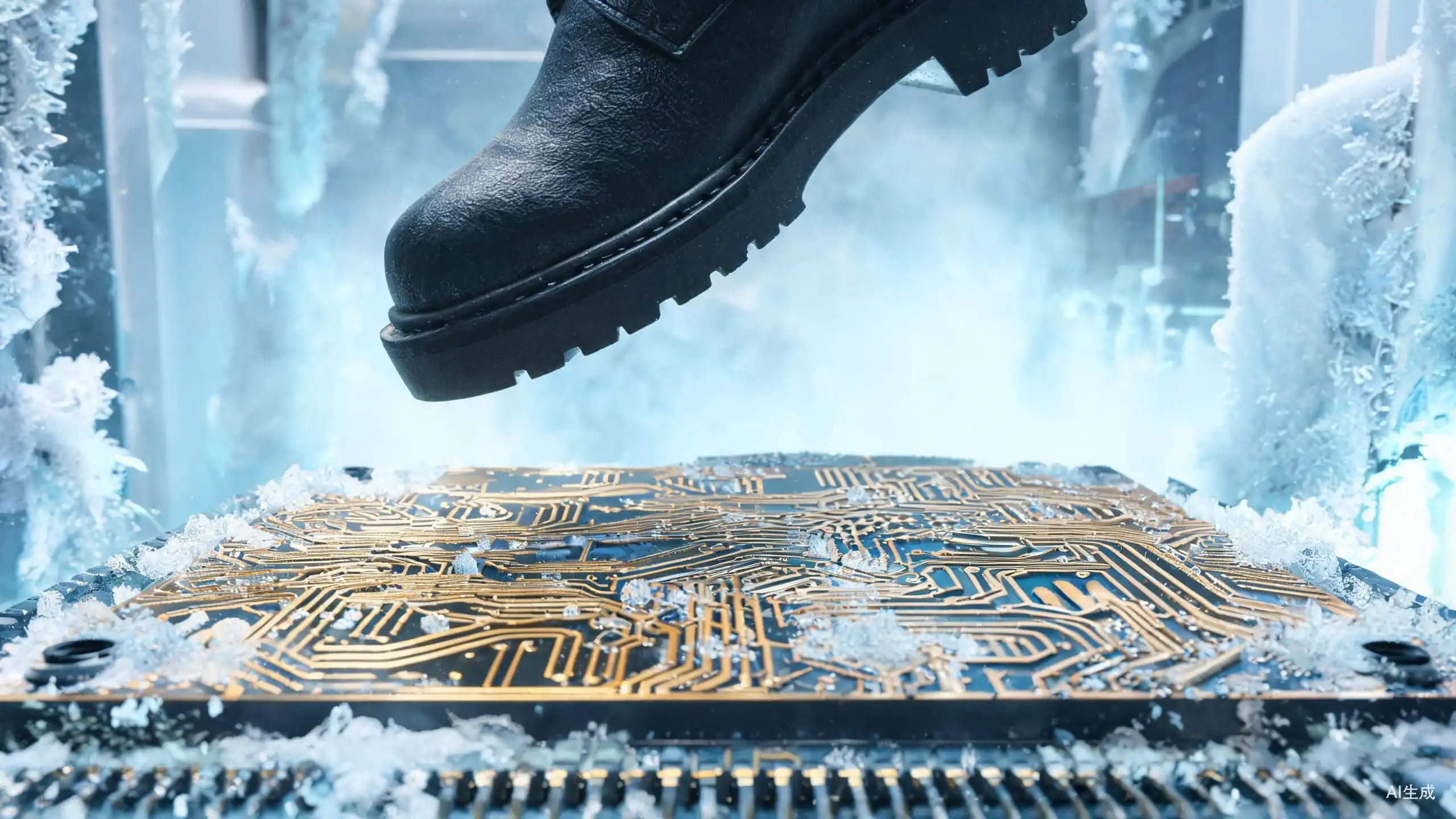
Microsoft Announces Commercial-Grade Quantum Computer to be Completed in Three Years: Will the Boots Land?

Microsoft announces plans to build a commercially viable quantum computer by 2029, a significant acceleration from the previous industry consensus of a decade. The breakthrough is fueled by their new Majorana 2 quantum chip, which boasts a record-breaking average qubit lifetime of 20 seconds—a 1,000-fold reliability improvement over its predecessor. This leap was achieved by leveraging topological qubits, a theoretically more stable technology using Majorana zero modes, and switching the core superconducting material from aluminum to lead. Crucially, Microsoft's "Discovery" agentic AI platform accelerated the R&D process. AI agents autonomously analyzed vast experimental data, optimized manufacturing parameters (like the lead alloy composition), and solved issues like "ghost noise," dramatically speeding up experimentation. While the 20-second coherence time is a landmark, challenges remain: scaling from 12 qubits to the millions needed for practical applications, managing compilation costs, and verifying quantum results. Skeptics call for peer-reviewed data, and questions persist about whether even 20 seconds is sufficient for complex algorithms like breaking RSA encryption. The race is on with other approaches (superconducting, trapped ions), but Microsoft's confidence in its topological roadmap signals a potential shortcut to a scalable quantum future.

marsbit06/15 03:30

Microsoft Announces Commercial-Grade Quantum Computer to be Completed in Three Years: Will the Boots Land?

marsbit06/15 03:30

It's Not Jensen Huang Who Wants to Change the PC, But the PC That's Revolting Against Itself

The 40-year-old PC industry is undergoing a fundamental transformation, driven by the rise of AI PCs. At the GTC Taipei 2026 event, NVIDIA, backed by Microsoft and major PC OEMs, announced the RTX Spark super chip for Windows PCs, marking its official entry into the PC core processor market. This move aims to redefine the AI PC by shifting its core from the CPU to an AI-focused SoC (System on Chip). NVIDIA envisions the PC evolving from a personal computer to a "personal AI"—a platform where local AI Agents can autonomously perform tasks. While Intel pioneered the AI PC concept earlier in 2026, NVIDIA's aggressive push, leveraging its vast CUDA developer ecosystem of 6 million, positions it to potentially reshape the industry's long-standing Wintel (Windows-Intel) power structure. NVIDIA's strategy extends beyond hardware; it's about embedding its CUDA, RTX, and AI software stack into the PC platform itself. The article identifies key shifts: 1) The move from a CPU-centric to an AI SoC-centric architecture, similar to Apple's approach with its M-series chips. 2) The PC's evolution from a human-operated tool to a platform for human-Agent collaboration. 3) The extension of NVIDIA's data center-centric CUDA ecosystem to personal devices via RTX Spark. Ultimately, the change is driven by the broader trend of AI moving to personal devices. Companies like Intel, AMD, Qualcomm, and Apple are all participating in this shift. NVIDIA's entry accelerates the competition, but the core driver is the technology itself finding its optimal expression in the PC. The industry is reinventing itself, with the outcome hinging on execution, ecosystem development, and the creation of compelling local AI applications.

marsbit06/12 11:14

It's Not Jensen Huang Who Wants to Change the PC, But the PC That's Revolting Against Itself

marsbit06/12 11:14

Microsoft is Afraid of Being Marginalized by AI Giants

Microsoft, once the defining force of the PC era, now faces a familiar challenge in the AI age: the risk of being relegated to a profitable but invisible infrastructure provider. This anxiety was laid bare at Build 2026, where CEO Satya Nadella unveiled a major strategic pivot. The catalyst was a quiet April agreement that dissolved Microsoft's exclusive licensing and cloud-hosting deal with OpenAI, its once-vital partner. This erased Microsoft's key AI moat. With OpenAI and Anthropic defining AI applications and gaining enterprise traction—even within Microsoft's own ranks—Nadella had to answer: without exclusivity, what is Microsoft's role? The answer was a suite of seven in-house AI models, a developer-focused AI workstation (Surface RTX Spark Dev Box), and, most crucially, the Agent 365 platform for enterprise AI governance. The models, notably targeting Anthropic's strengths in coding and enterprise, signal a defensive move. However, the broader strategy is to make the models themselves less decisive. Financially, Microsoft's AI revenue is strong, driven largely by Azure running others' models. Yet its user-facing products like Copilot show weak penetration and engagement. Microsoft earns infrastructure money but lacks direct user mindshare. Nadella's core fear is being "hollowed out." As OpenAI and Anthropic prepare for IPOs and gain financial independence, they may build their own infrastructure, threatening Azure's lucrative AI revenue stream. Microsoft's window is to entrench itself deeper: not as the model creator, but as the indispensable platform for securely deploying, managing, and governing all AI models within the enterprise through Agent 365. Build 2026 revealed Microsoft's bet: in the AI era, the ultimate power lies not in any single model, but in the enterprise "operating system" that controls them. Nadella is determined to ensure Microsoft is the driver of this new era, not just a passenger.

marsbit06/03 11:03

Microsoft is Afraid of Being Marginalized by AI Giants

marsbit06/03 11:03

When Google Also 'Prints Stocks' to Build AI, Whose Narrative is Shattering the High Valuations of Neocloud?

Google has announced its first equity financing since 2005, a series of moves totaling $80 billion that signal a strategic challenge to Nvidia's GPU dominance in the AI compute market. This impacts "Neocloud" companies like CoreWeave, Nebius, and IREN, whose valuations are heavily tied to Nvidia's perceived uniqueness. Google's three-part strategy involves: launching new TPU chips (TPU 8t/8i) and selling them to third parties for the first time; forming a $25 billion compute-as-a-service joint venture with Blackstone; and raising ~$50 billion in new equity (part of an $80B package) to fund AI infrastructure, underscoring the massive capital demands even for tech giants. This marks a divergence from Microsoft's path. Microsoft, lacking a mature in-house AI chip, relies heavily on outsourcing to Neocloud providers using Nvidia GPUs. Google, with its proprietary TPU, is pursuing vertical integration—building its own data centers, selling chips, and competing directly with Neocloud services. While Neocloud firms have strong near-term revenue from locked-in Nvidia GPU contracts (e.g., CoreWeave's ~$100B backlog), Google's moves undermine their long-term valuation narrative based on Nvidia's sole supremacy and perpetual supply shortage. TPU performance claims and adoption by firms like Anthropic add credibility to Google's alternative. The AI compute market is transitioning from a uniform seller's market to a layered one: top AI labs are diversifying their hardware stacks; hyperscalers are pursuing different chip strategies; and financing costs will become a critical differentiator, favoring players like Google with lower capital costs. Key metrics to watch include the progress of the Google-Blackstone JV, expansion of the TPU customer base beyond Anthropic, and potential shifts in Microsoft's sourcing strategy. If Google succeeds on these fronts, the Neocloud investment thesis will require significant reassessment.

marsbit06/03 07:04

When Google Also 'Prints Stocks' to Build AI, Whose Narrative is Shattering the High Valuations of Neocloud?

marsbit06/03 07:04

活动图片