# Mechanism Articoli collegati

Il Centro Notizie HTX fornisce gli articoli più recenti e le analisi più approfondite su "Mechanism", coprendo tendenze di mercato, aggiornamenti sui progetti, sviluppi tecnologici e politiche normative nel settore crypto.

Vitalik's Algorithmic Stablecoin Vision: Interpreting the Mechanism and Challenges from an Options Perspective

Vitalik Buterin's recent algorithmic stablecoin proposal envisions using an option-like mechanism to create a stablecoin without the liquidation risks inherent in traditional collateralized debt position (CDP) models. The design splits one unit of ETH into two components: a 'stable' leg (P) that maintains value up to a certain strike price, and an 'upside' leg (N) that captures any appreciation above that price. Together, they always sum to one ETH, eliminating the need for debt or liquidation mechanisms. From an options perspective, the stable leg essentially functions as a synthetic, covered call position. However, significant challenges exist. For the stable asset to maintain its peg, it must continuously roll deep in-the-money call options, leading to potential rollover slippage, predictable trading paths vulnerable to front-running, and liquidity issues. Crucially, the system's scalability depends on a constant demand for the upside leg—a form of leveraged ETH long position without funding rates or liquidation risk. It's unclear if such persistent, specific demand will materialize from speculators or market makers who have simpler alternatives like perpetual swaps. The author, drawing from experience with Rysk, argues that DeFi options have struggled as standalone trading products due to complexity and fragmented liquidity. Their potential lies instead as foundational infrastructure underpinning more complex financial primitives like stablecoins, structured yields, or index products—transforming from a direct product into a core pricing and risk distribution engine for the next generation of on-chain finance.

marsbit06/21 07:23

Vitalik's Algorithmic Stablecoin Vision: Interpreting the Mechanism and Challenges from an Options Perspective

marsbit06/21 07:23

Why Do Memes Only Cut You? An Article That Explains Their True Growth Mechanism

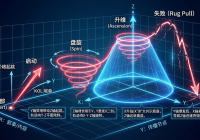
The article "Why Do Meme Coins Only 'Cut' You? Clarifying Their True Growth Mechanism" offers a fresh, analytical perspective on meme coin dynamics, framing their growth not as irrational speculation but as a mathematically explainable phenomenon. The core argument is that a meme coin’s market capitalization isn't just driven by price increases (Z-axis), but is fundamentally supported and "propped up" by two underlying factors: narrative density (X-axis) and the network of传播 nodes (Y-axis). Together, these form the base radius of a "Wealth Cone." A meme with only height (price) but no base (narrative and community) is like a thin needle—easily toppled. A strong, expanding base is necessary to support sustainable, exponential growth. The proposed XYZ three-dimensional growth spiral model explains the interaction: * **X-axis (Narrative Density):** The meme's core idea, cultural resonance, originality, and the richness of community-created content. * **Y-axis (Propagation Network):** The transmission pipelines, from major influencers (e.g., Elon Musk) to KOLs and finally to retail investors. * **Z-axis (Capital Flow):** The monetization of attention, measured by market cap, trading volume, and crucially, liquidity depth. The lifecycle of a successful meme is a reflexive, spiral ascent through stages: **Ignition** (a Y-axis spike from a KOL callout lifts the Z-axis), **Spin** (price growth attracts more discussion, enriching the narrative), and **Ascension** (an expanded narrative base allows for a new, higher level of market cap). Failed memes (rug pulls) occur when a price pump (Z) isn't supported by narrative development (X), causing a collapse. The article concludes that understanding this geometric interplay of narrative, community, and capital is key to evaluating meme coins.

比推01/21 07:39

Why Do Memes Only Cut You? An Article That Explains Their True Growth Mechanism

比推01/21 07:39

Rolling the Snowball in a Cold Market: How a Meme Coin Achieved 20x in 2 Days with an Automated Market-Making Mechanism?

**Summary: Snowball Meme Coin’s 20x Surge in 2 Days via Automated Market-Making Mechanism Amid a sluggish crypto market, the Meme token Snowball, launched on pump.fun on December 18, surged 20 times in value within two days, reaching a $10 million market cap—a rare success in the current bearish environment. Its core innovation lies in an automated market-making mechanism designed to create a "snowball effect." Typically, pump.fun tokens allow creators to collect a fee (0.5%–1%) from each transaction, often leading to devs cashing out and abandoning projects. Snowball redirects 100% of this creator fee to an on-chain market-making bot instead. This bot periodically: 1. Uses accumulated funds to buy back tokens, creating buy pressure. 2. Adds purchased tokens and corresponding SOL to the liquidity pool, improving depth. 3. Burns 0.1% of tokens per operation, inducing deflation. The fee rate fluctuates (0.05%–0.95%) based on market cap: higher fees at lower caps to accelerate fund accumulation, lower fees at higher caps to reduce transaction friction. The idea is that each trade fuels buy pressure and liquidity, not dev profits, theoretically creating a self-sustaining cycle: trading generates fees → fees fund buybacks → buybacks boost price → higher price attracts more trading. On-chain data shows 7,270 holders, with top 10 addresses holding ~20% of supply—relatively distributed. Trading volume reached $11 million in 24 hours, with buys slightly outpacing sells. Bybit Alpha listed the token within 96 hours of launch, signaling short-term hype. However, the mechanism relies on sustained trading volume to work. In a cold market with low activity, if new buys decline, the snowball effect could reverse. While it mitigates dev rug-pull risk, it doesn’t eliminate other Meme coin dangers like dumping, illiquidity, or narrative decay. Similar projects like FIREBALL are emerging, indicating growing interest in "mechanism-driven Memes," but past examples (e.g., OlympusDAO, Safemoon) show such models can collapse without continuous external inflows. In short: Snowball is a Meme first, an experiment second. The mechanism adds structural safety but doesn’t guarantee profits.

比推12/22 14:10

Rolling the Snowball in a Cold Market: How a Meme Coin Achieved 20x in 2 Days with an Automated Market-Making Mechanism?

比推12/22 14:10

活动图片