# Long-Termism Articoli collegati

Il Centro Notizie HTX fornisce gli articoli più recenti e le analisi più approfondite su "Long-Termism", coprendo tendenze di mercato, aggiornamenti sui progetti, sviluppi tecnologici e politiche normative nel settore crypto.

This Strategy Earned Hefei One Trillion Yuan

This article analyzes the "Hefei Model" that enabled a municipal state-owned investment to generate paper profits exceeding one trillion yuan through the 2026 IPO of ChangXin Memory Technologies (CXMT). It argues against framing this success as a "lucky gamble," instead presenting it as the result of a deliberate institutional system designed to enable long-term industrial investment. The system comprises three core components. First, a **quantified risk-tolerance mechanism**, including a 40% loss allowance for venture funds and a clear "duty-fulfilled exemption" list, decouples project failure from personal career risk for decision-makers, allowing them to focus on industrial potential rather than personal liability. Second, **strategic investment in critical supply chain gaps**: Hefei doesn't just invest in "good" projects, but targets "missing" links essential for its key industries (appliances, displays, cars). The investment in CXMT aimed to fill the critical DRAM memory chip gap, subsequently attracting over 450 upstream and downstream firms and creating a full semiconductor cluster. Third, **institutional authorization for counter-cyclical investment**: Protected by the risk-tolerance framework, Hefei supported CXMT with increased investment during the 2023 global memory industry downturn, enabling it to scale production and capitalize on the 2025 AI-driven demand surge. The article concludes that the true lesson is not the specific investment but building the institutional infrastructure—quantified risk tolerance, deep industry chain analysis, and counter-cyclical mandates—that makes such long-term, strategic bets possible. It notes the final challenge is perfecting the exit mechanism to complete the investment cycle and transform paper gains into sustainable fiscal returns and reinvestment capacity.

marsbit2 giorni fa 07:52

This Strategy Earned Hefei One Trillion Yuan

marsbit2 giorni fa 07:52

Former CFTC Chairman, Circle President Tarbert: Preaching Long-Termism While Cashing Out $30 Million Himself

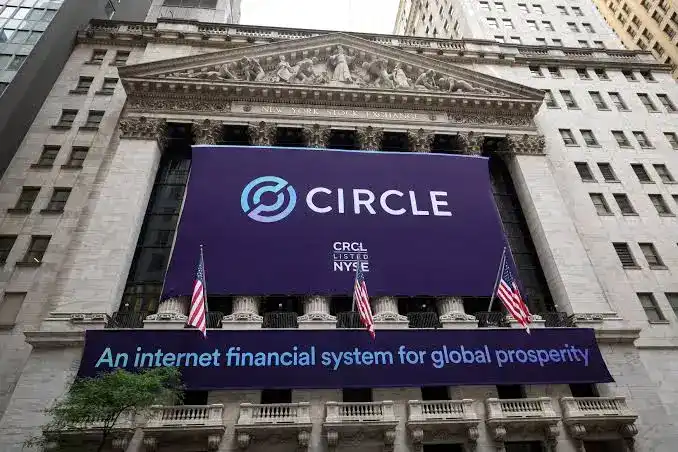
Former CFTC Chairman and Circle President Heath Tarbert has consistently advocated for a long-term vision in public, urging patience from investors as Circle’s stock price has fallen significantly from its peak. However, it has been revealed that since Circle’s IPO, Tarbert has continuously sold his CRCL shares through pre-arranged trading plans, cashing out approximately $30 million, without making any public market purchases. This contrast between his public messaging and personal actions has drawn criticism. Tarbert joined Circle in July 2023 as Chief Legal Officer, leveraging his regulatory experience to help guide the company through its IPO and expansion. Despite promoting stablecoins as long-term infrastructure, he established a 10b5-1 trading plan just before Circle went public, leading to substantial stock sales over the following year. In March 2026, he initiated another plan to sell more shares. His career trajectory highlights a pattern of moving between high-level regulatory roles and influential positions in the financial sector. After resigning as CFTC Chairman in early 2021, he joined Citadel Securities as Chief Legal Officer just 27 days later, during a period of intense regulatory scrutiny for the firm. He later joined Circle, aiding its efforts to navigate regulatory challenges for its public listing. While Tarbert's expertise in policy and compliance is valuable to companies like Circle, his actions—advocating long-term confidence while personally divesting—raise questions about the alignment between his public statements and his private financial decisions, leaving investors who followed his advice to bear the market risks.

marsbit07/22 08:06

Former CFTC Chairman, Circle President Tarbert: Preaching Long-Termism While Cashing Out $30 Million Himself

marsbit07/22 08:06

73 Sell Trades, 0 Buy Trades: Is This the 'Long-termism' of Circle's Management?

**Title: "73 Sales, 0 Buys: Is This Circle Management's 'Long-Termism'?"** In July, Circle President Heath Tarbert claimed the company was "playing the long game" and its stock price would "take care of itself." However, an analysis of SEC Form 4 filings reveals a contrasting picture: since CRCL's IPO, Circle's top executives and board members have consistently sold shares while making zero purchases. Key insiders, including CEO Jeremy Allaire, multiple board members, the CFO, CPTO, CAO, and President Tarbert himself, have executed a total of 73 sell transactions, collectively cashing out approximately $664 million. Tarbert alone has sold 10 times for about $30.77 million. While insider sales can be routine for diversification, the complete absence of any buys—especially after CRCL's ~70% price drop from its highs—raises questions. This one-sided trading pattern seems at odds with management's public assurances of long-term confidence and suggests they may not view the depressed stock as a compelling buying opportunity. The article argues this activity amplifies existing market doubts. Investors are reevaluating whether Circle's valuation is justified, questioning if it is truly a future financial infrastructure platform or remains primarily dependent on USDC's scale and the interest rate environment. Ultimately, Circle will need to demonstrate its long-term narrative through tangible business performance.

marsbit07/20 08:53

73 Sell Trades, 0 Buy Trades: Is This the 'Long-termism' of Circle's Management?

marsbit07/20 08:53

When Crypto Meets the World Cup: CoinW and Modrić's Art of "Navigating Cycles"

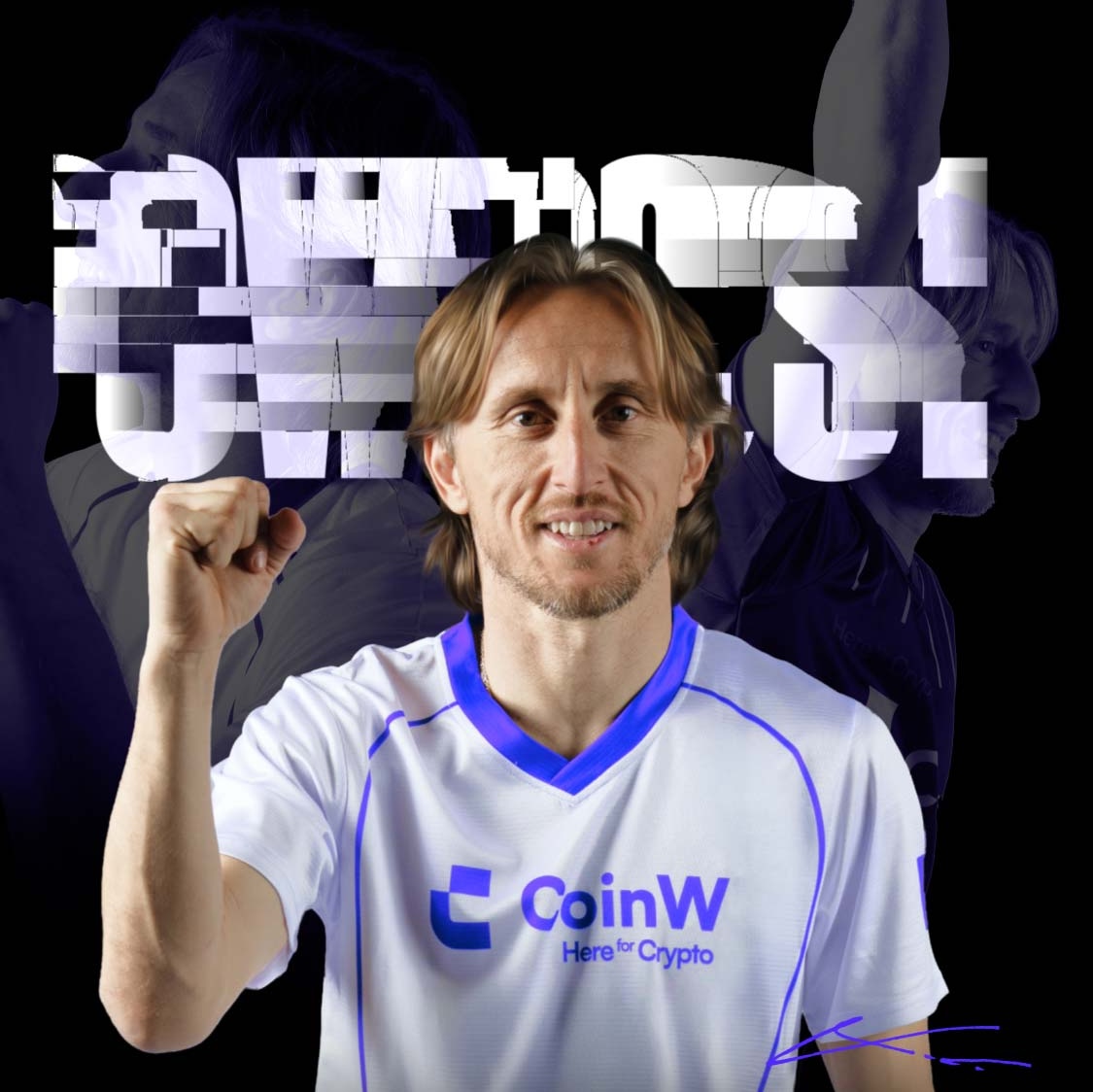
When Encryption Meets the World Cup: CoinW and Modrić's "Transcending Cycles" Philosophy In the context of the 2026 FIFA World Cup and its massive global audience, the crypto exchange CoinW announced football legend Luka Modrić as its global brand ambassador. This move is framed not merely as a marketing tactic, but as a strategic experiment in user profile migration. It targets mature, financially stable football fans—particularly in Europe, Southeast Asia, and Latin America—who traditionally have low crypto awareness but value trusted, time-tested authority figures like Modrić. The article draws parallels between Modrić's enduring, disciplined career—marked by consistency and success at the highest level over two decades—and CoinW's own development path. Founded in 2017 during a volatile industry period, CoinW focused on building robust infrastructure and risk management. It weathered the 2022 industry crisis without major security incidents, subsequently earning recognition like "Europe's Most Trusted Exchange" and growing to over 20 million registered users. This "long-termism" is translated into user-centric products. CoinW Academy lowers the initial knowledge barrier. Its integrated ecosystem (CoinW, GemW, DeriW, PropW) and the recent launch of a TradFi section—offering perpetual contracts on traditional assets like stocks, gold, and oil—aim to create a unified platform for diverse assets. For the World Cup, CoinW launched the "We Are The Game" campaign, collaborating with Alchemy Pay to offer zero-fee deposits and local payment options, aiming to transform spectators into participants and lower entry barriers. Ultimately, CoinW's sports partnerships and product strategy are presented as a concerted effort to build trust and accessibility for the "silent majority" still outside crypto—shifting the industry narrative toward inclusivity and long-term value.

Foresight News06/17 04:39

When Crypto Meets the World Cup: CoinW and Modrić's Art of "Navigating Cycles"

Foresight News06/17 04:39

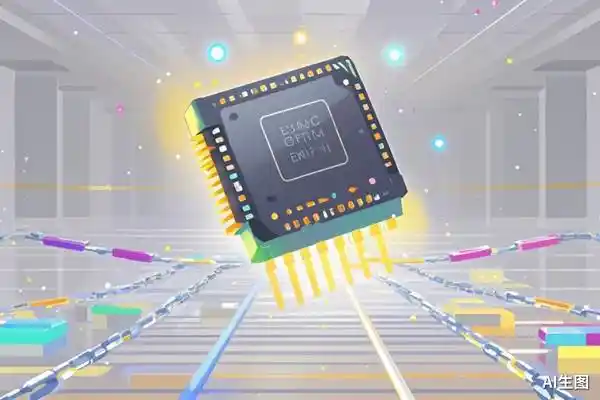
From Mining Pool to Mars: Why Is Wang Chun in the SpaceX Cockpit?

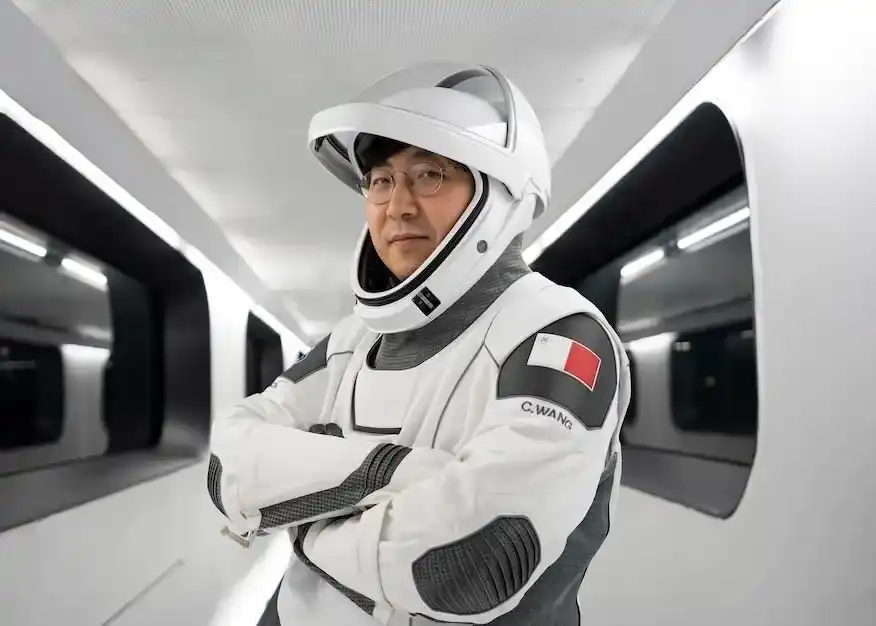
Title: From Mining Pool to Mars: Why Wang Chun is in the SpaceX Cockpit? When SpaceX announced that Wang Chun, co-founder of F2Pool, would command the first commercial crewed interplanetary mission, many were shocked. Why would a Bitcoin mining pool founder be on a Mars mission roster? However, understanding Wang Chun's journey over the past decade and the deepening ties between the crypto industry and SpaceX reveals this is not accidental, but an inevitable result of a new era taking shape. Today's Mars plan is no longer just a space engineering project; it is evolving into a civilization-upgrading experiment driven by global tech capital, AI, computing power, energy, and the crypto economy. Wang Chun stands precisely at the intersection of these forces. Part 1: From F2Pool to SpaceX – Wang Chun's Leap F2Pool, founded when Bitcoin was still niche, is one of the earliest large-scale mining pools and once held a significant share of global Bitcoin hash rate. Wang Chun belongs to the first generation of Chinese Bitcoin advocates and infrastructure builders—idealists and engineers who believed in a new value network independent of traditional finance. Miners like him built the hardware, energy, and computing power foundational to decentralized networks. This aligns with the long-term, high-engineering, future-oriented vision required for space civilization. Elon Musk’s space endeavors value such long-term builders over mere capital players, which explains Wang Chun's entry into the SpaceX ecosystem. Part 2: Why Crypto and SpaceX Are Growing Closer The core of global tech competition is shifting from internet applications to next-generation infrastructure. Both crypto and SpaceX are part of this. SpaceX's goal is to drastically reduce space access costs. If successful, it could enable orbital servers, space-based energy, global satellite internet, and Martian bases. These new frontiers will require new payment systems, value networks, and global financial architectures. Cryptocurrencies, inherently global and trustless, are poised to become key to off-planet economies. Moreover, crypto and SpaceX share a high-risk, long-termist ethos—believing in ambitious, world-changing goals despite early skepticism. Part 3: Human Spaceflight Enters the Commercial Era Space exploration, long dominated by state actors, is now being transformed by commercial entities like SpaceX. Wang Chun's involvement signifies that future deep-space participants may include not just career astronauts, but also entrepreneurs, engineers, and AI researchers. This mirrors the Age of Exploration, where commercial capital eventually drove global expansion. Wang Chun has emphasized that Mars colonization must not be delayed for future generations, countering a potential over-focus on nearer-term, commercial lunar projects. His presence symbolizes how new capital, technical communities, and idealists from the crypto world are now entering the interstellar age. In summary, the true significance is not an individual's journey to Mars, but the shift in the driving force of human civilization expansion from state machinery to tech companies, AI systems, and global technology capital. Wang Chun's path—from mining pool to Mars, from the Bitcoin network to starships—may be a preview of technological civilization's evolution in the coming decades.

marsbit05/26 14:46
From Mining Pool to Mars: Why Is Wang Chun in the SpaceX Cockpit?

marsbit05/26 14:46

The Unchanging Foundation Through Bull and Bear Markets: On the Occasion of BitMart's 8th Anniversary

BitMart Celebrates 8 Years: A Journey of Compliance, Security, and Ecosystem Growth As the cryptocurrency industry matures, centralized exchanges (CEXs) face two major challenges: regulatory compliance and ecosystem development. BitMart, now celebrating its 8th anniversary, has established itself through a strong commitment to both. Founded in 2017 in the U.S., BitMart prioritized regulatory compliance from the start. By early 2026, it achieved full compliance across all 50 U.S. states and territories, becoming one of the few crypto exchanges operating legally nationwide. Security is another cornerstone. BitMart employs a multi-layered defense system: 99% of user assets are stored in cold wallets, MPC technology secures key management, and advanced protocols like WAF and XDR protect the platform. It also collaborates with institutional custodians and maintains a large blacklist database for AML monitoring. Ecosystem growth has been central to BitMart’s strategy. In 2025, it upgraded its trading systems, achieving ultra-low latency and high throughput. The platform listed 1,193 assets, nearly 50% of which were first listings, with 93 assets surging over 1,000%. BitMart expanded into PayFi with BitMart Card, travel bookings, P2P trading, and RWA-linked products. It also introduced AI tools like X Insight and Beacon Trading Assistant, and launched a Web3 wallet in 2026 to streamline on-chain transactions. By the end of 2025, BitMart had over 13 million users, 1,700+ trading pairs, and saw its native token BMX grow 445% in market cap. Rather than seeking shortcuts, BitMart has consistently chosen the path of long-term, sustainable growth—building trust through compliance, security, and innovation.

Odaily星球日报03/31 06:24

The Unchanging Foundation Through Bull and Bear Markets: On the Occasion of BitMart's 8th Anniversary

Odaily星球日报03/31 06:24

A New Paradigm in Tokenomics? When Backpack Makes VCs 'Delay Gratification'

The article discusses Backpack's innovative tokenomics model, which challenges conventional practices in the cryptocurrency industry. Unlike typical projects where teams and venture capitalists (VCs) receive immediate token allocations, Backpack allocates 100% of liquid tokens to users at TGE. The remaining 37.5% of tokens, traditionally reserved for teams and investors, are locked in a corporate vault and tied to the company’s eventual IPO. This structure ensures that internal stakeholders can only benefit after a successful IPO, with an additional one-year lock-up period post-IPO to prevent early sell-offs. Backpack’s approach emphasizes long-term alignment with user interests and project sustainability. The token distribution prioritizes community incentives, with 25% of tokens released at TGE to reward users and NFT holders. Future unlocks are tied to product milestones, ensuring that new token releases contribute more value to the ecosystem than they dilute the token’s price. Additionally, Backpack prioritizes regulatory compliance, currently serving only 48% of global regions to adhere to legal standards. Its goal is to build a hybrid platform integrating crypto and traditional financial services. Market reactions are mixed: Backpack is reportedly seeking funding at a $1 billion valuation, but predictions about its token FDV reflect uncertainty. Ultimately, Backpack’s model represents a shift toward transparency, long-term value, and user-centric growth in Web3.

marsbit02/10 14:42

A New Paradigm in Tokenomics? When Backpack Makes VCs 'Delay Gratification'

marsbit02/10 14:42

活动图片