A 40-Year-Old Securities Reconciliation Dilemma: Could ERC-8056 Be the Final Answer?
For four decades, the global securities industry has grappled with an inefficient and costly process for handling corporate actions like dividends and stock splits, with an annual cost estimated at $58 billion. The core problem stems from a fragmented system involving multiple intermediaries—transfer agents, the Depository Trust Company (DTC), custodian banks, and brokerages—each maintaining separate, non-interoperable databases. This requires repetitive manual calculations and costly post-hoc reconciliation for every event.
The inefficiency persists due to non-machine-readable data formats (like PDFs), a lack of incentive for issuers to change, and the dominance of data vendors who profit from manual processing. While technological solutions like XBRL exist, industry inertia has prevented widespread adoption.
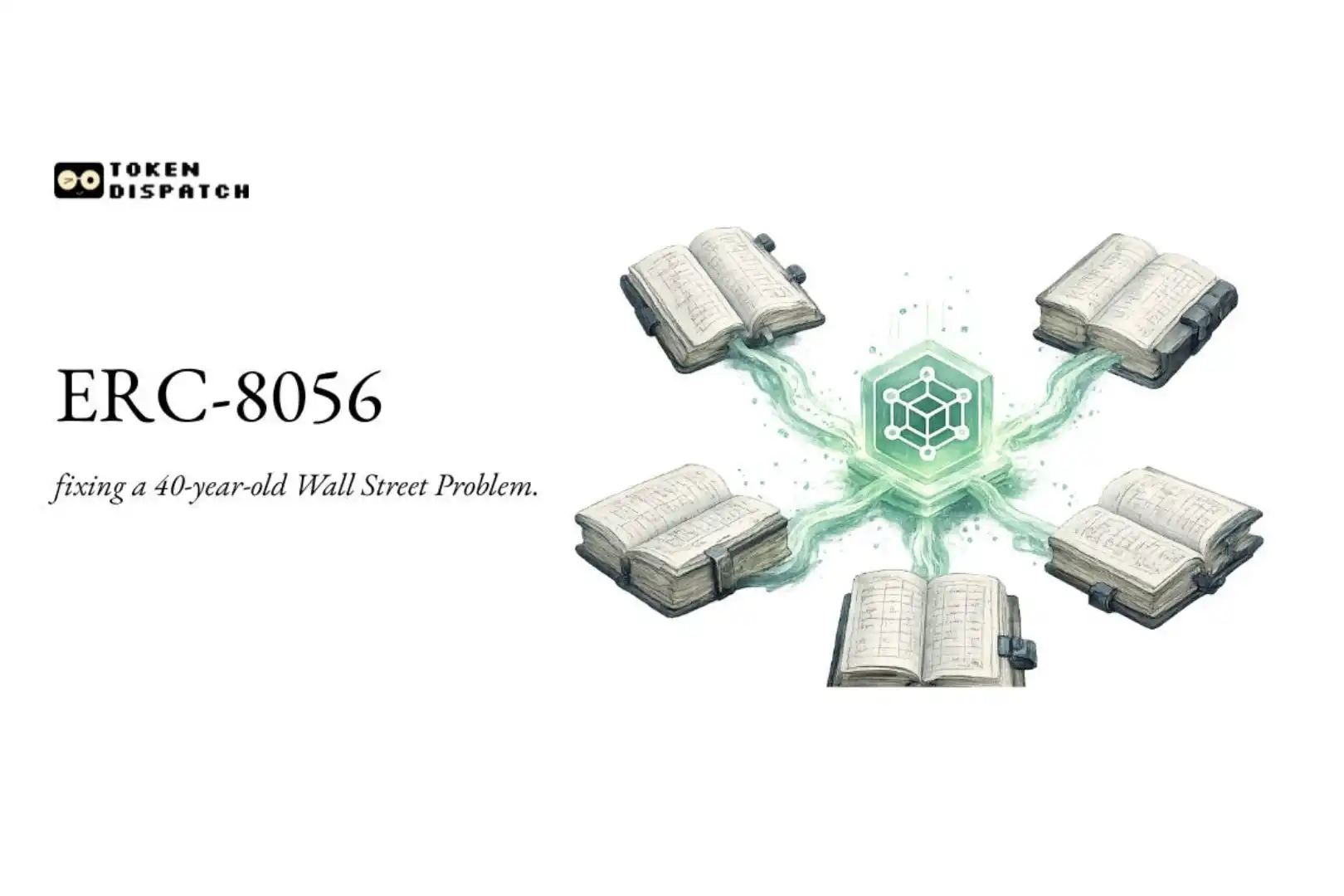
A potential solution is emerging through blockchain technology and a new token standard, ERC-8056. Unlike "mirrored" tokenized assets that add another layer to the old system, ERC-8056 enables native on-chain issuance, where the blockchain itself becomes the authoritative shareholder ledger. This standard can automate corporate actions through smart contracts—for example, adjusting displayed balances for a stock split without minting new tokens or distributing dividends directly and instantly to all holders—eliminating the need for multi-layered reconciliation.
Companies like Superstate, which is a registered transfer agent, are pioneering this model. This approach aligns with the concept of triple-entry bookkeeping, creating a single, shared source of truth. Recent regulatory developments, including actions by the DTCC and Nasdaq, signal growing acceptance. The transformation may not require a crisis to drive change; instead, by building new, efficient systems for native on-chain securities, the industry can render the costly legacy reconciliation processes obsolete. The pace of adoption now hinges on regulatory clarity and issuer willingness to embrace this new paradigm.
marsbitIeri 09:11