# Insurance Articoli collegati

Il Centro Notizie HTX fornisce gli articoli più recenti e le analisi più approfondite su "Insurance", coprendo tendenze di mercato, aggiornamenti sui progetti, sviluppi tecnologici e politiche normative nel settore crypto.

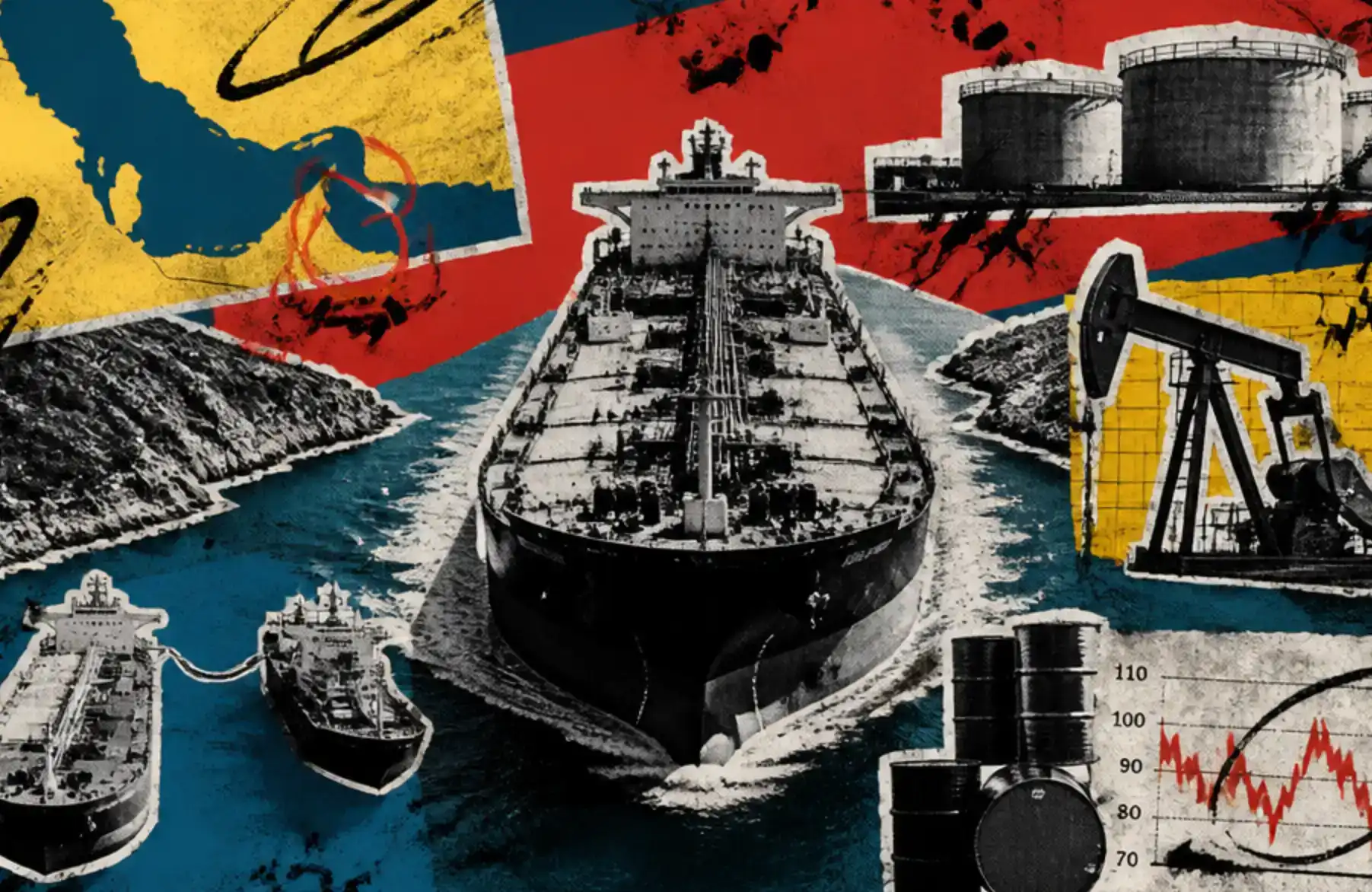
Why Didn't Oil Prices Stabilize Above $100 as Traffic Through the Strait of Hormuz Plunged Again?

Despite a significant drop in daily oil tanker traffic through the critical Strait of Hormuz in August, Brent crude oil prices have failed to stabilize above $100 per barrel, instead hovering around $90. This contrasts with traditional market logic, where a threat to a chokepoint handling roughly 20 million barrels per day (27% of global seaborne oil) should trigger a sustained supply risk premium. The article explains that the market is pricing in increased transit costs rather than an imminent, complete supply cutoff. Investors currently believe multiple buffers can absorb the shock: strategic and commercial inventories, the potential for coordinated stock releases, available OPEC+ spare capacity, and alternative export routes from the Gulf. Furthermore, workarounds like ship-to-ship transfers outside the Strait and route adjustments by buyers and shippers add resilience, though at a higher cost for insurance, financing, and longer voyages. The underlying U.S.-Iran tensions frame this reassessment as a problem of cost allocation across the supply chain. The price action suggests traders are awaiting clearer signals—such as a military escalation, sustained Iranian attacks, or stricter enforcement of secondary sanctions on buyers—before pricing in a worst-case, long-term disruption scenario. In the longer term, the episode is accelerating investments to reduce dependency on the Strait, such as expanded storage and pipeline infrastructure, which will embed higher costs into the energy system. While Brent may remain range-bound for now, the real-time impact of the Hormuz risk is likely appearing first in freight rates, insurance premiums, and regional product spreads like diesel crack margins. The stability of current prices depends on how much longer these existing buffers can effectively absorb the mounting transit costs and logistical friction.

marsbit08/19 10:41

Why Didn't Oil Prices Stabilize Above $100 as Traffic Through the Strait of Hormuz Plunged Again?

marsbit08/19 10:41

From Speculation to Risk Management: Predictive Markets Are Filling the Gap in Commercial Insurance

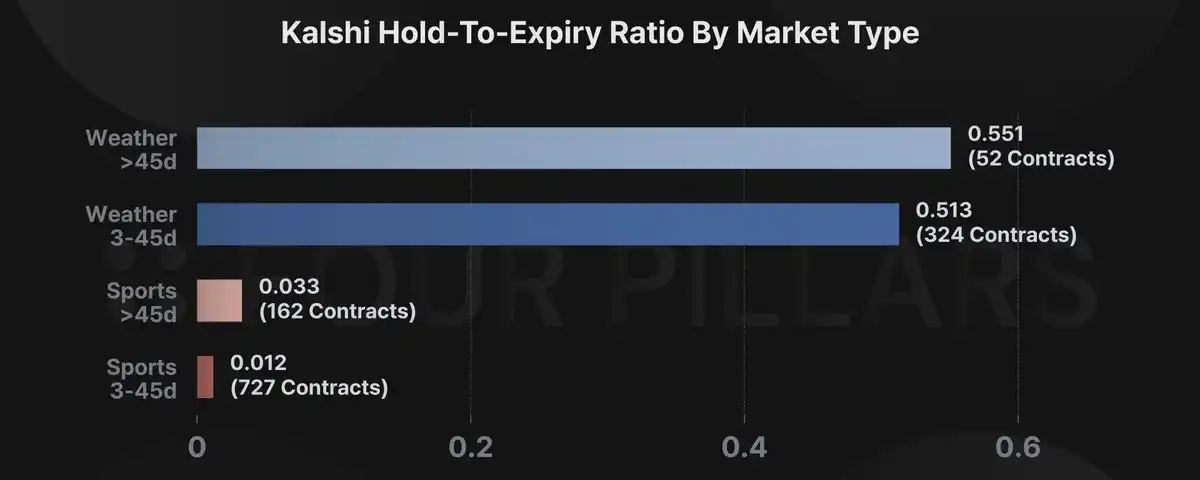
From Speculation to Risk Management: Predictive Markets Filling the Commercial Insurance Gap The emergence of AI risk management tools like Blanket is exploring the potential of predictive markets as a genuine insurance tool for businesses. These markets, with their simple contract structure—paying $1 if an event occurs, $0 if not—allow the real-time market price to reflect collective probability assessments. Businesses can use them to hedge against operational risks (e.g., abnormal weather, energy price fluctuations) that are often not covered by traditional business interruption insurance, which typically requires physical damage. A key question is whether these markets are genuinely used for hedging or remain primarily speculative. Analysis of Kalshi markets from August 2025 to August 2026 compared weather contracts (a potential hedge instrument) against sports contracts (largely speculative) and traditional CME grain futures. Three behavioral metrics were examined: 1. **Daily Turnover Rate:** Weather contracts showed the lowest rate (0.210), lower than corn futures (0.266) and significantly lower than sports contracts (0.315), suggesting longer holding periods. 2. **Hold-to-Expiry Ratio:** Weather contracts had a much higher ratio (over 0.5) compared to near-zero ratios for sports contracts, indicating a stronger tendency to hold positions until settlement, consistent with hedging behavior. 3. **Position Buildup Timing:** Weather market positions reached 50% of their peak much earlier in their lifecycle than sports market positions, aligning with the early risk-locking behavior seen in traditional futures hedging markets. The data indicates that the Kalshi weather market exhibits transaction patterns distinct from pure speculation and more aligned with hedging markets, suggesting real hedging demand exists alongside speculative activity. Crucially, speculation provides the essential liquidity and pricing mechanism that enables the hedging function. The future growth of predictive markets as viable risk management infrastructure depends not on eliminating speculation, but on building real enterprise hedging demand atop this existing liquidity base.

marsbit08/17 11:16

From Speculation to Risk Management: Predictive Markets Are Filling the Gap in Commercial Insurance

marsbit08/17 11:16

$7.8 Billion in Theft and Losses Reveals the Truth: Security Costs Have Become an Unavoidable Liquidity Tax for DeFi

"7.8 Billion in Thefts Reveals the Truth: Security Costs Have Become DeFi's Unavoidable 'Liquidity Tax'" A summary of Q2 2026 data reveals that security risks are now a fundamental capital cost in DeFi, directly impacting user returns and liquidity decisions. DeFiLlama recorded 88 hacking incidents with quantified losses totaling $780.3 million in Q2. April was the worst month with $644.8 million lost. DeFi protocol attacks accounted for $735.8 million, while cross-chain bridge exploits resulted in $354.4 million in losses (note: some event categorizations overlap). Cumulatively, DeFi hacks have reached $7.85 billion, with bridge losses at $3.26 billion. The quarter highlighted two primary risk categories: high-value infrastructure vulnerabilities (e.g., bridges, oracles, admin keys) causing massive single losses, and more frequent contract logic bugs. This signals a critical market shift: from post-incident analysis to preemptive pricing of risk. Users and liquidity providers now implicitly factor in the security of the entire asset pathway—not just pool APY—into their decisions. This hidden "risk premium" manifests through wider spreads, higher liquidity incentives, and capital migration towards perceived safer routes. Cross-chain bridge risks, responsible for over $353 million in Q2 losses, exemplify this change. Asset routing credibility is now part of the transaction. Following incidents like KelpDAO and THORChain, markets are demanding safer bridges, asset insurance, and clearer risk disclosure, increasing the cost of capital for riskier pathways. Consequently, security spending is transforming from a defensive cost into a core distribution cost for attracting liquidity. Protocols must invest more in audits, bug bounties, real-time monitoring, and insurance to remain competitive. Users are increasingly demanding transparency about fund flow paths, associated risks, and contingency plans. The key indicators for the industry's direction will be whether capital continues consolidating in trusted channels, if projects delay launches for enhanced audits, if insurance premiums rise, and if aggregators start displaying security risk metrics. Q2 2026 may be remembered not just as a bad period, but as the point when DeFi underwent a fundamental asset risk repricing, where security became a persistent,隐性 tax on all on-chain activity.

Foresight News07/01 08:03
$7.8 Billion in Theft and Losses Reveals the Truth: Security Costs Have Become an Unavoidable Liquidity Tax for DeFi

Foresight News07/01 08:03

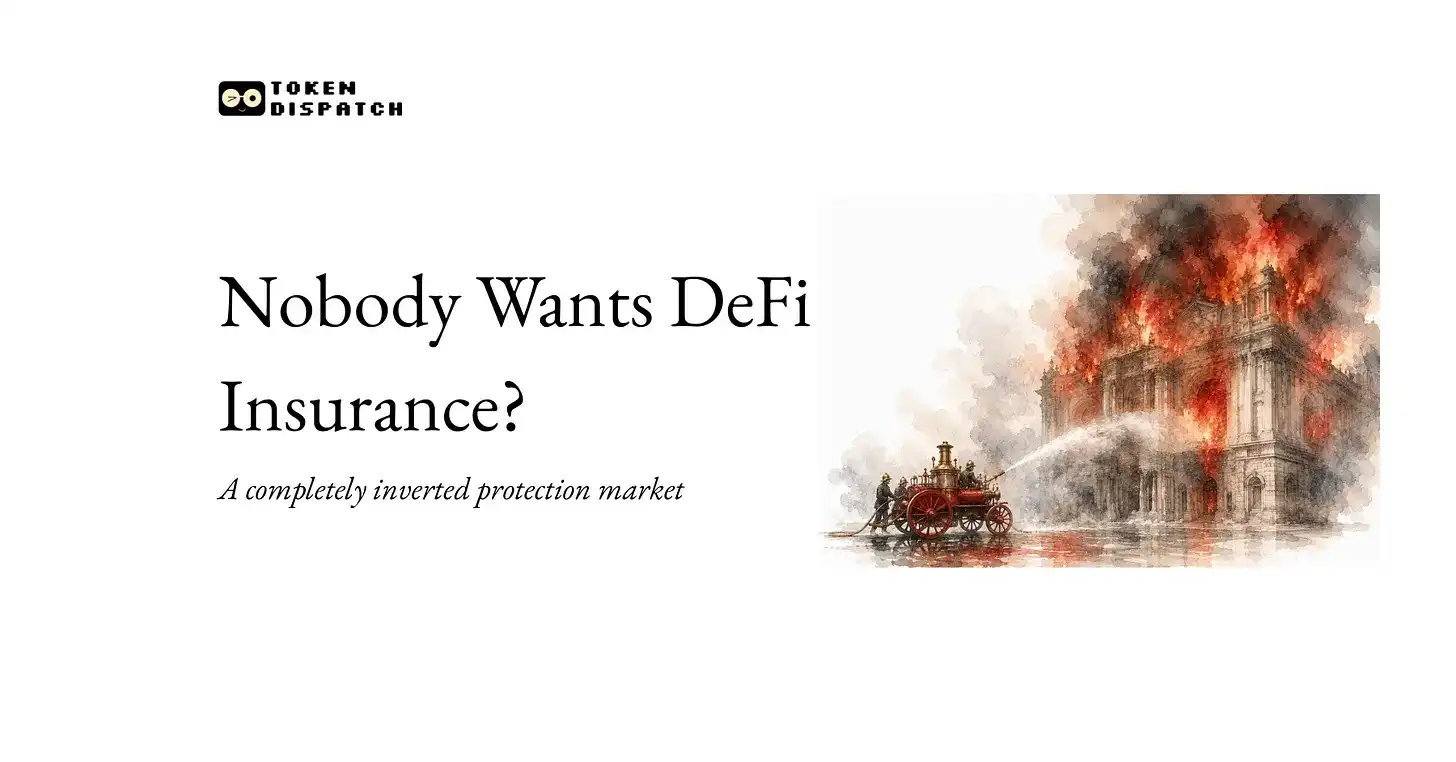
Why Is No One Buying DeFi Insurance?

"Why DeFi Insurance Remains Unpurchased" explores the paradox of decentralized finance insurance. While DeFi insurance promises automatic, unbiased payouts via smart contracts—eliminating traditional insurers' denial practices—it struggles to attract users. The core issue is economic viability. Premiums are prohibitively high relative to the yields from DeFi protocols. For example, insuring a deposit on Aave or Maple Finance can consume most or even all of the annual yield, leaving returns comparable to or worse than traditional savings. Only the safest protocols, like MakerDAO, offer affordable premiums. Furthermore, the DeFi insurance model is structurally fragile. Unlike traditional insurance where risks are uncorrelated, DeFi risks are highly interconnected (e.g., oracle failures, bridge hacks). A single major exploit can simultaneously threaten multiple protocols, potentially bankrupting the entire insurance pool, which holds only millions against billions in total value locked. The governance model also creates a conflict of interest. In platforms like Nexus Mutual, token holders who vote on claims risk their own capital if payouts are approved, incentivizing denials. Consequently, the market is tiny and shrinking. Nexus Mutual dominates with $81.56 million in assets, but the industry lacks the capacity to cover a catastrophic event like the $292M Kelp DAO hack. Other providers have dwindled or shut down. The article concludes that DeFi insurance faces a "tragedy of the commons": its stability requires widespread adoption, but individual users have no incentive to pay for it, as premiums destroy their yields. Current solutions involve preventative measures like bug bounties and seeking external capital from traditional reinsurance, acknowledging that on-chain capital alone is insufficient to cover on-chain risks.

marsbit06/27 03:03

Why Is No One Buying DeFi Insurance?

marsbit06/27 03:03

Why Does No One Buy DeFi Insurance?

**Title: Why Isn't DeFi Insurance Being Bought?** DeFi insurance, which promised automated, unbiased payouts via smart contracts, has failed to gain traction. The core issue is economic: high premiums severely erode the yields that attract users to DeFi in the first place. For example, insuring a USDC deposit on Aave V3 could cost 1.5–2.5% of the annual yield, leaving a net return barely above a savings account. For riskier platforms like Maple Finance or Ethena, premiums can even turn net yields negative. Consequently, users often forgo insurance, as it nullifies their profit motive. The market also suffers from structural flaws. First, DeFi risks are highly correlated (e.g., an oracle failure can impact multiple protocols simultaneously), unlike the independent risks in traditional insurance. This makes large-scale events potentially catastrophic for insurers. Second, the total capital in DeFi insurance pools (e.g., Nexus Mutual's ~$81.5M) is minuscule compared to the hundreds of billions in total value locked (TVL), creating a massive capacity gap. A single major hack could drain the entire industry's reserves. Furthermore, the governance model where tokenholders vote on claims creates a conflict of interest, incentivizing them to deny payouts to protect their own funds. As a result, the sector is shrinking. While pioneers like Nexus Mutual are pivoting to preventative measures (bug bounties) and seeking external capital via reinsurance, the fundamental problems remain. DeFi insurance represents a public good—its stability benefits the entire ecosystem—but without a mechanism to share costs, a "tragedy of the commons" ensues where no one is willing to pay, leaving the system vulnerable.

marsbit06/23 08:54

Why Does No One Buy DeFi Insurance?

marsbit06/23 08:54

活动图片