# Flywheel Articoli collegati

Il Centro Notizie HTX fornisce gli articoli più recenti e le analisi più approfondite su "Flywheel", coprendo tendenze di mercato, aggiornamenti sui progetti, sviluppi tecnologici e politiche normative nel settore crypto.

Robinhood's Wealth Management Business Transformation Journey

Robinhood's 2025 Wealth Management Transformation: A Summary In 2025, Robinhood successfully pivoted its business model by aggressively expanding its wealth management services. This strategic shift, marked by the launch of disruptive products like a high-match-rate IRA, high-yield cash accounts, and comprehensive banking services, effectively guided its young user base from speculative trading toward long-term saving and investing. Key to this success was a highly internet-native customer acquisition strategy. Robinhood used aggressive cash match incentives (up to 3% for Gold members) to drastically lower the barrier for users to transfer retirement assets (e.g., 401(k) rollovers), effectively "buying" AUM with a high lifetime value. This was paired with a seamless, tech-driven transfer process. The company's revenue model evolved from a heavy reliance on volatile payment for order flow (PFOF) to more stable, recurring income streams. This included substantial net interest income from its massive cash sweep balances and a growing, high-margin subscription business from its Robinhood Gold program, which saw 4.2 million subscribers by Q4 2025. Robinhood built a powerful ecosystem, creating a super-app that seamlessly connects high-frequency trading (stocks, crypto) with low-frequency, sticky products (IRA, automated investing) and daily spending (credit card, banking). This allows for efficient cross-selling and user retention. To build trust for managing long-term savings, Robinhood leveraged traditional finance's safety nets, emphasizing SIPC protection for securities and partnering with banks to offer FDIC insurance on cash deposits far exceeding standard limits. This transformation was underpinned by an extremely efficient, tech-driven cost structure. With a self-clearing platform and automated services, Robinhood achieved a high revenue-per-employee ratio, allowing it to offer competitive pricing like a $250 annual cap on robo-advisory fees. The strategy is powered by a profound shift in its young user base (median age ~32-35). Data shows Gen Z users are increasingly adopting long-term, tax-optimized retirement investing. By capturing this demographic early, Robinhood is strategically positioned to benefit from the largest intergenerational wealth transfer in history, as these users inherit assets and keep them within the familiar Robinhood ecosystem.

marsbit04/14 06:47

Robinhood's Wealth Management Business Transformation Journey

marsbit04/14 06:47

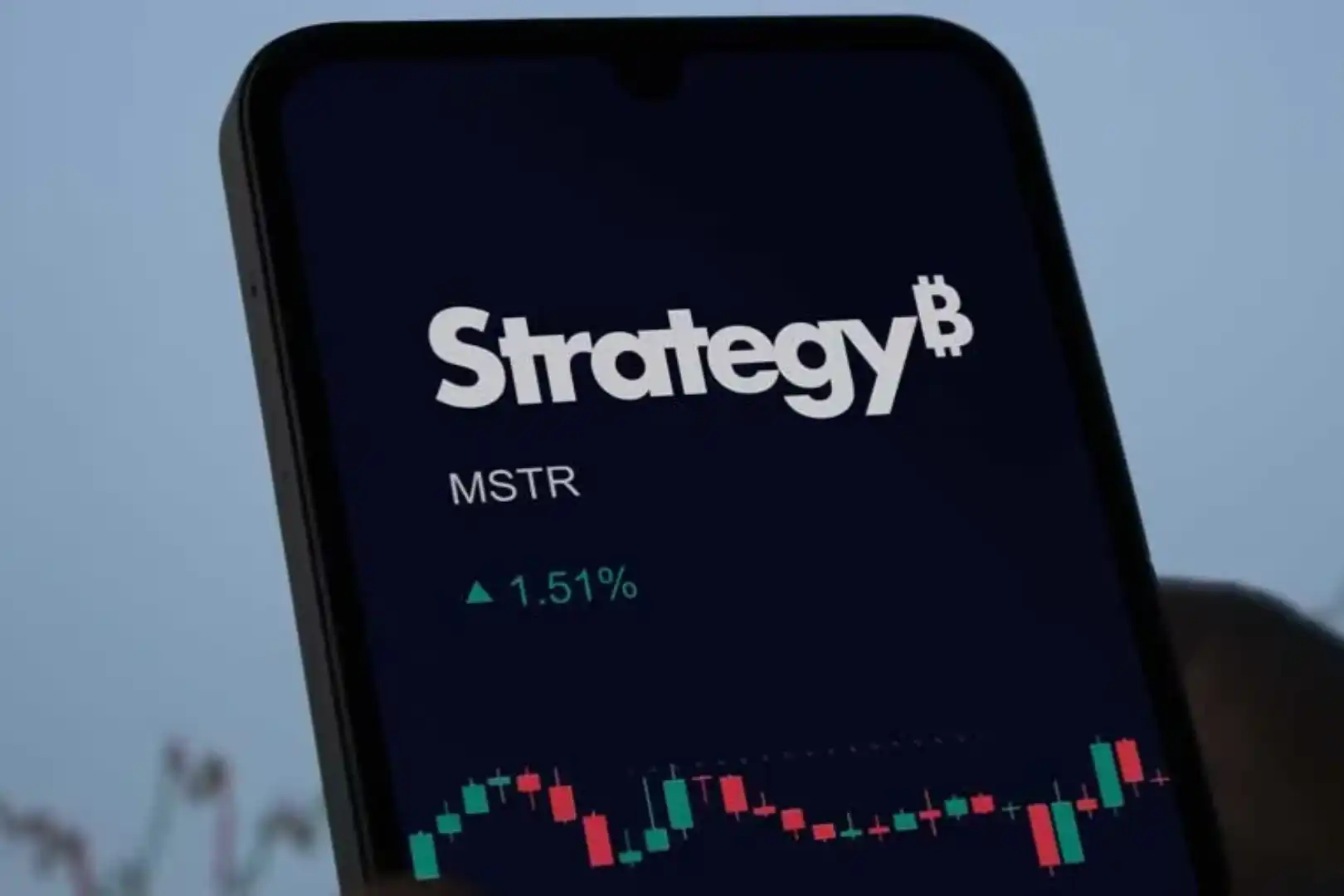
Buy BTC or MSTR? Analyzing the Capital Flywheel of MicroStrategy

MicroStrategy's mNAV (market cap to Bitcoin holdings ratio) has compressed to near parity, sparking debate about whether the premium will re-expand. The core argument centers on the company's ATM equity issuance strategy. Critics view it as shareholder dilution, while supporters see it as rational Bitcoin accumulation. However, both miss the deeper strategic shift: MicroStrategy is building a layered capital structure that operates differently across mNAV regimes. At ~1x mNAV (current phase), equity issuance is used to buy Bitcoin directly, justified by long-term undervaluation. In high mNAV regimes (3-4x+), equity becomes a tool to repay debt from preferred securities, not just acquire Bitcoin. The introduction of preferred stock attracts yield-seeking investors, creating a continuous funding source for Bitcoin purchases but also dividend obligations. The ATM acts as a proactive de-leveraging tool, building equity ahead of future payment needs. mNAV expansion may return not only from Bitcoin price appreciation but also from the market valuing MicroStrategy as a scalable Bitcoin capital markets platform. The company is evolving from a Bitcoin treasury into a financial engine with distinct investor segments: yield investors in preferred securities and growth investors in equity. This could form a self-reinforcing "capital flywheel": preferred demand funds Bitcoin buys, equity demand values platform growth, and Bitcoin appreciation strengthens the balance sheet. The discussion may shift from *if* mNAV premium returns to *how large* this financial platform can become.

marsbit03/13 11:08

Buy BTC or MSTR? Analyzing the Capital Flywheel of MicroStrategy

marsbit03/13 11:08

GameStop Exits and Runs Away, Saylor Is Still Buying

Ryan Cohen, CEO of GameStop, announced the company is divesting its entire Bitcoin holdings of approximately 4,710 BTC (worth around $450 million), transferring them to Coinbase Prime, signaling an intent to sell. This move comes less than a year after GameStop initially invested $513 million in Bitcoin, which represented only about 10.4% of its cash reserves at the time—characterized more as a speculative trial rather than a core strategic commitment. In contrast, Michael Saylor and MicroStrategy continue to aggressively accumulate Bitcoin, even during market downturns, demonstrating a deeply held conviction in the asset. While MicroStrategy’s approach has been all-in, leveraging debt to buy more Bitcoin during dips, GameStop’s exit reflects a lack of long-term belief in Bitcoin as a treasury asset. The divergence highlights a broader trend: the initial “corporate Bitcoin treasury” strategy—where companies buy Bitcoin to potentially boost stock performance—is losing steam as the market corrects. Analysts suggest the space may consolidate, evolve into more sophisticated financial strategies, or see Bitcoin downgraded to a high-risk alternative asset rather than a revolutionary balance sheet choice. GameStop is now pivoting toward becoming a diversified investment holding company, with ambitions to grow into a $100 billion+ enterprise, possibly through acquisitions. The episode underscores a divide between short-term speculators and long-term believers like Saylor, who continues to buy despite volatility. The market will ultimately judge which strategy prevails.

比推02/04 13:15

GameStop Exits and Runs Away, Saylor Is Still Buying

比推02/04 13:15

GameStop Exits, Saylor Still Buying

GameStop, led by CEO Ryan Cohen, has reportedly moved its entire Bitcoin holdings of approximately 4,710 BTC (worth around $450 million) to Coinbase Prime, signaling an intent to sell. This decision comes less than a year after the company initially invested $513 million in Bitcoin, averaging a cost of about $108,917 per coin. Cohen publicly stated that he now sees a more attractive strategy than Bitcoin, focusing on transforming GameStop into an investment holding platform akin to Berkshire Hathaway. This move contrasts sharply with the approach of Michael Saylor and MicroStrategy, who have continued to aggressively accumulate Bitcoin despite market downturns. While GameStop’s investment represented only about 10.4% of its cash reserves, MicroStrategy has heavily leveraged its balance sheet to buy Bitcoin, reflecting a deeper conviction in the asset. The divergence highlights a broader trend: corporate Bitcoin treasury strategies, which thrived during bull markets, are now under pressure as prices fall. Some companies may exit entirely, while others, like MicroStrategy, double down. The market is likely to see consolidation, evolution in financial strategies around Bitcoin, and a potential downgrade in Bitcoin’s narrative from a revolutionary asset to a high-volatility alternative. GameStop’s exit may become a footnote in the larger story of corporate Bitcoin adoption, underscoring the difference between short-term speculation and long-term belief.

marsbit02/04 07:42

GameStop Exits, Saylor Still Buying

marsbit02/04 07:42

Tesla + xAI + SpaceX: The Trillion-Dollar Ultimate AI Flywheel

Tesla, xAI, and SpaceX are converging to form an unprecedented, synergistic industrial "flywheel" that creates a formidable competitive moat and massive cash flow. The system starts with Tesla's high-margin energy business, which supplies Megapack batteries to power xAI's massive AI training facilities. To reduce reliance on Nvidia, Tesla is developing its own highly efficient AI inference chips (AI5 and AI6), designed for both data centers and Optimus robots. This enables cost-effective, large-scale computing, even in space—a vision supported by SpaceX's Starship launches of orbital data centers powered by solar energy and Tesla batteries. Data forms a closed loop: xAI's models (like Grok) run on Tesla vehicles and robots, which in turn generate vast real-world data. This data is uniquely supplemented by real-time, unstructured human thought from X (Twitter). SpaceX’s Starlink provides global connectivity and space infrastructure, creating a seamless flow of data, computation, and command. Competitors like Google, Microsoft, Amazon, and Nvidia lack this full-stack integration across physical hardware, real-time data, global connectivity, and space access. The combined enterprise value of these entities exceeds $2 trillion, with each component reinforcing the others: Tesla's success feeds xAI with data, xAI's AI enhances Tesla's products, SpaceX enables global coverage, and Tesla's chips and energy reduce costs. The flywheel is spinning with no clear structural weakness.

marsbit01/24 02:47

Tesla + xAI + SpaceX: The Trillion-Dollar Ultimate AI Flywheel

marsbit01/24 02:47

MicroStrategy's Bitcoin Flywheel: How Long Can It Last?

MicroStrategy, now rebranded as Strategy Inc., has transformed from a business intelligence software provider into a global Bitcoin-focused holding company, with approximately 670,000 BTC—about 3.2% of the total supply—as of mid-December 2025. Its core strategy relies on a "Bitcoin flywheel" effect: leveraging the premium of its stock (MSTR) over its Bitcoin holdings to fund further Bitcoin acquisitions through equity and debt issuances. The company employs three primary funding methods: an At-The-Market (ATM) equity program to capitalize on stock premiums, perpetual preferred shares attracting tax-advantaged investors, and an ambitious "42/42 Plan" aiming to raise $84 billion by 2027 to buy more Bitcoin. Despite rumors of Bitcoin sales, recent large transfers were confirmed as security-related wallet rotations, not liquidations. However, significant risks threaten this model. MSCI index may reclassify MicroStrategy as an "investment vehicle" rather than an operating company, potentially triggering massive institutional sell-offs. If MSTR’s premium over NAV disappears, the funding mechanism would stall. Additionally, the company carries substantial debt and preferred dividend obligations, though it maintains a $1.44 billion USD reserve as a buffer. While its software business continues modest growth, it operates at a cash flow loss. MicroStrategy’s future hinges on maintaining investor confidence, navigating regulatory classifications, and sustaining financial innovation amid volatility.

比推12/23 15:08

MicroStrategy's Bitcoin Flywheel: How Long Can It Last?

比推12/23 15:08

活动图片