# E-commerce Articoli collegati

Il Centro Notizie HTX fornisce gli articoli più recenti e le analisi più approfondite su "E-commerce", coprendo tendenze di mercato, aggiornamenti sui progetti, sviluppi tecnologici e politiche normative nel settore crypto.

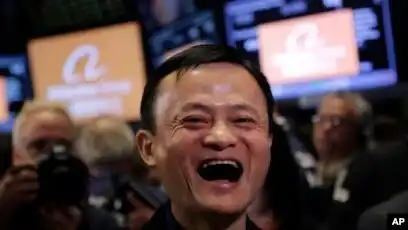
The Creator of Kling Returns to Alibaba and Builds Another Dark Horse

The article discusses the rise of HappyHorse-1.0, an AI video generation model developed by Alibaba, which topped the Artificial Analysis leaderboard in both text-to-video and image-to-video categories in April 2026. The model was created under the leadership of Zhang Di, who returned to Alibaba in November 2025 after working at Kuaishou, where he led the development of the Kling model. HappyHorse is open-source and commercially available, similar to Alibaba's Qwen model. Zhang Di's background includes extensive experience in large-scale data systems and machine learning at Alibaba and Kuaishou, which contributed to the rapid development of HappyHorse within just five months. The model uses a 15-billion-parameter transformer architecture with native multimodal training, supporting multiple languages and lip-sync capabilities. It also focuses on reducing inference time and cost, making it practical for commercial use. The primary application of HappyHorse is in e-commerce, where it can generate product videos to enhance user engagement and conversion rates by creating contextual and personalized content. This aligns with Alibaba's strengths in commerce, advertising, and data feedback loops. The model's success with open-source approach contrasts with challenges faced by closed-source models like OpenAI's Sora (shut down due to high costs) and ByteDance's Seedance 2.0 (paused over copyright issues). HappyHorse represents a strategic move for Alibaba to integrate AI video generation into its core business ecosystems.

marsbit04/13 05:10

The Creator of Kling Returns to Alibaba and Builds Another Dark Horse

marsbit04/13 05:10

Edge AI Daily Morning Report (April 12)

Edge AI Daily Brief (April 12) **Silicon Valley Front:** CoreWeave expanded partnerships with Meta and Anthropic, reflecting surging AI compute demand. Major cloud providers in China raised prices by 5%-30% due to soaring GPU costs and a 1000x increase in daily token usage since 2024. Anthropic, with annualized revenue exceeding $30B, is exploring in-house chip development to address shortages and signed a 3.5GW TPU deal with Google and Broadcom. The U.S. MATCH Act tightened semiconductor export controls, lowering technology thresholds and threatening global supply chains. ASML and Tokyo Electron saw stock declines. OpenAI addressed a third-party Axios library security issue, requiring macOS app updates. Microsoft restructured Windows Insider channels to simplify testing. Meta, Amazon, and Google invested in small modular nuclear reactors (SMRs) to power energy-intensive AI data centers. Mozilla criticized Microsoft for forcing Copilot integration in Windows 11, highlighting broader concerns about user choice and DMA compliance. Microsoft paused new carbon credit purchases due to quality concerns. **Domestic Progress:** MUJI’s Q2 revenue grew 14.8%, while Amazon launched a global smart hub in Shenzhen to streamline cross-border logistics for Chinese sellers, cutting delivery times by up to 7 days. **Open Source Trends:** Meta AI and KAIST proposed "Neural Computers" (NCs), merging computation and memory into learning runtime states. Agent AI is shifting from prediction to world-state modeling, driving edge infrastructure redesign. Quantum computing demonstrated exponential advantages in classical data processing, using under 60 logical qubits to outperform classical machines. France began migrating government systems to Linux to enhance digital sovereignty and reduce U.S. tech reliance. (Source: Edge AI Daily, Guangjiao Guancha)

marsbit04/12 00:52

Edge AI Daily Morning Report (April 12)

marsbit04/12 00:52

The Payment Empire PayPal Might Be Bought Out

The once-dominant global payment giant PayPal is reportedly facing a potential acquisition, as its market value plummeted from a pandemic peak of $363 billion to a recent low of $38 billion—a nearly 90% drop over five years. Despite its pioneering role in enabling cross-border e-commerce, particularly for Chinese exporters in the mid-2000s, PayPal has struggled to keep pace with newer, more agile competitors like Stripe, Apple Pay, and various neobanks. Recent financial performance has been weak, with active user growth slowing to just 1% and transaction volume declining. The abrupt departure of its CEO and appointment of a new leader from HP—known for cost-cutting rather than product innovation—has fueled market skepticism. Critics, including former executive David Marcus, argue that PayPal lost its "mojo" by shifting from a product-driven to a finance-oriented culture, sacrificing long-term vision for short-term financial optimization. While subsidiary Venmo shows strong revenue growth and has become a verb among U.S. millennials, it faces challenges: user growth is stagnant, it remains confined to the U.S., and it lacks deeper integration like Stripe or the hardware-level ease of Apple Pay. PayPal’s bets on stablecoins (PYUSD) and AI-driven agentic payments are still unproven in highly competitive fields. Despite valuable assets—including Braintree’s infrastructure, a leading BNPL service, and 400 million active accounts—PayPal’s future as an independent company is uncertain. Market confidence now seems higher in a potential acquisition than in its standalone prospects, marking a dramatic fall for a former fintech disruptor.

marsbit02/24 11:44

The Payment Empire PayPal Might Be Bought Out

marsbit02/24 11:44

When AI Reshapes the Shopping Journey, How Much Time Does PayPal Have Left?

PayPal's recent $200 million acquisition of Cymbio signals a strategic pivot to remain relevant in the emerging era of "Agentic Commerce," where AI agents increasingly handle product discovery, decision-making, and purchasing on behalf of users. This move aims to transform PayPal from a Web2 payment button into an embedded infrastructure layer within AI-driven commercial workflows, covering discovery, checkout, and fulfillment. The competitive landscape is rapidly evolving: Google and Shopify are developing the Universal Commerce Protocol (UCP) to control the routing layer, while OpenAI and Stripe are advancing the Agentic Commerce Protocol (ACP) to enable AI agents to execute transactions. Stripe, in particular, is positioning itself as the default "action layer" for AI commerce, mirroring its success as the internet’s payment API. Major forecasts suggest Agentic Commerce could capture $1 trillion in U.S. retail sales by 2030, representing up to one-third of online retail. For PayPal, Stripe, and other fintech players, the challenge is to embed themselves into these new protocol-based ecosystems—or risk being sidelined. Banks retain advantages in clearing and compliance but must adapt quickly, while crypto remains largely absent from current frameworks, presenting both a risk and potential opportunity. PayPal’s acquisition is less an offensive move than a necessary bid to maintain its seat at the table.

marsbit02/18 12:38

When AI Reshapes the Shopping Journey, How Much Time Does PayPal Have Left?

marsbit02/18 12:38

Galaxy Research 10,000-Word Report: x402 and the "Leviathan Moment" of the AI Economy

Artificial intelligence agents are poised to transform the internet by enabling autonomous task execution, reducing the need for direct human interaction. Galaxy Research highlights the emergence of Agentic Payment Standards (APS), particularly the x402 protocol, which allows AI agents to use cryptocurrencies like stablecoins for seamless, on-demand payments for digital services, data access, and API calls. Developed by Coinbase, x402 leverages the HTTP 402 status code to facilitate machine-native transactions, eliminating the need for traditional payment rails or API key management. The protocol operates through a stack involving clients (agents), servers, coordinators, and blockchain settlement layers, with recent upgrades (x402 V2) enhancing support for subscriptions, reusable sessions, and service discovery. Early adoption saw speculative activity, but use cases are expanding into data-as-a-service, agent-to-agent transactions, and infrastructure payments. While x402 excels in micro-payments for digital resources, traditional players like Visa, PayPal, and Stripe are also developing agentic commerce solutions for regulated, high-value e-commerce transactions. The integration of APS could significantly improve capital efficiency for software production by replacing subscriptions with pay-per-use models, reducing friction in experimentation and development. In the long term, blockchain-based payments are likely to operate silently in the background, complementing rather than replacing existing systems, and becoming a foundational layer for the AI-driven economy without requiring end-user engagement with crypto directly.

比推01/09 00:08

Galaxy Research 10,000-Word Report: x402 and the "Leviathan Moment" of the AI Economy

比推01/09 00:08

活动图片