# Drones Articoli collegati

Il Centro Notizie HTX fornisce gli articoli più recenti e le analisi più approfondite su "Drones", coprendo tendenze di mercato, aggiornamenti sui progetti, sviluppi tecnologici e politiche normative nel settore crypto.

Commerce Ministry's Latest Export Controls Target 10 US Companies: Three Market-Moving Threads Explained

China's Ministry of Commerce placed 10 U.S. entities, including MP Materials, USA Rare Earth, Red Cat Holdings, and Teal Drones, on an export control list, banning the export of dual-use items. This move is seen as part of an ongoing countermeasure in the rare earth sector. The analysis suggests the primary impact is on U.S. companies within the **military, drone, and rare earth** sectors, aiming to restrict their access to critical Chinese materials and technology. For the Chinese market, the event is interpreted as reinforcing the **strategic value and pricing power** of domestic rare earth suppliers. However, the potential stock market reactions are nuanced: 1. **Chinese Rare Earth Upstream:** Companies like Northern Rare Earth are near yearly highs, indicating this event's "beneficiary" logic is largely priced in. It may confirm the trend but is unlikely to be a new major catalyst. 2. **Chinese Rare Earth Mid/Downstream & Drones:** Sectors like magnetic materials (e.g., Da Di Bear, Zhenghai Magnetic) and military drones (e.g., China Aerospace) are relatively undervalued. While the drone listing highlights sectoral competition, it doesn't directly translate to new orders for Chinese firms. 3. **Impact on Listed U.S. Companies:** The effect on stocks like MP Materials is ambiguous. While Chinese restrictions pose a challenge, these companies are also core to U.S. supply chain security efforts and may receive increased government support, potentially offsetting negative impacts. Their pre-announcement stock prices did not indicate panic selling. In summary, the export controls strengthen China's position in the global rare earth supply chain but have uneven effects across related stock market segments, with upstream Chinese gains likely priced in and downstream/drone sectors receiving more indirect, sentiment-driven attention. The outcome for the targeted U.S. stocks depends on the balance between restriction impacts and potential compensatory U.S. policy support.

marsbit06/22 08:57

Commerce Ministry's Latest Export Controls Target 10 US Companies: Three Market-Moving Threads Explained

marsbit06/22 08:57

After 50x Storage Surge, Justin Sun Always Looks to the Next Decade

Sun Yuchen, known for his controversial stunts like a $30 million lunch with Warren Buffett (canceled due to a kidney stone) and eating a $6.2 million duct-taped banana, is often overshadowed by a significant fact: his decade-long track record of spotting major investment trends. In 2016, he famously advised young people to invest in Bitcoin, Nvidia, Tesla, and Tencent instead of buying property. A hypothetical $20,000 investment in Nvidia and Tesla from that list would now be worth over 50 million RMB. His latest major call was on November 6, 2025, predicting a "50x storage opportunity" tied to the AI boom, which materialized with Sandisk's stock surging nearly 50-fold by 2026. Looking ahead, Sun now focuses on the next frontier: Physical AI. He identifies four key areas: 1. **Embodied AI/Robotics**: He sees this reaching its "iPhone moment," with companies like UBTech and Galaxy General leading in commercialization. 2. **Drones**: Viewed as the first commercially viable form of Physical AI, revolutionizing sectors from warfare (e.g., AeroVironment's Switchblade) to logistics. 3. **Spatial Computing**: Beyond VR, it's about AI understanding physical space, a foundational technology for robotics and autonomous systems, exemplified by Apple's Vision Pro. 4. **Space Exploration**: After a 2025 suborbital flight with Blue Origin, Sun advocates for space as the ultimate frontier, discussing blockchain's potential role in space asset management and data transactions. His investment philosophy involves betting on entire, inevitable trends rather than single companies. For robotics, he sees Tesla (the body/manufacturer) and Nvidia (the brain/AI platform) as complementary plays. In defense drones, he highlights companies making tanks obsolete (AeroVironment) and those augmenting fighter jets (Kratos). For space, he participated in Blue Origin's flight and anticipates SpaceX's potential IPO to redefine the sector's valuation. Sun Yuchen's vision frames the next two decades not as a revolution in information flow (like the internet), but in the fundamental operation of the physical world through AI-powered robots, autonomous systems, and spatial intelligence, ultimately extending human and AI activity into space. While many still focus on conventional assets, he continues to look toward the next technological horizon.

marsbit05/11 07:22
After 50x Storage Surge, Justin Sun Always Looks to the Next Decade

marsbit05/11 07:22

A 140% Surge in Valuation in One Year: Who's Writing Checks for Defense AI?

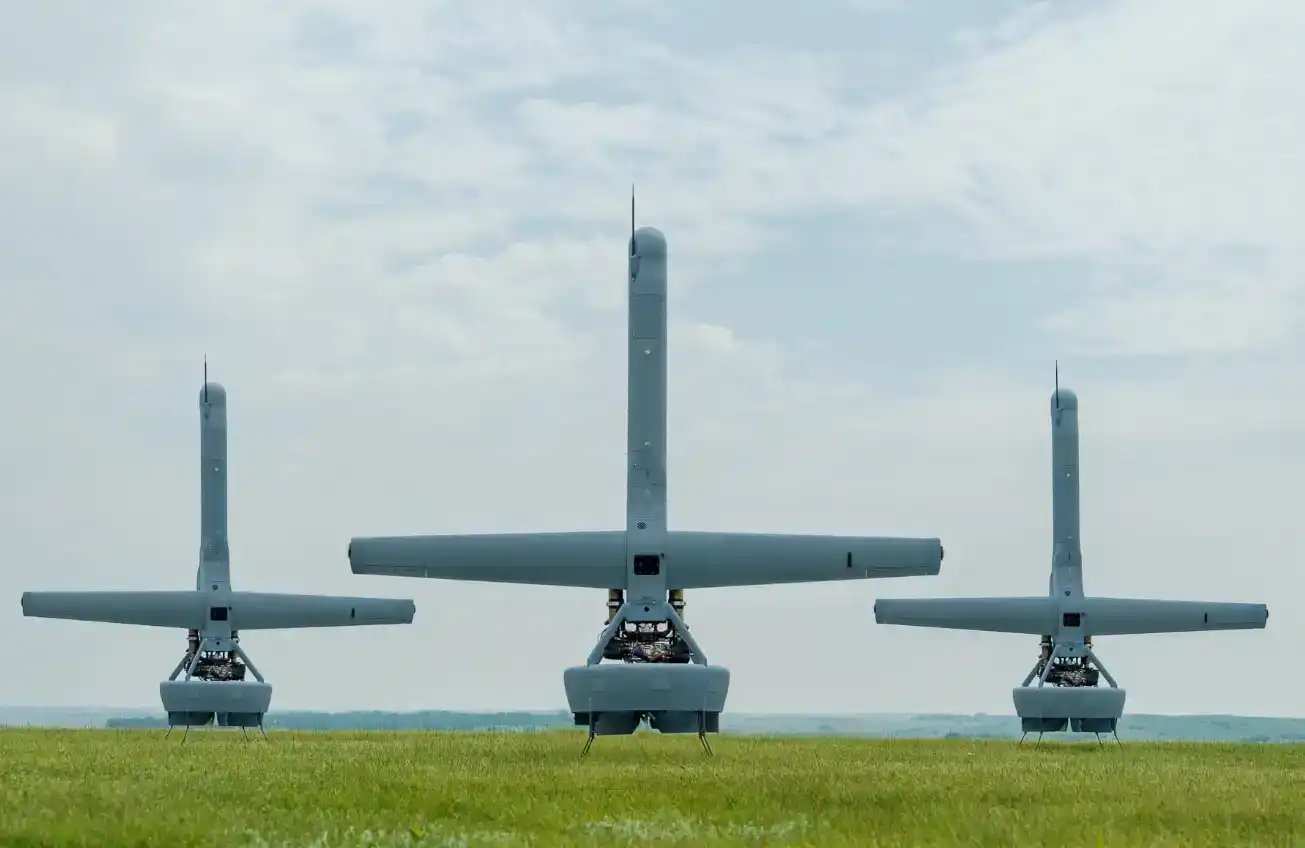
In March 2026, military AI company Shield AI raised $2 billion in funding round, led by Advent International and J.P. Morgan, with additional participation from Blackstone. Its valuation surged 140% to $12.7 billion within a year. Similarly, competitor Anduril is reportedly seeking new funding at a $60 billion valuation. Both companies have seen valuations grow fourfold in just over two years, far outpacing revenue growth, indicating that the market is pricing them based on future platform potential rather than current earnings. This trend is mirrored in the public market, where Palantir’s market cap grew to over $420 billion by late 2025. Shield AI’s products include the MQ-35 V-BAT drone and the upcoming X-BAT autonomous fighter, while its Hivemind AI engine was selected by the U.S. Air Force for the Collaborative Combat Aircraft (CCA) program. A key driver is the structural shift in defense tech funding. Private equity firms like Advent, KKR, and Carlyle are increasingly investing in long-term defense infrastructure, moving beyond traditional venture capital. In 2025, global defense tech VC deals reached $49.1 billion, with 87% going to late-stage companies. The U.S. Department of Defense’s FY2026 budget request allocated $13.4 billion specifically for AI and autonomous systems, with $9.4 billion dedicated to aerial drones—directly aligning with Shield AI and Anduril’s offerings. This clear demand signal, combined with institutional capital moving into defense infrastructure, marks a shift from speculative investment to asset-level allocation in the defense AI sector.

marsbit03/27 07:52

A 140% Surge in Valuation in One Year: Who's Writing Checks for Defense AI?

marsbit03/27 07:52

活动图片